


Nigerian Palm Kernel: The Botanical Inner Nut of the Oil Palm Fruit That Produces a Completely Different Oil From the Same Fruit’s Outer Flesh — Whose Lauric Acid-Rich Profile Creates Applications in Soap Manufacturing, Cosmetics, and Specialty Fats That Red Palm Oil Cannot Serve, and Whose Nigerian Production Scale Makes It One of the Most Commercially Significant Underexplored Commodity Nuts in West African Agricultural Export
Palm Kernel Exporter Nigeria — Whole Palm Kernels, Cracked Palm Kernels, Oil-Grade Palm Kernels, Palm Kernel Shell (PKS), and Palm Kernel Cake, Direct Southern Belt Sourcing, Bulk Supply to Palm Kernel Oil Crushing Mills, Oleochemical Manufacturers, Soap and Detergent Producers, Specialty Fat Refineries, Animal Feed Manufacturers, and Global Commodity Wholesale Buyers Worldwide
Palm kernel exporter Nigeria is a search phrase whose commercial context requires an immediate and commercially important botanical clarification: the palm kernel — the subject of this article — is an entirely different product from palm kernel oil (PKO) covered in our dedicated PKO article, and equally distinct from red palm oil covered in our red palm oil article. All three products come from the same Elaeis guineensis oil palm tree — but from different parts of the fruit and through different processing pathways — creating three separate commercial product lines whose buyers, applications, and international trade flows are entirely distinct.
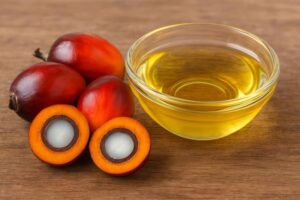
The oil palm fruit is a botanical double-oil producer whose architecture is commercially extraordinary: the outer fleshy mesocarp of the fruit — the orange-red oily pulp that surrounds the hard stone — is pressed to produce red palm oil (crude palm oil, CPO), whose carotenoid-rich profile and semi-solid character at room temperature create its established applications in West African cooking and global food manufacturing. Inside the stone sits the palm kernel — a hard, white-to-ivory inner nut approximately 2–3cm in diameter — whose mechanical cracking from the shell releases the raw material for palm kernel oil extraction (PKO). These two oils — red palm oil and palm kernel oil — share the same fruit origin but are as chemically different as olive oil and coconut oil: red palm oil is oleic and palmitic acid-dominant (the unsaturated fat profile of a tropical vegetable oil); palm kernel oil is lauric acid-dominant (the saturated medium-chain fatty acid profile that places it in the same commercial category as coconut oil).
The palm kernel as a commodity — the raw, unextracted whole nut after separation from the palm fruit — is the raw material that sits between the fruit processing step (producing red palm oil) and the kernel crushing step (producing PKO). This intermediate commodity is what Paradise MultiTrade’s palm kernel export programme specifically addresses: supplying the whole or cracked palm kernel as the raw material input that palm kernel crushing mills, oleochemical manufacturers, and industrial buyers who process on-site specifically procure from West African producing origins.
Nigeria — whose oil palm cultivation across the Rivers, Delta, Edo, Bayelsa, Imo, Anambra, Cross River, Akwa Ibom, Ogun, Ondo, and Ondo states of the southern rainforest and forest-savanna zones creates one of West Africa’s most commercially significant oil palm industries — produces palm kernels as the inevitable co-product of every palm oil processing operation. The commercial development of Nigeria’s palm kernel export programme creates the formal supply chain infrastructure that connects this co-product to the international crushing, oleochemical, and industrial buyer markets whose demand is served primarily by Malaysian and Indonesian origins — creating the supply diversification opportunity that Paradise MultiTrade’s programme addresses.
To discuss sourcing immediately, request a quotation here and our export team responds within 48 hours.
History and Origin — The Oil Palm’s Double Commercial Heritage
Elaeis Guineensis — West African Native, Global Industrial Crop
As documented in our red palm oil article, Elaeis guineensis is native to West Africa — specifically to the humid forest and forest-savanna transition zones extending from Nigeria through Cameroon, Gabon, and the Congo Basin where the oil palm has grown wild and been cultivated for food and non-food uses across thousands of years of West African agricultural practice. Nigeria’s historical oil palm belt — concentrated in the Niger Delta and southeastern forest states — was the world’s primary source of both palm oil and palm kernels before Malaysia and Indonesia’s plantation developments systematically captured global market share from the 1960s onwards.
The distinction between palm oil and palm kernels as separate commercial products with separate trade flows has a commercial history extending back to the earliest European trade with West Africa: the Royal Niger Company and its predecessors traded both palm oil (the more visually striking, volumetrically significant product) and palm kernels (shipped separately after cracking from the shell at village level or at coastal trading posts) as distinct commodities to different European industrial buyers. Palm oil went primarily to soap manufacturers and margarine producers; palm kernels went to kernel crushing mills in Germany, the Netherlands, and the UK whose investment in crushing and refining infrastructure was built around processing West African kernels — including Nigerian kernels — from the 19th century onward.
This commercial heritage — Germany and the Netherlands having built their kernel crushing industries on West African supply — is commercially significant context for Nigeria’s palm kernel export recovery programme: the European importing infrastructure and industrial consumer base that processed Nigerian palm kernels for generations has not disappeared. What disappeared was Nigeria’s formal export supply chain whose institutional infrastructure collapsed alongside the broader agricultural export sector decline.
The Palm Kernel’s Place in the Nigerian Oil Palm Processing System
Understanding the commercial position of the palm kernel within Nigeria’s oil palm processing system explains both its current domestic commercial role and the export opportunity whose formalisation Paradise MultiTrade’s programme addresses:
Fresh Fruit Bunch (FFB) processing sequence:
- FFB harvested from oil palm trees
- FFB sterilised (steam treatment) at palm oil mills
- Mesocarp threshed from bunch — producing fresh mesocarp for palm oil extraction
- Mesocarp pressed → Red Palm Oil (CPO) extracted
- Palm nuts separated from pressed mesocarp fibre
- Palm nuts cracked (nut cracker machines or traditional manual cracking) → separating palm kernels from palm kernel shells (PKS)
- Palm kernels cleaned, dried → Palm Kernel commodity (this article’s product)
- Palm kernels pressed or solvent-extracted → Palm Kernel Oil (PKO) + Palm Kernel Cake (PKC)
The palm kernel is thus the product of step 6 — the intermediate commodity whose extraction from the nut cracker creates the raw material for PKO production and whose commercial trade as a whole commodity specifically serves buyers who have their own crushing facilities.
What Is Nigerian Palm Kernel? The Botanical Profile, Oil Chemistry, and Commercial Product Range
Elaeis Guineensis — The Lauric Acid Oilseed at the Heart of the Oil Palm Fruit
The palm kernel — the inner nut of Elaeis guineensis fruit — is a hard, white to ivory-coloured oval nut (approximately 2–3cm long, 1.5–2cm wide) whose specific botanical identity as the primary source of lauric acid in plant-based oils creates its commercial distinction from all other West African oilseeds:
Oil content — approximately 47–52% of dry kernel weight — one of the highest oil contents of any commercially traded oilseed nut, creating extraction economics comparable to copra (dried coconut) and significantly better than soybean per unit kernel input.
Lauric acid (C12:0) — approximately 46–52% of total palm kernel oil fatty acids — the medium-chain saturated fatty acid that is palm kernel oil’s primary commercial identifier. Lauric acid’s specific properties — antimicrobial activity, rapid metabolism to ketone bodies (creating energy without hepatic fat accumulation), high lathering potential in soap manufacturing — create commercial applications that long-chain saturated fatty acids cannot replicate. The only other major commercial source of lauric acid at comparable concentration is coconut oil (47–53% lauric acid) — creating a commercial relationship between palm kernel oil and coconut oil as the two primary global lauric oil sources whose combined supply determines the economics of the soap, cosmetics, and specialty fat industries that depend on lauric acid.
Myristic acid (C14:0) — approximately 15–18% of total fatty acids — the second medium-chain saturated acid whose contribution to soap bar hardness and lather quality complements lauric acid’s primary soap performance role.
Capric (C10:0) and Caprylic (C8:0) acids — approximately 5–7% combined — the shorter chain medium-chain fatty acids whose specific applications in MCT oil nutraceutical products and pharmaceutical excipients create specialty market interest in palm kernel-derived fractions.
Oleic acid (C18:1) — approximately 13–15% — providing moderate unsaturated fat content alongside the dominant saturated medium-chain profile.
Protein content (of the defatted cake after oil extraction) — approximately 18–22% crude protein — creating palm kernel cake as an animal feed protein supplement whose fibrous texture and specific amino acid profile suits ruminant feeding systems.
The Critical Distinction Between Tenera and Dura Varieties
Nigerian oil palm cultivation includes two primary fruit types whose kernel characteristics create different commercial economics:
Tenera variety (dura × pisifera hybrid) — the commercially improved variety dominating plantation cultivation — produces fruits with thin-shelled, large-kernelled nuts whose kernel extraction rate (kernel as percentage of fruit bunch weight) is approximately 3.5–5%. Tenera is the commercial standard variety whose kernel oil content and extraction efficiency create the economics that support palm kernel as a commercially traded commodity.
Dura variety — the traditional wild-type variety — produces fruits with thick-shelled, smaller-kernelled nuts whose kernel extraction rate is lower (approximately 2–3% of FFB) and whose shell-to-kernel ratio creates higher cracking costs for lower kernel yield. Dura kernels are commercially acceptable but less economically efficient than Tenera.
For commercial kernel buyers whose extraction economics depend on oil yield per tonne of kernel input — documenting the source variety (Tenera vs Dura) is commercially meaningful. Paradise MultiTrade sources primarily from Tenera plantation operations whose commercial infrastructure produces the most consistent, highest-oil-content kernel grades. Contact us to discuss variety documentation.
Four Commercial Product Forms
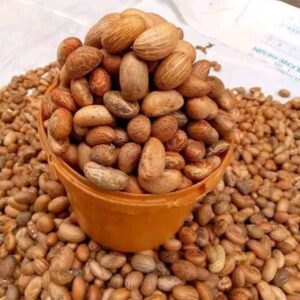
Whole Palm Kernels (Dry) — dried whole kernels as discharged from nut cracking operations — the primary export commodity form for buyers who have their own crushing mills and process on-site.
Cracked and Cleaned Kernels — mechanically sorted to remove shell fragments — the cleaner, higher-quality form preferred by buyers whose crushing equipment requires low shell contamination.
Palm Kernel Shell (PKS) — the hard outer shell separated from the kernel after cracking — a separate commercial product used as biomass fuel (high energy density, approximately 19–20 MJ/kg) for power generation, as activated carbon raw material, and as a hard aggregate in road construction.
Palm Kernel Cake (PKC) — the solid protein-rich residue after oil extraction from whole kernels — an established animal feed ingredient whose ruminant feed application is commercially significant.
Benefits and Industrial Uses of Nigerian Palm Kernel
Palm Kernel Oil Crushing Industry — The Primary Commercial Market
The global palm kernel oil market — tracked through Grand View Research’s palm kernel oil market analysis at over USD 5 billion annually — is the largest commercial buyer of palm kernels as a raw material. Palm kernel crushing mills — concentrated in Malaysia, Indonesia, Europe (Netherlands, Germany, UK historically), and increasingly in West Africa — import or source palm kernels for solvent or mechanical oil extraction whose output serves the lauric oil-dependent industries:
Soap and detergent manufacturing — lauric acid’s specific saponification properties create soap bars with superior lather, hardness, and cleansing action compared to soaps made from long-chain fatty acid oils. The global soap industry’s demand for lauric oil is enormous — Mordor Intelligence’s soap market report documents soap manufacturing as the single largest end-use market for palm kernel oil, consuming millions of tonnes annually. For crushing mills and soap manufacturers who source palm kernels directly — Nigerian supply provides West African origin material at Atlantic logistics pricing competitive with Malaysian PKO.
Cosmetics and personal care — palm kernel oil derivatives (especially the fractionated lauric and myristic acid components) create emulsifier, surfactant, and skin conditioning ingredients used across shampoo, conditioner, body wash, and skin care formulation. The Cosmetic Ingredient Review (CIR) has assessed palm kernel oil and its derivatives in cosmetics — confirming safety for use. INCI nomenclature: Elaeis Guineensis (Palm) Kernel Oil and various hydrogenated and fractionated derivatives.
Specialty fat manufacturing — palm kernel oil’s specific melting point range (24–26°C) and solid fat index create specialty fat applications in confectionery cocoa butter equivalents, chocolate coating fats, non-dairy coffee creamer fats, and ice cream coating applications whose specific textural requirements (sharp melt, good snap) are uniquely served by lauric acid-rich oils. The confectionery industry’s use of palm kernel-derived Cocoa Butter Equivalents (CBE) and Cocoa Butter Replacers (CBR) creates substantial demand for high-quality PKO whose lauric acid content and fractionation characteristics determine finished product quality. Innova Market Insights’ confectionery ingredient innovation database confirms palm kernel oil derivatives’ consistent presence in specialty fat formulation.
For palm kernel crushing mill buyers evaluating Nigerian whole kernels — contact our export team to discuss oil content, shell contamination specification, and moisture documentation.
Oleochemical Manufacturing — Lauric Acid and Derivatives
The oleochemical industry’s use of palm kernel oil as a feedstock for fatty acid, fatty alcohol, and glycerol production — tracked through Grand View Research’s oleochemical market analysis — creates significant industrial procurement demand for palm kernels whose lauric acid content specifically enables the production of:
Lauryl alcohol (C12) — from lauric acid reduction, used as a surfactant precursor and fragrance ingredient in personal care and detergent manufacturing.
Sodium lauryl sulphate (SLS) and sodium laureth sulphate (SLES) — the most widely used surfactants in shampoo, body wash, and toothpaste — derived from lauryl alcohol whose production chain begins with palm kernel lauric acid.
Lauric acid derivatives — the full range of laurate ester emulsifiers (glyceryl laurate, polyglyceryl laurate) used across food emulsification, pharmaceutical formulation, and cosmetics whose production specifically requires C12 lauric acid from palm kernel or coconut oil sources.
For oleochemical manufacturers evaluating Nigerian palm kernel as a lauric acid feedstock — contact our team to discuss lauric acid content specification.
Animal Feed Manufacturing — Palm Kernel Cake
Palm kernel cake (PKC) — the defatted meal produced after oil extraction from whole kernels — is one of the most commercially significant animal feed protein and energy ingredients in West African and Southeast Asian livestock production:
Ruminant feed — PKC’s specific nutritional profile (18–22% crude protein, 15–20% crude fat in expeller cake, 35–40% crude fibre from shell contamination) creates a ruminant feed ingredient whose high fibre content limits but does not eliminate monogastric use while making it ideal for ruminant systems whose digestive physiology utilises high-fibre feeds effectively. Research on PKC’s ruminant nutritional value — published through NCBI’s animal nutrition database and tracked through FEFAC European compound feed statistics — confirms PKC as an established ruminant feed ingredient in European and global compound feed formulation.
Aquaculture feed — PKC’s energy and protein contribution at competitive pricing creates aquaculture feed formulation interest for tilapia and catfish rations where its specific amino acid profile and digestibility characteristics are documented through FAO’s aquaculture nutrition research.
Biomass Energy — Palm Kernel Shell (PKS)
Palm kernel shell — the hard outer stone separated from the kernel after cracking — is a separate commercial product whose biomass fuel value has created a specific international trade in PKS as a renewable energy feedstock:
Biomass power generation — PKS’s high energy density (approximately 19–20 MJ/kg — comparable to sub-bituminous coal), low ash content, low sulphur content, and renewable biological origin create biomass co-firing applications in European coal power plants whose renewable energy transition plans specifically seek sustainable biomass fuels. The EU Renewable Energy Directive (RED II)‘s biomass sustainability criteria — requiring that biomass fuel achieve minimum greenhouse gas savings versus fossil fuel baseline — are met by PKS from certified sustainable palm production when accompanied by appropriate sustainability documentation.
Activated carbon production — PKS’s specific pore structure when activated through steam or chemical activation creates activated carbon with commercial application in water filtration, air purification, and pharmaceutical activated charcoal. The Grand View Research activated carbon market analysis documents PKS as an established activated carbon raw material.
For PKS biomass buyers — contact us to discuss energy content specification and sustainability documentation.
Why Buy Palm Kernel From Nigeria?
The Origin Authenticity — West African Centre of Oil Palm Diversity
Nigeria’s position within the oil palm’s West African centre of origin — as documented in our red palm oil article — creates specific botanical authenticity credentials for Nigerian palm kernel that Southeast Asian plantation origins cannot claim. The same genetic diversity argument applies: Nigerian oil palm populations contain the full botanical heritage of the species whose centre of domestication is West Africa — not the genetically narrow plantation selections whose Malaysian and Indonesian cultivation has optimised for yield at the cost of genetic diversity.
For specialty oleochemical and cosmetics buyers who communicate “West African origin palm kernel oil” as an authentic botanical provenance story — Nigeria provides the most geographically credible and historically documented origin for Elaeis guineensis kernel.
The Non-RSPO Alternative — Supply Diversification Beyond Certified Plantation
The global palm oil industry’s sustainability certification framework — the Roundtable on Sustainable Palm Oil (RSPO) whose certification is required by many European and North American food and personal care manufacturers for their palm and palm kernel oil procurement — is almost entirely concentrated in Malaysian and Indonesian plantation operations whose certification infrastructure has been systematically built over two decades.
Nigerian smallholder and semi-commercial oil palm production — operating outside the RSPO certification framework in most cases — provides supply for buyers whose product positioning does not require RSPO certification (domestic industrial buyers, developing market manufacturers) and whose price sensitivity makes the RSPO premium commercially unviable. For buyers specifically seeking non-RSPO Nigerian palm kernel at commodity pricing — Paradise MultiTrade provides documented, food-safe supply without RSPO certification cost structure.
For buyers who specifically require RSPO certification — we note this and recommend appropriate Malaysian or Indonesian certified sources for that procurement need.
The Atlantic Logistics Advantage for European Buyers
Nigeria’s Atlantic coast position — Lagos to Rotterdam at 14–18 days — versus Malaysia’s palm kernel shipping route to Rotterdam at approximately 25–30 days creates meaningful transit time and logistics cost advantages for European crushing mills and oleochemical manufacturers whose raw material inventory management benefits from shorter, more flexible supply chains. For European PKO crushing mills who have historically sourced entirely from Malaysian origin — Nigerian supply provides geographic and logistics diversification whose commercial value the 2022 supply chain disruption events across Asian shipping routes permanently elevated in procurement risk frameworks.
Complete Export Documentation
Every palm kernel shipment carries phytosanitary certification from NAQS, NEPC export documentation, certificate of origin, commercial invoice, packing list, and bill of lading. We coordinate moisture content, oil content (Soxhlet), free fatty acid (FFA), shell contamination percentage, foreign matter, aflatoxin screening, and microbiological safety testing following AOAC International validated procedures. For PKS biomass buyers, we coordinate gross calorific value, ash content, moisture, and particle size distribution. For oleochemical buyers requiring fatty acid profile — we coordinate GC lauric acid and myristic acid percentage documentation. EU-bound shipments comply with Regulation (EU) 2017/625 on official controls. Our NEPC Export Licence No. 0042385 and CAC Registration No. RC-9284647 are verifiable through NEPC.
Nigeria’s Palm Kernel Export Strength and Global Market Demand
The Global Market
The global palm kernel market — tracked through Grand View Research’s palm kernel oil market analysis and Mordor Intelligence’s palm kernel market report — is dominated by Malaysian and Indonesian origins whose plantation infrastructure produces the majority of internationally traded palm kernels. The Malaysian Palm Oil Council (MPOC) and Indonesian Palm Oil Association (GAPKI) represent the dominant supply origins whose institutional market development infrastructure has created the buyer relationships that Nigerian origin must progressively penetrate through quality documentation, competitive pricing, and Atlantic logistics positioning.
The Food and Agriculture Organization (FAO) and ITC Trade Map confirm Nigeria’s growing palm kernel formal export volumes — with European crushing mills, Indian oleochemical manufacturers, and Chinese edible oil refineries among the most active procurement communities for West African origin palm kernels.
Key Export Destination Markets
Netherlands and Germany — Europe’s primary palm kernel crushing and oleochemical manufacturing hubs, historically built on West African palm kernel processing — creating the most commercially significant European procurement market for Nigerian palm kernels. European crushing mill requirements: moisture ≤7%, oil content ≥47%, FFA ≤3%, shell contamination ≤2%. EU food and feed safety requirements administered through EFSA.
India — one of the world’s most significant palm kernel importers, whose soap manufacturing, oleochemical industry, and edible oil refining sectors collectively create enormous procurement demand for palm kernels and PKO. Indian import intelligence tracked through APEDA.
China — whose soap, personal care product, and specialty fat manufacturing industries create growing palm kernel import demand tracked through GACC.
United Kingdom — whose oleochemical and personal care ingredient manufacturing sector creates PKO and palm kernel procurement demand. UK food import requirements administered by FSA.
South Korea and Japan — whose sophisticated personal care and specialty food ingredient industries create quality-demanding palm kernel procurement tracked through JETRO and KATI.
West African Regional Market — the growing regional palm kernel crushing industry in Benin, Ghana, Senegal, and Côte d’Ivoire creates a regional market for Nigerian palm kernels whose shorter logistics and common regulatory framework create procurement efficiency.
Why Choose Paradise MultiTrade International Limited?
Shell Contamination Documentation — The Primary Commercial Quality Parameter. Shell percentage in palm kernel lots — confirmed by gravimetric separation and percentage weight calculation — is the most commercially significant quality parameter for crushing mill buyers whose extraction equipment performance and oil quality are both directly affected by shell contamination. We document shell contamination percentage on every lot. Contact us to discuss shell contamination specification.
Oil Content and FFA Documentation. Soxhlet oil content (target ≥47% for Tenera-sourced kernels) and free fatty acid (FFA ≤3% for fresh crop material) confirmed through accredited analytical laboratories — providing the crushing economics documentation that kernel procurement decisions require. Contact us to discuss oil content specification.
PKS Biomass Documentation for Energy Buyers. Gross calorific value (GCV), moisture content, ash content, and particle size distribution — documented for PKS biomass buyers whose boiler specifications and regulatory compliance programmes require analytical fuel quality certification. Contact us to discuss PKS biomass specification.
Integrated Oil Palm Product Programme. Paradise MultiTrade supplies palm kernels alongside red palm oil and palm kernel oil from the same Nigerian oil palm supply network — allowing buyers who source multiple palm products to consolidate procurement through one licensed exporter. Contact our team to discuss integrated palm product procurement.
Multi-Commodity West African Agricultural Sourcing. Palm kernel buyers frequently source complementary Nigerian commodities. Alongside palm kernel, Paradise MultiTrade exports red palm oil, palm kernel oil, shea butter, groundnut oil, sesame seeds, soybeans, castor oil, moringa oil, hibiscus flower, gum arabic, cashew nut kernel, and raw cashew nuts. Explore our full range of Nigerian export commodities and consolidate your West African oil, seed, and botanical sourcing through one verified, licensed export partner.
Product Specifications
| Specification | Details |
|---|---|
| Product | Nigerian Palm Kernel (Elaeis guineensis) |
| Common Names | Palm kernel, Palm nut kernel, Ogoro (Yoruba), Akụ ọcha (Igbo), Kwakwa (Hausa for oil palm) |
| Botanical Species | Elaeis guineensis Jacq. (Arecaceae) |
| Variety | Tenera (commercial plantation — primary); Dura (smallholder — lower oil content) |
| Origin | Nigeria (Rivers, Delta, Edo, Bayelsa, Imo, Anambra, Cross River, Akwa Ibom, Ogun, Ondo, Oyo States) |
| Forms Available | Whole dry kernels; Cracked and cleaned kernels; Palm Kernel Shell (PKS) biomass; Palm Kernel Cake (animal feed) |
| Oil Content (Tenera) | 47–52% dry weight (Soxhlet extraction) |
| Oil Content (Dura) | 42–47% dry weight |
| Free Fatty Acid (FFA) | ≤3% (fresh crop); ≤5% (stored) |
| Moisture Content | ≤7% (crushing grade standard) |
| Shell Contamination | ≤2% for premium crushing grade; ≤5% for standard grade |
| Foreign Matter | ≤1% |
| Lauric Acid Content (PKO) | 46–52% of total fatty acids (GC analysis — oil fraction) |
| Myristic Acid Content (PKO) | 15–18% of total fatty acids |
| Crude Protein (PKC) | 18–22% dry weight (Kjeldahl) |
| Crude Fibre (PKC) | 35–40% dry weight |
| Aflatoxin | Total ≤10 ppb; B1 ≤2 ppb |
| Pesticide Residue | Multi-residue analysis to EU MRL standards — mandatory all EU-bound lots |
| Microbiological | Salmonella absent/25g; Total plate count within safety limits |
| PKS Gross Calorific Value | 19–20 MJ/kg (air dry basis) |
| PKS Moisture | ≤15% (biomass fuel grade) |
| PKS Ash Content | 2.5–4% dry basis |
| Colour | White to ivory (fresh kernel); yellowing indicates oxidation |
| Shelf Life | 6 months whole kernel (sealed, cool, dry); 12 months PKS |
| Packaging Options | 50kg polypropylene bags; bulk container loading (25–27 MT per 20-foot container); bulk vessel for PKS |
| Supply Capacity | 500–20,000+ MT per season |
| MOQ | Palm kernels: 25 MT; PKS: 100 MT; PKC: 25 MT |
| Export Documentation | Phytosanitary Certificate (NAQS), Certificate of Origin, NEPC Export Licence, Oil Content Certificate (Soxhlet), FFA Certificate, Shell Contamination Analysis, Moisture Certificate, Aflatoxin Certificate, PKS GCV and Ash Analysis (biomass buyers), Lauric Acid GC Profile (oleochemical buyers on request), Pesticide Residue Certificate (EU MRL), Microbiological Certificate, Commercial Invoice, Packing List, Bill of Lading |
| Payment Terms | T/T, Letter of Credit (LC at sight), Escrow |
| Loading Port | Lagos (Apapa / Tin Can Island Port); Warri (Delta State — closer to Niger Delta producing areas) |
| Incoterms Available | EXW, FOB Lagos, CNF, CIF |
Packaging and Export Process
Oil Palm Harvest and Fresh Fruit Bunch Processing. Nigerian oil palm Fresh Fruit Bunches (FFB) are harvested year-round — with peak production aligned with two rainfall-driven production cycles in the Niger Delta and southeastern forest zones: March–June (first cycle) and September–November (second cycle). FFBs harvested by chisel-tipped harvesting poles are transported to mills within 24–48 hours of harvest — delay causes increased FFA in the oil and premature hydrolysis of the kernel.
Nut Separation and Cracking. At palm oil mills, the sterilised FFB goes through a thresher separating loose fruits from the bunch. Fruits are digested (mashing the mesocarp to release oil) — and the press cake containing the palm nuts is separated. Palm nuts are then cracked by centrifugal nut crackers (mechanical impact) or traditional hand-cracking methods — separating the kernel from the hard outer shell. Modern mill operations use centrifugal nut crackers whose cracking efficiency (kernel damage rate below 3%) is the mechanical performance standard for commercial operations.
Kernel Separation, Washing, and Drying. Cracked kernels and shell fragments are separated through wet separation (claybath — density difference between lighter kernels and heavier shell fragments) or dry winnowing (air separation). Separated kernels are washed, drained, and dried — in kernel silos with forced hot air at 60–70°C until moisture falls below 7%. Drying speed is commercially critical — undried kernels above 7% moisture develop FFA-raising free fatty acids and create aflatoxin risk within days.
Quality Inspection and Grading. Dried kernels are visually inspected and spot-tested for shell contamination (gravimetric separation of representative sample), moisture content (oven drying), and colour (yellowing indicating oxidation). FFA testing and oil content Soxhlet analysis conducted on representative lot samples before commercial grading and export documentation preparation.
PKS Collection and Preparation. Palm kernel shells from nut cracking operations are collected separately — dried if necessary to below 15% moisture for biomass fuel grade — and either bagged or bulk-loaded for container or vessel shipping.
Lead Times. Palm kernels (from processing and available stock): 14–21 days from order confirmation. PKS (bulk biomass): 14–28 days depending on vessel scheduling. PKC: 21–35 days. Contact us to plan your supply schedule.
Frequently Asked Questions
What is the difference between palm kernel, palm kernel oil (PKO), and red palm oil — and which product should I specify?
These three products all come from the same Elaeis guineensis oil palm fruit but are entirely different commercial commodities: Red Palm Oil — pressed from the orange-red outer fleshy mesocarp of the palm fruit. Rich in carotenoids, semi-solid at room temperature, high in palmitic and oleic acids. Used in West African cooking, food manufacturing, biodiesel. Palm Kernel (this article) — the whole inner nut, cracked from the hard stone at the fruit’s centre. The raw material that crushing mills process into PKO. Commercial form: whole or cracked kernel as a commodity raw material for crushing operations. Palm Kernel Oil (PKO) — extracted from the palm kernel through pressing or solvent extraction. Lauric acid-dominant (46–52%), comparable to coconut oil in fatty acid profile. Used in soap manufacturing, cosmetics, specialty fats. Who should specify what: Crushing mills who extract oil on-site: specify palm kernels (this article). Edible oil refiners who use refined PKO: specify palm kernels or crude PKO. Soap manufacturers who want the finished oil: specify PKO. Food manufacturers using palm oil: specify red palm oil or PKO depending on application. If you are unsure which product fits your application — contact us and our team will confirm the correct specification.
What is shell contamination in palm kernels and why is it the most important quality specification for crushing mills?
Shell contamination refers to fragments of the palm nut’s hard outer shell that are not completely separated from the kernels during the cracking and separation process — expressed as a percentage of total lot weight. Shell contamination matters commercially for three reasons: (1) Crushing equipment abrasion — palm kernel shell is one of the hardest natural materials in agricultural processing (Mohs hardness approximately 3.5–4), creating significant abrasive wear on screw press elements, expeller barrel bars, and solvent extraction conveying equipment. High shell contamination dramatically accelerates equipment wear — increasing maintenance costs and production downtime. Crushing mills typically specify ≤2% shell for premium grade and accept up to ≤5% for standard grade with appropriate pricing adjustment. (2) Oil quality dilution — shell material contains minimal oil content — shell contamination at 5% dilutes the effective kernel oil content of the delivered lot by approximately 0.3–0.5 percentage points, reducing the crushing yield per tonne paid. (3) PKC quality — shell fragments in the pressed cake reduce its palatability and digestibility in animal feed applications — increasing crude fibre and reducing protein digestibility. Paradise MultiTrade documents shell contamination by gravimetric separation of 1kg representative samples — confirmed by weight percentage before export documentation. Contact us to discuss shell contamination specification.
Why is lauric acid the most commercially significant fatty acid in palm kernel oil and what industries specifically require it?
Lauric acid (C12:0) is the medium-chain saturated fatty acid whose specific molecular properties create commercial applications that neither short-chain fatty acids (C4–C10) nor long-chain fatty acids (C14+) can replicate: (1) Soap manufacturing — lauric acid’s saponification value and the resulting sodium laurate soap’s superior lathering, cleansing, and hardness properties make it the most commercially valuable fatty acid for soap manufacturing. Soap bars whose fatty acid profile includes 40%+ lauric acid produce the abundant, stable lather and hard bar character that consumers associate with premium soap quality. Only palm kernel oil and coconut oil provide lauric acid at commercial concentrations. (2) Surfactant manufacturing — sodium lauryl sulphate (SLS) and its ethoxylated derivative SLES — the most widely used anionic surfactants in shampoo, body wash, and toothpaste — are produced from lauryl alcohol derived by fatty acid reduction of lauric acid. The surfactant manufacturing industry’s dependence on C12 lauric acid means that palm kernel and coconut oil are both literally irreplaceable as the primary raw material source. (3) Specialty confectionery fats — lauric acid’s specific melting behaviour (sharp melt at mouth temperature, complete solid at room temperature) creates the textural performance that confectionery coating fats and chocolate alternatives require. For oleochemical buyers evaluating Nigerian palm kernels as a lauric acid feedstock — we document GC lauric acid percentage on request. Contact us to discuss lauric acid specification.
What is Palm Kernel Shell (PKS) and why do European biomass power plants import it?
Palm kernel shell is the hard outer stone of the oil palm nut — the material that nut crackers break to release the kernel inside. After cracking and kernel separation, the shell is a co-product whose biomass fuel properties make it commercially valuable beyond Nigeria’s domestic fuel use: (1) Energy density — PKS’s gross calorific value of 19–20 MJ/kg (air dry basis) is comparable to sub-bituminous coal and significantly higher than wood chips or agricultural residue biomass. This high energy density reduces transport cost per unit of energy compared to lower-density biomass. (2) Low ash content (2.5–4%) — significantly lower than most agricultural residue biomass whose high ash content creates boiler fouling and slagging problems. PKS’s low ash creates cleaner combustion and lower boiler maintenance costs. (3) Low sulphur content — below 0.1% — creating lower SO2 emissions than coal co-firing, supporting air quality regulatory compliance. (4) Renewability — PKS is a by-product of food production (palm oil), qualifying as a renewable biomass under EU Renewable Energy Directive (RED II) frameworks when produced from certified sustainable sources. European coal-to-biomass transitioning power plants — particularly in the Netherlands, UK, and Germany — have been progressively importing PKS from Southeast Asian and West African origins as a coal co-firing and replacement fuel whose renewable energy credentials support their decarbonisation commitments. Contact us to discuss PKS biomass supply and energy content documentation.
What is the difference between Tenera and Dura palm kernel and why does variety matter for crushing mill buyers?
Oil palm fruit varieties are classified by their shell thickness-to-kernel size ratio — which directly determines the commercial economics of kernel extraction: Tenera variety (dura × pisifera cross) — thin-shelled fruit with relatively large kernel. Tenera is the commercially improved hybrid that dominates modern plantation cultivation — producing: kernel oil content 47–52% (higher oil yield per tonne crushed), kernel extraction rate approximately 3.5–5% of FFB weight (higher kernel yield per fruit bunch), and thinner shell that cracks more cleanly with lower kernel damage. Dura variety — thick-shelled traditional variety, smaller kernel proportionally. Oil content 42–47%, lower kernel extraction rate (2–3% of FFB), thicker shell creating higher cracking costs and more shell contamination risk. The commercial consequence for crushing mill buyers: Tenera kernel delivers approximately 15–20% more oil per tonne of kernel purchased compared to Dura — directly affecting crushing economics and return on kernel cost investment. Paradise MultiTrade sources primarily from Tenera plantation and semi-commercial operations — documenting variety type where known and oil content as the primary commercial quality verification of Tenera-sourced material. Contact us to discuss variety documentation.
How does Nigerian palm kernel compare to Malaysian origin on quality — and what is the commercial case for building Nigerian supply positions?
Malaysian palm kernel — from the world’s most commercially developed palm kernel producing industry — sets the quality benchmark for international crushing mill procurement: consistent Tenera variety, oil content reliably at 48–50%, FFA below 2.5%, shell contamination below 2%, moisture below 7%. This is the commercial standard against which all origins are evaluated. Nigerian palm kernel from well-managed processing operations matches these quality parameters for oil content (47–52% Tenera sourced), FFA (≤3% fresh crop), and shell contamination (≤2% premium grade) — with moisture management as the critical variable that distinguishes professional export-grade supply from lower-quality informal trade material. Commercial case for Nigerian positions: (1) Atlantic coast logistics — 14–18 days to Rotterdam versus 25–30 days from Sabah/Sarawak Malaysia — creating freight cost advantages and supply chain flexibility for European buyers. (2) Geographic supply diversification — uncorrelated climate and logistics risk from Southeast Asian production. (3) Competitive pricing — Nigerian kernel’s developing export infrastructure typically creates pricing below Malaysian benchmark at equivalent specification. (4) West African origin authenticity for brands communicating authentic palm oil origins. For crushing mills building supply diversification — Paradise MultiTrade provides sample lots with full analytical documentation for quality comparison before volume commitment. Contact us to arrange comparative sample supply.
What transit times should I expect from Nigeria?
Palm kernels and PKC (standard dry container — no temperature control): UK (Tilbury, Felixstowe) — 14–18 days from Lagos or Warri. Netherlands (Rotterdam) — 14–18 days. Germany (Hamburg) — 14–20 days. India (Nhava Sheva, Mundra) — 10–15 days. China (Shanghai, Tianjin) — 28–35 days. South Korea (Busan) — 30–38 days. Japan (Yokohama) — 25–32 days. UAE (Jebel Ali) — 10–14 days. USA (East Coast) — 18–25 days. Canada (Halifax, Montreal) — 18–28 days. PKS biomass (bulk vessel — preferred for volume above 5,000 MT): Same port-to-port transit times, but bulk vessel chartering from Lagos or Warri provides significantly lower per-tonne freight economics than container shipping for biomass fuel volumes. Add 5–7 days for Warri port loading coordination versus Lagos Apapa for Delta/Rivers state sourced kernels. Contact us to plan your complete logistics programme.
Ready to Source Nigerian Palm Kernels — Whole Dry Kernels, Cracked and Cleaned Grade, PKS Biomass, and Palm Kernel Cake — With Oil Content Documentation, Shell Contamination Analysis, FFA Certification, Lauric Acid Profile for Oleochemical Buyers, PKS Calorific Value for Biomass Buyers, and Full Export Documentation for Crushing Mills, Oleochemical Manufacturers, Soap Producers, Biomass Energy Companies, and Animal Feed Manufacturers?
If you are a European palm kernel crushing mill building West African supply diversification from Malaysian-dominant procurement whose Atlantic logistics advantage over Southeast Asian origin creates freight cost savings and supply chain resilience, an Indian oleochemical or soap manufacturer whose lauric acid feedstock procurement benefits from West African origin at competitive pricing relative to Malaysian PKO import costs, a Chinese edible oil and specialty fat refinery evaluating West African palm kernel as a supplementary lauric oil feedstock source during Malaysian supply tightness, a European biomass power plant operator whose coal replacement programme requires sustainable PKS biomass whose high calorific value, low ash content, and RED II sustainability documentation meet your boiler and regulatory requirements, a confectionery specialty fat manufacturer whose Cocoa Butter Equivalent or coating fat formulation requires consistent-quality palm kernel oil from a diversified origin supply chain, an animal feed compound manufacturer evaluating palm kernel cake as a cost-effective ruminant protein and energy supplement whose fibre contribution creates specific nutritional value for cattle and sheep rations, or a global commodity trader building Nigerian palm kernel supply positions for European, Asian, or Middle Eastern crushing and oleochemical industry buyers as Nigeria’s palm kernel formal export infrastructure progressively develops — Paradise MultiTrade International Limited is the licensed Nigerian exporter your palm kernel supply programme needs.
We supply Nigerian Elaeis guineensis palm kernels — whole dry, cracked and cleaned, PKS biomass, and PKC — from Rivers, Delta, Edo, and Akwa Ibom palm belt processing operations, oil content Soxhlet-certified per lot, shell contamination gravimetrically documented, FFA and moisture certified, lauric acid GC profile available for oleochemical buyers, PKS GCV and ash analysis for biomass energy buyers, aflatoxin screened, and exported with full documentation to buyers in every major regulated destination market.
Request a Quotation — share your required form (whole kernels, cracked and cleaned, PKC, or PKS biomass), oil content minimum, shell contamination maximum, FFA specification, volume, application (crushing, oleochemical, soap, biomass energy, animal feed, confectionery), destination market, and preferred incoterms. We respond within 48 hours.
Contact Our Export Team — speak directly about Tenera versus Dura variety sourcing, oil content and FFA documentation, shell contamination analytical protocol, PKS calorific value and RED II sustainability documentation, lauric acid GC fatty acid profile, integrated palm product procurement (red palm oil + palm kernel + PKO), Warri port versus Lagos logistics options, and long-term supply programme structuring.
Explore Our Full Product Range — alongside palm kernel, Paradise MultiTrade exports red palm oil, palm kernel oil, shea butter, groundnut oil, sesame seeds, soybeans, castor oil, moringa oil, hibiscus flower, gum arabic, cashew nut kernel, and raw cashew nuts. One licensed Nigerian exporter. One consolidated West African palm product, oilseed, botanical, and natural food sourcing relationship — from the oil palm fruit that produces two completely different commercial oils from two completely different botanical locations to the world’s most important source of the lauric acid that keeps global soap, surfactant, and specialty fat industries running.
Paradise MultiTrade International Limited | NEPC Export Licence No. 0042385 | CAC No. RC-9284647 | Lagos, Nigeria | www.paradisemultitrade.com

Reviews
There are no reviews yet.