


Nigerian Black Sesame Seed: The Pigmented Sesame Whose Black Hull’s Anthocyanin Concentration Places Its Antioxidant Activity Above Both Brown and White Sesame, That Two Thousand Years of Traditional Chinese and Korean Medicine Have Prescribed for Kidney Tonification, Hair Health, and Anti-Aging — and That the Asian Functional Food Market Has Built Into One of the Most Premium Colour-Specific Ingredient Categories in East Asian Health Food Retail
Black Sesame Seed Exporter Nigeria — Whole Black Sesame Seed, Black Sesame Oil, Black Sesame Powder, and Black Sesame Paste, Direct Sahel Belt Sourcing, Bulk Supply to Asian Food Manufacturers, Traditional Chinese Medicine Product Companies, Korean Functional Food Brands, Japanese Health Food Producers, Cosmetics Formulators, and Global Wholesale Buyers Worldwide
Black sesame seed exporter Nigeria is a search phrase whose commercial context is more specifically defined by its primary buyer community than almost any other search phrase in our entire product portfolio. The buyer is almost certainly Asian — or supplying Asian markets — because black sesame seed’s commercial premium over brown and white sesame exists almost exclusively within the East Asian food, medicine, and functional ingredient cultural context whose 2,000-year traditional use prescription for black sesame creates a consumer demand whose intensity, cultural specificity, and price sensitivity operate entirely outside the Western sesame procurement framework.
In China, Japan, South Korea, and Taiwan — the four markets that together constitute the overwhelming majority of premium black sesame procurement — black sesame is not merely a colour variant of ordinary sesame. It is a specifically prescribed therapeutic food ingredient whose distinct identity from brown sesame has been maintained across 2,000 years of Traditional Chinese Medicine (TCM) and Korean traditional medicine (hanbang) practice — prescribed specifically for: kidney Qi tonification (the TCM framework for the kidney system’s energy and essence that governs ageing, hair health, and reproductive vitality), hair blackening (both preventing premature greying and restoring natural hair colour — whose documentation in classical TCM texts has generated substantial modern pharmaceutical research interest in the melanin synthesis mechanisms that black sesame’s anthocyanins may influence), liver nourishment (supporting blood production and storage in the TCM liver system), and general anti-aging tonification whose modern reinterpretation through antioxidant science connects directly to black sesame’s documented anthocyanin-derived antioxidant superiority over both brown and white sesame varieties.
The biochemistry behind these traditional applications is more commercially credible than Western food science instinct might initially suggest. Black sesame’s characteristic black hull is coloured by anthocyanins — the same class of polyphenolic pigments that makes blueberries, black rice, purple grapes, and acai berries the most commercially successful antioxidant superfoods in the Western natural food market. Black sesame’s anthocyanin content — documented through NCBI’s food chemistry and phytochemistry research at concentrations of 3–10mg per gram of black hull — places its antioxidant activity measurably above both brown and white sesame on standard DPPH and FRAP radical scavenging assays. The same lignan complement (sesamin, sesamolin, sesamol) documented in brown sesame’s hull is present in black sesame — amplified by the additional anthocyanin antioxidant layer whose contribution to total antioxidant capacity creates what food scientists describe as a synergistic multi-mechanism antioxidant profile uniquely characteristic of black-pigmented seed foods.
Nigeria produces black sesame — as a naturally occurring colour variant within its Sesamum indicum cultivation whose traditional smallholder variety selection has maintained black sesame alongside brown and white varieties in the same Sahel producing zones. At Paradise MultiTrade International Limited, black sesame seed is a distinct and separately managed export category — sourced from farming communities across Jigawa, Kano, Yobe, Borno, Nassarawa, and Benue states where black sesame variety cultivation exists within the established Nigerian sesame production system, processed into whole black sesame, black sesame oil, black sesame powder, and black sesame paste appropriate to the Asian food manufacturing, TCM product, and functional ingredient buyer requirements.
To discuss sourcing immediately, request a quotation here and our export team responds within 48 hours.
History and Origin of Black Sesame — The Ancient Prescription Food Whose Colour Is Its Commercial Credential
Two Thousand Years of East Asian Traditional Medicine — The Most Documented Traditional Food-Medicine in the Series
The traditional use documentation for black sesame in East Asian medicine systems represents one of the most historically deep and institutionally formalised traditional use records in the entire traditional plant medicine canon. The Shennong Bencao Jing (Divine Farmer’s Classic of Materia Medica) — the foundational Chinese pharmacopoeia compiled approximately 200 CE — specifically lists black sesame (Hei Zhi Ma, 黑芝麻) as a superior medicine whose long-term consumption “makes the body light, prolongs life, and prevents ageing.” The Chinese Pharmacopoeia (2020 edition) — the contemporary official pharmaceutical standard of the People’s Republic of China — continues to list Hei Zhi Ma as an official pharmacopoeia drug substance used in TCM formulations for kidney deficiency, premature greying, constipation, and insufficient lactation.
This continuity — from ancient pharmacopoeia to modern official pharmaceutical standard — across 2,000 years of documented clinical practice represents the most robust form of traditional use validation available for any botanical product, creating the institutional pharmaceutical framework that supports both TCM product manufacturing procurement and modern functional food positioning. The World Health Organization’s traditional medicine strategy specifically recognises the Chinese Pharmacopoeia’s standing as an official national regulatory instrument whose entries constitute recognised traditional use evidence.
In Nigeria — where Sesamum indicum was introduced through trans-Saharan trade routes — black sesame developed as a colour variant within traditional smallholder farming without the specific therapeutic prescription identity it holds in East Asia. Nigerian cultivation has always produced black sesame alongside brown varieties, recognising it as a distinct colour grade rather than a therapeutically distinct ingredient. The commercial opportunity for Nigerian black sesame export is therefore unambiguously directional — from Nigeria’s Sahel producing zones toward the East Asian markets whose established black sesame demand is served primarily by Chinese, Indian, and Southeast Asian origins whose production volumes and formal export infrastructure are the competitive reference points that Nigerian origin must meet.
The Anthocyanin Science — Why Colour Is a Quality Credential
The commercial premium that black sesame commands over brown and white sesame in Asian markets is not merely cultural preference. It is supported by documented biochemical distinction whose connection to antioxidant and potentially anti-aging biological activity provides the modern scientific validation that the ancient TCM prescription anticipated:
Research published through NCBI’s food chemistry database — specifically studies comparing total antioxidant capacity of black, brown, and white sesame — consistently documents black sesame’s antioxidant superiority: DPPH radical scavenging activity of black sesame hull extract at 85–95% inhibition versus brown sesame hull at 70–85% and white sesame at 40–60%. The anthocyanin compounds specifically identified in black sesame hull include cyanidin-3-glucoside and cyanidin-3-rutinoside — the same anthocyanin molecules that constitute the primary antioxidant compounds in blueberries and black rice whose commercial antioxidant superfood positioning is among the most commercially successful in the global health food market.
The hair health research dimension — whose traditional TCM prescription for black sesame’s hair-blackening properties has attracted modern pharmaceutical investigation — is specifically connected to anthocyanin-mediated melanin synthesis. Research on dietary anthocyanins and hair follicle melanocyte activity — accessible through NCBI’s dermatology research database — documents the biological plausibility of the traditional hair health application through anthocyanin’s documented stimulation of tyrosinase (the enzyme responsible for melanin synthesis in hair follicle melanocytes). While the clinical evidence for dietary black sesame’s direct hair-blackening efficacy in human trials remains developing rather than conclusive — the biochemical mechanism whose plausibility the research confirms is the most commercially significant pharmaceutical research connection in any sesame colour grade.
What Is Nigerian Black Sesame Seed? The Phytochemical Profile, Quality Parameters, and Commercial Product Range
Sesamum Indicum — Black Variety — The Pigment That Defines the Product
Sesamum indicum black sesame is the same botanical species as brown and white sesame — differentiated by a genetic variant in the anthocyanin biosynthesis pathway that produces the deep black pigmentation of the outer hull. The hull’s pigmentation is the primary commercial distinguishing characteristic — and its authenticity is commercially verifiable by simple water immersion testing: genuine black sesame releases anthocyanin pigment into water (producing characteristic purple-to-red colour) while fake black sesame (ordinary sesame dyed with black food colouring) releases artificial dye that produces a distinctly different colour character. This simple adulteration test is commercially important — black sesame’s premium pricing creates economic incentive for adulteration that buyers must actively screen for.
The Complete Phytochemical Profile
Anthocyanins — approximately 3–10mg per gram of black hull dry weight — the primary commercial distinguishing compound whose concentration creates black sesame’s antioxidant superiority over brown and white varieties. Specific compounds: cyanidin-3-glucoside (most abundant), cyanidin-3-rutinoside, and related cyanidin derivatives documented through Journal of Agricultural and Food Chemistry black sesame anthocyanin characterisation studies.
Sesamin, Sesamolin, and Sesamol — the lignan compounds whose complete profile we documented in the brown sesame article — present in black sesame at concentrations comparable to or slightly higher than brown sesame, creating a synergistic antioxidant profile where anthocyanins and lignans act through complementary mechanisms simultaneously.
Oil content — approximately 45–52% of dry seed weight — slightly lower than the highest-oil-content brown sesame varieties but sufficient for cold-pressed black sesame oil production whose colour, flavour, and antioxidant properties create premium positioning distinct from brown sesame oil. The oil’s fatty acid profile mirrors brown sesame — oleic and linoleic acid dominant with the same oxidative stability contribution from sesamin and sesamol.
Protein — approximately 18–24% of dry seed weight — the same complete essential amino acid profile as brown sesame including the methionine content that distinguishes sesame protein from most cereal grain proteins.
Calcium — approximately 600–900mg per 100g dry weight — hull-inclusive calcium density comparable to brown sesame, retained because black sesame is always sold and consumed unhulled (there is no commercial black hulled sesame — the black hull is the product’s identity and cannot be removed without destroying its commercial value).
Iron — approximately 14–16mg per 100g dry weight — one of the highest iron concentrations of any commonly traded oilseed, creating functional food positioning for blood health applications that complements the TCM blood-nourishing prescription.
Vitamin E (tocopherols) — present at concentrations whose antioxidant contribution adds to the anthocyanin-lignan antioxidant system — documented through FAO food composition data.
Four Commercial Product Forms
Whole Black Sesame Seed — the primary commercial form for all Asian food manufacturing, TCM product manufacturing, and natural food applications. Hull always intact — never hulled.
Black Sesame Oil (Cold-Pressed) — dark, intensely flavoured oil pressed from whole black sesame at low temperature — retaining anthocyanin-derived colour compounds and the full lignan antioxidant profile. Premium cosmetics and functional food application.
Black Sesame Powder — finely milled whole black sesame — the primary form for Korean black sesame porridge (heukimja-juk), Japanese black sesame paste (neri goma), Taiwanese black sesame desserts, and health food supplement encapsulation.
Black Sesame Paste (Black Tahini equivalent) — ground black sesame to a smooth paste — the primary form for East Asian dessert and confectionery manufacturing and for the growing Western health food market’s discovery of black tahini as a premium alternative to conventional tahini.
Benefits and Industrial Uses of Nigerian Black Sesame Seed
Traditional Chinese Medicine Product Manufacturing — The Most Institutionally Validated Application
The TCM product manufacturing industry — whose global market is tracked through Grand View Research’s traditional Chinese medicine market analysis at over USD 130 billion annually — represents the most institutionally validated and commercially established procurement community for black sesame as a therapeutic ingredient. Chinese Pharmacopoeia-listed Hei Zhi Ma is incorporated in multiple classical and modern TCM formulations:
Kidney and liver tonification formulas — classical TCM patent medicines including Qi Bao Mei Ran Dan (Seven Treasure Hair and Beard Pill) and Shou Wu Wan incorporate black sesame alongside He Shou Wu (Polygonum multiflorum) specifically for hair health and anti-aging applications. The Chinese Pharmacopoeia Commission administers the quality standards for TCM raw materials including Hei Zhi Ma — confirming moisture content (≤9%), total ash (≤5%), and oil content (≥40%) as the official specification parameters.
Prepared drug manufacturing — black sesame is processed into prepared forms including roasted sesame, honey-processed sesame, and sesame paste for direct dispensing in TCM pharmacy and manufacturing into granule, pill, and capsule formats for the global TCM health product export market documented through CITES ITTO TCM export data.
For TCM product manufacturers requiring Chinese Pharmacopoeia-specification Hei Zhi Ma — contact our export team to discuss Chinese Pharmacopoeia parameter documentation.
Korean and Japanese Functional Food Manufacturing
Korean black sesame porridge (Heukimja-juk) — one of the most commercially established traditional health foods in the Korean market, whose production from ground black sesame creates consistent procurement demand from Korean food manufacturers whose domestic and export product lines serve the global Korean diaspora and the mainstream Korean functional food market tracked through KATI. The black sesame porridge market — sold in shelf-stable single-serve pouches through Korean convenience stores, supermarkets, and online health food channels — represents tens of thousands of tonnes of annual black sesame procurement.
Japanese black sesame confectionery and paste (Neri Goma) — the Japanese black sesame paste tradition whose applications span wagashi confectionery, ice cream flavouring, noodle sauce, and bread filling creates consistent premium procurement demand from Japanese food manufacturers whose quality standards — among the most exacting in global food manufacturing — establish the quality benchmarks that Nigerian black sesame must meet for Japanese market entry. Japanese food safety and import requirements are administered through JETRO and the Ministry of Health, Labour and Welfare (MHLW).
Taiwanese black sesame oil — whose specific traditional use in postpartum recovery (consumed with rice wine and ginger as a warming recovery food) and as a cooking oil creates a cultural procurement context that specifically requires authentic black sesame oil’s dark colour, rich flavour, and documented antioxidant character.
For Korean and Japanese food manufacturer buyers evaluating Nigerian black sesame — contact our team to discuss moisture specification and adulteration testing documentation.
Western Health Food and Superfood Market — The Anthocyanin Discovery Wave
The Western natural food market’s progressive discovery of black sesame — whose anthocyanin antioxidant superfood positioning directly parallels the same market’s established enthusiasm for blueberries, black rice, and acai — creates a growing procurement stream whose commercial significance is increasing with each year:
Black tahini — the dark, intensely flavoured paste produced by grinding whole black sesame — has emerged as a premium artisan food product in European and American specialty food retail, tracking the same commercial trajectory as black garlic, activated charcoal, and other visually dramatic dark-coloured functional foods. The Specialty Food Association’s global specialty food trend reports confirm black sesame paste/tahini’s growth in premium health food channels.
Black sesame supplement — encapsulated black sesame powder or black sesame oil soft gels whose anthocyanin antioxidant and hair health positioning create supplement market demand from the Natural Products Association (NPA) tracked supplement development community. For supplement brands building anthocyanin supplement products — black sesame’s anthocyanin profile provides an oilseed-matrix anthocyanin delivery system distinct from the fruit-based anthocyanin supplements (bilberry, black elderberry, blueberry extract) that currently dominate the category.
Black sesame milk — the plant-based milk application whose creamy, nutty, visually distinctive dark colour creates premium plant-based milk positioning tracked through Grand View Research’s plant-based milk market analysis.
Bakery and confectionery colouring ingredient — black sesame’s natural deep black-grey colour — from its anthocyanin pigments — creates a natural food colouring application for black sesame-coloured bread, pasta, noodles, and confectionery whose visual impact and clean-label natural colour origin provide commercial positioning advantages over synthetic black food colourants.
Cosmetics and Personal Care — Hair Health and Antioxidant Skin Care
Hair care formulations — black sesame oil and black sesame extract’s traditional hair health positioning — whose biological plausibility through anthocyanin-mediated tyrosinase stimulation was documented in the History section — creates cosmetics formulation interest for anti-greying, hair darkening, and scalp health products. The Asian hair care market’s specific commercial interest in natural melanin-supporting ingredients creates consistent procurement demand from Asian cosmetics manufacturers tracked through Mintel’s global hair care innovation database.
Anti-aging skin care — black sesame oil’s anthocyanin and lignan combined antioxidant profile creates premium anti-aging skin care formulation applications where the dark oil’s visual identity communicates the botanical richness that premium natural cosmetics consumers associate with potent antioxidant delivery. The Cosmetic Ingredient Review (CIR) has assessed sesame oil in cosmetics applications — confirming safety for use at appropriate concentrations. INCI nomenclature: Sesamum Indicum (Sesame) Seed Oil (with black variety sourcing declared in product marketing).
Scalp oil treatment — black sesame oil’s specific traditional application for scalp nourishment and hair growth support creates cosmetics product development interest for premium scalp oil treatments whose traditional heritage narrative from both TCM and African natural medicine traditions provides dual cultural authority for international marketing.
Why Buy Black Sesame From Nigeria?
The First-Mover Commercial Window — West Africa’s Undiscovered Black Sesame Origin
Unlike Ethiopian brown sesame (whose established commercial reputation in tahini manufacturing is documented across decades of formal trade) — Nigerian black sesame has not yet established a recognised position in the international black sesame market whose dominant origins (China, India, and Southeast Asia for the Asian food market; Sudan and Ethiopia for the limited Western natural food trade) have captured the formal buyer relationships. This commercial invisibility is not a quality statement. It is a supply chain development gap whose closure creates the first-mover opportunity we have documented across this series for undiscovered-origin products.
The specific commercial opportunity for Nigerian black sesame in the Asian market is supported by China’s growing domestic black sesame demand pressure on its own production — documented through GACC import data showing China progressively importing black sesame alongside white and brown grades from multiple African origins as domestic supply is absorbed by the massive TCM product manufacturing and functional food industry.
Authenticity Verification — The Adulteration Test Advantage
Authentic black sesame’s anthocyanin content provides an in-built authenticity verification mechanism that no other sesame colour grade possesses. Paradise MultiTrade provides water immersion adulteration testing documentation on every black sesame lot — confirming genuine anthocyanin pigmentation (natural purple-red water colour) versus artificial dye (synthetic colour release pattern). For buyers whose supply chain integrity programmes require documented authenticity confirmation — our adulteration testing documentation provides the commercial assurance that protects against fraudulent substitution. Contact us to discuss authenticity testing.
Anthocyanin Content Documentation for Functional Food Buyers
We coordinate total anthocyanin content quantification through pH differential spectrophotometric method — expressed as cyanidin-3-glucoside equivalents per gram of black sesame hull — for functional food and nutraceutical buyers whose product label claims require documented anthocyanin concentration. This analytical documentation capability distinguishes Paradise MultiTrade’s black sesame programme from commodity traders who supply black sesame without phytochemical content documentation. Contact us to discuss anthocyanin content documentation.
Complete Export Documentation
Every black sesame shipment carries phytosanitary certification from NAQS, NEPC export documentation, certificate of origin, commercial invoice, packing list, and bill of lading. We coordinate moisture content, purity (minimum 98%), oil content (Soxhlet), adulteration test (water immersion pigment verification), aflatoxin screening, pesticide residue analysis to EU MRL standards, and microbiological safety testing following AOAC International validated procedures. On request: anthocyanin content by pH differential spectrophotometry, sesamin content by HPLC, total antioxidant capacity (DPPH assay). EU-bound shipments comply with Regulation (EU) 2017/625. Our NEPC Export Licence No. 0042385 and CAC Registration No. RC-9284647 are verifiable through NEPC.
Nigeria’s Black Sesame Export Strength and Global Market Demand
The Global Market
The global black sesame market — a subset of the broader sesame market tracked through Mordor Intelligence’s sesame market report — commands a premium of 20–50% over equivalent white sesame commodity pricing in the Asian functional food and TCM product markets whose cultural specificity drives sustained premium demand. The Asian functional food market’s progressive premiumisation — documented through Euromonitor International’s Asian health food market intelligence — consistently drives black sesame ingredient procurement higher as consumer health awareness of anthocyanin antioxidants increases alongside TCM-inspired functional food adoption across the East Asian consumer middle class.
Key Export Destination Markets
China — the world’s largest black sesame consuming market, whose TCM product manufacturing industry, functional food sector, and traditional food culture create the most commercially significant procurement community. Chinese food safety standards for imported sesame are administered through GACC with specific attention to aflatoxin and pesticide residue compliance.
South Korea — whose heukimja-juk porridge market, traditional medicine product manufacturing, and growing black sesame cosmetics industry create multi-channel procurement demand tracked through KATI.
Japan — whose neri goma paste manufacturing, wagashi confectionery, and premium health food sector create consistent quality-demanding procurement tracked through JETRO and MHLW.
Taiwan — whose traditional black sesame oil postpartum recovery food culture and growing functional food market create specific demand tracked through BOFT (Bureau of Foreign Trade Taiwan).
Germany and the Netherlands — Europe’s gateway for Asian specialty food ingredients and natural health products — whose growing awareness of black sesame’s anthocyanin superfood credentials creates import demand from both Asian diaspora food retailers and mainstream health food manufacturers.
The United States — whose Korean and Japanese diaspora food retail demand, growing awareness of black sesame among mainstream health food consumers, and supplement manufacturing community create multi-channel procurement demand. FDA sesame allergen declaration under the FASTER Act applies — same as brown sesame documentation requirement. FDA administers food import requirements.
UAE and Gulf States — where Chinese, Korean, and South Asian expatriate communities create diaspora demand for black sesame food products and TCM-adjacent health products tracked through ADAFSA.
Why Choose Paradise MultiTrade International Limited?
Adulteration Testing on Every Lot. Water immersion anthocyanin pigment verification — confirming authentic black sesame versus dye-adulterated product — provided as standard documentation on every black sesame export lot. This is the most commercially distinguishing quality assurance step for black sesame procurement and the one most commonly omitted by commodity traders whose pricing pressure creates economic incentive to allow adulterated product into supply chains. Contact us to discuss adulteration testing.
Anthocyanin Content Quantification for Functional Food and Nutraceutical Buyers. pH differential spectrophotometric total anthocyanin analysis — expressed as cyanidin-3-glucoside equivalents — coordinated through accredited food chemistry laboratories for buyers whose product label claims require documented anthocyanin concentration. Contact us to discuss anthocyanin documentation.
Chinese Pharmacopoeia Parameter Documentation for TCM Buyers. Moisture (≤9%), total ash (≤5%), and oil content (≥40%) confirmed per Chinese Pharmacopoeia 2020 specification for Hei Zhi Ma — coordinated as standard for TCM product manufacturing buyers. Contact us to discuss Chinese Pharmacopoeia compliance.
All Four Commercial Forms Available. Whole black sesame, cold-pressed black sesame oil, black sesame powder, and black sesame paste — from the same documented Nigerian Sahel origin supply network. Contact our team to specify your required form.
Integrated Three-Colour Sesame Programme. Paradise MultiTrade is among the very few exporters who supply white sesame, brown sesame, and black sesame from the same Nigerian origin — allowing buyers who source multiple sesame colour grades to consolidate procurement through one licensed exporter. Alongside all sesame grades, we export sesame oil, groundnut oil, moringa oil, shea butter, hibiscus flower, gum arabic, raw bush honey, cashew nut kernel, soybeans, bitter kola, and raw cashew nuts. Explore our full range of Nigerian export commodities.
Product Specifications
| Specification | Details |
|---|---|
| Product | Nigerian Black Sesame Seed (Sesamum indicum — Black Variety) |
| Common Names | Black sesame, Hei Zhi Ma (Chinese), Heuk Chamkkae (Korean), Kuro Goma (Japanese), Black beniseed |
| Botanical Species | Sesamum indicum L. (Pedaliaceae) — black pigmented hull variety |
| Processing Status | Unhulled — black hull (testa) always intact. Never hulled. |
| Origin | Nigeria (Jigawa, Kano, Yobe, Borno, Nassarawa, Benue States) |
| Forms Available | Whole black sesame; Cold-pressed black sesame oil; Black sesame powder; Black sesame paste |
| Purity | Minimum 98% pure black sesame — minimum 95% true black (remainder may be dark brown) |
| Moisture Content | ≤9% (Chinese Pharmacopoeia specification); ≤6% (general export standard) |
| Oil Content | 45–52% dry weight (Soxhlet) — Chinese Pharmacopoeia minimum ≥40% |
| Protein Content | 18–24% dry weight |
| Calcium Content | 600–900mg per 100g dry weight |
| Iron Content | 14–16mg per 100g dry weight |
| Anthocyanin Content | 3–10mg per gram of black hull (pH differential spectrophotometry — on request) |
| Sesamin Content | Present — HPLC quantification on request |
| Total Ash | ≤5% (Chinese Pharmacopoeia specification) |
| Foreign Matter | ≤2% |
| Adulteration Test | Water immersion anthocyanin pigment verification — confirmed authentic per lot |
| Aflatoxin | Total ≤10 ppb; B1 ≤2 ppb |
| Pesticide Residue | Multi-residue analysis to EU MRL standards — mandatory all EU-bound lots |
| Microbiological | Salmonella absent/25g; Total plate count ≤100,000 CFU/g |
| Allergen Status | Contains sesame — FDA FASTER Act allergen declaration provided for US shipments |
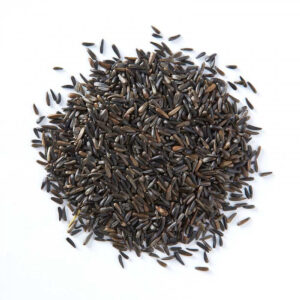
| Colour | Deep black hull — water immersion produces characteristic purple-red anthocyanin colour |
| Shelf Life | 18–24 months (sealed, cool, dark storage) |
| Packaging Options | 25kg, 50kg polypropylene bags; vacuum-sealed for powder and oil |
| Supply Capacity | 50–2,000+ MT per season |
| MOQ | Whole seed: 10 MT; Powder: 1 MT; Oil: 500kg; Paste: 500kg |
| Export Documentation | Phytosanitary Certificate (NAQS), Certificate of Origin, NEPC Export Licence, Purity and Moisture Certificate, Oil Content Certificate (Soxhlet), Adulteration Test Certificate (water immersion), Chinese Pharmacopoeia Parameter Certificate (TCM buyers), Anthocyanin Content Certificate (on request), Sesamin HPLC Certificate (on request), Aflatoxin Certificate, Pesticide Residue Certificate (EU MRL), FDA Sesame Allergen Declaration (US shipments), Microbiological Certificate, Commercial Invoice, Packing List, Bill of Lading |
| Payment Terms | T/T, Letter of Credit (LC at sight), Escrow |
| Loading Port | Lagos (Apapa / Tin Can Island Port), Nigeria |
| Incoterms Available | EXW, FOB Lagos, CNF, CIF |
Packaging and Export Process
Variety Sourcing and Colour Verification. Black sesame variety cultivation in Nigeria’s Sahel producing zones exists within the broader sesame farming system — with specific varieties producing the deep black hull pigmentation that commercial black sesame requires. Colour verification at farm gate level is the critical first step — separating true black sesame (deep black hull, characteristic purple-red water immersion test) from dark brown varieties (brown hull, minimal water colour change). Only confirmed black-variety material enters the black sesame supply chain.
Harvesting. Identical to brown sesame — cutting before pod shattering, bundling and stooking for dry-down, then threshing. Speed of processing is important because black sesame’s anthocyanin pigments are susceptible to degradation under prolonged high humidity — rapid drying to below 9% moisture preserves both hull integrity and anthocyanin concentration.
Cleaning and Sorting. Mechanical cleaning removes foreign matter, light seeds, and non-black sesame material. Colour sorting — either by optical sorter or careful manual inspection — removes brown and white sesame kernels that inevitably occur as admixture within black sesame cultivation lots. Target: minimum 95% true black seeds in the final export lot.
Adulteration Testing. Representative samples from each lot undergo water immersion testing — seeds immersed in water for 5 minutes observed for characteristic purple-red anthocyanin colour release. Artificial dye-adulterated sesame releases synthetic colour at a different rate and produces a colour character distinguishable from genuine anthocyanin. Results documented and included in the export certificate of analysis.
Processing Routes:
Whole seed: Cleaned, sorted, colour-verified black sesame packaged immediately in moisture-barrier sealed bags.
Powder: Dried whole black sesame milled through pin mills to fine powder — sealed immediately to prevent moisture absorption and anthocyanin oxidation.
Cold-pressed oil: Whole black sesame pressed at below 40°C through expeller presses — the dark, characteristically coloured oil collected, filtered, and sealed in amber containers.
Paste: Whole or lightly roasted black sesame ground through stone mills or colloid mills to smooth paste consistency.
Quality Testing. Moisture, purity, oil content, total ash, adulteration test, aflatoxin, pesticide residue — tested before export documentation. Anthocyanin quantification and sesamin HPLC coordinated on request.
Lead Times. Whole seed: 14–21 days. Powder: 21–28 days. Oil: 28–35 days. Paste: 21–35 days. Anthocyanin testing: add 7 days. Contact us to plan your supply schedule.
Frequently Asked Questions
Why is black sesame commercially distinct from brown sesame — and can brown sesame substitute for black sesame in Asian food applications?
Black and brown sesame are botanically the same species (Sesamum indicum) but commercially distinct products whose differences are irreducible in East Asian food culture contexts: (1) Anthocyanin content — black sesame’s hull contains cyanidin-based anthocyanins at 3–10mg per gram; brown sesame’s hull contains negligible anthocyanins. This creates measurably higher total antioxidant capacity in black sesame documented through NCBI food chemistry research. (2) Colour — black sesame’s deep black colour is the visual identity of Korean black sesame porridge, Japanese black sesame paste, and Taiwanese black sesame oil — all products whose consumer visual expectation is non-negotiable. Brown sesame produces brown-coloured porridge, paste, and oil — commercially unacceptable in applications where the black colour is the product’s identity. (3) TCM prescription specificity — the Chinese Pharmacopoeia specifically lists Hei Zhi Ma (black sesame) — not brown sesame — as the officinal drug substance. Substitution in TCM product manufacturing would violate the pharmacopoeia specification. For Western natural food applications (granola, bread topping, general sesame flavour) — brown sesame can often substitute. For Asian food manufacturing, TCM product manufacturing, and functional food anthocyanin applications — black sesame is non-substitutable. Contact us to specify your grade requirement.
What is the Chinese Pharmacopoeia specification for Hei Zhi Ma and how does Nigerian black sesame meet it?
The Chinese Pharmacopoeia 2020 edition specification for Hei Zhi Ma (black sesame) includes: Character: black, flat oval seeds 2.5–3mm long with network-patterned surface; Moisture: ≤9%; Total Ash: ≤5%; Acid-Insoluble Ash: ≤1%; Oil Content: ≥40% (ether extraction, Soxhlet method); Flavonoids: identification confirmed by TLC. Nigerian black sesame from Jigawa and Kano state producing zones achieves: moisture ≤7% (better than pharmacopoeia specification), total ash ≤4%, oil content 45–52% (above pharmacopoeia minimum). For TCM product manufacturers in China and international TCM pharmaceutical companies — Paradise MultiTrade provides Chinese Pharmacopoeia parameter documentation (moisture, ash, oil content, character description) as standard for TCM product manufacturing buyers. TLC identification can be coordinated on request through accredited phytochemistry laboratories. Contact us to discuss Chinese Pharmacopoeia compliance.
How is black sesame adulteration detected and why is adulteration testing commercially essential?
Black sesame’s premium pricing over brown and white sesame — typically 30–80% premium depending on market and procurement volume — creates significant economic incentive for adulteration: coating ordinary brown or white sesame with black food dye to sell as black sesame at black sesame pricing. Adulteration is commercially prevalent in markets where buyer quality management is weak — and has been documented in international trade by food safety authorities in South Korea, Japan, and the UK. Detection methods: (1) Water immersion test: genuine black sesame releases natural anthocyanin pigment producing characteristic purple-to-red colour (from cyanidin compounds) when immersed in water. Artificially dyed sesame releases synthetic black dye producing a characteristically different colour pattern (typically grey-black rather than purple-red). (2) Hull microscopy: genuine black sesame hull has characteristic cellular architecture visible under low magnification that artificial pigment coating does not replicate. (3) Anthocyanin HPLC: confirms authentic cyanidin-3-glucoside profile versus synthetic dye compound profile. Paradise MultiTrade performs water immersion adulteration testing on every export lot and provides the test result documentation as part of the standard certificate of analysis. For buyers whose quality management system requires additional verification — we coordinate HPLC anthocyanin profiling. Contact us to discuss adulteration testing.
What is the evidence for black sesame’s traditional use in hair health and does modern research support it?
The TCM prescription of black sesame for hair blackening — documented in the Shennong Bencao Jing (200 CE) and maintained through 2,000 years of classical Chinese medicine practice — connects to the modern pharmaceutical research through the anthocyanin-melanin synthesis pathway: hair colour is determined by melanin produced by melanocyte cells in hair follicles through the enzyme tyrosinase — the same enzyme whose activity anthocyanins have been documented to modulate in cell culture and animal model research accessible via NCBI’s dermatology and melanocyte biology database. Current evidence status: cell culture studies confirm cyanidin-3-glucoside’s stimulation of melanocyte tyrosinase activity; animal model studies document dietary anthocyanin effects on hair pigmentation in melanocyte-deficient models; human clinical trials specifically examining dietary black sesame’s effect on hair colour are limited. The evidence base supports biological plausibility rather than clinical proof for the specific hair-blackening application. For nutraceutical brands developing hair health supplement products incorporating black sesame — the traditional use documentation (2,000 years, official pharmacopoeia listing) combined with the mechanistic biological plausibility research provides a commercially substantiated foundation for traditional use claim positioning, while clinical health claim positioning requires further human trial evidence. Contact us to discuss black sesame for hair health product formulation.
What is black sesame oil and how does it differ from regular sesame oil?
Black sesame oil — cold-pressed from whole black sesame seeds — is a distinct premium product from conventional sesame oil (pressed from brown sesame) in three specific ways: (1) Colour: black sesame oil is characteristically dark — ranging from deep amber to near-black — from anthocyanin pigments and chlorophyll compounds that survive cold-pressing. Conventional sesame oil is pale yellow to amber. The deep colour is the primary visual quality indicator for authentic black sesame oil consumers. (2) Flavour: black sesame oil has a more intense, complex, slightly earthy flavour profile with the characteristic black sesame nuttiness that distinguishes it from the cleaner, lighter flavour of conventional sesame oil. (3) Antioxidant profile: black sesame oil contains both the sesamin-sesamolin lignan antioxidants of conventional sesame oil AND the anthocyanin antioxidants from the black hull — creating a broader multi-mechanism antioxidant system. The anthocyanin content of cold-pressed black sesame oil is lower than whole black sesame (anthocyanins are water-soluble and partially separate from the oil fraction during pressing) — but measurably present and detectable by UV-visible spectrophotometry. For buyers sourcing black sesame oil for TCM hair treatment, cosmetics formulation, or premium culinary applications — contact us to discuss oil specification and colour standard.
What is the Nigerian black sesame harvest season and how does supply availability work?
Nigerian black sesame harvest coincides with the broader sesame harvest season: October through December for the main Sahel producing zone — following the rainy season planting (June–July) and the post-rainy season maturation period. Black sesame variety plots within Nigerian farming systems are smaller than white and brown sesame plots — reflecting the specialty market positioning rather than the commodity scale of white sesame cultivation. As a result, black sesame supply volumes from Nigerian origin are more limited than white or brown sesame — reinforcing the importance of advance procurement planning for buyers who need consistent annual supply volumes. For buyers whose annual black sesame requirement exceeds 500 MT — advance booking by August–September (before harvest) is strongly recommended to ensure adequate variety-specific lot allocation from our producer network. For smaller volumes — harvest season stock is available from November through approximately June of the following year. Contact us to plan your procurement cycle.
What transit times should I expect from Nigeria?
Black sesame seed and black sesame products (standard dry container — no temperature control for whole seed and powder; amber glass or sealed containers for oil): UK (Tilbury, Felixstowe) — 14–18 days from Lagos. Netherlands (Rotterdam) — 14–18 days. Germany (Hamburg) — 14–20 days. China (Shanghai, Tianjin) — 28–35 days. South Korea (Busan) — 30–38 days. Japan (Yokohama) — 25–32 days. Taiwan (Kaohsiung, Keelung) — 28–35 days. USA (East Coast — New York, Baltimore) — 18–25 days. UAE (Jebel Ali) — 10–14 days. Canada (Halifax, Montreal) — 18–28 days. Packaging note: Black sesame powder is particularly hygroscopic and anthocyanin-sensitive — vacuum-sealed packaging with nitrogen flushing recommended for all powder shipments to preserve anthocyanin content through transit. Black sesame oil requires amber or opaque containers to prevent anthocyanin photo-degradation during transit. Contact us to plan your complete logistics programme.
Ready to Source Premium Nigerian Black Sesame Seed — Whole Natural, Cold-Pressed Oil, Powder, and Paste — With Adulteration Testing, Anthocyanin Content Documentation, Chinese Pharmacopoeia Parameter Compliance, EU Pesticide Residue Certification, and FDA Sesame Allergen Declaration for Asian Food Manufacturers, TCM Product Companies, Korean and Japanese Functional Food Brands, Cosmetics Formulators, and Global Wholesale Buyers?
If you are a Chinese TCM product manufacturer requiring Chinese Pharmacopoeia 2020 specification Hei Zhi Ma with moisture, ash, and oil content compliance documentation for patent medicine and granule formulation, a Korean functional food company whose heukimja-juk black sesame porridge product line needs documented-authentic, adulteration-tested black sesame from a supply-diversified non-Chinese origin with consistent annual supply capability, a Japanese food manufacturer sourcing black sesame for neri goma paste, wagashi confectionery, or premium black sesame product development whose exacting quality standards require documented purity and colour authenticity, a Taiwanese black sesame oil producer whose postpartum recovery oil cultural tradition requires authenticated black sesame with documented oil content and characteristic dark colour, a Western natural food or supplement brand building a black sesame anthocyanin superfood product line whose functional food positioning requires documented anthocyanin content and authentic black pigmentation verification, a cosmetics company developing hair health or anti-aging skin care formulations incorporating black sesame oil or extract whose traditional hair health credentials require authentic documented origin, or a global Asian food ingredient trader building Nigerian black sesame supply positions for Asian market distribution as China’s domestic black sesame supply increasingly falls short of TCM and functional food industry demand — Paradise MultiTrade International Limited is the licensed Nigerian exporter your black sesame supply programme needs.
We supply Nigerian Sesamum indicum black variety sesame — whole seed, cold-pressed oil, powder, and paste — from Jigawa, Kano, and Borno Sahel-zone producing communities, adulteration testing documented on every lot, anthocyanin quantification available for nutraceutical buyers, Chinese Pharmacopoeia parameters documented for TCM buyers, EU pesticide residue compliant, aflatoxin screened, FDA sesame allergen declared for US shipments, and exported with full documentation to buyers in every major regulated Asian and Western destination market.
Request a Quotation — share your required form (whole, oil, powder, or paste), purity specification, anthocyanin documentation requirement, Chinese Pharmacopoeia compliance need, volume, application (TCM product, Korean food, Japanese food, cosmetics, supplement, natural food), destination market, and preferred incoterms. We respond within 48 hours.
Contact Our Export Team — speak directly about adulteration testing protocol and documentation, anthocyanin pH differential analysis, Chinese Pharmacopoeia parameter compliance, Korean heukimja-juk grade specification, Japanese neri goma quality requirements, cold-pressed black sesame oil colour and antioxidant documentation, vacuum-sealed packaging for powder, and long-term supply programme structuring.
Explore Our Full Product Range — alongside black sesame, Paradise MultiTrade exports white sesame seed, brown sesame seed, sesame oil, groundnut oil, shea butter, moringa oil, soybeans, hibiscus flower, raw bush honey, cashew nut kernel, bitter kola, and raw cashew nuts. One licensed Nigerian exporter. One consolidated West African oilseed, botanical, and natural food sourcing relationship — from the most anthocyanin-rich sesame colour grade that 2,000 years of East Asian medicine has prescribed to the most commercially underexplored West African origin in the global black sesame trade.
Paradise MultiTrade International Limited | NEPC Export Licence No. 0042385 | CAC No. RC-9284647 | Lagos, Nigeria | www.paradisemultitrade.com

Reviews
There are no reviews yet.