


Nigerian Red Palm Oil: The World’s Most Nutritionally Dense Edible Oil — and Why Buyers Who Understand Beta-Carotene and Tocotrienols Are Coming Directly to the Source
Red Palm Oil Exporter Nigeria — Crude Unrefined Elaeis Guineensis, Direct Palm Belt Sourcing, Bulk Supply to Global Food, Pharmaceutical, and Cosmetics Buyers
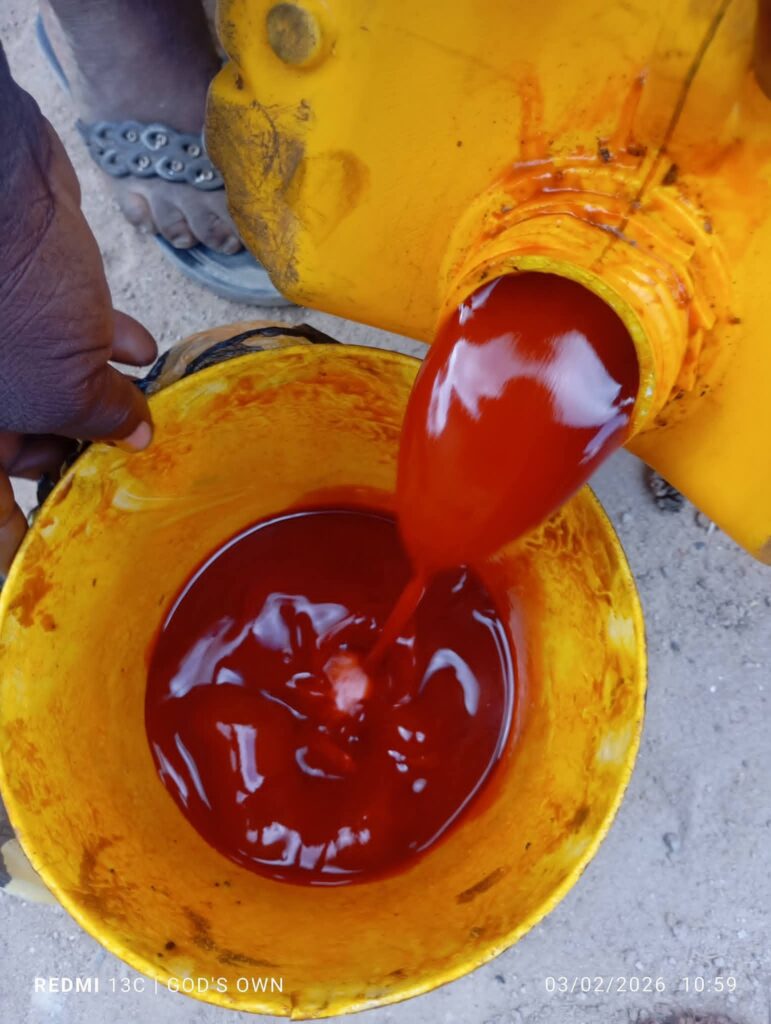
Red palm oil exporter Nigeria is a search phrase carrying layers of commercial meaning that no other edible oil procurement search quite replicates. The buyers running it are not looking for the commodity palm oil that dominates global vegetable oil trade — the refined, bleached, deodorised (RBD) product that flows in millions of tonnes through Rotterdam, Mumbai, and Karachi as an invisible industrial ingredient in biscuits, margarine, and soap. They are looking for something categorically different: crude, unrefined red palm oil — the naturally vivid orange-red oil pressed directly from the fresh fruit of Elaeis guineensis, retaining the full spectrum of carotenoid pigments, tocotrienols, tocopherols, and phytonutrients that make it one of the most nutritionally complex edible oils produced anywhere on earth.
Nigeria’s relationship with the oil palm is not commercial — it is civilisational. The oil palm (Elaeis guineensis) is native to the tropical rainforest belt of West and Central Africa, and Nigeria sits at the geographic and cultural heart of that native range. Long before the Malaysian palm oil industry existed, before Indonesian plantations were established, before red palm oil appeared on health food store shelves in California or Berlin — Nigerians were pressing, cooking with, trading, and building their agricultural economies around palm oil. Nigeria was once the world’s largest palm oil exporter. That position was eventually overtaken by Southeast Asian plantation agriculture, but the quality of Nigeria’s palm oil — specifically its crude, unrefined red palm oil from small-scale traditional processing operations in the southern forest belt states — has never been surpassed.
At Paradise MultiTrade International Limited, Nigerian red palm oil is one of our most strategically positioned export commodities — sourced from the traditional palm oil producing states of the Niger Delta and southeastern forest belt, processed to retain the natural red colour and full nutritional profile that industrial buyers, health food companies, pharmaceutical ingredient sourcing managers, and cosmetics formulators specifically require. If you are sourcing unrefined red palm oil for its beta-carotene content, its tocotrienol fraction, its traditional food application in West African cuisine, or its cosmetics and pharmaceutical ingredient value — this article makes the complete case for Nigerian origin and explains exactly how to access it through a licensed, compliant Nigerian exporter.
To move directly to pricing, request a quotation here and our export team will respond within 48 hours.

History and Origin of Red Palm Oil — The Oil That Built West Africa
A Tree So Valuable It Was Called the Tree of Life
Few agricultural plants have been as comprehensively intertwined with a region’s civilisation as Elaeis guineensis has been with West and Central Africa. Archaeological evidence from excavations in West Africa — including analysis of ancient food remains and pottery residues — places palm oil use in the region at least 5,000 years ago, with some evidence suggesting human consumption and exploitation of wild palm fruits extending considerably further into prehistory. The oil palm was not domesticated in the agricultural sense that cereals and legumes were — it was a forest tree that West African communities learned to harvest, manage, and eventually cultivate across the humid forest belt over millennia.
Among the Igbo of southeastern Nigeria — perhaps the world’s most historically significant palm oil-producing community — the oil palm was known as mkpuru nkwu (palm fruit) and its oil as mmanya nkwu, occupying a position of economic and cultural centrality comparable to olive oil in Mediterranean civilisation or coconut oil in Pacific island cultures. Palm oil was the cooking medium, the skin moisturiser, the lamp fuel, the ritual offering, the currency of trade, and the primary source of dietary fat for communities across the Niger Delta, the Cross River basin, and the southeastern forest states for thousands of years.
The Colonial Era — When Nigerian Palm Oil Conquered the World
The colonial encounter between European traders and West African palm oil transformed a regional commodity into one of the 19th century’s most globally significant agricultural trade products — with consequences that shaped both Nigeria’s economic development trajectory and the global vegetable oil industry’s structure in ways that persist to the present day.
European demand for West African palm oil began in earnest in the early 19th century, driven initially by the industrial revolution’s need for machinery lubricants, candle manufacturing inputs, and eventually soap production raw material as the personal hygiene movement swept Victorian Britain. Liverpool and Bristol merchants who had previously traded slaves — a trade legally abolished in the British Empire in 1807 — shifted their West African commercial infrastructure toward legitimate palm oil trade with extraordinary commercial energy. The Niger Delta trading city-states — Calabar, Bonny, Brass, and the Efik kingdom — became major export hubs. European merchants called the trade route the “Oil Rivers” — a name that survives today in Nigeria’s “Oil Rivers Protectorate,” one of the colonial administrative units from which modern Nigeria was eventually assembled.
By the 1850s, Britain was importing over 40,000 tonnes of Nigerian palm oil annually. By the 1880s and 1890s, palm oil had become Nigeria’s most valuable export commodity — generating more trade revenue than any other product in the colonial economy. As documented in historical trade records tracked by the Food and Agriculture Organization and historical commodity research published by institutions including the International Institute for Tropical Agriculture (IITA), Nigeria maintained its position as the world’s dominant palm oil exporter well into the mid-20th century — before the emergence of Malaysian and Indonesian plantation agriculture fundamentally restructured global supply dynamics.

The Southeast Asian Transformation and Nigeria’s Divergence
What happened to Nigeria’s palm oil sector between the 1960s and the 1990s is one of the most instructive case studies in agricultural commodity development economics. While Malaysia and Indonesia invested in large-scale monoculture oil palm plantations using hybrid high-yielding varieties, mechanical fresh fruit bunch processing mills, and industrial refining infrastructure — building the vertically integrated plantation-to-refinery-to-port supply chains that allowed them to dominate global palm oil trade — Nigeria’s palm oil sector remained predominantly smallholder-based, using traditional hand-processing methods that prioritised quality and nutritional integrity over industrial throughput and refined product standardisation.
The commercial consequence was that Nigeria lost its position in the global commodity palm oil market — unable to compete on volume or refined product consistency with Malaysian and Indonesian industrial producers. But the quality consequence was the opposite: Nigeria’s traditional processing methods, which involve gentler extraction temperatures and the absence of industrial refining, bleaching, and deodorisation steps that strip the oil of its carotenoid and tocotrienol content, preserved in Nigerian red palm oil precisely the nutritional characteristics that have since become the primary commercial value driver for unrefined red palm oil in the global health food, nutraceutical, and pharmaceutical markets.
Nigeria essentially preserved by accident what the industry is now paying a premium to access by design.
What Is Nigerian Red Palm Oil? The Chemistry Behind the Colour
Crude, Unrefined, and Irreplaceable
Nigerian red palm oil — as exported by Paradise MultiTrade — is crude unrefined palm oil: pressed mechanically from steamed fresh oil palm fruit (Elaeis guineensis) without the industrial refining, bleaching, and deodorisation processes that convert crude palm oil into the colourless, odourless RBD commodity that dominates global vegetable oil trade. The refining process removes the very compounds that make red palm oil commercially valuable in health food, pharmaceutical, and cosmetics markets — stripping out the carotenoids responsible for its vivid red-orange colour and the tocotrienol vitamin E fraction responsible for its most powerful antioxidant and neuroprotective properties.
Crude unrefined Nigerian red palm oil retains its full natural complement of:
Beta-carotene and mixed carotenoids — at concentrations of 500–700 ppm, making red palm oil the world’s richest natural food source of beta-carotene — approximately 15 times more concentrated than carrots and 30 times more concentrated than tomatoes. As documented in research accessible through the National Center for Biotechnology Information (NCBI), the carotenoid content of red palm oil is the primary driver of its pharmaceutical and nutraceutical value.
Tocotrienols and Tocopherols (Vitamin E complex) — red palm oil contains the world’s highest known natural concentration of tocotrienols — a form of vitamin E that is structurally and pharmacologically distinct from the tocopherol form found in most other vegetable oils and vitamin E supplements. Tocotrienols have attracted significant pharmaceutical research interest for their neuroprotective, cardioprotective, and anticancer properties — documented extensively through research published in the NCBI journal database and tracked commercially by the Palm Tocotrienol Research Foundation.
Coenzyme Q10 — the mitochondrial antioxidant relevant to cardiovascular health and cellular energy metabolism.
Squalene — a natural hydrocarbon with documented antioxidant and skin health properties.
Phytosterols — plant sterols with documented cholesterol-modulating properties.
Lycopene — the carotenoid antioxidant associated with cardiovascular health and cancer prevention.
This extraordinary phytonutrient complexity — concentrated in an oil that is simultaneously one of the most stable and heat-resistant edible fats available — is the foundation of red palm oil’s growing global commercial significance beyond its traditional role as a West African cooking oil.

Benefits and Industrial Uses of Nigerian Red Palm Oil
Food Industry — The Traditional Heart of Global Palm Oil Demand
In West Africa, red palm oil is not an ingredient — it is the cooking medium around which entire cuisines are constructed. Egusi soup, banga soup, ofe onugbu, palmnut soup, jollof rice, stew bases, and hundreds of other dishes across Nigerian, Ghanaian, Cameroonian, and broader West African culinary traditions depend on red palm oil for their characteristic colour, flavour, and body. The West African diaspora communities across the United Kingdom, United States, Canada, France, Italy, and the Netherlands recreate these dishes at home and in restaurants — creating consistent, year-round retail demand for genuine Nigerian origin red palm oil in diaspora food import markets.
Beyond the diaspora market, red palm oil is used extensively in African food manufacturing — in commercially produced stews, soups, seasonings, and processed foods sold across West Africa’s growing urban food markets. For food manufacturers seeking to authentically position products for West African diaspora consumers, Nigerian-origin crude red palm oil is not a generic vegetable oil choice — it is a specific, origin-marked ingredient whose provenance carries brand value.
The food industry’s growing interest in natural, minimally processed ingredients — tracked through consumer trend analysis published by Mintel’s global food and drink database and Innova Market Insights — is also driving mainstream food manufacturers in Europe and North America to evaluate unrefined red palm oil as a natural colourant and flavour contributor in premium food product formulations.
For food manufacturers seeking competitive pricing on bulk Nigerian red palm oil for food production applications, contact our export team to discuss supply arrangements.
Pharmaceutical Industry — Beta-Carotene and Tocotrienols as Active Compounds
This is arguably red palm oil’s most commercially significant and highest-value application sector in the international market beyond traditional food use. The pharmacological properties of red palm oil’s active fractions — particularly the tocotrienol vitamin E complex and the carotenoid fraction — have attracted serious clinical research attention from pharmaceutical companies investigating natural compounds for cardiovascular protection, neuroprotection, cancer prevention, and micronutrient deficiency treatment.
The World Health Organization (WHO) has formally recognised red palm oil’s role in addressing vitamin A deficiency — one of the most widespread and clinically serious micronutrient deficiencies affecting populations across Sub-Saharan Africa, South Asia, and Southeast Asia. Red palm oil’s extraordinary beta-carotene concentration makes it an effective and food-based vitamin A supplementation vehicle — and WHO, UNICEF, and national public health programmes in multiple developing countries have incorporated red palm oil into micronutrient supplementation strategies.
Pharmaceutical ingredient companies sourcing carotenoid and tocotrienol fractions for standardised supplement and pharmaceutical active production are active buyers of crude red palm oil as an extraction raw material. Tocotrienol standardised extracts produced from red palm oil are used in cardiovascular health pharmaceutical formulations — with clinical evidence available through the NCBI database and tracked commercially by the American Palm Oil Council (APOC).

For pharmaceutical-grade red palm oil sourcing discussions, including free fatty acid specifications, carotenoid content documentation, and analytical testing coordination, contact Paradise MultiTrade directly.
Nutraceutical and Dietary Supplement Industry
The global dietary supplement market’s embrace of red palm oil as a premium nutraceutical ingredient has been one of the most commercially significant demand developments for crude unrefined palm oil in the past decade. Red palm oil supplement products — marketed on the strength of their tocotrienol vitamin E content, beta-carotene concentration, and broad phytonutrient profile — are sold through health food retail across North America, Europe, Australia, and increasingly Asia in capsule, soft gel, and bottled liquid forms.
Market demand analysis and growth projections for the red palm oil supplement segment are tracked by industry research organisations including Grand View Research and Mordor Intelligence — both of which project sustained double-digit market growth driven by expanding consumer awareness of tocotrienols’ health benefits and the clean-label supplement market’s preference for whole food-derived ingredients over synthetic vitamin E supplements.
The Palm Tocotrienol Research Foundation — a research consortium tracking clinical evidence on tocotrienol health applications — has produced extensive documentation on the specific advantages of tocotrienol over tocopherol vitamin E forms in cardiovascular and neuroprotective applications, evidence that has directly driven nutraceutical procurement interest in red palm oil as the world’s best natural tocotrienol source.
Cosmetics and Personal Care Industry
Red palm oil’s combination of beta-carotene antioxidants, tocotrienol vitamin E, natural squalene, and saturated fatty acid structure makes it a premium active ingredient and carrier oil for cosmetics and personal care formulation. Its applications span:
Skin moisturisation and barrier function — red palm oil’s saturated fat composition (approximately 50% palmitic acid, 40% oleic acid) gives it excellent emollient and occlusive properties for dry skin formulations.
Anti-aging skincare — the tocotrienol and carotenoid antioxidant content provides documented free radical scavenging activity that protects skin tissue from oxidative damage — the primary mechanism of photoaging and environmental skin damage. Cosmetic science research accessible through the Cosmetic Ingredient Review (CIR) and ingredient documentation through INCI nomenclature supports palm oil’s established position as a cosmetics carrier and active ingredient.
Natural hair care — red palm oil’s vitamin E content, combined with its ability to penetrate the hair shaft as a fatty acid-rich conditioning agent, has made it an increasingly popular ingredient in natural hair care products — particularly in the Afro-textured hair care segment where the “natural hair movement” has driven strong consumer interest in traditional West African beauty ingredients.
Lip care and colour cosmetics — red palm oil’s natural orange-red pigmentation from carotenoids makes it a functional natural colorant in lip care and colour cosmetic formulations — providing both moisturisation and a natural warm tone without synthetic dyes.
European and Asian cosmetic ingredient suppliers and contract manufacturers sourcing red palm oil for cosmetic applications should reference sustainability and traceability standards published by the Roundtable on Sustainable Palm Oil (RSPO) — the international certification body for sustainable palm oil supply chains. Paradise MultiTrade is committed to engaging with sustainability certification as our supply base develops.
Traditional Medicine and Herbal Products
Across West Africa and in diaspora communities globally, red palm oil occupies a significant position in traditional medicine practice beyond its culinary role. Its use in traditional treatment of vitamin A deficiency conditions — night blindness, dry skin, immune weakness — is rooted in millennia of empirically observed association between palm oil consumption and health maintenance. It is used topically for wound healing, skin condition management, and as a vehicle for herbal medicine preparations. Herbal product companies and traditional medicine wholesalers sourcing authentic Nigerian origin red palm oil for traditional medicine product lines are a consistent demand stream in the UK, USA, and continental European diaspora market.
Industrial and Oleochemical Applications
Beyond food and pharmaceutical applications, crude palm oil — including the red unrefined form — serves as a raw material for oleochemical manufacturing: the production of fatty acids, fatty alcohols, glycerol, and surfactants used in soap, detergent, lubricant, and industrial chemical production. Nigeria’s Nigerian Institute for Oil Palm Research (NIFOR) — the national research institution dedicated to oil palm agronomy, processing, and industrial utilisation — has documented the oleochemical applications of Nigerian palm oil extensively in its published research outputs, providing the technical framework for industrial buyers evaluating Nigerian crude palm oil as an oleochemical feedstock.

Why Buy Red Palm Oil from Nigeria?
The Origin That Created the Product
There is no other edible oil in the world where origin carries the weight that it carries for red palm oil. Elaeis guineensis is native to Nigeria’s forest belt. The traditional processing methods that preserve the nutritional integrity of Nigerian red palm oil have been refined over thousands of years by farming communities in Imo, Akwa Ibom, Cross River, Rivers, Delta, Edo, and Anambra states. No Malaysian plantation, no Indonesian refinery, and no laboratory can replicate the combination of traditional variety genetics, forest-edge growing conditions, and gentle small-scale processing that produces the deep red, nutrient-dense Nigerian crude palm oil that serious international buyers are increasingly recognising as categorically superior to plantation-derived material for specific end applications.
Beta-Carotene Concentration That Outperforms Every Alternative
For pharmaceutical and nutraceutical buyers sourcing crude red palm oil as a beta-carotene extraction raw material, the concentration comparison against alternative natural sources is unambiguous. Nigerian red palm oil from traditional processing operations delivers beta-carotene concentrations of 500–700 ppm — a level that makes it the most concentrated commercially accessible natural beta-carotene source in liquid oil form. Carrot oil, tomato extract, sea buckthorn oil — none approach the carotenoid density of crude Nigerian red palm oil. For extraction companies producing natural beta-carotene for food colourant, pharmaceutical supplement, or vitamin A fortification applications, this concentration differential translates directly into extraction economics: more active compound per litre of raw material processed. Market intelligence on natural carotenoid sourcing and pricing is tracked through Tridge’s palm oil commodity intelligence platform.
Traditional Processing — The Method That Preserves Nutritional Value
The single most important quality differentiator between Nigerian traditional-process red palm oil and plantation-origin crude palm oil is processing temperature and method. Industrial plantation processing mills use high-temperature sterilisation of fresh fruit bunches — necessary at industrial scale to deactivate lipases and prevent free fatty acid development in large fruit masses — followed by high-pressure mechanical pressing. These high temperatures, combined with the large volume of fruit processed simultaneously, begin degrading the heat-sensitive carotenoid and tocotrienol content of the oil before it has even left the pressing chamber.
Traditional Nigerian processing — steaming smaller quantities of fruit at lower temperatures, using wooden or mild-steel mechanical presses, and settling the pressed crude oil through natural gravity separation rather than industrial centrifugation — preserves the carotenoid and tocotrienol fraction at significantly higher levels than industrial processing. This is a measurable, analytically verifiable quality difference — not a marketing narrative. Buyers who commission comparative laboratory analysis between Nigerian traditional-process crude red palm oil and plantation-origin crude oil consistently confirm the carotenoid and tocotrienol advantage of the Nigerian material.
Supply Chain Transparency in a Market Under Sustainability Scrutiny
The global palm oil industry is under more intense sustainability scrutiny than virtually any other agricultural commodity sector — driven by the well-documented deforestation, biodiversity loss, and smallholder rights violations associated with large-scale oil palm plantation expansion in Southeast Asia. The Roundtable on Sustainable Palm Oil (RSPO) certification system, the Palm Oil Innovation Group (POIG) standards framework, and buyer commitments to deforestation-free supply chains embedded in procurement policies at major European and American food companies have created a complex and demanding sustainability compliance landscape for palm oil buyers.

Nigerian small-scale traditional palm oil production — based on harvesting from native and semi-wild oil palm populations within existing farmland and forest-edge environments rather than forest-clearing plantation establishment — offers a fundamentally different and more defensible deforestation story than Southeast Asian plantation origin material. Nigerian traditional palm oil does not come with the deforestation footprint that has made Malaysian and Indonesian origin material so difficult to source sustainably at scale. For buyers whose procurement policies require deforestation-free supply chains and transparent smallholder sourcing, Nigerian origin offers structural advantages worth evaluating seriously — supported by the sustainability framework guidance published by the International Finance Corporation (IFC).
Complete Export Documentation from a Licensed Exporter
Every red palm oil shipment processed through Paradise MultiTrade carries phytosanitary certification from the Nigerian Agricultural Quarantine Service (NAQS), NEPC export documentation, certificate of origin, commercial invoice, packing list, and bill of lading. For pharmaceutical and nutraceutical buyers requiring carotenoid content analysis, tocotrienol fraction documentation, free fatty acid measurement, peroxide value testing, and heavy metal screening — we coordinate third-party laboratory analysis through accredited facilities. EU-bound shipments are prepared in compliance with Regulation (EU) 2017/625 on official controls for food and agri-commodity imports and in reference to EFSA’s published assessments on palm oil contaminants — specifically addressing process contaminants including 3-MCPD and glycidyl esters that are relevant for EU market compliance. Our NEPC Export Licence No. 0042385 and CAC Registration No. RC-9284647 are current and verifiable through NEPC.

Nigeria’s Red Palm Oil Export Strength and Global Market Demand
The Scale of Global Palm Oil Demand
Palm oil is the world’s most consumed vegetable oil by volume — a fact that reflects both its extraordinary versatility across food, industrial, and cosmetics applications and its unmatched yield efficiency per hectare of cultivated land. Global palm oil production and trade data tracked by the United States Department of Agriculture (USDA) Foreign Agricultural Service and the Malaysian Palm Oil Board (MPOB) — the world’s most comprehensive palm oil industry data source — place total global palm oil production at approximately 75–80 million metric tonnes annually. The unrefined red palm oil segment — the premium nutritional fraction of this broader market — is smaller by volume but significantly higher in value per tonne, and growing at a faster rate than the overall palm oil market.
Market sizing and growth trajectory analysis published by Grand View Research values the global red palm oil market at several hundred million USD and projects sustained compound annual growth driven by expanding pharmaceutical, nutraceutical, and natural cosmetics industry demand — particularly in North America, Europe, and East Asia where consumer and industrial buyer interest in natural, minimally processed botanical ingredients continues to strengthen.

The Markets Defining Nigerian Red Palm Oil Export Opportunity
The United Kingdom is Nigeria’s most commercially significant European market for red palm oil — driven by the UK’s large and commercially active West African diaspora community (the largest outside Africa itself), ethnic food retail infrastructure spanning major cities including London, Birmingham, Manchester, and Leeds, and a growing mainstream natural food market that has begun incorporating red palm oil into premium health food product lines.
The United States hosts the world’s largest Nigerian diaspora community outside Africa — concentrated in metropolitan areas including Houston, Atlanta, New York, Washington DC, and Dallas — generating consistent retail demand for authentic Nigerian-origin red palm oil through ethnic grocery retail, online food retail, and African restaurant supply chains. The American natural and health food market’s discovery of red palm oil as a premium supplement ingredient has added a significant non-diaspora demand stream, with health food retailers, supplement brands, and natural food manufacturers sourcing Nigerian origin material. Import market data is trackable through USDA Foreign Agricultural Service reports.
Germany and the Netherlands are the EU’s primary entry points for Nigerian red palm oil destined for European food manufacturing, pharmaceutical ingredient processing, and diaspora community distribution. German pharmaceutical ingredient companies and Dutch food commodity traders are among the most sophisticated buyers of quality crude red palm oil in the European market — applying stringent quality specifications and documentation requirements that Nigerian licensed exporters with proper analytical support can meet.
Canada, France, Italy, and Belgium all host significant West African diaspora communities with active ethnic food import markets consuming Nigerian red palm oil through diaspora grocery retail channels.
India and China represent growing non-traditional markets for Nigerian red palm oil — driven by pharmaceutical and nutraceutical ingredient sourcing interest in the carotenoid and tocotrienol fractions, and by the natural cosmetics industry’s increasing demand for traditionally processed West African botanical oils. Trade flow data for these markets is tracked through ITC Trade Map.
NIFOR — Nigeria’s Palm Oil Research Authority
The Nigerian Institute for Oil Palm Research (NIFOR) — established in 1939 and headquartered in Benin City, Edo State — is one of the world’s longest-established oil palm research institutions, conducting agronomy research, variety improvement programmes, and processing technology development specifically for the Nigerian palm oil sector. NIFOR’s published research outputs provide internationally credible scientific documentation on Nigerian palm oil quality parameters, processing methods, and nutritional composition — reference material that international buyers can use to benchmark Nigerian origin material against competing sources with scientific confidence.

Why Choose Paradise MultiTrade International Limited?
Traditional Processing Origin Specificity. Our Nigerian red palm oil is sourced specifically from small-scale traditional processing operations in the southern forest belt states — Imo, Akwa Ibom, Cross River, Rivers, Delta, and Edo — where the combination of native Elaeis guineensis genetic material and traditional gentle-temperature processing preserves the carotenoid and tocotrienol content that makes Nigerian red palm oil commercially superior for pharmaceutical and nutraceutical applications.
Analytical Credibility. We coordinate carotenoid content analysis, tocotrienol fraction documentation, free fatty acid measurement, peroxide value testing, and moisture analysis through accredited third-party laboratories — providing buyers with the analytical documentation they need to specify Nigerian red palm oil accurately in their ingredient and product formulations. Contact our team to discuss analytical package requirements.
EU Contaminant Compliance Support. We are aware of and actively manage the 3-MCPD and glycidyl ester contaminant issues documented by EFSA for palm oil in heated food applications — coordinating testing on export lots for EU-bound shipments where these parameters are relevant to buyer import compliance. This is a technical area where many Nigerian palm oil exporters provide no support — we engage with it directly.
Flexible Packaging for Multiple Market Segments. Nigerian red palm oil is supplied in a range of packaging configurations appropriate for different buyer types — from bulk flexi-tanks and IBC totes for food manufacturing and pharmaceutical extraction buyers, to drums for wholesale distributor customers, to retail-ready consumer packaging for diaspora food importers. Contact our export team to discuss packaging appropriate to your end application.
Multi-Commodity West African Sourcing. Buyers sourcing Nigerian red palm oil frequently have parallel requirements for sesame seeds, hibiscus flower, turmeric, bitter kola, fresh ginger, dry split ginger, kola nut, or cashew products. Explore our full range of Nigerian export commodities and consolidate your West African botanical and agricultural sourcing through one verified, licensed export partner.

Product Specifications
| Specification | Details |
|---|---|
| Product | Crude Unrefined Red Palm Oil (Elaeis guineensis) |
| Origin | Nigeria (Imo, Akwa Ibom, Cross River, Rivers, Delta, Edo, Anambra States) |
| Processing Method | Traditional small-scale mechanical pressing; unrefined, unbleached, undeodorised |
| Colour | Deep red-orange (characteristic of high carotenoid content) |
| Beta-Carotene Content | 500–700 ppm (lot-specific analysis available) |
| Tocotrienol Content | High (specific values per lot analysis on request) |
| Free Fatty Acid (FFA) | ≤5% as palmitic acid (food grade); specification discussed per buyer application |
| Moisture and Impurities | ≤0.5% |
| Peroxide Value | ≤10 meq/kg (fresh season material) |
| Iodine Value | 50–55 g I₂/100g |
| Saponification Value | 190–205 mg KOH/g |
| Packaging Options | 25L jerricans, 200L steel drums, 1,000L IBC totes, flexi-tanks (bulk); retail packaging on request |
| Supply Capacity | 20–500+ MT per shipment (subject to seasonal availability) |
| MOQ | 5 Metric Tonnes |
| Shelf Life | 12–18 months properly stored (cool, dark, sealed containers) |
| Export Documentation | Phytosanitary Certificate (NAQS), Certificate of Origin, NEPC Export Licence, Laboratory Analysis Certificate (on request), Commercial Invoice, Packing List, Bill of Lading |
| Payment Terms | T/T, Letter of Credit (LC at sight), Escrow |
| Loading Port | Lagos (Apapa / Tin Can Island Port), Nigeria |
| Incoterms Available | EXW, FOB Lagos, CNF, CIF |

Packaging and Export Process
Fresh Fruit Bunch Harvesting. Oil palm fresh fruit bunches (FFB) are harvested manually using long-handled chisels or harvesting knives from trees in the traditional palm groves of Nigeria’s southern forest states. Timely harvesting — collecting bunches as individual fruits begin to detach naturally — is critical for quality: over-ripe fruit has elevated free fatty acid content from activated lipases, while under-ripe fruit delivers lower oil yield and paler colour.
Steaming and Stripping. Harvested FFB are steamed in large drums or pots at temperatures sufficient to deactivate lipases and soften the fruit pericarp for oil release — but at lower temperatures and shorter durations than industrial plantation processing, which preserves the carotenoid and tocotrienol fractions that industrial high-temperature sterilisation degrades. Steamed fruits are stripped from the bunch manually or using small mechanical threshers.
Pressing and Separation. Stripped fruit is pressed — using traditional wooden or mild-steel mechanical screw presses — to release the crude oil-water emulsion. The pressed liquor is collected and heated gently to separate the oil phase from the water and fibre. This gravity separation step — slower and gentler than industrial centrifugation — preserves the oil’s colour and phytonutrient content at maximum concentration.
Settling and Clarification. The separated crude oil is allowed to settle naturally in settling tanks, allowing residual water and fine fibre particles to separate from the oil phase. This natural settling — without chemical clarification agents or industrial centrifuges — maintains the oil’s full phytonutrient profile while achieving the clarity and moisture reduction required for safe storage and shipping.
Quality Testing. Settled crude oil is sampled for free fatty acid content, moisture and impurities, peroxide value, and colour intensity before packing confirmation. For pharmaceutical and nutraceutical buyers, samples are submitted to accredited laboratories for carotenoid content quantification and tocotrienol fraction analysis following validated methods referenced in AOAC International analytical standards.
Packaging and Loading. Crude red palm oil is packed into 25L jerricans, 200L steel drums, or 1,000L IBC totes depending on buyer specification and volume. Containers are filled leaving appropriate headspace, sealed, and clearly labelled with product name, origin, lot number, net weight, FFA percentage, and export documentation reference. Pre-export phytosanitary inspection by NAQS is conducted before container sealing.
Lead Times. From order confirmation to container loading typically runs 14–21 days. Red palm oil is a year-round supply commodity — not strictly seasonal — though peak fresh-oil availability follows the primary fruit harvest seasons: April to June and October to January across most producing states. Contact us to discuss current availability and lead time for your specific volume requirement.

Frequently Asked Questions
What is the difference between Nigerian red palm oil and refined palm oil?
They are fundamentally different products serving different commercial purposes. Nigerian crude unrefined red palm oil retains its natural carotenoid pigments (500–700 ppm beta-carotene), tocotrienol vitamin E complex, phytosterols, squalene, and other phytonutrients — giving it its characteristic deep red-orange colour, distinctive aroma, and high nutritional value. Refined, bleached, and deodorised (RBD) palm oil — the global commodity that dominates world vegetable oil trade — has had these compounds removed through industrial processing, leaving a colourless, odourless fat used as an undifferentiated food manufacturing ingredient. For pharmaceutical, nutraceutical, health food, and traditional food applications, crude unrefined Nigerian red palm oil is the only commercially relevant form. For industrial fat applications where neutrality of colour and odour is required, RBD is the appropriate product.
What beta-carotene content can I expect from Nigerian red palm oil?
Nigerian traditional-process crude red palm oil typically delivers beta-carotene concentrations of 500–700 ppm by weight — making it the most concentrated commercially accessible natural food source of beta-carotene. Specific lot carotenoid content analysis is available through accredited third-party laboratories for buyers requiring documented values for pharmaceutical, nutraceutical, or food ingredient specification compliance. Contact us to arrange sample and analysis.
What free fatty acid level should I specify for my application?
Free fatty acid (FFA) content in crude palm oil increases with time after fruit harvesting due to lipase enzyme activity — making timely processing the most important quality management variable. For food applications, FFA ≤5% is generally acceptable. For pharmaceutical extraction and nutraceutical applications, FFA ≤3% is preferred. For cosmetics formulation, FFA ≤5% is typically acceptable. We discuss FFA specification at the quotation stage and source accordingly. Contact our team.
Is Nigerian red palm oil sustainably produced?
Nigerian traditional palm oil production — based on harvesting from native and semi-wild Elaeis guineensis populations within existing farmland and forest-edge environments — does not involve forest clearing or plantation establishment in the way that Malaysian and Indonesian industrial production does. This gives Nigerian traditional palm oil a fundamentally different and more defensible sustainability profile than Southeast Asian plantation origin material. Paradise MultiTrade is committed to engaging with sustainability documentation requirements and recommends buyers reference the RSPO and POIG frameworks as the international sustainability standards relevant to palm oil procurement policy.

What are the EU import compliance requirements for Nigerian red palm oil?
EU buyers should be aware of EFSA’s published findings on palm oil process contaminants — specifically 3-MCPD esters and glycidyl fatty acid esters — which are relevant to crude palm oil used in food applications involving heat processing. We coordinate testing for these contaminants on EU-bound shipments where they are relevant to the buyer’s import compliance obligations. All EU shipments comply with Regulation (EU) 2017/625. Contact us for detailed EU compliance documentation support.
What packaging configurations are available for red palm oil?
We supply Nigerian red palm oil in 25L jerricans (suitable for diaspora retail and small-scale food service buyers), 200L steel drums (for wholesale distributors and mid-scale food manufacturers), 1,000L IBC totes (for larger food manufacturing and pharmaceutical extraction operations), and flexi-tanks for full-container bulk liquid shipment (for high-volume industrial buyers). Retail consumer packaging — smaller bottles or sachets — is available for diaspora food retail importers requiring pre-packed consumer product. Contact our team to discuss packaging appropriate to your operation.
What transit times should I expect from Nigeria?
Europe (Rotterdam, Hamburg, Felixstowe, Antwerp) — approximately 14–20 days from Lagos. UAE (Jebel Ali) — 10–14 days. USA (East Coast) — 18–25 days. Canada (Halifax, Montreal) — 18–28 days. India (Nhava Sheva) — 10–15 days. China (Shanghai, Guangzhou) — 22–28 days.
Ready to Source Premium Crude Unrefined Red Palm Oil from Nigeria?
If you are a pharmaceutical ingredient buyer, nutraceutical manufacturer, natural food company, cosmetics formulator, diaspora food importer, or wholesale commodity trader actively searching for a reliable red palm oil exporter in Nigeria who can supply genuine crude unrefined red palm oil with documented carotenoid and tocotrienol content, full regulatory compliance, and the sourcing transparency that serious procurement requires — Paradise MultiTrade International Limited is the partner your supply chain needs.
We supply traditionally processed Nigerian crude red palm oil from the southern forest belt states — packed in configurations suitable for your operation, analytically tested on request, and exported with full phytosanitary and commercial documentation to buyers in every major regulated destination market.
Request a Quotation — share your required volume, packaging specification, FFA tolerance, carotenoid testing requirements, destination port, and preferred incoterms. We respond with a detailed, competitive quote within 48 hours.
Contact Our Export Team — speak directly with our export coordinators about carotenoid and tocotrienol analysis, packaging options, EU contaminant compliance, sustainability documentation, and long-term contract supply arrangements.
Explore Our Full Product Range — alongside red palm oil, Paradise MultiTrade exports turmeric, cloves, dry split ginger, fresh ginger, hibiscus flower, sesame seeds, bitter kola, kola nut, cashew nut kernel, and raw cashew nuts. One licensed Nigerian exporter. One consolidated West African sourcing relationship. Consistent quality and documentation across every commodity.
buy Nigerian red palm oil, crude palm oil Nigeria supplier, unrefined red palm oil bulk export, Elaeis guineensis Nigeria wholesale, Nigerian palm oil for food industry, red palm oil high beta-carotene Nigeria, Nigerian palm oil importer wholesale, West African red palm oil bulk buyer
Paradise MultiTrade International Limited | NEPC Export Licence No. 0042385 | CAC No. RC-9284647 | Lagos, Nigeria | www.paradisemultitrade.com

Reviews
There are no reviews yet.