
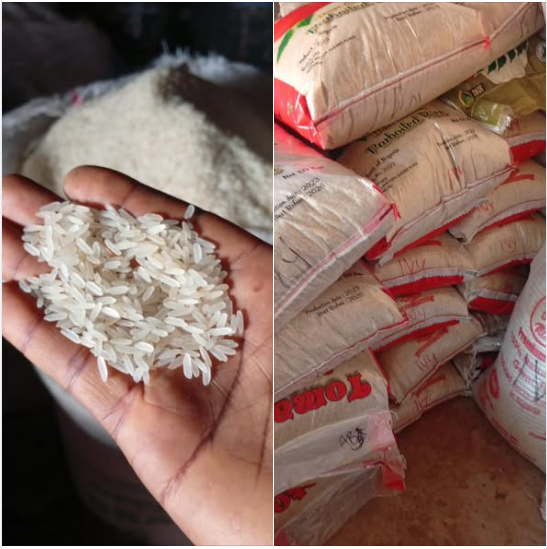

Nigerian Local Rice: The Cereal Crop Whose Dramatic Production Transformation — Triggered by a Single Import Restriction Policy Decision That Redirected USD 2 Billion in Annual Import Spending Toward Domestic Production Investment — Has Created West Africa’s Most Significant New Agricultural Export Opportunity in a Generation
Nigerian Rice Exporter — Parboiled Long Grain Rice, Local Variety Milled Rice, Premium Nigerian Rice, Parboiled Rice in Polished and Semi-Polished Grades, Broken Rice, and Rice Bran, Direct Northern and Middle Belt Sourcing, Bulk Supply to Food Manufacturing Companies, West African Diaspora Food Retailers, Institutional Catering Operations, Commodity Wholesale Buyers, and Global Food Industry Procurement Teams Worldwide
Nigerian rice exporter is a search phrase whose commercial context is defined by one of the most dramatic agricultural policy transformations in sub-Saharan African economic history — a transformation whose commercial consequences for international buyers are still unfolding and whose first-mover supply positioning opportunity is precisely the commercial argument that this article is written to make.
In 2015, Nigeria’s Central Bank of Nigeria (CBN) implemented a landmark foreign exchange restriction policy that effectively blocked access to official CBN foreign exchange for rice imports — creating an import cost increase whose commercial consequence was to make imported rice from Thailand, India, Vietnam, and Brazil significantly more expensive in Nigerian domestic markets overnight. Combined with concurrent investments in domestic rice production infrastructure through the Anchor Borrowers’ Programme — whose direct farmer credit, improved seed, and agronomy support package reached millions of smallholder rice farmers across Kebbi, Sokoto, Niger, Benue, Ebonyi, Cross River, Ekiti, and Kano states — the policy created the most concentrated package of agricultural production incentives that Nigerian rice farming had ever received.
The commercial result documented through FAO production statistics and the Nigerian National Bureau of Statistics: Nigerian paddy rice production grew from approximately 4.6 million metric tonnes in 2015 to over 8 million metric tonnes by 2022 — a 74% production increase in under a decade. The milled rice equivalent — approximately 5.5 million metric tonnes by 2022 — represents a production scale whose quality-documented, food-safety-certified surplus export potential is the commercial subject of this article.
The historical context that frames this production growth: Nigeria was, until 2015, the world’s second-largest rice importer by value (after China in some years) — spending approximately USD 2.0–2.4 billion annually on rice imports from Asian origins. The political economy of this import dependency — whose foreign exchange cost made Nigerian rice imports a macro-economic concern at Central Bank level — created the policy pressure whose 2015 expression triggered the production transformation. The commercial consequence for international buyers: the Nigerian domestic rice market, whose 215+ million consumers each consume approximately 33kg of rice per year (creating a 7 million tonne annual consumption market), is large enough that even modest export surplus from production that exceeds this consumption creates commercially significant exportable volumes whose formal development is precisely what Paradise MultiTrade’s rice export programme addresses.
Nigerian local rice varieties — the non-premium, domestically consumed parboiled and milled rice whose varieties include FARO series (FARO 44, FARO 52, FARO 57, FARO 60, and related releases from the National Cereals Research Institute (NCRI) at Badeggi), Sipi, Jamila, Arroz, and the traditional heritage varieties cultivated in specific ecological niches across Nigeria’s diverse rice production geographies — create the commercial product range whose quality documentation, moisture management, and food safety certification enables formal international export.
At Paradise MultiTrade International Limited, rice is a strategically significant commodity export programme — sourced from established paddy rice farming communities and domestic processing mills across Nigeria’s primary production states, processed to milled and parboiled specifications appropriate to food manufacturing, diaspora retail, and commodity wholesale buyer requirements, and exported with full food safety, quality, and regulatory documentation.
To discuss sourcing immediately, request a quotation here and our export team responds within 48 hours.
History and Origin — From Colonial-Era Import Dependency to Production Transformation
Oryza Sativa in Nigeria — The Incomplete Agricultural Revolution
Oryza sativa L. — Asian rice — was introduced to West Africa through Portuguese maritime trade from the 16th century, complementing the indigenous West African rice species Oryza glaberrima (African rice) whose cultivation across the Upper Guinea Coast from Senegal to Sierra Leone predates Asian rice introduction by approximately 3,000 years. In Nigeria — where O. glaberrima cultivation is geographically limited to specific river floodplain ecosystems — O. sativa became the dominant commercial rice species through colonial-era agricultural development whose irrigation and mechanisation investments concentrated production in the Benue-Niger confluence floodplains, the Sokoto-Rima river system (creating the Kebbi and Sokoto state production concentrations whose modern Anchor Borrowers’ Programme investment has made them Nigeria’s dominant rice producing states), and the Anambra-Imo floodplain systems of southeastern Nigeria.
The colonial and early post-independence agricultural policy framework — whose subsidised imported rice created the structural disincentive for domestic rice investment that economists documented as a pervasive agricultural market failure — created the import dependency whose 2015 reversal through import restriction created the investment environment that production growth required.
The Anchor Borrowers’ Programme (ABP) — launched by the CBN under Governor Godwin Emefiele — whose direct credit provision to smallholder rice farmers through participating banks and agricultural development companies created the capital access whose previous absence was the primary constraint on smallholder rice yield improvement — is the single policy instrument whose commercial legacy is the production volume whose export development this article documents. ABP’s specific commercial impact: documented in CBN agricultural finance reports as reaching over 4 million smallholder farmers across 23 crop categories — with rice as the largest programme component — providing access to NCRI-certified improved seed varieties, fertiliser credit, and post-harvest equipment financing.
What Is Nigerian Local Rice? The Variety Landscape, Processing Profile, and Commercial Grade Structure
Oryza Sativa — The Grain Architecture and Nigerian Production Geography
Oryza sativa is a member of the Poaceae family — the same grass family as maize, wheat, and sorghum — whose cultivation as a semi-aquatic annual crop in flooded (paddy) or upland (dryland) conditions creates the agronomic system that Nigerian rice production employs across three primary production ecologies:
Fadama (floodplain) production — the most productive ecosystem, using seasonal river flooding in Kebbi, Sokoto, Niger, and Benue states to provide natural irrigation for high-yielding long-duration varieties whose wet season flooding creates the paddy conditions that maximise per-hectare yield.
Irrigated production — the Kano River Irrigation Project (KRIP), Hadejia-Jama’are River Basin, and National Irrigation Development Authority schemes creating dry season rice production that extends growing beyond the single wet season harvest, creating potential for double-cropping whose year-round supply implications commercial buyers value.
Upland production — rain-fed dryland rice in Cross River, Ekiti, Ondo, and southeastern states — lower yield but drought-tolerant varieties creating production diversity whose upland rice character (typically less sticky, more distinct grain separation) creates specific culinary positioning for certain Asian and African food culture applications.
The NCRI Variety Landscape — FARO Series and Commercial Applications
The National Cereals Research Institute (NCRI) at Badeggi, Niger State — Nigeria’s primary rice breeding institution — has released over 60 improved rice varieties documented through NCRI variety catalogue whose commercial names in the FARO (Federal Agriculture Rice Original) series create the variety identification system that commercial rice procurement in Nigeria references:
FARO 44 (Sipi) — the most widely cultivated improved variety in Nigeria’s northwest Kebbi and Sokoto state production belt. Long, slender grain (6.5–7.2mm length, 1.8–2.0mm width); excellent milling recovery (68–72%); moderate chalky grain; good cooking quality (non-sticky, well-separated grain after cooking). This is the variety whose Kebbi State production under Anchor Borrowers’ Programme has become Nigeria’s most commercially significant single-origin rice.
FARO 52 (Jamila) — medium-long grain variety; lower chalky grain percentage than FARO 44; specific palatability positioning in northern Nigerian consumer market. Good amylose content (23–26% — creating the non-sticky cooking quality that northern Nigerian and export market food preferences value).
FARO 57 — high-yielding short-duration variety (90–100 days maturity) whose quick harvest cycle enables double-cropping in irrigated systems and rapid response to seasonal rainfall patterns. Medium grain; moderate amylose content.
FARO 60 — most recently released major commercial variety; highest yield potential of the widely adopted FARO series (up to 8 MT/ha under optimal conditions); good milling recovery; long-duration variety suited to fadama systems.
Local Heritage Varieties — the traditional rice varieties cultivated in specific ecological niches — including Ofada (Cross River/Ogun State swamp varieties documented in the separate Ofada article), Igbemo (Ekiti State), Abakaliki (Ebonyi State), Ogwashi (Delta State), and various Benue State floodplain varieties — whose specific grain characteristics, cooking properties, and cultural food traditions create premium pricing in specific market segments that the FARO series cannot replicate.
Parboiling — The Processing Standard That Defines Nigerian Commercial Rice
Parboiling — the most commercially significant rice processing step in Nigerian domestic and export rice — involves steeping paddy rice in water (6–12 hours), steam cooking the wet paddy at 100–120°C (15–30 minutes), and then drying the parboiled paddy before milling. The commercial consequences of parboiling:
Nutritional advantage: Parboiling drives water-soluble B vitamins from the bran layer into the endosperm — creating parboiled white rice whose thiamine, riboflavin, and niacin content is significantly higher than equivalent polished white rice. Research through NCBI’s food composition database confirms parboiled rice’s nutritional superiority over equivalent non-parboiled white rice.
Lower glycaemic index: Parboiling increases resistant starch content — starch that resists enzymatic digestion in the small intestine, creating slower glucose release and a lower glycaemic index than equivalent non-parboiled white rice. Research published through Journal of Agricultural and Food Chemistry documents this glycaemic advantage — creating functional food positioning for parboiled rice in the growing low-GI food market.
Milling quality: Parboiling gelatinises and re-crystallises the starch, hardening the grain whose structural reinforcement dramatically reduces broken grain percentage during milling (from 20–35% broken in non-parboiled to 5–10% broken in parboiled) — improving milling yield and creating the whole grain premium quality that international commercial rice markets value.
Cooking quality: Parboiled rice’s gelatinised-then-re-crystallised starch creates the characteristic firm, separate grain texture after cooking — whose non-sticky, well-separated cooked grain is the commercial cooking quality that West African, Middle Eastern, and South Asian food cultures specifically prefer. The cooking quality that Nigerian parboiled long grain rice delivers — consistently firm, separate, and fully cooked in 20–25 minutes — creates the commercial culinary credential that positions it in the same market segment as Thai parboiled long grain and US long grain parboiled rice.
Commercial Grade Structure
Grade 1 Parboiled Long Grain Rice:
Moisture ≤14%; Milling degree: well-milled (polished); Broken grain ≤5%; Chalky grain ≤5%; Foreign matter ≤0.1%; Damaged grain ≤1%; Immature grain ≤1%; Grain length: ≥6.2mm (long grain); Amylose content: 22–26% (non-sticky, well-separated cooking quality). The premium export grade appropriate for diaspora food retail, premium food service, and value-adding international food manufacturing.
Grade 2 Parboiled Long Grain Rice:
Moisture ≤14.5%; Broken grain ≤10%; Chalky grain ≤10%; Foreign matter ≤0.2%; Foreign grain ≤2%. The standard commodity grade for bulk wholesale, institutional catering, and food manufacturing applications where minor physical quality defects are acceptable.
Broken Rice (Brewers Rice / Short Grain Broken):
Broken grain ≥60%; Moisture ≤14%; the by-product of milling whose starch content creates brewery adjunct, animal feed, and rice flour applications at significantly lower pricing than whole grain.
Rice Bran:
The outer bran layer removed during polishing — containing approximately 18–22% oil (rice bran oil extraction), 13–16% protein, and 8–12% dietary fibre. Rice bran and rice bran oil create separate commercial value streams from the milling process.
Benefits and Industrial Uses of Nigerian Rice
Food Manufacturing — The West African and Diaspora Rice Market
The West African food manufacturing and diaspora food retail markets create the most immediately commercially accessible international buyer communities for Nigerian local rice:
West African regional food distribution — the ECOWAS regional trade framework creates reduced tariff barriers for Nigerian rice exported to Senegal, Ghana, Côte d’Ivoire, Niger, and Cameroon — whose regional rice deficits create consistent import demand. Nigerian rice’s regional transport logistics (short-sea or road transport) create freight cost advantages versus long-haul Asian origin supply — creating the commercial argument for West African regional trade that the Anchor Borrowers’ Programme production growth has made commercially viable for the first time.
Diaspora retail in UK, USA, and Canada — the Nigerian and West African diaspora’s preference for parboiled long grain rice whose cooking quality — firm, separate grain, consistent with Nigerian domestic rice cooking experience — creates specific diaspora retail demand for Nigerian-origin parboiled rice. For diaspora retailers whose customers specifically seek Nigerian-brand rice (Mama Gold, Best Tomato, Lake Rice, and Pyramid — Nigerian domestic rice brand names whose diaspora recognition creates commercial demand) — the supply infrastructure whose development enables formal international export is precisely what Paradise MultiTrade’s rice programme provides.
Institutional catering — the large-scale food service sector (schools, hospitals, military, prisons, refugee food programmes) across West Africa and global institutions creates bulk procurement demand for affordable, high-quality parboiled long grain rice whose Nigerian origin pricing, at competitive FOB levels, creates commercial value versus Asian origin alternatives.
For food manufacturing and institutional buyers — contact our export team to discuss parboiled long grain specification and bulk supply.
The Global Rice Market Position — Where Nigerian Rice Fits
The global rice market — tracked through USDA’s rice market outlook and FAO’s rice market monitor at approximately 520 million metric tonnes of milled rice production annually — is dominated by Asian origins (India, China, Vietnam, Thailand, Pakistan, Myanmar) whose combined production and export infrastructure represents the world’s rice supply benchmark. Nigerian local rice’s commercial positioning within this global market:
Not competing with premium Asian varieties — Nigerian local rice’s production cost structure, milling quality, and variety profile positions it in the mid-market commodity rice segment — competing with Grade 2 Thai parboiled, Indian parboiled, and commodity Vietnamese rice rather than with Thai Jasmine, Basmati, or Japanese Koshihikari premium varieties.
Competing on West African regional supply chains — where Nigerian Atlantic logistics creates freight time and cost advantages over Asian origins for buyers serving West African end markets.
Competing on cultural authenticity for diaspora retail — where Nigerian brand identity and origin authenticity creates premium pricing versus commodity Asian rice in diaspora retail channels.
The specific quality improvement agenda — milling uniformity, chalkiness reduction through improved post-harvest handling and better-adapted varieties, and colour consistency improvements through modern colour-sorting technology — are the specific quality agenda whose progressive implementation creates Nigerian rice’s path from commodity to premium market positioning over the medium term.
Why Buy Nigerian Local Rice From Paradise MultiTrade?
The Supply Infrastructure That Formal Export Requires
The commercial challenge in Nigerian rice export is not production volume — the Anchor Borrowers’ Programme has created abundant production. The challenge is the post-harvest and processing infrastructure whose systematic development is required to consistently meet international buyers’ moisture, foreign matter, broken grain, and mycotoxin specifications:
Moisture management — rice above 14% moisture is at risk of fungal growth during transit and storage — creating both quality and food safety concerns whose management requires dryer access and verified moisture measurement at every production batch. Paradise MultiTrade’s rice supply programme works with processing mills whose dryer infrastructure, moisture testing equipment, and documented protocols create the processing quality assurance that formal export requires.
Colour sorting — the removal of discoloured, damaged, and foreign grain through optical sorting technology — creating the visual uniformity that international buyers expect — is available through Paradise MultiTrade’s partner mill infrastructure.
Aflatoxin management — rice is generally less aflatoxin-susceptible than maize — but inadequate drying and storage of paddy can create Aspergillus growth risk whose management through rapid drying and proper storage is the same post-harvest discipline applied to all Nigerian grains in our programme.
Pesticide residue compliance — multi-residue analysis to EU MRL standards for rice — required for EU-bound shipments under Regulation (EC) 396/2005.
The Anchor Borrowers’ Programme Legacy — Quality and Volume Together
The CBN’s Anchor Borrowers’ Programme documentation — whose participating farmer records, seed traceability, and agronomy support documentation create an agricultural production audit trail unprecedented in Nigerian smallholder farming history — provides the supply chain transparency foundation that commercial buyers increasingly require. Paradise MultiTrade sources specifically from ABP-documented farming communities and ABP-participating mill operations whose production records create the traceability infrastructure that premium food buyers value.
Complete Export Documentation
Every rice shipment carries phytosanitary certification from NAQS, NEPC export documentation, certificate of origin, commercial invoice, packing list, and bill of lading. We coordinate moisture content (ISTA moisture meter), milling degree, broken grain percentage, foreign matter, chalky grain percentage, grain length measurement, aflatoxin screening (ELISA), pesticide residue multi-residue analysis to EU MRL standards, and microbiological testing. EU-bound shipments comply with Regulation (EU) 2017/625 on official controls and Commission Regulation (EC) 1881/2006. Our NEPC Export Licence No. 0042385 and CAC Registration No. RC-9284647 are verifiable through NEPC.
Nigeria’s Rice Export Strength and Global Market Demand
Key Export Destination Markets
Senegal, Ghana, and West African Regional — the most commercially immediate markets whose rice deficit, ECOWAS regional trade framework, and Nigerian Atlantic logistics advantage create the strongest commercial argument for Nigerian local rice export. Regional food safety and import requirements administered through ECOWAS standards frameworks.
United Kingdom — whose Nigerian diaspora creates specific demand for Nigerian-brand parboiled rice. UK food import requirements through FSA.
United States — whose Nigerian-American diaspora and West African food retail community create institutional demand. US food import requirements through FDA.
UAE and Saudi Arabia — whose large expatriate African communities and growing rice import requirements create developing demand tracked through ADAFSA.
Netherlands and Belgium — whose West and Central African diaspora communities and commodity rice trading infrastructure create European hub procurement demand.
International development and humanitarian supply — WFP‘s West Africa operations whose rice procurement for food assistance programmes creates institutional procurement demand for affordable, quality-documented parboiled rice at programme scale.
Why Choose Paradise MultiTrade International Limited?
Parboiling Quality Assurance — The Processing Standard That Defines Commercial Value. Every export-grade parboiled rice produced through documented steam parboiling protocols — steeping time, steam temperature, drying protocol all recorded — creating the processing consistency whose visible expression is uniform golden-yellow parboiled grain colour, low broken percentage, and the non-sticky, well-separated cooking quality that premium food manufacturing and diaspora retail buyers specifically require. Contact us to discuss parboiling quality specification.
Grain Length and Variety Documentation. Grain length measurement (mm, IRRI standard method), amylose content (iodine blue-value colorimetric), and variety identification from ABP-documented farming communities — creating the varietal transparency whose commercial value for buyers communicating Nigerian origin on product labels or menus requires authentic, documented variety provenance. Contact us to discuss variety documentation.
Colour Sorting for Visual Quality. Optical colour-sorted rice removing discoloured, damaged, and foreign grains — creating the visual uniformity whose commercial value is immediate in retail packaging and food service presentation. Contact us to discuss colour sorting specification.
Multi-Commodity West African Grain and Food Ingredient Sourcing. Rice buyers frequently source complementary Nigerian grains and food ingredients. Alongside local rice, Paradise MultiTrade exports Ofada rice, brown rice, maize, sorghum, millet, cowpeas, soybeans, akamu, hibiscus flower, moringa leaf powder, shea butter, and cashew nut kernel. Explore our full range of Nigerian export commodities and consolidate your West African grain and agricultural commodity sourcing through one verified, licensed export partner.
Product Specifications
| Specification | Grade 1 Parboiled Long Grain | Grade 2 Parboiled Long Grain | Broken Rice | Rice Bran |
|---|---|---|---|---|
| Botanical Species | Oryza sativa L. | Oryza sativa L. | Oryza sativa L. | Oryza sativa L. |
| Processing | Parboiled, milled, polished | Parboiled, milled | Parboiled, milled | Milling by-product |
| Varieties | FARO 44, FARO 52, FARO 57, FARO 60 | Mixed FARO varieties | Mixed | All varieties |
| Grain Length | ≥6.2mm (long grain — IRRI standard) | ≥5.5mm | <3mm (broken) | N/A |
| Amylose Content | 22–26% (non-sticky) | 20–26% | N/A | N/A |
| Moisture Content | ≤14% | ≤14.5% | ≤14% | ≤12% |
| Milling Degree | Well-milled (polished) | Milled | Milled | N/A |
| Broken Grain | ≤5% | ≤10% | ≥60% | N/A |
| Chalky Grain | ≤5% | ≤10% | N/A | N/A |
| Foreign Matter | ≤0.1% | ≤0.2% | ≤0.3% | ≤0.5% |
| Damaged Grain | ≤1% | ≤3% | ≤3% | N/A |
| Foreign Grain | ≤0.5% | ≤2% | ≤3% | N/A |
| Immature Grain | ≤1% | ≤3% | N/A | N/A |
| Colour | Uniform golden-yellow (parboiled) | Golden-yellow | Golden/broken white | Brown-tan |
| Aflatoxin | Total ≤10 ppb; B1 ≤2 ppb | Total ≤10 ppb | Total ≤10 ppb | ≤20 ppb |
| Pesticide Residue | EU MRL compliant | EU MRL (where required) | N/A | N/A |
| Microbiological | Salmonella absent/25g; TPC ≤100,000 CFU/g | Standard | Standard | Feed standard |
| Oil Content (Bran) | N/A | N/A | N/A | 18–22% |
| Protein Content (Bran) | N/A | N/A | N/A | 13–16% |
| Supply Capacity | 1,000–50,000+ MT/year | 5,000–100,000+ MT/year | 1,000–20,000 MT/year | 500–5,000 MT/year |
| MOQ | 25 MT (container); 500 MT (bulk) | 25 MT (container); 1,000 MT (bulk) | 25 MT | 5 MT |
| Packaging | 5kg, 10kg, 25kg, 50kg pp bags; bulk | 25kg, 50kg pp bags; bulk | 50kg pp bags; bulk | 50kg pp bags |
Export Documentation (all grades): Phytosanitary Certificate (NAQS), Certificate of Origin, NEPC Export Licence, Quality Certificate (moisture, milling degree, broken %, chalky %, foreign matter, grain length), Aflatoxin Certificate, Pesticide Residue Certificate (EU MRL), Microbiological Certificate, Commercial Invoice, Packing List, Bill of Lading.
Payment Terms: T/T, LC at sight, Escrow. Loading Port: Lagos (Apapa / Tin Can Island Port). Incoterms: EXW, FOB Lagos, CNF, CIF.
Processing and Export Process
Paddy Procurement. Paddy rice procured from ABP-participating and independent smallholder farming communities across Kebbi, Sokoto, Niger, and Benue states whose FARO series improved variety cultivation creates the grain characteristics whose processing performance is documented from prior season experience. Moisture measurement at procurement — accepting only paddy below 22% for processing (higher moisture requiring immediate drying to prevent heating and quality loss in storage).
Initial Drying (where required). High-moisture paddy (above 20%) dried through batch dryers or continuous flow dryers to below 18% before parboiling — creating the moisture-management discipline that prevents fungal growth during the paddy inventory period.
Parboiling. Clean paddy steeped in clean water (temperature 65–70°C for accelerated steeping — 4–6 hours versus 8–12 hours at ambient temperature) — swelling the grain and beginning B vitamin migration from bran to endosperm. Steeped paddy steam-parboiled at 100–120°C for 20–30 minutes — gelatinising the starch and completing nutrient migration. Parboiled paddy spread on drying platforms or mechanical dryers and dried to below 14% moisture — the critical moisture management step whose proper execution determines shelf life, milling quality, and transit safety.
Milling. Parboiled paddy processed through: (1) De-husking (rubber roll huller — removing the outer husk to produce brown rice); (2) Whitening (friction abrasive whitener — removing bran layers to produce white rice); (3) Polishing (polishing machine — creating the glossy surface characteristic of well-polished rice); (4) Grading (length grader — separating whole grain, half-broken, and small-broken fractions); (5) Colour sorting (optical sorter — removing discoloured, chalky, and foreign grain); (6) Weighing and bagging (automatic weigher — filling 5kg, 10kg, 25kg, or 50kg bags to specification).
Quality Testing and Lead Times. Moisture, milling degree, broken grain, foreign matter, aflatoxin (ELISA), and pesticide residue — tested before shipment documentation. Containers: 21–35 days from order. Bulk vessel (1,000+ MT): 35–56 days. Contact us to plan your procurement schedule.
Frequently Asked Questions
What triggered Nigeria’s rice production transformation and how does this create export opportunity?
The 2015 CBN foreign exchange restriction — which effectively closed the official FX window for rice importers — combined with the Anchor Borrowers’ Programme’s direct smallholder credit and improved seed supply created a dual policy lever whose simultaneous application produced the supply response that economic theory predicts: when import competition is reduced and producer credit is provided, domestic production investment increases. The documented result — 74% production growth in under a decade — created the surplus export capacity whose development through formal export infrastructure is Paradise MultiTrade’s rice programme’s commercial purpose. For international buyers — the opportunity is not simply access to cheaper rice (Nigerian local rice’s production cost structure is not yet competitive with South Asian origins on pure commodity pricing). The opportunity is establishing supply relationships during the formative export development phase whose quality standards, commercial terms, and infrastructure investment shape the mature export market that Nigerian rice’s production trajectory is building toward. Contact us to discuss long-term supply programme structuring.
What is parboiling and why does it matter for Nigerian rice’s commercial quality?
Parboiling — steeping paddy in water followed by steam cooking before drying and milling — creates five specific commercial quality improvements whose combined effect is why Nigerian commercial rice is almost universally parboiled rather than raw-milled: (1) Nutritional improvement: B vitamins migrate from bran into endosperm — creating parboiled white rice with significantly higher thiamine, riboflavin, and niacin than equivalent non-parboiled white rice. (2) Glycaemic index reduction: Starch retrogradation during parboiling increases resistant starch — documented 30–40% GI reduction versus equivalent non-parboiled white rice through NCBI’s food glycaemic index research database. (3) Milling quality: Grain hardening reduces broken percentage from 20–35% (non-parboiled) to 5–10% (parboiled) — improving milling yield and whole grain percentage. (4) Cooking quality: Gelatinised-then-retrograded starch creates firm, separate grain — whose non-sticky cooking character is the commercial requirement for West African, Middle Eastern, and South Asian food cultures. (5) Storage advantage: Parboiled rice’s reduced enzyme activity and modified starch structure creates longer shelf life — important for transit to international markets. Contact us to discuss parboiling quality specification.
What are the FARO rice varieties and how do they compare to international commercial rice standards?
The FARO (Federal Agriculture Rice Original) series — developed by NCRI at Badeggi — are Nigeria’s primary improved commercial rice varieties whose adoption under the Anchor Borrowers’ Programme has made them the dominant commercial rice in Nigeria’s northern production belt. Comparison with international standards: (1) Grain length: FARO 44 and 60 achieve 6.5–7.2mm grain length — meeting the 6.2mm minimum for “long grain” classification under CODEX Alimentarius rice standard CODEX STAN 198-1995 — creating international commercial grade compatibility. (2) Amylose content: 22–26% amylose — creating non-sticky, well-separated cooking quality comparable to Thai parboiled long grain (20–24% amylose) and US long grain parboiled (22–26% amylose). (3) Milling recovery: 68–72% whole grain milling recovery under optimal conditions — comparable to commercial Thai varieties but with higher variation reflecting smaller-scale milling operations. (4) Chalkiness: The primary quality challenge for Nigerian FARO varieties — whose chalky grain percentage (15–25% in unoptimised production) exceeds Asian premium variety standards — whose reduction through improved post-harvest drying and better-adapted variety selection is the specific quality improvement agenda that NCRI’s ongoing breeding programme addresses. (5) Competitive positioning: Nigerian FARO parboiled rice is commercially comparable to Grade 2 Thai parboiled, Indian parboiled (non-Basmati), and commodity Vietnamese long grain — creating a mid-market commodity positioning whose price and supply advantages over Asian origins are most significant for West African regional buyers. Contact us to discuss FARO variety specification.
How does Nigerian rice compare in price to Thai and Indian rice origins?
Nigerian local rice pricing versus Asian origins reflects the intersection of production cost, processing efficiency, and logistics: (1) Production cost: Nigerian smallholder rice production cost per tonne is typically higher than Vietnamese and Indian origins whose irrigated, highly mechanised production systems create lower per-tonne costs — but comparable to or below Thai parboiled whose quality premiums create the pricing umbrella that Nigerian rice fits beneath. (2) Processing cost: Nigerian milling capacity is modernising but remains less efficient on average than major Asian mills — creating processing cost differentials whose narrowing is a progressive improvement agenda. (3) Logistics advantage for West Africa: Nigerian rice FOB Lagos to Abidjan, Accra, or Dakar is significantly cheaper than Thai or Indian rice FOB to the same destinations — creating regional freight economics that make Nigerian rice competitively landed in West African markets even when Nigerian FOB price is at par with Asian origins. (4) Price summary for international buyers: Nigerian parboiled Grade 1 typically prices at USD 350–450 per MT FOB Lagos in surplus harvest seasons — comparable to Indian parboiled 5% broken and below Thai Grade B parboiled pricing — making it commercially competitive for West African regional procurement and for Asian-origin-diversification strategies in European and Middle Eastern markets. Contact us to discuss current pricing and availability.
What quality challenges does Nigerian rice face and how is Paradise MultiTrade addressing them?
The quality improvement agenda for Nigerian local rice — whose honest communication is more commercially valuable than unrealistic claims — centres on three specific challenges: (1) Chalkiness: Chalky grain (white, opaque endosperm centre versus translucent, vitreous endosperm) reduces visual quality and creates cooking quality inconsistency. Causes: premature harvest, rapid temperature change during grain filling, inadequate fertilisation. Solutions: NCRI’s ongoing variety development targeting lower chalkiness; improved post-harvest handling protocols; optical colour sorting removing chalky grain before export. (2) Moisture uniformity: Inconsistent drying creating lots with above-14% moisture content that creates transit mould risk. Solution: Paradise MultiTrade’s partner mill quality system requiring documented dryer temperature and exit moisture measurement on every processing batch. (3) Foreign grain and matter: Traditional harvesting and threshing methods creating higher foreign grain and matter contamination than mechanical combine harvesting. Solution: multiple cleaning stages including gravity separator, indent cylinder, and optical sorter removing physical contamination. Paradise MultiTrade’s quality management programme addresses all three challenges through processing partner selection, documented quality protocols, and per-lot quality testing before shipment. Contact us to discuss quality management documentation.
What international food safety regulations apply to Nigerian rice exports?
Nigerian rice export to regulated international markets requires compliance with multiple food safety frameworks: (1) EU (Regulation EU 2017/625 and Regulation EC 1881/2006): Aflatoxin limits for rice — B1 ≤5 ppb, total ≤10 ppb. Pesticide residue compliance to EU MRL standards. Phytosanitary certification from NAQS. (2) USA (FDA): Rice falls under FDA’s food import programme — requiring facility registration, Prior Notice, and food safety compliance documentation. FDA aflatoxin action level for rice: 20 ppb total (less stringent than EU). (3) CODEX Alimentarius Rice Standard (CODEX STAN 198-1995): International quality standard for rice defining milling degree, moisture content, broken grain percentage, and foreign matter limits — the baseline specification whose compliance creates international market access across regulatory frameworks. (4) Specific destination requirements: Saudi Arabia (SASO rice standard), Japan (Japan Rice Industry Standard), and West African regional markets (ECOWAS food safety framework) each carry specific requirements whose documentation Paradise MultiTrade coordinates. (5) Non-GMO: Nigerian rice cultivation uses non-GMO varieties — NBMA has not approved GM rice varieties for commercial cultivation in Nigeria — creating the non-GMO status that EU and Japanese market requirements value. Contact us to discuss destination-specific regulatory documentation.
What transit times should I expect from Nigeria?
Nigerian parboiled rice in polypropylene bags (container) or bulk: UK (Tilbury, Felixstowe) — 14–18 days. Netherlands (Rotterdam) — 14–18 days. Germany (Hamburg) — 14–20 days. France (Le Havre) — 14–18 days. UAE (Jebel Ali) — 10–14 days. Saudi Arabia (Dammam, Jeddah) — 12–16 days. USA (East Coast — New York, Baltimore) — 18–25 days. Ghana (Tema) — 3–5 days. Senegal (Dakar) — 5–8 days. Côte d’Ivoire (Abidjan) — 4–7 days. Cameroon (Douala) — 6–10 days. South Korea (Busan) — 30–38 days. Japan (Yokohama) — 25–32 days. Container loading: 20-foot container holds approximately 18–20 MT in 50kg bags or 22–25 MT in bulk liner. 40-foot container holds approximately 24–27 MT in bags or 28–32 MT in bulk liner. Lead time note: Quality testing (moisture, broken grain, aflatoxin) adds 7–10 days; milling scheduling adds 14–21 days for large orders. Total lead time from order confirmation: 21–42 days for container; 35–60 days for bulk vessel. Contact us to plan your procurement schedule.
Ready to Source Nigerian Local Parboiled Rice — Grade 1 and Grade 2 Parboiled Long Grain, Broken Rice, and Rice Bran — With Full Quality Documentation (Milling Degree, Broken %, Chalky %, Grain Length), Aflatoxin and Pesticide Residue Certification, NCRI Variety Documentation, Optical Colour Sorting, and Bulk or Container Loading for Food Manufacturers, Diaspora Retailers, Institutional Catering, Regional Commodity Traders, and Global Wholesale Buyers?
If you are a West African regional food distributor building Nigerian parboiled rice supply for Senegal, Ghana, Côte d’Ivoire, or Cameroon markets whose ECOWAS regional trade framework and Nigerian Atlantic logistics advantage over Asian origin competitors create compelling landed cost economics, a West African diaspora food retailer in the UK, USA, Canada, or continental Europe whose Nigerian and West African customer base demands quality-documented, Nigerian-brand parboiled rice through formal commercial channels with consistent availability and food safety certification, a food manufacturing company developing parboiled rice products, rice flour, rice-based baby food, or West African traditional meal kits whose ingredient sourcing requires NCRI-documented Nigerian variety parboiled rice with quality specifications meeting food manufacturing quality system requirements, an institutional catering operation, WFP procurement team, or humanitarian food programme sourcing affordable, quality-documented parboiled long grain rice for large-scale feeding operations in West African contexts where Nigerian origin creates shorter supply chains and lower landed cost than Asian alternatives, or a global commodity rice trader building West African origin positions in parboiled long grain as Nigeria’s production trajectory and export infrastructure development creates progressively competitive supply from one of the world’s most rapidly growing rice producing countries — Paradise MultiTrade International Limited is the licensed Nigerian exporter your rice supply programme needs.
Request a Quotation — share your required grade (Grade 1 or Grade 2 parboiled, broken rice, or rice bran), packaging specification (5kg retail to 50kg bulk bags, or bulk loading), volume, application, destination market, and preferred incoterms. We respond within 48 hours.
Contact Our Export Team — speak directly about FARO variety documentation, parboiling quality assurance, broken grain specification, colour sorting capability, aflatoxin management programme, EU regulatory compliance, diaspora retail packaging, regional West African logistics, bulk vessel scheduling, and long-term annual supply agreement structuring.
Explore Our Full Product Range — alongside local rice, Paradise MultiTrade exports Ofada rice, brown rice, maize, sorghum, millet, cowpeas, soybeans, sesame seeds, hibiscus flower, moringa leaf powder, shea butter, and cashew nut kernel.
Paradise MultiTrade International Limited | NEPC Export Licence No. 0042385 | CAC No. RC-9284647 | Lagos, Nigeria | www.paradisemultitrade.com

Reviews
There are no reviews yet.