
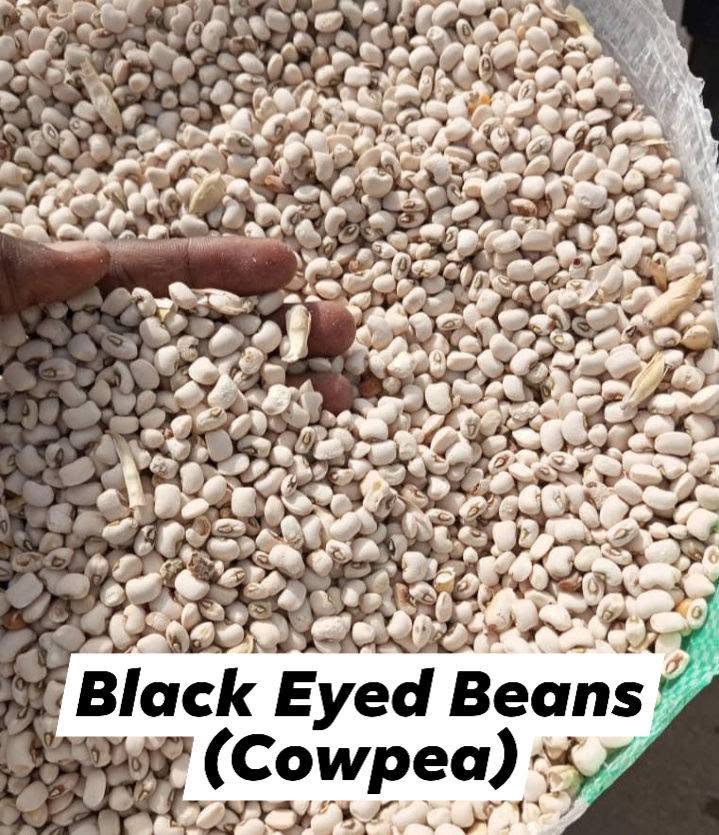

Nigerian Cowpea: Africa’s Most Important Food Legume — The Protein Source That Sustains More Sub-Saharan African Diets Than Any Other Pulse, That Nigeria Produces at Volumes Exceeding the Next Four Global Producers Combined, and That the International Food Industry Has Barely Begun to Source From the World’s Most Dominant Origin
Cowpea Exporter Nigeria — Whole Grain Cowpeas, Cowpea Flour, Dehulled Split Cowpea, Cowpea Protein Concentrate, and Fresh/Frozen Green Cowpea, Direct Sahel Belt and Guinea Savanna Sourcing, Bulk Supply to Food Manufacturers, Canning Industry, Diaspora Food Importers, Baby Food Companies, Plant-Based Protein Brands, and Global Commodity Wholesale Buyers Worldwide
Cowpea exporter Nigeria is a search phrase whose commercial significance requires a single statistic to establish before any product description, nutritional profile, or market analysis begins: Nigeria produces approximately 2.5–3.5 million metric tonnes of cowpeas annually — accounting for an estimated 50–65% of total global cowpea production according to FAO production statistics. The next four largest producing countries — Niger, Burkina Faso, Myanmar, and Tanzania — collectively produce less than Nigeria alone. In any other commodity category, a single country holding this level of production dominance would be universally recognised as the primary commercial supply origin, with buyer relationships, quality standards, and trade infrastructure organised around its output.
For cowpeas, this recognition has not happened — not because Nigerian cowpea production is commercially inadequate but because the formal export documentation infrastructure, food safety certification programme, and international commercial buyer development that transform domestic production dominance into global trade dominance have not yet been systematically built for this specific crop. Nigeria produces the majority of the world’s cowpeas. The international food industry largely ignores this fact when making procurement decisions — defaulting to smaller-volume origins whose formal commercial infrastructure happened to develop earlier. This mismatch between production reality and commercial recognition is the first-mover opportunity that Paradise MultiTrade’s cowpea export programme is specifically positioned to exploit.
Vigna unguiculata (L.) Walp. — the cowpea, black-eyed pea, black-eyed bean, or southern pea — is the most commercially significant food legume in sub-Saharan Africa, directly feeding an estimated 200 million people across the continent whose protein nutrition depends on cowpea as the primary affordable, locally produced dietary protein source. In Nigeria, cowpea is called wake in Hausa, ewa in Yoruba, and akidi in Igbo — names whose cultural embeddedness reflects a legume so fundamental to Nigerian food culture that entire culinary traditions are constructed around it: akara (deep-fried cowpea fritters consumed across Nigeria at breakfast and as street food), moinmoin (steamed cowpea pudding whose preparation is a culinary skill passed across generations), gbegiri (cowpea soup), ewa agoyin (Yoruba stewed cowpeas), and dozens of regional preparations whose combined cultural significance makes cowpea Nigeria’s most consumed legume by a margin that no other pulse approaches.
The international commercial story adds another dimension: black-eyed peas — the white-with-black-eye cowpea variety that is the most internationally recognisable form — are a culturally specific food in the American South whose traditional consumption on New Year’s Day for good luck has made them one of the most commercially recognisable pulses in US food retail, and whose demand from the American Southern soul food tradition creates a documented, culturally specific consumer procurement stream whose Nigerian origin supply has been commercially underserved.
At Paradise MultiTrade International Limited, cowpea is one of our most strategically significant and most volume-capable grain legume export categories — sourced from farming communities across Kano, Kaduna, Borno, Yobe, Gombe, Bauchi, Sokoto, Kebbi, Zamfara, Jigawa, Niger, Kwara, and Ogun states where cowpea cultivation is most commercially developed, processed into whole grain, flour, dehulled split, protein concentrate, and fresh/frozen green cowpea forms, and exported with full food safety, nutritional, and quality documentation to buyers worldwide.
To discuss sourcing immediately, request a quotation here and our export team responds within 48 hours.
History and Origin of Nigerian Cowpea — Africa’s Indigenous Protein Crop and One of the World’s Oldest Cultivated Legumes
Vigna Unguiculata — African Origin, Global Distribution, and the Nutritional Foundation of Sahel Diets
Vigna unguiculata joins sorghum and pearl millet as one of the small number of globally significant food crops whose origin is indisputably Africa — specifically the savanna zones of West Africa where archaeological evidence, botanical genetics, and traditional cultivation knowledge converge to establish the cowpea as among the continent’s most ancient domesticated food plants. Research on cowpea domestication published through NCBI’s plant genetics database and conducted through ICRISAT and IITA’s (International Institute of Tropical Agriculture) cowpea research programmes — the most comprehensive cowpea genetic diversity studies available — places cowpea’s domestication origin in West Africa approximately 5,000–7,000 years ago, with Nigeria’s savanna and forest-savanna transition zones within the primary centre of cowpea diversity.
This African origin is not merely historical context. It establishes Nigeria — whose diverse savanna zones from the Sudan savanna of the north through the Guinea savanna of the Middle Belt to the forest-savanna mosaic of the southwest encompass virtually the complete range of cowpea’s original adaptive diversity — as the world’s most botanically appropriate large-scale cowpea producer. The genetic diversity of traditional Nigerian cowpea varieties — maintained in the farming systems of Hausa, Yoruba, Igbo, and dozens of other Nigerian agricultural communities across millennia — represents a plant breeding resource whose commercial value for the global food industry’s cowpea crop improvement needs is documented through IITA’s cowpea germplasm collection (the most comprehensive in the world) maintained at IITA’s headquarters in Ibadan, Nigeria.
The cowpea’s extraordinary importance to African food security — documented through FAO’s pulse crop importance assessment and the Global Pulse Confederation’s annual pulse trade statistics — reflects properties that made it the pre-eminent food legume of sub-Saharan Africa’s savanna agricultural systems: nitrogen fixation capability (reducing soil fertility depletion in continuous cropping systems), drought tolerance comparable to sorghum and millet, ability to produce meaningful protein nutrition under resource-limited smallholder farming conditions, and the culinary versatility that has supported 5,000 years of continuous cultural adoption across the most diverse agricultural environments on the continent.
The IITA Research Connection — The World’s Largest Cowpea Research Programme in Nigeria
The most institutionally credentialled endorsement of Nigerian cowpea’s commercial significance is the existence of IITA’s cowpea improvement programme — headquartered in Ibadan, Nigeria, and constituting the world’s most comprehensive institutional investment in cowpea genetic improvement, agronomic development, and commercial production support. IITA’s cowpea programme — funded through the CGIAR research system and the Bill and Melinda Gates Foundation — has produced improved cowpea varieties with higher yield, better disease resistance, enhanced drought tolerance, and in some biofortified varieties, higher iron and zinc content — whose progressive adoption by Nigerian smallholder farmers has been increasing Nigerian cowpea productivity per hectare.
The institutional investment in Nigerian cowpea improvement at IITA scale reflects a scientific community consensus that Nigeria is not merely one significant cowpea origin among many — it is the global centre of cowpea production whose productivity improvement and export formalisation has the greatest potential impact on global cowpea supply security of any single intervention available.
Nigeria’s Cowpea Production Geography — The Sahel and Guinea Savanna Belt
Nigerian cowpea production spans a wider geographic range than any other crop in our portfolio — from the driest Sahel zones of the north through the Guinea savanna of the Middle Belt to the forest-savanna mosaic of the southwest:
Kano, Kaduna, and Jigawa states — the most commercially significant northern cowpea production territory, whose established market infrastructure around Kano provides the best commercial access to large-volume, well-cleaned cowpea at consistent quality specification. The most traded grades of white cowpea and black-eyed pea for international export originate primarily from this zone.
Borno, Yobe, Gombe, and Bauchi states — northeastern Sahel and Sudan savanna production zones whose drought-adapted cowpea varieties contribute significant volumes to Nigeria’s total output.
Sokoto, Kebbi, and Zamfara states — northwestern producers whose semi-arid Sahel conditions produce small-seeded cowpea varieties with specific traditional food applications.
Niger and Kwara states — Middle Belt Guinea savanna producers whose cowpea cultivation integrates with diverse cropping systems including sorghum, millet, and yam in mixed farming landscapes.
Ogun and other southwestern states — where cowpea cultivation in the forest-savanna mosaic zone produces varieties whose larger seed size and specific flavour profiles are preferred for akara and moinmoin preparation.
What Is Nigerian Cowpea? The Nutritional Chemistry, Variety Landscape, and Commercial Quality Parameters
Vigna Unguiculata — The Protein Legume Whose Nutritional Profile Complements Every Major Nigerian Grain
Vigna unguiculata is an annual herbaceous legume of the Fabaceae (bean and legume) family — growing as both bush and climbing varieties whose diverse morphological adaptations to different farming system structures reflect the 5,000 years of agricultural selection across Africa’s diverse farming environments. Like soybean, cowpea fixes atmospheric nitrogen through root nodule symbiosis with Rhizobium bacteria — making it both a protein-rich food crop and a soil fertility restoration component in traditional African mixed cropping systems.
The nutritional composition of cowpea grain — documented through food composition research from FAO’s food composition programme and reviewed through NCBI’s food science and pulse nutrition database — establishes cowpea’s commercial nutritional positioning:
Protein — approximately 22–26% of dry grain weight — the primary commercial credential positioning cowpea as a high-protein food legume. Cowpea protein’s specific amino acid profile is rich in lysine (the limiting amino acid in cereal grains) — creating the nutritional logic for the traditional West African food combination of cowpea with sorghum, millet, or corn (complementary proteins) that delivers a more complete essential amino acid profile than either food alone. This complementary protein logic is the nutritional foundation of Nigerian traditional cuisine’s cowpea-grain co-consumption patterns and the scientific basis for incorporating cowpea protein into gluten-free grain products.
Digestible Energy / Carbohydrate — approximately 50–60% of dry grain weight — primarily starch, with a significant resistant starch fraction (10–25% of total starch) whose prebiotic properties create gut health positioning analogous to the tiger nut resistant starch we documented in the tiger nuts article.
Folate (Vitamin B9) — approximately 200–400 mcg per 100g dry weight — making cowpea one of the most folate-dense commonly traded food legumes, with direct commercial relevance for the maternal nutrition and pregnancy health market whose folate requirement (400–800 mcg daily for pregnant women recommended by WHO’s maternal nutrition guidelines) creates specific functional food positioning for cowpea in prenatal nutrition products.
Iron — approximately 7–9mg per 100g dry weight — comparable to pearl millet’s iron density and significantly higher than rice or wheat. Cowpea’s specific combination of high iron AND high folate creates the most commercially comprehensive blood health and anaemia prevention nutritional positioning of any single commonly traded legume — addressing both the iron deficit (treated by iron supplementation) and the folate deficit (whose role in haemoglobin synthesis and neural tube development requires separate folate supplementation) simultaneously in one ingredient.
Zinc — approximately 3–4mg per 100g dry weight — providing meaningful zinc contribution complementary to the zinc density documented for pearl millet in the previous article.
Dietary Fibre — approximately 10–15% of dry grain weight — one of the highest fibre concentrations of any commonly traded food legume, providing the gut health, blood glucose management, and cholesterol-lowering benefits tracked through NCBI’s dietary fibre and chronic disease research database.
Calcium — approximately 70–100mg per 100g dry weight — the highest calcium concentration of any major food legume except soybeans, contributing to the bone health nutritional positioning relevant for plant-based and dairy-free dietary consumers.
Natural Gluten-Free Status — cowpea contains no gluten — creating the same naturally gluten-free positioning that sorghum and pearl millet hold among grains, but with the additional distinction that cowpea’s protein content (22–26%) dramatically exceeds any gluten-free grain alternative — making cowpea flour the most protein-dense naturally gluten-free flour ingredient commercially available.
The Variety and Grade Landscape — The Commercially Critical Distinctions
White cowpea — uniform white to cream colouring, the most internationally traded grade for food manufacturing, canning, and commodity trade. Clean, mild flavour. The specification for European canning industry buyers and commodity processors.
Black-eyed pea (black-eyed bean) — the iconic white cowpea with a distinctive black spot around the hilum (seed attachment point) — the most internationally recognisable cowpea variety whose cultural significance in American Southern cuisine (New Year’s Day Hoppin’ John tradition) and in UK West Indian food culture creates specific consumer demand that white cowpea cannot meet despite identical botanical species. The commercial premium of the black-eyed appearance over generic white cowpea is documented in US retail price data for Southern-style canned beans.
Brown/speckled cowpea — traditional varieties with mottled brown and cream colouring — preferred in specific regional Nigerian culinary traditions and in some export markets (particularly the UK West African diaspora) whose cultural familiarity with speckled cowpea creates procurement specificity.
Small-seeded vs large-seeded varieties — commercial cowpea seed size varies from 8g to 25g per 100 seeds — with larger-seeded varieties preferred for retail presentation (better visual appeal in transparent packaging, better mouthfeel after cooking) while smaller-seeded varieties may be adequate for flour and processing applications.
The Anti-Nutritional Factor Management — Critical Processing Parameter
Cowpea contains several anti-nutritional factors (ANFs) in raw grain — including trypsin inhibitors (reducing protein digestibility), phytic acid (reducing mineral bioavailability), tannins (reducing protein digestibility), and oligosaccharides (causing flatulence through incomplete small intestine digestion and fermentation in the colon) — whose management through appropriate processing is the most important quality consideration for food manufacturing buyers:
Soaking and boiling — the traditional cowpea preparation method used across Nigeria (overnight soaking followed by 30–60 minutes boiling) substantially reduces all major ANFs — inactivating trypsin inhibitors by heat, leaching phytic acid and oligosaccharides into soak and cooking water, and reducing tannins. Properly prepared boiled cowpea has ANF levels that are nutritionally acceptable for human consumption.
Decortication (dehulling) — mechanical removal of the outer seed coat (testa) which contains the majority of tannins and a significant fraction of phytic acid — reducing ANF content substantially while simultaneously producing a split dehulled cowpea product with faster cooking time, better digestibility, and lighter colour flour for food manufacturing applications.
Fermentation — traditional fermentation (as in Nigerian ogi and moinmoin preparation steps) and industrial lactic acid fermentation both reduce phytic acid content through phytase enzyme activity and reduce oligosaccharide content through microbial metabolism — improving both mineral bioavailability and digestive tolerance.
Extrusion — industrial extrusion cooking at 130–160°C eliminates virtually all trypsin inhibitors and haemagglutinins, gelatinises starch, and substantially reduces ANFs — creating the most thoroughly processed, most digestible cowpea ingredient form for baby food and instant food manufacturing applications.
Benefits and Industrial Uses of Nigerian Cowpeas
West African Diaspora Food Retail — Akara, Moinmoin, and the Irreplaceable Cultural Food Market
The diaspora food retail demand for Nigerian cowpeas — while structurally similar to the ugu leaf, bitter leaf, and crayfish diaspora demand we have documented — has an additional commercial dimension: cowpea is simultaneously a culturally specific Nigerian ingredient AND a product recognisable to non-Nigerian consumers in multiple established cultural contexts (American black-eyed peas, UK West Indian cuisine, South Asian dal preparations). This dual cultural recognition creates a commercial bridge between the dedicated Nigerian diaspora market and the broader multicultural food retail consumer base:
Akara (bean cakes) — the deep-fried cowpea fritter consumed across Nigeria as a breakfast and street food staple — is produced from cowpea that has been soaked, dehulled, ground to a smooth paste, seasoned, and deep-fried. The preparation requires cowpea of the appropriate variety (white or cream cowpea whose dehulling reveals white inner flesh for the characteristic pale akara interior) and appropriate grain size for consistent paste texture. Diaspora Nigerian food entrepreneurs producing commercial-scale akara for UK, USA, and Canadian Nigerian grocery retail create consistent cowpea procurement demand for the appropriate varieties and grades.
Moinmoin (steamed bean pudding) — the steamed cowpea preparation whose elaborate preparation (soaking, dehulling, blending, seasoning with crayfish, fish, and eggs, steaming in leaves or containers) produces one of the most culturally revered traditional Nigerian foods — creates demand for dehulled split cowpea and cowpea flour that simplify the home preparation process while delivering authentic flavour.
Gbegiri (bean soup) and Ewa agoyin — the Yoruba bean soup traditions whose specific cowpea preparation creates demand for boiling-grade cowpea from the appropriate varieties preferred in southwestern Nigeria.
Toasted cowpea snack (guguru and ewa) — the traditional cowpea snack roasted and consumed alongside popcorn across northern Nigeria — creating diaspora snack product development interest.
For wholesale importers supplying Nigerian and West African diaspora grocery retail networks, contact our export team to discuss whole grain and dehulled cowpea supply arrangements.
Canning Industry — The Black-Eyed Pea Commercial Heritage
The global canned pulses market — tracked through Mordor Intelligence’s canned pulses market report at over USD 4 billion annually — creates one of the most commercially significant institutional procurement streams for cowpea whole grain at food-grade specification:
American soul food and Southern cuisine canning — canned black-eyed peas for the American retail market create specific black-eyed variety procurement demand from US canning operations whose production supplies the traditional New Year’s Hoppin’ John preparation (black-eyed peas with rice, a South Carolina Lowcountry tradition documented by Serious Eats and Southern Foodways Alliance as one of the most culturally embedded food traditions in American Southern food culture). The commercial scale of this specific application — whose annual procurement spikes dramatically in November–December — creates predictable seasonal demand whose supply can be specifically planned around Nigerian October–December harvest timing.
European canned pulse market — UK, French, German, and Dutch canned pulse manufacturers whose retail distribution to mainstream European supermarkets creates consistent year-round canned cowpea procurement demand at food-grade specification. Tesco, Sainsbury’s, Carrefour, and Edeka all stock canned black-eyed beans/peas in their mainstream pulse range — creating upstream procurement demand from European canning operations who need documented, food-grade, consistent-colour white/black-eyed cowpea at commercial volume.
Food service canned cowpea — the professional kitchen and food service sector’s demand for ready-to-use canned pulses in restaurant, catering, and institutional food production creates consistent higher-volume procurement from food service canning operations.
For canning industry buyers evaluating Nigerian cowpea for both black-eyed variety and white variety canned pulse production — contact our team to discuss food-grade specification, colour consistency, and canning trial support.
Plant-Based Protein Food Manufacturing — The Cowpea Protein Opportunity
The global plant-based protein market — tracked through Grand View Research’s plant-based protein market analysis — has been dominated by soy protein, pea protein, and wheat gluten as the primary plant-based protein ingredients in meat analogue, protein supplement, and high-protein food formulation. Cowpea protein — whose 22–26% whole grain protein content, combined with its natural gluten-free status and its specifically high lysine content — creates a plant-based protein positioning that is commercially competitive with pea protein on nutritional parameters while offering different functional properties and a distinctive African botanical authenticity story:
Cowpea protein concentrate and isolate — produced by aqueous or alcoholic extraction of defatted cowpea flour followed by isoelectric precipitation — achieving protein contents of 60–90% — provides a clean-label plant-based protein ingredient whose functional properties (solubility, gelation, emulsification, foaming) are documented through food science research in Cereal Chemistry and LWT — Food Science and Technology as comparable to or exceeding pea protein concentrate in specific formulation applications.
High-protein gluten-free flour — cowpea flour (22–26% protein, naturally gluten-free) provides the most protein-dense naturally gluten-free flour commercially available — far exceeding the protein content of rice flour (6–7%), corn flour (8–9%), and cassava flour (1–2%). For gluten-free bread, pasta, and snack manufacturers whose formulation challenge includes achieving adequate protein content without soy protein or wheat gluten — cowpea flour provides a single-ingredient solution that delivers both protein density and clean-label positioning.
Plant-based meat analogue formulation — cowpea protein’s specific gelling and texturisation properties create meat analogue formulation applications that the growing plant-based meat market tracked through Good Food Institute’s alternative protein market intelligence specifically values. For plant-based meat brands seeking alternatives to soy and pea protein with authentic African origin positioning — cowpea protein concentrate provides commercially viable functional performance with a distinctively African heritage narrative.
Baby Food and Maternal Nutrition Industry
Infant complementary food fortification — cowpea flour’s extraordinary combination of protein (22–26%), iron (7–9mg/100g), zinc (3–4mg/100g), folate (200–400mcg/100g), and calcium makes it the most nutritionally comprehensive single plant ingredient for fortifying cereal-based infant complementary foods. Research on cowpea’s role in infant nutrition — published through NCBI’s paediatric nutrition database and through IITA’s cowpea nutrition programme — confirms that cowpea flour incorporation at 20–30% of complementary food blend substantially improves the protein quality, iron density, and zinc density of cereal-based weaning foods whose deficiencies in these nutrients drive the persistent childhood stunting and wasting documented across sub-Saharan African populations. The World Food Programme (WFP) and UNICEF’s nutrition programme both engage with cowpea within their complementary food fortification and therapeutic food formulation research — confirming institutional validation for baby food application.
Maternal nutrition — the folate imperative — cowpea’s extraordinary folate density (200–400mcg/100g) creates the most commercially specific and clinically credible functional food positioning for maternal nutrition products of any single plant food ingredient in this series. The WHO’s recommendation of 400mcg daily folate supplementation for all women of reproductive age (to prevent neural tube defects whose most critical period is the first 28 days of pregnancy — often before pregnancy is confirmed) — combined with documented global folate deficiency in women across developing and developed countries — creates a functional food market whose cowpea-fortified product development is commercially logical, clinically substantiated, and institutionally validated. For food manufacturers developing pregnancy nutrition products, maternal wellness foods, and women’s health functional ingredients — Nigerian cowpea’s folate density provides a whole-food folate source whose natural food matrix enhances bioavailability compared to synthetic folic acid supplementation.
Traditional Food Processing and Fermentation Industry
Cowpea fermentation — iru/dawadawa from cowpea — while our fermented locust bean article covered Parkia biglobosa-based locust bean fermentation, cowpea can also be fermented using similar Bacillus subtilis fermentation to produce cowpea-based condiments with similar umami flavour profiles — creating traditional food processing demand for cowpea as a fermentation substrate.
Instant cowpea flour (pre-cooked) — extrusion-cooked cowpea flour whose anti-nutritional factor elimination through extrusion creates an instant, no-cook cowpea ingredient for instant soup, porridge, and convenience food formulation — one of the most commercially promising food manufacturing applications for cowpea in the African domestic and export food industry.
Cowpea starch — isolated from whole cowpea through wet milling — whose specific functional properties (high amylose content creating gel-forming and film-forming capability, retrograde tendency useful in some food texturisation applications) creates food manufacturing interest as a clean-label, plant-based starch with protein co-extraction economics that other legume starches lack.
Animal Feed — The Cowpea Haulm Application
Cowpea haulm (stover) — the above-ground vegetative material of the cowpea plant (leaves, stems, and pod walls) after grain harvest — provides one of the most nutritious crop residue feeds in African smallholder animal production, containing 13–18% crude protein on a dry matter basis — substantially higher than sorghum stover (5–8% protein) or millet stover (6–10% protein). The commercial export of cowpea haulm as a processed animal feed ingredient — dried and pelletised for ruminant livestock nutrition — represents a zero-waste by-product commercialisation opportunity whose development parallel to grain export creates additional value from the same production system.
Why Buy Cowpeas From Nigeria?
The Production Dominance Argument — The World’s Primary Origin
Nigeria’s 50–65% share of global cowpea production is the most extreme production dominance of any crop in our entire article series — more concentrated than Brazil and Argentina’s soybean combined dominance, more concentrated than Indian black pepper’s historical monopoly, and more concentrated than any agricultural commodity typically associated with a single country in international trade. For buyers who want to build supply relationships with the world’s primary producing origin for their cowpea procurement — there is, by definition, no more direct route to the most significant source than Nigerian origin supply. Contact our team to discuss how Nigeria’s production scale can serve your volume requirements.
The IITA Research Quality Certification Context
IITA’s cowpea improvement programme — headquartered in Nigeria — has produced documented improved varieties whose yield, disease resistance, and in biofortified lines, iron and zinc content improvements are verifiable through IITA’s published variety releases. For buyers who want to specifically source cowpea from IITA-improved variety production — whose nutritional credentials are documented through independent research — Paradise MultiTrade can coordinate sourcing from farming communities whose variety adoption is documented.
The Complementary Protein and Grain Supply Chain Argument
For food manufacturers building African-origin grain and legume supply chains whose protein and carbohydrate ingredients come from the same geographic origin — Nigerian cowpea (protein) combined with Nigerian sorghum (starch/energy), Nigerian millet (starch/mineral), and Nigerian soybeans (oil/protein) creates a complete West African food ingredient portfolio sourced from a single country and a single export partner. For institutional food manufacturers, UN nutrition programme buyers, and food security intervention procurement officers whose programmes serve West African populations — sourcing grain and legume ingredients from Nigerian origin through Paradise MultiTrade provides the most geographically authentic, logistically streamlined, and commercially efficient supply arrangement available.
Complete Export Documentation from a Licensed Exporter
Every cowpea shipment from Paradise MultiTrade carries phytosanitary certification from NAQS, NEPC export documentation, certificate of origin, commercial invoice, packing list, and bill of lading. For food-grade and canning buyers, we coordinate moisture content, foreign matter, protein content (Kjeldahl), colour and visual grade, aflatoxin screening, pesticide residue analysis to EU MRL standards, and microbiological safety testing following AOAC International validated procedures. For baby food and maternal nutrition buyers, we coordinate the complete mineral analysis package (iron, zinc, folate, calcium) through accredited food analytical laboratories. For plant-based protein buyers, we coordinate protein content, amino acid profile (HPLC), and anti-nutritional factor levels (trypsin inhibitor activity, phytic acid content). EU-bound shipments comply with Regulation (EU) 2017/625 on official controls. Our NEPC Export Licence No. 0042385 and CAC Registration No. RC-9284647 are verifiable through NEPC.
Nigeria’s Cowpea Export Strength and Global Market Demand
The Global Market — The Most Underexplored Major Pulse in International Formal Trade
The global pulse market — tracked through Grand View Research’s pulse market analysis and the Global Pulse Confederation’s annual pulse market intelligence — values internationally traded pulses at tens of billions of dollars annually, with chickpeas, lentils, common beans, and dry peas constituting the commercially dominant categories in formal international trade. Cowpea — despite its extraordinary production scale and nutritional significance — remains commercially underrepresented in formal international trade relative to its production volume.
This underrepresentation is not a permanent market feature — it reflects the absence of formal export infrastructure rather than the absence of commercial demand. The United Nations’ 2016 International Year of Pulses — whose commercial marketing impact documented through FAO’s IYP legacy programme specifically elevated global consumer awareness of pulses’ nutritional benefits — created a commercial awareness foundation whose progressive exploitation through formal Nigerian cowpea export development is underway through NEPC and through Paradise MultiTrade’s commercial programme.
Key Export Destination Markets
The United States — whose American Southern culinary tradition’s specific black-eyed pea demand (New Year’s Hoppin’ John, soul food restaurant procurement, Southern supermarket retail) creates the most culturally specific and commercially documented cowpea demand of any single market outside sub-Saharan Africa. The US pulse import data from USDA confirms consistent annual black-eyed pea import volumes. US food import requirements through USDA APHIS for phytosanitary and FDA for food safety.
The United Kingdom — whose West African, West Indian, and South Asian diaspora communities create multi-community demand for cowpea/black-eyed bean alongside a growing mainstream pulse consumer market whose health food positioning is tracked through Mintel’s UK pulse market intelligence. Major UK retailers (Tesco, Sainsbury’s, ASDA, Morrisons) all stock canned and dried black-eyed beans in their mainstream pulse range — creating both retail and canning industry upstream procurement demand. UK pulse import requirements administered by FSA.
Germany and the Netherlands — Europe’s primary canned pulse manufacturing hub and most sophisticated food ingredient distribution network — creating commercial demand for canning-grade and food-manufacturing-grade cowpea whose EU food safety compliance documentation is the primary market access requirement.
France — whose large West African Francophone diaspora and growing plant-based food innovation sector create dual diaspora retail and plant-based protein ingredient demand for Nigerian cowpea.
Middle East (UAE, Saudi Arabia) — where cowpeas are incorporated into traditional Emirati, Yemeni, and broader Arabian Peninsula cooking traditions (lobiya dishes) whose cultural familiarity with cowpea creates consistent commercial procurement demand tracked through ADAFSA.
India — where lobia (black-eyed beans) is a widely consumed pulse in North Indian and South Indian cooking, creating consistent import demand from Indian pulse trading houses during domestic supply shortfalls.
Why Choose Paradise MultiTrade International Limited?
Variety-Specific Sourcing — White, Black-Eyed, and Speckled Grades All Available. We source and supply the specific cowpea variety grade that your buyer community requires — white cowpea for food manufacturing and canning, black-eyed variety for Southern American and West Indian cultural food markets, and speckled for specific diaspora communities whose regional preference specifies the mottled variety. Variety documentation is provided on every lot. Contact us to specify your variety requirement.
Folate and Iron ICP/HPLC Documentation for Maternal and Baby Food Buyers. We coordinate folate content (HPLC) and iron content (ICP-MS) through accredited food analytical laboratories — providing the maternal nutrition and infant food grade analytical documentation that clinical nutrition product manufacturers require. Contact us to discuss maternal nutrition-grade analytical documentation.
Anti-Nutritional Factor Testing for Food Processing Buyers. Trypsin inhibitor activity, phytic acid content, and oligosaccharide (stachyose, raffinose) levels — coordinated through accredited food chemistry laboratories for buyers whose processing specifications require documented ANF baseline levels to confirm processing effectiveness. Contact us to discuss ANF testing.
Canning Trial Support. For canning industry buyers who need to verify Nigerian cowpea’s performance in industrial canning operations before committing to volume procurement — we coordinate sample shipments of appropriate size for full canning line trials, providing the pre-purchase quality verification that industrial canning procurement requires. Contact our team to arrange canning trial sample supply.
Multi-Commodity West African Grain and Legume Sourcing. Cowpea buyers frequently source complementary Nigerian agricultural commodities. Alongside cowpeas, Paradise MultiTrade exports soybeans, sorghum, millet, tiger nuts, sesame seeds, groundnut oil, shea butter, moringa leaf powder, hibiscus flower, crayfish, cashew nut kernel, and raw cashew nuts. Explore our full range of Nigerian export commodities and consolidate your West African grain, legume, and botanical sourcing through one verified, licensed export partner.
Product Specifications
| Specification | Details |
|---|---|
| Product | Nigerian Cowpea / Black-Eyed Pea (Vigna unguiculata) |
| Common Names | Cowpea, Black-eyed pea, Black-eyed bean, Southern pea, Lobia, Wake (Hausa), Ewa (Yoruba), Akidi (Igbo) |
| Botanical Species | Vigna unguiculata (L.) Walp. (Fabaceae) |
| Grades/Varieties | White cowpea (food manufacturing, canning); Black-eyed variety (retail, Southern US, diaspora); Speckled/mottled (diaspora specific); Specify at order |
| Origin | Nigeria (Kano, Kaduna, Borno, Sokoto, Jigawa, Zamfara, Niger, Kwara States) |
| Forms Available | Whole grain (dried); Dehulled split cowpea; Cowpea flour; Cowpea protein concentrate (60–80% protein); Extruded cowpea flour (baby food grade); Fresh/frozen green cowpea (seasonal cold chain) |
| Protein Content | 22–26% dry weight (Kjeldahl) |
| Iron Content | 7–9mg per 100g dry weight (ICP-MS) |
| Zinc Content | 3–4mg per 100g dry weight (ICP-MS) |
| Folate Content | 200–400 mcg per 100g dry weight (HPLC) |
| Calcium Content | 70–100mg per 100g dry weight |
| Dietary Fibre | 10–15% dry weight |
| Starch Content | 50–60% dry weight |
| Moisture Content | ≤13% (whole grain); ≤10% (flour and protein concentrate) |
| Foreign Matter | ≤2% (food grade); ≤1% (canning grade) |
| Broken and Damaged Grain | ≤3% (food grade); ≤1% (canning grade — whole uniform beans required) |
| Aflatoxin | Total ≤10 ppb; B1 ≤2 ppb (EU limits) |
| Pesticide Residue | Multi-residue analysis to EU MRL standards — mandatory for all EU-bound lots |
| Trypsin Inhibitor Activity | Tested on request (relevant for baby food and animal feed buyers) |
| Phytic Acid Content | Tested on request |
| Microbiological | Salmonella absent/25g; Total plate count within food safety limits |
| Colour (white grade) | Uniform cream to white — colour-sorted, minimum 95% uniform white grain |
| Colour (black-eyed grade) | White grain with distinctive black hilum eye — minimum 90% true black-eyed type |
| Seed Size | Large: >25g/100 seeds; Medium: 18–25g; Small: <18g — specify at order |
| Packaging Options | 25kg, 50kg polypropylene bags; bulk container loading (20–25 MT per container) |
| Supply Capacity | 500–50,000+ MT per season |
| MOQ | Whole grain: 25 MT; Flour and protein concentrate: 5 MT |
| Shelf Life | Whole grain: 12 months; Flour: 6 months; Protein concentrate: 12 months |
| Export Documentation | Phytosanitary Certificate (NAQS), Certificate of Origin, NEPC Export Licence, Certificate of Analysis (protein, moisture, foreign matter, colour grade), Iron/Zinc/Folate Mineral Certificate (on request), Anti-Nutritional Factor Certificate (on request), Aflatoxin Certificate, Pesticide Residue Certificate (EU MRL), Microbiological Certificate, Commercial Invoice, Packing List, Bill of Lading |
| Payment Terms | T/T, Letter of Credit (LC at sight), Escrow |
| Loading Port | Lagos (Apapa / Tin Can Island Port), Nigeria |
| Incoterms Available | EXW, FOB Lagos, CNF, CIF |
Packaging and Export Process
Harvest Season. Nigeria’s primary cowpea harvest runs October through December — with early-maturing varieties (55–65 days) harvested by October and standard varieties (70–90 days) completing harvest by November–December. Like sorghum and millet, the harmattan season’s low humidity coincides with the harvest period — providing excellent natural drying conditions that reduce post-harvest aflatoxin and mould risk when harvest is promptly dried.
Post-Harvest Processing. Freshly harvested cowpea is threshed (seeds separated from pods), dried to ≤13% moisture, and cleaned through sieving and air aspiration to remove pod fragments, soil, stones, and other foreign matter. For canning-grade specification — additional colour sorting (optical or manual) removes off-colour beans to achieve minimum 95% colour uniformity. For black-eyed pea grade — optical colour sorting specifically selects for beans with clearly defined black hilum eye marking.
Dehulling and Flour Processing. Whole cowpea is fed through abrasive dehulling equipment to remove the outer seed coat (testa), producing clean cream-coloured cotyledons that can be sold as dehulled split cowpea or further milled to flour. Dehulling removes the majority of tannins, phytic acid, and dietary fibre while increasing protein concentration in the endosperm flour — producing a lighter colour, lower-fibre flour whose reduced ANF content is commercially preferable for baby food and food manufacturing applications.
Quality Colour Sorting. For premium food-grade and canning-grade cowpea — optical sorting equipment removes discoloured, damaged, weevil-affected, and off-type beans to achieve the uniform colour specification that retail presentation and canning quality require. This sorting step is essential for export-grade cowpea and distinguishes commercial export quality from domestic market grade.
Mycotoxin and Pesticide Testing. All EU-bound lots undergo aflatoxin testing and multi-residue pesticide analysis through accredited laboratories before shipping confirmation. Food-grade lots additionally undergo microbiological safety testing.
Lead Times. Whole grain (from available stock): 14–21 days. Dehulled split and flour (processing scheduling): 28–42 days. Protein concentrate: 35–56 days (extraction processing). Contact us early — particularly for protein concentrate orders requiring specialised processing.
Frequently Asked Questions
Why is Nigeria the world’s largest cowpea producer and what commercial implications does this have for buyers?
Nigeria’s production dominance — approximately 50–65% of global cowpea output — reflects a convergence of four factors: (1) optimal agro-ecological conditions across Nigeria’s vast Guinea savanna and Sudan savanna zones; (2) 5,000+ years of traditional cultivation creating deep farming knowledge and diverse local variety adaptation; (3) IITA’s world-leading cowpea research programme headquartered in Ibadan whose improved variety releases have progressively increased productivity; and (4) cowpea’s cultural centrality to Nigerian food culture whose sustained domestic demand has maintained continuous cultivation pressure and variety improvement. The commercial implication for international buyers is straightforward: Nigeria is not merely one cowpea origin among many — it is the world’s primary cowpea origin whose production scale, variety diversity, and research-backed quality improvement create commercial advantages that no other single country’s production can match at equivalent scale. For buyers building long-term cowpea supply chains — building direct relationships with Nigerian origin provides access to the world’s most productive and most diverse cowpea production base. Contact us to discuss long-term supply programme development.
What is the difference between white cowpea, black-eyed pea, and common bean — and why does variety matter for my specific application?
These are distinct commercial grades of the same botanical species (Vigna unguiculata) plus a related but separate species: White cowpea — uniform white to cream colouring with no distinctive marking — the standard food manufacturing and commodity grade suitable for flour, protein concentrate, canning, and commodity trade where visual variety authenticity is less important than consistent quality. Black-eyed pea (black-eyed bean) — white cowpea with a distinctive black spot around the hilum — the variety specific to American Southern cuisine (Hoppin’ John, soul food), UK West Indian cuisine, and mainstream European black-eyed bean retail whose consumer visual recognition of the “eye” is a non-negotiable purchasing decision signal. Supplying white cowpea where black-eyed variety is specified creates consumer complaint and product recall risk for canning and retail buyers. Common bean (Phaseolus vulgaris) — an entirely different legume species (South/Central American origin) that includes kidney beans, navy beans, borlotti beans, and haricot beans. Common beans are not cowpeas and cannot be substituted. For your specific application — canning and retail buyers need to specify which grade; food manufacturing buyers for flour and protein concentrate can typically use white cowpea grade. Contact us to specify your variety and grade requirement.
How does cowpea’s folate content make it commercially relevant for maternal nutrition products?
Cowpea’s folate content of 200–400 mcg per 100g dry weight is commercially significant for maternal nutrition in two specific ways: (1) Neural tube defect prevention — folate’s critical role in preventing neural tube defects (spina bifida and anencephaly) during the first 28 days of pregnancy — before most women confirm they are pregnant — has been confirmed through clinical research and endorsed by WHO, CDC, and health authorities globally. The WHO recommends 400mcg daily folic acid for all women of reproductive age. A 100g serving of cowpea provides 50–100% of this recommendation from natural food-matrix folate — creating a functional food ingredient whose maternal nutrition positioning is institutionally validated. (2) Haemoglobin synthesis and anaemia prevention — folate’s role alongside iron in haemoglobin synthesis means that cowpea’s simultaneous folate and iron density addresses both the iron and folate deficiency components of nutritional anaemia in a single whole food ingredient. For food manufacturers developing pregnancy nutrition bars, maternal wellness cereals, or women’s health functional foods whose label claims include folate contribution — cowpea flour provides HPLC-documented folate content that supports specific percentage DV claims. We coordinate folate analysis (HPLC) through accredited laboratories. Contact us to discuss folate content documentation for maternal nutrition product formulation.
What EU regulatory and food safety requirements apply to Nigerian dried cowpeas entering EU markets?
Dried cowpeas entering EU food markets must comply with: general food safety requirements under Regulation (EC) 178/2002; pesticide residue MRL compliance under Regulation (EC) 396/2005; contaminant limits (aflatoxin, heavy metals) under Commission Regulation (EC) 1881/2006; and general food import control requirements under Regulation (EU) 2017/625. Unlike sorghum and millet — cowpea does not have specific fumonisin limits (fumonisin affects primarily maize and small grains, not legumes) — making aflatoxin the primary mycotoxin compliance requirement. Important Novel Food status note: Dried cowpea (Vigna unguiculata) has a well-documented history of consumption in EU member states through West African and West Indian diaspora communities predating the 1997 Novel Food Regulation baseline — meaning cowpea does NOT require Novel Food authorisation for food applications in the EU, simplifying market entry compared to less familiar botanicals in our portfolio. Paradise MultiTrade coordinates the complete EU compliance documentation package including pesticide residue analysis, aflatoxin testing, and microbiological certification as standard for EU-bound lots. Contact us to discuss EU compliance.
How should food manufacturers manage cowpea’s anti-nutritional factors for different applications?
The anti-nutritional factor management approach depends entirely on the intended application: For retail whole dried cowpea (sold for home cooking where the consumer soaks and boils) — no special processing is required from the manufacturer; standard soaking (8–12 hours) and boiling (30–60 minutes) by the consumer effectively eliminates trypsin inhibitors, reduces phytic acid, and removes flatulence-causing oligosaccharides into soak and cooking water. For canning applications — the industrial canning process (pressure cooking at 115–125°C, 20–30 minutes) inactivates all heat-sensitive trypsin inhibitors and substantially reduces oligosaccharide content. For flour applications (food manufacturing, bakery) — thermal processing (autoclaving, extrusion) of cowpea flour before or during formulation eliminates trypsin inhibitors. Dehulling before milling substantially reduces phytic acid and tannin content. For baby food applications — extrusion cooking at 130–160°C provides the most thorough ANF elimination, producing a fully safe, highly digestible extruded cowpea flour whose trypsin inhibitor activity is confirmed at nutritionally negligible levels. Paradise MultiTrade supplies raw whole grain (for canning and retail), dehulled split (reduced ANF), and on request coordinates extruded flour processing for baby food buyers. Trypsin inhibitor activity and phytic acid content are tested on request. Contact us to discuss processing specification for your application.
What is the Nigerian cowpea harvest season and when should I plan procurement?
Nigeria’s primary cowpea harvest runs October through December — coinciding with the main sorghum and millet harvest period, as all three crops are grown in overlapping geographic zones under similar seasonal production calendars. Early-maturing cowpea varieties (55–65 days from planting) planted in August harvest by October; standard varieties planted in July–August harvest in November–December. Procurement planning: (1) For October–December fresh harvest grain — initiate discussions by August–September to coordinate harvest allocation and priority quality sorting for export-grade material. (2) For canning industry buyers whose production peaks in January–March for spring retail — October–December procurement booking allows container shipments to arrive at European or American ports in December–February, aligning with canning production scheduling. (3) For November–December US retail demand (New Year’s black-eyed pea seasonal spike) — procurement must be initiated by August at the latest for October–November harvest, shipping, and US port arrival by mid-December. Year-round supply from stored season inventory is available through approximately June–July of the following year under proper warehouse storage conditions. Contact us to plan your procurement cycle.
What transit times should I expect from Nigeria?
Whole grain cowpea and flour (standard dry container — no temperature control): UK (Tilbury, Felixstowe) — 14–18 days from Lagos. Netherlands (Rotterdam) — 14–18 days. Germany (Hamburg) — 14–20 days. France (Le Havre) — 14–18 days. USA (East Coast — New York, Baltimore, Savannah) — 18–25 days (note: for November–December US delivery for New Year’s demand, container must depart Lagos by early November). Canada (Halifax, Montreal) — 18–28 days. UAE (Jebel Ali) — 10–14 days. India (Nhava Sheva, Mundra) — 10–15 days. Japan (Yokohama) — 25–32 days. For large-volume buyers (above 5,000 MT): bulk vessel chartering from Lagos provides significantly lower per-tonne freight costs. Add 5–7 days for colour sorting processing and 7–10 days for analytical testing (AFI folate, protein) beyond standard lead time. Contact us to plan your complete logistics programme.
Ready to Source Premium Nigerian Cowpeas — White Grade, Black-Eyed Variety, Dehulled Split, Flour, and Protein Concentrate With Folate and Iron Mineral Documentation, Anti-Nutritional Factor Testing, EU Pesticide Residue Compliance, and Full Analytical Documentation for Food Manufacturers, Canning Industry, Diaspora Importers, Baby Food Companies, and Global Wholesale Buyers?
If you are a European or American canning industry buyer who needs food-grade white or black-eyed cowpea at consistent colour specification for canned pulse production supplying mainstream supermarket retail, a baby food or maternal nutrition manufacturer developing iron-dense, folate-rich, naturally gluten-free infant cereals or pregnancy nutrition products whose formulation specifically requires the protein-iron-folate combination that no other single plant ingredient delivers, a plant-based protein brand developing cowpea protein concentrate or isolate as a pea protein alternative with distinctive West African botanical origin authenticity, a UK, USA, or Canadian ethnic food wholesale importer supplying West African, West Indian, or Southern American diaspora grocery retail networks whose culturally specific black-eyed pea demand requires documented-variety, consistent-quality supply from the world’s largest producing origin, a gluten-free food manufacturer seeking the most protein-dense naturally gluten-free flour alternative to rice and corn starch for nutritionally credentialed gluten-free bread, pasta, or snack formulation, a food security programme or WFP/UNICEF procurement officer building cowpea supply positions for complementary food fortification programmes serving iron-deficient and protein-deficient populations in West Africa or other developing regions, or a global commodity pulse trader building Nigerian cowpea supply positions as the world’s most dominant single-country origin whose formal export infrastructure development creates first-mover commercial advantage — Paradise MultiTrade International Limited is the licensed Nigerian exporter your cowpea supply programme needs.
We supply Nigerian Vigna unguiculata cowpeas — whole grain (white, black-eyed, and speckled), dehulled split, flour, extruded flour, and protein concentrate — from Kano, Kaduna, Borno, and Jigawa producing communities, variety-specific sourcing documented per lot, iron and folate ICP/HPLC mineral analysis coordinated for baby food and maternal nutrition buyers, EU aflatoxin and pesticide residue certified for all European shipments, anti-nutritional factor testing available on request, and exported at commercial scale with full documentation to buyers in every major regulated destination market.
Request a Quotation — share your required grade (white, black-eyed, or speckled), form (whole, dehulled, flour, or protein concentrate), seed size preference (large, medium, or small), volume, application context (canning, diaspora food, baby food, plant-based protein, food manufacturing, commodity), destination market, and preferred incoterms. We respond within 48 hours.
Contact Our Export Team — speak directly about variety-specific sourcing (black-eyed pea grade confirmation), folate and iron mineral analysis, anti-nutritional factor management for your specific processing application, canning trial sample supply, colour sorting specification, EU mycotoxin compliance, harvest season procurement planning, and long-term supply programme structuring.
Explore Our Full Product Range — alongside cowpeas, Paradise MultiTrade exports soybeans, sorghum, millet, tiger nuts, sesame seeds, moringa leaf powder, shea butter, gum arabic, hibiscus flower, lemongrass, cashew nut kernel, and raw cashew nuts. One licensed Nigerian exporter. One consolidated West African grain, legume, oil, and botanical ingredient sourcing relationship — from the world’s most dominant cowpea producing nation whose formally underdeveloped export infrastructure creates the most commercially compelling first-mover opportunity in the global pulse trade.
Paradise MultiTrade International Limited | NEPC Export Licence No. 0042385 | CAC No. RC-9284647 | Lagos, Nigeria | www.paradisemultitrade.com
Reviews
There are no reviews yet.