
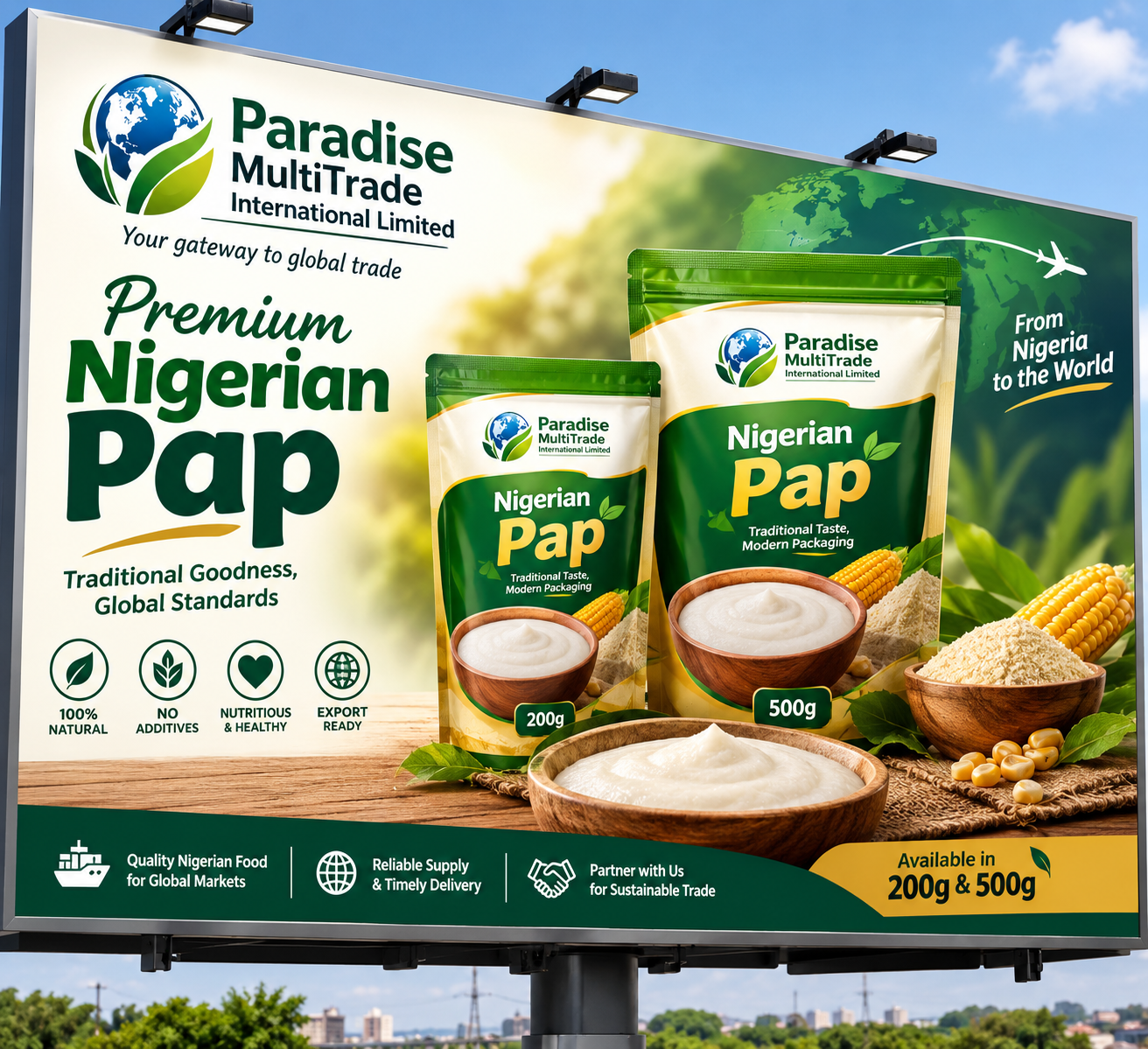

Nigerian Akamu (Pap / Ogi): The Fermented Maize Starch That Is Nigeria’s Most Universally Consumed Traditional Food — Baby’s First Meal, the Sick Person’s Recovery Food, the Nursing Mother’s Daily Staple, and the Breakfast of Hundreds of Millions of West Africans — Whose Lactic Acid Fermentation Process Modern Food Science Has Validated as One of the Most Nutritionally Intelligent Traditional Food Technologies in Human History
Akamu Exporter Nigeria — Dried Akamu Powder, Ogi Flour, Enriched Pap Formulation, Instant Akamu Mix, and Custom Weaning Food Blend, Direct Northern and Middle Belt Sourcing, Bulk Supply to Baby Food Manufacturers, Complementary Food Producers, West African Diaspora Food Retailers, Hospital and Clinic Nutritional Supply, Functional Grain Food Manufacturers, and Global Specialty Wholesale Buyers Worldwide
Akamu exporter Nigeria is a search phrase that arrives at the intersection of Nigeria’s most culturally embedded traditional food and one of the most commercially underserved diaspora food supply gaps in the entire West African specialty food market. The product — known as akamu in Igbo, ogi in Yoruba, koko in some Hausa-speaking communities, and pap in Nigerian English — is simultaneously the most common food in Nigeria across age, class, and ethnic boundaries and one of the most difficult authentic West African food products for the international diaspora community to access through formal commercial channels.
Every Nigerian parent who has raised a child — regardless of educational background, economic status, or geographic origin within Nigeria — has prepared akamu. The fermented, mildly sour, silky, porridge-smooth starch gel whose preparation from corn, millet, or sorghum through a three-stage process of soaking, wet milling, and fermentation before straining creates one of the most technically sophisticated traditional food processing methods in human history — and one of the most nutritionally validated by modern food science. The lactic acid fermentation that transforms raw grain into akamu is not a preservation technique or a flavour-development convenience. It is a precise microbial food technology whose specific outcomes — reduction of phytic acid (the anti-nutritional factor that prevents mineral absorption from whole grain), reduction of tannins (the polyphenolic compounds whose astringency and mineral-binding activity limits nutritional bioavailability), increase in free amino acid content (through bacterial protease activity), production of lactic acid (whose acidification creates antimicrobial protection), and improvement in starch digestibility (through partial enzymatic hydrolysis during fermentation) — create a nutritional profile that raw grain cannot achieve and that industrial food processing approximates only with significant technological investment.
Research published through NCBI’s food science and nutrition database — and reviewed through FAO’s traditional fermented food science programme — confirms that traditional West African cereal fermentation processes including akamu/ogi production achieve: 50–85% reduction in phytate content (increasing zinc, iron, and calcium bioavailability dramatically); 40–60% reduction in tannin content in sorghum and millet-based ogi; increased free amino acid content through bacterial protease activity that partially hydrolyses intact cereal protein; and competitive exclusion of pathogenic organisms through lactic acid’s antimicrobial activity — outcomes whose combined nutritional benefit makes fermented cereal porridge one of the World Health Organization‘s specifically recommended complementary feeding strategies for infant nutrition in sub-Saharan African contexts.
The commercial opportunity whose development this article documents is the formalisation of Nigerian akamu as a dried powder export product — converting the fresh, wet, perishable traditional product (which cannot be exported without cold chain logistics that make diaspora supply commercially impractical) into a shelf-stable, commercially standardised, food-safety-documented powder that diaspora families, baby food manufacturers, hospital nutritional supply programmes, and functional grain food companies can purchase through legitimate commercial channels at appropriate commercial volumes.
At Paradise MultiTrade International Limited, akamu is produced from Nigerian-origin yellow maize (primary), white maize (variant), sorghum, and millet — processed through traditional fermentation followed by controlled drying and milling into standardised powder whose moisture content, particle size, fermentation character, and food safety documentation enable legitimate international commercial trade at scale.
To discuss sourcing immediately, request a quotation here and our export team responds within 48 hours.
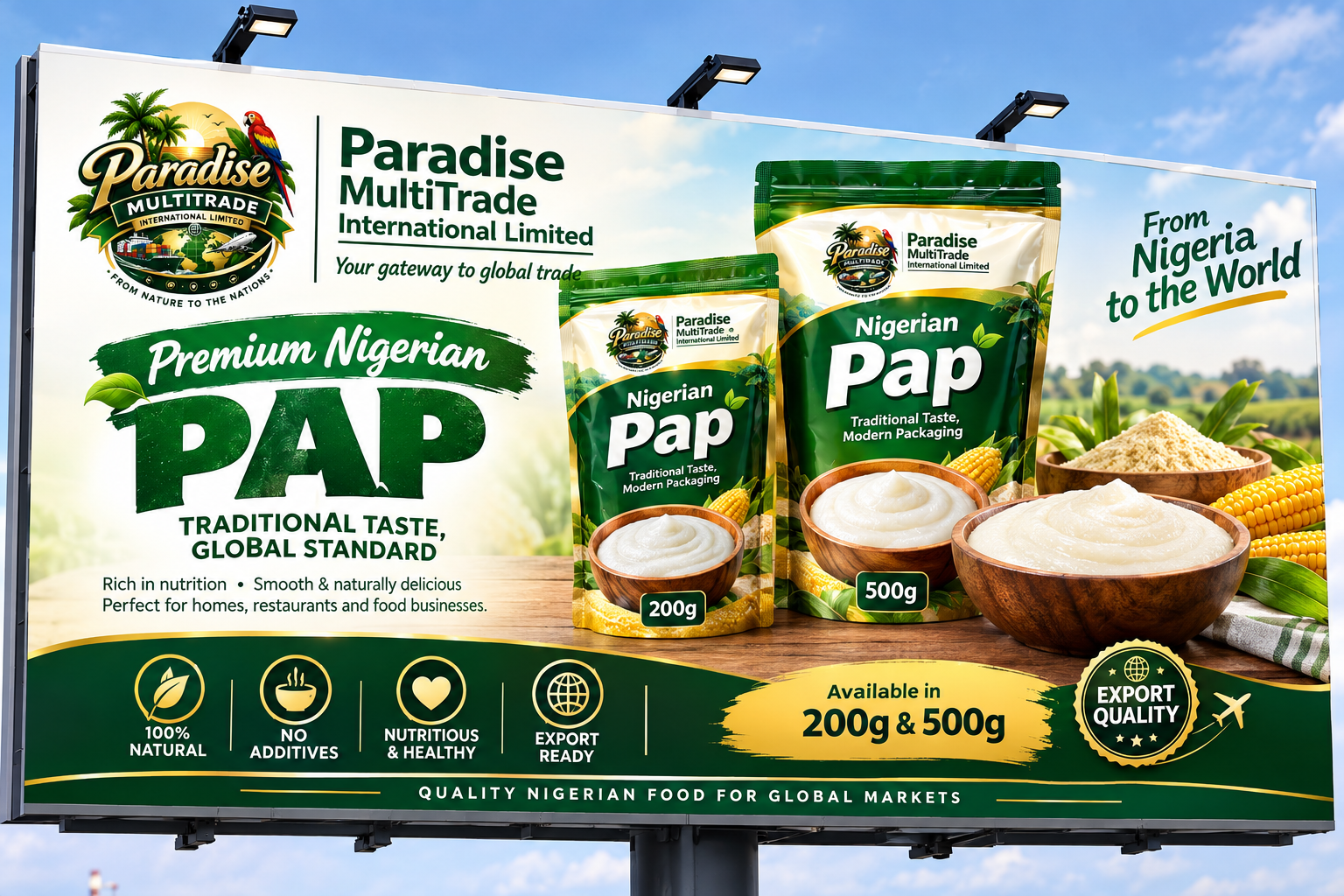
History and Origin — The Ancient Fermentation Technology That Science Is Still Catching Up With
Ogi/Akamu — West Africa’s Most Ancient Cereal Food Technology
The fermented cereal porridge tradition — of which Nigerian akamu/ogi is the most commercially significant and most widely consumed West African expression — is among the oldest documented food processing technologies in human history. Archaeological evidence from West African Neolithic sites confirms cereal processing activity dating to approximately 5,000–7,000 BCE — predating the written records of any food culture that would ultimately incorporate similar fermentation principles. The specific microbial ecosystem — dominated by lactic acid bacteria (Lactobacillus plantarum, Lactobacillus fermentum, Pediococcus species, and related organisms) whose spontaneous proliferation during the soaking and wet-milling stages of akamu production creates the fermentation whose nutritional consequences are only now being fully characterised — developed through generations of practical knowledge whose specific empirical outcomes traditional food preparers recognised and optimised without understanding the microbiological mechanisms responsible.
The traditional production method — documented through food anthropology research accessible via JSTOR’s African studies database and Journal of Ethnic Foods — follows a three-stage process that has remained essentially unchanged for millennia:
Stage 1 — Steeping: Whole maize (or sorghum, millet) kernels submerged in water for 2–3 days, during which lactic acid bacteria from the grain surface and environment spontaneously multiply — their lactic acid production progressively acidifying the steep water, softening the grain pericarp, and initiating the phytate hydrolysis whose nutritional benefit was understood empirically (traditional communities observed that fermented cereal foods produced healthier children than unfermented alternatives) long before phytate’s specific mineral-binding mechanism was identified by nutritional biochemists.
Stage 2 — Wet milling: Softened grain wet-milled (traditionally on stone mills; commercially on plate mills or hammer mills with water addition) — producing a coarse slurry whose particle size reduction creates the starch-water suspension from which akamu’s final form is separated.
Stage 3 — Sieving and settling: Milled slurry passed through fine sieves (traditionally through cloth) — separating the fine starch-water suspension (which becomes akamu) from the coarser bran and hull fraction (discarded or fed to animals). The separated starch suspension is allowed to settle — the dense starch fraction sinking while excess water is decanted — producing the semi-solid akamu cake or ogi wet from which fresh porridge is prepared by cooking with additional water.
This traditional process produces a fresh, perishable product (the wet akamu cake) whose shelf life at tropical ambient temperature is 2–3 days — making export without drying technically impossible and creating the supply chain gap that powdered akamu specifically addresses.
The Drying Innovation — Converting Traditional Product to Commercial Export Form
The conversion of traditional wet akamu into shelf-stable powder — through controlled low-temperature drying whose temperature management preserves the fermentation-derived nutritional characteristics while reducing moisture to below 10% — is the technical processing step that creates the commercial export product. This innovation — whose development has occurred in commercial food processing operations across Nigeria’s food manufacturing sector — preserves the essential nutritional and sensory character of traditionally fermented akamu while creating a 12–18 month shelf life at ambient temperature, eliminating cold chain requirements, and producing a standardised, consistently specified powder whose food manufacturing applicability extends far beyond the diaspora retail market.
What Is Nigerian Akamu Powder? The Fermentation Science, Nutritional Profile, and Commercial Product Range
The Fermentation Microbiology — Understanding the Science Behind the Tradition
The lactic acid fermentation that creates akamu’s distinctive nutritional profile operates through a well-characterised microbial succession whose specific organisms and metabolic activities are documented through NCBI’s food microbiology research database:
Primary fermentation organisms: Lactobacillus plantarum — the dominant lactic acid bacterium in West African cereal fermentations whose broad metabolic capability (phytate hydrolysis through phytase production, protein hydrolysis through protease production, starch hydrolysis through amylase production alongside lactic acid generation) makes it the nutritionally most impactful organism in akamu fermentation. Lactobacillus fermentum, Leuconostoc mesenteroides, and Pediococcus acidilactici as secondary organisms creating the specific flavour and acid profile that distinguishes traditional akamu’s mild sourness.
The phytate reduction mechanism: Phytate (inositol hexaphosphate) — the storage form of phosphorus in cereal grains — binds zinc, iron, calcium, and magnesium through its multiple negatively charged phosphate groups, forming insoluble mineral-phytate complexes that resist intestinal absorption. Phytase enzymes produced by lactic acid bacteria during fermentation progressively hydrolyse phytate — releasing bound minerals as free ions whose intestinal absorption proceeds normally. Research on phytate reduction in Nigerian ogi fermentation — published through Journal of Agricultural and Food Chemistry — documents 50–85% phytate reduction after 48–72 hours of traditional fermentation — translating directly into dramatically improved zinc, iron, and calcium bioavailability from the fermented product versus equivalent unfermented grain.
The protein quality improvement: Lactic acid bacterial protease activity partially hydrolyses intact cereal prolamin proteins (zein in maize, kafirin in sorghum) — whose compact structure makes them resistant to digestive enzyme access in intact form. Partial hydrolysis during fermentation creates smaller peptide fragments whose digestive enzyme access is improved — increasing net protein digestibility and amino acid availability. Research through NCBI’s nutrition science database documents measurable improvement in in vitro protein digestibility of fermented versus unfermented maize.
The starch modification: Partial amylase activity during fermentation creates limited starch hydrolysis — increasing the proportion of short-chain glucose oligomers in the fermented starch whose rapid digestion creates the fast energy delivery that infant metabolic requirements specifically value. The result is a starch whose rapidly digestible starch (RDS) fraction is higher than equivalent unfermented maize starch — creating the fast glucose delivery profile appropriate for the infant whose immature metabolic system has limited capacity for slowly digestible starch management.
The Grain Variants and Their Commercial Significance
Yellow maize akamu — the most commercially widespread variant, whose slightly golden colour, mild corn sweetness, and neutral flavour create the broadest consumer acceptance across all age groups. The primary production variety for commercial export.
White maize akamu (ogi baba) — produced from white maize varieties whose paler cream colour and slightly different flavour profile create a product preferred in some regional and cultural contexts — particularly relevant for diaspora communities whose specific traditional exposure was to white maize ogi.
Sorghum ogi (ogi baba) — the darker, more robust-flavoured variant whose sorghum fermentation creates a distinctive profile — higher protein than maize, higher iron, but also higher tannin (whose fermentation reduction is particularly important in sorghum ogi production). Specifically recommended in traditional practice as a blood-building food for post-partum recovery and anaemia management — creating a specific nutritional positioning for which the WHO‘s complementary feeding guidelines provide institutional validation context.
Millet ogi — the highest-protein and highest-mineral-density variant whose millet grain’s nutritional superiority over maize (documented through ICRISAT’s millet research programme) creates superior nutritional credentials for the weaning food application where mineral density is most commercially significant.
Enriched/fortified akamu — commercial formulations where dried akamu powder is combined with soybean flour, cowpea flour, or dried fish powder to increase protein content and essential amino acid density — creating the ogi plus or enriched pap products recommended by UNICEF’s complementary feeding programme for improving nutritional outcomes in infant weaning food beyond plain cereal porridge.
Commercial Product Forms
Plain Dried Akamu Powder — fermented, dried, and milled to fine powder — the base product for diaspora retail, food manufacturing ingredient, and baby food manufacturing.
Instant Akamu Mix — pre-gelatinised dried akamu powder whose hot water reconstitution requires no cooking — just mixing with boiling water to form porridge — creating the instant preparation convenience whose commercial positioning for diaspora consumers in time-constrained kitchen environments creates premium retail value.
Enriched Akamu Blend — akamu powder combined with protein-enriching ingredients (soy flour, cowpea flour, dried skimmed milk powder, or dried fish) creating the nutritionally improved weaning food formulation whose protein and amino acid enhancement addresses plain akamu’s primary nutritional limitation.
Organic Certified Akamu — produced from certified organic Nigerian maize whose organic farming documentation enables premium organic product positioning for European and North American natural baby food markets.
Benefits and Industrial Uses of Nigerian Akamu
Baby Food and Infant Nutrition — The Most Culturally Validated and Scientifically Endorsed Application
The global infant complementary food market — tracked through Grand View Research’s baby food market analysis at over USD 80 billion annually — creates the most commercially significant premium procurement market for nutritionally validated, culturally authentic weaning food ingredients:
WHO complementary feeding guidance — the World Health Organization’s guidelines on complementary feeding specifically recommend fermented cereal porridges as appropriate complementary feeding foods for infants from 6 months of age in sub-Saharan African contexts — citing the phytate reduction, improved mineral bioavailability, and reduced pathogen risk from fermentation’s antimicrobial lactic acid as the evidence-based nutritional advantages that make fermented cereal porridge preferable to unfermented alternatives. This WHO validation — representing the most authoritative global nutrition guidance available — creates institutional endorsement for akamu/ogi’s infant nutrition application that commercial baby food manufacturers can specifically reference in their product communication.
UNICEF complementary feeding programme — UNICEF’s nutrition programme specifically recognises fermented cereal porridge including ogi as a core element of evidence-based complementary feeding strategies for West African populations — creating international institutional validation that extends akamu’s credibility beyond regional traditional knowledge into global nutrition science.
Baby food manufacturer applications — commercial baby food manufacturers developing West African-specific or global complementary food product ranges whose formulations incorporate akamu powder create consistent industrial procurement demand for documented, food-safety-certified, nutritionally characterised dried akamu powder. The commercial development of culturally authentic baby food products for diaspora communities — whose parenting preferences include traditional West African weaning food alongside or replacing Western commercial baby food — creates a specific product development opportunity whose ingredient requirement is precisely what Paradise MultiTrade’s akamu powder programme supplies.
Hospital and clinic nutritional supply — Nigerian hospitals, clinics, and nutritional rehabilitation programmes whose patient populations include malnourished infants, post-partum mothers, and recovering patients whose nutritional management specifically incorporates akamu create institutional procurement demand for food-safety-documented, consistently specified akamu powder. The ANDI (African Drug Innovation and Access) network’s nutrition programme documents traditional food use in clinical nutrition management across African healthcare systems.
For baby food manufacturer buyers — contact our export team to discuss nutritional characterisation, phytate reduction documentation, and food manufacturing grade specification.
West African Diaspora Food Retail — The Most Immediate Commercial Gap
The West African diaspora’s akamu supply situation precisely mirrors the ehuru and suya spice commercial paradox documented earlier: enormous and culturally specific demand, genuine Nigerian production supply, complete absence of formal export infrastructure connecting the two. Nigerian-British parents in London — whose children’s weaning follows the same cultural pattern as Nigeria — want to give their babies akamu. The product that reaches them currently does so through: relatives visiting from Nigeria bringing dried akamu in luggage, informal diaspora traders importing small quantities through informal channels, or desperate substitution with inferior commercial alternatives that lack the fermentation character that makes traditional akamu nutritionally and culturally authentic.
The commercial consequence of formalising this supply chain — through Paradise MultiTrade’s documented, food-safety-certified, shelf-stable dried akamu powder programme — is that diaspora families in London, New York, Toronto, and Houston can purchase authentic Nigerian akamu through legitimate retail channels with full food safety documentation, consistent quality, and appropriate shelf life.
UK diaspora retail — the Nigerian diaspora’s largest European concentration creates the most commercially immediate UK demand. UK food import requirements for baby food and complementary food products administered by FSA and MHRA for products positioned as infant food.
USA diaspora retail — Houston, Atlanta, and New York Nigerian-American communities create significant demand. US complementary infant food requirements administered through FDA.
Online African food retail — the global e-commerce channel whose geographic reach extends beyond physical diaspora concentration communities creates digital procurement options for diaspora families whose local physical specialty retail access is limited.
For diaspora food retail buyers — contact our team to discuss retail packaging specification, allergen labelling, and shelf life documentation.
Functional Grain Food and Sports Nutrition
High-energy breakfast food manufacturing — akamu powder as a functional grain ingredient in premium breakfast porridge formulations whose fermentation-enhanced digestibility, mineral bioavailability, and mild sour flavour create product differentiation in the growing premium breakfast category tracked through Innova Market Insights’ global breakfast product launch database.
Sports nutrition application — the rapidly digestible starch fraction in fermented akamu creates a fast-energy carbohydrate delivery mechanism whose sports nutrition positioning parallels commercial fast-absorbing carbohydrate products but with the clean-label whole-food identity that the natural sports nutrition market specifically values. For athletes requiring rapid pre- or post-workout carbohydrate delivery without artificial ingredients — akamu’s fermentation-enhanced fast-digesting starch creates a genuinely differentiated natural product.
Recovery food for illness — akamu’s traditional role as Nigeria’s universal food for sick people, people recovering from illness, and those with digestive sensitivity reflects its specific digestive-friendliness whose mechanism (pre-digested starch from fermentation, antimicrobial lactic acid whose gut flora protection benefits the compromised digestive system, easy-to-swallow porridge texture) creates functional food positioning for the medical nutrition and recovery food market.
Traditional Medicine and Maternal Nutrition
Post-partum maternal nutrition — the Yoruba and Igbo traditions of feeding new mothers akamu as a primary component of the post-partum recovery diet reflect the same empirical nutritional intelligence documented for ehuru’s post-partum warming application. Akamu’s rapidly digestible carbohydrate creates energy restoration after labour; the fermentation-enhanced mineral bioavailability supports the mineral replenishment that lactation demands; the lactic acid’s probiotic character supports gut microbiome restoration after the disruption of childbirth and post-partum antibiotic use.
Anaemia management — sorghum and millet ogi’s iron content — enhanced by fermentation’s phytate reduction whose direct consequence is improved dietary iron bioavailability — creates anaemia prevention and management nutritional positioning for the WHO’s Global Anaemia Programme target population whose iron deficiency prevalence in West Africa creates specific demand for bioavailable-iron-rich traditional foods.
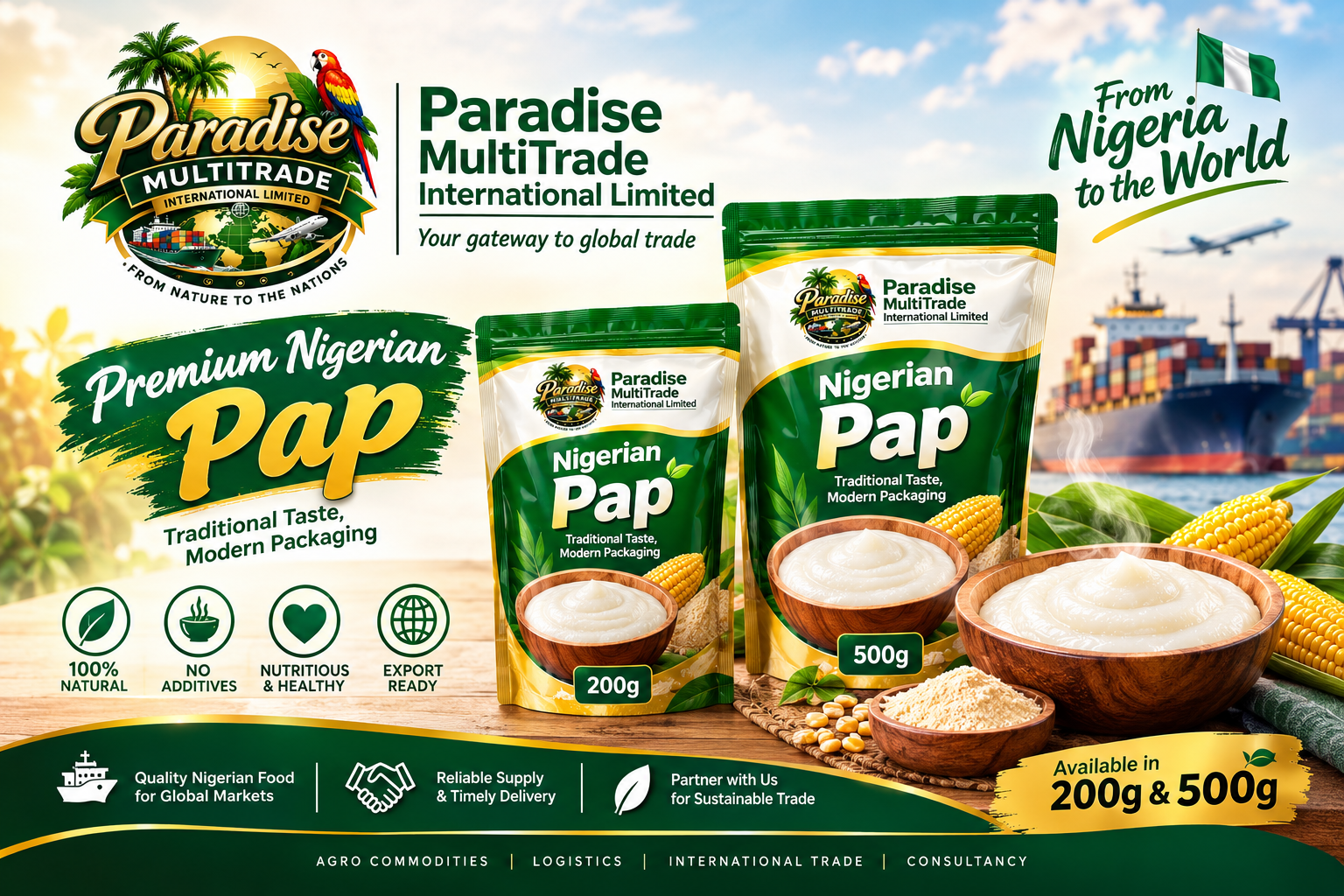
Why Buy Akamu From Nigeria?
The Authentic Fermentation Terroir — Nigerian Lactic Acid Bacterial Ecosystem
The spontaneous fermentation that creates akamu’s characteristic nutritional and sensory profile is not reproduced by starter culture inoculation in industrial settings — it emerges from the specific lactic acid bacterial ecosystem of Nigerian grain processing environments whose microbial biodiversity, regional variation, and traditional processing conditions create a fermentation character that industrially produced equivalents do not fully replicate. Research on regional variation in Nigerian ogi fermentation microbiology — accessible through NCBI’s food microbiology database — confirms that the microbial diversity of traditional Nigerian fermentation produces a more complex lactic acid profile, broader probiotic organism diversity, and more thorough phytate hydrolysis than standardised single-strain industrial fermentation.
For diaspora consumers whose sensory memory of authentic akamu is calibrated on traditional Nigerian production — and for baby food manufacturers whose product communication specifically references traditional fermentation heritage — Nigerian-produced akamu powder whose authentic microbial fermentation creates the genuine product character is commercially irreplaceable.
The Grain Quality Advantage — Nigerian Maize, Millet, and Sorghum
As documented throughout this series, Nigerian northern belt production of maize, sorghum, and millet creates grain quality whose characteristics — mineral density from Sahel soil profiles, protein content from semi-arid growing stress, and documented IITA-improved variety performance — create superior raw material for akamu fermentation compared to commodity grain from intensively irrigated, high-density-planted origins. The grain quality foundation whose documentation through Paradise MultiTrade’s supply programme creates the ingredient traceability that premium baby food and natural food manufacturers specifically require.
The Commercial Development Window — First Formal Export Programme
Paradise MultiTrade’s akamu powder programme represents the first formally documented, food-safety-compliant, commercially scalable export programme for Nigerian dried akamu/ogi powder. The commercial window whose exploitation creates first-mover advantage for buyers who establish supply relationships now — as the programme builds its formal export infrastructure — precisely mirrors the ehuru and suya spice commercial development opportunities documented in preceding articles. For diaspora food retailers, baby food manufacturers, and African food brand developers who want to build commercial products around authentic Nigerian akamu — the programme whose existence enables legitimate commercial supply is being built now. Contact us to discuss establishing supply.
Complete Export Documentation
Every akamu powder shipment carries phytosanitary certification from NAQS, NEPC export documentation, certificate of origin, commercial invoice, packing list, and bill of lading. We coordinate moisture content, water activity, particle size, pH (confirming fermentation acid level), titratable acidity (fermentation intensity documentation), aflatoxin screening (critical for maize — EU limits B1 ≤2 ppb), fumonisin content (maize-specific mycotoxin — EU limit 1,000 ppb combined B1+B2 in processed maize), pesticide residue multi-residue analysis to EU MRL standards, and microbiological safety testing following AOAC International validated procedures including Salmonella, E. coli, and total plate count. For baby food manufacturing buyers, we coordinate phytate reduction documentation (HPLC phytate quantification confirming reduction versus unfermented grain), iron and zinc bioavailability estimation (in vitro dialysability assay on request), and full nutrition information per 100g. EU-bound shipments comply with Regulation (EU) 2017/625 on official controls and Commission Regulation (EC) 1881/2006. Our NEPC Export Licence No. 0042385 and CAC Registration No. RC-9284647 are verifiable through NEPC.
Nigeria’s Akamu Export Strength and Global Market Demand
The Global Market — Emerging From Informal Supply to Formal Commerce
The global akamu market — like suya spice — is not currently tracked by formal commodity market intelligence as a distinct category. Its commercial activity exists primarily through informal diaspora supply chains and domestic Nigerian food manufacturing. The most relevant market intelligence comes from the global baby food market (USD 80 billion+ annually tracked through Grand View Research), the diaspora specialty food market tracked through Euromonitor International’s ethnic food analysis, and specifically through UNICEF’s complementary feeding programme data whose infant nutrition interventions specifically reference fermented cereal porridge.
Key Export Destination Markets
United Kingdom — the most developed international akamu retail market outside Nigeria, where specialist West African food retailers, Nigerian community health networks, and growing mainstream natural baby food interest create multi-channel demand. UK food safety for complementary infant food administered by FSA.
United States — whose Nigerian-American diaspora communities and growing African food specialty retail sector create consistent demand. US FDA requirements for baby food and complementary food administered through FDA food import.
Canada — Toronto and Ottawa West African diaspora communities create developing demand tracked through CFIA.
Germany and Netherlands — growing West African diaspora and developing European natural baby food market interest create continental European demand.
UAE and Gulf States — Nigerian professional expatriate communities whose parenting preferences maintain traditional weaning food practices create Gulf demand tracked through ADAFSA.
International development and humanitarian nutrition programmes — WFP, UNICEF’s nutrition programme, and NGO complementary feeding initiatives whose use of local traditional fermented foods is specifically endorsed in current evidence-based complementary feeding guidelines create institutional procurement interest for documented, safe, nutritionally characterised fermented cereal powder at programme scale.
Why Choose Paradise MultiTrade International Limited?
Authentic Fermentation Documentation — pH and Titratable Acidity Confirmation. pH measurement (target pH 3.5–4.5 confirming adequate lactic acid fermentation) and titratable acidity (expressing total lactic acid equivalent per 100g) — the specific fermentation parameters whose documentation distinguishes authentically fermented akamu from spray-dried unfermented maize starch marketed as akamu. Contact us to discuss fermentation documentation.
Phytate Reduction Confirmation for Baby Food Buyers. HPLC phytate quantification of fermented versus unfermented equivalent grain — confirming the specific phytate reduction percentage achieved by our fermentation protocol — providing the nutritional differentiation documentation that baby food manufacturers and institutional nutrition programme buyers specifically require for evidence-based product communication. Contact us to discuss phytate documentation.
Fumonisin Testing — The Maize-Specific Mycotoxin. Fumonisin B1 and B2 content — the maize-specific mycotoxins whose EU food safety limits (1,000 ppb combined for processed maize) and documented carcinogenic and developmental toxicity create specific food safety testing requirements for all maize-derived products in EU food markets — tested on every EU-bound akamu lot through ELISA and confirmed by HPLC. Contact us to discuss fumonisin management.
All Grain Variants Available. Yellow maize akamu, white maize akamu, sorghum ogi, millet ogi, and enriched/fortified blends — from the same documented Nigerian grain supply network. Contact our team to specify your required grain base and enrichment formulation.
Instant and Standard Grades. Pre-gelatinised instant akamu (boiling water reconstitution, no cooking) and standard dried akamu powder (cooking required) — both from the same authenticated fermented grain base. Contact us to specify instant or standard grade.
Multi-Commodity West African Food Ingredient Sourcing. Akamu buyers frequently source complementary Nigerian food products. Alongside akamu, Paradise MultiTrade exports maize (yellow corn), sorghum, millet, cowpeas, groundnut, crayfish (dried shrimp), hibiscus flower, moringa leaf powder, suya spice, locust beans, cashew nut kernel, and raw cashew nuts. Explore our full range of Nigerian export commodities and consolidate your West African food ingredient sourcing through one verified, licensed export partner.
Product Specifications
| Specification | Details |
|---|---|
| Product | Nigerian Akamu / Pap / Ogi — Dried Fermented Cereal Powder |
| Common Names | Akamu (Igbo), Ogi (Yoruba), Koko (some Hausa contexts), Pap (Nigerian English), Fermented maize porridge powder |
| Raw Material | Yellow maize (Zea mays) — primary; White maize; Sorghum (Sorghum bicolor); Millet (Pennisetum glaucum) — specify grain base at order |
| Process | Traditional lactic acid fermentation (48–72 hours), wet milling, sieving, controlled drying, milling to powder |
| Grain Variants Available | Yellow maize akamu; White maize akamu (ogi baba); Sorghum ogi; Millet ogi; Enriched blend (with soy flour, cowpea flour, or dried skimmed milk) |
| Product Forms | Standard dried akamu powder (cooking required); Instant akamu (pre-gelatinised — hot water reconstitution) |
| Origin | Nigeria (Northern and Middle Belt grain producing states — Kano, Kaduna, Benue, Nasarawa, Plateau) |
| Fermentation pH | 3.5–4.5 (confirmed per lot — indicating adequate lactic acid fermentation) |
| Titratable Acidity | ≥0.4% lactic acid equivalent (fermentation intensity documentation) |
| Phytate Content | Reduced ≥50% versus unfermented equivalent grain (HPLC quantification — baby food grade) |
| Moisture Content | ≤10% |
| Water Activity | ≤0.65 |
| Particle Size | ≤150 microns (fine powder — 100 mesh) — standard; ≤250 microns (60 mesh) — coarser grade |
| Starch Content | 65–75% dry weight |
| Protein Content | 7–10% dry weight (plain maize); 10–18% (enriched blend depending on protein source inclusion) |
| Fat Content | 1–4% dry weight |
| Crude Fibre | 1–3% dry weight (fine sieved product) |
| Ash Content | ≤2% dry weight |
| Colour | Cream to pale yellow (yellow maize); Off-white (white maize); Light brown (sorghum ogi) |
| Aroma | Mild, pleasant sour fermentation note — clean grain aroma — no off-notes |
| Aflatoxin | Total ≤10 ppb; B1 ≤2 ppb |
| Fumonisin B1 + B2 | ≤1,000 ppb combined (EU Commission Regulation 1881/2006 limit for processed maize) |
| Zearalenone | ≤75 ppb (EU limit for processed maize) |
| Pesticide Residue | Multi-residue analysis to EU MRL standards — mandatory all EU-bound lots |
| Microbiological | Salmonella absent/25g; E. coli absent/1g; Total plate count ≤50,000 CFU/g; Mould and yeast ≤500 CFU/g |
| Allergen Status | Plain akamu: gluten-free (maize, sorghum, millet — no wheat). Enriched blend: declare soy/milk/fish if incorporated. No major allergens in plain variants. |
| Shelf Life | 12–18 months (sealed, cool, dry storage) |
| Packaging Options | 500g, 1kg food-grade retail packs; 5kg, 10kg food service bulk bags; 25kg food manufacturing bags |
| Supply Capacity | 10–500 MT per year |
| MOQ | Standard powder: 1 MT; Instant grade: 1 MT; Enriched blend: 500kg |
| Export Documentation | Phytosanitary Certificate (NAQS), Certificate of Origin, NEPC Export Licence, Fermentation pH Certificate, Titratable Acidity Certificate, Phytate Reduction Documentation (HPLC — baby food grade), Moisture and Water Activity Certificate, Starch and Protein Content Certificate, Aflatoxin Certificate, Fumonisin Certificate (maize-specific), Zearalenone Certificate, Pesticide Residue Certificate (EU MRL), Microbiological Certificate, Full Nutrition Information per 100g, Allergen Declaration, Commercial Invoice, Packing List, Bill of Lading |
| Payment Terms | T/T, Letter of Credit (LC at sight), Escrow |
| Loading Port | Lagos (Apapa / Tin Can Island Port), Nigeria |
| Incoterms Available | EXW, FOB Lagos, CNF, CIF |
Production and Export Process
Grain Sourcing. Nigerian yellow maize, sorghum, and millet sourced from documented northern belt farming communities — with aflatoxin and fumonisin screening of every incoming grain lot before processing. Grain quality confirmation: moisture below 13%, aflatoxin within EU limits, visual inspection for mould and insect damage. Only clean, within-specification grain enters akamu production.
Cleaning and Sorting. Incoming grain passed through grain cleaners — destoning, aspirating, and sieve-sorting to remove foreign material, broken kernels, and lightweight empty seeds before steeping.
Steeping — The Fermentation Stage. Clean grain steeped in potable water at ambient temperature (25–30°C in Nigerian conditions) for 48–72 hours — the optimal fermentation window whose pH drop from approximately 6.5 (fresh water) to 3.5–4.5 (fermented) confirms adequate lactic acid bacterial activity. Steeping water changed at 24-hour intervals in some protocols to manage excessive acid accumulation. Fermentation endpoint confirmed by pH measurement and sensory evaluation (characteristic mild sour aroma).
Wet Milling. Fermented, water-softened grain wet-milled through commercial plate mills or hammer mills with controlled water addition — producing a coarse slurry whose particle size reduction creates the starch-water suspension from which akamu is extracted.
Sieving. Milled slurry passed through vibrating sieves (60–100 mesh) — separating the fine starch fraction (which becomes akamu) from coarser bran, hull, and germ fragments whose separation determines the powder’s final fibre content and colour. Finer sieving (100 mesh) creates paler, smoother powder; coarser sieving (60 mesh) retains more bran and creates slightly higher fibre content and more wholesome flavour character.
Settling and Dewatering. Sieved starch suspension allowed to settle — the dense starch fraction sedimenting over 4–8 hours while excess fermentation water is decanted — concentrating the akamu cake to approximately 40–50% moisture before drying.
Drying. Dewatered akamu cake dried at controlled temperature — spray drying (producing fine, free-flowing powder from liquid slurry) or tray/belt drying at 55–65°C — reducing moisture to below 10% while preserving the fermentation-derived lactic acid character and avoiding the starch gelatinisation that would prevent reconstitution performance. Temperature management is critical — above 70°C risks partial starch gelatinisation that creates lumping in the finished powder.
Pre-gelatinisation (Instant Grade). For instant akamu — partially gelatinised before drying by brief cooking to approximately 70°C before spray drying — creating a powder whose starch has already undergone partial gelatinisation, allowing hot water reconstitution without additional cooking.
Milling and Sieving. Dried akamu milled to target particle size and sieved to specification — confirming homogeneous fine powder whose reconstitution creates smooth, lump-free porridge.
Quality Testing. Moisture, water activity, pH, titratable acidity, particle size, aflatoxin (ELISA), fumonisin (ELISA/HPLC), zearalenone, pesticide residue, and microbiological (Salmonella, E. coli, total plate count) — tested before export documentation. Phytate HPLC and full nutrition analysis for baby food manufacturing buyers.
Lead Times. Standard akamu powder from production stock: 14–21 days. Instant grade: 21–28 days (pre-gelatinisation scheduling). Enriched blend (custom formulation): 28–42 days. Full baby food analytical panel: add 7–10 days. Contact us to plan your supply schedule.
Frequently Asked Questions
What is akamu (pap/ogi) and how does it differ from ordinary maize flour or cornstarch?
Akamu is fundamentally different from both ordinary maize flour and cornstarch in its production process, nutritional profile, and culinary function — and cannot be nutritionally or culinarily substituted by either. Ordinary maize flour — ground dried maize without fermentation — retains its full phytate content (limiting mineral bioavailability), full anti-nutritional factors, unmodified protein structure (less digestible prolamin proteins intact), and the raw grain flavour profile. Cornstarch — the extracted starch fraction of maize without fermentation — is nutritionally essentially pure starch (no protein, no fibre, no phytate — but also no fermentation-derived nutritional benefit) and commercially purified to neutrality rather than fermentation-soured. Akamu — specifically the fermented, wet-milled, fine-sieved starch fraction — has had 50–85% of its phytate hydrolysed by lactic acid bacterial fermentation (dramatically improving mineral bioavailability), partial protein hydrolysis creating more digestible amino acid availability, lactic acid’s antimicrobial protection, and the characteristic mild sour flavour that is akamu’s identity. Akamu reconstitutes into a smooth, gel-textured porridge whose mouthfeel, flavour, and digestibility are entirely distinct from both maize flour porridge and cornstarch-thickened preparations. For diaspora families, babies, and traditional food applications — there is no substitute for authentic fermented akamu. Contact us to discuss grade specification.
Why does the WHO recommend fermented cereal porridge for infant complementary feeding and what evidence supports this?
The World Health Organization’s guidelines on complementary feeding recommend fermented cereal porridge as a preferred complementary food for infants from 6 months in sub-Saharan African contexts for three evidence-based reasons documented through NCBI’s infant nutrition research database: (1) Improved mineral bioavailability: Phytate — present in unfermented maize, sorghum, and millet at concentrations that bind 50–80% of dietary iron and zinc into insoluble complexes — is reduced 50–85% by fermentation phytase activity. Iron deficiency is the world’s most prevalent nutritional deficiency, affecting approximately 2 billion people according to WHO; zinc deficiency affects an estimated 2 billion people in developing regions. Fermentation’s phytate reduction creates a measurable improvement in the dietary mineral absorption that prevents these deficiencies. (2) Reduced pathogen risk: Lactic acid fermentation’s pH reduction to 3.5–4.5 creates an acidic environment that inhibits growth of pathogenic organisms including Salmonella, E. coli, and Shigella — whose presence in infant complementary food in settings with limited refrigeration creates diarrhoeal disease risk. Traditional fermented porridge’s self-preservation through acid creates a microbiological safety advantage over non-fermented alternatives. (3) Improved digestibility: Partial starch modification during fermentation creates a proportion of rapidly digestible starch whose energy delivery pace matches infant metabolic capacity. For baby food manufacturers building evidence-based product communication around authenticated fermented akamu — the WHO recommendation provides institutional validation that commercial marketing cannot fabricate. Contact us to discuss WHO-aligned documentation for baby food grade.
What are fumonisins and why are they specifically tested in maize-based akamu?
Fumonisins — specifically Fumonisin B1 and Fumonisin B2 — are mycotoxins produced by Fusarium moniliforme and Fusarium proliferatum fungi that specifically colonise maize kernels during field growth and storage. Unlike aflatoxin (which primarily develops post-harvest under inadequate drying) — fumonisins can develop in the field before harvest when specific weather conditions (drought stress followed by warm, humid post-silking conditions) create Fusarium infection. The EU Commission Regulation (EC) 1881/2006 — updated through Commission Regulation (EU) 2014/212 — sets maximum fumonisin B1+B2 combined limits of 1,000 μg/kg (1,000 ppb) for processed maize products including maize flour and by extension maize-derived products like akamu powder. Fumonisin’s specific toxicological concern: fumonisin B1 is classified as Group 2B (possibly carcinogenic to humans) by IARC, and its inhibition of ceramide biosynthesis creates developmental neurological toxicity in animal models at high chronic exposures — creating specific concern for products consumed by infants whose developing nervous system is most susceptible. Paradise MultiTrade tests fumonisin B1 and B2 by ELISA screening on all incoming maize grain and by HPLC confirmation on EU-bound akamu lots — confirming compliance with the 1,000 ppb combined limit. For baby food manufacturing buyers whose product is specifically consumed by infants — we recommend targeting below 200 ppb combined as an internal quality threshold below the regulatory maximum. Contact us to discuss fumonisin management.
How should diaspora families prepare dried akamu powder to make traditional pap?
Preparing akamu from dried powder follows a simplified version of the traditional fresh preparation whose fundamental technique — mixing cold water, adding hot water, and cooking to the desired consistency — requires only basic kitchen equipment: (1) Mix the powder: Place 2–3 tablespoons (20–30g) dried akamu powder in a heat-resistant bowl. Add cold water gradually, stirring continuously to create a smooth lump-free slurry — approximately 100ml cold water per 25g powder. The mixing stage is critical — adding hot water directly to dry powder creates instant lumping. (2) Add boiling water: Pour boiling water into the cold slurry while stirring vigorously — the hot water initiates starch gelatinisation whose progressive thickening creates the porridge. Approximately 200–300ml boiling water per 25g powder, adjusted to desired consistency. (3) Cook if needed (standard grade): Standard dried akamu powder may require 2–3 minutes of gentle cooking over low heat — stirring continuously — to complete starch gelatinisation and achieve full smooth porridge consistency. (4) Instant grade: Instant akamu powder’s pre-gelatinised starch requires only boiling water mixing — no additional cooking — creating porridge in 2–3 minutes. (5) Serving: Traditional Nigerian akamu is served warm — sweetened with sugar and enriched with evaporated milk (tin milk), fresh milk, or for infants from 6 months, served plain without added sugar. Temperature appropriate for infant age — body temperature warm for very young infants. Sorghum ogi is traditionally served with akara (bean cakes) or moi moi (steamed bean pudding) as a complete protein-carbohydrate balanced breakfast. Contact us for preparation guidance documentation for retail packaging.
What enriched akamu formulations are available and how do they address plain akamu’s nutritional limitations?
Plain akamu — even after fermentation — has one commercially significant nutritional limitation: low protein content (7–10% dry weight in maize akamu) and limited essential amino acid profile (maize protein is lysine-deficient, creating a limiting amino acid whose deficiency constrains the nutritional value of maize-dominant diets for infants whose protein requirements for growth are high relative to body weight). Traditional Nigerian practice addressed this limitation through a specific complementary feeding pattern — serving akamu alongside protein-rich foods (akara/bean cakes, eggs, or dried crayfish) rather than as a sole food — whose nutritional logic the enriched formulation programmes formalise: (1) Soy-enriched akamu: Akamu powder combined with full-fat soy flour at 20–30% of blend — increasing protein to 15–20% dry weight and improving amino acid balance through soy’s lysine provision complementing maize’s methionine. The most commercially widespread enrichment approach — used in UNICEF-supported complementary feeding programmes across Nigeria. (2) Cowpea-enriched akamu: Using cowpea (black-eyed bean) flour as the protein enrichment — creating a plant-based protein source whose West African traditional food identity creates clean-label positioning alongside the protein benefit. Cowpea’s specific lysine content (approximately 6.4g per 100g protein) complements maize protein’s limiting lysine deficiency. (3) Dried skimmed milk enrichment: Most expensive but most complete essential amino acid profile — creating the highest-quality protein enrichment for premium formulations. (4) Dried crayfish/fish powder enrichment: The most traditional protein enrichment approach — small quantities of dried crayfish or fish powder in the akamu providing the complete essential amino acid profile of animal protein in a culturally authentic format. Paradise MultiTrade develops custom enriched formulations based on buyer specification — providing full nutritional analysis per 100g on all enriched blends. Contact us to discuss enriched blend formulation.
Can akamu be incorporated in mainstream food manufacturing products beyond baby food?
Yes — dried akamu powder’s unique combination of fermentation-enhanced nutritional profile, mild sour flavour character, and rapid-digesting starch creates commercial food manufacturing applications beyond the baby food and diaspora retail core markets: (1) Artisan sourdough and fermented grain baking: Akamu’s natural lactic acid content creates a ready-made sourdough flavour contribution in bread, cracker, and flatbread formulations whose fermented grain ingredient communication creates premium natural positioning. Replacing a portion (10–20%) of wheat flour with akamu powder in sourdough formulations creates authentic fermented grain depth without extended sourdough starter maintenance. (2) Gluten-free product formulation: Maize, sorghum, and millet-based akamu is inherently gluten-free — creating application interest in the growing gluten-free food manufacturing market whose formulation challenges (poor texture without gluten’s structural contribution) akamu’s partially pre-gelatinised starch specifically helps address. (3) Natural sports recovery drink: Rapid-digesting fermented maize starch reconstituted in water creates a natural carbohydrate recovery beverage whose clean-label positioning (fermented whole grain) appeals to natural sports nutrition consumers. (4) Premium breakfast porridge range: Akamu powder as the fermented grain base of premium African-inspired breakfast porridge products — combined with dried fruit, nuts, and honey for mainstream retail positioning. For food manufacturers evaluating akamu powder for industrial application — Paradise MultiTrade provides food manufacturing grade documentation including full nutritional analysis, ingredient declaration, and allergen status. Contact us to discuss food manufacturing grade specification.
What transit times should I expect from Nigeria?
Dried akamu powder in all forms (standard dry container — no temperature control required for properly dried powder below 10% moisture): UK (Tilbury, Felixstowe) — 14–18 days from Lagos. Netherlands (Rotterdam) — 14–18 days. Germany (Hamburg) — 14–20 days. France (Le Havre) — 14–18 days. USA (East Coast — New York, Baltimore, Houston) — 18–25 days. Canada (Toronto via Halifax or Montreal) — 18–28 days. UAE (Jebel Ali) — 10–14 days. Australia (Sydney, Melbourne) — 28–38 days. Ghana (Tema) — 3–5 days. Air freight (UK Heathrow) — 2–3 days total (recommended for urgent diaspora retail restocking). Air freight (USA JFK/Houston) — 3–4 days total. Packaging note: Akamu powder is hygroscopic — moisture ingress during transit creates caking and water activity increase whose shelf life and microbiological safety consequences require sealed moisture-barrier packaging for all container shipments. Retail packs sealed in nitrogen-flushed moisture-barrier pouches; bulk bags in multilayer kraft with inner polyethylene liner, heat-sealed. Add 7–10 days for fumonisin HPLC, phytate HPLC (baby food grade), and full nutritional analysis before loading. Contact us to plan your complete logistics programme.
Ready to Source Nigerian Akamu (Pap / Ogi) — Dried Powder, Instant Grade, and Enriched Blends — With Fermentation pH Documentation, Phytate Reduction Certification, Fumonisin and Aflatoxin Testing, WHO-Aligned Baby Food Documentation, Microbiological Safety Certification, and Full Food Safety Compliance for Baby Food Manufacturers, Diaspora Retailers, Hospital Nutritional Supply, African Food Brand Developers, and Global Specialty Buyers?
If you are a baby food manufacturer developing West African-specific or global complementary food products whose evidence-based formulation incorporates WHO-recommended fermented cereal porridge with documented phytate reduction, improved mineral bioavailability, and lactic acid fermentation authentication from Nigerian traditional production — building a product that diaspora families and evidence-informed parents trust for infant nutrition, a West African diaspora food retailer in the UK, USA, Canada, or continental Europe whose Nigerian, Ghanaian, or Cameroonian customer base demands authenticated, food-safety-certified dried akamu/ogi powder through formal commercial channels with consistent availability and legitimate food safety documentation that informal travel-based supply cannot provide, a hospital, clinic, or nutritional rehabilitation programme whose patient nutrition protocols incorporate fermented cereal porridge for infant recovery, post-partum maternal nutrition, or anaemia management and whose institutional procurement requires documented, consistently specified, food-safety-certified akamu powder at programme scale, a functional grain food manufacturer developing fermented grain breakfast products, gluten-free porridge ranges, or natural sports nutrition carbohydrate products whose ingredient sourcing specifically values fermented whole-grain Nigerian akamu’s nutritional documentation and authentic traditional production heritage, an African food brand developer creating branded Nigerian weaning food, traditional breakfast products, or fermented grain snack products whose ingredient authenticity requires documented traditional fermentation from Nigerian-origin grain with NEPC-licensed formal supply chain documentation, or a global specialty food ingredient importer building supply positions in the emerging formal market for authenticated traditional Nigerian fermented food products as West African cuisine’s international commercial development creates growing institutional and consumer buyer demand — Paradise MultiTrade International Limited is the licensed Nigerian exporter your akamu supply programme needs.
We supply Nigerian fermented akamu powder — yellow maize, white maize, sorghum ogi, millet ogi, instant grade, and enriched protein blend variants — from northern and Middle Belt grain producing states, fermentation pH and titratable acidity documented per lot, phytate reduction HPLC certified for baby food grade, aflatoxin and fumonisin tested on incoming grain and finished product, zearalenone screened, EU pesticide residue MRL compliant, full microbiological panel certified, complete nutrition information per 100g provided, allergen-free plain variants confirmed, and exported with full food safety and regulatory documentation to buyers in every major regulated destination market.
Request a Quotation — share your required grain base (yellow maize, white maize, sorghum, millet, or blend), form (standard powder, instant, or enriched blend), protein enrichment specification if applicable, baby food grade documentation requirement, volume, application (baby food manufacturing, diaspora retail, hospital supply, functional food, African food brand), destination market, and preferred incoterms. We respond within 48 hours.
Contact Our Export Team — speak directly about fermentation authentication documentation (pH, titratable acidity), phytate reduction HPLC for baby food manufacturer WHO-aligned communication, fumonisin management programme for maize-based products, enriched protein blend custom formulation, instant grade pre-gelatinisation specification, diaspora retail packaging with allergen declaration and nutrition labelling, hospital nutritional programme bulk supply, and long-term supply programme structuring.
Explore Our Full Product Range — alongside akamu, Paradise MultiTrade exports maize (yellow corn), sorghum, millet, cowpeas, groundnut, crayfish (dried shrimp), moringa leaf powder, suya spice, locust beans, hibiscus flower, cashew nut kernel, and raw cashew nuts. One licensed Nigerian exporter. One consolidated West African traditional food, fermented grain, spice blend, and agricultural commodity sourcing relationship — from the fermented porridge that modern food science is only now fully validating as one of humanity’s most nutritionally intelligent food processing traditions to the most comprehensive formally documented Nigerian food export portfolio available through a single licensed export partner.
Paradise MultiTrade International Limited | NEPC Export Licence No. 0042385 | CAC No. RC-9284647 | Lagos, Nigeria | www.paradisemultitrade.com
Reviews
There are no reviews yet.