
Nigerian Millet: The Sahel’s Most Drought-Resilient Major Cereal — The Grain That Grows Where Sorghum Struggles, Maize Cannot Survive, and Every Other Commercial Cereal Crop Fails — and That Nigerian Sahel-Zone Growing Conditions Elevate to Among the Highest Iron, Zinc, and Magnesium Concentrations Available in Commercially Traded Gluten-Free Grain
Millet Exporter Nigeria — Whole Grain Pearl Millet, Millet Flour, Millet Flakes, Millet Bran, and Bird Food-Grade Pearl Millet, Direct Sahel Belt Sourcing, Bulk Supply to Gluten-Free Food Manufacturers, Baby Food and Infant Nutrition Companies, Traditional African Beverage Producers, Wild Bird Food Manufacturers, and Global Commodity Wholesale Buyers Worldwide
Millet exporter Nigeria is a search phrase whose commercial significance becomes fully legible only when the buyer understands the specific agronomic boundary that defines pearl millet’s commercial position in the global grain landscape — a boundary that no other major food cereal crosses and that Nigerian Sahel production sits within at the most authentic and commercially compelling position of any producing country on earth.
Pearl millet (Pennisetum glaucum) remains commercially productive at annual rainfall levels below 300mm — the threshold at which sorghum production becomes unreliable, maize production is impossible, wheat and barley fail completely, and rice cultivation is not even conceptually feasible. In the driest agricultural zones of Nigeria’s Sahel — Katsina, Sokoto, Zamfara, Kebbi, and Borno states where annual rainfall ranges between 250 and 500mm and where the harmattan’s desiccating northern winds create growing conditions whose harshness no temperate agricultural imagination adequately captures — pearl millet produces harvestable grain with the reliability that has made it the primary food security crop for Sahel communities across 4,000 years of recorded cultivation.
This is not merely an agronomic credential. It is a commercial and nutritional quality argument whose implications the global health food, functional food, and infant nutrition markets are only beginning to fully process: the drought stress and high UV radiation of the Nigerian Sahel’s extreme growing conditions drive the same secondary metabolite and mineral accumulation pathway we have documented across this entire series — producing pearl millet grain with iron, zinc, magnesium, and phosphorus concentrations that consistently rank among the highest of any commercially available millet origin. Pearl millet grown under mild drought stress in the Sahel accumulates minerals more densely in its grain tissue than the same crop grown under well-irrigated conditions in India, China, or Europe — because the water stress concentrates mineral uptake into a smaller grain volume while the plant’s stress response activates mineral translocation pathways whose activity is proportional to the intensity of the growing challenge.
The International Crops Research Institute for the Semi-Arid Tropics (ICRISAT) — which has made pearl millet one of its primary crop improvement research mandates specifically because of its role in feeding the world’s most food-insecure semi-arid populations — and the Bill and Melinda Gates Foundation’s agricultural development programme — whose funding of West African pearl millet biofortification research reflects its identification of pearl millet as the most strategically important climate-resilient grain for 21st-century food security in the semi-arid tropics — have both specifically and repeatedly placed Nigerian Sahel pearl millet at the centre of their research and intervention programmes. Their institutional investment constitutes perhaps the most credentialed external validation of Nigerian millet’s commercial and nutritional significance available.
At Paradise MultiTrade International Limited, pearl millet is one of our most commercially versatile and most climate-strategically significant grain export categories — sourced from farming communities across Kano, Katsina, Jigawa, Sokoto, Zamfara, Kebbi, Borno, Yobe, Gombe, Bauchi, Kaduna, and Niger states whose combined production makes Nigeria consistently among the world’s three largest pearl millet producing nations, processed into whole grain, flour, flakes, bran, and bird food-grade forms appropriate to the full range of international buyer requirements, and exported with full food safety, nutritional, and quality documentation.
To discuss sourcing immediately, request a quotation here and our export team responds within 48 hours.
History and Origin of Nigerian Millet — The Sahel’s Indigenous Grain and the Ancient Agricultural Tradition That Created One of the World’s Most Commercially Underexplored Grain Origins
Pennisetum Glaucum — African Origin, Sahel Domestication, Global Distribution
Pearl millet (Pennisetum glaucum (L.) R.Br., also classified as Cenchrus americanus in some taxonomic frameworks) shares with sorghum the distinction of being domesticated in Africa — specifically in the West African Sahel, with archaeological evidence from Mauritania, Niger, Mali, and northern Nigeria documenting pearl millet cultivation beginning approximately 4,000–5,000 years ago. Genetic research on pearl millet domestication — published through NCBI’s plant genetics database and conducted through ICRISAT’s millet diversity research programme — confirms the West African Sahel as pearl millet’s centre of origin, making Nigerian production not merely geographically positioned within the crop’s natural range but located within the precise ecological zone where the crop’s evolutionary optimisation for extreme heat and drought was achieved across millennia of natural and human selection.
The practical consequence of this evolutionary heritage is commercially significant: pearl millet varieties grown in Nigeria’s Sahel are not foreign varieties adapted to an unfamiliar climate. They are the original varieties — or directly descended from them — whose entire evolutionary trajectory was directed by the specific heat, drought, and soil conditions of the West African Sahel. No amount of agronomic science applied to pearl millet production in India, China, the USA, or Europe can replicate the 4,000-year adaptive refinement that authentic West African Sahel pearl millet represents.
In Nigeria, pearl millet is called gero in Hausa — the dominant language of the northern states where the crop is most commercially significant — and is deeply embedded in the culinary traditions of Hausa, Kanuri, Fulani, and other northern Nigerian communities whose food culture was built around millet in the same way that Igbo culture was built around yam and cassava and Yoruba culture around maize. Tuwo gero (millet porridge), fura da nono (fermented millet balls with cow’s milk — perhaps the most sophisticated traditional millet food preparation in West Africa), kunu zaki (a fermented millet beverage), and dambu gero (millet grits) constitute a traditional food processing system whose commercial development for diaspora and international markets represents one of the most commercially authentic West African food export opportunities in the grain category.
The Nigerian Export Promotion Council (NEPC) has recognised pearl millet within its agricultural export development programme — with growing international food manufacturing, baby food, and wild bird food procurement interest driving progressive formalisation of export supply chains. International trade flow data from ITC Trade Map confirms Nigerian millet entering formal export channels at growing volumes — with European bird food manufacturers, UK gluten-free food companies, and Middle Eastern traditional food buyers among the most active procurement communities.
Nigeria’s Pearl Millet Production — Scale, Geography, and the Sahel Quality Advantage
According to FAO production statistics, Nigeria consistently ranks among the world’s top three pearl millet producing nations — with annual production estimates of 5–8 million metric tonnes placing it alongside India (the world’s largest producer) and Niger as the most commercially significant millet origin outside South Asia. This production scale creates commercial supply capacity for large-volume international buyers that smaller millet origins cannot sustain — a critical commercial advantage for food manufacturing and animal feed buyers whose annual procurement requirements require consistent volume beyond what artisan-scale production can provide.
The geographic distribution of Nigerian pearl millet production across the Sahel and Sudan savanna zone creates specific quality advantages:
Katsina and Sokoto states — the driest and most climatically extreme pearl millet producing zones, whose 300–500mm annual rainfall creates the maximum drought stress conditions that drive the highest mineral density accumulation in grain tissue. Material from these states represents the premium quality tier for mineral-density-focused buyers.
Kano and Jigawa states — the most commercially aggregated production territory, whose established grain market infrastructure around Kano provides the best commercial access to large-volume, well-cleaned, commercially documented pearl millet.
Zamfara, Kebbi, and Niger states — northwestern producing states whose semi-arid conditions parallel those of Katsina and Sokoto in driving high-mineral-density pearl millet production.
Borno, Yobe, Gombe, and Bauchi states — northeastern producing states whose Sudan savanna and semi-arid conditions provide significant production volumes with quality characteristics suited to both food-grade and feed-grade applications.
Kaduna State — the most southerly significant pearl millet producer, whose Guinea savanna transition zone conditions produce pearl millet with slightly higher moisture requirements but excellent grain size and test weight for premium food-grade applications.
What Is Nigerian Pearl Millet? The Nutritional Chemistry, Key Quality Parameters, and the Commercial Quality Credentials That Make Sahel-Zone Origin Premium
Pennisetum Glaucum — The Nutritional Profile Whose Mineral Density the Health Food Market Is Discovering
Pearl millet’s nutritional composition — documented through food composition research from FAO’s food composition programme and reviewed through NCBI’s food science and nutrition publications — reveals a cereal grain whose nutritional credentials position it uniquely relative to the mainstream grains (wheat, rice, corn) that dominate global food supply:
Iron — approximately 8–11mg per 100g dry weight — making pearl millet the most iron-dense of all major cereal grains, containing 3–5× more iron than polished white rice (0.8mg/100g), 2–3× more than refined wheat flour (1.2mg/100g), and more than brown rice (2.5mg/100g) or whole wheat (3.9mg/100g). This iron density creates the most commercially important nutritional positioning in pearl millet’s entire profile — specifically relevant to the infant and child nutrition market where iron deficiency anaemia is the world’s most prevalent nutritional deficiency, affecting an estimated 1.6 billion people globally according to WHO’s iron deficiency anaemia statistics. Research on Nigerian Sahel-zone pearl millet’s iron content specifically — published through ICRISAT’s pearl millet biofortification programme research — documents that Sahel-grown varieties consistently achieve iron concentrations at the upper end of the commercial range (8–11mg/100g) compared to more humid or irrigated origin material.
Zinc — approximately 3–5mg per 100g dry weight — the second most commercially significant mineral in pearl millet’s nutritional profile, present at concentrations 2–3× higher than polished rice and substantially higher than refined wheat. Zinc deficiency — affecting an estimated 2 billion people globally according to WHO micronutrient statistics — creates specific nutritional intervention interest in zinc-dense pearl millet for food fortification and infant nutrition applications.
Magnesium — approximately 130–160mg per 100g dry weight — making pearl millet the most magnesium-dense commercially traded cereal grain. Magnesium’s established roles in cardiovascular health, bone density, blood glucose regulation, and muscle function — documented through NCBI’s mineral nutrition research database — create specific nutraceutical and health food market positioning for high-magnesium pearl millet flour as a whole grain ingredient in functional food formulations.
Phosphorus — approximately 290–350mg per 100g dry weight — providing significant bone health nutritional contribution alongside calcium in the complete mineral profile.
Protein — approximately 10–14% of dry grain weight — comparable to wheat in protein quantity, with a specific amino acid profile whose leucine content is among the highest of any cereal grain (though with relatively lower lysine, the limiting amino acid in cereal protein quality, whose dietary supplementation through legume combination in traditional Sahel food systems reflects centuries of practical nutritional wisdom).
Dietary Fibre — approximately 1.5–2.5% of whole grain dry weight (insoluble fibre from pericarp) — contributing to the gut health and blood glucose management properties that position whole grain pearl millet above refined grain alternatives in functional food formulation.
B Vitamins (niacin, thiamine, riboflavin) — present at concentrations documented through FAO food composition data to be nutritionally meaningful for populations whose grain-based diets require significant B vitamin contribution from cereal staples.
Alkaline-forming grain chemistry — pearl millet is one of the few commonly traded cereal grains whose mineral composition creates an alkaline rather than acid metabolic response in the human body — a nutritional property that the premium alkaline diet food market tracks through Innova Market Insights’ global health food trend database as commercially valuable for the growing consumer segment actively managing dietary acid-alkaline balance.
The Gluten-Free Credential — Naturally Absent
Pearl millet contains no gluten — not as a result of processing or genetic modification but as a natural botanical characteristic of Pennisetum glaucum whose storage proteins (prolamins called pennisetins) share no structural or immunological similarity with the wheat gliadins and glutenins that trigger coeliac disease and gluten sensitivity responses. This natural gluten-free status — analogous to the status we documented for sorghum — positions pearl millet as a gluten-free grain flour option whose simultaneous high mineral content (particularly iron and zinc) creates a nutritional advantage over rice flour and corn starch that dominates conventional gluten-free food formulation without providing meaningful micronutrient contribution.
The Biofortification Research Context — ICRISAT’s Pearl Millet Iron and Zinc Improvement Programme
Pearl millet occupies a unique position among internationally traded grains for which one of the world’s most respected agricultural research institutions — ICRISAT — has conducted a systematic, Gates Foundation-funded biofortification programme whose specific objective is increasing iron and zinc density in pearl millet varieties grown by smallholder farmers in the Sahel. The existence of this programme — documented through ICRISAT’s published research and the HarvestPlus biofortification programme whose pearl millet iron and zinc varieties are being progressively deployed across West Africa — provides pharmaceutical-grade institutional validation for pearl millet’s iron and zinc density as the primary nutritional credential.
For baby food manufacturers, infant nutrition companies, and food fortification programme buyers who need documented iron and zinc content in their grain raw materials — ICRISAT’s biofortification research provides the scientific institutional backing whose credibility goes beyond routine food composition analysis.
Four Commercial Product Forms
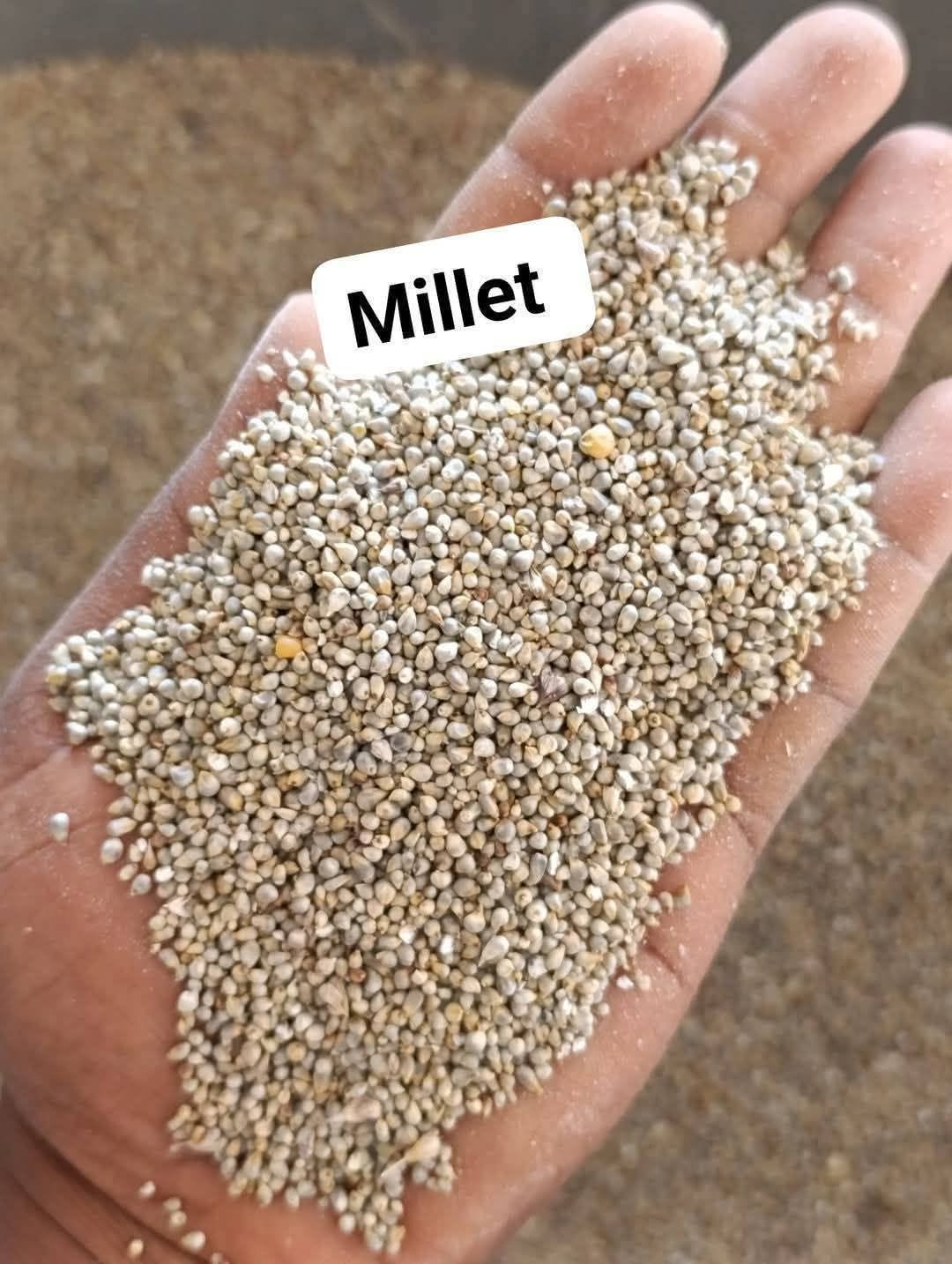
Whole Grain Pearl Millet — cleaned, dried whole millet grains for direct export to food manufacturers who mill on-site, animal feed manufacturers, bird food manufacturers, traditional beverage producers, and commodity buyers. The primary large-volume export form.
Millet Flour — whole grain or decorticated (outer bran removed) pearl millet milled to flour — the primary gluten-free flour form for baby food, infant porridge, flatbread, traditional food products, and health food baking applications.
Millet Flakes — steam-rolled whole millet flakes for ready-to-eat breakfast cereal, muesli, porridge blends, and granola bar ingredient applications — the processing form analogous to rolled oats whose convenience format creates premium health food retail market positioning.
Millet Bran — the outer pericarp fraction separated during decortication — a high-fibre, high-antioxidant by-product used in dietary supplement, animal feed, and functional food formulation.
Benefits and Industrial Uses of Nigerian Millet
Baby Food and Infant Nutrition Industry — The Most Commercially Significant Premium Application
The global baby food market — tracked through Grand View Research’s baby food market analysis at over USD 70 billion annually and growing at 5%+ CAGR — is one of the most quality-sensitive and premium-priced commercial markets for any grain-based ingredient. Pearl millet’s specific nutritional profile — high iron, high zinc, meaningful protein, and natural gluten-free status — creates the most compelling positioning of any commonly available grain for the following specific baby food applications:
Infant cereals and weaning porridge — pearl millet flour is the primary ingredient in traditional African weaning porridges across the Sahel belt whose preparation as ogi (fermented) or unfermented porridge has been the primary weaning food for Sahelian infants for generations. The WHO’s complementary feeding guidelines specifically identify iron and zinc as the micronutrients most critically limiting in typical complementary food diets of infants in low-income populations — creating institutional WHO-level validation for the commercial priority of iron-dense pearl millet in infant nutrition programming.
Iron and zinc fortification through food vehicle — for baby food manufacturers seeking to meet the iron and zinc nutritional requirements of infant complementary food without synthetic mineral supplement addition — pearl millet flour’s natural iron (8–11mg/100g) and zinc (3–5mg/100g) concentrations provide a whole-food fortification approach whose natural source credentials are commercially valued in the premium natural baby food segment. The Nestlé, Danone, and major branded baby food companies’ engagement with pearl millet in their African market infant nutrition products — documented through their CSR and nutrition programme reports — confirms commercial validation of the baby food application at the industry’s most respected institutional level.
Organic and clean-label baby food — the growing premium baby food segment whose parents specifically seek organic-certified, naturally nutritious, single-ingredient grain bases creates commercial demand for premium Nigerian pearl millet flour whose natural iron density, clean agricultural profile (minimal synthetic input use in traditional Sahel cultivation), and organic certification potential provide the ingredient credentials that natural baby food brands specifically communicate to their health-conscious parent consumer base.
For baby food and infant nutrition manufacturers evaluating Nigerian pearl millet flour — contact our export team to discuss iron and zinc content documentation and infant nutrition-grade specification.
Gluten-Free Food Manufacturing — The Iron-Rich Alternative to Nutritionally Hollow Alternatives
The global gluten-free food market’s primary criticism from nutritionists — consistently tracked through nutritional analysis of commercially available gluten-free products by EFSA’s scientific opinion on gluten-free food and reviewed through clinical nutrition research published in journals accessible via NCBI — is that gluten-free foods based on white rice flour and corn starch are nutritionally inferior to the wheat-based products they replace, delivering significantly less iron, zinc, magnesium, and B vitamins per serving. This “nutritional void” problem has become one of the most commercially pressing formulation challenges facing the gluten-free food industry.
Pearl millet flour’s specific iron, zinc, and magnesium density — combined with its natural gluten-free status — positions it as the solution to this nutritional void problem whose commercial value to gluten-free food manufacturers is growing with every nutritional labelling standard that highlights the micronutrient content of gluten-free alternatives:
Gluten-free bread with meaningful iron contribution — pearl millet flour incorporated at 30–50% of total flour blend in gluten-free bread formulation provides iron content per serving that approaches or meets the 15% DV (Daily Value) threshold for “good source of iron” claims on finished product labels — a labelling benefit that rice flour or corn starch-based bread formulations cannot approach without synthetic iron fortification.
Gluten-free baby biscuit and snack fortification — pearl millet flour’s combination of iron, zinc, and natural sweetness makes it specifically suited for gluten-free weaning biscuit and baby snack formulation — creating the iron contribution that iron-deficient infants in coeliac-affected families specifically need from a naturally gluten-free, iron-dense grain alternative.
Gluten-free flatbread and wrap — pearl millet flour’s specific starch and protein composition produces flatbread (analogous to the traditional jolof flatbread of Sahel communities) whose texture, pliability, and flavour are commercially appropriate for gluten-free wrap and flatbread applications where rice flour alternatives are too fragile and corn flour alternatives too dense.
Gluten-free breakfast cereal and porridge — millet flakes provide the breakfast cereal and porridge category with a natural gluten-free whole grain whose iron density creates meaningful daily iron contribution from the breakfast meal — the nutritional logic that has driven mainstream UK cereal manufacturer Warburtons and others to include pearl millet in their gluten-free product range reformulations.
For gluten-free food manufacturing buyers — contact our team to discuss iron content documentation and gluten-free certification testing.
Wild Bird Food Manufacturing — The Most Commercially Surprising Application at the Highest Volume
The wild bird food market — tracking the consumer products sold through garden centres, pet stores, supermarkets, and online retail for garden bird feeding — is one of the most commercially significant and least discussed commodity grain applications in this series. Pearl millet is one of the most widely used ingredients in wild bird food seed blends for European and North American garden bird feeding — consumed in enormous quantities annually:
The global wild bird food market — tracked through Grand View Research’s pet food market analysis — is valued at over USD 8 billion annually (broader pet food including bird food), with the UK wild bird food market alone estimated at over GBP 200 million annually by the Royal Society for the Protection of Birds (RSPB) whose bird feeding guidance specifically identifies pearl millet as a preferred food for ground-feeding bird species including dunnock, sparrows, buntings, and doves.
The commercial logic is straightforward: garden bird feeding is a year-round consumer behaviour in the UK (the world’s most bird-feeding-engaged nation per capita), Germany, the Netherlands, and North America — creating consistent, high-volume demand for whole pearl millet grain at bird food commodity specification (cleanliness, absence of foreign matter, appropriate grain size). Nigerian pearl millet — whose small to medium grain size, pale cream colour, and clean cultivation profile make it commercially appropriate for bird food specification — can serve this market at competitive pricing relative to established bird food grade millet origins.
For wild bird food manufacturers and pet food ingredient wholesalers evaluating Nigerian pearl millet — contact our export team to discuss bird food-grade specification and supply arrangements.
Traditional African Beverage Market — Fura Da Nono and the Commercial Premium of Authentic Traditional Processing
Fura da nono — the traditional Hausa beverage produced by forming fermented pearl millet dough into balls (fura) and combining them with fermented cow’s milk or yoghurt (nono) — is one of the most commercially sophisticated traditional food preparations in West Africa. Its specific combination of fermented millet’s probiotic bacterial cultures with the lactic acid bacteria of fermented milk creates a spontaneously fermented probiotic beverage whose nutritional complexity and flavour depth reflect centuries of traditional food science refinement.
The commercial development of fura da nono for diaspora markets — Nigerian communities in the UK, USA, Canada, and Europe whose food identity includes fura as a specifically valued traditional food — creates demand for whole pearl millet grain and pre-processed fura millet dough from authenticated Nigerian Sahel origin. Several diaspora food entrepreneurs are progressively formalising fura da nono production in the UK and USA — creating upstream procurement demand for Nigerian pearl millet as a core ingredient.
Kunu zaki — the traditional fermented millet beverage combining pearl millet with spices including cloves, ginger, and chilli pepper — whose fermentation creates a naturally probiotic, slightly alcoholic traditional drink consumed across northern Nigeria — creates additional procurement demand from traditional beverage producers serving both domestic Nigerian and diaspora markets.
Ogi/akamu — the fermented millet porridge consumed as breakfast food across Nigeria (prepared from pearl millet, corn, or sorghum depending on regional preference) — creates demand from commercial ogi manufacturers whose product reaches both domestic markets and diaspora export channels.
Nutraceutical and Dietary Supplement Industry
High-magnesium supplement — pearl millet’s extraordinary magnesium density (130–160mg per 100g) creates nutraceutical positioning for whole grain or concentrated extract products in the magnesium supplement market whose cardiovascular, bone health, and blood glucose management positioning is tracked through Grand View Research’s magnesium supplement market analysis. The WHO’s guidance on dietary magnesium requirements — published through WHO’s micronutrient nutrition programme — identifies magnesium deficiency as increasingly prevalent in Western populations whose ultra-processed food diets are systematically depleted of this mineral.
Probiotic food ingredient — fermented pearl millet (as in traditional ogi and kunu preparation) contains documented populations of lactic acid bacteria (Lactobacillus and Pediococcus species) whose probiotic properties are documented through NCBI’s fermented food microbiology database — creating functional food positioning for naturally fermented pearl millet products in the growing probiotic food market tracked through Mordor Intelligence’s probiotic food market report.
Alkaline diet supplement — pearl millet’s alkaline-forming mineral balance creates specific commercial positioning in the premium alkaline diet product market whose consumers actively seek alkaline-forming whole grain alternatives to conventional acid-forming refined grains tracked by Innova Market Insights’ alkaline food trend analysis.
Iron and zinc food supplement — pearl millet flour’s natural iron and zinc density creates dietary supplement formulation interest for iron and zinc deficiency management products targeting iron-deficient women, infants, and vegetarian/vegan populations whose plant-based diets require documented-high natural iron sources.
Animal Feed Manufacturing
Poultry feed — pearl millet grain’s metabolisable energy value (approximately 3,000–3,200 kcal/kg, dry matter basis — slightly below sorghum and corn) and its 10–14% protein content make it a commercially viable partial substitute for corn in poultry ration formulation. Research on pearl millet’s poultry feed performance — published through NCBI’s veterinary nutrition database — documents acceptable growth performance and feed conversion ratios at up to 50% inclusion in broiler rations when properly processed. The FEFAC tracks pearl millet within European compound feed ingredient ingredient alternatives.
Swine and ruminant feed — pearl millet’s digestibility in swine and ruminant rations is comparable to sorghum — with appropriate processing (ground or rolled millet for improved digestibility) achieving feed conversion ratios commercially competitive with corn and sorghum at equivalent pricing. For feed compounders whose geographic position or procurement relationships give them better access to Nigerian millet than to US corn or Indian sorghum — pearl millet provides a commercially viable alternative whose nutritional contribution is well-documented.
Why Buy Millet From Nigeria?
The Mineral Density and Sahel Growing Condition Advantage
The specific commercial argument for Nigerian Sahel-zone pearl millet over Indian, Chinese, or European-origin millet rests on the same growing condition quality enhancement logic we have documented throughout this series — with the specific addition that ICRISAT’s systematic biofortification research has specifically documented this quality advantage in the scientific literature:
Research published through ICRISAT’s biofortification programme comparing pearl millet iron and zinc concentrations across growing environments confirms that West African Sahel-grown varieties — including those from the Nigerian Sahel production zones — consistently achieve iron concentrations of 70–90mg/kg (dry weight) compared to 50–65mg/kg for Indian origin pearl millet under more favourable growing conditions. The semi-arid stress that might seem like a production disadvantage is in fact the mechanism producing superior mineral density — identical to the Sahel-quality argument we have applied to sesame, moringa, neem, and other Sahel-origin products across this series.
The Origin Authenticity and Biofortification Programme Connection
The connection of Nigerian pearl millet to ICRISAT’s biofortification research programme — whose institutional credibility is among the highest available in the international agricultural science community — provides Nigerian origin millet with a scientific institutional backing that no mainstream commodity grain origin possesses. For baby food manufacturers, infant nutrition organisations, and food fortification programme buyers who want to communicate “scientifically validated, origin-authenticated, naturally high iron and zinc grain” — Nigerian ICRISAT biofortification programme context pearl millet provides exactly that institutional narrative.
The Climate Resilience Long-Term Procurement Argument
The argument for building Nigerian pearl millet supply positions now — beyond immediate procurement economics — is identical to the climate resilience argument made in the sorghum article but with even stronger force: pearl millet’s 300mm rainfall production threshold is the ultimate climate change hedge in global grain procurement. As global warming progressively reduces the reliability of temperate cereal production in traditional growing zones — wheat in Europe, corn in the US Midwest, barley in Australia — the grain that can sustain commercial production in the warmest and driest agricultural environments on earth becomes progressively more strategically valuable. Nigerian Sahel pearl millet is not merely commercially interesting today. It is strategically essential in the 20–30 year grain procurement horizon that long-term food manufacturing and animal feed industry supply chain planning requires.
Complete Export Documentation from a Licensed Exporter
Every millet shipment from Paradise MultiTrade carries phytosanitary certification from NAQS, NEPC export documentation, certificate of origin, commercial invoice, packing list, and bill of lading. For food-grade buyers, we coordinate moisture content, test weight, protein content (Kjeldahl), iron and zinc content (ICP-MS/AAS for mineral analysis), aflatoxin screening, pesticide residue analysis to EU MRL standards, and microbiological safety testing following AOAC International validated procedures. For gluten-free certification buyers, we coordinate ELISA gluten testing below 20ppm. For infant nutrition buyers, we coordinate the complete analytical package including iron, zinc, phosphorus, magnesium, protein, moisture, aflatoxin, pesticide residue, and microbiological safety. EU-bound shipments comply with Regulation (EU) 2017/625 on official controls and mycotoxin limits under Commission Regulation (EC) 1881/2006. Our NEPC Export Licence No. 0042385 and CAC Registration No. RC-9284647 are verifiable through NEPC.
Nigeria’s Millet Export Strength and Global Market Demand
The Global Market — Nutritional Rediscovery Drives Premium Demand Growth
The global millet market — tracked through Grand View Research’s millet market analysis and Mordor Intelligence’s comprehensive millet market report at over USD 12 billion annually — is experiencing demand growth driven simultaneously by gluten-free food market expansion, infant nutrition programme investment, health food consumer interest in ancient grains, and animal feed industry demand for affordable drought-resilient grain alternatives to corn. The International Millet and Sorghum Value Chain Development (IMS-VCD) programme coordinates international millet trade development — tracking the progressive formalisation of West African millet export supply chains.
The United Nations’ declaration of 2023 as the International Year of Millets (IYM) — initiated by the Indian government at the UN General Assembly and endorsed by the FAO — provided the most significant global institutional marketing investment in millet’s commercial profile in the crop’s entire history. The IYM’s specific objectives included raising global consumer awareness of millets’ nutritional credentials, increasing international trade, and promoting millet consumption for food security and environmental sustainability. The commercial afterglow of the IYM — in terms of increased buyer inquiries, food manufacturer formulation interest, and media coverage — has created a commercial environment whose momentum benefits Nigerian millet export development more than any previous period.
Key Export Destination Markets
The United Kingdom — the world’s most wild bird food-engaged consumer nation, creating the most commercially immediate high-volume procurement market for bird food-grade pearl millet, alongside a growing gluten-free food manufacturing sector and a premium baby food market whose natural ingredient sourcing increasingly includes African-origin grains. UK grain import requirements are administered by APHA and FSA.
Germany and the Netherlands — Europe’s primary wild bird food manufacturing hub and most sophisticated health food grain ingredient procurement market — creating dual commercial demand for bird food-grade and food-grade Nigerian pearl millet. EU mycotoxin compliance under Commission Regulation (EC) 1881/2006 is the primary regulatory requirement. CBI Netherlands’ market intelligence on African grain exports provides specific EU market entry guidance.
France — whose premium natural baby food brands (including Blédina/Danone and independent French natural baby food companies) create specific demand for iron-dense, organically certified, African-origin pearl millet flour for infant cereal formulation.
The United States — whose gluten-free food market is the world’s largest and whose wild bird food market (the American Bird Conservancy estimates Americans spend over USD 4 billion annually on wild bird food) together create the most commercially significant North American demand. US grain import requirements are administered through USDA APHIS and FDA.
The UAE and Gulf States — where the large South Asian expatriate community’s familiarity with pearl millet (bajra in Hindi/Urdu) creates consistent procurement demand for both food-grade flour and whole grain, alongside growing interest in traditional West African grain products as part of the Gulf region’s progressive diversification of its food import sourcing.
India — paradoxically one of the world’s largest millet producers — imports specific West African pearl millet varieties during domestic supply shortfalls and for Sahel-origin varieties whose flavour profiles differ from Indian varieties in specific traditional preparation applications.
Japan and South Korea — whose premium health food markets and specific interest in ancient grain nutritional benefits create growing Asian destinations for food-grade Nigerian pearl millet tracked through JETRO.
Why Choose Paradise MultiTrade International Limited?
Iron and Zinc Content Documentation — The Primary Quality Credential for Baby Food and Health Food Buyers. We coordinate ICP-MS iron and zinc quantification through accredited food mineral analysis laboratories — providing the mineral content documentation that baby food manufacturers, infant nutrition programme buyers, and health food companies require for product formulation and label claim substantiation. This analytical capability specifically distinguishes our millet supply from undifferentiated commodity trading whose documentation rarely extends to micronutrient quantification. Contact us to discuss iron and zinc specification.
Gluten-Free ELISA Testing for Food Manufacturing Buyers. We coordinate ELISA gluten testing confirming below 20ppm on all food-grade millet lots where gluten-free claim substantiation is required — providing the analytical basis for gluten-free certification on finished food products incorporating our millet. Contact us to discuss gluten-free certification.
Bird Food-Grade Specification for Wild Bird Food Manufacturers. We supply pearl millet at bird food commodity specification — focusing on cleanliness (foreign matter below 1%), appropriate grain size consistency, low moisture (below 13%), and competitive pricing at the volume economics that wild bird food manufacturing requires. Contact our team to discuss bird food-grade pricing and volume.
All Four Commercial Forms. Whole grain pearl millet, millet flour, millet flakes, and millet bran — from the same documented Nigerian Sahel origin supply network. Contact us to specify your required form.
Multi-Commodity West African Grain and Agricultural Sourcing. Millet buyers frequently source complementary Nigerian agricultural commodities. Alongside millet, Paradise MultiTrade exports sorghum, soybeans, sesame seeds, tiger nuts, groundnut oil, shea butter, gum arabic, moringa leaf powder, hibiscus flower, lemongrass, cashew nut kernel, and raw cashew nuts. Explore our full range of Nigerian export commodities and consolidate your West African grain, oil, and botanical ingredient sourcing through one verified, licensed export partner.
Product Specifications
| Specification | Details |
|---|---|
| Product | Nigerian Pearl Millet (Pennisetum glaucum) |
| Common Names | Pearl millet, Gero (Hausa), Bajra (South Asian trade name), Bulrush millet, Candle millet |
| Botanical Species | Pennisetum glaucum (L.) R.Br. / Cenchrus americanus (Poaceae) |
| Origin | Nigeria (Kano, Katsina, Jigawa, Sokoto, Zamfara, Kebbi, Borno, Yobe, Gombe, Bauchi, Kaduna, Niger States) |
| Forms Available | Whole grain; Flour (whole grain or decorticated); Flakes (steam-rolled); Bran; Bird food-grade whole grain |
| Iron Content | 70–110mg/kg dry weight (8–11mg per 100g) — ICP-MS documented |
| Zinc Content | 30–50mg/kg dry weight (3–5mg per 100g) — ICP-MS documented |
| Magnesium Content | 1,300–1,600mg/kg dry weight (130–160mg per 100g) |
| Protein Content | 10–14% dry weight (Kjeldahl method) |
| Starch Content | 60–70% dry weight |
| Dietary Fibre | 1.5–2.5% dry weight (whole grain) |
| Moisture Content | ≤13% (whole grain, safe storage); ≤10% (flour, flakes) |
| Test Weight (bulk density) | ≥70 kg/hl |
| Foreign Matter | ≤2% (food grade); ≤1% (bird food grade — stricter cleanliness standard) |
| Broken and Damaged Grain | ≤3% |
| Aflatoxin | Total ≤10 ppb; B1 ≤2 ppb (EU limits per Commission Regulation (EC) 1881/2006) |
| Fumonisin | B1 + B2 ≤4,000 ppb (EU limits) |
| Pesticide Residue | Multi-residue analysis to EU MRL standards — mandatory for all EU-bound lots |
| Gluten | Below 20ppm (ELISA testing on request for gluten-free certification) |
| Microbiological | Total plate count within food safety limits; Salmonella absent/25g; E. coli within specified limits |
| Grain Colour | Pale cream to grey-white (premium food grade); grey-white (bird food grade) |
| Packaging Options | 25kg, 50kg polypropylene bags; bulk container loading |
| Supply Capacity | 500–50,000+ MT per season |
| MOQ | Whole grain: 25 MT; Flour and flakes: 5 MT; Bird food grade: 25 MT |
| Shelf Life | Whole grain: 12 months; Flour: 6 months; Flakes: 9 months |
| Export Documentation | Phytosanitary Certificate (NAQS), Certificate of Origin, NEPC Export Licence, Iron/Zinc/Magnesium Mineral Analysis Certificate (ICP-MS, on request), Certificate of Analysis (moisture, protein, test weight, foreign matter), Aflatoxin/Fumonisin Certificate, Pesticide Residue Certificate (EU MRL), Gluten-Free Certificate (on request, ELISA), Microbiological Certificate, Commercial Invoice, Packing List, Bill of Lading |
| Payment Terms | T/T, Letter of Credit (LC at sight), Escrow |
| Loading Port | Lagos (Apapa / Tin Can Island Port), Nigeria |
| Incoterms Available | EXW, FOB Lagos, CNF, CIF |
Packaging and Export Process
Harvest Season. Nigeria’s pearl millet primary harvest runs September through November — slightly earlier than the sorghum harvest because pearl millet’s shorter growing season (60–90 days for improved varieties versus 100–120 days for sorghum) allows it to mature before the main sorghum harvest period. Early-maturing varieties planted in June–July harvest in September; standard varieties planted in July harvest in October–November. The harmattan’s onset in late October–November creates optimal natural drying conditions for post-harvest moisture reduction.
Post-Harvest Drying and Cleaning. Freshly harvested millet carries 18–25% moisture — requiring immediate field drying on elevated platforms or mechanical dryer processing to reach the ≤13% safe storage moisture specification. Prompt drying is the critical quality management step — undried millet stored above 14% moisture creates conditions for Aspergillus aflatoxin production and Fusarium fumonisin contamination within weeks of harvest. Dried grain is cleaned through mechanical sieves removing foreign matter, broken grain, and light material.
Processing Routes:
Whole grain: Cleaned, dried millet packaged in 25–50kg polypropylene bags or bulk-loaded for container shipping. Bird food-grade material undergoes additional cleaning to below 1% foreign matter specification.
Flour: Decorticated (bran removed by abrasive milling) or whole grain millet fed through hammer or roller mills to flour particle size. Iron and zinc content is higher in whole grain flour (which retains the bran and aleurone layer mineral-rich fraction) than in decorticated flour. For baby food applications — whole grain flour is nutritionally preferred; for colour-neutral food manufacturing applications — decorticated flour provides lighter colour.
Flakes: Cleaned whole millet steamed and steam-rolled to flatten into flake form — providing the breakfast cereal and porridge convenience format that premium health food retail buyers specifically require.
Mineral Analysis Testing (food-grade lots). For food-grade, baby food, and infant nutrition buyers — iron, zinc, magnesium, and phosphorus content quantification through ICP-MS (inductively coupled plasma mass spectrometry) through accredited mineral analysis laboratories is coordinated before export documentation preparation. This mineral analysis documentation is what specifically distinguishes food-grade from commodity-grade millet procurement.
Lead Times. Whole grain (from harvest season stock): 14–21 days. Flour and flakes (processing scheduling required): 28–42 days. Mineral analysis documentation: add 7–10 days. Contact us early — particularly for infant nutrition buyers requiring the complete analytical package.
Frequently Asked Questions
What makes Nigerian Sahel-zone pearl millet higher in iron and zinc than millet from other producing countries?
The documented higher iron and zinc concentration in Sahel-grown pearl millet compared to more humid or irrigated origin material reflects the mineral concentration mechanism that drought stress activates in grain crops: when water availability is limited, the plant’s mineral uptake per unit of grain biomass increases as the same mineral absorption capacity from the soil operates on a smaller water-diluted grain volume. Additionally, the sandy, mineral-rich soils of the Nigerian Sahel — whose iron and zinc reserves reflect the geological weathering of the underlying laterite and granite parent material — provide higher mineral availability for root uptake than the more thoroughly leached soils of higher-rainfall agricultural zones. ICRISAT’s pearl millet biofortification research — documented through ICRISAT’s publications and accessible through HarvestPlus — specifically confirms West African Sahel pearl millet’s iron and zinc density advantage over non-Sahel origins. Paradise MultiTrade documents iron and zinc content through ICP-MS mineral analysis on food-grade and infant nutrition-grade lots — providing the analytical evidence that substantiates the Sahel quality premium. Contact us to discuss iron and zinc content documentation.
Why is pearl millet nutritionally superior to rice flour for gluten-free food formulation?
The core nutritional comparison that positions pearl millet flour above white rice flour in gluten-free formulation is multi-dimensional: Iron: pearl millet 8–11mg/100g versus white rice flour 0.5–0.8mg/100g — pearl millet provides 10–15× more iron per gram of flour. Zinc: pearl millet 3–5mg/100g versus white rice flour 0.5–1mg/100g — pearl millet provides 4–8× more zinc. Magnesium: pearl millet 130–160mg/100g versus white rice flour 25–35mg/100g — pearl millet provides 4–5× more magnesium. Protein: pearl millet 10–14% versus white rice flour 6–7% — pearl millet provides meaningfully more protein per serving. The practical consequence for gluten-free food manufacturers: 100g of pearl millet flour can contribute 40–73% of the Recommended Daily Intake (RDI) for iron for an adult — providing genuine nutritional contribution that white rice flour or corn starch-based formulation cannot replicate without synthetic fortification. For manufacturers developing gluten-free products specifically marketed for nutritional density — pearl millet flour is not merely a texture and structure ingredient but a primary nutritional contributor. Contact us to discuss iron content specification for food label claim purposes.
What makes pearl millet suitable for wild bird food and what specification is required?
Wild bird food manufacturers specify pearl millet for bird seed blends based on three properties: (1) Palatability to ground-feeding birds — pearl millet’s small grain size, soft bran layer, and mild flavour profile make it highly accepted by dunnocks, sparrows, buntings, finches, and doves that feed on ground-level seed; the RSPB’s bird feeding guidance specifically identifies pearl millet as a preferred seed for these species. (2) Cleanliness and foreign matter — bird food blends must be free of soil, stones, plant debris, and other foreign matter that could contaminate bird feeder designs; bird food-grade millet specifies ≤1% foreign matter (stricter than the ≤2% standard food specification). (3) Moisture content — bird food millet must be below 12% moisture to prevent mould growth in bird feeders exposed to outdoor humidity. The bird food market does not require human food safety specifications (no pesticide residue testing, no microbiological standards equivalent to food grade) — but does require APHA phytosanitary documentation for the UK market and equivalent plant health documentation for EU markets. Paradise MultiTrade supplies bird food-grade pearl millet at the cleaned, low-moisture specification that bird food manufacturing requires at competitive commodity pricing. Contact us to discuss bird food-grade specification and volume pricing.
What is fura da nono and how is it relevant to pearl millet export development?
Fura da nono is the traditional Hausa fermented millet beverage prepared in two stages: (1) fura — pearl millet grain is soaked, ground, kneaded with spices (cloves, pepper, dry ginger), formed into balls, and partially cooked by brief boiling; (2) da nono — the fura balls are crumbled into fresh cow’s milk or fermented cow’s milk (nono) and stirred vigorously until combined into a thick, probiotic-rich beverage. The result is a spontaneously double-fermented drink combining millet’s lactic acid bacterial cultures with the lactic acid bacteria of fermented cow’s milk — creating a natural probiotic beverage whose nutritional complexity has sustained Hausa communities across generations. Its diaspora commercial relevance: several UK and USA-based Nigerian food entrepreneurs are developing commercial scale fura production for diaspora retail — requiring consistent, quality-documented Nigerian pearl millet as their primary raw material. Its health food commercial relevance: fura da nono as a concept maps directly onto the probiotic dairy beverage category (analogous to kefir or lassi) whose premium health positioning the European and American natural food market has made commercially lucrative. For food entrepreneurs developing authentic West African probiotic beverage products — Nigerian pearl millet is the non-negotiable primary ingredient. Contact us to discuss procurement for fura and traditional beverage applications.
What mycotoxin limits apply to Nigerian millet entering EU food markets?
EU Commission Regulation (EC) 1881/2006 applies the following maximum contaminant limits for pearl millet entering EU food markets: Aflatoxin B1: ≤2 ppb (food-grade unprocessed cereal); Total aflatoxins: ≤4 ppb; Fumonisin B1+B2: ≤4,000 ppb (unprocessed cereals); Deoxynivalenol (DON): ≤1,750 ppb (unprocessed cereals). Pearl millet’s primary mycotoxin risk is fumonisin — from Fusarium infection at field level during grain development — and aflatoxin from post-harvest inadequate drying and storage conditions. The harmattan drying season that coincides with Nigeria’s millet harvest (September–November) provides naturally low humidity conditions that significantly reduce post-harvest aflatoxin risk if field drying is prompt. Paradise MultiTrade coordinates aflatoxin and fumonisin testing through accredited GAFTA-approved laboratories on all EU-bound millet lots as standard pre-export quality assurance. Contact us to discuss EU mycotoxin compliance documentation.
What is the Nigerian millet harvest season and when should I plan procurement?
Nigeria’s pearl millet primary harvest runs September through November — slightly earlier than sorghum due to millet’s shorter growing season. Early-maturing improved varieties (60–75 days maturity) planted in June harvest by September; standard varieties (80–90 days) planted in July harvest by October–November. Procurement planning recommendations: (1) For premium mineral-density food-grade procurement requiring ICP-MS iron/zinc documentation — initiate discussions by July–August to coordinate September–October fresh harvest material whose mineral content documentation reflects the most recently validated growing season. (2) For large-volume bird food-grade procurement — October–December booking allows access to peak harvest supply at most competitive pricing. (3) For flour and flakes requiring processing scheduling — November–January procurement from harvest inventory provides optimal processing scheduling flexibility. (4) Fresh harvest (September–October) material provides the highest germination rate (relevant if any buyer wants to sprout millet for sprouted grain applications) and the lowest mycotoxin risk. Contact us to plan your procurement cycle.
What transit times should I expect from Nigeria?
Whole grain millet, flour, and flakes (standard dry container, no temperature control): UK (Tilbury, Felixstowe) — 14–18 days from Lagos. Netherlands (Rotterdam) — 14–18 days. Germany (Hamburg) — 14–20 days. France (Le Havre) — 14–18 days. USA (East Coast — New York, Baltimore, Savannah) — 18–25 days. UAE (Jebel Ali) — 10–14 days. India (Nhava Sheva, Mundra) — 10–15 days. Japan (Yokohama) — 25–32 days. Canada (Halifax, Montreal) — 18–28 days. For large-volume buyers (above 5,000 MT): bulk vessel chartering from Lagos provides significantly lower per-tonne freight costs than container shipping — feasible for large bird food manufacturers and commodity feed compounders. Add 7–10 days for ICP-MS mineral analysis documentation on infant nutrition and health food-grade lots. Contact us to plan your complete logistics programme.
Ready to Source Premium Nigerian Pearl Millet — Whole Grain, Flour, Flakes, and Bird Food-Grade With Iron and Zinc ICP-MS Documentation, Gluten-Free ELISA Certification, EU Mycotoxin Compliance, and Full Analytical Documentation for Baby Food Manufacturers, Gluten-Free Food Companies, Wild Bird Food Producers, and Global Wholesale Buyers?
If you are a European or American baby food or infant nutrition manufacturer developing iron-dense, naturally gluten-free, African-origin grain-based infant cereals and weaning porridges who needs documented Nigerian pearl millet flour with ICP-MS iron and zinc content certification, a gluten-free food company developing nutritionally credentialed gluten-free bread, pasta, porridge, or snack products whose formulation specifically addresses the nutritional void problem of conventional rice flour and corn starch-based alternatives, a UK, German, Dutch, or American wild bird food manufacturer building Nigerian pearl millet supply positions for garden bird seed blend formulation at competitive commodity pricing and clean-specification grain, a traditional African food and beverage entrepreneur developing commercial-scale fura da nono, kunu zaki, or ogi products for diaspora retail using authenticated Nigerian Sahel pearl millet as primary raw material, a nutraceutical brand developing magnesium supplement, alkaline diet, or iron deficiency management products incorporating whole grain or flour-form Nigerian pearl millet, an animal feed compound manufacturer evaluating pearl millet as a drought-resilient, competitively priced corn alternative for poultry, swine, or ruminant ration formulation, a food security or nutrition programme procurement officer building supply positions for iron and zinc food fortification in sub-Saharan African community nutrition programmes, or a global commodity grain trader building Nigerian pearl millet supply positions for the European bird food market, UK gluten-free food sector, or Middle Eastern traditional food market — Paradise MultiTrade International Limited is the licensed Nigerian exporter your millet supply programme needs.
We supply Nigerian Pennisetum glaucum pearl millet — whole grain, flour, flakes, and bird food-grade — from Kano, Katsina, Sokoto, and Zamfara Sahel-zone producing communities, iron and zinc ICP-MS content documented for baby food and health food buyers, gluten-free ELISA testing coordinated on request, EU aflatoxin and fumonisin mycotoxin certified for all European shipments, pesticide residue compliant, and exported at commercial volume with full analytical and regulatory documentation to buyers in every major regulated destination market.
Request a Quotation — share your required form (whole grain, flour, flakes, or bird food-grade), volume, iron/zinc content specification if applicable, gluten-free certification requirement, application context (baby food, gluten-free food, bird food, animal feed, traditional beverage, nutraceutical), destination market, and preferred incoterms. We respond within 48 hours.
Contact Our Export Team — speak directly about ICP-MS iron and zinc mineral analysis, ICRISAT biofortification programme context documentation, gluten-free ELISA certification, EU mycotoxin compliance, bird food-grade cleanliness specification, harvest season procurement planning for September–November main crop, bulk vessel chartering options for large-volume buyers, and long-term supply programme structuring.
Explore Our Full Product Range — alongside millet, Paradise MultiTrade exports sorghum, soybeans, tiger nuts, sesame seeds, moringa leaf powder, shea butter, gum arabic, hibiscus flower, lemongrass, raw bush honey, cashew nut kernel, and raw cashew nuts. One licensed Nigerian exporter. One consolidated West African grain, oil, botanical, and natural food sourcing relationship — from the world’s most drought-resilient major cereal grain whose climate-adaptive properties make it the most strategically important agricultural commodity of the coming century to the continent’s most nutritionally dense infant food ingredient.
Paradise MultiTrade International Limited | NEPC Export Licence No. 0042385 | CAC No. RC-9284647 | Lagos, Nigeria | www.paradisemultitrade.com
buy Nigerian millet, pearl millet Nigeria supplier, Pennisetum glaucum Nigeria bulk export, millet flour Nigeria wholesale, Nigerian millet for food manufacturing, gero millet Nigeria export, gluten-free millet Nigeria, West African pearl millet bulk buyer
Reviews
There are no reviews yet.