
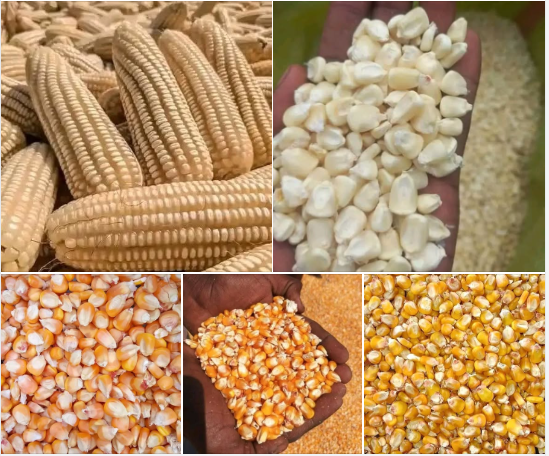

Nigerian Maize (Yellow Corn and White Maize): Africa’s Most Commercially Significant Cereal Crop — Whose Yellow Variety Feeds the World’s Poultry, Pigs, and Aquaculture Farms While Its White Variety Feeds Africa’s Human Population — and Whose Nigerian Production Scale, IITA-Improved Variety Performance, and Atlantic Logistics Position Create a Supply Geography Whose Commercial Development Is Among the Most Strategically Important Agricultural Trade Opportunities in Sub-Saharan Africa
Maize Exporter Nigeria — Yellow Corn (Grade 1 and Grade 2), White Maize, Maize Flour, Maize Grits, Maize Bran, and Maize Starch, Direct Northern and Middle Belt Sourcing, Bulk Supply to Animal Feed Manufacturers, Poultry Feed Producers, Starch and Glucose Manufacturers, Ethanol Distillers, Food Processing Companies, Flour Millers, Breweries, and Global Commodity Wholesale Buyers Worldwide
Maize exporter Nigeria is a search phrase that opens into the most commercially complex production-consumption dynamic in West African agricultural trade — a paradox whose commercial understanding is essential for any international buyer evaluating Nigerian maize supply:
Nigeria is the largest maize producer in Africa — generating approximately 12–15 million metric tonnes of fresh maize annually according to FAO production statistics — whose production scale, supported by the world’s most concentrated cassava and maize agricultural research infrastructure at the International Institute of Tropical Agriculture (IITA) headquartered in Ibadan, Nigeria, creates a production base that has grown consistently through adoption of improved varieties, mechanisation expansion, and government agricultural investment programmes.
Nigeria is also, in many seasons, a net maize importer — because the domestic demand of Africa’s most populous country (215+ million people consuming maize as ugali, ogi, tuwo masara, and the hundreds of maize-based traditional foods documented across 36 states and their FCT) combined with the fastest-growing industrial demand profile on the continent (the Nigerian poultry industry consumes approximately 2.5 million tonnes of maize annually as its primary feed ingredient; the industrial starch sector consumes several hundred thousand additional tonnes; the brewing and milling sectors add further industrial demand) creates annual aggregate domestic maize demand whose total significantly exceeds domestic production in below-average harvest years, creating the import-despite-production paradox that Nigerian agricultural economists have documented extensively.
The commercial opportunity that this production-consumption dynamic creates for international buyers is not — as might be assumed — a reason to avoid Nigerian supply. It is the precise indicator of a maize producing country whose domestic market is developing the industrial demand infrastructure (poultry, feed milling, starch, ethanol) that pulls agricultural supply upward — creating the agricultural investment incentives, the improved variety adoption rates, and the production scale growth whose trajectory suggests that Nigeria’s export surplus capacity, currently seasonal and variety-specific, will grow progressively as smallholder productivity improvements outpace even rapid domestic demand growth.
The specific commercial opportunity for international buyers in this trajectory: establishing supply relationships with Paradise MultiTrade’s Nigerian maize programme now — when Nigerian maize is competitively positioned for export in surplus harvest seasons and specific quality grades — creates the sourcing infrastructure and commercial relationships that grow in value as Nigerian production scale expands and export infrastructure develops. First-mover positioning in Nigerian maize supply is a commercial strategy whose payoff compounds over time rather than delivering immediate arbitrage.
The dual product disambiguation that this combined article addresses:
Yellow maize (yellow corn) — Zea mays with yellow endosperm, whose colour derives from the carotenoid compounds zeaxanthin and lutein (10–20μg per gram dry weight) — the most commercially significant animal feed grain globally, consumed by the poultry, swine, aquaculture, and cattle feed industries as the primary energy source in compound feed formulations across every major animal protein producing country on earth.
White maize — Zea mays with white endosperm, essentially carotenoid-free — the culturally preferred food grade maize across sub-Saharan African and southern African human food consumption whose specific colour preference (white flour, white grits, white ugali, white tuwo) creates a parallel commercial stream for human food applications that the carotenoid-pigmented yellow grain cannot enter in most African food culture contexts.
Both varieties come from the same species — Zea mays L. — and share virtually identical starch, protein, and fibre chemistry. Their commercial separation is almost entirely driven by the colour preference whose root is partly cultural (African food tradition’s white starch preference), partly functional (yellow pigment in animal feed creates desirable egg yolk and broiler skin colour whose value is quantified by the poultry industry), and partly industrial (starch manufacturing preferring white maize whose lower carotenoid content creates purer white starch products).
At Paradise MultiTrade International Limited, maize is one of our most strategically significant volume commodity categories — sourced from farming communities across Nigeria’s primary production states of Kano, Kaduna, Katsina, Borno, Gombe, Plateau, Benue, Nasarawa, Niger, Kebbi, Sokoto, Zamfara, and Kwara, processed into specific commercial grades appropriate to animal feed, human food, and industrial application requirements, and exported with full food safety, mycotoxin, and quality documentation.
To discuss sourcing immediately, request a quotation here and our export team responds within 48 hours.
History and Origin — From Mesoamerican Domestication to Africa’s Most Important Cereal
Zea Mays — The Americas’ Most Transformative Agricultural Gift
Zea mays L. — maize, corn — is native to Mexico’s Balsas River valley in the present-day state of Guerrero — where archaeological evidence documents the domestication of wild teosinte (Balsas teosinte, Zea mays ssp. parviglumis) into cultivated maize approximately 9,000 years ago, creating one of the most extraordinary agricultural transformations in human history. The wild teosinte plant — a weedy annual grass producing small cobs with only 6–12 rock-hard kernels — was transformed through 5,000 years of selection and cultivation into the large-cobbed, multi-hundred-kernelled, nutritionally productive crop whose global adoption has made it the world’s most produced grain crop by volume.
Columbus’s return from the Caribbean in 1493 introduced maize to Europe and — through Portuguese maritime trade — to West Africa, where it arrived approximately in the early 16th century. Nigeria’s adoption of maize was progressive and transformative — creating the northern Guinea savanna maize belt (whose Benue, Kaduna, Kano, and adjacent states now produce the majority of Nigerian commercial maize) and the southern forest-edge maize production zones (whose Ogun, Oyo, and Kwara states contribute to total production) whose combined output has grown from a few million tonnes annually in the 1960s to the current 12–15 million tonne level through improved variety adoption championed by IITA.
The IITA connection — whose commercial significance for Nigerian maize is unique in the West African region — deserves specific documentation: IITA, headquartered in Ibadan since 1967 and operating research stations across Nigeria and sub-Saharan Africa, has developed the most commercially impactful tropical maize improved variety portfolio in Africa, including: TZEE-W and TZEE-Y series (drought-tolerant open-pollinated varieties), SAMMAZ series (specifically improved varieties for smallholder production whose adoption across northern Nigeria has created documented yield improvements of 40–80% versus traditional varieties), and the ProVitaMinCorn series (whose provitamin A-biofortified yellow maize creates both animal feed and human food nutritional positioning). Nigeria’s proximity to IITA’s Ibadan headquarters creates technology access advantages that geographically distant African maize producing countries do not have — whose commercial expression is consistent varietal improvement adoption whose yield and quality trajectories support long-term supply programme development.
What Is Nigerian Maize? The Botanical Profile, Composition, and Commercial Grade Structure
Zea Mays — The Kernel Architecture and Commercial Chemistry
Zea mays is a member of the Poaceae (grass) family — the same botanical family as wheat (Triticum aestivum), rice (Oryza sativa), sorghum (Sorghum bicolor), and millet (Pennisetum glaucum) — whose tropical and subtropical annual growth habit creates the agronomic profile whose adaptation to Nigeria’s Guinea savanna and Sudan savanna growing zones has created commercial production geography.
The maize kernel’s commercial architecture:
Pericarp (outer shell): 5–6% of kernel weight — the bran fraction whose dietary fibre content creates animal feed and human food fibre positioning. Colour of the outer pericarp (essentially transparent in both yellow and white maize — the colour distinction is in the endosperm) creates no visual difference at the whole kernel level; the endosperm colour (starchy interior) determines yellow vs white classification.
Endosperm: 82–84% of kernel weight — the primary commercial fraction whose starch content (approximately 70–75% of endosperm weight) creates the energy value that dominates commercial use. Yellow maize endosperm contains zeaxanthin and lutein (total carotenoids 10–20μg per gram); white maize endosperm is essentially carotenoid-free.
Germ: 10–12% of kernel weight — the lipid-rich fraction containing approximately 30–35% oil (primarily linoleic acid, creating a healthy fatty acid profile) and the majority of the kernel’s protein fraction (approximately 18–20% protein in the germ versus 8–9% in the endosperm).
The Nutritional Comparison — Yellow vs White:
| Nutrient | Yellow Maize | White Maize | Commercial Significance |
|---|---|---|---|
| Zeaxanthin + Lutein | 10–20μg/g | <1μg/g | Poultry egg yolk/skin colour, antioxidant supplement |
| Starch | 70–72% dry weight | 70–72% dry weight | Identical — commercial energy value equal |
| Protein | 8–10% dry weight | 8–10% dry weight | Identical |
| Oil | 4–5% dry weight | 4–5% dry weight | Identical |
| Dietary Fibre | 7–9% dry weight | 7–9% dry weight | Identical |
| β-Carotene (provitamin A) | Standard: trace; ProVitaMinCorn varieties: 10–15μg/g | Essentially absent | IITA-biofortified varieties create nutritional differentiation |
The nutritional equivalence between yellow and white maize — identical starch, protein, oil, and fibre — means that the commercial price differential between the two grades is driven entirely by the colour preference of the downstream application, not by any underlying nutritional difference that affects energy or protein delivery.
The Aflatoxin and Fumonisin Management Framework — Nigeria’s Most Critical Quality Parameter
As documented in the akamu article’s fumonisin discussion — and now expanded for raw maize export context — the two primary mycotoxin hazards in Nigerian maize require systematic management whose documentation is essential for every international buyer’s quality system:
Aflatoxin — produced by Aspergillus flavus and A. parasiticus — the most commercially consequential food safety hazard in West African maize, whose hot, humid tropical storage conditions create proliferation risk if maize is not rapidly dried to below 13% moisture and stored in cool, dry conditions. EU maximum limits: B1 ≤2 ppb; total ≤4 ppb for food use; B1 ≤20 ppb for animal feed. Nigerian aflatoxin challenge is real and specifically managed — IITA’s drought-tolerant varieties carry lower aflatoxin risk because drought stress during flowering creates the physiological predisposition to Aspergillus infection that well-watered, stress-free growing conditions minimise. Paradise MultiTrade’s aflatoxin management: pre-harvest variety selection (IITA varieties with documented lower aflatoxin susceptibility), rapid post-harvest drying to below 13% moisture within 48 hours of harvest, cold-chain-free but humidity-managed storage in sealed warehousing, and ELISA screening of every export lot before commercial acceptance.
Fumonisin B1 and B2 — as documented in the akamu article, maize-specific mycotoxins produced by Fusarium moniliforme whose EU limits for unprocessed maize are 4,000 ppb (4mg/kg) total FB1+FB2 — less stringent than the 1,000 ppb limit for processed maize products, but still requiring systematic testing documentation. Paradise MultiTrade tests fumonisin on every EU-bound maize lot by ELISA screening with HPLC confirmation.
Zearalenone — the oestrogenic Fusarium mycotoxin whose EU limit for unprocessed maize is 2,000 ppb — tested on every EU-bound lot.
Commercial Grades and Quality Standards
Nigerian Grade 1 Yellow Maize:
Moisture ≤13%; Aflatoxin ≤4 ppb B1; Foreign matter ≤1%; Broken kernels ≤2%; Damaged kernels ≤2%; Weevil damage absent; Minimum test weight 70 kg/hl. The premium export grade whose specifications match or exceed GAFTA, FOSFA, and ISTA standards for international food-grade and premium animal feed-grade maize.
Nigerian Grade 2 Yellow Maize:
Moisture ≤14%; Aflatoxin ≤10 ppb total; Foreign matter ≤2%; Broken kernels ≤5%; Damaged kernels ≤5%. The standard commercial animal feed grade whose pricing reflects higher tolerance for physical quality defects while maintaining food safety within international standards.
Nigerian White Maize (Food Grade):
Moisture ≤13%; Aflatoxin ≤2 ppb B1 (more stringent — food use); Foreign matter ≤0.5%; Broken kernels ≤1.5%; Damaged kernels ≤1.5%; Colour: white endosperm confirmed (no yellow admixture above 2%). The human food application grade whose stringent colour and safety specifications command premium pricing versus yellow maize commodity.
Maize Flour (White — Bolted): Moisture ≤12%; Protein 7–9%; Starch 72–76%; Fat 1–2% (bran-reduced); Colour: bright white.
Maize Grits (White — Degermed): Particle size 0.5–3mm graded; Moisture ≤13%; Fat ≤1% (degermed).
Maize Bran: The by-product stream from maize milling — pericarp and germ-rich fraction — whose fibre and oil content creates animal feed ingredient value.
Benefits and Industrial Uses of Nigerian Maize
Animal Feed Manufacturing — The Single Largest Global Maize Application
The global animal feed industry — tracked through International Feed Industry Federation (IFIF) at approximately 1.1 billion metric tonnes of compound feed produced annually — consumes the majority of the world’s maize production through a simple commercial logic: maize is the most energy-dense, most cost-effective, most logistically accessible cereal grain available for monogastric livestock energy nutrition, creating a demand whose scale, consistency, and growth make it the foundational commodity of the global food protein supply chain:
Poultry feed — the single largest maize consumption application globally. Broiler (meat chicken) compound feed typically incorporates 60–65% maize as the primary energy component — with Nigeria’s poultry industry (approximately 180 million birds) consuming approximately 2.5 million tonnes annually. European, Middle Eastern, and Southeast Asian poultry industries whose annual maize procurement is measured in millions of tonnes create the commercial procurement community for Nigerian maize whose surplus export potential is concentrated in strong harvest years. For EU poultry feed buyers — yellow maize’s zeaxanthin and lutein content creates specific value: these carotenoids deposit in egg yolks (creating the deep yellow yolk colour that European consumers associate with quality and freshness) and in broiler skin (creating the yellow skin pigmentation that some European and Asian markets specifically value). Yellow maize’s carotenoid advantage over white maize in poultry nutrition is quantified — typically 10–15mg zeaxanthin per kg of feed from yellow maize inclusion versus zero from white maize — creating a nutritional specification argument for yellow maize in poultry compound feed whose commercial value justifies the colour premium over white maize in animal feed markets.
Swine feed — compound pig feed typically incorporates 55–70% maize as the primary energy source — creating the second largest maize consumption stream in global animal agriculture. For swine feed manufacturers in the EU, USA, and Southeast Asia whose procurement creates consistent demand for yellow maize as energy-dense swine feed ingredient — Nigerian Grade 2 yellow maize provides the basic energy specification at competitive pricing.
Aquaculture feed — the rapidly growing global fish farming sector — tracked through FAO’s aquaculture production statistics as the world’s fastest growing food production sector — creates growing maize procurement demand from fish feed manufacturers whose tilapia, catfish, shrimp, and salmon formulations incorporate maize as an energy and binding agent. Nigerian yellow maize’s competitive pricing for West African aquaculture feed manufacturing creates specific regional industrial demand.
For animal feed manufacturer buyers — contact our export team to discuss yellow maize Grade 1 and Grade 2 specification.
Human Food Manufacturing — White Maize’s African Food Cultural Dominance
White maize flour and meal production — the most commercially significant human food application for Nigerian white maize — creates consistent industrial procurement demand from:
Flour milling for ugali, tuwo, and ogi — white maize’s role as the primary starch staple across East and West African human food cultures creates consistent demand from flour mills in Kenya, Tanzania, Uganda, Zambia, Zimbabwe, and South Africa — whose white maize procurement is measured in millions of tonnes annually and whose regional sourcing from Nigeria’s Atlantic position would replace more distant southern African origin supply on specific freight economics and logistics grounds.
Breakfast cereal and maize porridge manufacturing — white maize grits and flour as the ingredient base for commercial breakfast cereals (maize flakes, puffed corn products) and instant maize porridge create food manufacturing procurement demand from regional and international food manufacturers whose product formulations specifically require white maize’s neutral colour for visually appealing final product presentation.
Tortilla and snack food manufacturing — the global expansion of Mexican food culture’s tortilla, nacho, and corn chip tradition creates maize procurement demand from snack food manufacturers across Europe, Asia, and Africa whose white or yellow maize specification depends on the target product’s colour requirement.
Baby food and weaning food manufacturing — as documented in the akamu article, maize-based complementary foods including fermented ogi/akamu represent the most widespread weaning food tradition in Nigeria and West Africa — creating industrial procurement demand for documented, food-safe yellow and white maize from food manufacturers building complementary food products for West African markets.
Industrial Processing — Starch, Glucose, Ethanol, and Bioproducts
Wet milling for starch production — the largest volume industrial maize processing application outside animal feed — producing native maize starch (food, pharmaceutical, and industrial applications), modified starches (food thickeners, adhesives), glucose syrup (beverage sweetener, confectionery), fructose syrup (HFCS), and maize oil from the germ fraction. White maize is specifically preferred for starch production — its near-zero carotenoid content creates the pure white starch colour whose food and pharmaceutical application requirements demand colourless product. For starch manufacturers in Nigeria, West Africa, and internationally — white maize’s colour specification creates the primary procurement differentiation from yellow maize.
Dry milling for grits and flour — the simpler industrial processing route producing maize grits (for brewing, snack food, and breakfast cereal), maize flour (for baking and traditional food), and maize bran (for animal feed) from both yellow and white maize depending on application colour requirements.
Brewing industry — maize grits and maize starch as adjuncts in beer brewing — partially replacing malted barley in lager beer production to reduce raw material cost while maintaining fermentation characteristics. The West African brewing industry — whose major operators include Nigerian Breweries (Heineken subsidiary), Guinness Nigeria, International Breweries, and smaller craft operators — collectively consume significant volumes of maize grits annually as brewing adjuncts whose domestic procurement from Nigerian production reduces import dependency.
Bioethanol — maize starch fermentation to ethanol for fuel blending creates industrial procurement demand from ethanol distillers whose expansion is driven by Nigeria’s progressive biofuel mandate implementation.
For industrial processing buyers — contact our team to discuss white maize food grade and industrial starch specification.
The IITA ProVitaMinCorn Opportunity — Biofortified Yellow Maize
Provitamin A-biofortified yellow maize — IITA’s SAMMAZ series varieties whose provitamin A content (β-carotene 10–15μg per gram) significantly exceeds conventional yellow maize’s trace levels — creates a premium nutritional segment whose public health significance in sub-Saharan Africa (where vitamin A deficiency affects an estimated 190 million children) creates both institutional nutrition programme demand and premium food manufacturing positioning. For buyers developing nutritionally differentiated maize products whose provitamin A content creates competitive positioning in health-conscious consumer markets — the IITA-developed ProVitaMinCorn varieties create the raw material foundation whose Nigerian production and Paradise MultiTrade supply programme enables access. Contact us to discuss provitamin A biofortified maize availability.
Why Buy Maize From Nigeria?
Africa’s Largest Producer — The Production Scale Argument
Nigeria’s 12–15 million tonne annual maize production — the largest in sub-Saharan Africa — creates supply availability whose scale supports both domestic demand and progressive export programme development. For international buyers whose annual procurement requirements are measured in thousands of tonnes — Nigeria’s production geography (spread across 10+ northern states, creating supply resilience through geographic diversification across different rainfall zones and different harvest timing) creates procurement reliability that smaller-production-geography alternatives cannot match.
IITA-Backed Varietal Improvement — The Quality Trajectory Argument
No other African country has the crop improvement research infrastructure concentration that Nigeria has for maize — with IITA’s Ibadan headquarters and multiple national research institutes whose combined work on drought tolerance, aflatoxin resistance, yield improvement, and provitamin A biofortification creates a continuous quality improvement trajectory whose commercial expression grows more favourable with each successive varietal adoption cycle. Buyers who establish Nigerian maize supply relationships today are positioned at the beginning of a yield and quality improvement curve — not at its plateau.
Atlantic Logistics — The Geographic Advantage
Lagos to Rotterdam: 14–18 days. South African ports to Rotterdam: 20–30 days. North American Gulf (New Orleans) to Rotterdam: 10–14 days. For European animal feed and food processing buyers whose current procurement leans heavily on South American (Brazil, Argentina) and North American origins — Nigerian Atlantic position creates 6–15 day shipping time advantage to European destination ports, whose value in freight cost and supply chain responsiveness grows as vessel rates and port congestion create logistics premium on shorter transit times.
Complete Export Documentation
Every maize shipment carries phytosanitary certification from NAQS, NEPC export documentation, certificate of origin, commercial invoice, packing list, and bill of lading. We coordinate moisture content (ISTA moisture meter), test weight (kg/hl), foreign matter percentage, broken kernel percentage, damaged kernel percentage, aflatoxin (ELISA — all lots; HPLC confirmation for EU-bound lots), fumonisin B1+B2 (ELISA), zearalenone (ELISA), deoxynivalenol (DON) screening (where specified), pesticide residue multi-residue analysis to EU MRL standards per Regulation (EC) 396/2005, and protein and starch content (for food and industrial processing grades). EU-bound shipments comply with Regulation (EU) 2017/625 on official controls and Commission Regulation (EC) 1881/2006. Our NEPC Export Licence No. 0042385 and CAC Registration No. RC-9284647 are verifiable through NEPC.
Nigeria’s Maize Export Strength and Global Market Demand
The Global Market
The global maize market — tracked through FAO commodity data and USDA World Agricultural Supply and Demand Estimates (WASDE) at approximately 1.2 billion metric tonnes of production annually — is dominated by the USA (approximately 390 million MT), China (approximately 280 million MT), Brazil (approximately 130 million MT), and Argentina (approximately 60 million MT). Sub-Saharan African production — of which Nigeria is the largest contributor — represents a growing but currently modest share of global formal trade whose development trajectory creates the commercial opportunity that Paradise MultiTrade’s programme specifically builds for.
The International Grains Council (IGC) and Grain and Feed Trade Association (GAFTA) provide the international trade documentation standards and contract framework within which Nigerian maize’s formal export development operates.
Key Export Destination Markets
Netherlands, Germany, and Belgium — Europe’s primary animal feed and industrial maize processing hubs creating consistent import demand from non-European origins. EU maize import requirements administered through EFSA and [Regulation (EC) 1881/2006] mycotoxin limits.
West African Regional Market — Senegal, Côte d’Ivoire, Ghana, and Cameroon whose domestic production deficits in specific years create regional trade demand for Nigerian maize whose land-border and short-sea logistics create cost advantages over intercontinental origins. ECOWAS trade framework reduces intra-regional tariff barriers.
Middle East (Saudi Arabia, UAE, Kuwait) — whose large poultry industries create significant yellow maize import demand tracked through ADAFSA and Saudi SFDA.
South Korea and Japan — whose intensive livestock and aquaculture industries create quality-demanding maize import demand tracked through KATI and JETRO.
East Africa (Kenya, Ethiopia, Tanzania) — whose chronic white maize deficits in drought years create regional import demand whose Nigerian supply represents Atlantic-facing rather than Southern African-facing West Africa — creating complex logistics but genuine demand in severe regional shortage years.
Why Choose Paradise MultiTrade International Limited?
Both Yellow and White Maize from One Supply Programme. Yellow corn Grade 1 (premium food and poultry feed), yellow corn Grade 2 (standard animal feed), white maize food grade, white maize grits, and maize flour — from the same documented northern belt and Middle Belt farming community supply network. Buyers requiring both varieties for different applications consolidate procurement through one licensed exporter relationship. Contact us to discuss multi-grade procurement.
Full Mycotoxin Documentation Panel — Aflatoxin, Fumonisin, and Zearalenone. ELISA-screened and where required HPLC-confirmed on every EU-bound lot — the complete mycotoxin documentation package whose presence in our programme and absence from informal West African maize supply creates the regulatory compliance foundation for EU food and feed market acceptance. Contact us to discuss mycotoxin management.
IITA-Improved Variety Sourcing Programme. Procurement specifically from farming communities whose SAMMAZ and TZEE series improved variety adoption is documented — creating the yield, quality, and aflatoxin-resistance performance advantages that IITA’s breeding programme delivers at farm level but that commodity maize procurement cannot access without sourcing programme specificity. Contact us to discuss improved variety programme.
Provitamin A Biofortified Yellow Maize. IITA ProVitaMinCorn variety supply for buyers developing nutritionally differentiated maize products — documented β-carotene content by HPLC creating the provitamin A nutritional credential that conventional yellow maize cannot provide. Contact our team to discuss biofortified variety availability.
Multi-Commodity West African Grain, Legume, and Food Ingredient Sourcing. Maize buyers frequently source complementary Nigerian grains and agricultural commodities. Alongside maize, Paradise MultiTrade exports sorghum, millet, cowpeas (black-eyed beans), soybeans, groundnut, sesame seeds, akamu (fermented maize porridge powder), cassava flour/HQCF, hibiscus flower, moringa leaf powder, shea butter, and cashew nut kernel. Explore our full range of Nigerian export commodities and consolidate your West African grain, legume, and agricultural commodity sourcing through one verified, licensed export partner.
Product Specifications
| Specification | Yellow Maize Grade 1 | Yellow Maize Grade 2 | White Maize Food Grade |
|---|---|---|---|
| Botanical Species | Zea mays L. (Poaceae) | Zea mays L. (Poaceae) | Zea mays L. (Poaceae) |
| Endosperm Colour | Yellow — confirmed (zeaxanthin/lutein present) | Yellow | White — confirmed (<2% yellow admixture) |
| Moisture Content | ≤13% | ≤14% | ≤13% |
| Test Weight | ≥70 kg/hl | ≥68 kg/hl | ≥70 kg/hl |
| Foreign Matter | ≤1% | ≤2% | ≤0.5% |
| Broken Kernels | ≤2% | ≤5% | ≤1.5% |
| Damaged Kernels | ≤2% | ≤5% | ≤1.5% |
| Weevil-Damaged | Absent | ≤0.1% | Absent |
| Protein Content | 8–10% dry weight | 8–10% dry weight | 8–10% dry weight |
| Starch Content | 70–72% dry weight | 70–72% dry weight | 70–72% dry weight |
| Oil Content | 4–5% dry weight | 4–5% dry weight | 4–5% dry weight |
| Total Carotenoids | 10–20μg/g (zeaxanthin + lutein) | 10–20μg/g | <1μg/g |
| Aflatoxin B1 | ≤2 ppb (food); ≤5 ppb (feed) | ≤10 ppb total | ≤2 ppb |
| Aflatoxin Total | ≤4 ppb (food); ≤20 ppb (feed) | ≤20 ppb | ≤4 ppb |
| Fumonisin B1+B2 | ≤2,000 ppb | ≤4,000 ppb | ≤2,000 ppb |
| Zearalenone | ≤1,000 ppb | ≤2,000 ppb | ≤1,000 ppb |
| Pesticide Residue | EU MRL compliant | EU MRL compliant (where required) | EU MRL compliant |
| Origin | Nigeria (Benue, Kaduna, Kano, Niger, Plateau States primarily) | Nigeria (northern and Middle Belt states) | Nigeria (northern states — white variety growing zones) |
| Primary Applications | Poultry feed, human food processing, starch, export premium | Animal feed (poultry, swine, aquaculture), ethanol | Flour milling, grits, brewing adjunct, human food |
| Supply Capacity | 5,000–100,000+ MT per year | 10,000–200,000+ MT per year | 2,000–50,000+ MT per year |
| MOQ | 500 MT (bulk vessel); 25 MT (container) | 500 MT | 500 MT |
Additional Processed Grades:
| Product | Specification | Application |
|---|---|---|
| White Maize Flour (Bolted) | Moisture ≤12%; Protein 7–9%; Starch 72–76%; Fat ≤2%; Colour: bright white | Ugali, tuwo, porridge, baby food |
| White Maize Grits (Degermed) | Particle size 0.5–3.0mm; Moisture ≤13%; Fat ≤1%; Colour: white | Brewing adjunct, breakfast cereal, snack food |
| Yellow Maize Grits | Particle size 0.5–3.0mm; Moisture ≤13%; Fat ≤1%; Colour: yellow | Brewing adjunct, snack food (where yellow colour acceptable) |
| Maize Bran | Moisture ≤13%; Crude Fibre 8–12%; Protein 8–10% | Ruminant feed supplement, fibre ingredient |
Export Documentation (all grades): Phytosanitary Certificate (NAQS), Certificate of Origin, NEPC Export Licence, Quality Certificate (moisture, test weight, foreign matter, broken/damaged kernels), Aflatoxin Certificate (ELISA + HPLC), Fumonisin Certificate (ELISA), Zearalenone Certificate, Protein and Starch Content Certificate (food/industrial grades), Pesticide Residue Certificate (EU MRL — EU-bound lots), Bill of Lading, Commercial Invoice, Packing List.
Packaging: Bulk vessel loading (Panamax/Handymax compatible) for volumes above 5,000 MT; 50kg polypropylene bags for container loading (25–500 MT); 25kg food-grade bags for food processing grade.
Incoterms: EXW, FOB Lagos, CFR, CIF.
Processing and Export Process
Harvest and Field Drying. Nigerian maize harvest seasons: primary harvest September–November (guinea savanna main season); secondary harvest February–March (Sudan savanna second crop). Field drying — the critical aflatoxin prevention step — targets cob and shelled grain moisture below 13% before storage. Improved variety adoption has progressively shifted Nigerian northern belt maize toward higher-yielding, faster-drying varieties whose harvest timing and drying characteristics reduce the post-harvest moisture management challenge that traditional varieties create.
Shelling and Cleaning. Harvested maize cobs — where not already combine-harvested in shelled form — passed through mechanical shellers whose threshing action separates grain from cob without excessive kernel damage that creates entry points for fungal infection. Shelled grain cleaned through grain cleaners removing cob fragments, husks, soil, and foreign material — reducing contamination whose presence increases mycotoxin risk during storage.
Drying to Export Moisture. Grain dryers (rotary drum or continuous flow — propane or biomass fired) bring moisture from field harvest levels (14–20%) to export target (≤13% for Grade 1; ≤14% for Grade 2) using documented temperature and time profiles. Dryer temperature management: above 60°C risks starch gelatinisation damage that affects industrial processing quality and feed digestibility — dryer temperatures typically maintained at 45–55°C for food and premium feed grades.
Grading and Sorting. Dried, cleaned grain passed through gravity separators (removing light, damaged kernels) and indented cylinder separators (removing weed seeds and foreign grain) — creating the physical quality grade confirmation whose measurement against specification determines commercial grade assignment. Colour sorting (for white maize) removes yellow-endosperm admixture using optical sorters — creating the colour purity that food-grade white maize specifications require.
Mycotoxin Screening. ELISA rapid test kit screening on representative samples from every production lot — NEOGEN or Bioo Scientific commercial kits for aflatoxin, fumonisin, and zearalenone — with positive-screen lots rejected from food and premium feed channels and tested by HPLC confirmation before channel determination. EU-bound lots tested by HPLC confirmation on all aflatoxin results.
Bagging or Bulk Loading. Food-grade white maize and premium yellow maize: 50kg polypropylene woven bags, machine-stitched with inner polyethylene liner — whose moisture barrier protects during transit humidity exposure. Bulk commodity grade: direct bulk loading into shipping containers (fitted with liner bags for container bulk loading) or into bulk vessels for large commercial shipments.
Lead Times. Container (25–500 MT): 21–35 days from order confirmation (mycotoxin testing adds 7–10 days). Bulk vessel (5,000+ MT): 35–56 days (vessel scheduling, loading port coordination). Contact us to plan your procurement schedule.
Frequently Asked Questions
What is the commercial difference between yellow maize and white maize and when should buyers specify each?
The commercial distinction between yellow and white maize — despite identical starch, protein, oil, and fibre chemistry — is driven entirely by two factors: carotenoid content and downstream application colour requirement. Yellow maize: Contains zeaxanthin and lutein (10–20μg per gram) — creating specific value in poultry feed (egg yolk and broiler skin pigmentation), aquaculture feed (salmonid flesh colour in some applications), and potentially human nutrition for zeaxanthin’s documented eye health (macular degeneration prevention) applications. Yellow maize also dominates global commodity maize markets — the USA, Brazil, and Argentina’s dominant maize is almost entirely yellow — meaning yellow maize pricing tracks global commodity benchmarks most directly. White maize: Carotenoid-free — creating the white starch, white flour, and white food products that African human food culture specifically requires. White maize trades at a premium to yellow maize in African domestic markets — where white ugali, white tuwo, and white maize meal command cultural price premiums — but may trade at par or slight discount to yellow maize in international markets where colour preference is not the primary value driver. Specification guidance: Poultry and swine feed → yellow corn Grade 1 or Grade 2. Industrial starch (white starch required) → white maize food grade. Human food flour and grits (African markets) → white maize food grade. Brewing adjunct (colour-neutral) → white maize grits. Ethanol (colour-neutral) → yellow or white Grade 2. Contact us to confirm which grade fits your application.
What is the aflatoxin risk in Nigerian maize and how does Paradise MultiTrade manage it?
Aflatoxin risk in Nigerian maize is the most commercially important food safety topic in the country’s agricultural export programme — because tropical West Africa’s hot, humid storage conditions create one of the world’s highest-risk environments for Aspergillus mycotoxin development if post-harvest handling is inadequate. The risk profile: (1) Field infection: Aspergillus flavus infects maize kernels during drought-stressed flowering (silk stage) — whose physiological predisposition to infection creates the pre-harvest aflatoxin contamination risk that improved drought-tolerant varieties specifically reduce. (2) Post-harvest amplification: The most commercially significant risk — improperly dried grain stored above 13% moisture at tropical ambient temperatures (25–35°C) creates exponential Aspergillus growth whose aflatoxin production can increase total aflatoxin content from 2 ppb (harvest) to 100+ ppb (after 3 months of inadequate storage) — rendering commercially valuable maize non-exportable to regulated markets. (3) Paradise MultiTrade’s management: Harvest-stage procurement from IITA improved variety farming communities (whose variety resistance reduces pre-harvest infection risk); rapid drying to below 13% moisture within 48 hours of harvest using documented mechanical dryer protocols; sealed humidity-managed warehouse storage preventing moisture re-absorption; ELISA screening of every lot before commercial acceptance; HPLC confirmation on EU-bound lots; and complete rejection of any lot exceeding 2 ppb aflatoxin B1 for food grade or 10 ppb total for feed grade. This systematic approach — whose documentation creates the audit trail that EU Border Inspection Posts specifically require for West African maize — is the commercial foundation without which Nigerian maize cannot be reliably supplied to regulated international markets. Contact us to discuss our aflatoxin management programme.
What is IITA and why does its presence in Nigeria create a quality advantage for Nigerian maize?
The International Institute of Tropical Agriculture (IITA) — headquartered in Ibadan, Nigeria since its founding in 1967 — is the world’s leading research institution for tropical staple crop improvement in sub-Saharan Africa, whose maize breeding programme has created the most commercially impactful portfolio of improved tropical maize varieties in Africa: (1) SAMMAZ series: The Samaru Maize (SAMMAZ) varieties developed through IITA-USAID-USDA collaborative breeding whose yield improvements of 40–80% versus traditional varieties document the commercial productivity impact of improved variety adoption. (2) TZEE series: Drought-tolerant, early-maturing open-pollinated varieties specifically bred for smallholder farming systems — whose lower aflatoxin susceptibility (drought tolerance reduces the drought-stress Aspergillus infection risk documented in the aflatoxin FAQ) creates food safety improvement alongside yield improvement. (3) ProVitaMinCorn: Provitamin A-biofortified yellow maize varieties whose β-carotene content (10–15μg per gram versus conventional yellow maize’s trace levels) creates human nutrition improvement in vitamin A-deficient populations — documented through HarvestPlus biofortification programme whose global impact research confirms measured serum vitamin A status improvement in communities consuming ProVitaMinCorn. (4) Commercial implication: IITA’s Ibadan location means Nigerian smallholder farmers have faster technology access, more extensive extension support, and more regionally adapted variety development than any other African country’s maize farming community. This translates over time into progressively improving yield, quality, and food safety performance whose trajectory creates a quality improvement argument for Nigerian maize supply that commodity pricing alone does not capture. Contact us to discuss IITA improved variety sourcing programme.
What is zeaxanthin and why does yellow maize’s zeaxanthin content create premium value in poultry feed?
Zeaxanthin — one of the two primary carotenoid pigments in yellow maize endosperm (alongside lutein, its geometric isomer) — creates commercial value in poultry production through a specific, quantifiable, consumer-visible mechanism: (1) Egg yolk pigmentation: Zeaxanthin consumed by laying hens deposits specifically in egg yolk — whose characteristic deep yellow-orange colour is the primary visual quality indicator that consumers in European, Asian, and premium food markets associate with nutritional quality and free-range or high-welfare egg production. EFSA’s European consumer research consistently documents that yolk colour is the primary visual quality attribute for egg purchase decisions in European markets — creating commercial pressure on egg producers to maintain high yolk colour scores (measured on the Roche Colour Fan scale from 1–15, with premium market requirements typically targeting score 10–13). Yellow maize’s zeaxanthin content — approximately 15–25μg per gram of yellow maize — is the single most cost-effective source of dietary zeaxanthin for achieving target yolk colour scores, creating demand whose commercial foundation is consumer colour preference translated into poultry feed specification. (2) Broiler skin pigmentation: In Asian markets (particularly Japan, South Korea, and Southeast Asia) and some European markets — yellow broiler skin is culturally associated with premium quality poultry, creating commercial demand for dietary zeaxanthin that deposits in broiler skin fat to create the yellow skin colour. Markets where white skin is preferred (USA, Northern Europe) reverse this preference — but yellow maize is still fed because the carotenoid content creates no commercial penalty in white-skin-preferred markets. (3) Human zeaxanthin supplement: Zeaxanthin’s documented accumulation in the human eye’s macular pigment — creating protection against age-related macular degeneration whose clinical evidence is reviewed through NCBI’s ophthalmology research database — creates human supplement interest in yellow maize as a natural zeaxanthin source for eye health products. Contact us to discuss premium yellow maize carotenoid documentation.
What are the EU regulations governing maize import from Nigeria and what documentation is required?
EU maize import from Nigeria is governed by multiple regulatory frameworks whose compliance requires systematic documentation: (1) General plant health (Regulation EU 2017/625): All plant-derived food and feed products require phytosanitary certification from the National Agricultural Quarantine Service (NAQS) confirming freedom from regulated pests. (2) Mycotoxin limits (Regulation EC 1881/2006, as amended): Aflatoxin B1 ≤2 ppb (food use maize); total aflatoxins ≤4 ppb (food); aflatoxin B1 ≤20 ppb (feed); fumonisin B1+B2 ≤4,000 ppb (unprocessed maize food and feed); zearalenone ≤2,000 ppb (unprocessed maize). (3) Enhanced controls (Regulation EU 2019/1793): Nigeria is listed under Regulation (EU) 2019/1793 as a country subject to enhanced Border Inspection Post (BIP) testing for aflatoxin in maize — meaning a defined percentage of Nigerian maize shipments are subject to physical sampling and laboratory testing at EU border entry points. This enhanced control status — which reflects the documented aflatoxin risk in West African maize supply chains — makes Paradise MultiTrade’s systematic aflatoxin testing programme commercially essential: shipments whose aflatoxin documentation is impeccable and whose BIP testing confirms compliance build the documented supply history that reduces BIP testing frequency over time through the enhanced control programme’s compliance-track mechanism. (4) Pesticide residue (Regulation EC 396/2005): Multi-residue pesticide testing to EU MRL standards documented on all EU-bound lots. (5) GMO status: Nigerian commercial maize is not currently approved for commercial GMO cultivation — NBMA has not approved maize GM varieties for commercial growing, meaning Nigerian maize is non-GMO by default. This non-GMO status creates EU market access advantage given the EU’s restrictive GMO food and feed import framework. Contact us to discuss EU regulatory compliance documentation.
What is Nigeria’s production-consumption paradox and how does it affect export availability?
The paradox — Nigeria simultaneously producing Africa’s largest maize volume and importing maize in deficit years — reflects the explosive growth of domestic industrial demand whose trajectory is commercially significant for international buyers evaluating Nigerian supply reliability: (1) Production scale: 12–15 million MT annually — Africa’s largest. (2) Domestic demand: Approximately 14–17 million MT annually in strong demand years — combining human food (4–5 million MT), poultry industry (2.5 million MT), other animal feed (1.5–2 million MT), starch and food processing (1–1.5 million MT), and brewing/ethanol (0.5–1 million MT). (3) The deficit/surplus dynamic: In excellent harvest years (good rainfall, high improved variety adoption, minimal storage losses) — Nigeria generates exportable surpluses of 1–3 million MT that create genuine export opportunity. In average harvest years — domestic demand is approximately met by domestic production. In drought-affected years — Nigeria imports maize, primarily from Argentina and Brazil through commercial traders. (4) The commercial implication for international buyers: Nigerian maize export availability is seasonal, harvest-year-dependent, and most reliably available from August through February following the September–November primary harvest. For buyers whose procurement can accommodate seasonal flexibility — Nigerian surplus season pricing and supply represents genuine commercial opportunity. For buyers requiring year-round contracted volumes — Nigerian maize requires supply security planning that acknowledges the harvest-year variability and builds appropriate inventory management or multi-origin blending strategies. Paradise MultiTrade provides harvest-year supply availability assessments (May–June assessment for September–November harvest availability) to enable advance procurement planning. Contact us to discuss harvest-year supply assessment.
What transit times should I expect from Nigeria?
Nigerian maize in all forms (bulk vessel or container): UK (Tilbury, Felixstowe) — 14–18 days from Lagos. Netherlands (Rotterdam — primary European animal feed port) — 14–18 days. Germany (Hamburg) — 14–20 days. Belgium (Antwerp) — 14–18 days. Spain (Valencia, Barcelona) — 10–14 days. Italy (Genoa, Naples) — 10–14 days. USA (East Coast — Baltimore, Savannah) — 18–25 days. UAE (Jebel Ali) — 10–14 days. Saudi Arabia (Dammam, Jeddah) — 12–16 days. South Korea (Busan) — 30–38 days. Japan (Yokohama) — 25–32 days. Ghana (Tema — regional) — 3–5 days. Senegal (Dakar — regional) — 5–8 days. Kenya (Mombasa) — 18–22 days (Atlantic + Indian Ocean routing). Bulk vessel vs container economics: Bulk vessel (Handymax 35,000–55,000 MT) freight rates per tonne are typically 40–60% below container equivalent — the standard choice for volumes above 5,000 MT. Container loading (20-foot: approximately 25 MT in bags) is the commercial format for 25–500 MT shipments. ISOtainer bulk liner bags enable container bulk loading without bagging — reducing packaging cost for volumes 200–1,000 MT. Lead time note: Mycotoxin testing adds 7–10 days to standard processing time; bulk vessel scheduling adds 14–21 days beyond container scheduling. Plan procurement initiation 6–8 weeks before required delivery date for bulk vessel shipments. Contact us to plan your complete logistics programme.
Ready to Source Nigerian Yellow Corn and White Maize — Grade 1 and Grade 2 Yellow Maize, Food-Grade White Maize, White Maize Flour, White Maize Grits, and Maize Bran — With Full Mycotoxin Documentation (Aflatoxin ELISA + HPLC, Fumonisin, Zearalenone), IITA Improved Variety Sourcing, EU Regulation 2019/1793 Enhanced Control Compliance Documentation, Non-GMO Confirmation, and Bulk Vessel or Container Loading for Animal Feed Manufacturers, Poultry Feed Producers, Flour Millers, Starch Manufacturers, Breweries, and Global Commodity Wholesale Buyers?
If you are a European, Middle Eastern, or Asian poultry feed manufacturer whose compound feed formulation requires yellow corn’s specific zeaxanthin and lutein carotenoid profile for target egg yolk colour and broiler skin pigmentation — whose procurement programme benefits from West African Atlantic supply chain diversification from South American dominant origins whose freight time and vessel rate economics Nigerian origin Atlantic logistics specifically improves, a flour miller or food processing company serving sub-Saharan African markets whose white maize procurement requires food-grade colour purity (white endosperm confirmed, <2% yellow admixture), mycotoxin compliance documentation, and moisture specifications meeting both domestic food safety and export market regulatory frameworks, an industrial starch or glucose manufacturer requiring white maize whose near-zero carotenoid content creates the colour-pure starch whose pharmaceutical and food-grade applications demand white product that yellow maize’s carotenoid pigment prevents, a brewery or ethanol distiller requiring maize grits or maize starch as brewing adjunct or fermentation feedstock whose Nigerian origin supply provides competitive landed cost versus South American origins for West African regional industrial users, a nutrition programme or institutional buyer sourcing IITA ProVitaMinCorn biofortified yellow maize whose documented provitamin A (β-carotene) content creates the micronutrient-enriched staple grain product whose food security and vitamin A deficiency intervention applications are supported by HarvestPlus clinical evidence, a West African regional trader building supply positions in Nigerian yellow or white maize for intra-regional ECOWAS trade whose regional price arbitrage and logistics advantages create commercial margin from Nigerian surplus harvests to regional deficit markets, or a global commodity trader building Nigerian maize supply infrastructure for European, Asian, and Middle Eastern animal feed and food processing markets as Nigeria’s production trajectory and IITA-backed quality improvement create progressively more competitive export positioning — Paradise MultiTrade International Limited is the licensed Nigerian exporter your maize supply programme needs.
We supply Nigerian Zea mays yellow corn and white maize — Grade 1 and Grade 2 yellow maize, food-grade white maize, white maize flour, degermed white maize grits, and maize bran — from Benue, Kaduna, Kano, Plateau, and Niger State northern belt and Middle Belt production, full mycotoxin documentation (aflatoxin ELISA + HPLC, fumonisin ELISA, zearalenone ELISA) per lot, EU Regulation 2019/1793 enhanced control compliance documented, non-GMO confirmed, IITA improved variety sourcing available, provitamin A biofortified yellow maize available from ProVitaMinCorn variety programme, bulk vessel loading (Handymax compatible) for large commercial volumes, container loading for 25–500 MT shipments, and exported under NEPC Licence No. 0042385 with full quality, food safety, and regulatory documentation to buyers in every major regulated destination market.
Request a Quotation — share your required grade (yellow Grade 1, yellow Grade 2, white maize food grade, white flour, white grits), mycotoxin limit specification (food or feed standard), volume (MT), loading format (bulk vessel or container), application (poultry feed, swine feed, human food, starch, brewing, ethanol, regional trade), destination market, and preferred incoterms. We respond within 48 hours.
Contact Our Export Team — speak directly about mycotoxin management programme and EU enhanced control compliance, IITA improved variety sourcing for aflatoxin-resistant, yield-improved production, provitamin A biofortified yellow maize availability, white maize colour purity and optical sorting specification, bulk vessel scheduling and Lagos port loading coordination, EU Regulation 2019/1793 compliance documentation track record, non-GMO confirmation documentation, harvest-year supply availability assessment, and long-term annual supply agreement programme structuring.
Explore Our Full Product Range — alongside maize, Paradise MultiTrade exports sorghum, millet, cowpeas (black-eyed beans), soybeans, groundnut, sesame seeds, akamu (fermented maize porridge powder), cassava flour/HQCF, shea butter, hibiscus flower, moringa leaf powder, and cashew nut kernel. One licensed Nigerian exporter. One consolidated West African grain, legume, oilseed, botanical, and specialty agricultural commodity sourcing relationship — from Africa’s most strategically significant cereal crop to the most comprehensive formally documented Nigerian agricultural export portfolio available through a single licensed export partner.
Paradise MultiTrade International Limited | NEPC Export Licence No. 0042385 | CAC No. RC-9284647 | Lagos, Nigeria | www.paradisemultitrade.com

Reviews
There are no reviews yet.