
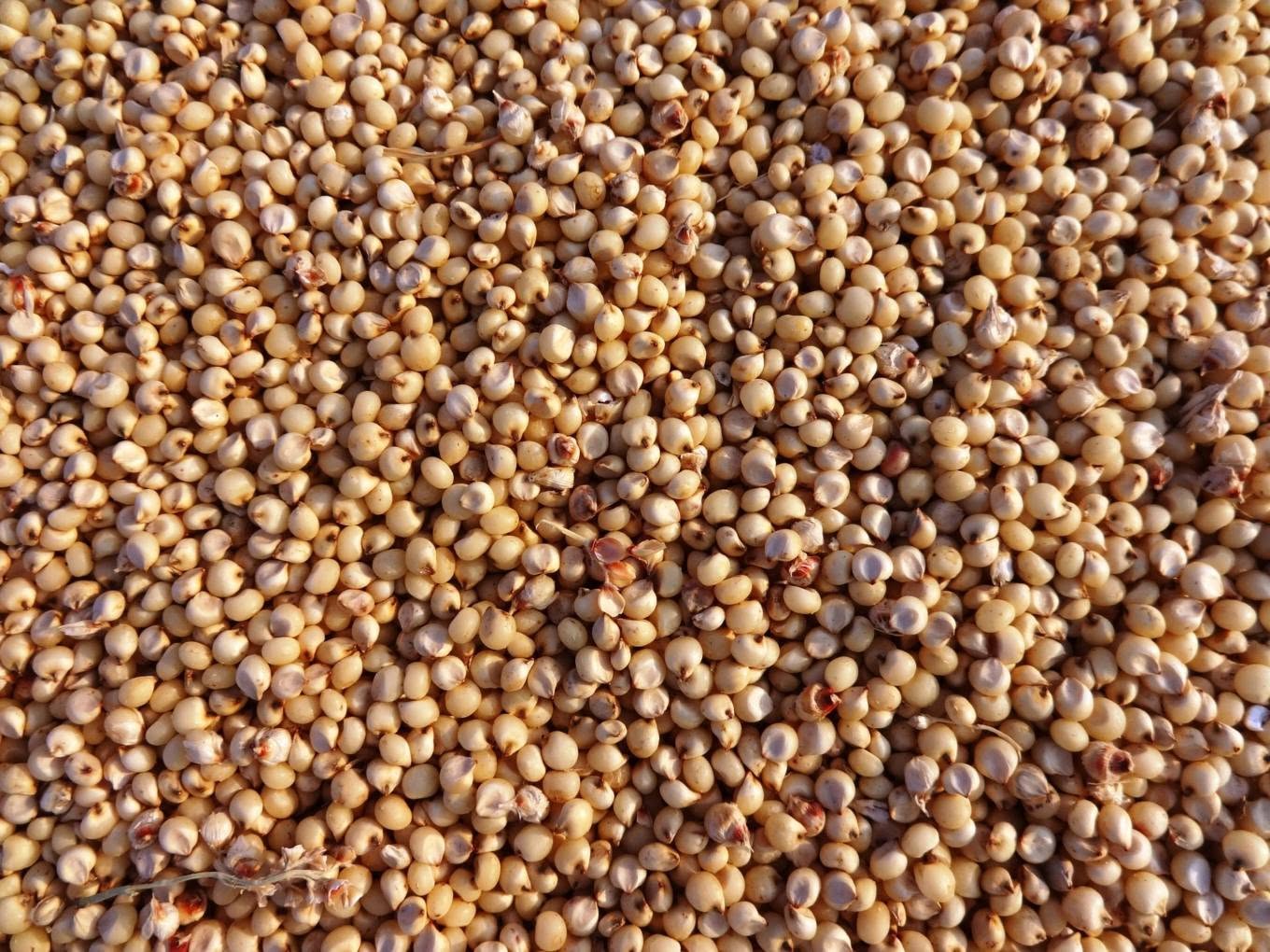

Nigerian Sorghum: The Ancient African Grain That Heineken and SABMiller Have Used in Nigerian Brewery Operations for Decades, That Is the Only Grain Brewing Science Accepts for Producing Genuinely Malt-Forward Gluten-Free Beer, and That Nigeria Produces in Volumes That Make It One of the Most Commercially Significant Global Sorghum Origins — Yet One of the Most Underexplored in International Food and Beverage Industry Procurement
Sorghum Exporter Nigeria — Whole Grain Sorghum, Sorghum Flour, Sorghum Malt, Sorghum Starch, and Sorghum Bran, Direct Sahel Belt and Middle Belt Sourcing, Bulk Supply to Breweries, Distilleries, Gluten-Free Food Manufacturers, Animal Feed Companies, Ethanol Producers, and Global Commodity Wholesale Buyers Worldwide
Sorghum exporter Nigeria is a search phrase whose commercial intelligence is concentrated in one extraordinary technical fact that most international food and beverage procurement professionals have not fully appreciated — and that the buyers who have appreciated it are acting on with increasing urgency: sorghum is the only commonly grown grain that can be malted through conventional barley malting processes to produce a gluten-free beer with a genuinely malt-forward flavour profile comparable to barley-malt beer, rather than a beer-adjacent beverage produced from unmalted rice, millet, corn, or buckwheat whose flavour profile, mouthfeel, and fermentation characteristics all fall short of conventional beer expectations in ways that gluten-intolerant consumers consistently notice and frequently reject.
The global gluten-free beer market — tracked through Grand View Research’s gluten-free beer market analysis — has grown from a niche specialty segment into a commercially significant category valued at over USD 1.7 billion annually with projected compound growth of 13%+ through 2030, driven by the 1% of the global population with confirmed coeliac disease (for whom gluten-free beer is a medical dietary requirement), the 6–13% with non-coeliac gluten sensitivity, and the substantially larger lifestyle-driven gluten-avoidance consumer segment whose dietary preferences have made gluten-free products one of the fastest-growing food and beverage segments in European and American premium retail. Every litre of gluten-free beer whose malt character approaches conventional beer quality requires sorghum malt — and the global brewing industry’s scramble to source documented-quality, food-grade sorghum at commercial brewing scale is one of the most commercially urgent procurement development stories in the global grain trade today.
Nigeria — whose sorghum production of approximately 6–8 million metric tonnes annually makes it one of the world’s three largest sorghum producing nations alongside the United States and Ethiopia — has supplied the brewing industry through SABMiller (now AB InBev) and Heineken’s Nigerian brewery operations for decades. The same sorghum that Nigerian brewers have used as a partial barley adjunct in local beer production is the identical raw material that the global gluten-free brewing industry now urgently needs — from documented African origins, with food-grade analytical certification, and at the commercial volumes that the growing gluten-free beer market demands.
Sorghum bicolor (L.) Moench — known in Nigeria as guinea corn (jero or dawa in Hausa, oka in Igbo) — is one of the world’s oldest domesticated cereal grains, whose cultivation across the African Sahel for over 4,000 years has produced an extraordinary diversity of varieties adapted to the specific growing conditions, culinary traditions, and processing requirements of Nigeria’s primary sorghum belt states of Kano, Kaduna, Borno, Yobe, Gombe, Bauchi, Adamawa, Sokoto, Zamfara, Kebbi, Niger, Plateau, Nasarawa, Kogi, and Kwara. At Paradise MultiTrade International Limited, sorghum is one of our highest-volume, most commercially versatile grain export categories — available in whole grain, flour, malt, starch, and bran forms with the full analytical, food safety, and brewing-grade documentation that international brewery, food manufacturing, and commodity buyers require.
To discuss sourcing immediately, request a quotation here and our export team will respond within 48 hours.
History and Origin of Nigerian Sorghum — The African Grain That Fed Civilisations and Is Now Feeding a Global Gluten-Free Market
Sorghum Bicolor — Origin, Domestication, and the African Agricultural Heritage
Sorghum bicolor is one of the few crop species whose centre of origin and centre of diversity are indisputably African — specifically in the region encompassing northeastern Africa (Ethiopia, Eritrea, Sudan) through the Sahel belt of West Africa, where botanical and genetic evidence documented through research accessible via NCBI’s plant genetics database confirms sorghum’s domestication from wild Sorghum bicolor subsp. verticilliflorum approximately 5,000–8,000 years ago. Unlike maize, wheat, and rice — whose African significance was established through introduction from other continents — sorghum is Africa’s own grain: developed on the continent, optimised for the continent’s growing conditions, and sustained by African farming communities across millennia of cultivation.
The significance of this African botanical origin for Nigerian sorghum’s international market positioning is not merely historical. It provides the authentic provenance narrative — confirmed by archaeological, genetic, and traditional knowledge evidence — that establishes Nigeria as not merely a sorghum producing country but a sorghum origin country whose production represents the full depth of the crop’s evolutionary heritage. For premium food manufacturers, craft breweries, and specialty grain buyers who communicate origin authenticity in their product positioning — Nigerian sorghum’s status as production from the crop’s ancestral homeland is a commercial credential that no American, European, or Asian sorghum origin can claim.
Nigeria’s specific position within Africa’s sorghum heritage reflects the country’s location within the crop’s primary domestication and diversification region. Research on Nigerian sorghum genetic diversity — published through the International Crops Research Institute for the Semi-Arid Tropics (ICRISAT) whose African headquarters in Bamako coordinates West African sorghum improvement programmes — documents extraordinary varietal diversity across Nigerian producing states whose accumulated traditional breeding has produced locally adapted varieties for specific soil types, rainfall regimes, and end-use applications spanning food, feed, and fermentation.
The Brewing Heritage — Decades of Commercial Use in Nigerian Brewery Operations
The most commercially credentialled validation of Nigerian sorghum’s brewing quality is not academic — it is operational: major international brewing companies have been using Nigerian sorghum as a brewing adjunct in their Nigerian production facilities for decades. SABMiller’s (now AB InBev) Pabod Breweries in Port Harcourt and Nigerian Breweries (Heineken) operations across Lagos, Ibadan, Aba, Kaduna, and Enugu have incorporated sorghum as a partial adjunct in Nigerian beer production — both to comply with Nigerian government local content requirements for domestic agricultural procurement and because Nigeria’s well-established sorghum supply infrastructure makes it commercially practical as a local ingredient.
The institutional knowledge of sorghum’s role in commercial brewing — whose quality management, malting specifications, and fermentation parameters have been developed across decades of industrial production experience in Nigeria — provides Paradise MultiTrade’s sorghum export programme with a quality reference framework anchored not in speculation about sorghum’s commercial brewing potential but in actual industrial brewing operational reality. Contact our team to discuss brewing-grade sorghum specification.
Nigeria’s Sorghum Production Geography — The Sahel Belt’s Agricultural Foundation
Nigeria’s primary sorghum production geography spans the semi-arid Sahel and Sudan savanna zones of the north and Middle Belt — where the specific combination of adequate but not excessive rainfall (600–1,200mm annually), well-drained sandy and sandy-loam soils, high sunshine intensity, and the warm temperatures that sorghum’s C4 photosynthesis metabolism is optimised for create the agro-ecological foundation for one of Africa’s most commercially significant sorghum production regions:
Kano and Kaduna states — the most commercially significant sorghum production territory, concentrating the largest share of Nigeria’s commercially aggregated sorghum output in the established agricultural systems of the northern Guinea savanna. The commercial marketing infrastructure around Kano — one of West Africa’s most significant agricultural commodity trading hubs — makes Kano and Kaduna sorghum the most commercially accessible and best-documented origin material in the Nigerian sorghum market.
Borno, Yobe, and Gombe states — northeastern producing states whose Sudan savanna conditions are particularly well-suited to the drought-tolerant sorghum varieties whose production continues reliably even in reduced-rainfall years that would compromise less drought-resilient crops.
Bauchi, Adamawa, and Taraba states — Middle Belt northeastern producing states whose Guinea-Sudan savanna transition conditions support diverse sorghum variety cultivation spanning both food-grade and malt-grade variety types.
Sokoto, Zamfara, and Kebbi states — northwestern Sahel zone producing states whose semi-arid conditions produce drought-adapted sorghum varieties with specific quality characteristics valued in both domestic traditional food processing and export-grade commodity applications.
Plateau, Nassarawa, Niger, Kogi, and Kwara states — Middle Belt secondary producing states whose Guinea savanna conditions support sorghum cultivation alongside diverse cropping systems whose multi-crop agricultural economies create significant annual sorghum volumes.
According to FAO production statistics, Nigeria consistently ranks among the world’s top three sorghum producing nations — with annual production estimates of 6–8 million metric tonnes representing approximately 10–15% of global sorghum output. The Nigerian Export Promotion Council (NEPC) has formally recognised sorghum as a priority agricultural export commodity — with growing international brewing, food manufacturing, and commodity procurement interest driving progressive formalisation of export supply chains. International trade flow data from ITC Trade Map confirms Nigerian sorghum entering formal international export channels at growing volumes.
What Is Nigerian Sorghum? The Botanical Profile, Key Quality Parameters, and the Commercial Variety Landscape
Sorghum Bicolor — The World’s Fifth Most Important Cereal Crop
Sorghum bicolor is a tall, vigorous annual grass of the Poaceae family — related to maize, wheat, and sugarcane as a member of the grass family that includes virtually every major food grain in human agriculture. Sorghum’s specifically African-adapted agronomic profile distinguishes it commercially from all other major cereal crops:
Drought tolerance — sorghum’s deep root system, waxy leaf coating that reduces transpiration, ability to enter dormancy during water stress and resume growth when moisture returns, and C4 photosynthesis metabolism (more water-efficient than C3 crops including wheat, barley, and rice) make it uniquely productive under the semi-arid conditions of the Sahel and Sudan savanna zones that would fail or severely underperform most other cereal crops. This drought tolerance creates supply reliability that matters commercially: Nigerian sorghum production is less variable than maize production in the same geographic zones during drought years — providing supply chain stability that commodity buyers with long-term procurement horizons value.
Heat tolerance — sorghum’s optimal growing temperature range (25–35°C) aligns perfectly with the Sahel’s growing season temperatures — allowing the crop to achieve maximum yields under conditions that heat-stressed wheat, barley, and rice production cannot match. This heat tolerance positions sorghum as an increasingly strategically valuable crop under the climate change scenarios whose progressive temperature increases will disadvantage temperate cereal origins while favouring tropical and semi-arid alternatives.
Photoperiod sensitivity — many traditional Nigerian sorghum varieties are photoperiod-sensitive — adapted to flower at a specific day length rather than calendar date — which historically limited their utility for export buyers whose procurement calendars required predictable harvest timing. Improved ICRISAT-bred photoperiod-insensitive varieties for Nigerian production have addressed this limitation, and the specific variety documentation in Paradise MultiTrade’s supply chain identifies which varieties are photoperiod-insensitive and therefore harvest-predictable for export scheduling.
The Critical Quality Parameters for Commercial Buyers
Grain colour — Nigerian sorghum varieties span white, cream, yellow, red, and brown grain colour — each commercially relevant for specific applications: White and cream varieties are preferred for food-grade flour (lighter flour colour, milder flavour), malt production (better malt colour control), and starch extraction (cleaner starch). Red varieties are common in traditional foods and acceptable for animal feed. Brown varieties contain higher tannin levels (discussed below) that limit food and malt applications but contribute positively to certain traditional fermented beverages.
Tannin content — this is the most commercially consequential quality parameter that separates food-grade and malt-grade sorghum from feed-grade: tannins (condensed tannins or proanthocyanidins) in high-tannin brown sorghum varieties create bitter flavour, reduce protein and starch digestibility, and inhibit malt enzyme activity — making high-tannin varieties unsuitable for food manufacturing, brewing malt production, and human food applications while remaining acceptable for animal feed where tannin’s antihelminthic properties may even be beneficial. The commercial specification distinction: low-tannin white/cream/yellow sorghum for food, flour, malt, and starch applications; high-tannin brown sorghum for animal feed applications only.
Starch content — approximately 68–80% of dry grain weight — the primary energy fraction whose quantity determines brewing fermentation potential, ethanol production economics, and food manufacturing starch yield per tonne of raw grain.
Protein content — approximately 8–14% of dry grain weight — providing the nitrogen foundation for malt enzyme development and contributing to sorghum flour’s protein nutritional value in food applications.
Germination rate — critical for malt production buyers: minimum 90% germination rate is the standard commercial specification for malting-grade sorghum — confirming that the grain is alive, healthy, and capable of the enzymatic development that malting requires.
Moisture content — ≤13% is the standard safe storage specification that prevents mould growth and maintains grain quality during storage and transport.
Five Commercial Product Forms
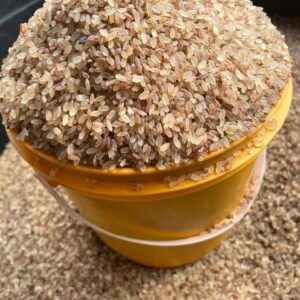
Whole Grain Sorghum — cleaned, dried whole sorghum grains for direct export to commodity buyers, breweries processing on-site, animal feed manufacturers, ethanol producers, and food manufacturers who mill on-site. The primary export commodity form for large-volume procurement.
Sorghum Flour — whole grain or decorticated (outer pericarp removed) sorghum milled to flour — the primary gluten-free flour form for food manufacturing incorporation in bread, cookies, pasta, porridge, and fermented food product formulations.
Sorghum Malt — germinated and kiln-dried sorghum whose enzymatic development provides the fermentation-ready amylase enzymes and flavour precursors that brewing and distilling applications require. This is the highest-value-per-tonne form for the brewing industry.
Sorghum Starch — isolated starch extracted from whole sorghum grain — a clean-label, gluten-free industrial starch with specific functional properties (gelatinisation temperature 68–77°C, paste clarity, retrogradation characteristics) used in food manufacturing, industrial paper and textile coating, and bioplastic applications.
Sorghum Bran — the outer pericarp fraction separated during decortication or milling — a high-fibre, antioxidant-rich by-product used in animal feed, dietary supplement, and functional food formulation.
Benefits and Industrial Uses of Nigerian Sorghum
Brewing Industry — The Gluten-Free Beer Revolution and Sorghum’s Irreplaceable Role
The global brewing industry’s relationship with sorghum spans two entirely different commercial contexts — whose simultaneous commercial significance creates the most diverse buyer base of any grain application in this series:
Traditional African brewing — sorghum has been used across sub-Saharan Africa for traditional opaque beer (ogi, burukutu, pito, umqombothi) for thousands of years — whose social, cultural, and economic significance across Nigerian, Ghanaian, South African, and East African communities represents one of the oldest continuous fermentation traditions in human history. The commercial production of traditional sorghum beers in West Africa creates substantial domestic procurement demand whose formal documentation increasingly connects to international buyers interested in authentic African fermentation traditions.
International lager beer brewing (adjunct application) — major international brewers operating in Nigeria — including Heineken (Nigerian Breweries), AB InBev (International Breweries), and domestic brewers — use sorghum as a partial starch adjunct in conventional lager beer production, typically replacing 20–40% of imported barley malt with Nigerian sorghum whose lower cost and local availability improves production economics without significantly compromising beer quality at appropriate inclusion rates. The Institute of Brewing and Distilling (IBD) publishes technical guidelines on sorghum adjunct use in conventional brewing — confirming the established commercial practice.
Gluten-free beer malting — this is the most commercially urgent and most commercially underserved current application: the gluten-free beer market’s demand for sorghum malt whose enzymatic development allows production of 100% sorghum-based beer whose malt character, fermentation profile, and sensory experience approach conventional barley beer more closely than any other gluten-free grain alternative. Research on sorghum malting for gluten-free brewing — published through the Journal of the American Society of Brewing Chemists (ASBC) and reviewed through NCBI’s food science and fermentation database — confirms that white-grain, low-tannin Nigerian sorghum varieties produce malt of commercial brewing quality when malted under appropriate conditions. For gluten-free craft breweries, gluten-free beer contract manufacturers, and mainstream brewers developing gluten-free product lines — authenticated, low-tannin, high-germination white sorghum from Nigerian origin provides the documented raw material that their malting and brewing specification requires.
Brewing technical specifications for sorghum malt: minimum 90% germination rate (confirming malting viability), minimum diastatic power (DP) of 80°Lintner (confirming amylase enzyme development adequate for starch conversion), moisture content of malted grain ≤5%, total protein 8–12% (supporting yeast nutrition during fermentation). These specifications are coordinated through accredited brewing analytical laboratories following ASBC and EBC (European Brewery Convention) methods.
Distilling applications — sorghum grain and malt for whisky and spirit distillation — whose growing commercial presence in the American craft spirits market (documented through American Craft Spirits Association (ACSA) distillery growth statistics) creates specific procurement demand for gluten-free grain that can be distilled into a product labelled gluten-free. Sorghum whisky — produced from 100% sorghum grain — is legally gluten-free and can be labelled as such in US and European markets where gluten-free spirit claims are commercially valuable.
For brewing and distilling buyers evaluating Nigerian sorghum whole grain and malt — contact our export team to discuss malting-grade specification, germination rate, and diastatic power documentation.
Gluten-Free Food Manufacturing — The Flour and Starch Market
The global gluten-free food market — tracked through Grand View Research’s gluten-free food market analysis at over USD 7 billion — creates enormous procurement demand for sorghum flour and sorghum starch as functional, neutral-tasting gluten-free grain alternatives to wheat flour and wheat starch:
Sorghum flour in gluten-free bread — sorghum flour’s protein content (8–14%), starch composition, and water absorption characteristics create a gluten-free bread flour whose performance in commercial bread formulation (combined with xanthan gum or psyllium husk as gluten-function replacers) is among the most widely used and most technically validated of any gluten-free grain flour. Research on sorghum flour’s bread formulation properties published through Cereal Chemistry — the primary peer-reviewed publication of the Cereals and Grains Association (AACC International) — documents sorghum flour’s specific functional properties that make it commercially viable for commercial gluten-free bread production at industrial scale.
Sorghum flour in pasta and noodle — sorghum flour’s protein quality and starch network formation create gluten-free pasta whose textural properties approach conventional wheat pasta more closely than most alternative gluten-free flours — explaining the growing commercial adoption of sorghum flour in premium gluten-free pasta products tracked through Innova Market Insights’ global pasta product innovation database.
Sorghum flour in cookies, crackers, and baked snacks — sorghum flour’s mildly sweet, slightly earthy flavour profile and its commercial availability as a clean-label, naturally gluten-free ingredient create strong adoption in the premium gluten-free snack baking category whose product launches are documented through Mintel’s global snack innovation database.
Sorghum starch in clean-label food thickening — sorghum starch’s specific functional properties — gelatinisation temperature of 68–77°C (similar to corn starch, lower than potato starch), opaque paste character, and moderate retrogradation — create food manufacturing applications in gluten-free sauce thickening, clean-label soup thickening, and confectionery production as alternatives to wheat starch and modified corn starch in formulations where clean-label or gluten-free status is commercially required.
For gluten-free food manufacturing buyers evaluating Nigerian sorghum flour and starch — contact our team to discuss flour specification, moisture content, and supply arrangements.
Animal Feed Manufacturing — The Highest Volume Application
Animal feed manufacturing — the global market’s primary sorghum consumption application by volume, consuming approximately 50–60% of globally traded sorghum according to USDA’s World Agricultural Supply and Demand Estimates (WASDE) — creates the most volume-significant procurement stream for Nigerian whole grain sorghum:
Poultry feed — sorghum grain’s metabolisable energy value of 3,200–3,350 kcal/kg (dry matter basis, approximately 95% of corn’s energy value) and its comparable protein content to corn make it a commercially viable partial or full corn substitute in poultry ration formulation. The European Feed Manufacturers’ Federation (FEFAC) documents sorghum’s established role in European compound feed formulation — particularly in years when corn prices spike relative to sorghum, creating feed manufacturer incentive to shift toward sorghum at higher corn:sorghum price ratios.
Swine feed — sorghum’s digestibility in swine rations is documented through animal nutrition research accessible via NCBI’s veterinary science database — confirming adequate feed conversion ratios at appropriate inclusion rates and proper processing (whole grain, rolled, or ground sorghum each performing differently in swine digestive systems).
Aquaculture feed — sorghum’s role as a starch energy source in aquaculture feed formulation — replacing corn or wheat starch components — creates specific procurement demand from aquaculture feed manufacturers whose formulation economics benefit from sorghum’s competitive pricing relative to conventional starch sources during supply-demand cycles.
Dairy cattle — sorghum grain incorporated into dairy cattle total mixed rations (TMR) provides fermentable starch for rumen microbial production and metabolisable energy for milk production — with proper processing (high-moisture or steam-flaked sorghum for improved rumen starch digestibility) being the critical processing parameter for optimal performance in ruminant feeding.
Bioethanol Production — The Renewable Energy Application
Sorghum’s combination of high starch content (68–80% of dry grain) and drought-tolerant production economics in semi-arid regions makes it a commercially attractive bioethanol feedstock whose development is tracked through renewable energy market intelligence:
Sweet sorghum (juice-based ethanol) — specific sweet sorghum varieties whose stalks contain high concentrations of fermentable sugars (comparable to sugarcane) provide a dual-use crop for simultaneous grain and juice ethanol production — creating higher total ethanol yield per hectare than grain-only sorghum varieties.
Grain sorghum (starch-based ethanol) — conventional grain sorghum processed through dry-grind or wet-milling ethanol production (identical to corn ethanol production) achieves ethanol yields of approximately 370–400 litres per tonne of whole grain — comparable to corn ethanol yield and significantly better than sugarcane bagasse.
The EU Renewable Energy Directive (RED II) requirements for demonstrable greenhouse gas savings from biofuel feedstocks — and the EUDR’s emerging deforestation-free supply chain requirements — create specific commercial interest in African origin sorghum for ethanol production whose cultivation on established agricultural land (not deforested land) and whose African origin (not implicated in the Amazon or Cerrado biome concerns affecting Brazilian corn and sugarcane bioethanol) provides favourable sustainability credentials.
Traditional Food Processing — The Domestic and Diaspora Market
Nigeria’s traditional sorghum food processing traditions create both domestic consumption and growing diaspora export demand:
Tuwo sorghum — the stiff porridge whose commercial production for northern Nigerian communities and diaspora markets creates demand for whole grain and flour from the appropriate white sorghum varieties whose starch properties produce the correct gel texture.
Ogi/Kunu — the fermented sorghum porridge/beverage whose commercial production for both domestic market and diaspora consumers creates consistent flour and whole grain demand.
Pito and Burukutu — the traditional sorghum opaque beers whose commercial production in Ghana, northern Nigeria, and West African communities creates specific malted sorghum and whole grain demand from traditional beverage manufacturers.
Sorghum bread and baked goods — traditional northern Nigerian sorghum-based bread products whose commercial production for domestic and diaspora markets creates flour demand whose formal export development is progressing alongside the broader Nigerian food export formalisation effort.
Why Buy Sorghum From Nigeria?
The Production Scale and Supply Reliability Argument
Nigeria’s 6–8 million metric tonnes annual sorghum production — making it consistently among the world’s top three sorghum producers — creates commercial supply capacity that few alternative origins can match for buyers seeking large-volume, reliable supply. Unlike smaller specialty crop origins whose total national production might be insufficient for a single large-scale buyer’s annual procurement, Nigerian sorghum’s production scale supports simultaneous procurement by multiple large-volume international buyers without supply competition pressure.
The drought tolerance of sorghum production in the Nigerian Sahel — whose production variability is lower than the maize production in the same zones during dry years — creates supply chain reliability that matters for buyers managing long-term procurement programmes where supply disruption creates costly manufacturing interruptions.
The Variety Diversity for Specific Application Requirements
Nigeria’s traditional breeding and ICRISAT-supported improved variety development have created the most commercially diverse sorghum variety portfolio in West Africa — spanning white food-grade varieties, amber malt-grade varieties, red feed-grade varieties, photoperiod-insensitive varieties for harvest timing predictability, and sweet sorghum varieties for juice ethanol applications. This variety diversity allows Paradise MultiTrade to match specific buyer requirements — whether white low-tannin flour-grade, high-germination malt-grade, or high-starch ethanol-grade — to specific sourcing from the appropriate variety production zones within Nigeria’s sorghum belt.
For buyers who need white grain food-grade sorghum — we source specifically from the white-grain variety production zones of Kano and Kaduna states. For buyers who need malt-grade high-germination sorghum — we source from the carefully managed production operations whose post-harvest handling ensures germination integrity is maintained. Contact our team to discuss variety and grade specification.
The Climate Change Resilience Commercial Argument
The commercial case for building African sorghum origin positions in long-term grain procurement programmes extends beyond current supply economics to the climate change trajectory whose progressive impact on global grain production geography is already creating supply security concerns in conventional cereal origin procurement planning. The CGIAR research programme on climate change, agriculture and food security (CCAFS) has published extensive modelling of climate change impacts on global crop production — documenting that sorghum’s heat and drought tolerance makes it one of the crops whose production economics improve relative to temperature-sensitive alternatives (wheat, barley, corn) under the warming scenarios that are progressively being realised.
For food manufacturers, breweries, and animal feed companies whose long-term raw material sourcing strategies must account for 10–20-year climate trajectories — building Nigerian sorghum supply relationships now establishes access to a heat-tolerant grain source whose competitive advantage strengthens as global warming intensifies competition for conventional cereal crop production geography.
The Gluten-Free Commercial Documentation Advantage
Sorghum is naturally gluten-free — not by certification or special processing but by botanical identity as a grass species that does not produce the gliadins and glutenins whose combined network constitutes gluten. For buyers whose product specifications, customer contracts, or regulatory compliance require confirmed gluten-free grain ingredients — Nigerian sorghum’s natural gluten-free status eliminates the cross-contamination risk management complexity that wheat-adjacent processing facilities create for gluten-free grain procurement. Paradise MultiTrade coordinates ELISA gluten testing (confirming below 20ppm) on food-grade sorghum lots for buyers whose gluten-free certification programme requires analytical confirmation.
Complete Export Documentation from a Licensed Exporter
Every sorghum shipment from Paradise MultiTrade carries phytosanitary certification from NAQS, NEPC export documentation, certificate of origin, commercial invoice, packing list, and bill of lading. For food and brewing-grade buyers, we coordinate moisture content, test weight (bulk density), protein content (Kjeldahl), starch content, tannin content (Vanillin-HCl method confirming low-tannin specification), germination rate (for malt-grade), thousand kernel weight, aflatoxin and fumonisin screening, pesticide residue analysis to EU MRL standards, and microbiological safety testing following AOAC International validated procedures. EU-bound shipments comply with Regulation (EU) 2017/625 on official controls and Commission Regulation (EC) 1881/2006 on mycotoxin contaminant limits. Our NEPC Export Licence No. 0042385 and CAC Registration No. RC-9284647 are verifiable through NEPC.
Nigeria’s Sorghum Export Strength and Global Market Demand
The Global Market — The World’s Fifth Most Important Cereal in Its Most Dynamic Commercial Period
The global sorghum market — tracked through Grand View Research’s sorghum market analysis and Mordor Intelligence’s comprehensive sorghum market report — is experiencing commercial growth driven by the simultaneous expansion of the gluten-free food sector, the African continent’s growing food manufacturing demand for locally produced grains, the biofuel industry’s search for drought-tolerant feedstock alternatives, and the animal feed industry’s price-driven substitution of sorghum for higher-priced corn during commodity price cycles.
The United States Grains Council (USGC) provides the most comprehensive international sorghum market development intelligence — tracking procurement trends, technical standards, and buyer development activities across sorghum’s major international markets. The Sorghum United organization represents the international sorghum supply chain development community whose market intelligence and buyer-seller connection activities are progressively creating the commercial visibility for African sorghum origins that has historically been missing.
The FAO Sorghum production statistics and USDA WASDE reports provide the authoritative global sorghum supply and demand data whose trend analysis confirms Nigeria’s growing strategic importance as a supply origin in the global sorghum trade.
Key Export Destination Markets
Japan — the world’s largest sorghum importing nation by value, whose poultry and swine feed industry’s substantial sorghum procurement (documented through JETRO Japan agricultural import statistics) creates the most commercially significant single-country destination for Nigerian sorghum whole grain. Japan’s premium quality requirements and its established sorghum import infrastructure make it a priority Asian destination for documented-grade Nigerian sorghum.
China — whose massive feed grain import demand (China is the world’s largest corn importer in recent years) extends to sorghum as a corn substitute in poultry and swine feed during periods of corn price elevation. Chinese sorghum import intelligence is tracked through GACC (General Administration of Customs China).
The European Union (Germany, Netherlands, Spain) — whose gluten-free food manufacturing industries and growing craft brewing sectors create combined food-grade and brewing-grade sorghum procurement demand. EU sorghum import requirements include mycotoxin compliance (particularly fumonisin limits under Commission Regulation (EC) 1881/2006) and pesticide residue MRL compliance. CBI Netherlands market intelligence on African grain exports provides specific EU market entry guidance for Nigerian sorghum exporters.
The United Kingdom — whose gluten-free food manufacturing sector (including large private label manufacturers producing for major UK supermarket gluten-free ranges) and growing craft brewing industry create consistent procurement demand for food-grade and malt-grade sorghum. UK grain import requirements are administered by APHA and FSA.
Mexico — a significant sorghum importing nation whose domestic sorghum production deficit creates consistent procurement demand from global origins including Nigeria for both feed-grade and food-grade applications.
The United States — whose craft spirits distilling sector’s growing interest in sorghum whisky and gluten-free spirit production creates specific malt-grade and food-grade sorghum procurement demand. US grain import requirements are administered through USDA APHIS for phytosanitary and FDA for food safety.
Why Choose Paradise MultiTrade International Limited?
Tannin Content Documentation — The Most Critical Quality Distinction for Food and Brewing Buyers. The vanillin-HCl tannin assay confirming low-tannin specification (below 0.1% condensed tannins for food-grade and malt-grade) versus high-tannin specification (feed-grade acceptable) is the most commercially consequential analytical test in sorghum quality characterisation — and the one that undifferentiated commodity sorghum sourcing most frequently neglects. We document tannin content on every food-grade, flour-grade, and malt-grade sorghum lot as standard quality assurance. Contact us to discuss tannin specification.
Germination Rate Testing for Malt-Grade Supply. Minimum 90% germination rate confirmed through standard germination testing following ASBC Method Sorghum-3 on every malt-grade sorghum lot — confirming the grain’s viability for malting before the malting investment is committed. Germination rate is the most critical single quality parameter for malting-grade sorghum buyers and the test most commonly omitted by commodity traders without brewing industry technical knowledge. Contact us to discuss malt-grade germination specification.
White Grain Variety Sourcing for Food and Flour Applications. We source specifically from white-grain and cream-grain sorghum variety production zones for food-grade flour and malt applications — providing the grain colour, flavour neutrality, and flour colour that food manufacturing buyers require. White grain sorghum from Kano and Kaduna state production provides the colour specification that distinguishes food-grade from feed-grade commodity sorghum at the most fundamental visual quality level. Contact our team to discuss white grain variety specification.
Mycotoxin Testing Package for EU-Bound Grain. EU maximum limits for sorghum mycotoxins — including fumonisin B1 + B2 (≤4,000 ppb in raw cereals per Commission Regulation (EC) 1881/2006), aflatoxin B1 (≤2 ppb), and deoxynivalenol (≤1,750 ppb) — are coordinated through accredited grain analytical laboratories as standard for all EU-bound sorghum shipments. This mycotoxin package is non-negotiable for EU grain market entry and is provided alongside pesticide residue analysis as standard pre-export quality assurance. Contact us to discuss EU mycotoxin compliance documentation.
Multi-Commodity West African Grain and Agricultural Sourcing. Sorghum buyers frequently source complementary Nigerian agricultural commodities. Alongside sorghum, Paradise MultiTrade exports soybeans, sesame seeds, groundnut oil, shea butter, gum arabic, moringa leaf powder, hibiscus flower, tiger nuts, cashew nut kernel, raw cashew nuts, bitter kola, and raw bush honey. Explore our full range of Nigerian export commodities and consolidate your West African grain, oil, and botanical ingredient sourcing through one verified, licensed export partner.
Product Specifications
| Specification | Details |
|---|---|
| Product | Nigerian Sorghum (Sorghum bicolor) |
| Common Names | Sorghum, Guinea corn, Jero/Dawa (Hausa), Oka (Igbo), Jowar (Indian trade name) |
| Botanical Species | Sorghum bicolor (L.) Moench (Poaceae) |
| Grain Colour Grades | White/cream (food, flour, malt grade — premium); Yellow/amber (malt acceptable); Red (feed grade); Brown (feed grade — high tannin) |
| Origin | Nigeria (Kano, Kaduna, Borno, Gombe, Bauchi, Adamawa, Sokoto, Zamfara, Plateau, Niger States) |
| Forms Available | Whole grain; Sorghum flour; Sorghum malt (malted grain); Sorghum starch; Sorghum bran |
| Starch Content | 68–80% dry weight |
| Protein Content | 8–14% dry weight (Kjeldahl) |
| Tannin Content (food/malt grade) | ≤0.1% condensed tannins (Vanillin-HCl method) — low-tannin specification |
| Tannin Content (feed grade) | >0.1% — acceptable for animal feed |
| Germination Rate (malt grade) | ≥90% (ASBC Method Sorghum-3) |
| Test Weight (bulk density) | ≥70 kg/hl (US standard: ≥56 lbs/bushel) |
| Moisture Content | ≤13% (whole grain, safe storage); ≤10% (flour and starch) |
| Foreign Matter | ≤2% |
| Broken and Damaged Grain | ≤3% |
| Aflatoxin | Total ≤10 ppb; B1 ≤2 ppb (EU limits) |
| Fumonisin | B1 + B2 ≤4,000 ppb (EU Commission Regulation 1881/2006) |
| Pesticide Residue | Multi-residue analysis to EU MRL standards — standard for all EU-bound lots |
| Microbiological | Total plate count within food safety limits; Salmonella absent/25g |
| Gluten Content | Below 20ppm (ELISA/PCR testing on request for gluten-free certification) |
| Packaging Options | 50kg polypropylene bags; 25kg paper bags; Bulk container loading (20–25 MT per 20-foot container) |
| Supply Capacity | 1,000–100,000+ MT per season |
| MOQ | Whole grain: 25 MT; Flour: 5 MT; Malt-grade: 25 MT; Starch: 5 MT |
| Shelf Life | Whole grain: 12 months (dry storage); Flour: 6 months; Malt: 12 months |
| Export Documentation | Phytosanitary Certificate (NAQS), Certificate of Origin, NEPC Export Licence, Certificate of Analysis (moisture, test weight, protein, starch, tannin), Germination Rate Certificate (malt grade), Aflatoxin/Fumonisin Certificate, Pesticide Residue Certificate (EU MRL), Gluten-Free Certificate (on request), Microbiological Certificate, Commercial Invoice, Packing List, Bill of Lading |
| Payment Terms | T/T, Letter of Credit (LC at sight), Escrow |
| Loading Port | Lagos (Apapa / Tin Can Island Port), Nigeria |
| Incoterms Available | EXW, FOB Lagos, CNF, CIF |
Packaging and Export Process
Harvest Season. Nigeria’s primary sorghum harvest runs October through December following the July–September growing season across the Sahel and Sudan savanna producing states. Northern states with a single-peak rainfall season harvest in October–November. Middle Belt states with longer growing seasons may harvest through December. For malt-grade procurement requiring high germination rates — fresh-season grain harvested in October–November and processed within 2–3 months of harvest provides the highest and most reliably documented germination rates.
Post-Harvest Drying and Cleaning. Freshly harvested sorghum carries 16–22% moisture — requiring prompt field drying (spread on elevated platforms or tarpaulins in direct sunlight) or mechanical dryer processing to reach the ≤13% safe storage moisture specification. Speed of drying after harvest is the critical mycotoxin prevention step — delayed or inadequate drying creates the high-humidity conditions that Fusarium and Aspergillus species require to produce fumonisin and aflatoxin respectively. Dried grain is cleaned through mechanical sieves removing foreign matter, broken kernels, and light material.
Grain Colour Sorting. For food-grade and malt-grade white sorghum specification — colour sorting equipment removes off-colour (red, brown, or black) kernels from the white-grain lots. This colour sorting step is essential for food-grade and malt-grade supply and distinguishes properly prepared food-grade from commodity-traded mixed colour grain. Colour-sorted white grain is sampled for tannin content verification before export documentation is prepared.
Malt-Grade Processing (where specified). For malt-grade whole grain supply — germination testing (ASBC Method Sorghum-3: 100 seeds on germination paper, 25°C, 72 hours, germination percentage confirmed by radicle emergence) is conducted on representative lot samples before export documentation preparation. Grain failing the 90% minimum germination specification is redirected to flour or feed-grade channels.
Mycotoxin and Pesticide Testing. All export lots undergo aflatoxin and fumonisin testing through accredited grain analytical laboratories before shipping confirmation. EU-bound lots additionally undergo pesticide residue multi-residue analysis (400+ compounds) before loading confirmation.
Container Loading. Sorghum is loaded in 50kg polypropylene bags (25 MT per 20-foot container) or in bulk (up to 25 MT loose fill with container liner). Bulk loading provides better freight economics for large-volume buyers whose receiving facilities are configured for bulk grain handling. Lead time: 14–21 days for whole grain from available stock; 28–42 days for flour and starch (processing scheduling required); 35–49 days for malt-grade (germination testing and documentation add lead time). Contact us early particularly for malt-grade orders whose quality testing extends beyond standard commodity lead times.
Frequently Asked Questions
What makes sorghum the only grain suitable for producing genuinely malt-forward gluten-free beer?
The commercial claim that sorghum is uniquely suited for genuine malt-forward gluten-free beer production rests on two specific properties that no other commonly traded gluten-free grain simultaneously offers: (1) Sorghum can be malted — germinated and kiln-dried to develop amylase enzymes whose starch-converting activity allows mashing (converting grain starch to fermentable sugars) without requiring external enzyme additions. Rice, corn, millet, quinoa, and buckwheat can all produce gluten-free beer through unmalted starch conversion with added enzymes — but the flavour profile and mouthfeel of enzyme-converted unmalted grain beer is detectably different from conventionally malted grain beer. Malted sorghum’s amylase enzymes produce the same mashing chemistry as barley malt — creating a fermentation substrate and final beer whose malt character, body, and head retention approach conventional barley beer quality more closely than enzyme-converted alternatives. (2) Sorghum produces protein that forms beer foam — the protein-tannin interactions that create persistent beer head (foam) in conventional barley beer require specific proteins and polyphenols whose balance in malted sorghum, while different from barley, provides better foam stability than most other gluten-free grain alternatives. Research on sorghum’s malting and brewing properties published through ASBC journals confirms these technical differentiation points. Contact us to discuss malt-grade sorghum specification.
What is the difference between white, red, and brown sorghum and which should I specify?
The most commercially consequential quality distinction in sorghum procurement is grain colour — because colour correlates directly with tannin content and therefore with suitability for specific applications: White and cream sorghum — low-tannin (typically below 0.05% condensed tannins), mild neutral flavour, suitable for food flour, malting, starch production, and conventional food manufacturing. The premium-priced specification for food and brewing applications. Yellow/amber sorghum — low to moderate tannin, suitable for malt and some food applications. Red sorghum — moderate tannin (0.1–0.3%), typical commercial feed-grade specification, mild bitterness reduces suitability for human food but acceptable for animal feed. Brown sorghum — high tannin (>0.3%), strong bitterness and astringency, anti-nutritional factors that reduce protein and starch digestibility in monogastric animals, unsuitable for food or malting, used only in animal feed and some traditional fermented beverages where tannin’s antiparasitic properties are valued. Always specify white/cream grain for food, flour, and malt applications. We tannin-test and colour-sort all food-grade lots. Contact us to discuss grain colour and tannin specification.
What mycotoxin limits apply to Nigerian sorghum entering EU markets and how does Paradise MultiTrade ensure compliance?
EU Commission Regulation (EC) 1881/2006 and its amendments set the following maximum limits for mycotoxins in sorghum entering EU markets as food or feed: Aflatoxin B1: ≤2 ppb (food); Total aflatoxins (B1+B2+G1+G2): ≤4 ppb (food); Fumonisin B1 + B2: ≤4,000 ppb (unprocessed cereals, food); Deoxynivalenol (DON): ≤1,750 ppb (unprocessed cereals, food); Zearalenone: ≤100 ppb (unprocessed cereals). These limits are enforced at EU Border Inspection Posts under Regulation (EU) 2017/625. The primary mycotoxin risk in Nigerian sorghum is fumonisin (from Fusarium mould growth associated with insect damage and inadequate pre- and post-harvest management) and aflatoxin (from Aspergillus flavus growth in inadequately dried grain). Paradise MultiTrade manages this through: (1) sourcing from agricultural cooperatives with documented post-harvest drying protocols; (2) mandatory aflatoxin and fumonisin testing through accredited GAFTA-approved laboratories on every EU-bound lot; and (3) rejection of any lot exceeding EU maximum limits from EU market channels. All mycotoxin test results are provided as lot-specific certificates alongside standard commercial documentation. Contact us to discuss mycotoxin compliance.
How does Nigerian sorghum compare to US, Ethiopian, or Argentine sorghum on key commercial specifications?
Nigerian white-grain low-tannin sorghum from Kano and Kaduna state production achieves commercial specifications analytically comparable to the benchmark origins for equivalent quality grades: starch content (68–75% vs US benchmark of 70–78%), protein content (8–12% vs US 8–12%), and test weight (68–74 kg/hl vs US 72–78 kg/hl) are all within the commercially acceptable range for food and feed procurement. Nigerian sorghum’s competitive distinctions from US and Argentine origin: (1) no GMO sorghum varieties are commercially grown in Nigeria, providing structural non-GMO status (though sorghum is not currently available in approved commercial GMO varieties in any major producing country — unlike corn/soybeans — this remains a relevant non-GMO documentation talking point); (2) West African provenance for authenticity-conscious buyers; (3) shorter transit time to European markets versus Argentine origin (14–20 days vs 20–28 days). Ethiopian sorghum comparison: Ethiopia produces high-quality white sorghum varieties whose food-grade specification is directly comparable to Nigerian material, with Ethiopia having slightly shorter Red Sea route transit to Middle Eastern markets but longer Atlantic route transit to European markets. Contact us to request comparative analytical documentation.
What specifications does malt-grade sorghum require and how is germination rate confirmed?
Malt-grade sorghum for brewing and distilling applications must meet: Germination rate: ≥90% (confirmed by ASBC Method Sorghum-3 — 100 seeds on moistened germination paper at 25°C for 72 hours; germinated seeds showing radicle emergence of ≥2mm counted as germinated). Grain colour: White or cream (low-tannin specification essential — high-tannin grain produces unacceptably bitter malt). Tannin content: ≤0.1% condensed tannins (Vanillin-HCl method). Moisture: ≤13% (higher moisture reduces germination rate and shelf life). Thousand kernel weight: ≥25g (adequate kernel size for malting efficiency). Freedom from mould: confirmed by visual assessment and fumonisin testing. For gluten-free brewing buyers whose production requires diastatic power documentation (confirming enzyme activity in the finished malt): we coordinate diastatic power measurement (°Lintner method) on commercially malted sorghum lots — minimum 80°Lintner for brewing-adequate enzyme activity. Paradise MultiTrade works with established Nigerian malting facilities whose malting parameters (steeping, germination, kilning) are documented for each malt production batch. Contact us to discuss malt-grade specification and diastatic power documentation.
What is the Nigerian sorghum harvest season and when should I plan procurement?
Nigeria’s main sorghum harvest runs October through December — the post-rainy-season period when grain reaches maturity, field drying conditions are optimal (harmattan season low humidity), and commercial aggregation at market centres begins. Procurement planning: (1) For October–December fresh harvest grain (maximum germination rate, lowest mycotoxin risk from freshly dried grain) — initiate discussions by August–September to coordinate harvest season allocation and immediate post-harvest procurement. (2) For February–June shipments (from stored season inventory) — initiate discussions by November–December for early-season booking at favourable pricing before inventory tightens in the second half of the post-harvest storage cycle. (3) For malt-grade procurement — October–January fresh harvest grain provides the highest and most reliable germination rates, as grain stored beyond 6 months shows progressive germination rate decline. Large-volume malt-grade buyers should book October–January harvest lots by August–September. Contact us to plan your procurement cycle.
What transit times should I expect from Nigeria?
Whole sorghum grain and flour (standard dry container — no temperature control): UK (Tilbury, Felixstowe) — 14–18 days from Lagos. Netherlands (Rotterdam) — 14–18 days. Germany (Hamburg) — 14–20 days. Spain (Barcelona, Algeciras) — 12–16 days. USA (East Coast — New York, Baltimore, Savannah) — 18–25 days. Japan (Yokohama) — 25–32 days. China (Shanghai, Tianjin) — 28–35 days. Mexico (Veracruz, Manzanillo) — 20–28 days. UAE (Jebel Ali) — 10–14 days. Canada (Halifax, Montreal) — 18–28 days. For large-volume buyers above 10,000 MT: bulk vessel chartering from Lagos or Cotonou (Benin Republic — closer to northern producing states via road) is commercially viable and provides significantly lower per-tonne freight costs than container shipping. Contact us to plan your logistics programme including bulk vessel options.
Ready to Source Premium Nigerian Sorghum — Whole Grain, Flour, Malt-Grade, Starch, and Bran With Tannin Content Documentation, Germination Rate Certification, EU Mycotoxin Compliance, and Full Analytical Documentation for Breweries, Gluten-Free Food Manufacturers, Animal Feed Companies, Distilleries, and Global Commodity Wholesale Buyers?
If you are a gluten-free craft brewery or mainstream brewery developing a gluten-free beer product line who needs documented white-grain, low-tannin, high-germination sorghum for malting and brewing with confirmed diastatic power and colour specification, a gluten-free food manufacturer developing sorghum flour-based bread, pasta, crackers, or baked goods who needs consistent white-grain flour with tannin-free specification and EU mycotoxin compliance documentation, a European or Asian animal feed compound manufacturer whose feed economics benefit from sorghum as a competitively priced corn substitute in poultry or swine ration formulation, an ethanol producer evaluating Nigerian sorghum as a drought-tolerant, climate-resilient, deforestation-free bioethanol feedstock under EU RED II sustainability requirements, a craft spirits distillery developing gluten-free sorghum whisky or African-origin grain spirit products who needs documented-variety Nigerian sorghum with appropriate production provenance, a commodity trading house building Nigerian sorghum supply positions for the Japanese feed market, Chinese grain market, or European food manufacturing procurement networks, or a traditional African food and beverage manufacturer developing commercial-scale production of kunun, ogi, tuwo, pito, or burukutu products from authenticated Nigerian guinea corn — Paradise MultiTrade International Limited is the licensed Nigerian exporter your sorghum supply programme needs.
We supply Nigerian Sorghum bicolor — whole grain (white, red, and feed-grade), flour, malt-grade, starch, and bran — from Kano, Kaduna, Borno, Gombe, and Sokoto producing states, white-grain colour-sorted and low-tannin documented for food and brewing grades, germination rate certified for malt-grade supply, EU fumonisin and aflatoxin mycotoxin compliant for all EU-bound shipments, pesticide residue certified, and exported at commercial volume with full analytical and regulatory documentation to buyers in every major regulated destination market.
Request a Quotation — share your required form (whole grain, flour, malt-grade, starch, or bran), grain colour specification (white, red, or mixed), tannin content specification (low-tannin food/malt grade or feed grade), volume, application context (brewing, gluten-free food, animal feed, distilling, ethanol, traditional food), destination market, and preferred incoterms. We respond within 48 hours.
Contact Our Export Team — speak directly about white-grain variety sourcing, tannin content vanillin-HCl assay, germination rate certification (ASBC Method Sorghum-3), diastatic power documentation for malt-grade, EU mycotoxin compliance package, gluten-free ELISA testing, bulk vessel chartering for large-volume procurement, harvest season allocation planning for October–December main crop, and long-term supply contract structuring.
Explore Our Full Product Range — alongside sorghum, Paradise MultiTrade exports soybeans, sesame seeds, tiger nuts, groundnut oil, shea butter, gum arabic, moringa leaf powder, hibiscus flower, cashew nut kernel, raw cashew nuts, bitter kola, and raw bush honey. One licensed Nigerian exporter. One consolidated West African grain, oil, botanical, and natural food sourcing relationship — from Africa’s most ancient cereal grain whose drought tolerance positions it as the climate-resilient crop of the future to the most commercially underexplored malting grain in the global gluten-free beer revolution.
Paradise MultiTrade International Limited | NEPC Export Licence No. 0042385 | CAC No. RC-9284647 | Lagos, Nigeria | www.paradisemultitrade.com
Reviews
There are no reviews yet.