
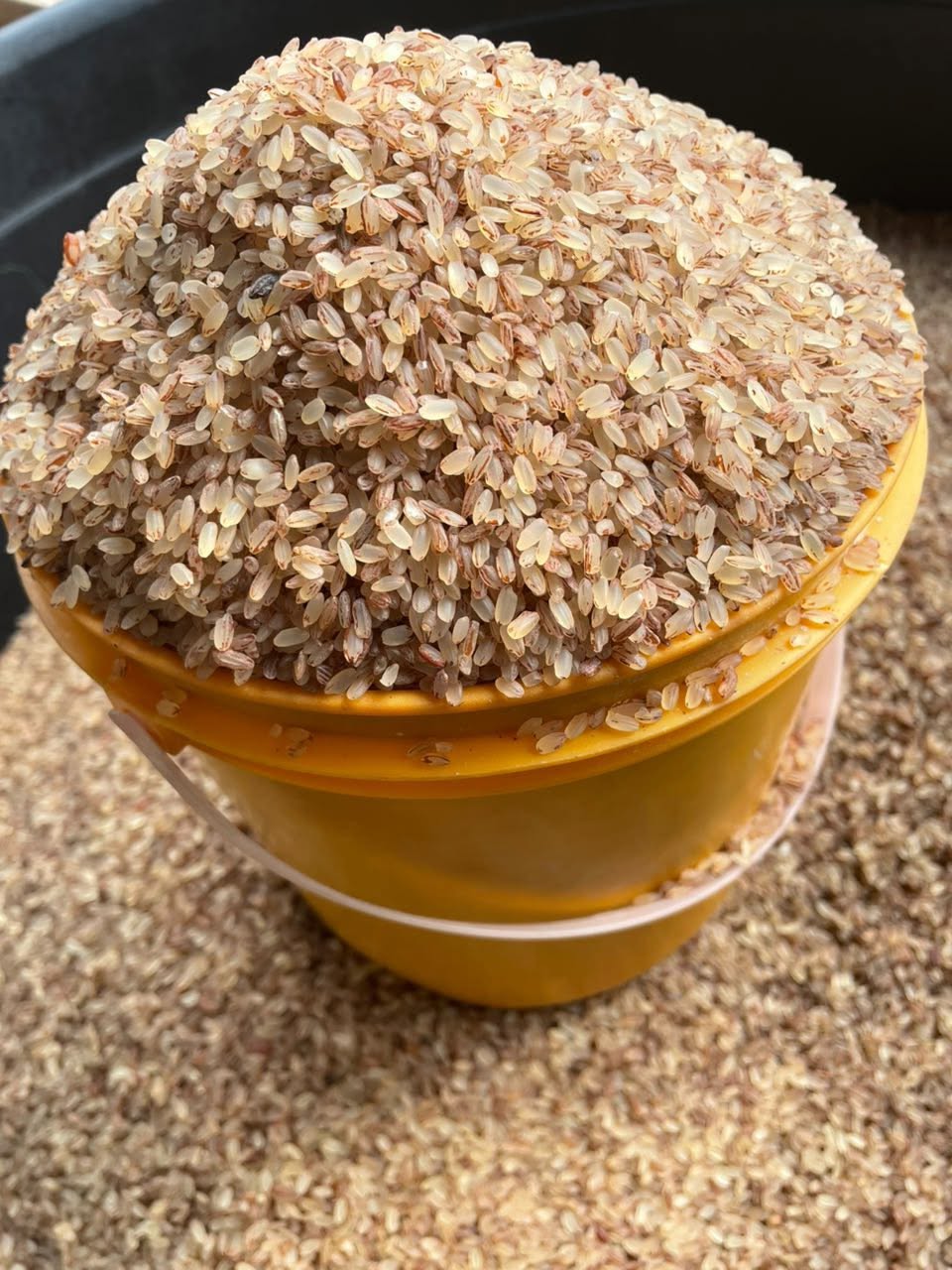

Nigerian Ofada Rice: The Indigenous Heritage Rice Variety Whose Terroir-Specific Aroma, Cultural Prestige, and Diaspora Demand Intensity Have Created One of the Most Commercially Underserved Premium Food Markets in the West African Export Landscape — Where Every Nigerian Who Has Eaten Ofada Rice With Ayamase Stew Carries a Lifelong Sensory Memory Whose Replication Requires the Authentic Grain From One Specific Geographic Origin
Ofada Rice Exporter Nigeria — Whole Grain Ofada Rice (Brown-Speckled Heritage Grade), Parboiled Ofada Rice, Ofada Rice Flour, Ofada Rice Bran, and Premium Retail-Packed Ofada Rice, Direct Ogun and Adjacent State Sourcing, Bulk and Retail Supply to West African Diaspora Food Retailers, Nigerian Premium Restaurants, Specialty Food Importers, African Heritage Food Brand Developers, Artisan Food Manufacturers, and Global Specialty Wholesale Buyers Worldwide
Ofada rice exporter Nigeria is a search phrase whose commercial context is defined by the most culturally specific food premium in the entire Nigerian agricultural export portfolio — a premium whose origin is geographical, aromatic, cultural, and gastronomic simultaneously, and whose specific combination creates a product whose commercial value far exceeds its commodity rice equivalent in ways that resemble the value dynamics of Champagne versus sparkling wine, Parmigiano-Reggiano versus generic parmesan, or Darjeeling versus generic black tea.
Ofada rice — named after the town of Ofada in Obafemi Owode Local Government Area of Ogun State, southwestern Nigeria — is an indigenous Oryza sativa variety complex (not a single variety but a group of related short-to-medium grain varieties adapted to the specific swampy, flood-prone lowlands of the Ogun River valley and adjacent ecosystems) whose cultivation by farming communities in Ogun, Oyo, and Osun states has been practised for generations before any formal agricultural variety development programme existed in Nigeria.
The grain’s most commercially distinctive characteristic — the aromatic compound whose presence in Ofada rice creates the immediately recognisable fragrance that experienced Nigerian food culture consumers identify within seconds of approaching the cooking pot — is 2-acetyl-1-pyrroline (2-AP): the same heterocyclic aromatic compound that creates the characteristic floral-popcorn aroma of Thai Jasmine (Khao Dawk Mali 105) and the distinctive fragrance of Indian Basmati — the two most premium-priced rice varieties in international commercial trade.
This aromatic identity is commercially striking for two reasons whose combined commercial argument creates the foundation of Ofada rice’s international market positioning:
First, 2-AP’s presence in Ofada rice confirms that Nigerian indigenous rice cultivation has independently produced the same aromatic biochemical pathway that created the two most commercially valuable rice varieties on earth — establishing that Ofada’s premium aromatic character is not marketing language but biosynthetically verified, analytically documented aromatic chemistry whose compound identity matches the compound that drives Thai Jasmine’s premium pricing at 2–3× non-aromatic long grain rice and Basmati’s premium at 3–5× commodity long grain.
Second, despite sharing the same key aromatic compound, Ofada rice’s aromatic character is distinct from both Jasmine and Basmati — because the grain’s specific genetic background, cultivation ecology (Ogun River valley swamp conditions), associated aroma compound profile (2-AP alongside additional volatile compounds specific to Ofada varieties), and post-harvest processing tradition (partial milling that retains the bran layer whose brown-speckled appearance is the visual identity mark that Nigerian consumers immediately recognise) create a terroir-specific aromatic signature that is neither Jasmine nor Basmati but unmistakably Ofada — a character whose culinary context (specifically the combination of Ofada rice with ayamase — the traditional green pepper, assorted meat, and palm oil stew — whose flavour profile creates the most celebrated single dish in Yoruba food culture) is so deeply embedded in the sensory memory of every Nigerian who has eaten it that diaspora demand for authentic Ofada rice is among the most emotionally intense food supply gaps in the entire West African diaspora food market.
The commercial paradox whose resolution this article documents: a rice variety whose aromatic premium, cultural prestige, and diaspora demand intensity parallel the international commercial dynamics of Jasmine and Basmati — yet whose formal international export supply chain is essentially non-existent. Ofada rice reaches diaspora consumers in London, New York, Toronto, and Houston through the same informal personal travel network documented for uziza leaves, ehuru, and kuka powder — family members bringing small quantities in luggage, specialist West African retailers stocking irregular informal supplies — without any formally documented, food-safety-certified, commercially scalable export programme connecting Ogun State production to international buyer demand.
At Paradise MultiTrade International Limited, Ofada rice is our most premium and most culturally distinctive grain export category — sourced directly from farming communities in Ogun State (Ofada, Papalanto, Ewekoro, Ilaro areas), adjacent Oyo State (Ibarapa area), and Osun State production zones whose swampy lowland ecology creates the specific cultivation environment that the indigenous Ofada variety complex requires, processed through traditional partial milling practices that preserve the characteristic brown-speckled appearance while achieving food safety and quality documentation, and exported with full botanical authentication, quality, and food safety certification.
To discuss sourcing immediately, request a quotation here and our export team responds within 48 hours.
History and Origin — The Ogun River Valley Rice Whose Terroir Is Its Identity
Ofada Rice — Indigenous Cultivation, Geographical Identity, and Cultural Prestige
The history of Ofada rice cultivation is inseparable from the history of Ogun State’s agricultural communities — whose relationship with the Ogun River valley’s seasonal flooding creates the specific ecological niche that traditional rice cultivation requires and that the indigenous Ofada variety complex is specifically adapted to exploit.
The Ogun River valley — whose annual flood-recession cycle creates the waterlogged, nutrient-rich, low-lying swampland (fadama) conditions that traditional smallholder rice farmers manage through generations of practical knowledge — creates a growing environment whose specific combination of waterlogging stress, Ogun River sediment mineral profile, humidity, and temperature creates the physiological conditions that maximise 2-AP biosynthesis in adapted varieties. Research on 2-AP biosynthesis in aromatic rice — published through Journal of Agricultural and Food Chemistry and accessible via NCBI’s plant biochemistry research database — documents that 2-AP accumulation is maximised under conditions of: moderate soil salinity or water stress during grain filling (the biochemical trigger that upregulates the proline metabolism pathway whose intermediate, Δ1-pyrroline, is the direct precursor to 2-AP synthesis through the BADH2 enzyme loss-of-function mutation documented in aromatic rice); specific temperature ranges during grain filling (18–24°C nighttime temperatures — cooler than the optimal temperatures for non-aromatic varieties); and the specific soil nitrogen profile that Ogun River alluvial soils create.
This environment-variety interaction — whose commercial expression is the Ofada aroma that no other growing environment or variety combination replicates — is the agricultural terroir whose geographical specificity creates the same commercial dynamic as wine appellation systems: the product’s quality is inseparable from its specific geographical origin in a way that commercial replication in alternative locations cannot achieve.
The Ayamase Cultural Context — The Dish That Defines the Demand
No commercial understanding of Ofada rice is complete without documenting the specific culinary context whose cultural significance creates the demand intensity that drives diaspora purchasing behaviour:
Ayamase (sometimes called ofada stew or designer stew in contemporary Nigerian food media) is a traditional Yoruba stew preparation whose specific character — green and yellow tatashe peppers roasted until blackened and blended with locust beans (iru), assorted meats (goat, cow skin/ponmo, cowleg, offal), and bleached palm oil (ude oji — palm oil with the carotenoid extracted through heating, creating a clear oil whose cooking character differs fundamentally from unbleached red palm oil) — creates a dish whose darkly complex, intensely savoury, slightly smoky flavour profile is specifically designed as the culinary partner for Ofada rice’s nutty, aromatic, slightly chewy grain character.
The Ofada rice + ayamase combination — served in the traditional way wrapped in wild banana leaf or ewe eran (cow leaf) whose tannin content and aromatic compounds create an additional flavour layer — is arguably the most culturally prestigious single meal in Yoruba food culture. Its presence at celebrations, high-status food occasions, and premium restaurant menus across Nigeria and in every Nigerian diaspora city confirms that Ofada rice is not simply a food ingredient but a cultural statement whose authenticity diaspora communities specifically and emotionally require.
The commercial consequence of this cultural prestige: diaspora consumers whose Ofada rice purchase is a cultural identity expression (I am serving authentic Yoruba food tonight) rather than a simple commodity procurement (I need rice for dinner) have dramatically higher price tolerance and product quality sensitivity than generic rice buyers — creating the premium food market economics that parallel artisan cheese, single-origin coffee, and terroir-specific wine rather than commodity grain trade.
What Is Ofada Rice? The Botanical Profile, Aromatic Chemistry, and Commercial Product Range
Oryza Sativa — Ofada Variety Complex — The Aromatic and Physical Distinctives
Ofada rice is not a single registered variety but a variety complex — a group of related, indigenous Oryza sativa accessions whose common characteristics include:
Grain morphology: Short to medium grain length (4.5–6.0mm — shorter than the long grain FARO varieties documented in the local rice article); typically rounder and plumper than commercial long grain varieties; irregular grain shape reflecting traditional selection without systematic morphological uniformity breeding.
Endosperm colour: Pale cream to light brown — whose partial bran retention creates the characteristic brown-speckled appearance of traditionally processed Ofada rice. Unlike fully milled white rice (whose complete bran removal creates uniform white grain) or fully unmilled brown rice (whose complete bran retention creates uniform brown grain) — Ofada rice’s traditional partial milling creates the variegated brown-and-cream speckled visual identity that is the primary consumer authentication marker. Experienced Ofada rice buyers identify inauthentic products by their colour — fully milled white rice passed off as “Ofada” is immediately identifiable by its lack of brown speckling.
Aroma — 2-Acetyl-1-Pyrroline (2-AP): The most commercially significant chemical characteristic. 2-AP concentration in Ofada varieties — documented through GC-MS analysis in Journal of Agricultural and Food Chemistry aromatic rice comparative studies — ranges from 120–350μg per kg of raw grain — within the range documented for Thai Jasmine (130–380μg/kg) and below the extraordinary concentrations in aged Basmati (400–600μg/kg) but significantly above non-aromatic varieties (0–30μg/kg). The specific 2-AP concentration created by Ogun State’s growing conditions and the indigenous variety’s BADH2 enzyme loss-of-function mutation creates the aromatic intensity whose culinary expression is the characteristic Ofada fragrance during cooking — intensified by partial milling’s retention of the bran layer whose volatile compound complexity adds aromatic dimensions to the 2-AP foundation.
Cooking character: Ofada rice’s short-medium grain and higher amylopectin fraction (lower amylose content than long grain varieties — approximately 16–20%) creates a slightly stickier cooked texture than long grain parboiled rice — whose specific chew and cohesion character is the texture that Ofada rice consumers specifically associate with the authentic dining experience. The partial bran retention adds a slightly chewy resistance whose textural distinction from fully milled rice is the second primary consumer authentication marker after aroma.
The BADH2 Genetic Mutation — Why Ofada Is Aromatic:
The molecular basis of Ofada rice’s aroma — documented through rice genetics research published in Nature Genetics and accessible via NCBI’s plant genomics research database — is a loss-of-function mutation in the BADH2 gene (betaine aldehyde dehydrogenase 2) that is present in all naturally aromatic rice varieties worldwide. BADH2’s function in non-aromatic rice: converting Δ1-pyrroline (a compound accumulated from proline catabolism during grain filling) into a non-aromatic compound. The BADH2 loss-of-function mutation: Δ1-pyrroline cannot be converted — instead, it accumulates and spontaneously reacts with acetyl-CoA to produce 2-AP. The mutation’s presence in Ofada varieties confirms their membership in the aromatic rice genetic group — and also confirms that the same mutation found in Thai Jasmine and Basmati arrived in the Nigerian indigenous variety population independently or through ancient seed dispersal pathways that predate modern plant breeding.
Commercial Product Forms
Whole Grain Ofada Rice (Traditional Heritage Grade) — partially milled to traditional brown-speckled specification, preserving characteristic aroma and visual identity — the primary form for premium diaspora retail, traditional restaurant supply, and specialty food marketing.
Parboiled Ofada Rice — traditional-style parboiling applied to Ofada paddy before partial milling — creating extended shelf life and improved milling yield while preserving characteristic aroma (2-AP’s heat stability during parboiling documented in aromatic rice processing literature through Journal of Food Science).
Ofada Rice Flour — whole grain Ofada rice milled to flour — for gluten-free flour applications, traditional Nigerian snack production, and artisan food manufacturing whose Ofada aroma creates premium ingredient differentiation.
Premium Retail-Packed Ofada Rice — retail consumer packs (500g, 1kg, 2kg) with full origin documentation, aroma guarantee, and traditional preparation guidance — the format for diaspora food retail and premium food gifting.
Benefits and Industrial Uses of Nigerian Ofada Rice
West African Diaspora Food Retail — The Most Emotionally Intense Supply Gap in Nigerian Food Export
The diaspora demand for authentic Ofada rice is qualitatively different from the demand documented for any other product in this series — because the demand is not simply for a food ingredient but for a culturally irreplaceable sensory experience whose specificity diaspora consumers cannot compromise on:
The Yoruba diaspora in the UK — the largest single concentration of Ofada rice consumers outside Nigeria, whose Yoruba-speaking communities in London (Peckham, Dalston, Hackney, Southwark), Birmingham, Manchester, and Bristol create consistent, specific, quality-demanding demand for authentic Ofada rice. Nigerian food retailers whose Yoruba customer base creates consistent Ofada rice demand — and whose current supply through informal travel-based networks creates the most emotionally charged supply inconsistency in Nigerian diaspora food retail. The retailer who can reliably supply authentic, properly aromatic, brown-speckled Ofada rice creates the most loyal customer relationship in West African food retail — because the customer who finds authentic Ofada becomes a repeat purchaser whose product loyalty is calibrated on the authentic aroma that no substitute satisfies.
The diaspora premium pricing dynamic — Ofada rice commands 3–5× the retail price of commodity parboiled long grain rice in Nigerian domestic premium food retail (Shoprite, Spar, and specialist food retailers in Lagos, Ibadan, and Abuja). In diaspora markets whose supply is even more limited — the price premium may be higher still, reflecting the scarcity rent whose commercial elimination through formal supply would not necessarily collapse the premium but would create the scale that currently informal supply cannot generate.
Nigerian restaurant premium menu positioning — the growing global Nigerian restaurant sector whose nkwobi and jollof menus are increasingly supplemented by Ofada rice and ayamase as the premium traditional menu item whose cultural prestige creates the highest average spend per cover. Nigerian restaurant groups in London (Chuku’s, Alara, Iya Eba), New York, Houston, and Toronto whose Ofada rice menu item drives premium menu engineering specifically require consistent, authentic supply whose current informality creates menu availability inconsistency that damages commercial reputation.
For diaspora food retail and restaurant buyers — contact our export team to discuss premium retail pack specification and restaurant supply programme.
Specialty Food Manufacturing and African Heritage Brand Development
African heritage food brand development — the growing commercial category of premium branded African food products — whose commercial development parallels the artisan food movement that created commercially significant premium categories for Scottish single malt whisky, Italian DOP foods, and French AOC cheese — creates specific procurement demand for authenticated, origin-documented Ofada rice as the ingredient foundation for:
Premium Nigerian rice brand development — branded Ofada rice products whose geographical indication (GI) story, traditional cultivation heritage, and 2-AP aromatic documentation create the authentic premium product communication that mainstream food retail channels (Whole Foods, Waitrose, specialty food shops) require for premium positioning. The commercial parallel to Basmati’s journey from regional Indian subcontinent specialty to global premium rice category — creating a USD 1.5 billion annual export market for Indian and Pakistani Basmati rice tracked through APEDA’s Basmati rice export statistics — represents the long-term commercial trajectory for Ofada rice whose development requires the formal export supply chain infrastructure whose creation is Paradise MultiTrade’s programme’s commercial purpose.
Gluten-free artisan food manufacturing — Ofada rice flour’s distinctive aroma creates premium positioning in the growing gluten-free artisan food market — creating Ofada-flavoured rice crackers, rice pasta, rice bread, and traditional Nigerian snack products (puff puff base, akara complement, agidi jollof ingredient) whose aromatic distinction from standard rice flour creates commercial differentiation in the crowded gluten-free food category tracked through Grand View Research’s gluten-free food market analysis.
Premium food gifting and hamper inclusion — Ofada rice’s cultural prestige in Nigerian food culture creates commercial positioning in the growing African luxury food gifting market — whose development in UK, USA, and Gulf States diaspora markets creates premium hamper and gift food procurement demand.
Geographical Indication and Intellectual Property Development
GI registration potential — the commercial parallel to Champagne’s AOC, Darjeeling’s GI, and Basmati’s GI protection across 29 countries is directly applicable to Ofada rice whose: specific geographical origin (Ogun State, Nigeria); traditional cultivation method (indigenous variety complex, swamp ecology); distinctive quality characteristics (2-AP aroma, brown-speckled appearance); and historical use community (Ofada farming communities whose generational cultivation creates the traditional knowledge heritage) — all meet the criteria established by the Agreement on Trade-Related Aspects of Intellectual Property Rights (TRIPS) for geographical indication protection.
The commercial value of GI registration for Ofada rice — documented through the commercial impact analysis of existing agricultural GI protections — is the prevention of “Ofada” name misappropriation by producers using conventional Nigerian rice varieties or non-Nigerian origin rice marketed under the culturally valuable “Ofada” name. For buyers whose brand communication specifically references “authentic Ofada rice” — Paradise MultiTrade’s direct Ogun State sourcing from indigenous variety farming communities creates the authenticity documentation that GI protection would ultimately formalise. Contact us to discuss GI-compliant sourcing documentation.
Functional Food — The Partial Bran Retention Nutritional Advantage
Nutritional positioning between white and brown rice — Ofada rice’s traditional partial milling creates a nutritional profile whose position between fully milled white rice and fully unmilled brown rice creates specific functional food positioning:
Higher B vitamins than white rice — partial bran retention preserves more thiamine (B1), riboflavin (B2), and niacin (B3) than complete polishing removes — creating nutritional positioning above commodity white rice. Research through NCBI’s rice nutrition database confirms that partially milled rice retains 40–60% more thiamine than fully polished white rice.
Higher antioxidants than white rice — the retained bran fraction contains tocopherols, oryzanol (a compound specific to rice bran whose cholesterol-lowering and antioxidant activity creates functional food positioning documented through Journal of Agricultural and Food Chemistry rice bran research), and phenolic acids whose combined antioxidant activity exceeds white rice significantly.
Lower GI than white rice — partial bran retention slows starch digestion rate — creating a lower glycaemic index than equivalent fully milled white rice, adding to the parboiling-enhanced resistant starch contribution documented in the local rice article.
Digestibility advantage over brown rice — partial milling creates better digestibility than fully unmilled brown rice whose complete bran retention creates the anti-nutritional factor (phytic acid) and digestive resistance (bran fibre) that limit brown rice digestibility — positioning Ofada as the nutritionally superior middle ground between white and brown rice.
Why Buy Ofada Rice From Nigeria?
Origin Authenticity — Only Ogun State Is Authentic Ofada
The geographical specificity of Ofada rice’s identity — the Ogun River valley ecology, the indigenous variety complex, the specific cultivation community — means that there is no meaningful substitute for direct Ogun State sourcing. Rice sold as “Ofada” that is produced outside the traditional growing zones, or that uses FARO series varieties rather than indigenous Ofada variety complex accessions, lacks the 2-AP aromatic character and brown-speckled visual identity that diaspora consumers authenticate.
Paradise MultiTrade’s direct sourcing from Ofada farming communities in Obafemi Owode, Ifo, and adjacent Ogun State LGAs — combined with molecular marker documentation confirming indigenous variety identity versus FARO series — provides the authentic origin documentation that genuine Ofada product claims require. For buyers whose brand communication specifically values authentic Nigerian origin — our Ogun State sourcing documentation is the commercial foundation. Contact us to discuss origin documentation.
The 2-AP Aroma Documentation — The Commercial Authentication
The most commercially differentiating aspect of Paradise MultiTrade’s Ofada rice supply programme is the 2-AP content documentation by GC-MS — confirming that the aroma compound whose presence defines Ofada rice’s premium character is present at commercially meaningful concentrations in every export lot. For premium food retailers, restaurant buyers, and brand developers whose product communication specifically references Ofada rice’s aromatic character — 2-AP documentation provides the analytical foundation whose specificity distinguishes authentic aromatic Ofada from unaromatic rice sold under the Ofada name. Contact us to discuss 2-AP aroma documentation.
The Traditional Processing Preservation Programme
Ofada rice’s brown-speckled appearance — the visual identity whose preservation traditional partial milling creates — requires specific milling management whose commercial implementation Paradise MultiTrade’s processing partner programme specifically coordinates:
Controlled milling degree — whitening machine passes adjusted to achieve partial bran removal (creating brown-speckled appearance) rather than complete polishing (creating white grain) — documented through IRRI milling degree measurement whose specific percentage bran removal creates the traditional visual specification.
Traditional inspection by experienced millers — whose generational knowledge of proper Ofada appearance creates visual quality control that automated measurement alone cannot replace.
Preservation of grain integrity — Ofada’s shorter, rounder grain whose fragility during milling creates higher breakage risk than long grain varieties — requiring adjusted milling parameters that minimise breakage while achieving traditional appearance.
Complete Export Documentation
Every Ofada rice shipment carries phytosanitary certification from NAQS, NEPC export documentation, certificate of origin (specifically documenting Ogun State production origin), commercial invoice, packing list, and bill of lading. We coordinate: 2-AP aroma content (GC-MS — per-lot aroma authentication); milling degree (IRRI method); moisture content (≤14%); broken grain percentage; brown-speckled appearance confirmation; variety identity documentation (indigenous Ofada variety complex — distinguished from FARO series through morphological and molecular marker assessment); aflatoxin screening (ELISA); pesticide residue multi-residue analysis to EU MRL standards per Regulation (EC) 396/2005; and microbiological safety testing. EU-bound shipments comply with Regulation (EU) 2017/625 on official controls and Commission Regulation (EC) 1881/2006. Our NEPC Export Licence No. 0042385 and CAC Registration No. RC-9284647 are verifiable through NEPC.
Nigeria’s Ofada Rice Export Strength and Global Market Demand
The Global Market — Premium Aromatic Rice Context
The global aromatic rice market — tracked through Mordor Intelligence’s aromatic rice market analysis at over USD 40 billion annually — is dominated by Basmati (Indian and Pakistani origin) and Thai Jasmine (Khao Dawk Mali 105 — Thai origin) whose combined export volumes create the commercial benchmark against which Ofada rice’s market development trajectory is measured. The commercial lesson from Basmati’s international journey — from regional subcontinental specialty to global premium rice category commanding 3–5× commodity price — is that aromatic rice with documented geographical origin, distinct sensory character, and culturally embedded use tradition can achieve international premium market status whose commercial value accrues to producing communities and export programme developers who build the supply chain infrastructure before mass market awareness creates crowded competitive supply.
Key Export Destination Markets
United Kingdom — home to Europe’s largest Yoruba diaspora community — whose emotional intensity of Ofada rice demand is the most commercially concentrated in any single European city. London’s Ofada rice retail market — currently served almost entirely through informal channels — is the most immediately commercially accessible European market. UK food import requirements through FSA.
United States — whose Nigerian-American Yoruba communities in Houston, Atlanta, Washington DC, and New York create significant demand. Yoruba-owned restaurants in these cities whose Ofada rice menu item creates consistent procurement need. US food import through FDA.
Canada — whose Toronto and Ottawa Yoruba communities create developing demand tracked through CFIA.
Germany and Netherlands — whose growing Nigerian communities and specialty food retail infrastructure create developing European continental demand.
UAE and Gulf States — where Nigerian professional expatriate communities create consistent premium food demand tracked through ADAFSA.
Japan and South Korea — whose sophisticated aromatic rice markets and growing interest in global food cultures create developing specialty buyer interest in Ofada as a novel aromatic variety beyond Jasmine and Basmati.
Premium specialty food retail globally — the international specialty food retail sector (Whole Foods USA, Selfridges UK, Dean & DeLuca, La Grande Épicerie Paris) whose premium rice section typically features Jasmine, Basmati, Carnaroli, and Arborio — creating an undeveloped slot for African heritage aromatic rice whose Ofada aroma and cultural story creates genuine differentiation.
Why Choose Paradise MultiTrade International Limited?
2-AP Aroma GC-MS Documentation — The Only Authentic Ofada Proof. Per-lot 2-AP content measurement by GC-MS — confirming authentic aromatic character above 100μg/kg (the threshold below which consumers fail aroma recognition tests documented in sensory evaluation research) — providing the analytical foundation for premium product claims whose specificity distinguishes genuine Ofada from unaromatic conventional rice marketed under the Ofada name. This documentation is available from no informal Ofada supply chain and from no alternative export programme. Contact us to discuss 2-AP aroma documentation.
Direct Ogun State Origin — Geographical Authenticity. Sourcing specifically from Ofada farming communities in Obafemi Owode and adjacent Ogun State LGAs — with community sourcing records, GPS-located farm documentation, and local government council certification confirming Ogun State geographical origin. For premium food brands whose product communication values authentic Ofada origin provenance — this documentation is the commercial foundation. Contact us to discuss origin documentation.
Traditional Brown-Speckled Processing Specification. Controlled partial milling preserving the brown-speckled visual identity that diaspora consumers authenticate — whose IRRI milling degree documentation confirms processing within the traditional specification range. Contact our team to discuss milling degree specification.
Premium Retail Pack Programme. 500g, 1kg, and 2kg retail consumer packs with full origin documentation, 2-AP aroma guarantee, traditional preparation guidance (including ayamase stew basic recipe), and Ogun State origin story — the complete premium retail product format whose value-added packaging enables diaspora food retailers and specialty food stores to retail at premium pricing with authentic product communication. Contact us to discuss retail pack programme.
Multi-Rice and Multi-Commodity West African Grain Sourcing. Ofada rice buyers frequently source complementary Nigerian rice and grain products. Alongside Ofada rice, Paradise MultiTrade exports local parboiled rice (FARO varieties), brown rice, maize, sorghum, millet, cowpeas, crayfish (dried shrimp), locust beans (iru), hibiscus flower, cashew nut kernel, and raw cashew nuts. Explore our full range of Nigerian export commodities — the most comprehensive formally documented Nigerian agricultural export portfolio available through a single licensed export partner.
Product Specifications
| Specification | Whole Grain Ofada (Traditional Grade) | Parboiled Ofada | Ofada Rice Flour |
|---|---|---|---|
| Botanical Species | Oryza sativa L. (indigenous variety complex) | Oryza sativa L. | Oryza sativa L. |
| Variety | Indigenous Ofada variety complex (not FARO series) — confirmed by morphological and molecular marker assessment | Indigenous Ofada variety complex | Indigenous Ofada variety complex |
| Geographic Origin | Ogun State (Obafemi Owode, Ifo, Ewekoro LGA areas), Ogun River valley ecology — confirmed by origin documentation | Ogun State | Ogun State |
| 2-AP Aroma Content | ≥100μg/kg (GC-MS — per lot) — authentic aroma guarantee | ≥80μg/kg (GC-MS — parboiling reduces 2-AP by 10–20%) | ≥60μg/kg (milling reduces 2-AP; flour retains significant aroma) |
| Appearance | Brown-speckled (partial bran retention) — NOT white; NOT fully brown | Golden-brown speckled (parboiling darkens grain) | Cream-tan flour with visible bran flecks |
| Milling Degree | Partial milling — IRRI degree 3–4 (some bran retained) | Partial milling post-parboiling | Whole grain flour |
| Grain Length | 4.5–6.0mm (short-medium grain) | 4.5–6.0mm | Flour — N/A |
| Amylose Content | 16–20% (slightly sticky, cohesive cooking character) | 16–20% | N/A |
| Broken Grain | ≤10% | ≤8% | N/A (flour) |
| Foreign Matter | ≤0.1% | ≤0.1% | ≤0.1% |
| Moisture Content | ≤14% | ≤14% | ≤12% |
| Total Ash | ≤1.5% | ≤1.5% | ≤2% |
| Protein Content | 7–9% dry weight | 7–9% dry weight | 7–9% |
| Rice Bran Oil (retained) | 1–2% (partial bran) | 1–2% | 2–4% (whole grain flour) |
| Oryzanol Content | 50–100mg per 100g (bran-retained fraction) | 40–80mg per 100g | 60–120mg per 100g |
| Aflatoxin | Total ≤10 ppb; B1 ≤2 ppb | Total ≤10 ppb | Total ≤10 ppb |
| Pesticide Residue | EU MRL compliant | EU MRL compliant | EU MRL compliant |
| Microbiological | Salmonella absent/25g; E. coli absent/1g; TPC ≤100,000 CFU/g | Standard | Standard |
| Allergen Status | No major EU or US allergens (rice is gluten-free) | Gluten-free | Gluten-free |
| Shelf Life | 18 months (sealed cool dark) | 18 months | 12 months |
| Packaging — Retail | 500g, 1kg, 2kg branded retail packs | 500g, 1kg, 2kg | 500g, 1kg |
| Packaging — Bulk | 5kg, 10kg, 25kg pp bags | 25kg, 50kg pp bags | 25kg pp bags |
| Supply Capacity | 50–2,000 MT per year (limited by indigenous variety cultivation area) | 50–2,000 MT per year | 10–200 MT per year |
| MOQ | Bulk: 500kg; Retail packs: 200kg finished product | Bulk: 500kg | 100kg |
Export Documentation: Phytosanitary Certificate (NAQS), Geographical Origin Certificate (Ogun State — LGA documentation), Variety Authenticity Certificate (indigenous Ofada variety complex — morphological + molecular marker), 2-AP Aroma Content Certificate (GC-MS — per lot), Milling Degree Certificate (IRRI method), Moisture and Broken Grain Certificate, Aflatoxin Certificate (ELISA), Pesticide Residue Certificate (EU MRL), Microbiological Certificate, NEPC Export Licence, Certificate of Origin, Commercial Invoice, Packing List, Bill of Lading.
Payment Terms: T/T, LC at sight, Escrow. Loading Port: Lagos (Apapa / Tin Can Island Port). Incoterms: EXW, FOB Lagos, CNF, CIF.
Processing and Export Process
Paddy Procurement — Community Sourcing. Ofada paddy procured directly from farming communities in Obafemi Owode LGA and adjacent Ogun State communities — whose traditional cultivation of indigenous Ofada variety complex accessions is documented through community sourcing records, variety identification, and GPS-located farm coordinates. Procurement timing: October–December (main harvest season following September–October grain filling in Ogun River valley swamp ecology) and March–May (secondary harvest from some irrigated plots). Procurement at below 20% moisture — ensuring paddy quality before processing commitment.
Pre-Cleaning. Freshly harvested paddy cleaned through grain cleaners — removing straw, soil, stones, weed seeds, and foreign material whose presence in traditional harvested paddy reflects hand-harvesting and sun-threshing methods used in smallholder Ofada cultivation. Metal detection removes ferrous contaminants.
Parboiling (for Parboiled Ofada Grade). Indigenous Ofada paddy steeped at 65–70°C for 4–6 hours — steam-parboiled at 100–110°C for 20–25 minutes. Lower steam temperature and shorter time than for long grain varieties — managing Ofada’s shorter, rounder grain whose fragility under aggressive parboiling creates breakage risk. Target: adequate starch gelatinisation for milling quality improvement without over-processing that damages grain integrity.
Drying. Parboiled or green paddy dried at 40–50°C — lower than conventional parboiled rice drying to preserve 2-AP (which is volatile at higher temperatures — documented in aromatic rice processing literature whose temperature management recommendations specifically address 2-AP retention during drying). Target moisture: ≤14%.
Partial Milling — The Signature Processing Step. Dried Ofada paddy processed through:
- De-husker: Rubber roll or stone hulling removing outer husk — producing Ofada brown rice
- Controlled whitening: Friction whitener adjusted to achieve traditional milling degree — IRRI degree 3–4 removing some but not all bran layers — creating the brown-speckled visual character whose consistency requires experienced miller calibration
- Length grader: Separating whole grain from large and small broken fractions
- Colour sorter: Removing discoloured, damaged, and excessively pale (over-milled) grain — preserving uniform brown-speckled appearance in the commercial fraction
2-AP Sampling and Aroma Verification. Representative sample from every production lot extracted by SPME (Solid Phase Microextraction) and analysed by GC-MS for 2-AP quantification — confirming per-lot aroma content before commercial grading acceptance. Lots below 100μg/kg 2-AP (indicating non-authentic variety, excessive processing, or storage aroma loss) rejected from premium Ofada grade and reclassified to local variety bulk grade.
Packaging. Retail packs: heat-sealed multi-layer barrier pouches (preventing moisture ingress and aroma loss during transit and retail shelf display) — with printed labelling including origin documentation, 2-AP aroma guarantee statement, traditional preparation guide, and brand story. Bulk bags: 25kg polypropylene woven bags with inner polyethylene liner.
Lead Times. Retail pack programme: 28–42 days. Bulk bags: 21–35 days. Full analytical panel (2-AP GC-MS, variety authentication, pesticide residue): add 7–14 days. Contact us to plan your supply schedule.
Frequently Asked Questions
What makes Ofada rice different from regular Nigerian parboiled rice and why is it more expensive?
The commercial distinction between Ofada rice and regular Nigerian parboiled long grain rice (FARO varieties) spans four independent quality dimensions whose combined premium creates the 3–5× price differential: (1) Aroma: Ofada rice contains 2-acetyl-1-pyrroline (2-AP) — the compound shared with Thai Jasmine and Basmati — whose cooking fragrance is immediately identifiable and completely absent from FARO varieties. Cooking Ofada rice fills the kitchen with a characteristic popcorn-floral aroma whose absence in FARO variety rice is immediately apparent to any experienced Ofada consumer. (2) Appearance: Ofada rice’s traditional partial milling creates the brown-speckled visual identity — whose presence authenticates Ofada origin and whose absence (white grain) immediately reveals inauthentic substitution. FARO parboiled rice is fully milled white rice. (3) Grain type: Ofada’s short-medium grain with higher amylopectin creates a slightly cohesive cooked texture that pairs specifically with ayamase stew’s rich, dense sauce — whose viscosity the slightly sticky Ofada grain texture complements in ways that long grain non-sticky FARO rice cannot replicate. (4) Cultural provenance: Ofada rice’s indigenous cultivation heritage — tied to specific Ogun State communities, traditional farming methods, and centuries of cultural association with Yoruba food tradition — creates an authenticity premium whose value is entirely lost in FARO variety substitution. The price premium reflects all four dimensions simultaneously — and for diaspora consumers whose purchase is as much cultural as culinary, the premium is consistently willingly paid when authentic product is available. Contact us to discuss authentic Ofada specification.
What is 2-acetyl-1-pyrroline (2-AP) and why does its presence in Ofada rice create premium commercial value?
2-Acetyl-1-pyrroline (2-AP) is a heterocyclic volatile compound — a five-membered nitrogen-containing ring with an acetyl side chain — whose extraordinarily low odour threshold (approximately 0.06 parts per billion in water — among the lowest of any flavour compound, meaning humans detect it at concentrations six orders of magnitude below what most sensory compounds require) creates intense aromatic perception at trace concentrations. This remarkable odour threshold potency is why a single grain of aromatic rice significantly influences the fragrance of an entire pot of cooking rice — and why the compound commands such outsized commercial premium in rice markets whose consumers pay 3–5× more for rice containing it. The BADH2 mutation connection: All naturally aromatic rice varieties — Jasmine, Basmati, Ofada, and the 20+ other aromatic rice varieties documented globally — share a loss-of-function mutation in the BADH2 gene (chromosome 8 in rice genome) whose presence creates 2-AP accumulation during grain filling rather than metabolic conversion to non-aromatic compounds. This shared genetic basis confirms that Ofada rice’s aroma is a genetically authentic characteristic of the indigenous variety — not a post-harvest treatment, not an additive — whose documentation through GC-MS analysis provides the analytical proof that premium product claims require. Commercial value creation: The global aromatic rice market (Basmati + Jasmine combined) accounts for approximately 25% of internationally traded rice value despite representing only approximately 10% of volume — the aromatic premium’s commercial expression in the most significant rice market segment globally. Ofada rice’s entry into formal international aromatic rice trade creates a West African origin aromatic rice with cultural heritage, terroir specificity, and documented aroma chemistry whose commercial development trajectory follows the same premium pricing logic. Contact us to discuss 2-AP documentation.
What is ayamase stew and why is it specifically paired with Ofada rice?
Ayamase (also called ofada stew, designer stew, or green pepper stew) is the traditional Yoruba stew preparation whose specific pairing with Ofada rice creates the most celebrated meal combination in Yoruba food culture: (1) Ayamase preparation: The stew is characterised by three unique elements that distinguish it from all other Nigerian stews: (a) Green tatashe pepper (Capsicum annuum grossum variety — large bell-type sweet pepper, green and yellow varieties) as the primary pepper base, roasted until blackened and partially charred before blending — creating the slightly smoky, complex pepper character. (b) Bleached palm oil (ude oji — white-bleached palm oil produced by heating red palm oil until carotenoids are destroyed, creating a clear-coloured oil) whose specific cooking character and high smoke point creates the stew’s distinctive texture. (c) Iru (locust beans) as essential seasoning — whose fermented umami character creates the depth that distinguishes authentic ayamase from imitations. Assorted meats (goat meat, ponmo/cow skin, cowfoot, offal varieties, stockfish) complete the protein components. (2) Why specifically Ofada rice: The pairing is not arbitrary — it reflects culinary intelligence: Ofada’s partial bran retention creates a slightly nutty, textured grain that holds its structure in the rich, viscous ayamase stew without disintegrating. The slightly cohesive texture allows the stew’s flavoured oil to coat each grain without drowning it. And most importantly — Ofada’s 2-AP floral-aromatic fragrance provides an aromatic counterpoint to ayamase’s complex savoury-smoky character, creating the flavour architecture whose balance experienced cooks specifically seek. (3) Traditional serving: Ayamase and Ofada are traditionally served wrapped in fresh or briefly wilted ewe eran (wild banana leaf or Thaumatococcus daniellii leaf) — whose tannin content and own aromatic character adds a final flavour layer that completes the sensory experience. Contact us to discuss restaurant-grade Ofada supply.
Can Ofada rice receive a Geographical Indication (GI) protection and what would this mean commercially?
The case for Ofada rice GI protection — under Nigeria’s GI framework administered by the Nigerian Trademark Office (NTMO) and internationally recognised under the WTO TRIPS Agreement — is among the strongest of any African agricultural product: (1) Specific geographical origin: Ofada is explicitly named after Ofada town in Obafemi Owode LGA, Ogun State — meeting the geographical specificity requirement whose clarity is stronger than many successful GI applications. (2) Quality-geography link: The scientific evidence linking Ogun River valley ecology to 2-AP accumulation in indigenous varieties — through water stress-induced proline metabolism and Ogun River sediment mineral profile — creates a documented quality-geography link whose scientific basis supports GI registration claims. (3) Traditional knowledge heritage: Multi-generational Ofada farming community cultivation using indigenous variety accessions creates the traditional knowledge documentation that TRIPS requires. (4) Commercial value: GI protection would prevent misappropriation of the “Ofada” name by producers using FARO varieties or non-Ogun State growing locations — protecting the premium pricing that authentic producers receive. GI protection’s commercial impact parallels Basmati’s protection story — Indian Basmati GI registration in the UK market prevented Pakistani and other origin rice from using the Basmati name for non-qualifying varieties, protecting the premium that authentic Indian producers receive. Paradise MultiTrade actively supports the Ofada rice GI registration process and provides supply chain documentation that would support both Nigerian NTMO registration and international recognition. Contact us to discuss GI-compliant sourcing and documentation.
How should Ofada rice be prepared to maximise aroma expression and cooking quality?
Authentic Ofada rice preparation — whose specific techniques maximise the 2-AP aroma expression and achieve the traditional cooking quality that ayamase pairing requires — differs from standard parboiled long grain rice preparation in several key respects: (1) Washing: Ofada rice should be washed gently (2–3 changes of water — unlike some Asian short grain varieties that are not washed) to remove surface starch while preserving bran-retained compounds. Do NOT wash excessively — excessive washing removes surface 2-AP from the grain before cooking. (2) Water ratio: 1:1.5 (rice to water by volume) — slightly less water than long grain parboiled rice due to Ofada’s shorter grain and higher amylopectin content whose starch absorbs water more readily. (3) Cooking method: Absorb method (not boil-and-drain) — bringing water to boil, adding washed rice, reducing to very low simmer, covering tightly, and cooking 20–25 minutes until water is completely absorbed. (4) Steaming finish: After water absorption, removing from heat and resting covered for 5–10 minutes — the resting step whose steam redistribution creates the uniform texture whose characteristic cohesion is the final cooking quality marker. (5) The 2-AP fragrance: The most remarkable moment in Ofada cooking — lifting the pot lid after 15 minutes of cooking releases the 2-AP fragrance whose intensity immediately confirms authentic aromatic Ofada. Experienced Nigerian cooks specifically describe this moment as the authentication test — if the kitchen fills with fragrance, the rice is genuine Ofada. (6) Traditional banana leaf serving: For premium restaurant presentation — finished Ofada rice placed on briefly wilted banana leaf whose tannin character creates the final authentic sensory layer whose presence distinguishes restaurant from casual service. Contact us to discuss preparation guidance for retail packaging.
What is the Ofada rice supply season and how does Paradise MultiTrade ensure year-round availability?
Ofada rice cultivation follows the Ogun River valley’s seasonal flooding ecology — creating specific harvest windows whose management determines year-round supply: (1) Main season harvest (October–December): The primary Ofada harvest following the July–September grain filling period in the Ogun River valley swamp ecology. This harvest produces the majority of annual Ofada rice supply whose quality is highest — maximum 2-AP content, minimum moisture, best grain filling from adequate water availability during grain development. (2) Secondary season harvest (March–May): From some irrigated and naturally flooded plots — producing smaller volumes of Ofada paddy. (3) Storage programme for year-round supply: Properly dried Ofada paddy (moisture ≤14%) stored in sealed, humidity-managed warehousing maintains quality for 12–18 months after harvest — enabling year-round supply from main season production. Critical storage management: 2-AP in stored paddy is partially volatile — long-term ambient storage creates progressive aroma loss documented in aromatic rice ageing research. Paradise MultiTrade’s storage programme: (a) rapid drying to ≤14% immediately after procurement; (b) sealed moisture-barrier paddy storage in cool, dark conditions; (c) quarterly 2-AP GC-MS sampling from inventory lots confirming retained aroma content before commercial acceptance; (d) prioritising oldest inventory for earliest dispatch — FIFO (first in, first out) inventory management preserving maximum aroma in the most recently milled export lots. For buyers requiring year-round contracted supply — advance procurement booking (July–August before October–December main harvest) ensures priority inventory allocation at peak-quality main season production. Contact us to discuss year-round supply scheduling.
What transit times should I expect from Nigeria and how should Ofada rice be packaged for international transit?
Ofada rice (retail packs and bulk bags — standard dry container, no temperature control required): UK (Tilbury, Felixstowe) — 14–18 days from Lagos. Netherlands (Rotterdam) — 14–18 days. Germany (Hamburg) — 14–20 days. France (Le Havre) — 14–18 days. USA (East Coast — New York, Baltimore) — 18–25 days. Canada (Halifax, Montreal) — 18–28 days. UAE (Jebel Ali) — 10–14 days. Japan (Yokohama) — 25–32 days. South Korea (Busan) — 30–38 days. Air freight (UK Heathrow) — 2–3 days total (recommended for premium retail programme launches or urgent restaurant supply restocking). Air freight (USA JFK/Houston) — 3–4 days total. Packaging requirements specific to aromatic rice: 2-AP is a volatile compound — packaging whose gas permeability allows aroma escape creates commercial quality degradation during transit and shelf storage. Premium Ofada retail packs sealed in multi-layer metallised barrier film (PVDC or aluminium-laminate layer creating near-zero oxygen and volatile transmission) maximises 2-AP retention during the entire chain from packing through transit to consumer opening. Bulk bags: polypropylene woven bag with inner polyethylene liner heat-sealed — adequate moisture barrier with some aroma loss acceptable at bulk grade pricing. Temperature sensitivity: unlike pharmaceutical products, Ofada rice storage does not require cold chain — but avoiding heat (above 30°C) and humidity during transit preserves both aroma and moisture specification. Container placement: away from engine room heat zones; not in containers adjacent to heat-generating cargo. Add 7–14 days for 2-AP GC-MS analysis and variety authentication certificate preparation before loading. Contact us to plan your complete logistics programme.
Ready to Source Nigerian Ofada Rice — Authentic Ogun State Indigenous Variety, Traditional Brown-Speckled Whole Grain and Parboiled Grades, Premium Retail Packs, and Bulk Supply — With 2-AP Aroma GC-MS Documentation, Geographical Origin Certificate, Variety Authenticity Confirmation, EU Pesticide Residue Compliance, and Full Quality Documentation for West African Diaspora Food Retailers, Nigerian Premium Restaurant Chains, Specialty Food Importers, African Heritage Brand Developers, and Global Premium Food Buyers?
If you are a West African diaspora food retailer in the UK, USA, Canada, or continental Europe whose Yoruba, Nigerian, and West African customer base demands authentic, properly aromatic, brown-speckled Ofada rice through formal commercial channels with year-round consistent availability and 2-AP aroma documentation that eliminates the FARO variety substitution risk that informal supply creates, a Nigerian premium restaurant chain operating in London, New York, Houston, or Toronto whose Ofada rice and ayamase menu item is your highest-margin, highest-cultural-prestige dish requiring consistent, authentic, aromatic Ofada supply at commercial kitchen volumes without the reliability limitations of informal procurement, an African heritage food brand developer building premium Nigerian food products for mainstream specialty food retail whose Ofada rice product range requires authenticated Ogun State geographical origin, GC-MS 2-AP documentation, and the traditional processing specification whose brown-speckled visual identity creates the premium shelf presence that specialty food retail requires, a specialty food importer or premium food distributor building a West African premium food portfolio alongside Basmati and Jasmine whose African aromatic rice category development requires the most commercially credible, analytically documented, and culturally authentic West African aromatic rice available through any formal export programme, a Japanese, Korean, or European specialty rice retailer whose premium rice section creates a commercial slot for an African aromatic heritage variety whose terroir story, BADH2 genetic aroma documentation, and Ogun State cultural heritage creates genuine novelty alongside established Asian aromatic varieties, or a global food industry scout building supply positions in African heritage food products as the global premium food industry’s progressive engagement with African food culture creates growing institutional buyer demand for authentically documented, culturally specific African origin premium ingredients — Paradise MultiTrade International Limited is the licensed Nigerian exporter your Ofada rice supply programme needs.
We supply authentic Nigerian Oryza sativa Ofada rice — whole grain traditional brown-speckled grade, parboiled Ofada grade, and Ofada rice flour — directly from indigenous variety farming communities in Obafemi Owode and adjacent Ogun State LGAs, 2-AP aroma content GC-MS documented per lot (≥100μg/kg authentic aroma guarantee), geographical origin certificate confirming Ogun State production, indigenous Ofada variety complex authenticated by morphological and molecular marker assessment, traditional partial milling preserving brown-speckled visual identity with IRRI milling degree documentation, aflatoxin ELISA tested, EU pesticide residue MRL compliant, microbiological safety certified, premium retail pack programme (500g, 1kg, 2kg metallised barrier film packs) with full origin story and preparation guide, and exported with full provenance, aromatic, and food safety documentation to buyers in every major regulated destination market.
Request a Quotation — share your required form (whole grain traditional grade, parboiled Ofada, rice flour, or retail pack programme), 2-AP minimum specification, packaging requirement (retail packs or bulk bags), volume, application (diaspora retail, restaurant supply, specialty food brand, premium food import, artisan food manufacturing), destination market, and preferred incoterms. We respond within 48 hours.
Contact Our Export Team — speak directly about 2-AP aroma GC-MS documentation and per-lot aroma guarantee, geographical origin certification for Ogun State provenance, indigenous variety authentication distinguishing Ofada from FARO series, traditional partial milling specification and brown-speckled visual quality confirmation, premium retail pack programme design and branded packaging options, GI registration support documentation, ayamase stew preparation guide for retail packaging, diaspora retail pricing strategy, year-round supply scheduling from seasonal harvest inventory management, and long-term premium supply programme structuring.
Explore Our Full Product Range — alongside Ofada rice, Paradise MultiTrade exports local parboiled rice (FARO varieties), brown rice, maize, sorghum, millet, cowpeas, crayfish (dried shrimp), locust beans (iru), ehuru, hibiscus flower, moringa leaf powder, and cashew nut kernel. One licensed Nigerian exporter. One consolidated West African premium rice, heritage grain, authentic culinary ingredient, and specialty food sourcing relationship — from the aromatic heritage rice whose 2-AP compound identity connects Nigerian indigenous cultivation to the most premium-priced grain varieties on earth to the most comprehensively documented Nigerian premium food export portfolio available through a single licensed export partner.
Paradise MultiTrade International Limited | NEPC Export Licence No. 0042385 | CAC No. RC-9284647 | Lagos, Nigeria | www.paradisemultitrade.com

Reviews
There are no reviews yet.