
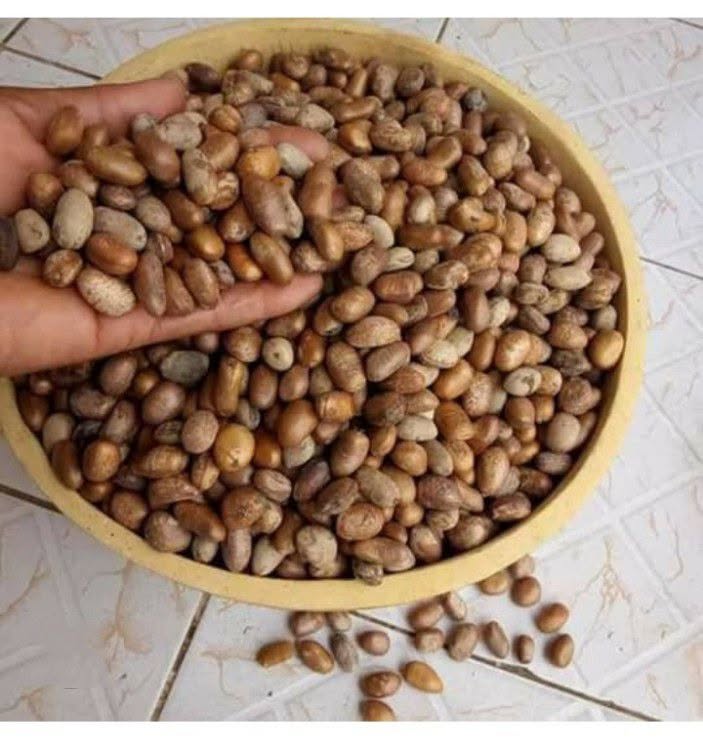

Nigerian Ehuru (Calabash Nutmeg): The Indigenous West African Spice Whose Aromatic Compound Profile So Closely Mirrors Asian Nutmeg That Two Botanically Unrelated Plant Families — Separated by Ocean, Continent, and Millions of Years of Independent Evolution — Have Arrived at Virtually the Same Volatile Chemistry Through Convergent Phytochemical Pathways That Food Scientists Are Only Now Beginning to Document
Ehuru Exporter Nigeria — Whole Ehuru Seeds (Monodora Myristica), Dried Ehuru Powder, Essential Oil-Grade Ehuru, and Ehuru Extract, Direct Southern Forest Belt Sourcing, Bulk Supply to West African Food Manufacturers, Diaspora Food Retailers, Traditional Medicine Producers, Flavour and Fragrance Companies, Specialty Food Ingredient Buyers, and Global Wholesale Buyers Worldwide
Ehuru exporter Nigeria is a search phrase whose commercial journey requires, before anything else, the single most important botanical disambiguation in this entire series — because the global spice market has assigned the word “nutmeg” to two products that share no botanical relationship, no geographic origin, no plant family, and no evolutionary lineage, yet have arrived at aromatic compound profiles so similar that traditional West African cooks and traditional Asian cooks have independently used them in ways whose functional culinary overlap is precise and documented.
The disambiguation is commercially decisive: Ehuru (Monodora myristica Dunal, Annonaceae family) — the subject of this article — is a completely different botanical species from true nutmeg (Myristica fragrans Houtt., Myristicaceae family). They are not related. They share no genus, no family, no botanical order. Monodora myristica is a tall West African forest tree native to Nigeria, Ghana, Cameroon, and the tropical forest belt of West and Central Africa — cultivated and harvested for its aromatic seeds that are dried, ground, and used as a spice in West African cooking. Myristica fragrans is an Asian evergreen tree native to the Banda Islands of Indonesia whose seed (nutmeg) and seed covering (mace) have been among the most commercially significant Asian spices since antiquity.
The convergence is phytochemical: both species produce aromatic seeds whose volatile compounds — dominated by monoterpenes and sesquiterpenes including α-pinene, sabinene, and terpene-4-ol — create an aromatic profile whose similarity is not the result of botanical relationship but of the same chemical evolutionary strategy applied independently by two different plant lineages whose ecological context (tropical forest, seed dispersal by birds and mammals attracted to aromatic compounds) created similar selection pressures toward similar aromatic metabolite production. When food scientists analyse the essential oil profiles of M. myristica and M. fragrans — documented through Journal of Agricultural and Food Chemistry essential oil characterisation studies — the overlap in compound identity is striking, while the relative proportions and the presence of species-specific compounds create the distinct character that distinguishes ehuru from Asian nutmeg in experienced hands.
The commercial opportunity whose exploitation this article documents is not a substitution story — ehuru is not an inferior substitute for Asian nutmeg. It is an authentically West African indigenous spice whose distinct aromatic character, traditional cultural significance, and genuine scarcity in international formal trade create a genuine specialty food ingredient positioning that the global food industry has barely begun to develop — and whose Nigerian origin production Paradise MultiTrade is specifically building formal export infrastructure to serve.
At Paradise MultiTrade International Limited, ehuru is one of our most culturally distinctive and commercially unique product categories — sourced from sustainable wild harvesting and emerging cultivated production across Nigeria’s southern forest belt states of Ogun, Ondo, Ekiti, Osun, Delta, Edo, Cross River, and Akwa Ibom, processed into whole dried seeds, ground powder, and essential oil-grade material appropriate to the diaspora food retail, specialty food manufacturing, and traditional medicine buyer communities, and exported with full food safety and quality documentation.
To discuss sourcing immediately, request a quotation here and our export team responds within 48 hours.
History and Origin — The West African Forest Spice Whose History Begins Before the Spice Trade
Monodora Myristica — Indigenous to West African Forests, Rooted in Traditional Culture
Monodora myristica Dunal is a member of the Annonaceae family — the same botanical family as soursop (Annona muricata), custard apple (Annona reticulata), and paw-paw (Asimina triloba) — a pantropical family whose West African members include multiple economically important food and medicine plants. Monodora myristica is specifically native to the humid lowland rainforest and forest-savanna transition zones of West and Central Africa — particularly Nigeria’s southern forest states, Ghana, Côte d’Ivoire, Cameroon, Gabon, and the Congo Basin — whose warm, humid conditions, rich forest floor soils, and distinctive seasonal rainfall pattern create the botanical habitat that the species specifically requires.
Unlike the vast majority of spices whose African presence reflects introduction through trade routes — black pepper, ginger, turmeric, and cinnamon all arriving in West Africa through Asian or trans-Saharan maritime contacts — ehuru is genuinely indigenous to West Africa. Its cultivation and use by Nigerian, Ghanaian, and Cameroonian communities predates any external botanical contact — creating a traditional knowledge heritage whose depth and specificity reflects millennia rather than centuries of cultural integration.
The cultural evidence is comprehensive and deeply embedded: Yoruba cuisine uses ehuru (ehuru or ariwo) as an essential spice in traditional egusi soup, ofe onugbu (bitter leaf soup), and specific ceremonial food preparations whose authenticity traditional cooks specifically associate with ehuru’s distinctive aromatic contribution that no substitute adequately replicates. Igbo cuisine uses ehuru (ehiri or egwu) as a fundamental spice in ofe owerri, ofe onugbu, and specific nsala (white soup) preparations whose characteristic flavour profile specifically requires ehuru’s warming, nutmeg-adjacent but distinctly West African aromatic character. Yoruba and Igbo traditional medicine both incorporate ehuru in preparations for respiratory conditions, digestive complaints, and post-partum recovery whose traditional prescriptions are documented through ethnomedicinal research in the Journal of Ethnopharmacology.
The ethnomedicinal documentation confirms what convergent phytochemistry independently suggests: ehuru’s bioactive compound profile creates genuine therapeutic functionality whose traditional prescriptions reflect empirical observation rather than botanical knowledge of the compounds responsible. Respiratory applications (the warm, volatile terpene-rich steam of ehuru-spiced preparations creating mucous membrane stimulation), digestive applications (the essential oil compounds whose carminative and digestive-stimulating activity parallel those of Asian nutmeg and other aromatic spices), and antimicrobial applications (documented through NCBI’s ethnopharmacology research database) all reflect the bioactive reality that ehuru’s phytochemical profile creates.
The Convergent Phytochemistry — Why Two Unrelated Species Arrived at Similar Aromatics
The scientific explanation for the aromatic similarity between M. myristica and M. fragrans lies in the convergent evolution of secondary metabolite biosynthesis in tropical forest plants whose ecological context — specifically the need to attract specific seed dispersers (birds and mammals) through aromatic reward while simultaneously deterring seed predators through compound toxicity — created similar evolutionary selection pressures in unrelated species.
Both species produce large, hard seeds that require animal dispersal — and both have evolved the strategy of aromatic volatile compounds that attract dispersers while secondary compounds in the seed tissue itself discourage excessive consumption. The specific volatile compound classes that achieve this — monoterpene and sesquiterpene hydrocarbons including α-pinene, sabinene, β-phellandrene, terpinen-4-ol, and related compounds — represent the same chemical family independently evolved in both species because they most efficiently serve the dispersal-attraction versus seed-protection ecological function in tropical forest environments.
Research on M. myristica essential oil composition published through NCBI’s plant chemistry database and Journal of Agricultural and Food Chemistry essential oil characterisation studies confirms the convergence while documenting the distinctiveness: both oils share α-pinene, sabinene, and terpinen-4-ol as major compounds — but M. myristica oil’s specific relative proportions and the presence of M. myristica-specific sesquiterpenes create a warm, woody, slightly sweet aromatic profile that is adjacent to Asian nutmeg but distinctly ehuru — a character that experienced West African cooks immediately recognise and that no amount of Asian nutmeg can precisely replicate in traditional West African preparations.
What Is Nigerian Ehuru? The Botanical Profile, Phytochemical Architecture, and Commercial Product Range
Monodora Myristica — The Forest Tree Whose Seeds Are Its Commercial Product
Monodora myristica is a large forest tree reaching 15–25 metres height — whose most visually distinctive feature is the extraordinary fruit: a large, spherical to ellipsoid pendulous gourd (20–35cm diameter) borne on long, flexible stalks from the main trunk and branches, whose hard woody shell contains the seeds suspended in a dry, fragrant, fibrous pulp matrix. The fruit’s botanical architecture is immediately recognisable as anomalous — hanging from the tree like decorative ornaments, the large round fruits whose hard shell and suspended seeds create a product whose harvesting requires cutting the stem and cracking the woody shell to access the seeds.
The commercial product is the seed — typically 20–35 per fruit, approximately 1.5–2.5cm long, oval to kidney-shaped, with a hard seed coat whose reddish-brown to dark brown colour, smooth surface, and characteristic aromatic fragrance upon cracking confirms the species identity.
The Essential Oil Chemistry:
α-Pinene — the primary monoterpene in M. myristica essential oil, documented at approximately 15–25% of total oil — the same bicyclic monoterpene whose presence in both Asian nutmeg and ehuru creates the primary aromatic convergence. α-Pinene’s characteristic resinous, pine-forward freshness contributes the clean, warm top note of ehuru’s aromatic profile.
Sabinene — approximately 10–20% of total oil — the monoterpene whose contribution to the warm, slightly spicy middle note of both ehuru and Asian nutmeg creates the aromatic register that traditional cooks associate with “nutmeg-type” spices. Sabinene’s specific heat-generated transformation to terpinen-4-ol during cooking creates the characteristic flavour development that makes ehuru most aromatic in cooked preparations.
Terpinen-4-ol — approximately 8–15% of total oil — the terpenol whose warm, spicy, slightly herbal character creates the persistent flavour note that distinguishes both ehuru and true nutmeg from other aromatic spices. Terpinen-4-ol’s documented antimicrobial activity — reviewed through NCBI’s antimicrobial pharmacology database — contributes to ehuru’s traditional medicine applications and creates natural preservative interest for food safety researchers.
Myristicin — present in M. myristica at lower concentrations than in M. fragrans — the aromatic ether compound whose presence in true nutmeg at high concentrations creates its mild psychoactive properties at excessive consumption (myristicin toxicity is the reason excessive nutmeg consumption is dangerous). The lower myristicin content of ehuru versus M. fragrans — documented through Journal of Natural Products comparative essential oil studies — means ehuru has a more favourable safety profile than Asian nutmeg at equivalent culinary use levels — an important food safety credential whose documentation supports EU and US food import compliance.
Elemicin and safrole — the minor aromatic ethers present in both species at low concentrations — contributing complex aromatic depth while requiring documentation for EU flavouring regulatory compliance under Regulation (EC) 1334/2008 whose safrole limits (1mg/kg in food) require analytical confirmation of compliance.
Total essential oil content — approximately 2–5% of dried seed weight — determining both flavour intensity in food applications and extraction yield economics for essential oil production buyers.
The Critical Commercial Disambiguation — Ehuru vs Asian Nutmeg
This disambiguation is so commercially important it warrants direct presentation rather than integration into the narrative:
| Feature | Ehuru (Monodora myristica) | Asian Nutmeg (Myristica fragrans) |
|---|---|---|
| Botanical family | Annonaceae | Myristicaceae |
| Geographic origin | West/Central Africa | Banda Islands, Indonesia |
| Commercial product | Seed from large gourd fruit | Seed from drupe fruit (nutmeg); seed covering (mace) |
| Myristicin content | Lower (more favourable safety profile) | Higher (cause of nutmeg toxicity at excessive consumption) |
| Primary use | West African traditional cuisine, traditional medicine | Global spice trade, food manufacturing, pharmaceuticals |
| Aroma character | Warm, woody, slightly sweet — West African aromatic register | Warm, spicy, slightly sweet — more intense myristicin character |
| EU Novel Food status | Requires verification — buyers must confirm per market | Established food use — not Novel Food |
| Market position | Specialty/niche — genuine scarcity premium | Global commodity — broad availability |
For buyers who want Asian nutmeg — see our nutmeg article. For buyers who want authentic West African ehuru — continue reading. These are not interchangeable products.
Three Commercial Product Forms
Whole Dried Ehuru Seeds — the primary commercial form for diaspora food retail, traditional medicine, and specialty food manufacturing — whose whole seed presentation preserves aromatic integrity longer than ground powder.
Ground Ehuru Powder — milled dried seeds for food manufacturing incorporation, spice blend production, and traditional medicine formulation — whose convenience and homogeneous distribution in food products creates broader industrial applicability.
Essential Oil-Grade Ehuru — whole seeds or ground material destined for steam distillation essential oil extraction — requiring maximum total essential oil content and documented chemical composition for flavour, fragrance, and aromatherapy applications.
Benefits and Industrial Uses of Nigerian Ehuru
West African Diaspora Food Retail and Traditional Cuisine Market
The global West African diaspora — whose Nigerian, Ghanaian, Cameroonian, and Ivoirian communities in the UK, USA, Canada, Germany, France, Italy, and across Europe create a substantial and commercially well-developed specialty food market — represents the most immediately commercially accessible and most culturally authentic procurement community for ehuru:
Nigerian diaspora food retail — the UK’s Nigerian diaspora alone (estimated at approximately 200,000–250,000 British Nigerians plus the much larger Nigerian-born temporary resident community in London and other major cities) creates specific, consistent procurement demand for ehuru whose traditional cuisine role is irreplaceable. No Nigerian cook preparing authentic ofe onugbu, ofe owerri, or traditional nsala accepts Asian nutmeg as a substitute for ehuru — the flavour difference, while subtle to the uninitiated palate, is immediately evident to anyone raised in Nigerian food culture. Specialist West African food retailers in London (Peckham, Brixton, Hackney), Birmingham, Manchester, and Dublin stock ehuru specifically because their Nigerian customer base demands it.
West African restaurant supply — the growing global popularity of West African cuisine — tracked through Euromonitor International’s ethnic food market analysis as one of the fastest-growing cuisine categories in UK and European restaurant markets — creates consistent procurement demand from restaurant operators whose authentic menu positioning specifically requires indigenous West African spices. Ehuru’s cultural authenticity creates commercial value for restaurants communicating genuine West African culinary identity to consumers seeking authentic cultural food experience.
Online specialty retail — the global e-commerce specialty food market — whose documented growth through platforms including Amazon, Etsy specialty food, and dedicated African food e-commerce sites — creates digital procurement channels for diaspora and non-diaspora consumers whose interest in authentic West African cooking ingredients creates a growing market beyond the traditional physical diaspora retail channel.
For diaspora food retail buyers evaluating Nigerian ehuru — contact our export team to discuss packaging specification and retail presentation.
West African Food Manufacturing — Traditional Seasoning Products
Authentic West African spice blend manufacturing — the commercial production of traditional Nigerian, Ghanaian, and Cameroonian spice blends — suya spice, egusi soup seasoning, traditional obe ata base spice mixes — creates industrial procurement demand for ehuru as a functional ingredient whose aromatic contribution is authentic and culturally specific.
African condiment and sauce manufacturing — the growing globalisation of West African food products creates manufacturing procurement demand from producers of bottled stews, seasoning pastes, and prepared cooking bases for diaspora and mainstream consumer markets whose product authenticity specifically requires indigenous West African spice ingredients including ehuru.
Bouillon and seasoning cube formulation — the development of specifically authentic West African bouillon cube and seasoning powder products — distinct from the generic chicken or beef bouillon cube that dominates mainstream seasoning markets — creates product development opportunities for food manufacturers whose West African-specific formulations incorporate ehuru alongside dried crayfish, locust beans, and other indigenous flavour compounds.
Traditional Medicine and Herbal Medicine Manufacturing
West African traditional medicine (TWM) pharmaceutical manufacturing — ehuru is incorporated in documented traditional medical preparations across Nigerian, Ghanaian, and Cameroonian healing systems for: respiratory conditions (inhaled aromatic steam from ehuru-spiced preparations whose volatile terpene compounds create bronchodilatory and expectorant effects documented through NCBI’s respiratory ethnopharmacology research), digestive conditions (carminative and digestive-stimulating effects of essential oil compounds whose mechanism parallels Asian nutmeg’s established digestive application), antimicrobial applications (terpinen-4-ol and α-pinene documented antimicrobial activity against common bacterial pathogens), and post-partum recovery (traditional prescription of ehuru-containing preparations in the post-partum warming dietary regime whose traditional use across Yoruba and Igbo communities is ethnomedicially documented through Journal of Ethnopharmacology research).
The WHO’s traditional medicine strategy specifically recognises indigenous African traditional medicine systems as valuable healthcare knowledge frameworks whose botanical ingredient supply chains require formalisation for safety, quality, and sustainability. Paradise MultiTrade’s ehuru supply programme contributes to this formalisation — providing documented, food-safety-tested ehuru whose quality standards extend the traditional medicine supply chain beyond informal village-level trade into internationally compliant commercial channels.
African and diaspora herbal product brands — the commercial development of African-origin herbal health products for diaspora and mainstream consumers creates procurement demand for authenticated, food-safety-documented ehuru as a raw material ingredient whose traditional use heritage provides the evidence base that herbal product regulatory frameworks reference.
Flavour and Fragrance Industry
Artisan fragrance and natural perfumery — ehuru essential oil’s distinctive warm, woody, resinous aromatic profile — documented through RIFM and comparable natural essential oil databases — creates interest from artisan natural perfumers building West African-inspired fragrance compositions whose authentic botanical provenance creates the cultural specificity that luxury natural fragrance markets specifically value. The growing market for African-origin botanical aromatics in the global fragrance industry — documented through Euromonitor International’s luxury fragrance analysis — creates commercial positioning for ehuru oil as an authentic West African fragrance note with genuine cultural and botanical provenance.
Natural food flavour development — ehuru’s unique aromatic profile — warm, slightly woody, nutmeg-adjacent but distinctly West African — creates commercial development interest for food flavour companies building authentic African cuisine flavour systems for the growing mainstream market interest in West African food culture. The Specialty Food Association documents West African cuisine flavour as one of the most rapidly emerging authentic global cuisine categories in premium food retail.
Aromatherapy and wellness products — ehuru essential oil’s terpene composition — whose documented antimicrobial, carminative, and warming properties parallel better-known aromatherapy ingredients — creates wellness product formulation interest for natural health brands building African botanical aromatherapy product ranges.
Research and Pharmaceutical Development
Pharmaceutical research interest — ehuru’s bioactive compound profile has attracted specific academic research interest documented through NCBI and Journal of Ethnopharmacology: antimicrobial research on M. myristica seed extracts confirming activity against Staphylococcus aureus, Salmonella typhi, and Candida albicans; anti-inflammatory research documenting cyclooxygenase-inhibitory activity of seed extract fractions; antidiabetic research on M. myristica in animal models. While this research is predominantly in vitro and early-stage — not yet generating the clinical evidence base of Asian nutmeg’s established pharmacological profile — the research trajectory reflects the global pharmaceutical research community’s progressive engagement with West African indigenous plant bioactivity.
Why Buy Ehuru From Nigeria?
The Origin Authenticity — Nigeria as Ehuru’s Centre of Commercial Production
Nigeria’s southern forest states — particularly the rainforest zones of Ogun, Ondo, Ekiti, Delta, Edo, Cross River, and Akwa Ibom — represent the most commercially accessible and best-documented production geography for Monodora myristica in West Africa. Unlike the vast majority of spices in this series whose African presence reflects historical introduction from other continents, ehuru is genuinely indigenous — whose natural distribution within Nigerian forest ecosystems creates production geography that cannot be replicated elsewhere through simple agricultural transplantation.
The specific terroir of Nigerian forest-zone ehuru — the laterite soils, humid tropical climate, forest canopy microclimate, and traditional harvesting practices of farming communities whose generational relationship with wild Monodora myristica populations creates sustainable harvesting knowledge — creates an origin authenticity whose commercial communication to diaspora communities, specialty food brands, and cultural cuisine businesses creates value that no alternative origin can replicate.
The Scarcity Premium — Why Formal Trade Creates Commercial Value
The global ehuru market is characterised by a commercial dynamic unusual in commodity spice trade: the product commands premium pricing not because production is limited by agronomic difficulty but because formal export supply chains are underdeveloped relative to the authentic cultural demand that exists in diaspora communities worldwide. Nigerian ehuru that reaches diaspora consumers in London, New York, Toronto, and Paris typically does so through informal personal travel networks — family members bringing small quantities in luggage, diaspora traders importing through informal channels whose documentation and food safety compliance are inconsistent.
Paradise MultiTrade’s formal ehuru export programme — with NAQS phytosanitary certification, food safety testing, and commercial-scale supply capability — creates the first formal supply chain whose product quality documentation, consistent availability, and legal compliance infrastructure enables diaspora food retailers, West African restaurant chains, and specialty food manufacturers to source ehuru through legitimate commercial channels at appropriate commercial volumes without the informal travel-based supply chain whose inherent limitations constrain business growth.
The First-Mover Window — Formal Export Development of an Indigenous Product
The commercial development of Nigerian ehuru as a formally exported, food-safety-documented specialty spice represents a first-mover opportunity whose commercial window reflects the same market timing dynamic we have documented throughout this series: the product’s authentic cultural value exists and is commercially actionable — the formal supply chain whose development creates the market access is what is being built. For international buyers who establish sourcing relationships with Paradise MultiTrade’s ehuru programme now — as it builds formal supply chain infrastructure — they are positioned to grow with the market whose formal development their own procurement creates incentive for.
Complete Export Documentation
Every ehuru shipment carries phytosanitary certification from NAQS, NEPC export documentation, certificate of origin, commercial invoice, packing list, and bill of lading. We coordinate moisture content, essential oil content (hydrodistillation), botanical species identity confirmation (Monodora myristica — distinguished from Myristica fragrans), safrole content (compliance with EU Regulation 1334/2008 limits), aflatoxin screening, pesticide residue multi-residue analysis to EU MRL standards per Regulation (EC) 396/2005, and microbiological safety testing following AOAC International validated procedures. For essential oil buyers, we coordinate complete GC-MS essential oil profiling (compound identification and percentage quantification). EU-bound shipments comply with Regulation (EU) 2017/625 on official controls and Commission Regulation (EC) 1881/2006. Our NEPC Export Licence No. 0042385 and CAC Registration No. RC-9284647 are verifiable through NEPC.
Nigeria’s Ehuru Export Strength and Global Market Demand
The Global Market
The global ehuru market — unlike the other spices documented in this series — is not tracked by major commodity market intelligence firms whose coverage focuses on high-volume globally traded spices. Ehuru’s commercial trade is predominantly informal, diaspora-driven, and geographically concentrated in West African community retail rather than food manufacturing channels whose data appears in standard commodity trade reporting. ITC Trade Map captures some formal trade flows under broader Capsicum and spice classifications — but ehuru-specific trade volume data reflects the pre-formalisation stage of the market rather than its authentic demand scale.
The West African Spice Producers Association through NEPC’s commodity development programmes and academic research on indigenous West African food ingredients published through Journal of Ethnic Foods provide the most relevant institutional intelligence on ehuru market development.
Key Export Destination Markets
United Kingdom — the largest single diaspora market for Nigerian food ingredients outside Nigeria, whose Yoruba and Igbo communities in London, Birmingham, Manchester, Leeds, and Bristol create concentrated retail demand. UK food import requirements administered by FSA and APHA for plant-derived food products.
United States — whose Nigerian-American community — concentrated in Houston, Atlanta, Dallas, New York, and Washington DC — creates the second-largest diaspora ehuru demand market. US food import requirements administered through FDA food import and USDA APHIS.
Canada — whose West African diaspora in Toronto and Ottawa creates consistent specialty spice demand tracked through CFIA.
Germany, Netherlands, and Italy — whose growing West African diaspora communities create developing European continental demand alongside the more established UK market.
Ghana and West African Regional Market — regional neighbours whose own food cultures use Monodora myristica under local names (wisa in Ghana) create natural regional trade through formal commercial channels that informal trade currently dominates.
France — whose large Francophone West African diaspora (Cameroonian, Ivoirian, Senegalese communities in Paris and Marseille) creates specific demand whose Cameroonian traditional use of M. myristica mirrors Nigerian ehuru in culinary function.
Why Choose Paradise MultiTrade International Limited?
Botanical Authentication — Confirming Monodora myristica Not Myristica fragrans. Species identity confirmed by botanical morphology documentation (seed shape, seed coat texture, fruit origin documentation) and essential oil GC-MS profile (compound ratio fingerprint distinguishing M. myristica from M. fragrans) — the foundational commercial quality assurance for a product whose name confusion with Asian nutmeg creates substitution risk. Contact us to discuss botanical authentication documentation.
Safrole Compliance Documentation. EU Regulation (EC) 1334/2008 limits safrole in food at 1mg/kg. Safrole content in ehuru essential oil — documented by GC-MS — confirmed below EU limits for all food-grade shipments. Contact us to discuss safrole compliance documentation.
Essential Oil GC-MS Profile for Fragrance and Flavour Buyers. Complete compound identification and percentage quantification of ehuru essential oil components — providing the chemical fingerprint that natural fragrance and food flavour applications require for formulation specification and IFRA/regulatory compliance management. Contact our team to discuss GC-MS essential oil profiling.
Sustainable Harvesting Documentation. Monodora myristica wild population harvesting documentation — confirming collection from established wild populations without destructive practices — for buyers whose sustainability credentials require documented responsible sourcing. Paradise MultiTrade works with forest community harvesting cooperatives whose traditional relationship with wild ehuru populations ensures sustainable collection. Contact us to discuss sustainable sourcing documentation.
Multi-Commodity West African Authentic Spice Sourcing. Ehuru buyers frequently source complementary authentic West African ingredients. Alongside ehuru, Paradise MultiTrade exports locust beans (iru/dawadawa), alligator pepper, uziza seed, uda (negro pepper), crayfish (dried shrimp), bitter kola, kola nut, hibiscus flower, moringa leaf powder, cashew nut kernel, and raw cashew nuts. Explore our full range of Nigerian export commodities — particularly our comprehensive portfolio of authentically West African indigenous spices and food ingredients that no other export programme consolidates under one formal supply relationship.
Product Specifications
| Specification | Details |
|---|---|
| Product | Nigerian Ehuru — Calabash Nutmeg (Monodora myristica) |
| Common Names | Ehuru (Yoruba), Ehiri / Egwu (Igbo), Ariwo (some Yoruba), African nutmeg, Calabash nutmeg, Jamaican nutmeg (trade), Wisa (Ghanaian), Bèsè (Fon/Benin) |
| Botanical Species | Monodora myristica Dunal (Annonaceae) — DISTINCT from Myristica fragrans (Myristicaceae) |
| Botanical Authentication | Seed morphology documentation; Essential oil GC-MS fingerprint; Botanical species certificate |
| Origin | Nigeria (Ogun, Ondo, Ekiti, Delta, Edo, Cross River, Akwa Ibom States — southern forest belt) |
| Harvesting Method | Sustainable wild harvesting from forest populations; emerging cultivated production |
| Forms Available | Whole dried seeds; Ground ehuru powder (60–80 mesh); Essential oil-grade whole seeds |
| Essential Oil Content | 2–5% of dried seed weight (hydrodistillation) |
| Primary Essential Oil Compounds | α-Pinene (15–25%), Sabinene (10–20%), Terpinen-4-ol (8–15%), β-Phellandrene (5–10%), and other monoterpenes and sesquiterpenes (GC-MS) |
| Myristicin Content | Lower than M. fragrans — documented by GC-MS per lot |
| Safrole Content | ≤1mg/kg in food-grade product (EU Regulation 1334/2008 compliant) — GC-MS confirmed |
| Moisture Content | ≤10% (whole seeds); ≤8% (powder) |
| Total Ash | ≤5% dry weight |
| Acid-Insoluble Ash | ≤1% dry weight |
| Aflatoxin | Total ≤10 ppb; B1 ≤2 ppb |
| Pesticide Residue | Multi-residue analysis to EU MRL standards — mandatory all EU-bound lots |
| Microbiological | Salmonella absent/25g; Total plate count ≤100,000 CFU/g |
| Allergen Status | Ehuru is not among the 14 major EU allergens or 9 US FDA major allergens |
| Colour | Seeds: reddish-brown to dark brown, smooth; Powder: light to medium brown |
| Aroma | Warm, woody, spicy, slightly sweet — nutmeg-adjacent but distinctly West African aromatic character |
| Shelf Life | 24 months (whole seeds, sealed cool dry); 12 months (powder) |
| Packaging Options | 1kg, 5kg, 25kg polypropylene bags (retail and wholesale); food-grade sealed bags |
| Supply Capacity | 5–500 MT per year (limited by wild harvesting sustainable yield; cultivated production growing) |
| MOQ | Whole seeds: 1 MT; Powder: 500kg; Essential oil grade: 500kg |
| Export Documentation | Phytosanitary Certificate (NAQS), Botanical Species Identity Certificate (Monodora myristica confirmed), Certificate of Origin, NEPC Export Licence, Essential Oil Content Certificate, Essential Oil GC-MS Profile (fragrance/flavour buyers), Safrole Content Certificate (EU compliance), Moisture and Ash Certificate, Aflatoxin Certificate, Pesticide Residue Certificate (EU MRL), Microbiological Certificate, Sustainable Harvesting Documentation (on request), Commercial Invoice, Packing List, Bill of Lading |
| Payment Terms | T/T, Letter of Credit (LC at sight), Escrow |
| Loading Port | Lagos (Apapa / Tin Can Island Port), Nigeria |
| Incoterms Available | EXW, FOB Lagos, CNF, CIF |
Packaging and Export Process
Fruit Harvest and Seed Extraction. Monodora myristica fruiting season in Nigeria’s southern forest belt runs October through February — when the large spherical fruits (20–35cm diameter) hanging from trunk and major branches reach full maturity confirmed by the fruit shell’s colour change from green to yellow-brown. Mature fruits harvested by cutting the stalk — whose pendulous hanging position makes hand harvesting accessible without damaging the tree. The hard woody shell cracked to release the seeds and their surrounding fibrous, aromatic pulp matrix. Seeds separated from pulp by hand washing or dry separation — whose efficiency determines seed surface cleanliness and reduces organic contamination.
Initial Drying. Freshly extracted ehuru seeds sun-dried on raised mesh platforms for 7–14 days — or kiln-dried at 50–60°C for 24–48 hours — until moisture falls below 10%. The aromatic essential oil compounds whose preservation during drying determines commercial quality — requiring temperature management below 65°C to prevent volatile terpene loss.
Cleaning and Sorting. Dried seeds cleaned to remove residual pulp fragments, empty or shrivelled seeds, and foreign material. Visual inspection removes discoloured, cracked, or mould-affected seeds whose presence would compromise lot quality and microbiological safety. Seeds selected for consistent size and colour uniformity for premium whole-seed retail grade.
Grinding (for powder). Clean dried seeds fed through hammer mills or impact mills — the hard seed coat’s density requiring appropriate mill speed for consistent particle size. Grinding temperature managed through ambient cooling — preventing heat-induced terpene volatilisation whose loss would reduce the powder’s aromatic intensity and commercial quality.
Essential Oil Extraction (where specified). Whole or coarsely ground ehuru steam-distilled through commercial Clevenger apparatus or industrial steam distillation equipment — with essential oil yield documented per batch as quality control and commercial specification.
Quality Testing. Moisture, ash, essential oil content (hydrodistillation), safrole by GC-MS (EU compliance), aflatoxin (ELISA), pesticide residue (multi-residue GC/LC-MS), and microbiological — tested before export documentation. GC-MS complete compound profiling for essential oil buyers.
Lead Times. Whole seeds from harvest season stock: 14–21 days. Powder: 21–28 days. Essential oil: 28–42 days (distillation scheduling). Off-season (March–September): supply from sealed storage — moisture and quality confirmed before shipment. Contact us to plan your supply schedule.
Frequently Asked Questions
What is the difference between ehuru (Monodora myristica) and Asian nutmeg (Myristica fragrans) and can they substitute for each other?
The most important commercial question about ehuru — and the one whose precise answer determines whether buyers are sourcing the right product for their application. The distinction is botanical, chemical, culinary, and cultural: Botanical: Different species, different genera, different families (Monodora: Annonaceae; Myristica: Myristicaceae), different geographic origins (West Africa vs Indonesian Banda Islands). Chemical: Both produce terpene-dominant essential oils with overlapping compound classes (α-pinene, sabinene, terpinen-4-ol) — but ehuru has lower myristicin content (creating a gentler, safer profile) and different relative proportions creating distinct aromatic character. Culinary: Ehuru’s aromatic character is warm, woody, and distinctly West African — experienced Nigerian cooks immediately recognise the difference from Asian nutmeg in traditional preparations. Asian nutmeg’s more intense myristicin-driven pungency creates the aromatic character of European and Asian cuisines. Cultural: Ehuru is irreplaceable in authentic West African traditional recipes for reasons of cultural identity that transcend simple flavour matching — the same way that wasabi cannot substitute for horseradish in Japanese cuisine even though both provide nasal pungency through different compounds. Can they substitute? In non-traditional, non-culturally specific food manufacturing applications — imprecisely, yes. For authentic West African cooking and diaspora food products — no substitution is culturally or commercially acceptable. Contact us to confirm which product fits your application.
What is the EU regulatory status of ehuru and are there any Novel Food concerns?
EU food regulatory status for ehuru (Monodora myristica) requires careful navigation because the species lacks the extensive commercial history in EU markets that established food ingredients have: Novel Food consideration: EU Regulation 2015/2283 on novel foods requires that food ingredients without documented significant consumption in the EU before May 1997 undergo Novel Food authorisation before commercial marketing as a food ingredient. The key question for ehuru is whether documented West African diaspora consumption in EU member states (primarily UK before Brexit, and continental EU diaspora communities) constitutes “significant consumption” prior to 1997 — a question whose legal answer depends on the volume and geographic breadth of documented pre-1997 consumption. EU importers should verify ehuru’s specific Novel Food status with the relevant national food safety authority (in Germany through BVL, in Netherlands through NVWA, in UK post-Brexit through FSA) before commercial food product incorporation. Safrole compliance: EU Regulation 1334/2008 limits safrole at 1mg/kg in food — ehuru’s safrole content documented below this limit in food-grade material. Current market reality: Ehuru is sold in West African diaspora retail shops across EU member states without systematic Novel Food enforcement — reflecting the regulatory pragmatism that applies to small-volume diaspora food ingredients. Paradise MultiTrade recommends that buyers seeking EU food manufacturing scale use — rather than diaspora retail use — obtain specific regulatory guidance before incorporation. Contact us to discuss EU regulatory navigation.
What traditional medicine applications does ehuru have and what research supports them?
Ehuru’s traditional medicine applications — documented through ethnomedicinal surveys across Yoruba, Igbo, Efik, and related West African cultural groups published in Journal of Ethnopharmacology — span three primary therapeutic areas: (1) Respiratory conditions: Ehuru is used in steam inhalation preparations for catarrh, sinusitis, and upper respiratory congestion — whose mechanism of action (volatile terpene compounds including α-pinene and terpinen-4-ol whose antimicrobial and bronchial-stimulating properties are documented through NCBI) parallels traditional eucalyptus inhalation therapy in European folk medicine. (2) Digestive conditions: Ehuru in warm preparations for digestive discomfort, bloating, and carminative relief — whose mechanism parallels Asian nutmeg’s established digestive application and reflects the essential oil compounds’ documented antispasmodic activity on smooth muscle. (3) Post-partum recovery: Specific Igbo and Yoruba traditional practices of incorporating ehuru in the post-partum warming diet (the 40-day confinement period during which new mothers eat specific warming, nutrient-dense foods) — creating ehuru demand specifically associated with childbirth cultural practices. Research on M. myristica bioactivity accessible through NCBI confirms in vitro antimicrobial activity, anti-inflammatory properties in animal models, and antifungal activity of seed extracts — providing research foundation for traditional use biological plausibility without yet constituting human clinical evidence. Contact us to discuss traditional medicine application supply.
Why is ehuru scarce in international markets and how does Paradise MultiTrade address this scarcity?
Ehuru’s international market scarcity reflects a specific supply chain development gap rather than any fundamental production limitation: (1) Wild harvesting dependency: Monodora myristica commercial production currently relies primarily on wild forest population harvesting — whose sustainable yield, while commercially meaningful, is limited by natural population density rather than agricultural planting scale. Cultivated production is emerging in Nigeria’s southern forest states but has not yet reached commercial scale comparable to agricultural spice crops. (2) Absence of formal export infrastructure: Ehuru that reaches diaspora consumers typically travels through informal channels — personal travel, small-quantity diaspora trader imports — whose aggregate volume is commercially significant but whose formal documentation (phytosanitary certificate, food safety testing, commercial invoice) is absent. The result is a product with real demand and real supply whose connection is prevented by supply chain formalisation failure. (3) Limited buyer awareness: International food manufacturers, specialty food importers, and fragrance buyers who would incorporate ehuru if it were available through formal, quality-documented supply chains frequently don’t know it exists as a commercially tradeable ingredient. Paradise MultiTrade specifically addresses all three barriers: our formal supply chain with NAQS phytosanitary certification and food safety testing connects documented Nigerian production to international buyers; our cultivation development partnerships progressively expand supply beyond wild harvesting constraints; and our marketing communications (including this article) build buyer awareness of ehuru as a commercially accessible specialty ingredient. Contact us to discuss supply availability and cultivation development programme.
How is ehuru used in traditional West African cooking and what flavour role does it serve?
Ehuru’s culinary role in traditional West African cooking is that of a background aromatic whose warming, woody, slightly nutmeg-adjacent character creates flavour depth rather than sharp foreground pungency — functioning more like bay leaf or nutmeg in European cooking (background aromatic complexity that is noticed by its absence rather than its presence) than like chili pepper or garlic whose presence is immediately dominant. Specific traditional applications: Ofe onugbu (bitter leaf soup) — ehuru seeds are toasted and ground, incorporated in the seasoning base alongside crayfish, locust beans, and palm oil whose fat-soluble terpene compounds carry ehuru’s aromatic character through the entire soup. Ofe owerri — the quintessential Imo State Igbo soup whose specific ehuru incorporation creates the characteristic aromatic signature that distinguishes it from other egusi-based soups. Nsala (white soup) — whose clear broth-based preparation (without palm oil’s red colour) specifically depends on ehuru’s aromatic warming contribution to create flavour depth without colour contribution. Traditional spice blends — ehuru ground with alligator pepper, uda, and local pepper creates the traditional four-spice blend (aru-ọjị in some Igbo traditions) used in specific ceremonial food preparations. Preparation guidance: Ehuru seeds are typically lightly toasted before grinding — the gentle heat developing the aromatic compound profile through controlled terpene transformation that maximises flavour complexity. Grinding just before use (like pepper corn grinding) preserves maximum aromatic intensity. Contact us to discuss culinary-grade specification.
What is the sustainable harvesting situation for ehuru and how is supply reliability managed?
Monodora myristica wild population harvesting — the current primary supply source — requires active sustainability management whose documentation Paradise MultiTrade specifically coordinates: (1) Wild population status: M. myristica is classified as “Least Concern” on the IUCN Red List — confirming that wild populations are not currently threatened by commercial harvesting at present scale. However, sustainable harvesting limits per community forest area require documentation to confirm that commercial export volumes remain within sustainable yield. (2) Community harvesting protocols: Paradise MultiTrade sources from forest community cooperatives whose traditional knowledge of M. myristica population locations, fruiting seasons, and appropriate harvesting practices creates sustainable management through generational knowledge rather than formal conservation management planning. We document source communities, approximate harvest locations, and annual yield estimates as standard supply chain records. (3) Cultivated production development: Paradise MultiTrade actively supports cultivation programme development in Ogun and Ondo state forest-edge farming communities — whose cultivation of M. myristica from established nursery seedling stock progressively supplements wild harvesting with more predictable, year-round-accessible cultivated supply. Cultivated production timelines: M. myristica trees reach commercial fruiting maturity at 5–7 years from seedling planting — meaning current cultivation investment creates commercial yield in the 2030–2032 timeframe. Supply reliability management: For buyers requiring volumes above 50 MT per season — early-season procurement planning (August–September discussion initiation before October harvest) ensures harvesting capacity allocation. Off-season supply from prior season storage (sealed, cool storage maintaining quality through approximately June) provides year-round availability for volumes below 20 MT. Contact us to discuss sustainable supply management.
What transit times should I expect from Nigeria?
Whole ehuru seeds and ground powder (standard dry container — no temperature control required for properly dried seeds below 10% moisture): UK (Tilbury, Felixstowe) — 14–18 days from Lagos. Netherlands (Rotterdam) — 14–18 days. Germany (Hamburg) — 14–20 days. France (Le Havre) — 14–18 days. Italy (Genoa, Naples) — 12–16 days. USA (East Coast — New York, Baltimore, Houston) — 18–25 days. Canada (Toronto via Halifax or Montreal) — 18–28 days. UAE (Jebel Ali) — 10–14 days. Japan (Yokohama) — 25–32 days. South Korea (Busan) — 30–38 days. Ghana (Tema) — 3–5 days (regional West African logistics). Air freight (UK Heathrow) — 2–3 days total (recommended for small urgent diaspora retail restocking). Air freight (USA JFK/Houston) — 3–4 days total. Packaging note: Whole ehuru seeds’ aromatic essential oil content requires sealed moisture-barrier packaging — inner polyethylene liner within outer kraft bags — preventing aroma loss and moisture ingress during transit. Ground powder requires additional care for volatile compound preservation — nitrogen-flushed sealed packaging recommended for long transit routes. Contact us to plan your complete logistics programme.
Ready to Source Nigerian Ehuru (Calabash Nutmeg) — Whole Seeds, Ground Powder, and Essential Oil-Grade Material — With Botanical Species Authentication, Safrole EU Compliance Documentation, Essential Oil GC-MS Profile, Sustainable Harvesting Certification, and Full Food Safety Documentation for West African Diaspora Food Retailers, Traditional Cuisine Restaurants, Food Manufacturers, Herbal Medicine Producers, Fragrance Buyers, and Global Specialty Wholesale Buyers?
If you are a West African diaspora food retailer in the UK, USA, Canada, or continental Europe whose Nigerian, Ghanaian, or Cameroonian customer base demands authenticated, food-safety-certified ehuru supplied through formal commercial channels rather than informal travel-based procurement, a West African restaurant group or food service operator building authentic traditional West African menu positioning whose ehuru supply requires consistent quality, consistent availability, and legitimate food safety documentation, a West African food manufacturer developing authentic traditional spice blends, seasoning products, or prepared meal kits whose product authenticity specifically requires indigenous West African spice ingredients including ehuru from documented Nigerian origin, a natural fragrance company or artisan perfumery building West African-inspired fragrance compositions whose authentic botanical provenance requires essential oil GC-MS profile documentation from a formally documented West African origin exporter, a herbal product brand developing African-origin health products whose traditional medicine application of ehuru for respiratory support, digestive health, or post-partum recovery requires authenticated, food-safety-tested botanical raw material, a food ingredient development company exploring West African indigenous botanical flavour systems for the growing mainstream market interest in authentic West African cuisine, or a specialty food ingredient importer building supply positions in undercovered West African indigenous spices as international food culture awareness of West African cuisine develops commercial velocity — Paradise MultiTrade International Limited is the licensed Nigerian exporter your ehuru supply programme needs.
We supply Nigerian Monodora myristica ehuru — whole seeds, ground powder, and essential oil-grade material — from Ogun, Ondo, Delta, and Cross River forest belt community harvesting operations, botanical species authentication documented per lot, safrole content GC-MS confirmed within EU Regulation 1334/2008 limits, essential oil GC-MS complete compound profile for fragrance and flavour buyers, sustainable harvesting documentation available, aflatoxin screened, EU pesticide residue MRL compliant, and exported with full documentation to buyers in every major regulated destination market.
Request a Quotation — share your required form (whole seeds, powder, or essential oil-grade), botanical authentication documentation requirement, safrole compliance need, GC-MS oil profile requirement, sustainable harvesting documentation need, volume, application (diaspora retail, restaurant supply, food manufacturing, herbal medicine, fragrance, specialty food), destination market, and preferred incoterms. We respond within 48 hours.
Contact Our Export Team — speak directly about botanical species authentication distinguishing M. myristica from M. fragrans, safrole EU compliance documentation, essential oil GC-MS compound profiling for fragrance formulation, EU Novel Food regulatory navigation for food manufacturing buyers, sustainable wild harvesting documentation, cultivation development programme timeline, diaspora retail packaging specification, and long-term specialty supply programme structuring.
Explore Our Full Product Range — alongside ehuru, Paradise MultiTrade exports locust beans (iru/dawadawa), alligator pepper, uziza seed, uda (negro pepper), crayfish (dried shrimp), bitter kola, kola nut, hibiscus flower, moringa leaf powder, cashew nut kernel, and raw cashew nuts. One licensed Nigerian exporter. One consolidated West African indigenous spice, botanical, oilseed, and natural food sourcing relationship — from the West African forest spice whose convergent phytochemistry with Asian nutmeg represents one of the most remarkable independent evolutionary achievements in the botanical world to the most culturally authentic and commercially underdeveloped indigenous spice in the Nigerian export portfolio.
Paradise MultiTrade International Limited | NEPC Export Licence No. 0042385 | CAC No. RC-9284647 | Lagos, Nigeria | www.paradisemultitrade.com
Reviews
There are no reviews yet.