

Nigerian Suya Spice (Yaji): The Defining Flavour Blend of the Most Internationally Recognised African Street Food Whose Global Media Coverage Has Reached Every Major Food Media Platform on Earth — While the Authentic Spice Blend That Creates Its Irreplaceable Character Remains Almost Completely Unavailable Through Any Formal Commercial Export Channel Anywhere in the World
Suya Spice Exporter Nigeria — Authentic Nigerian Yaji Suya Spice Blend, Food Manufacturing Grade Suya Seasoning, Retail-Pack Suya Spice Mix, and Custom Suya Blend Formulation, Direct Traditional Recipe Sourcing, Bulk Supply to West African Diaspora Food Retailers, Nigerian Restaurant Chains, Food Manufacturing Companies, Suya Catering Operations, African Food Brand Developers, and Global Specialty Wholesale Buyers Worldwide
Suya spice exporter Nigeria is a search phrase whose commercial context is defined by one of the most commercially paradoxical situations in the entire global specialty food market: a street food so internationally celebrated that it has been featured in CNN’s 50 Best Foods in the World, BBC Food’s global street food coverage, National Geographic’s food travel documentation, and Anthony Bourdain’s Parts Unknown — yet whose defining spice ingredient is so completely absent from formal international commercial supply chains that diaspora Nigerians in London, New York, Toronto, and Houston regularly travel to Nigeria specifically to bring back yaji in their luggage, and West African restaurant operators outside Nigeria maintain semi-informal personal supply chains through visiting relatives whose luggage serves as the supply chain.
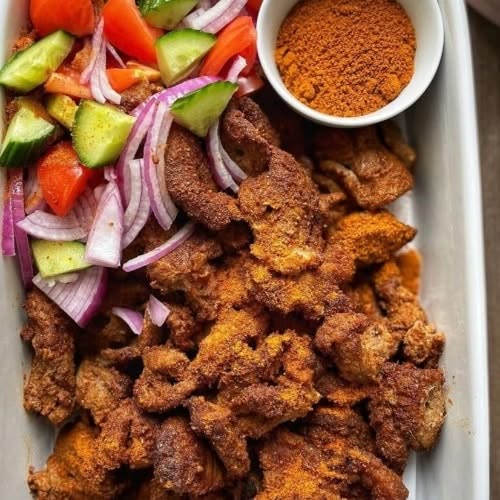
Suya — Nigeria’s most internationally celebrated culinary export — is grilled meat on skewers whose specific flavour identity is inseparable from yaji: the ground spice blend rubbed onto the meat before grilling whose combination of powdered groundnut cake (kulikuli), ground hot pepper, ginger, garlic, onion, and specific regional spice additions creates the characteristic flavour profile that suya vendors in Kano, Kaduna, Zaria, and Lagos have been perfecting across generations. Remove the yaji and you have grilled meat. Apply the yaji and you have suya — culturally, culinarily, and commercially specific in a way that no alternative seasoning blend can replicate.
The commercial paradox has three dimensions: demand — demonstrably global, growing rapidly as West African cuisine’s international media recognition translates into diaspora restaurant expansion and mainstream food culture curiosity; supply — physically abundant, with yaji production happening across Nigeria’s northern cities daily in quantities that could supply export markets; supply chain — completely absent, with no formally documented, food-safety-tested, consistently available international export programme connecting Nigerian yaji production to international buyer demand.
This is the commercial gap that Paradise MultiTrade International Limited’s suya spice programme specifically addresses — building the first formally documented, food-safety-compliant, commercially scalable export supply chain for authentic Nigerian yaji suya spice blend whose existence enables diaspora retailers, West African restaurant chains, food manufacturers, and African food brand developers to build genuine commercial products around an authentic ingredient whose supply has previously been limited to informal personal travel networks.
At Paradise MultiTrade International Limited, suya spice is produced to formulation specifications developed in collaboration with traditional suya master practitioners (mai suya) whose generational recipe knowledge creates the authentic flavour foundation, manufactured to international food safety standards whose microbiological, allergen, mycotoxin, and pesticide residue documentation enables legitimate commercial import in regulated markets, and exported with the complete food safety, customs, and regulatory documentation that formal commercial buyers require.
To discuss sourcing immediately, request a quotation here and our export team responds within 48 hours.
History and Origin — The Northern Nigerian Street Food Whose Hausa Tradition Created the World’s Most Under-Exported Authentic Spice Blend
Suya — From Fulani Pastoral Tradition to Global Street Food Recognition
The history of suya — and therefore of yaji — is embedded in the food culture of the Fulani (Fulbe) pastoral communities of northern Nigeria and the broader Sahel, whose nomadic cattle herding tradition created the practical necessity of a portable, quickly prepared, high-protein meat preparation appropriate to the mobility of pastoral life. The practice of slicing thin cuts of beef or goat, rubbing with ground spice paste, and grilling quickly over open fire created a food that was simultaneously the ideal pastoral protein — quick to prepare, requiring no cooking vessel, using the spices that northern trade routes made available — and the basis of what would become urban Nigeria’s most commercially significant street food culture.
The urbanisation of suya — its migration from pastoral camp preparation to the commercial street corner enterprise — followed the growth of northern Nigerian cities and the remarkable commercial ecosystem of the mai suya (suya maker — literally “owner of suya”) whose craft specialisation, recipe development, and business organisation created the suya industry that now operates across every Nigerian city, from Kano’s Sabongari market stalls through Lagos’s Ojuelegba suya spots through Abuja’s evening suya vendors whose queues form reliably at sunset.
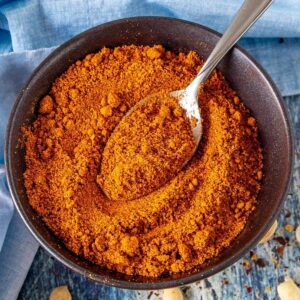
The yaji blend — whose precise formulation varies between mai suya families, regional traditions, and commercial producers — has its commercial foundation in several core components whose combination creates suya’s characteristic flavour architecture:
Kulikuli (groundnut cake) — the partially defatted, ground peanut paste that has been pressed to remove most oil and dried into a hard cake, then re-ground into coarse powder — forms the textural and fatty foundation of yaji, creating the characteristic coating that adheres to meat surfaces, caramelises during grilling, and delivers the nutty, slightly fatty richness that distinguishes suya from simple spiced grilled meat. Kulikuli’s role is functional as much as flavourful — it creates the coating vehicle that carries other spice compounds into contact with the meat surface.
Yaji ground pepper (Capsicum) — hot pepper whose specific variety and processing creates suya’s characteristic heat level — traditionally from the small, thin-walled Capsicum frutescens type peppers common in northern Nigerian markets whose intense pungency at small inclusion creates the appropriate heat without overwhelming the kulikuli’s nutty character.
Ground ginger — contributing warming, aromatic depth whose fresh-spiced character complements the groundnut base and integrates the pepper’s heat into the overall flavour profile.
Ground garlic and onion — the savoury allium foundation whose glutamate-related umami contribution creates flavour depth and the characteristic suya savouriness that distinguishes it from simple spiced meat.
Regional spice additions — varying between Kano, Kaduna, Zaria, Jos, and Lagos traditions: cloves (adding warm aromatic depth), cinnamon (adding sweet spice complexity), cubeb pepper (Piper cubeba — adding the piney, eucalyptus-adjacent character that distinguishes some Kano-tradition yaji), suya maggi or dawadawa (locust bean — adding fermented umami depth in some formulations), and paprika (adding colour without excessive heat in commercial formulations designed for milder markets).
The ethnomedicinal and food culture documentation of suya and yaji is captured through academic research accessible via Journal of Ethnic Foods and the African Studies Association‘s food culture programme — confirming the depth of cultural practice and recipe heritage that traditional yaji represents.
The Global Recognition Event — How Suya Became an International Food Media Story
The international food media coverage whose cumulative effect has created global awareness of suya — and therefore potential demand for authentic yaji in international markets — represents one of the most significant commercial opportunity creators in West African food culture:
CNN Travel’s 50 Best Foods in the World — whose inclusion of Nigerian suya created the most commercially significant single media exposure for any West African food in recent history, reaching millions of readers whose subsequent interest in Nigerian cuisine created both diaspora restaurant demand and mainstream food curiosity.
Anthony Bourdain’s Parts Unknown — Nigeria episode whose treatment of suya as a defining Nigerian food experience reached the global food media audience that Bourdain’s programme consistently delivered — whose influence on food trend awareness is among the most commercially consequential in food media history.
Netflix’s Chef’s Table and Street Food — whose global audience, combined with coverage of African street food culture, created documentary-level international awareness of African street food traditions including suya’s place in global street food heritage.
The commercial consequence: a diaspora population whose restaurant operators, food retailers, and food brand developers are building commercial businesses around Nigerian food culture for both diaspora and mainstream consumers — and who need authentic yaji supply whose quality, consistency, and regulatory compliance matches the commercial scale they are building toward.
What Is Yaji Suya Spice? The Formulation Architecture, Ingredient Profile, and Commercial Variants
The Core Formulation — Traditional Recipe Foundation
Yaji suya spice is a multi-ingredient ground spice blend — not a single botanical ingredient — whose formulation complexity distinguishes it from the single-ingredient spices covered in earlier articles and creates specific commercial documentation requirements for blended product export. The core formulation components and their functional roles:
Kulikuli (groundnut cake) — 40–60% of blend: The dominant ingredient by volume and weight — whose textural, fatty, and flavour contribution creates suya’s distinctive character. Partially defatted groundnut cake is produced by pressing roasted groundnuts to remove most oil (leaving approximately 20–30% residual fat versus groundnut’s natural 44–55% oil content) and grinding to coarse powder. The residual oil creates the adhesive coating character; the groundnut protein creates the caramelisation during grilling; the characteristic groundnut flavour creates suya’s nutty foundation. Important allergen consideration: groundnut (peanut) is a major food allergen under both EU Regulation 1169/2011 and US FDA FALCPA — requiring mandatory allergen declaration on all food products containing suya spice as an ingredient.
Ground hot pepper — 15–25% of blend: The heat contributor whose variety and processing creates the target Scoville level. Traditional northern Nigerian yaji uses small, intensely pungent Capsicum frutescens type peppers whose 30,000–50,000 SHU equivalent creates the characteristic suya heat. Commercial export formulations offer heat level variants (mild, medium, hot, extra hot) by adjusting pepper inclusion percentage.
Ground ginger — 8–15% of blend: The aromatic warming contributor whose Nigerian highland plateau ginger quality (as documented in our ginger powder article) creates superior aroma intensity per gram inclusion compared to lower-quality origins.
Ground garlic — 5–10% of blend: The savoury allium depth contributor.
Ground onion — 5–10% of blend: The sweet savoury complement to garlic.
Salt — 3–8% of blend: The flavour enhancer and preservation contributor whose sodium content creates the seasoning balance and helps manage moisture activity in the finished blend.
Additional regional spices — 2–8% combined: Cloves, cinnamon, paprika (for colour), cubeb pepper, and in some formulations a small proportion of locust bean powder (dawadawa) — whose combined contribution creates the specific regional character that distinguishes Kano-tradition, Kaduna-tradition, and Lagos-adapted yaji.
Commercial Formulation Variants
Traditional (Authentic) Yaji — full traditional recipe with kulikuli base, hot pepper at traditional pungency, all regional spice additions, no artificial flavours, no preservatives. Target SHU equivalent: 35,000–45,000. Packaging: 100g, 200g retail bags for diaspora retail; bulk 5kg, 10kg bags for restaurant supply.
Commercial Food Manufacturing Grade — standardised formulation with documented curcumin (from paprika addition), capsaicin (SHU documented), moisture content, and microbiological specifications — appropriate for food manufacturing incorporation in ready meals, seasoning products, and snack coatings.
Mild Suya Spice — adapted formulation reducing pepper to 8–12% of blend — creating a gateway product for mainstream non-diaspora consumers whose introduction to suya flavour benefits from reduced heat intensity. SHU equivalent: 15,000–25,000.
Marinade-Grade Suya Spice — formulated with slightly higher salt and oil retention for wet marinade applications — specifically suited for food service and catering operations whose marinating rather than dry rubbing application requires adjusted blend characteristics.
Benefits and Industrial Uses of Nigerian Suya Spice
West African Diaspora Food Retail — The Most Immediate Commercial Market
The global West African diaspora food retail market — whose growth is directly correlated with diaspora community size and income level across the UK, USA, Canada, and continental Europe — represents the most commercially immediate and highest-per-kilogram-value procurement market for authentic yaji suya spice:
UK diaspora retail — the UK’s Nigerian community (estimated 200,000+ British Nigerians) creates specific, consistent retail demand for authentic yaji whose quality standards — established through decades of direct Lagos suya consumption experience — create very low tolerance for inauthentic substitute products. Specialist West African food retailers in London’s Peckham, Brixton, and Hackney districts, Birmingham’s Handsworth, and Manchester’s Moss Side stock suya spice specifically because their Nigerian customer base demands it. The absence of consistently available, food-safety-documented authentic yaji in UK retail is the commercial gap that Paradise MultiTrade’s supply programme specifically fills.
USA diaspora retail — Houston (home to one of the largest Nigerian-American communities in the USA), Atlanta, Dallas, New York, and Washington DC support specialist West African grocery retail whose Nigerian customer base creates consistent suya spice demand. US food safety requirements for imported spice blends administered through FDA food import — requiring allergen declaration (peanut), full ingredient list, and country of origin labelling.
Online African food e-commerce — the global digital marketplace for African food products — through dedicated platforms including Afrofoods, African Food Market, and mainstream platforms including Amazon Marketplace — creates a digital retail channel whose geographic reach extends authentic yaji availability beyond the physical concentration of diaspora communities. For buyers building e-commerce African food retail operations — Paradise MultiTrade’s documented, food-safety-certified yaji provides the compliant product foundation that regulated e-commerce platforms require.
For diaspora food retail buyers — contact our export team to discuss retail packaging specification and allergen labelling.
West African Restaurant Supply — The Suya Restaurant Revolution
The globalisation of West African cuisine — particularly Nigerian food — is creating a restaurant sector expansion whose suya-specific demand creates a distinct commercial procurement requirement for authentic yaji supply at food service scale:
Suya restaurant chains — the emergence of dedicated suya and West African grill restaurants in London (Chuku’s, Ikoyi, Akara), New York (Buka, Afrobite), Houston, and Toronto creates consistent food service procurement demand for authentic yaji at commercial kitchen volumes. Unlike diaspora home cooks whose monthly consumption is measured in grams — restaurant operations measuring weekly consumption in kilograms create the commercial procurement volumes that formal supply chains justify.
Pan-African restaurant and food hall concepts — the commercial development of African food halls, pan-African cuisine restaurants, and African-inspired fast casual dining concepts in major international cities creates mainstream (non-diaspora) market exposure for suya whose authentic flavour foundation requires authentic yaji to create the experience that media coverage has established as the quality benchmark.
Food service and catering — suya catering operations serving Nigerian community events (weddings, cultural celebrations, church events) in diaspora communities create consistent bulk demand whose event-driven procurement pattern benefits from reliable, commercially available yaji supply.
Hotel and airline catering — the progressive inclusion of West African cuisine options in international hotel dining and African airline catering programmes — particularly carriers including Air Peace, Ethiopian Airlines, and African-operated international routes — creates institutional food service demand for authentic West African seasoning ingredients.
For restaurant supply buyers — contact our team to discuss food service packaging and volume specification.
Food Manufacturing — The Authentic African Flavour Innovation Market
The mainstream food manufacturing market’s progressive engagement with African flavour profiles — driven by consumer food culture diversification whose commercial documentation through Innova Market Insights’ global flavour trend database consistently identifies African cuisine as one of the highest-growth authentic world cuisine flavour categories — creates industrial procurement demand for documented, standardised suya spice blend:
Snack food flavouring — suya-flavoured crisps, popcorn, nuts, and extruded snack products represent one of the most commercially accessible mainstream food manufacturing applications for authentic African flavour. The global snack food market’s documented consumer appetite for bold, authentic ethnic flavour experiences — tracked through Grand View Research’s snack food market analysis — creates specific product development interest in suya as a distinctive, culturally authenticated African flavour whose boldness and groundnut-spice complexity create sensory differentiation in crowded snack flavour landscapes.
Ready meal and meal kit seasoning — the global meal kit and ready meal markets’ progressive incorporation of world cuisine recipes creates procurement demand for authentic ethnic seasoning blends whose quality substantiates “authentic” product communication. Suya-spiced chicken, beef, or plant-based protein ready meal kits whose flavour communication specifically references Nigerian suya heritage require authentic yaji rather than generic “African spice” blends whose flavour authenticity and cultural accuracy cannot support the same consumer communication.
Marinade and sauce manufacturing — suya marinade as a premium BBQ and grilling sauce product creates retail grocery market opportunity for food manufacturers building authentic world cuisine condiment ranges. The global BBQ sauce and marinade market — tracked through Grand View Research’s condiment market analysis — creates commercial space for authentic African BBQ marinades whose differentiation from dominant American-style BBQ sauce traditions creates genuine market novelty.
Plant-based protein seasoning — the plant-based food industry’s challenge of creating satisfying flavour intensity in meat-alternative products creates specific interest in bold, authentic spice blends whose flavour impact at appropriate inclusion rates delivers the taste experience that plant-based consumers — comparing directly to meat-based reference experiences — expect. Suya-spiced plant-based skewers, grilled tofu, or jackfruit preparations create culturally specific plant-based product development opportunities whose authentic flavour foundation requires authentic yaji.
For food manufacturing buyers evaluating suya spice for industrial application — contact our team to discuss standardised formulation, SHU specification, and food manufacturing grade documentation.
African Food Brand Development
West African food brand creation — the commercial development of branded Nigerian, Ghanaian, and West African food products for both diaspora and mainstream retail channels creates a brand development market whose ingredient sourcing specifically values authenticated, origin-documented Nigerian spice blends. Brands including Alhaji Suya, Suya Spot, and various emerging diaspora food brands are building commercial business around authentic West African flavour experiences whose supply chain foundation requires documented authentic ingredient supply.
Export brand development support — Paradise MultiTrade’s suya spice programme specifically supports African food brand developers whose product formulation requires authentic Nigerian yaji as both an ingredient and a product origin story whose supply chain documentation substantiates “authentic Nigerian suya spice” product communication in international retail markets.
Why Source Suya Spice From Paradise MultiTrade?
The Authentic Recipe Foundation — Mai Suya Collaboration
Paradise MultiTrade’s suya spice formulations are developed in collaboration with experienced mai suya practitioners from Kano and Kaduna whose generational recipe knowledge creates the authentic flavour profile that distinguishes genuine yaji from approximated spice blends. This collaboration — whose recipe specifications create the specific kulikuli-to-spice ratios, pepper variety selection, and regional ingredient additions that define northern Nigerian suya tradition — provides the cultural authenticity credential that diaspora consumers and restaurant operators specifically value and that mainstream food manufacturers specifically need for authentic product communication.
The Peanut Allergen Management Programme — The Critical Food Safety Foundation
The single most commercially important food safety aspect of suya spice export — whose management determines whether the product can be legitimately sold in regulated food markets — is the peanut allergen declaration whose kulikuli (groundnut cake) content mandates. Under EU Regulation 1169/2011 and US FDA FALCPA, peanut (groundnut) is a major food allergen requiring mandatory declaration on all food products containing it as an ingredient.
Paradise MultiTrade’s suya spice allergen management programme coordinates:
Bold peanut allergen declaration on all retail packaging — “CONTAINS PEANUTS (GROUNDNUT)” — in conformity with EU food labelling and US FDA food labelling requirements, enabling legitimate retail sale in regulated markets.
Allergen cross-contact management — production facility allergen management protocols ensuring that suya spice produced on shared equipment with non-peanut-containing products receives appropriate cleaning validation and that cross-contact risk is managed through physical separation or documented cleaning procedures.
Allergen declaration documentation for food manufacturing buyers — providing the ingredient allergen declaration that downstream food manufacturers require for their own allergen management systems and product label development.
This allergen management is the foundational food safety compliance requirement that separates professional export-grade suya spice from informal travel-based supply whose absence of allergen documentation creates legal liability for buyers who incorporate it in regulated food products. Contact us to discuss allergen management documentation.
The Mycotoxin Management Programme — Addressing Groundnut and Pepper Aflatoxin Risk
Suya spice blend’s two primary ingredients — groundnut cake (kulikuli) and ground hot pepper — are both individually among the most aflatoxin-susceptible food ingredients documented in the commodity food safety literature. Combining them in a blend whose aflatoxin risk is the sum of both ingredient risks creates a specific and commercially critical food safety management requirement whose systematic documentation Paradise MultiTrade’s programme provides:
Per-ingredient aflatoxin testing — ELISA testing of kulikuli and ground pepper separately before blend production — identifying and rejecting any ingredient lot exceeding EU food safety limits (B1 ≤2 ppb, total ≤4 ppb for direct human consumption) before blending creates cross-contamination of clean ingredients with contaminated ones.
Post-blend aflatoxin testing — ELISA confirmation of the finished blended product before export documentation preparation — providing the final safety assurance that the blending process has not introduced contamination through equipment or environmental sources.
Harmattan season procurement programme — coordinating kulikuli and pepper ingredient procurement from Nigeria’s November–March harmattan season production — whose low-humidity conditions minimise aflatoxin risk in both groundnut and pepper raw materials as documented throughout this series. Contact us to discuss aflatoxin management documentation.
Complete Food Safety Documentation for Blended Product Export
Every suya spice shipment carries phytosanitary certification from NAQS, NEPC export documentation, certificate of origin, commercial invoice, packing list, and bill of lading. We provide complete ingredient declaration (full ingredients list in descending order by weight), allergen declaration (peanut/groundnut bold declaration), nutrition information per 100g, country of origin, and best before dating as standard on all retail packaging. For food safety compliance, we coordinate moisture content, water activity measurement (critical for shelf stability of a groundnut-containing blend), aflatoxin (per-ingredient and finished blend), ochratoxin A (from pepper ingredient), Scoville Heat Unit measurement (HPLC capsaicin conversion), total ash, microbiological safety (Salmonella absent/25g; total plate count; Staphylococcus aureus — specifically relevant for groundnut-containing products), and pesticide residue multi-residue analysis. EU-bound shipments comply with Regulation (EU) 2017/625 on official controls and Commission Regulation (EC) 1881/2006. Our NEPC Export Licence No. 0042385 and CAC Registration No. RC-9284647 are verifiable through NEPC.
Nigeria’s Suya Spice Export Strength and Global Market Demand
The Global Market — Emerging From Informal to Formal
The global suya spice market — unlike any other product in this series — does not yet have formal commodity market tracking through Grand View Research, Mordor Intelligence, or ITC Trade Map. The market exists and is commercially significant — but its current infrastructure is almost entirely informal, diaspora-driven, and undocumented in formal commodity trade statistics. This is precisely the commercial development opportunity that Paradise MultiTrade’s programme addresses: formalising a product market that operates at commercial scale without formal supply chain infrastructure.
The African Food Market Report through the Specialty Food Association and Euromonitor International’s ethnic food market analysis provide the most relevant proxies for suya spice market size through tracking the growth of West African food culture’s commercial footprint in international markets.
Key Export Destination Markets
United Kingdom — the most developed international suya culture market outside Nigeria, whose established Nigerian restaurant sector, specialist West African food retail infrastructure, and growing mainstream food media interest in Nigerian cuisine creates the most commercially immediate European market. UK food labelling requirements for allergen declaration, ingredient list, and nutritional information administered by FSA.
United States — whose Houston, Atlanta, Dallas, New York, and Washington DC Nigerian-American communities and growing mainstream African food restaurant sector create significant procurement demand. US food labelling requirements including peanut allergen declaration under FALCPA, nutrition facts panel, and ingredient list administered through FDA.
Canada — whose Toronto and Ottawa West African diaspora communities create consistent specialty food demand. Canadian food labelling requirements administered through CFIA.
Germany and Netherlands — whose growing West African diaspora communities and European African food retail networks create developing continental European demand.
UAE and Gulf States — where the large Nigerian expatriate professional community creates specific demand for authentic Nigerian food ingredients tracked through ADAFSA.
Australia — whose Nigerian and West African diaspora in Sydney and Melbourne creates a developing market whose food import requirements are administered through DAFF.
Ghana and West African Regional Market — whose shared suya culture (called tsire in some contexts) creates regional food industry procurement demand for commercially standardised suya spice from documented Nigerian production.
Why Choose Paradise MultiTrade International Limited?
Authentic Formulation From Mai Suya Collaboration. Our suya spice formulation is developed with experienced northern Nigerian suya master practitioners whose generational recipe knowledge creates the authentic kulikuli-pepper-ginger-spice balance that distinguishes genuine yaji from approximated blends. This cultural authenticity is our most commercially differentiating quality attribute for diaspora and restaurant buyers. Contact us to discuss formulation authenticity.
Peanut Allergen Compliance as Standard. Bold peanut/groundnut allergen declaration, allergen cross-contact management documentation, and food manufacturing allergen disclosure — provided as standard on all retail and food manufacturing grade supply. This is the foundational food safety compliance requirement that separates professional export from informal supply. Contact us to discuss allergen management documentation.
Custom Formulation Development. For food manufacturers, restaurant chains, and African food brand developers whose product specifications require adjusted heat level, ingredient ratios, or specific regional tradition formulation — Paradise MultiTrade coordinates custom blend development whose technical specification, analytical documentation, and production scaling serve commercial product development requirements. Contact our team to discuss custom formulation development.
Heat Level Variants — Traditional Through Mild. Traditional (35,000–45,000 SHU equivalent), Medium (25,000–35,000 SHU), Mild (15,000–25,000 SHU), and Extra Hot (45,000–60,000 SHU) variants — from the same documented Nigerian authentic formulation base, with heat adjustment through pepper inclusion percentage. Contact us to specify your target heat level.
Multi-Commodity West African Spice and Food Ingredient Sourcing. Suya spice buyers frequently source complementary Nigerian ingredients. Alongside suya spice, Paradise MultiTrade exports groundnut, ginger powder, cayenne pepper, onion powder, garlic (dried), ehuru, locust beans (iru/dawadawa), hibiscus flower, crayfish (dried shrimp), cashew nut kernel, and raw cashew nuts. Explore our full range of Nigerian export commodities and consolidate your entire West African food ingredient and specialty spice sourcing through one verified, licensed export partner.
Product Specifications
| Specification | Details |
|---|---|
| Product | Nigerian Suya Spice Blend (Yaji) |
| Common Names | Suya spice, Yaji, Suya seasoning, Nigerian suya spice mix, Tsire spice (regional variant) |
| Product Type | Multi-ingredient traditional Nigerian spice blend — NOT a single botanical ingredient |
| Origin | Nigeria (formulated and produced from Nigerian-origin ingredients) |
| Core Ingredients | Kulikuli (groundnut cake, 40–60%); Ground hot pepper (Capsicum spp., 15–25%); Ground ginger (8–15%); Ground garlic (5–10%); Ground onion (5–10%); Salt (3–8%); Regional spice additions (cloves, paprika, cinnamon, cubeb pepper — 2–8%) |
| Heat Level Variants | Traditional (35,000–45,000 SHU); Medium (25,000–35,000 SHU); Mild (15,000–25,000 SHU); Extra Hot (45,000–60,000 SHU) — specify at order |
| Allergen Status | CONTAINS PEANUTS (GROUNDNUT) — major food allergen declared per EU 1169/2011 and US FDA FALCPA. May contain traces of other allergens depending on production facility |
| Moisture Content | ≤8% |
| Water Activity | ≤0.70 (critical for shelf stability of groundnut-containing product) |
| Aflatoxin | Total ≤10 ppb; B1 ≤2 ppb (per-ingredient tested before blending AND finished blend tested) |
| Ochratoxin A (OTA) | ≤10 ppb |
| Scoville Heat Unit Equivalent | Documented per lot by HPLC capsaicin measurement — variant-specific |
| Total Ash | ≤10% dry weight |
| Microbiological | Salmonella absent/25g; Staphylococcus aureus ≤100 CFU/g; Total plate count ≤100,000 CFU/g; E. coli absent/1g |
| Pesticide Residue | Multi-residue analysis to EU MRL standards — mandatory all EU-bound lots |
| Shelf Life | 18 months (sealed, cool, dry storage — moisture management critical for groundnut-containing blend) |
| Packaging — Retail | 100g, 200g, 500g food-grade sealed pouches with full allergen declaration, ingredient list, nutrition information, country of origin, best before date |
| Packaging — Food Service | 1kg, 2kg, 5kg food-grade sealed bags |
| Packaging — Food Manufacturing | 10kg, 25kg kraft bags with inner polyethylene liner |
| Custom Formulation | Available — heat level adjustment, regional tradition variants, salt reduction, organic ingredient version — specify at enquiry |
| Supply Capacity | 5–500 MT per year |
| MOQ | Retail packs: 500kg finished product (minimum retail order); Food service: 100kg; Food manufacturing: 500kg |
| Export Documentation | Phytosanitary Certificate (NAQS), Certificate of Origin, NEPC Export Licence, Full Ingredient Declaration, Allergen Declaration (Peanut/Groundnut), Nutrition Information per 100g, SHU Heat Level Certificate (HPLC), Moisture and Water Activity Certificate, Aflatoxin Certificate (per ingredient + finished blend), OTA Certificate, Pesticide Residue Certificate (EU MRL), Microbiological Certificate (Salmonella, Staphylococcus aureus, total plate count), Commercial Invoice, Packing List, Bill of Lading |
| Payment Terms | T/T, Letter of Credit (LC at sight), Escrow |
| Loading Port | Lagos (Apapa / Tin Can Island Port), Nigeria |
| Incoterms Available | EXW, FOB Lagos, CNF, CIF |
Production and Export Process
Ingredient Sourcing and Quality Control. Suya spice blend production begins with individual ingredient procurement whose quality management creates the foundational food safety assurance that the finished blend inherits:
Kulikuli production — roasted groundnuts pressed to remove most oil (30–50% oil extraction), ground to coarse powder whose particle size (2–4mm) creates the characteristic chunky texture that distinguishes authentic kulikuli from fine groundnut flour. Kulikuli lots aflatoxin-tested before blend use — ELISA screening rejecting any lot above 2 ppb B1.
Ground pepper procurement — Nigeria-origin cayenne-type Capsicum pepper ground to 60 mesh — aflatoxin and OTA tested before blend incorporation. Heat level confirmed by HPLC capsaicin measurement before each production batch.
Ginger, garlic, and onion powders — sourced from Paradise MultiTrade’s documented Nigerian highland producing zones (as described in individual articles) — ensuring supply chain transparency and consistent quality across all blend components.
Regional spice additions — cloves, paprika, and cinnamon sourced from authenticated origins (as documented in individual spice articles) — including Ceylon cinnamon for EU coumarin compliance where cinnamon is incorporated.
Blend Production. Individual pre-tested, pre-approved ingredients weighed to formulation specification — combined in industrial ribbon blenders or paddle mixers whose mixing thoroughness creates homogeneous distribution of all components throughout the blend. Mixing time and speed documented in production batch records.
Water Activity Management. Finished blend water activity measured post-production — confirming below 0.70 whose threshold prevents mould and bacterial growth in the groundnut-containing product during shelf life. Water activity management is more critical than moisture percentage alone for food safety in multi-ingredient blends whose hygroscopic components (salt, some spice powders) create moisture equilibration dynamics that simple moisture measurement misses.
Microbiological Testing. Finished blend tested for Salmonella (absent/25g — critical given multiple ingredient origins), Staphylococcus aureus (≤100 CFU/g — specifically relevant for groundnut-containing products), total plate count, and E. coli before export documentation preparation.
Packaging. Retail packs sealed in nitrogen-flushed food-grade multi-layer barrier pouches with heat-seal closure — whose nitrogen atmosphere prevents oxidative rancidity of the residual groundnut oil during the 18-month shelf life. Full label information including allergen declaration in bold, ingredient list, nutrition panel, country of origin, and best before date applied during packaging. Food manufacturing bags sealed with clip or heat seal — lot number and production date coded on each unit.
Lead Times. Standard formulation from production stock: 21–28 days (incorporating finished blend testing time). Custom formulation development: 35–56 days (formulation development, sample production, analytical testing, buyer approval). Large volume (above 5 MT): 28–42 days. Contact us to plan your supply schedule.
Frequently Asked Questions
What exactly is yaji and why is it essential to authentic suya rather than just a convenient seasoning?
Yaji — the Hausa word for the spice blend used in suya preparation — is not a seasoning in the sense of something applied to improve an otherwise complete food. It is the defining ingredient whose presence creates suya and whose absence creates merely grilled meat. The distinction is functional: yaji’s kulikuli (groundnut cake) base serves three simultaneous roles that no other seasoning achieves — it creates an adhesive coating layer that physically holds other spice compounds against the meat surface during cooking; it provides a porous, high-protein matrix that caramelises during grilling (through Maillard reaction between groundnut proteins and reducing sugars) creating the characteristic brown, slightly crispy exterior coating that is visually and texturally definitive of suya; and it contributes the primary flavour character — nutty, slightly fatty, deeply savoury — that creates suya’s unmistakable taste profile. Experienced Nigerian suya consumers immediately identify inauthentic yaji through three sensory signals: coating that doesn’t adhere properly (insufficient kulikuli proportion), flavour that lacks depth (commercial spice blend substitution for traditional formulation), and colour that browns too quickly or unevenly during grilling (inappropriate protein content for Maillard chemistry). For diaspora retailers and restaurant operators whose customers have established suya quality benchmarks through Lagos and Kano experience — the authenticity of yaji is not merely a preference but a commercial necessity for customer retention. Contact us to discuss authentic formulation.
What are the food safety and allergen compliance requirements for importing and selling suya spice in the UK and EU?
Suya spice blend’s groundnut (peanut) content creates specific food safety and allergen compliance obligations whose management is mandatory for legitimate commercial sale in regulated markets: (1) EU allergen labelling (Regulation 1169/2011): Peanuts/groundnuts must be declared in the ingredient list using the specific term “peanuts” or “groundnuts” in bold, underlined, or otherwise distinctive typography — on every food product containing suya spice or in the ingredient list of a product whose suya spice content is declared. (2) US FDA allergen labelling (FALCPA): Peanut must be declared in the “Contains” statement following the ingredient list or within the ingredient list in parenthetical — “groundnut cake (peanut)”. (3) Cross-contact allergen declaration: If produced in a facility that also handles other major allergens (tree nuts, milk, eggs, wheat, soy) — a “may contain” or “made in a facility that also handles” advisory declaration may be required depending on risk assessment findings. (4) EU food safety (Regulation 2017/625): Aflatoxin testing of imported groundnut-containing products is specifically targeted by EU Border Inspection Posts under Commission Regulation (EU) 2019/1793 enhanced controls for groundnut products from specific origins — whose compliance through Paradise MultiTrade’s pre-export aflatoxin certification facilitates smooth border clearance. (5) Nutritional labelling (EU Regulation 1169/2011): Complete nutrition information per 100g required for retail-packed suya spice sold in EU markets. Paradise MultiTrade provides pre-labelled retail packs meeting all EU and US compliance requirements as standard. Contact us to discuss compliance documentation.
How is suya made and what role does the yaji spice blend play in the cooking process?
Suya preparation is a precise process whose specific steps create the characteristic result that casual spice-rubbing on grilled meat cannot replicate: (1) Meat selection and slicing: Beef (most common — typically rump, sirloin, or heart for the most traditional preparation), chicken, goat, or ram — sliced very thin (3–5mm) on the bias against the grain, creating maximum surface area for spice adhesion. (2) Yaji application: Meat slices rolled generously in yaji so that the kulikuli base creates a thick, even coating on all surfaces — pressed firmly to ensure adhesion. The coating should be visible — creating an orange-brown exterior before cooking. (3) Skewering: Coated meat threaded onto long metal or bamboo skewers — multiple thin slices creating a compact, layered configuration. (4) Marination: Skewered, coated meat rested at room temperature for 30–60 minutes (or refrigerated for up to 4 hours) allowing the yaji to penetrate the meat surface and the kulikuli proteins to begin their adhesion chemistry. (5) Grilling: Skewers grilled over high charcoal heat — the intense direct heat creating rapid Maillard caramelisation of the kulikuli coating while the thin meat slices cook through in 4–6 minutes total. Characteristic visual: the coating browns rapidly, creating a dark crust that contrasts with the hot orange-red pepper visible in the yaji. (6) Serving: Finished suya served with fresh sliced tomato, onion, and additional yaji as dipping spice on the side — whose accompanying raw vegetable freshness creates the traditional presentation that suya authenticity specifically requires. Contact us to discuss suya preparation guidance for restaurant and food service buyers.
What is the commercial opportunity for suya-flavoured food manufacturing products and how should food manufacturers approach the category?
Suya’s commercial opportunity in mainstream food manufacturing is at an earlier market development stage than Korean gochujang, Japanese teriyaki, or Indian curry — whose mainstream commercial adoption trajectories from ethnic specialty to mass market suya is now beginning to trace. The commercial indicators for suya’s mainstream food manufacturing potential: (1) Media-validated authenticity — CNN, BBC, and National Geographic coverage creates consumer awareness whose breadth exceeds typical ethnic food category awareness and provides authentic cultural provenance that manufacturers can reference without over-claiming. (2) Flavour profile accessibility — suya’s groundnut-spice character, while distinctly Nigerian, is built on a groundnut base whose familiar flavour profile (nutty, warming, slightly spiced) creates lower consumer entry barrier than more unfamiliar ethnic flavour profiles. (3) Grilled protein application — suya’s primary application in grilled meat creates a BBQ and grilling food occasion whose mainstream mainstream market relevance is enormous — particularly in the UK and USA whose BBQ culture creates natural product occasion fit. Recommended approach for food manufacturers: (a) Start with a suya-spiced snack (crisp or nut) as the lowest risk, highest curiosity application; (b) Develop a suya marinade sauce as the BBQ application; (c) Progress to ready meal suya-spiced protein for the meal kit and premium ready meal channel. Custom formulation with adjusted heat for mainstream palate, oil-based marinade adaptation, and shelf-stable sauce formulation are all technically straightforward from the authentic yaji blend base. Contact us to discuss custom formulation development for food manufacturing applications.
How should diaspora retailers package and position authentic Nigerian suya spice for maximum sales?
Diaspora food retail positioning for authentic Nigerian suya spice — drawing from successful West African specialty food retail practice documented through the Specialty Food Association and the growing Nigerian food brand space: (1) Authenticity communication: The most commercially powerful positioning message for Nigerian diaspora consumers is authentic origin provenance — “Made in Nigeria” with Nigerian-origin ingredient declaration creates immediate diaspora consumer confidence that no diaspora-country-manufactured approximation can match. Label photography showing Lagos or Kano suya scenes, Hausa script alongside English, and traditional suya imagery creates cultural authenticity communication whose visual impact works beyond text. (2) Heat level clarity: Nigerian diaspora consumers — whose personal heat tolerance calibrated on Nigerian traditional suya — want heat information whose clarity prevents disappointment from under-spiced blends or food culture shock from over-delivery. Scoville-referenced or simple “mild/medium/hot/extra hot” heat level communication on packaging creates the purchase confidence that repeat buying depends on. (3) Usage instruction bilingual: Preparation instructions in English and Hausa or Yoruba — whose bilingual presentation signals authentic cultural engagement — create usage guidance that both diaspora consumers and non-diaspora curious buyers can follow. (4) Recipe inclusion: QR code linking to suya recipe video or recipe card insert whose inclusion rate premium generates recipe inspiration that extends consumer usage occasions beyond suya strictly. (5) UK and EU compliance: Full allergen declaration, ingredient list, nutrition panel, and best before date as mandatory regulatory requirements. Paradise MultiTrade supplies pre-labelled retail packs meeting all compliance requirements or bulk product with full documentation for buyer-label application. Contact us to discuss retail packaging specification.
What shelf life and storage requirements apply to suya spice and why does the groundnut content require specific management?
Suya spice blend’s 18-month shelf life — shorter than most single-ingredient spices (which typically achieve 24 months) — reflects the groundnut cake component whose residual oil content creates specific oxidative rancidity and moisture sensitivity requirements: (1) Oxidative rancidity management: Groundnut cake’s residual 20–30% oil content contains primarily linoleic acid (polyunsaturated) whose oxidation produces rancid off-notes that progressively degrade flavour quality during storage. Management: nitrogen flushing of retail and food service packaging eliminates headspace oxygen that initiates oxidation; dark packaging prevents photo-oxidation; cool storage below 20°C reduces oxidation rate. (2) Water activity management: The groundnut component is hygroscopic — absorbing atmospheric moisture that raises water activity above the 0.70 threshold creates mould growth risk and accelerates rancidity. Sealed packaging with moisture-barrier films prevents moisture ingress; packaging in low-humidity environments prevents in-package moisture accumulation. (3) Temperature sensitivity: Storage above 25°C significantly accelerates both oxidative rancidity and the Maillard browning that progressively changes suya spice colour during storage. Cool storage (below 20°C) maximises shelf life; refrigeration extends shelf life beyond 18 months in some formulations. (4) Best before versus use by: Suya spice uses “best before” dating rather than “use by” — indicating quality deterioration after the date rather than food safety risk whose management through allergen and aflatoxin documentation is separate from shelf life dating. Paradise MultiTrade provides specific storage guidance with every shipment — whose implementation by buyers creates maximum shelf life preservation through the supply chain. Contact us to discuss storage requirements and shelf life documentation.
What transit times should I expect from Nigeria?
Suya spice blend in retail packs or bulk bags (standard dry container — no temperature control required for properly manufactured blend with water activity below 0.70): UK (Tilbury, Felixstowe) — 14–18 days from Lagos. Netherlands (Rotterdam) — 14–18 days. Germany (Hamburg) — 14–20 days. France (Le Havre) — 14–18 days. USA (East Coast — New York, Baltimore, Houston) — 18–25 days. Canada (Toronto via Halifax or Montreal) — 18–28 days. UAE (Jebel Ali) — 10–14 days. Australia (Sydney, Melbourne) — 28–38 days. Ghana (Tema) — 3–5 days. Air freight (UK Heathrow) — 2–3 days total (recommended for urgent restocking of retail operations whose suya spice stockouts create customer loss). Air freight (USA JFK/Houston) — 3–4 days total. Transit note: Nitrogen-flushed retail packs maintain their protective atmosphere during normal container shipping — provided packages are not crushed or punctured. Bulk food manufacturing bags should be stored off-floor on pallets inside the container to prevent moisture absorption through floor contact during transit. Add 14–21 days for custom formulation development before first production run. Add 7 days for finished blend microbiological and aflatoxin testing before loading. Contact us to plan your complete logistics programme.
How to Make Nigerian Suya Spice (Yaji)
 Method
 For authentic suya
Ready to Source Authentic Nigerian Suya Spice (Yaji) — Traditional Formulation, Custom Heat Variants, Food Manufacturing Grade, and Retail-Pack — With Peanut Allergen Compliance Documentation, Aflatoxin Double-Testing (Per-Ingredient and Finished Blend), Microbiological Safety Certification, Scoville Heat Level Documentation, Water Activity Management, and Full Food Safety Compliance for West African Diaspora Food Retailers, Restaurant Chains, Food Manufacturers, African Food Brand Developers, and Global Specialty Wholesale Buyers?
If you are a West African diaspora food retailer in the UK, USA, Canada, or continental Europe whose Nigerian, Ghanaian, or Cameroonian customer base demands authenticated, food-safety-certified, allergen-declared authentic yaji suya spice supplied through formal commercial channels with consistent availability and legitimate food safety documentation that informal travel-based supply cannot provide, a West African restaurant chain or suya catering operation building a commercially scalable supply chain for authentic Nigerian yaji whose authentic formulation, consistent heat level, and food service packaging specifications require a formally documented Nigerian supply partner rather than personal travel procurement, a food manufacturer developing suya-flavoured snacks, suya marinade sauce, ready meal suya-spiced protein, or plant-based suya skewers whose authentic Nigerian flavour foundation requires standardised, allergen-declared, aflatoxin-certified yaji blend at food manufacturing grade with custom heat level and formulation specification capability, an African food brand developer creating branded Nigerian food products for diaspora or mainstream retail whose authentic suya spice supply requires documented Nigerian origin, certified authentic formulation, and pre-labelled retail packs meeting UK, EU, or US food safety and allergen labelling requirements, a food service distributor building a West African cuisine speciality product range whose authentic West African spice ingredient supply requires formal documentation, consistent supply, and commercially scalable volumes that informal diaspora supply channels cannot provide, or a global specialty food ingredient importer building supply positions in the emerging formal market for authenticated traditional Nigerian spice blends as West African cuisine’s international commercial development creates growing institutional buyer demand — Paradise MultiTrade International Limited is the licensed Nigerian exporter your suya spice supply programme needs.
We supply authentic Nigerian yaji suya spice blend — traditional formulation, heat level variants (mild through extra hot), food manufacturing grade, food service bulk, and pre-labelled retail packs — produced from Nigerian-origin kulikuli groundnut cake, highland plateau ginger powder, northern belt cayenne pepper, garlic, onion, and regional spice additions; peanut allergen declared boldly on all packaging; aflatoxin ELISA-tested both per-ingredient and on finished blend; microbiological Salmonella and S. aureus certified; Scoville equivalent documented by HPLC; water activity confirmed below 0.70; EU and US food labelling compliance as standard; custom formulation development available; and exported under NEPC Licence No. 0042385 with full documentation to buyers in every major regulated destination market.
Request a Quotation — share your required formulation (traditional, mild, medium, hot, or custom), packaging specification (retail packs, food service bulk, or food manufacturing grade), heat level target (SHU range), volume, application (diaspora retail, restaurant supply, food manufacturing, African food brand, catering, specialty food), destination market, and preferred incoterms. We respond within 48 hours.
Contact Our Export Team — speak directly about authentic mai suya formulation collaboration, peanut allergen compliance documentation, aflatoxin double-testing programme, custom heat level development, food manufacturing grade standardisation, retail pack pre-labelling to UK/EU/US requirements, water activity management, Nigerian restaurant chain supply programme development, suya-flavoured snack and sauce food manufacturing customisation, and long-term supply programme structuring.
Explore Our Full Product Range — alongside suya spice, Paradise MultiTrade exports groundnut, ginger powder, cayenne pepper, onion powder, garlic (dried), ehuru (calabash nutmeg), locust beans (iru/dawadawa), crayfish (dried shrimp), hibiscus flower, cashew nut kernel, bitter kola, and raw cashew nuts. One licensed Nigerian exporter. One consolidated West African authentic food ingredient, spice blend, and specialty sourcing relationship — from the spice blend that defines Nigeria’s most internationally celebrated street food to the most comprehensive formally documented West African food ingredient portfolio available through a single licensed export partner.
Paradise MultiTrade International Limited | NEPC Export Licence No. 0042385 | CAC No. RC-9284647 | Lagos, Nigeria | www.paradisemultitrade.com
Reviews
There are no reviews yet.