


Nigerian Brown Sesame Seed: The Hull-On Sesame Whose Intact Outer Layer Is Not a Processing Inconvenience to Be Removed Before Sale — But the Precise Location of the Sesamol, Sesamin, and Sesamolin Lignan Compounds That Make Sesame One of the Most Antioxidant-Dense Oilseeds in Commercial Agriculture
Brown Sesame Seed Exporter Nigeria — Whole Natural Brown Sesame, Toasted Brown Sesame, Brown Sesame for Cold-Pressed Oil, and Brown Sesame Flour, Direct Sahel Belt Sourcing, Bulk Supply to Tahini Manufacturers, Natural Food Producers, Cold-Pressed Oil Extractors, Health Food Brands, Spice Blenders, and Global Commodity Wholesale Buyers Worldwide
Brown sesame seed exporter Nigeria is a search phrase that arrives carrying a specific commercial intelligence that distinguishes its buyer from the majority of sesame procurement professionals working exclusively within the white hulled sesame commodity framework — the understanding that brown sesame (unhulled, natural sesame with its outer seed coat intact) and white sesame (hulled, the outer seed coat mechanically removed) are not merely colour variants of the same commercial product. They are distinct commercial ingredients whose different processing status creates different nutritional profiles, different functional applications, different buyer communities, and different commercial price relationships — and whose distinction the global tahini industry, the natural and health food sector, and the cold-pressed sesame oil market have understood and specifically procured around for decades.
The commercial distinction rests on a single botanical fact: the sesame seed’s outer hull (testa) — the thin, papery brown-to-cream coloured coat that surrounds the white inner endosperm — is not an inert packaging material. It is the primary location of sesamol, sesamin, and sesamolin — the three lignans whose combined antioxidant activity has generated more peer-reviewed food science research than any other compound in Sesamum indicum. Research published through NCBI’s food chemistry and phytochemistry database documents that the sesame hull’s lignan concentration accounts for 60–80% of the total antioxidant activity of whole sesame grain — meaning that the hulling process that produces white sesame removes the majority of the grain’s most commercially significant nutraceutical compounds along with the hull itself.
For tahini manufacturers whose product quality depends on the characteristic deep, complex, slightly bitter nuttiness that hull-on sesame delivers — and whose consumer base specifically distinguishes authentic stone-ground natural tahini (brown) from the milder, paler hulled-sesame tahini — white sesame is not an acceptable substitute. For cold-pressed sesame oil producers whose premium oil’s characteristic dark amber colour, rich flavour, and documented antioxidant stability depend on the hull-derived lignans that survive cold-pressing — white hulled sesame produces a lighter, less flavourful, less antioxidant-rich oil that the premium natural oil market does not accept as equivalent. For functional food manufacturers whose product formulation specifically communicates sesamin and sesamolin content as nutraceutical claims — only brown sesame whose hull is intact provides the lignan concentration that their product’s clinical substantiation requires.
Nigeria’s established sesame production infrastructure — documented in our white sesame seed article as one of Africa’s most commercially significant sesame origins — produces both the white hulled sesame that commodity markets trade and the brown unhulled sesame that the natural food, tahini, and functional ingredient markets specifically require. At Paradise MultiTrade International Limited, brown sesame seed is a commercially distinct and separately managed export category — sourced from the same Jigawa, Kano, Yobe, Borno, Nassarawa, Benue, and Plateau state producing communities whose output we document in our white sesame programme, but processed without the hulling step that creates the white commodity — delivered as whole natural brown sesame with the full nutritional and commercial value of the intact hull preserved.
To discuss sourcing immediately, request a quotation here and our export team responds within 48 hours.
History and Origin — Same Ancient Crop, Different Commercial Identity
Sesamum Indicum — The World’s Oldest Oilseed and the Commercial Split Between Natural and Hulled
As documented in our white sesame seed article, Sesamum indicum has been cultivated in the Sahel and Sudan savanna zones of Nigeria for over 3,000 years — introduced through the same trans-Saharan trade routes that distributed other South Asian botanical crops across West Africa, adapted to Nigerian growing conditions with remarkable success, and established as one of the most commercially significant oilseed crops in northern Nigeria’s agricultural economy.
What the white sesame article did not develop — because it was focused on the hulled commodity — is the specific commercial history of unhulled natural sesame as a distinct trade category. The global distinction between hulled and unhulled sesame as separate commercial products reflects a trade development that mirrors broader consumer food culture evolution: for most of commodity sesame’s commercial history, hulling was considered standard processing — producing the clean, white, uniform appearance that commodity buyers preferred and that mechanical food processing equipment was designed around. The commercial rehabilitation of brown unhulled sesame as a premium natural product specifically valued for its hull’s nutritional contribution reflects the same clean-label, whole-food, minimal-processing consumer values that have driven the market rehabilitation of whole grain bread, unrefined coconut oil, and cold-pressed seed oils across the global natural food market.
The commercial consequence in Nigeria’s sesame export market is that brown sesame — once considered merely the pre-hulling form of white sesame, destined to be further processed before sale — is now a separately specified, separately priced, and separately marketed commercial product whose buyers specifically do not want it hulled. This distinction is commercially important for Nigerian sesame exporters to manage: brown sesame buyers are making a specific procurement decision in favour of the unhulled form, and receiving hulled white sesame in its place would constitute a specification failure.
What Is Nigerian Brown Sesame Seed? The Botanical Profile, Lignan Chemistry, and the Commercial Applications That Specifically Require the Hull
Sesamum Indicum — The Unhulled Form and Its Nutritional Architecture
Sesamum indicum brown sesame is structurally identical to white sesame in everything except the presence of the outer seed coat (testa):
The hull — approximately 10–14% of the whole seed’s dry weight — contains:
Sesamol — the primary antioxidant lignan compound whose radical-scavenging activity is documented through NCBI’s food antioxidant research to be among the highest of any naturally occurring food phenolic compound. Sesamol’s specific antioxidant mechanism — inhibiting lipid peroxidation through radical chain interruption — is the primary reason why cold-pressed sesame oil has extraordinary oxidative stability compared to most other culinary oils, lasting years without rancidity when stored properly.
Sesamin — the most studied sesame lignan whose documented biological activities span cardiovascular health (documented reduction of LDL cholesterol oxidation), liver protection (hepatoprotective enzyme induction), and anti-inflammatory activity. Research on sesamin’s pharmacological properties — published through NCBI’s lipid metabolism research database and reviewed through the Journal of Agricultural and Food Chemistry — confirms sesamin’s commercial significance as both a functional food ingredient and a pharmaceutical research compound.
Sesamolin — the precursor compound that converts to sesamol during processing (roasting converts sesamolin to sesamol through pyrolysis) — whose presence in raw sesame hull creates the toasted sesame’s characteristic intensification of antioxidant activity upon heating. This sesamolin-to-sesamol conversion during roasting is the biochemical explanation for why toasted sesame oil has both richer flavour and higher antioxidant activity than raw sesame oil — a commercial distinction that premium toasted sesame oil buyers specifically communicate to their consumers.
Beyond the hull — the whole grain nutritional profile:
Oil content — approximately 48–58% of dry seed weight — slightly higher in some brown sesame varieties whose hull contributes additional lipid compounds to total oil content. The oil’s fatty acid profile (oleic acid 35–45%, linoleic acid 40–50%, palmitic acid 8–12%) creates an unsaturated fat profile comparable to olive oil in its oleic acid content alongside the essential omega-6 linoleic acid.
Protein — approximately 18–25% of dry seed weight — a complete protein profile containing all essential amino acids including methionine (whose deficiency limits the protein quality of most cereal grains — creating the nutritional complementarity logic for sesame-grain combinations in traditional Middle Eastern and Asian cuisines).
Calcium — approximately 670–1,000mg per 100g dry weight — one of the highest calcium concentrations of any commonly traded plant food. Critically, a significant fraction of this calcium is concentrated in the hull — with hulled white sesame losing 60–75% of whole sesame’s calcium when the hull is removed. For buyers whose product formulation or label claims communicate calcium content — brown sesame’s hull-inclusive calcium provides dramatically superior label claim substantiation compared to hulled alternatives.
Iron, zinc, and magnesium — at concentrations documented through FAO’s food composition programme that place brown sesame among the most mineral-dense commonly traded plant foods — with the hull contributing meaningful fractions of total mineral content through its phytic acid-bound and free mineral fractions.
Dietary fibre — the hull’s cellulose and hemicellulose content contributes approximately 8–12% dietary fibre to whole brown sesame — versus approximately 3–5% in hulled white sesame — creating gut health and satiety positioning that specifically values the hull’s contribution.
Three Commercial Product Forms
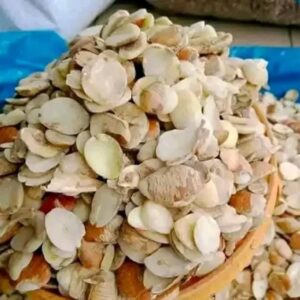
Whole Natural Brown Sesame — unwashed, uncleaned whole sesame with hull intact — the primary commercial form for tahini manufacturing, natural food retail, and cold-pressed oil production. The natural grade for buyers who will wash or sort on receipt.
Cleaned and Sorted Brown Sesame — mechanically cleaned to remove foreign matter, light seeds, and non-sesame material — the export-cleaned grade for buyers whose processing equipment or product specifications require clean but unhulled sesame.
Toasted Brown Sesame — whole brown sesame dry-roasted at 150–180°C until the characteristic toasted aroma and golden-brown colour develop — triggering the sesamolin-to-sesamol conversion that intensifies both flavour and antioxidant activity. Used in bread and bakery topping, Korean and Japanese cuisine applications, and premium toasted sesame oil production.
Benefits and Industrial Uses of Nigerian Brown Sesame Seed
Tahini Manufacturing — The Primary Commercial Market That Specifically Requires Brown Sesame
The global tahini market — tracked through Grand View Research’s tahini market analysis at over USD 1.5 billion annually with growing demand from Middle Eastern diaspora communities, mainstream health food adoption, and the plant-based protein market’s use of tahini as a high-protein condiment — is one of the most clearly defined commercial buyer communities for brown unhulled sesame because its product identity specifically depends on hull-on sesame:
Natural stone-ground tahini — the premium tahini category produced by grinding whole unhulled brown sesame — has a characteristic deep, complex, slightly bitter, intensely nutty flavour profile that derives directly from the hull’s sesamol and sesamin compounds. This flavour character is what distinguishes authentic natural tahini from hulled-sesame tahini and is the commercial quality that Middle Eastern tahini consumers — whose generations of consumption experience create immediate sensory recognition of authentic versus substitute product — specifically pay premium prices for.
Commercial hulled tahini — produced from white hulled sesame — is milder, paler, and less complex in flavour. It is commercially appropriate for mass-market hummus production and for consumers unfamiliar with traditional tahini character. It is not acceptable to the specialist Middle Eastern food market, the Israeli hummus chain supply chain, or the premium natural food buyer whose product communication specifically positions “natural” or “stone-ground” tahini.
Major tahini producing countries — Israel, Lebanon, Turkey, Greece, and the United States — collectively import hundreds of thousands of tonnes of brown sesame annually specifically for tahini production. The International Sesame Organisation documents the tahini industry’s procurement specifications — confirming brown unhulled sesame as the standard raw material for premium tahini production worldwide.
For tahini manufacturing buyers evaluating Nigerian brown sesame — contact our export team to discuss purity, oil content, and moisture specification.
Cold-Pressed Sesame Oil Production — The Antioxidant Stability Premium
The global cold-pressed and artisan oil market — tracked through Grand View Research’s cold-pressed oil market analysis as one of the fastest-growing premium food categories — creates specific procurement demand for brown sesame whose sesamol and sesamin content delivers the oxidative stability and flavour depth that premium cold-pressed sesame oil commands:
Virgin sesame oil — cold-pressed from whole brown sesame at below 40°C — preserves the complete sesamol, sesamin, and sesamolin lignan profile whose antioxidant activity creates the oil’s characteristic extraordinary shelf stability (documented 2+ year stability without rancidity under proper storage). The Journal of Agricultural and Food Chemistry documents sesame oil’s antioxidant stability as among the highest of any culinary oil — directly attributable to the hull-derived lignans that are absent in oil pressed from hulled white sesame.
Toasted sesame oil — the intensely flavoured, dark amber oil produced by pressing roasted brown sesame — whose sesamolin-to-sesamol conversion during roasting produces both the characteristic flavour and the intensified antioxidant profile that makes toasted sesame oil a functional ingredient in Korean, Japanese, and Chinese cuisine applications documented through the Journal of Ethnic Foods.
Natural and Health Food Manufacturing — Calcium and Lignans
Natural granola and muesli — brown sesame’s combination of hull-on calcium density, lignan antioxidant content, and characteristic nutty flavour creates premium natural breakfast product formulation applications where hull-on sesame is specifically preferred over hulled for its nutritional depth and authentic whole-food identity.
Natural bread and bakery topping — brown sesame as a bread topping (burger buns, artisan loaves, flatbreads) delivers the characteristic toasted sesame aroma and flavour that hulled white sesame partially but not fully replicates. The German whole grain bakery tradition, the Turkish simit bread tradition, and the Middle Eastern bread culture all specifically use brown sesame for bread topping — creating procurement demand from European and Middle Eastern artisan bakery ingredient suppliers tracked through Innova Market Insights’ global bakery ingredient innovation database.
Natural energy bars and snack products — brown sesame’s protein, healthy fat, and hull-on calcium create a nutritionally credentialed whole grain seed ingredient for premium natural snack formulation. The Specialty Food Association documents sesame’s growing adoption in premium natural snack products.
Nutraceutical and Functional Ingredient Market
Sesamin supplement — sesamin’s documented cardiovascular, hepatoprotective, and anti-inflammatory properties — reviewed through comprehensive research accessible via NCBI’s pharmacology database — have generated commercial nutraceutical product development whose raw material requires whole sesame or sesame hull extract with documented sesamin content. The Natural Products Association (NPA) tracks sesamin within its functional food ingredient development programme.
Sesamol antioxidant supplement — sesamol’s DPPH radical scavenging activity documented at 2–4× the antioxidant potency of vitamin E per molecule creates nutraceutical positioning for sesame hull extract in premium antioxidant supplement formulations.
Calcium supplement — plant-based source — brown sesame’s hull-inclusive calcium content of 670–1,000mg per 100g creates plant-based calcium supplement positioning for the vegan, dairy-free, and lactose-intolerant consumer markets whose bone health supplementation specifically seeks plant-food-matrix calcium sources with superior bioavailability compared to synthetic calcium carbonate. The International Osteoporosis Foundation (IOF) documents plant-based calcium source development within its dietary calcium programme.
Korean, Japanese, and Asian Cuisine Ingredient Supply
The Korean and Japanese cuisine traditions’ specific use of toasted brown sesame as a garnish, flavouring, and condiment ingredient creates consistent procurement demand from Asian food importers serving Korean and Japanese restaurant supply chains and diaspora grocery retail in Europe, the USA, and Canada. Gomasio (Japanese sesame salt), dokkaebi sesame seasoning, and Korean banchan sesame garnish all specifically use toasted whole brown sesame — whose authentic flavour cannot be replicated by hulled white sesame. For Asian food importers serving these communities — contact us to discuss toasted brown sesame supply.
Why Buy Brown Sesame From Nigeria?
The Sahel Quality Argument — Oil Content and Lignan Density
As documented in our white sesame article, Nigerian Sahel-zone sesame consistently achieves oil content at the upper end of the commercial specification range — 48–55% dry weight — driven by the high sunshine intensity, moderate drought stress, and warm temperatures that maximise lipid biosynthesis in sesame seed tissue. For cold-pressed oil buyers whose extraction economics depend on oil yield per tonne of input grain — Nigerian Sahel brown sesame’s high oil content creates production economics that lower-oil-content origins cannot match.
The same growing condition logic applies to lignan density: research on Sesamum indicum lignan variation across growing environments — published through NCBI’s plant chemistry database — documents that sesame grown under high UV radiation and moderate drought stress accumulates secondary metabolites including sesamol precursors at higher concentrations than irrigated or lower-sunshine origins. Nigerian Sahel brown sesame’s lignan density per kilogram — while not routinely tested in commodity trade — follows the same stress-induced biosynthesis enhancement pattern documented across neem oil, moringa, and lemongrass in this series.
Supply Diversification from Ethiopian and Sudanese Dominance
Ethiopia and Sudan dominate international brown sesame trade — collectively accounting for approximately 50–60% of the global natural/unhulled sesame export market according to ITC Trade Map commodity flow data. The same supply concentration risks documented in our white sesame article apply with equal force to the brown sesame market: Ethiopian political instability, harvest variability, and export policy interventions create the supply disruption exposure that buyers without Nigerian origin positions must absorb entirely. Nigerian brown sesame from Paradise MultiTrade provides the West African supply diversification whose production calendar and climate exposure are entirely uncorrelated with Horn of Africa and Sudan production.
The Non-GMO and Pesticide Management Advantage
Nigerian sesame cultivation — conducted across traditional smallholder farming systems with minimal synthetic pesticide use — provides the clean agricultural profile that premium natural food and organic market buyers specifically value. Paradise MultiTrade coordinates multi-residue pesticide analysis to EU MRL standards on all EU-bound brown sesame lots — confirming that the “natural” positioning of Nigerian brown sesame is substantiated by documented pesticide compliance rather than merely asserted through marketing language. Contact us to discuss pesticide compliance documentation.
Complete Export Documentation
Every brown sesame shipment carries phytosanitary certification from NAQS, NEPC export documentation, certificate of origin, commercial invoice, packing list, and bill of lading. We coordinate moisture content, purity (minimum 98% pure sesame), foreign matter, oil content (Soxhlet extraction), aflatoxin screening, pesticide residue multi-residue analysis to EU MRL standards, and microbiological safety testing following AOAC International validated procedures. On request we coordinate sesamin and sesamol content through HPLC analysis for nutraceutical buyers requiring lignan content documentation. EU-bound shipments comply with Regulation (EU) 2017/625 on official controls. Our NEPC Export Licence No. 0042385 and CAC Registration No. RC-9284647 are verifiable through NEPC.
Nigeria’s Brown Sesame Export Strength and Global Market Demand
The Global Market
The global sesame seed market — tracked through Grand View Research’s sesame seed market analysis — is valued at over USD 8 billion annually with brown/natural sesame commanding premium positioning over hulled commodity white sesame in the tahini, natural food, and cold-pressed oil segments. The International Sesame Organisation and Sesame Association of the Americas provide the institutional trade frameworks within which natural sesame procurement standards and trade flows are tracked.
Key Export Destination Markets
Israel — the world’s largest tahini manufacturing nation per capita, whose tahini production infrastructure imports enormous volumes of brown sesame annually. Israeli sesame import intelligence tracked through the Israel Export Institute.
Turkey — a major tahini and sesame paste producing country whose domestic manufacturing creates consistent brown sesame procurement demand.
Germany and the Netherlands — Europe’s primary natural food ingredient distribution hubs — creating commercial demand for certified-clean brown sesame for health food manufacturing, organic bakery, and premium condiment production.
South Korea and Japan — whose cuisine traditions’ specific requirement for toasted brown sesame create consistent procurement demand tracked through JETRO.
The United States — whose growing tahini market, natural food retail sector, and Korean/Japanese diaspora communities create multi-channel procurement demand. US sesame import requirements through FDA and USDA APHIS. Important note: The FDA added sesame to the list of major food allergens under the FASTER Act (effective January 1, 2023) — requiring sesame to be declared on all US food product labels. For US food manufacturers incorporating Nigerian brown sesame — allergen declaration documentation confirming sesame presence is now a legal labelling requirement administered through FDA’s sesame allergen guidance.
Lebanon and Greece — major tahini producing and consuming markets whose traditional food culture creates consistent brown sesame procurement.
UAE and Gulf States — where traditional Middle Eastern cuisine’s tahini and sesame confectionery consumption creates consistent brown sesame procurement demand tracked through ADAFSA.
Why Choose Paradise MultiTrade International Limited?
Hull-On Guarantee — No Hulling, No Processing. We supply brown sesame specifically to buyers who do not want hulling — our processing protocol maintains the intact hull throughout cleaning, sorting, and packaging without any dehulling step that would compromise the lignan content. This sounds obvious but is commercially critical — some Nigerian sesame exporters treat brown sesame as a pre-hulling commodity rather than a finished product in its own right. We do not. Contact us to confirm hull-intact specification.
Toasted Grade Available. We supply both raw whole brown sesame and toasted brown sesame — the sesamolin-to-sesamol conversion during roasting documented and the toasting parameters (temperature, duration, colour standard) specified per buyer requirement. Contact us to discuss toasting specification.
Sesamin and Sesamol HPLC Documentation for Nutraceutical Buyers. On request for nutraceutical and functional food buyers — we coordinate HPLC sesamin and sesamol content quantification through accredited phytochemistry laboratories. Contact us to discuss lignan content documentation.
US FDA Sesame Allergen Declaration. For US-bound brown sesame shipments — we provide the sesame allergen declaration documentation required under the FASTER Act’s sesame allergen labelling framework. Contact us to discuss US allergen documentation.
Integrated Sesame Whole Programme. Paradise MultiTrade supplies white sesame seed, brown sesame seed, sesame oil, and sesame-related products from the same Nigerian Sahel origin supply network. Buyers who source multiple sesame product forms can consolidate procurement through a single licensed exporter. Alongside brown sesame, we export groundnut oil, shea butter, moringa oil, castor oil, neem oil, soybeans, hibiscus flower, raw bush honey, cashew nut kernel, gum arabic, and raw cashew nuts. Explore our full range of Nigerian export commodities.
Product Specifications
| Specification | Details |
|---|---|
| Product | Nigerian Brown Sesame Seed (Sesamum indicum) — Unhulled/Natural |
| Common Names | Brown sesame, Natural sesame, Unhulled sesame, Whole sesame, Beniseed (Nigerian) |
| Botanical Species | Sesamum indicum L. (Pedaliaceae) |
| Processing Status | Unhulled — hull (testa) intact. Not processed for hull removal. |
| Origin | Nigeria (Jigawa, Kano, Yobe, Borno, Nassarawa, Benue, Plateau States) |
| Forms Available | Whole natural brown sesame; Cleaned and sorted brown sesame; Toasted brown sesame |
| Purity | Minimum 98% pure sesame seed |
| Moisture Content | ≤6% (standard export specification) |
| Oil Content | 48–55% dry weight (Soxhlet extraction) |
| Protein Content | 18–25% dry weight |
| Calcium Content | 670–1,000mg per 100g dry weight (hull-inclusive) |
| Sesamin Content | Present — HPLC quantification available on request |
| Sesamol Content | Present — HPLC quantification available on request |
| Dietary Fibre | 8–12% dry weight (hull-inclusive) |
| Foreign Matter | ≤2% |
| Admixture (other seeds) | ≤1% |
| Damaged Seeds | ≤2% |
| Aflatoxin | Total ≤10 ppb; B1 ≤2 ppb |
| Pesticide Residue | Multi-residue analysis to EU MRL standards — mandatory all EU-bound lots |
| Microbiological | Salmonella absent/25g; Total plate count ≤100,000 CFU/g |
| Allergen Status | Contains sesame — declared per FDA FASTER Act (US) and EU Regulation 1169/2011 |
| Colour | Natural brown to cream-brown (hull colour varies by variety) |
| Toasting Specification | 150–180°C, 15–25 minutes until golden-brown — specify colour standard at order |
| Shelf Life | 18–24 months (sealed, cool, dark storage) |
| Packaging Options | 25kg, 50kg polypropylene bags; food-grade kraft bags |
| Supply Capacity | 100–5,000+ MT per season |
| MOQ | 25 MT |
| Export Documentation | Phytosanitary Certificate (NAQS), Certificate of Origin, NEPC Export Licence, Purity/Moisture Certificate, Oil Content Certificate (Soxhlet), Aflatoxin Certificate, Pesticide Residue Certificate (EU MRL), Sesamin/Sesamol HPLC Certificate (on request), FDA Sesame Allergen Declaration (US shipments), Microbiological Certificate, Commercial Invoice, Packing List, Bill of Lading |
| Payment Terms | T/T, Letter of Credit (LC at sight), Escrow |
| Loading Port | Lagos (Apapa / Tin Can Island Port), Nigeria |
| Incoterms Available | EXW, FOB Lagos, CNF, CIF |
Packaging and Export Process
Harvest Season. Nigerian brown sesame harvest runs October through December — coinciding with the post-rainy-season drying period when the harmattan’s low-humidity conditions provide optimal natural drying for the moisture-sensitive sesame capsules. Early varieties planted in June harvest by September–October; standard varieties planted in July harvest November–December.
Harvesting. Sesame is harvested by cutting the plant stalks before the seed capsules fully shatter — a timing-critical step whose precision determines whether seed is recovered in the field or lost through natural pod shattering at full maturity. Cut stalks are bundled and stood upright in field stooks for 7–10 days to complete ripening and reduce moisture, then threshed by beating bundles over clean surfaces.
Cleaning and Sorting. Threshed sesame is cleaned through combination of winnowing (air separation of light material, dust, and empty seeds) and sieve separation (removing soil, stones, and oversized matter). For export-cleaned grade — mechanical cleaners achieve minimum 98% purity specification confirmed by gravimetric foreign matter assessment.
Hull Integrity Verification. For brown sesame specifically — cleaning equipment is operated without the abrasive rollers that hulling machines use, confirming that the mechanical cleaning process does not inadvertently initiate hull removal. Random seed sampling confirms hull intact status visually.
Toasting (where specified). Clean sorted brown sesame fed through continuous drum roasters at 150–180°C inlet temperature — with continuous colour monitoring ensuring the target golden-brown colour standard without over-roasting (which produces bitter off-notes and reduces oil quality). Toasted sesame is cooled immediately after roasting to preserve volatile aromatic compounds.
Quality Testing. Moisture content, purity, foreign matter, oil content (Soxhlet), aflatoxin (ELISA), pesticide residue multi-residue analysis — tested before export documentation preparation. HPLC sesamin/sesamol analysis coordinated on request for nutraceutical-grade buyers.
Lead Times. Whole natural brown sesame (from harvest season stock): 14–21 days. Toasted grade (roasting scheduling): 21–28 days. HPLC lignan testing: add 7–10 days. Contact us to plan your supply schedule.
Frequently Asked Questions
What is the actual nutritional difference between brown sesame and white hulled sesame — and when does it commercially matter?
The nutritional difference is most significant for calcium, dietary fibre, and lignan antioxidants — all three primarily concentrated in the hull: Calcium: brown sesame 670–1,000mg per 100g vs white hulled sesame approximately 100–130mg per 100g (60–80% of whole sesame’s calcium is in the hull). Dietary fibre: brown sesame 8–12% vs white 3–5% dry weight. Lignan antioxidants (sesamol, sesamin, sesamolin): 60–80% of total sesame antioxidant activity is hull-associated — white sesame retains very little lignan content after hulling. When it matters commercially: tahini production (flavour and authentic character), cold-pressed oil (antioxidant stability and colour), nutraceutical supplement formulation (sesamin content claims), and natural/whole food product positioning (authentic whole-food identity). When it matters less: large-scale commercial food manufacturing (bread uniformity, confectionery appearance) where white sesame’s uniform appearance and milder flavour are preferred over brown sesame’s nutritional advantage. For most health food, tahini, and premium natural oil applications — the nutritional difference matters decisively. Contact us to discuss which grade is appropriate for your application.
What is tahini and why does it specifically require brown unhulled sesame rather than white?
Tahini is a paste produced by grinding whole sesame seeds — the Middle Eastern equivalent of peanut butter, used across Mediterranean, Middle Eastern, and North African cuisines as a condiment, sauce base, and ingredient in hummus, baba ganoush, halva, and dozens of traditional preparations. Why brown sesame specifically: authentic stone-ground natural tahini is produced from whole brown sesame whose hull contributes the characteristic deep, complex, slightly bitter nuttiness that defines traditional tahini’s flavour. The hull’s sesamol and sesamin compounds are released during grinding — providing both the distinctive flavour and the extraordinary shelf stability (sesame oil’s lignan-derived antioxidant protection) that makes quality tahini stable at room temperature for months without rancidity. Hulled white sesame tahini is milder, paler, and less complex — commercially appropriate for mass-market hummus production but not for the premium tahini market or for Middle Eastern consumers whose generational taste experience distinguishes authentic from substitute product. For tahini manufacturers building authentic premium product positioning — Nigerian brown sesame provides the raw material that their flavour and quality standards require. Contact us to discuss tahini-grade specification.
What is sesamin and why has it attracted pharmaceutical research interest?
Sesamin is a furofuran-type lignan compound concentrated in sesame’s outer hull — whose specific pharmacological properties have generated substantial peer-reviewed research interest documented through NCBI’s cardiovascular and hepatology research database. Documented sesamin pharmacology includes: Cardiovascular protection — reduction of LDL cholesterol oxidation through antioxidant radical scavenging; reduction of blood pressure through ACE inhibitory activity documented in hypertension research. Hepatoprotection — sesamin’s specific induction of liver detoxification enzymes (CYP enzymes) whose activity enhances clearance of environmental toxins and pharmaceutical metabolites — creating liver health supplement positioning. Anti-inflammatory activity — documented inhibition of arachidonic acid metabolism reducing prostaglandin synthesis comparable to weak NSAID activity. Lipid metabolism — sesamin’s documented effect on fatty acid oxidation through PPAR-alpha activation creates specific interest in weight management and metabolic syndrome supplement formulation. The Natural Products Association (NPA) tracks sesamin supplement development within its functional food programme. For nutraceutical buyers who want to communicate sesamin content on supplement product labels — we coordinate HPLC sesamin quantification through accredited laboratories. Contact us to discuss sesamin testing.
What does the US FDA sesame allergen declaration requirement mean for buyers importing Nigerian brown sesame?
The FASTER Act (Food Allergy Safety, Treatment, Education, and Research Act) — signed into US law in April 2021 and effective January 1, 2023 — added sesame as the ninth major food allergen requiring mandatory label declaration on US food products. This means: (1) any US food product containing sesame (including sesame seed, sesame oil, tahini, and sesame flour) must declare “sesame” on its label in the same manner as peanuts, tree nuts, milk, eggs, wheat, soy, fish, and shellfish; (2) US food manufacturers whose formulations include Nigerian brown sesame must update their allergen management plans and product labels to include sesame declaration; (3) for import purposes — sesame-containing food products entering US market must comply with FDA’s sesame labelling guidance administered through FDA’s food allergen programme. Paradise MultiTrade provides sesame allergen declaration documentation on all US-bound brown sesame shipments confirming the presence of sesame as a declared allergen for downstream food manufacturer compliance. This is documentation only — it does not affect the product’s food safety status, only its US labelling compliance framework. Contact us to discuss US allergen documentation.
How do I specify toasted brown sesame and what quality parameters confirm correct toasting?
Toasted brown sesame specification requires three parameters: (1) Colour standard — the most commercially important visual quality indicator whose specification prevents both under-toasting (insufficient flavour development, pale colour) and over-toasting (bitter, acrid off-notes, dark brown to black colour). Standard commercial specification: light golden brown (L* value approximately 55–65 on CIE Lab* colorimetry); premium Japanese and Korean cuisine specification: medium golden brown (L* approximately 45–55). (2) Moisture content after toasting — toasting reduces moisture from raw sesame’s 6% to approximately 2–3% — with over-dried sesame becoming brittle and losing volatile aromatic compounds. (3) Aroma — properly toasted sesame has an intensely nutty, warm, slightly sweet aromatic profile without acrid or burnt character. Specify your colour standard (light, medium, or dark golden brown) and intended application (cooking garnish vs oil production vs bread topping) and we set toasting parameters accordingly. For high-volume toasted sesame buyers — sample lots with colour measurement documentation are available before production commitment. Contact us to discuss toasting specification.
How does Nigerian brown sesame compare to Ethiopian or Sudanese brown sesame on quality?
Ethiopian and Sudanese brown sesame — from their respective Humera and Gedaref producing zones — are the established benchmark origins for natural/unhulled sesame trade, particularly for tahini manufacturers whose procurement has historically been concentrated in East African and Sudanese supply. Nigerian Sahel-zone brown sesame’s comparable quality credentials: oil content (48–55% — within Ethiopian and Sudanese commercial specification ranges), purity (minimum 98% — competitive with established origins), and moisture (≤6% — equivalent specification). The commercial differentiation that Nigerian origin provides: Supply chain diversification — uncorrelated climate and political risk from Ethiopian and Sudanese origins; Atlantic logistics advantage — shorter transit to European tahini manufacturers than East African or Sudanese origin; Price competitiveness — Nigerian sesame’s production economics and growing formal export infrastructure create competitive FOB pricing. For tahini buyers whose entire natural sesame procurement is currently from Ethiopian or Sudanese origin — a partial position in Nigerian brown sesame provides supply chain resilience without specification compromise. Contact us to discuss comparative analytical documentation.
What transit times should I expect from Nigeria?
Brown sesame seed and toasted brown sesame (standard dry container — no temperature control required): UK (Tilbury, Felixstowe) — 14–18 days from Lagos. Netherlands (Rotterdam) — 14–18 days. Germany (Hamburg) — 14–20 days. France (Le Havre) — 14–18 days. Italy (Genoa, Naples) — 12–16 days. Israel (Ashdod, Haifa) — 10–14 days (most commercially relevant destination for tahini manufacturers). Turkey (Mersin, Ambarlı) — 10–14 days. USA (East Coast — New York, Baltimore, Savannah) — 18–25 days. Canada (Halifax, Montreal) — 18–28 days. UAE (Jebel Ali) — 10–14 days. South Korea (Busan) — 30–38 days. Japan (Yokohama) — 25–32 days. Lebanon (Beirut) — 10–14 days. Packaging note: Brown sesame is hygroscopic — sealed moisture-barrier bags are mandatory for all shipments. Toasted sesame specifically requires airtight packaging to preserve volatile aromatic compounds developed during roasting. Contact us to plan your complete logistics programme.
Ready to Source Premium Nigerian Brown Sesame Seed — Whole Natural, Cleaned and Sorted, and Toasted Grades, Hull-On Guaranteed, With Purity and Moisture Documentation, Sesamin HPLC on Request, EU Pesticide Residue Compliance, and FDA Sesame Allergen Declaration for Tahini Manufacturers, Cold-Pressed Oil Producers, Natural Food Brands, and Global Wholesale Buyers?
If you are a Middle Eastern or European tahini manufacturer whose authentic stone-ground natural tahini product requires whole brown unhulled sesame with documented purity and oil content from a supply-diversified West African origin alongside your established Ethiopian and Sudanese supply, a cold-pressed and artisan sesame oil producer whose premium oil’s antioxidant stability, dark amber colour, and rich flavour specifically depends on hull-on sesame’s sesamol and sesamin lignan content, a natural food manufacturer developing whole grain sesame products, granola, artisan bread, or premium condiments whose product positioning specifically communicates authentic whole-food, minimal-processing, hull-intact credentials, a Korean or Japanese cuisine ingredient supplier whose restaurant and retail customers specifically require toasted brown sesame with documented colour specification and authentic nutty aroma profile, a nutraceutical brand developing sesamin cardiovascular health, liver protection, or antioxidant supplement products requiring documented sesamin content from authenticated natural sesame origin, a US food manufacturer whose formulation includes sesame and who needs Nigerian sesame with FDA FASTER Act allergen declaration documentation as standard, or a global sesame commodity buyer building West African origin supply diversification from East African and Sudanese dominant positions — Paradise MultiTrade International Limited is the licensed Nigerian exporter your brown sesame seed supply programme needs.
We supply Nigerian Sesamum indicum brown sesame — whole natural, cleaned and sorted, and toasted grades — from Jigawa, Kano, Yobe, and Borno Sahel-zone producing communities, hull-on integrity guaranteed through processing protocol, purity minimum 98% documented per lot, oil content Soxhlet-certified, EU pesticide residue compliant, aflatoxin screened, sesamin and sesamol HPLC available for nutraceutical buyers, FDA sesame allergen declaration as standard for US shipments, and exported with full documentation to buyers in every major regulated destination market.
Request a Quotation — share your required form (natural whole, cleaned sorted, or toasted), colour specification for toasted grade, volume, application (tahini, cold-pressed oil, natural food manufacturing, nutraceutical, Asian cuisine), sesamin documentation requirement, destination market, and preferred incoterms. We respond within 48 hours.
Contact Our Export Team — speak directly about hull-on processing protocol confirmation, toasting colour specification, sesamin HPLC testing, tahini-grade purity documentation, EU pesticide compliance, FDA allergen declaration, Israeli and Turkish market logistics, and long-term supply programme structuring.
Explore Our Full Product Range — alongside brown sesame, Paradise MultiTrade exports white sesame seed, sesame oil, groundnut oil, shea butter, moringa oil, soybeans, hibiscus flower, raw bush honey, cashew nut kernel, gum arabic, bitter kola, and raw cashew nuts. One licensed Nigerian exporter. One consolidated West African oilseed, botanical, and natural food sourcing relationship.
Paradise MultiTrade International Limited | NEPC Export Licence No. 0042385 | CAC No. RC-9284647 | Lagos, Nigeria | www.paradisemultitrade.com

Reviews
There are no reviews yet.