
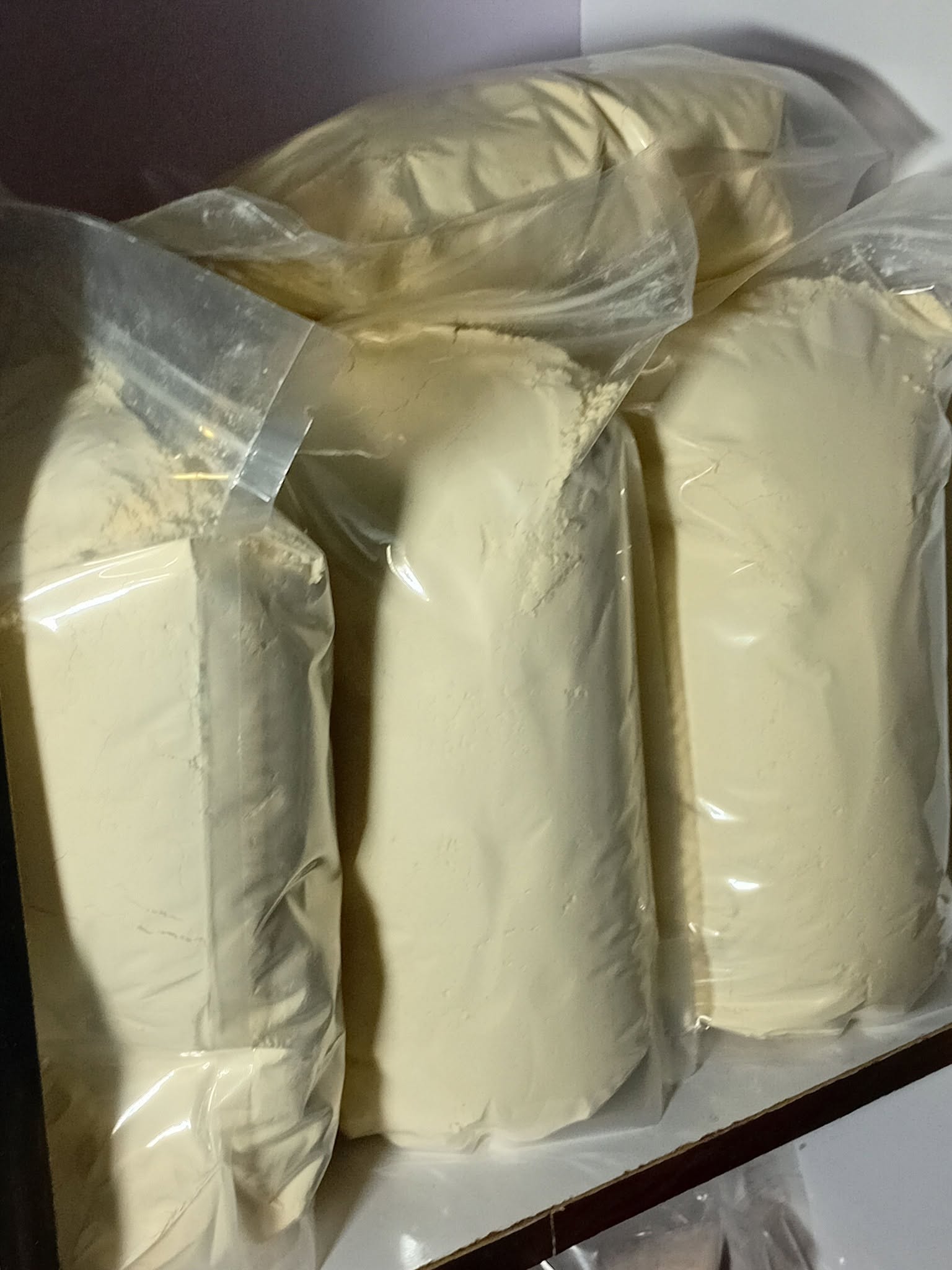

Nigerian Ginger Powder: The Dried and Milled Form of the World’s Most Clinically Studied Spice Whose Drying Process Does Not Merely Preserve the Fresh Root’s Bioactivity — It Chemically Transforms It, Converting Fresh Ginger’s Gingerols Into the Shogaols Whose Anti-Inflammatory, Antiemetic, and Gastroprotective Potency Is Documented at Three to Five Times Higher Activity Than the Fresh Root Compounds They Replace
Ginger Powder Exporter Nigeria — Ground Ginger Powder, Oleoresin-Grade Ginger Powder, Supplement-Grade Ginger Powder, and Ginger Extract Precursor, Direct Northern Highland Sourcing, Bulk Supply to Food Manufacturers, Spice Blending Companies, Nutraceutical Supplement Brands, Pharmaceutical Raw Material Buyers, Bakery and Confectionery Manufacturers, and Global Commodity Wholesale Buyers Worldwide
Ginger powder exporter Nigeria is a search phrase whose commercial context demands an immediate scientific clarification whose commercial consequences are more significant than any other transformation fact in this entire series: dried and powdered ginger is not merely a convenient storage form of fresh ginger root. It is a biochemically distinct product whose drying and milling process has fundamentally altered the composition of the active compounds that make ginger commercially valuable — in a direction that makes the powder pharmacologically superior to the fresh root for the clinical applications that the global botanical supplement market is built on.
The chemistry is commercially instructive: fresh ginger root’s primary bioactive compounds are gingerols — specifically [6]-gingerol, [8]-gingerol, and [10]-gingerol — the phenolic compounds whose pungency, anti-inflammatory activity, and gastroprotective properties are documented through extensive food chemistry research accessible via NCBI’s phytochemistry database. When fresh ginger is dried — the free water removed through sun drying, hot air drying, or freeze drying — a thermally and enzymatically driven conversion begins: gingerols dehydrate to form shogaols — specifically [6]-shogaol, [8]-shogaol, and [10]-shogaol — whose molecular structure (the loss of a hydroxyl group creating a more lipophilic, membrane-penetrating compound) gives them documented anti-inflammatory activity at three to five times the potency of the gingerols they replace, confirmed through comparative pharmacological research published in Journal of Agricultural and Food Chemistry.
This transformation has a commercially decisive implication: the nutraceutical and pharmaceutical research literature on ginger’s anti-inflammatory, antiemetic, and gastroprotective efficacy — the WHO-monographed, Commission E-assessed, clinically studied botanical medicine whose human trial evidence is among the strongest in the entire herbal medicine evidence base — is primarily built on dried ginger not fresh ginger. The supplement manufacturer who sources fresh ginger root as their product’s active ingredient is not sourcing the form whose clinical evidence base their product label claims rest upon. Only the dried powder — whose shogaol content reflects the gingerol-to-shogaol conversion that drying creates — delivers the bioactive profile that the clinical research documented.
Nigeria — as documented in our dry split ginger article — is one of the world’s most commercially significant ginger producing nations, whose Kaduna, Nasarawa, Benue, Plateau, Niger, Bauchi, and Gombe state highland plateau farming communities produce Zingiber officinale at scales that have established the country as a major ginger exporter. The progression from whole dried ginger root to dry split ginger to ground ginger powder represents successive value-adding processing steps — each step creating a product with more specific buyer applications and higher commercial positioning per tonne than the unprocessed root. Paradise MultiTrade’s ginger powder programme represents the most value-added step in this progression — sourcing from the same highland producing communities whose raw ginger quality we document in the dry split ginger article, and processing into the cleaned, milled, sieved, and analytically documented powder that food manufacturers, supplement brands, and pharmaceutical raw material buyers specifically require.
At Paradise MultiTrade International Limited, ginger powder is sourced from highland farming communities across Nigeria’s primary ginger belt, processed through commercial grinding, sieving, and quality testing operations, and exported with full food safety, microbiological, mycotoxin, and analytical documentation appropriate to every buyer segment from commodity food manufacturing to clinical-grade nutraceutical supply.
To discuss sourcing immediately, request a quotation here and our export team responds within 48 hours.
History and Origin — The World’s Most Traded Spice in Its Most Commercially Versatile Form
Zingiber Officinale — The Ancient Botanical Whose Powder Form Democratised Global Distribution
As documented in our dry split ginger article, Zingiber officinale has been cultivated and traded since antiquity — with Sanskrit, Greek, Roman, and Arabic trade records confirming its commercial movement across the ancient spice trade routes for over 3,000 years. The Arabic traders who named it zanjabil (the source of the English “ginger”) and the medieval European spice merchants who traded it at prices comparable to silver understood that ginger’s preservation problem — fresh rhizomes deteriorate within days — required a commercial solution that the drying process provided.
Ginger powder — ground dried ginger — is historically the form that made ginger accessible beyond the fresh-trade corridors of proximity. Dried whole ginger roots could survive ocean voyages from India and Southeast Asia to European markets; ground ginger powder extended this accessibility further — premilling at origin allowed European buyers to receive a product ready for immediate incorporation into baked goods, beverages, and medicinal preparations without the grinding equipment that whole dried rhizomes required.
The commercial distinction between dried whole ginger (which Paradise MultiTrade covers in our dry split ginger article) and ginger powder is commercially meaningful beyond mere particle size: ginger powder serves a completely different buyer population whose processing requirements, quality specifications, and commercial applications are distinct from whole dried ginger buyers. Food manufacturers whose production lines incorporate spice ingredients in powder form cannot substitute whole dried ginger without acquiring and operating grinding equipment whose capital and operating cost makes specification of pre-ground powder commercially rational. Supplement encapsulation operations require homogeneous, specified particle-size powder whose flow properties, bulk density, and moisture content determine capsule-filling machine performance. Pharmaceutical raw material buyers whose extracts begin with standardised powder whose gingerol and shogaol content is documented per lot cannot work with variable whole dried rhizomes.
Nigeria’s ginger powder production — milling the same highland plateau dried ginger whose quality we documented in our dry split ginger article — creates value-added export material whose commercial targeting is entirely different from raw ginger export. The Nigerian Export Promotion Council (NEPC)‘s value-added agricultural export development programme specifically identifies spice powder processing as a priority commercial development objective — recognising that the margin captured per kilogram of ginger powder exported is substantially higher than per kilogram of whole dried ginger exported.
What Is Nigerian Ginger Powder? The Processing Profile, Analytical Standards, and Commercial Grade Landscape
Zingiber Officinale — The Rhizome Chemistry of the Dried and Milled Form
Zingiber officinale Roscoe is a member of the Zingiberaceae family — the same botanical family as turmeric (Curcuma longa), cardamom (Elettaria cardamomum), and galangal (Alpinia galanga). Its commercial part is the rhizome — the underground stem system whose irregular, branching, yellowish-tan flesh is the raw material for all ginger products from fresh cooking root through dried split to powder.
The shogaol chemistry — the key commercial compound unique to dried ginger:
[6]-Shogaol — the primary active compound in dried ginger whose anti-inflammatory mechanism (COX-2 inhibition, NF-κB pathway modulation) and antiemetic activity are documented through NCBI’s pharmacology research database and specifically referenced in the World Health Organization’s ginger monograph as the primary bioactive compound responsible for ginger’s clinical effects.
[6]-Gingerol (residual) — some gingerol remains unconverted in properly dried (not over-dried) ginger powder — whose complementary bioactivity contributes to the total pungent phenolic profile.
Zingerone — produced through aldol condensation of [6]-gingerol during mild heating — contributing the characteristic sweet, spicy aroma note that distinguishes dried ginger powder’s flavour from fresh root’s more pungent, sharper profile.
Paradols — formed from shogaols through reduction — contributing antioxidant activity documented through Journal of Natural Products.
Essential oil content — approximately 1–3% of dried ginger powder dry weight — whose volatile compounds (zingiberene, bisabolene, β-sesquiphellandrene, camphene) create the characteristic warm, spicy aroma whose concentration in the powder is the primary food flavour application quality parameter. Essential oil content is measured by hydrodistillation per ASTA (American Spice Trade Association) standard methods.
Total oleoresin content — approximately 4–7% of dried ginger powder — the combined resin and essential oil fraction whose combined pungency and flavour intensity is the most commercially comprehensive quality parameter for food flavour applications.
The Critical Processing Steps That Determine Powder Quality
Raw material selection. Ginger powder quality is irreversibly determined at the raw material selection stage — only fully mature, properly dried, clean ginger roots whose moisture is below 10% and whose shogaol development is complete produce powder with the bioactive compound profile and organoleptic character that premium buyers require. Nigerian highland plateau ginger (Kaduna, Nasarawa, Benue) harvested at 8–10 months of growth and properly dried produces raw material whose natural quality creates the competitive commercial positioning of Nigerian ginger in international markets.
Cleaning and inspection. Dried ginger roots cleaned to remove soil, sand, extraneous plant material, and visually defective rhizomes before grinding — whose removal is essential because sand and soil contamination in the ground powder creates both organoleptic (grit) and microbiological (soil-borne organism) quality failures.
Grinding. Clean dried ginger fed through commercial hammer mills, pin mills, or impact mills — with particle size controlled by screen selection to achieve the target mesh specification. Nigerian ginger’s specific fibrous texture and moderate moisture content (below 10%) creates grinding behaviour that hammer mills handle well — producing powder with consistent particle size distribution when screen selection and feed rate are properly managed.
Sieving and classification. Ground ginger sieved through vibrating screens to specific particle size specifications — removing oversized unground particles (returned to mill) and ensuring mesh specification compliance. Standard commercial specification: through 60 mesh (250 microns); premium food manufacturing specification: through 80 mesh (180 microns); supplement encapsulation specification: through 100 mesh (150 microns) for optimal capsule filling flow characteristics.
Moisture adjustment. Finished powder moisture confirmed at below 10% — with adjustment through additional controlled drying if necessary. Powder moisture above 10% creates caking, mould growth risk, and reduced shelf life.
Commercial Grades and Specifications
Food Manufacturing Grade — 60–80 mesh, moisture ≤10%, essential oil ≥1.5%, total ash ≤6%, for bakery, confectionery, beverages, sauces, and spice blends.
Supplement/Nutraceutical Grade — 80–100 mesh, moisture ≤9%, [6]-shogaol content documented by HPLC, total gingerols + shogaols ≥5% dry weight, for capsule filling, tablet manufacture, and functional food formulation.
Oleoresin-Grade Raw Material — minimum essential oil content ≥2.5%, total oleoresin ≥6%, for oleoresin extraction manufacturing operations whose ginger oleoresin product requires high-compound-density raw material.
Pharmaceutical/Clinical Grade — highest specification: 100 mesh, moisture ≤8%, total pungent compounds ≥6% documented by HPLC, complete mycotoxin panel, heavy metals (ICP-MS), full pesticide residue, microbiological safety — for pharmaceutical raw material use and clinical trial supply.
Benefits and Industrial Uses of Nigerian Ginger Powder
Food Manufacturing — The Largest Volume Commercial Market
The global dried ginger market — whose powder form accounts for the majority of commercially processed ginger according to Grand View Research’s ginger market analysis — creates the most volume-significant procurement stream for ginger powder through food manufacturing applications:
Bakery and confectionery — ginger powder’s essential oil and oleoresin compounds create the characteristic warm spice flavour in gingerbread, ginger biscuits, ginger cake, and ginger confectionery whose global commercial production spans from industrial-scale biscuit manufacturers (McVitie’s, Bahlsen, Lotus) through artisan bakery operations. The Specialty Food Association documents ginger as one of the most consistently top-ranked flavour inclusions in premium bakery new product launches. Nigerian ginger powder’s specific volatile compound profile — whose zingiberene-dominant essential oil character delivers a distinctly warm, clean ginger flavour superior to lower-quality origins — creates the baking performance that premium bakery formulation requires.
Spice blends and seasoning — ginger powder as a component ingredient in curry powder, mixed spice, pumpkin spice blends, masala mixes, and commercial seasoning formulations creates consistent procurement demand from spice blending companies and food manufacturers whose multi-spice product formulations incorporate ground ginger. Innova Market Insights’ global spice and seasoning product launch database confirms ginger’s consistent top-5 inclusion in spice blend new product development.
Beverage manufacturing — ginger powder in ginger ale, ginger beer, ginger tea bags, health drinks, and functional beverage formulations creates specific beverage industry procurement demand. The global ginger beer and ginger ale market — tracked through Grand View Research’s flavoured beverage market analysis — creates consistent demand for food-grade ginger powder whose oleoresin content determines the beverage’s pungency level per gram of inclusion.
Sauces, marinades, and condiments — ginger powder as a flavour component in soy sauce, teriyaki, barbecue sauce, and Asian condiment formulations creates food manufacturing procurement demand from sauce manufacturers whose shelf-stable product formulations require dried powder rather than fresh root.
For food manufacturing buyers evaluating Nigerian ginger powder — contact our export team to discuss essential oil content specification and particle size.
Nutraceutical and Supplement Industry — The Shogaol Clinical Evidence Market
The global ginger supplement market — a subset of the broader digestive health and anti-inflammatory supplement market tracked through Grand View Research’s nutraceutical market analysis — creates one of the most institutionally validated herbal supplement procurement streams in the natural health product industry:
WHO and Commission E validation — the World Health Organization’s monograph on Zingiber officinale rhizome provides international health authority recognition for ginger’s use in nausea management (motion sickness, pregnancy-induced nausea, post-operative nausea), dyspepsia management, and as a carminative — creating the institutional validation framework that supplement manufacturers cite in their product regulatory dossiers. The German Commission E’s positive monograph for dried ginger root — approved for dyspepsia and motion sickness — provides EU traditional herbal medicinal product (THMP) registration basis under EU Directive 2004/24/EC analogous to pumpkin seed’s Commission E approval documented in the preceding article.
Pregnancy nausea — the most clinically documented application — randomised controlled trials on dried ginger extract’s efficacy in pregnancy-induced nausea and vomiting published through NCBI’s obstetrics and gynaecology research database represent one of the highest-quality human clinical evidence bases in botanical medicine. Research published in peer-reviewed obstetrics journals confirms ginger’s safety and efficacy at 1–1.5g dried ginger powder daily for first-trimester nausea — creating the clinical evidence that midwifery and obstetric practice guidelines in the UK (NHS guidance), USA (ACOG), and Australia incorporate as a recommended non-pharmacological nausea management option.
Anti-inflammatory supplement formulation — ginger powder’s shogaol-mediated COX-2 inhibition creates joint health, arthritis support, and general anti-inflammatory supplement positioning whose evidence base from NCBI clinical research supports qualified health claim communication in supplement markets. Combination formulations with turmeric curcumin — whose own COX-2 inhibitory mechanism complements ginger’s — create the most commercially established anti-inflammatory supplement pairing in the global natural health market.
Blood glucose and metabolic health — emerging clinical research on ginger powder’s insulin sensitisation potential — reviewed through NCBI’s diabetes and metabolism research database — creates developing nutraceutical market interest in ginger for metabolic syndrome support formulation.
The Natural Products Association (NPA) and American Herbal Products Association (AHPA) track ginger supplement development as one of the most consistently commercially significant botanical supplement categories — confirming the market’s scale and procurement stability for high-quality documented Nigerian ginger powder.
For nutraceutical supplement buyers requiring HPLC-documented shogaol content — contact our team to discuss supplement-grade specification.
Pharmaceutical and Oleoresin Industry
Ginger oleoresin manufacturing — ginger oleoresin (the concentrated resin-plus-essential oil fraction extracted from ginger powder by solvent extraction) is a commercially important food flavour and pharmaceutical ingredient whose production requires high-oleoresin-content ginger powder raw material. Nigerian ginger’s documented oleoresin content of 4–7% creates the raw material economics that oleoresin manufacturers whose solvent extraction operations produce concentrated ginger oleoresin for incorporation in flavour systems, pharmaceutical preparations, and functional food ingredient concentrates. Contact us to discuss oleoresin-grade supply.
Traditional medicine pharmaceutical manufacturing — ginger powder is incorporated in Ayurvedic formulations (Ayurvedic Pharmacopoeia of India — Sunthi, the dried ginger drug), Traditional Chinese Medicine preparations (姜 Jiāng — dried ginger), and Unani pharmaceutical preparations — creating pharmaceutical raw material procurement demand from Asian traditional medicine manufacturers whose product dossiers reference pharmacopoeia specifications for dried ginger powder.
Flavour and fragrance industry — ginger essential oil and oleoresin extracted from Nigerian ginger powder creates perfumery, fragrance, and flavour ingredient applications documented through RIFM (Research Institute for Fragrance Materials) safety assessments and IFRA fragrance ingredient guidelines — with [6]-gingerol and zingerone contributing to warm, spicy fragrance notes in personal care and household product formulations.
Functional Food and Beverage Innovation
Ginger-turmeric functional blends — the commercial combination of ginger powder and turmeric powder as a dual anti-inflammatory functional food ingredient — documented through Innova Market Insights’ global product launch database as one of the most commercially established two-spice functional combinations — creates consistent procurement demand for both powders simultaneously. Paradise MultiTrade supplies both ginger powder and turmeric powder — creating a one-stop procurement option for buyers whose formulation requires both ingredients from authenticated West African origin.
Immunity supplement market — ginger powder’s documented antioxidant, anti-inflammatory, and antimicrobial properties create immunity support supplement formulation interest — particularly following the post-2020 immunity supplement market expansion tracked through Grand View Research’s immunity supplement market analysis.
Why Buy Ginger Powder From Nigeria?
Nigeria’s Ginger Quality Advantage — The Highland Plateau Pungency Premium
As documented in our dry split ginger article, Nigerian ginger from the Jos Plateau and neighbouring highland states is recognised internationally for its exceptionally high pungency — whose essential oil content, oleoresin concentration, and shogaol density upon drying consistently exceed the commercial quality parameters of Indian, Peruvian, and Chinese ginger origins. Research on Zingiber officinale volatile oil composition variation across growing environments — published through NCBI’s plant chemistry database — confirms that altitude, temperature variation, and soil mineral profile directly influence essential oil yield and compound profile. Nigerian highland-grown ginger’s specific growing conditions — plateau altitude of 900–1,400m, significant diurnal temperature variation, and iron-rich Jos Plateau soils — create the secondary metabolite accumulation whose commercial expression is superior essential oil content and higher shogaol conversion upon drying.
For food manufacturers whose product quality is directly influenced by ginger pungency per gram of inclusion — and for supplement manufacturers whose clinical evidence basis requires documented shogaol content — Nigerian origin’s natural quality advantage creates procurement economics that lower-pungency origins cannot match on a per-active-compound basis.
The Value-Addition Margin — Powder vs Whole Root
Every tonne of ginger powder represents a value-added processing step that increases the commercial value per tonne over raw dried ginger root by approximately 30–60% — reflecting the milling, sieving, and quality testing costs that create a product with more specific buyer applicability and more precise analytical documentation. For Nigeria as an agricultural exporting nation — the domestic powder processing that Paradise MultiTrade’s supply programme coordinates captures this value addition within Nigeria rather than exporting it to importing country processors. The NEPC‘s value-added agricultural export programme specifically supports this processing investment rationale.
Supply Diversification From Indian and Chinese Dominance
India and China collectively account for approximately 70–75% of globally traded dried ginger and ginger powder according to ITC Trade Map commodity flow data. For food manufacturers and supplement brands whose supply chain resilience programmes require alternative origin development — Nigerian ginger powder provides West African origin supply whose production calendar (September–December harvest, January–May processing) and climate exposure are entirely uncorrelated with Indian monsoon variability or Chinese domestic policy decisions.
EU and US Pesticide Residue Compliance
Nigerian highland plateau ginger cultivation — practiced in traditional smallholder farming systems with minimal synthetic pesticide use — creates the same structural pesticide compliance advantage documented for Nigerian sesame, moringa, and other Sahel-zone crops. Paradise MultiTrade coordinates multi-residue pesticide analysis to EU MRL standards per Regulation (EC) 396/2005 on all EU-bound ginger powder lots — confirming compliance documentation rather than asserting it through marketing language. Contact us to discuss pesticide compliance documentation.
Complete Export Documentation
Every ginger powder shipment carries phytosanitary certification from NAQS, NEPC export documentation, certificate of origin, commercial invoice, packing list, and bill of lading. For food manufacturing buyers, we coordinate essential oil content (hydrodistillation, ASTA methods), total ash, acid-insoluble ash, moisture content, particle size distribution, aflatoxin, ochratoxin A, pesticide residue multi-residue analysis to EU MRL standards, and microbiological safety testing following AOAC International validated procedures. For supplement and nutraceutical buyers, we coordinate HPLC total gingerols and shogaols ([6]-gingerol and [6]-shogaol specifically documented), heavy metals (ICP-MS: lead, cadmium, arsenic, mercury), complete mycotoxin panel, and particle size for encapsulation flow properties. For THMP registration support — botanical species identity, traditional use documentation, and pharmacopoeia specification compliance documentation. EU-bound shipments comply with Regulation (EU) 2017/625 on official controls and Commission Regulation (EC) 1881/2006. Our NEPC Export Licence No. 0042385 and CAC Registration No. RC-9284647 are verifiable through NEPC.
Nigeria’s Ginger Powder Export Strength and Global Market Demand
The Global Market
The global ginger market — including fresh ginger, dried ginger, and processed forms including powder, oleoresin, and extract — is tracked through Grand View Research’s ginger market analysis at over USD 4 billion annually with consistent growth driven by both food flavour demand and supplement market expansion. The ground and powdered ginger segment represents a significant and growing fraction of this total — whose specific application in food manufacturing automation, supplement encapsulation, and industrial flavour systems creates procurement demand whose growth trajectory outpaces whole dried ginger root as processing efficiency and ingredient standardisation drive food manufacturers toward pre-milled powder specifications.
The American Spice Trade Association (ASTA) and European Spice Association (ESA) provide the quality standard frameworks within which international ginger powder procurement specifications are established — defining the colour, essential oil content, ash limits, and microbiological standards that commercial buyers reference.
Key Export Destination Markets
Germany and the Netherlands — Europe’s primary spice processing, food manufacturing ingredient distribution, and herbal supplement manufacturing hubs — creating the most commercially significant European procurement community for Nigerian ginger powder. German ginger supplement market — one of the most Commission E-literate herbal medicine markets in the world — creates specific clinical-grade ginger powder demand. EU food and supplement import requirements administered through EFSA and BfArM.
United Kingdom — whose established ginger biscuit tradition (McVitie’s Ginger Nuts, Fox’s biscuits), ginger beer manufacturing, and growing natural supplement market create multi-channel ginger powder demand. UK food safety requirements through FSA and supplement requirements through MHRA.
The United States — whose food manufacturing industry (ginger ale, ginger beer, ginger biscuit, Asian cuisine sauces), spice retail market, and substantial ginger supplement category create multi-channel procurement demand. US food safety through FDA food import; supplements through DSHEA.
Japan — whose sophisticated functional food market, traditional ginger (shoga) culinary tradition, and premium supplement sector create quality-demanding ginger powder procurement tracked through JETRO.
UAE and Gulf States — where Middle Eastern and South Asian cuisine traditions create consistent ginger powder demand in food service and retail tracked through ADAFSA.
India — the world’s largest ginger producer and consumer — paradoxically creates import demand during domestic supply shortfalls or for specific quality grades that domestic production does not consistently supply — tracked through APEDA.
South Korea — whose kimchi, pickled ginger, and traditional medicine industries create consistent ginger powder procurement tracked through KATI.
Why Choose Paradise MultiTrade International Limited?
HPLC Shogaol and Gingerol Documentation for Supplement Buyers. Total [6]-gingerol and [6]-shogaol content quantified by HPLC — specifically the shogaol fraction that represents the dried ginger’s pharmacologically superior active compound — coordinated through accredited phytochemistry laboratories for supplement and pharmaceutical buyers whose clinical evidence basis requires documented pungent compound content. This is the most commercially differentiating analytical documentation for supplement-grade ginger powder — and the one most frequently absent from commodity ginger powder suppliers who do not serve the nutraceutical market. Contact us to discuss HPLC documentation.
Essential Oil Content by Hydrodistillation. Essential oil content quantified by hydrodistillation per ASTA standard methods — confirming the volatile compound fraction whose concentration determines flavour intensity in food manufacturing applications. For food manufacturers whose formulation requires consistent flavour contribution per gram of ginger inclusion — essential oil content documentation provides the specification baseline. Contact us to discuss essential oil specification.
Particle Size Distribution for Encapsulation Buyers. Particle size distribution analysis (d10, d50, d90) confirming mesh specification compliance and capsule-filling flow characteristics — through laser diffraction particle size analysis on request for supplement encapsulation buyers. Contact us to discuss particle size specification.
Commission E and WHO THMP Dossier Support. Botanical species identity confirmation (Zingiber officinale), traditional use documentation, WHO monograph reference, Commission E monograph compliance data, and analytical data package (shogaols, essential oil, moisture, ash, microbiological) — coordinated as a package for EU supplement manufacturers building THMP dossiers under EU Directive 2004/24/EC. Contact our team to discuss THMP documentation support.
Ginger-Turmeric Combined Procurement. For buyers formulating ginger-turmeric anti-inflammatory products — Paradise MultiTrade supplies both ginger powder and turmeric powder from the same documented Nigerian origin, with consistent quality documentation across both ingredients from one licensed exporter. Contact us to discuss combined procurement.
Multi-Commodity West African Spice and Botanical Sourcing. Ginger powder buyers frequently source complementary Nigerian spices and botanicals. Alongside ginger powder, Paradise MultiTrade exports dry split ginger, turmeric finger, turmeric powder, hibiscus flower, moringa leaf powder, neem leaf powder, black pepper, cloves, cashew nut kernel, raw cashew nuts, shea butter, and sesame seeds. Explore our full range of Nigerian export commodities and consolidate your West African spice, botanical, and agricultural sourcing through one verified, licensed export partner.
Product Specifications
| Specification | Details |
|---|---|
| Product | Nigerian Ginger Powder (Zingiber officinale) |
| Common Names | Ground ginger, Ginger powder, Powdered ginger, Cittar (Hausa), Jinja (Yoruba powder form) |
| Botanical Species | Zingiber officinale Roscoe (Zingiberaceae) |
| Origin | Nigeria (Kaduna, Nasarawa, Benue, Plateau, Niger, Bauchi, Gombe States — Highland plateau zones) |
| Grades Available | Food Manufacturing Grade; Supplement/Nutraceutical Grade; Oleoresin-Grade Raw Material; Pharmaceutical/Clinical Grade |
| Particle Size (Food Grade) | Through 60 mesh (≤250 microns) |
| Particle Size (Supplement Grade) | Through 80–100 mesh (≤180–150 microns) |
| Moisture Content | ≤10% (food grade); ≤9% (supplement grade); ≤8% (pharmaceutical grade) |
| Essential Oil Content | ≥1.5% v/w (food grade); ≥2.0% v/w (supplement grade); ≥2.5% v/w (oleoresin grade) — ASTA hydrodistillation |
| Total Oleoresin Content | 4–7% of dry powder weight |
| [6]-Gingerol Content | ≥2% dry weight (HPLC — supplement and pharmaceutical grade) |
| [6]-Shogaol Content | ≥1% dry weight (HPLC — supplement and pharmaceutical grade) |
| Total Pungent Compounds | ≥5% dry weight (supplement grade); ≥6% (pharmaceutical grade) |
| Total Ash | ≤6% (food and supplement grade) |
| Acid-Insoluble Ash | ≤1.5% (indicator of soil and sand contamination) |
| Crude Fibre | 6–9% dry weight |
| Colour | Light yellow to yellowish-tan (characteristic of Nigerian highland ginger) |
| Aroma | Strong, warm, characteristic ginger — sharp pungency |
| Aflatoxin | Total ≤10 ppb; B1 ≤2 ppb |
| Ochratoxin A (OTA) | ≤10 ppb (EU food safety limit) |
| Heavy Metals | Lead ≤3 ppm; Cadmium ≤0.5 ppm; Arsenic ≤1 ppm; Mercury ≤0.1 ppm (ICP-MS) |
| Pesticide Residue | Multi-residue analysis to EU MRL standards — mandatory all EU-bound lots |
| Microbiological | Salmonella absent/25g; E. coli absent/1g; Total plate count ≤100,000 CFU/g; Mould and yeast ≤1,000 CFU/g |
| Allergen Status | Ginger is not among major declared allergens under EU 1169/2011 or US FDA allergen framework |
| Irradiation | Non-irradiated — documented per lot (alternative to irradiation: heat treatment or steam sterilisation where required) |
| Shelf Life | 24 months (sealed, cool, dark storage) |
| Packaging Options | 25kg, 50kg multilayer kraft paper bags with inner polyethylene liner; 1kg, 5kg food-grade retail bags on request |
| Supply Capacity | 50–2,000+ MT per year |
| MOQ | 1 MT (supplement grade); 5 MT (food manufacturing grade); 500kg (pharmaceutical/clinical grade) |
| Export Documentation | Phytosanitary Certificate (NAQS), Certificate of Origin, NEPC Export Licence, Essential Oil Content Certificate (ASTA hydrodistillation), HPLC Gingerol and Shogaol Certificate (supplement and pharmaceutical grade), Particle Size Distribution Certificate, Moisture and Ash Certificate, Aflatoxin Certificate, OTA Certificate (EU-bound), Heavy Metals ICP-MS Certificate (supplement/pharma grade), Pesticide Residue Certificate (EU MRL), Microbiological Certificate, WHO/Commission E THMP Documentation Package (on request), Commercial Invoice, Packing List, Bill of Lading |
| Payment Terms | T/T, Letter of Credit (LC at sight), Escrow |
| Loading Port | Lagos (Apapa / Tin Can Island Port), Nigeria |
| Incoterms Available | EXW, FOB Lagos, CNF, CIF |
Packaging and Export Process
Raw Material Sourcing and Harvest Season. Nigerian ginger harvest runs September through December — following the April–August growing season in the northern highland plateau states. Kaduna, Nasarawa, and Benue state ginger — the primary source zones for Paradise MultiTrade’s powder programme — is harvested when the leaves yellow and die back, confirming full rhizome maturity. Mature rhizomes (8–10 months growth) have maximum essential oil and pungent compound accumulation — whose harvesting before full maturity creates powder with lower essential oil content and reduced flavour intensity.
Post-Harvest Drying — The Gingerol-to-Shogaol Conversion Window. Harvested ginger rhizomes are washed to remove soil, sliced (to accelerate drying surface area) or dried whole, and dried through sun drying (traditional; 7–14 days) or mechanical hot-air drying at 50–60°C (commercial; 24–48 hours). Drying temperature management is commercially critical for powder production: too high (above 80°C) accelerates shogaol formation but also drives off volatile essential oil compounds whose aroma and flavour contribution is commercially essential. The optimal drying temperature range (50–65°C) balances shogaol development through gingerol conversion against essential oil preservation — producing dried ginger with both documented bioactive compound content and maintained aromatic quality.
Cleaning and Preparation for Grinding. Dried ginger roots cleaned to remove sand, soil, extraneous material, and visually defective rhizomes before grinding. Metal detection passes every batch through magnetic and inductive metal detectors — whose clearance is documented in the production record. X-ray inspection for dense foreign objects in supplement and pharmaceutical grade production.
Grinding and Sieving. Clean dried ginger fed through commercial hammer mills with appropriate screen selection for target mesh. Multi-stage grinding for finer particle size requirements — coarse pre-grind followed by fine grind with intermediate sieving. Grinding equipment temperature monitored — elevated temperature from grinding friction creates essential oil volatilisation risk whose management through ambient temperature control and cooling fans during grinding is standard practice.
Quality Testing and Grading. Essential oil content (hydrodistillation), moisture, total ash, acid-insoluble ash, particle size — tested on every production lot. Aflatoxin (ELISA), OTA (ELISA), pesticide residue (multi-residue GC/LC-MS) — tested before export documentation preparation. HPLC gingerol/shogaol analysis, heavy metals ICP-MS, full microbiological panel — tested for supplement and pharmaceutical grade lots.
Packaging. Ginger powder packed in multilayer kraft paper bags with inner polyethylene moisture-barrier liner — whose combined barrier properties prevent moisture absorption and aroma loss during storage and transit. Bags heat-sealed or tied — with batch number, production date, expiry date, and specification grade clearly labelled.
Lead Times. Food manufacturing grade from harvest season stock: 14–21 days. Supplement grade (including HPLC analysis): 21–35 days. Pharmaceutical/clinical grade (full analytical panel): 35–56 days. Contact us to plan your supply schedule.
Frequently Asked Questions
Why is dried ginger powder pharmacologically more potent than fresh ginger root and what does this mean for supplement formulation?
The conversion of gingerols to shogaols during drying — documented through Journal of Agricultural and Food Chemistry comparative pharmacology research — is one of the most commercially significant phytochemical transformations in spice processing. Fresh ginger contains primarily [6]-gingerol as its dominant pungent compound. During drying at 50–65°C, enzymatic and thermal dehydration removes the 5-OH group from the gingerol side chain — creating [6]-shogaol whose molecular structure has greater membrane permeability, higher COX-2 inhibitory activity (3–5× more potent than gingerol), and more powerful NF-κB pathway inhibition documented through comparative pharmacology in NCBI. The commercial implication for supplement formulation: the WHO monograph, Commission E assessment, and clinical trials that form ginger supplement’s evidence base were conducted primarily with dried ginger preparations — whose shogaol content represents the active compound profile the trials measured. Fresh ginger supplements contain primarily gingerols — the precursor compounds — not the shogaols whose activity the clinical evidence documents. Supplement brands claiming ginger’s clinical evidence for their products must source dried powder not fresh root — and must document shogaol content to substantiate the evidence link. Paradise MultiTrade provides HPLC shogaol documentation as standard for supplement-grade buyers. Contact us to discuss HPLC specification.
What is ginger oleoresin and how does ginger powder serve as its raw material?
Ginger oleoresin is a concentrated extract produced by solvent extraction of dried ginger powder — combining the non-volatile resin fraction (containing gingerols, shogaols, paradols, and zingerone) with the volatile essential oil fraction (zingiberene, bisabolene, and related terpenes) into a single, semi-solid to viscous concentrate. Oleoresin is commercially valued over powder in some food manufacturing applications because: (1) consistent pungency per gram — oleoresin is standardised to specific gingerol/shogaol concentration, eliminating batch-to-batch variation; (2) lower inclusion volume — 1kg oleoresin replaces approximately 25–35kg whole dried ginger in equivalent flavour contribution; (3) flow and handling advantages — oleoresin liquid or powder disperses more uniformly in large-scale food manufacturing processes. Production economics: oleoresin yield from ginger powder is approximately 3–6% of powder input weight (depending on oleoresin content of the raw material). Nigerian highland ginger powder’s high total oleoresin content (4–7%) creates extraction economics that lower-quality origins’ 2–4% content cannot match — providing 25–75% more oleoresin per tonne of powder input. For oleoresin manufacturers evaluating Nigerian powder as extraction feedstock — total oleoresin content and essential oil content are the primary selection criteria. Contact us to discuss oleoresin-grade specification.
What are the WHO and Commission E assessments for ginger and what do they mean for EU supplement manufacturers?
The WHO Monograph on Zingiber officinale Rhizome — published in WHO Monographs on Selected Medicinal Plants — provides formal international health authority documentation of ginger’s traditional uses, clinical pharmacology, preclinical safety data, and specific product quality standards. The WHO monograph confirms ginger’s use as: a carminative (gas-expelling digestive aid), an antiemetic (nausea management), an anti-rheumatic (joint inflammation), and a circulatory stimulant. The German Commission E positive monograph specifically approves dried ginger for dyspepsia (indigestion) and prevention of motion sickness nausea. For EU supplement manufacturers: under EU Directive 2004/24/EC, traditional herbal medicinal products (THMP) whose ingredients have 30 years documented traditional use (including 15 years in EU) and positive assessment can be registered for marketing with health claims through the simplified THMP pathway — without requiring full clinical trial data. Ginger meets both criteria — making it one of the most commercially accessible botanicals for THMP registration in the EU herbal medicine market. Paradise MultiTrade coordinates the WHO monograph compliance documentation, botanical species identity, traditional use dossier, and analytical specification data required to support THMP regulatory filing. Contact us to discuss THMP documentation.
What microbiological standards apply to ginger powder for EU food and supplement markets?
Ginger powder’s microbiological risk profile is moderate — the dried form’s low water activity (below 0.60 at ≤10% moisture) inhibits vegetative pathogen growth, but spore-forming bacteria (Bacillus, Clostridium) and moulds whose dormant forms survive drying create microbiological contamination potential that requires systematic testing. EU food grade requirements: general food safety microbiological limits per Regulation (EC) 2073/2005 apply — Salmonella absent in 25g is the primary food safety criterion, with E. coli and total plate count limits per buyer specification. EU supplement grade: stricter limits typically specified by supplement manufacturers whose product quality systems require lower total viable count (≤100,000 CFU/g), mould and yeast (≤1,000 CFU/g), and E. coli absent in 1g. Sterilisation options: for buyers requiring even lower microbiological counts — steam sterilisation (HTST — high temperature short time) achieves significant log reduction of vegetative organisms and spores while minimising essential oil loss (superior to irradiation for volatile compound preservation). Irradiation (gamma or e-beam) achieves excellent microbiological reduction but may be prohibited in some markets (EU maintains restrictions on irradiated food labelling disclosure). Paradise MultiTrade documents microbiological results per lot and can coordinate steam sterilisation for buyers whose specifications require it. Contact us to discuss microbiological specification.
What is the clinical evidence for ginger in pregnancy nausea and how should supplement brands communicate this?
Ginger’s clinical evidence for pregnancy-induced nausea and vomiting (NVP) is among the strongest in botanical medicine — with multiple randomised controlled trials documenting statistically significant symptom reduction versus placebo. Research summary accessible via NCBI systematic reviews: typical trial design uses 1–1.5g dried ginger powder daily (in 4 divided doses), outcome measured by validated nausea scales (Rhodes Nausea and Vomiting Scale, visual analogue scales), with statistically significant improvement versus placebo documented in the majority of published trials. Clinical practice endorsement: NHS UK guidance on morning sickness specifically mentions ginger as a non-pharmacological option. ACOG guidelines note ginger as a potentially useful alternative. Communication limitations for supplement brands: EU health claim regulations under Regulation (EC) 1924/2006 require authorised health claims from the EU Register for label communication — generic ginger health claims are not in the authorised list, requiring THMP registration pathway for medicine indication communication. US dietary supplement brands may communicate structure/function claims with appropriate disclaimers per DSHEA. For nutraceutical supplement buyers formulating pregnancy nausea products — documented [6]-shogaol content from our HPLC analysis provides the active compound documentation that clinical evidence linking requires. Contact us to discuss clinical-grade ginger powder specification.
How does Nigerian ginger powder compare to Indian and Chinese ginger powder on commercial quality parameters?
Nigerian highland plateau ginger powder is internationally recognised — by spice industry buyers and researchers — as producing higher essential oil content and pungency than Indian or Chinese commercial ginger origins: Essential oil content comparison: Nigerian highland ginger: ≥2.0–3.0% v/w; Indian ginger (Kerala, Wayanad): 1.5–2.5% v/w; Chinese ginger (Shandong): 1.2–2.0% v/w. Pungent compound content: Nigerian highland ginger’s plateau-altitude growing conditions create higher gingerol accumulation in fresh root — translating to higher shogaol content in dried powder. Price positioning: Nigerian ginger powder typically trades at a modest premium over Indian and Chinese origin at equivalent mesh specification — reflecting quality differentiation rather than marketing premium. Supply chain considerations: Indian origin offers the largest global volume; Chinese origin offers competitive pricing for commodity-grade; Nigerian origin offers premium pungency for buyers whose formulation value-per-gram depends on active compound density. For supplement manufacturers whose product efficacy depends on pungent compound content — Nigerian origin’s documented superior shogaol density creates meaningful formulation economics. For bulk food manufacturing where flavour intensity matters — Nigerian origin’s higher essential oil content reduces inclusion rates required per unit flavour contribution. Comparative analytical documentation (essential oil and HPLC shogaol) available on sample request. Contact us to arrange comparative sample evaluation.
What transit times should I expect from Nigeria?
Ginger powder (standard dry container — no temperature control): UK (Tilbury, Felixstowe) — 14–18 days from Lagos. Netherlands (Rotterdam) — 14–18 days. Germany (Hamburg) — 14–20 days. France (Le Havre) — 14–18 days. Italy (Genoa, Naples) — 12–16 days. USA (East Coast — New York, Baltimore, Savannah) — 18–25 days. Canada (Halifax, Montreal) — 18–28 days. UAE (Jebel Ali) — 10–14 days. Japan (Yokohama) — 25–32 days. South Korea (Busan) — 30–38 days. India (Nhava Sheva) — 10–15 days. Air freight (UK Heathrow) — 2–3 days total. Air freight (USA JFK/Houston) — 3–4 days total. Packaging note: Ginger powder’s aroma compounds are volatile — sealed multilayer kraft bags with inner polyethylene moisture barrier are mandatory for all container shipments, preventing both moisture ingress and aroma volatilisation during transit. Supplement and pharmaceutical grade: nitrogen-flushed sealed bags for maximum aromatic compound preservation. Add 7–10 days for HPLC gingerol/shogaol analysis and heavy metals ICP-MS testing before loading confirmation for supplement and pharmaceutical grade lots. Contact us to plan your complete logistics programme.
Ready to Source Premium Nigerian Ginger Powder — Food Manufacturing Grade, Supplement and Nutraceutical Grade, Oleoresin-Grade Raw Material, and Pharmaceutical/Clinical Grade — With Essential Oil Content Documentation, HPLC Shogaol and Gingerol Certification, Aflatoxin and OTA Testing, EU Pesticide Residue Compliance, Heavy Metals ICP-MS, WHO and Commission E THMP Dossier Support, and Full Analytical Documentation for Food Manufacturers, Nutraceutical Supplement Brands, Oleoresin Extraction Operations, and Global Wholesale Buyers?
If you are a European or American food manufacturer building spice powder supply from documented West African origin Nigerian ginger whose highland plateau essential oil content delivers superior flavour intensity per gram versus Indian and Chinese origin at competitive pricing, a nutraceutical supplement brand developing ginger capsules, ginger-turmeric anti-inflammatory products, pregnancy nausea support formulations, or immunity supplements whose HPLC-documented shogaol content provides the active compound evidence link that clinical substantiation requires, an EU herbal medicine manufacturer building a Traditional Herbal Medicinal Product (THMP) registration dossier for a ginger-containing product under EU Directive 2004/24/EC whose Commission E monograph compliance documentation and botanical identity confirmation require a formally documented, analytically verified ginger powder supply, a ginger oleoresin manufacturing operation evaluating Nigerian highland ginger powder as a high-oleoresin-content feedstock whose 4–7% total oleoresin yield creates extraction economics superior to lower-quality origins, a pharmaceutical raw material buyer sourcing clinical-grade dried ginger powder for traditional medicine pharmaceutical manufacturing whose Ayurvedic Pharmacopoeia, Chinese Pharmacopoeia, or Unani pharmacopoeia specification compliance requires full heavy metal, mycotoxin, pesticide residue, and shogaol compound documentation, a spice blending and seasoning company building Nigerian origin ginger powder supply diversification from Indian and Chinese dominant positions, or a functional food or beverage brand developing ginger-turmeric, ginger-lemon immunity, or metabolic health products whose ingredient sourcing requires two spices from one documented West African origin with consistent quality — Paradise MultiTrade International Limited is the licensed Nigerian exporter your ginger powder supply programme needs.
We supply Nigerian Zingiber officinale ginger powder — food manufacturing, supplement, oleoresin, and pharmaceutical grades — from Kaduna, Nasarawa, Benue, and Plateau highland plateau processing operations, essential oil content hydrodistillation-documented per lot, HPLC [6]-shogaol and [6]-gingerol certified for supplement and pharmaceutical grade, aflatoxin and OTA ELISA tested, heavy metals ICP-MS for supplement and pharmaceutical buyers, EU pesticide residue MRL compliant, Commission E and WHO THMP dossier support coordinated on request, and exported with full analytical and regulatory documentation to buyers in every major regulated destination market.
Request a Quotation — share your required grade (food manufacturing, supplement, oleoresin, or pharmaceutical), mesh specification (60, 80, or 100 mesh), essential oil minimum, HPLC shogaol documentation requirement, THMP dossier support need, volume, application (food manufacturing, capsule supplement, oleoresin extraction, pharmaceutical, spice blend), destination market, and preferred incoterms. We respond within 48 hours.
Contact Our Export Team — speak directly about HPLC shogaol and gingerol analysis, essential oil hydrodistillation specification, Commission E and WHO THMP regulatory documentation, oleoresin content for extraction buyers, particle size distribution for encapsulation flow properties, steam sterilisation for microbiological reduction, combined ginger-turmeric procurement, pesticide residue EU MRL compliance, and long-term supply programme structuring.
Explore Our Full Product Range — alongside ginger powder, Paradise MultiTrade exports dry split ginger, turmeric finger, turmeric powder, hibiscus flower, moringa leaf powder, neem leaf powder, black pepper, cloves, cashew nut kernel, raw cashew nuts, shea butter, and sesame seeds. One licensed Nigerian exporter. One consolidated West African spice, botanical, oilseed, and natural food sourcing relationship — from the powder whose drying transformation creates pharmacologically superior compounds to the most clinically studied spice’s most commercially versatile commercial form.
Paradise MultiTrade International Limited | NEPC Export Licence No. 0042385 | CAC No. RC-9284647 | Lagos, Nigeria | www.paradisemultitrade.com
Reviews
There are no reviews yet.