
Nigerian Cassava Leaves: The Most Protein-Dense Widely-Consumed Leaf Vegetable in the World — Whose Mandatory Cyanide Detoxification Processing Is Simultaneously the Food Safety Requirement That Protects 700 Million Daily Consumers and the Commercial Barrier That Has Kept One of the World’s Most Nutritionally Significant Leaf Vegetables Almost Entirely Absent From Formal International Agricultural Trade
Cassava Leaves Exporter Nigeria — Detoxified Dried Cassava Leaves, Cassava Leaf Powder,
Supplement-Grade Cassava Leaf, Cassava Leaf Protein Concentrate, and Dried Cassava Leaf Flakes, Direct Southern and Middle Belt Sourcing, Bulk Supply to West African Diaspora Food Retailers, Food Manufacturers, Protein Ingredient Buyers, Nutraceutical Supplement Companies, Animal Feed Manufacturers, and Global Specialty Wholesale Buyers Worldwide
Cassava leaves exporter Nigeria is a search phrase whose commercial context is defined by the most dramatic nutritional paradox in the entire global cassava industry — an industry whose commercial and nutritional narrative has been written almost exclusively around the root while the leaf, whose nutritional profile in certain critical metrics dramatically exceeds the root, has remained almost completely excluded from international commercial development.
The paradox begins with the numbers: Manihot esculenta (cassava) is the world’s third-largest source of food carbohydrates in the tropics — whose roots feed approximately 800 million people according to FAO production statistics, making it one of the most commercially significant food crops on earth. The cassava root is nutritionally dominated by starch — approximately 75–80% of dry matter — creating a high-calorie, low-protein food source whose protein content of approximately 1–2% of fresh weight makes it one of the most protein-poor major staple crops in global food culture.
The cassava leaf — from the same plant, growing above the same starchy root — contains approximately 25–38% protein on a dry weight basis. Not 1–2%. Not even 10%. Twenty-five to thirty-eight percent — a protein concentration that exceeds most legumes, exceeds soybean meal in some analyses, and creates the most striking protein density differential between a plant’s edible parts documented in any major food crop. The same plant simultaneously produces the world’s most commercially significant low-protein starchy root and one of the most protein-dense widely-consumed leaf vegetables in human food history.
The food safety dimension that makes this nutritional story commercially complex — and commercially important — is equally striking: raw cassava leaves are toxic. They contain cyanogenic glycosides — specifically linamarin and lotaustralin — whose enzymatic hydrolysis by the plant’s own linamarase enzyme (released when the leaf tissue is damaged, bruised, or chewed) generates hydrogen cyanide (HCN) at concentrations that create acute cyanide poisoning risk if leaves are consumed without appropriate detoxification processing. A disease called konzo — a sudden, permanent lower limb paralysis caused by chronic dietary cyanide exposure from inadequately processed cassava — remains a documented public health condition in the Democratic Republic of Congo and other sub-Saharan African regions where food insecurity forces consumption of inadequately processed cassava products.
The commercial consequence of this food safety reality: cassava leaves cannot be sold internationally as raw, unprocessed material. Every cassava leaf product in international commerce requires documented HCN content reduction to below food safety thresholds — and the specific processing methods (prolonged boiling, sun drying, fermentation, or combinations thereof) that achieve this reduction are precisely the food processing steps that informal supply chains omit and that formal export programmes must systematically implement and document.
This HCN management requirement — whose complexity has prevented informal supply chains from delivering food-safe cassava leaf products reliably — is the commercial barrier whose formal export solution creates the business Paradise MultiTrade’s cassava leaf programme is specifically built to deliver. For buyers who need documented, HCN-tested, formally certified cassava leaf powder with confirmed cyanide content below food safety thresholds — the formal export programme whose existence this article announces is the supply chain whose absence the market has waited for.
Nigeria’s cassava production — the largest in the world, with approximately 60 million tonnes of fresh cassava root harvested annually according to FAO production data — creates a leaf biomass resource of extraordinary scale. Every cassava plant whose root is harvested generates a canopy of protein-rich leaves that Nigerian cassava farmers currently manage as agricultural by-product — ploughed back as green manure or fed to animals — while the same leaf biomass’s commercial potential as a high-protein food ingredient for international markets remains almost entirely uncaptured.
At Paradise MultiTrade International Limited, cassava leaves is a priority agricultural by-product development programme — sourced from cassava farming communities across Nigeria’s primary production states of Benue, Kogi, Niger, Anambra, Imo, Cross River, Delta, Edo, Ogun, and Oyo, processed through validated HCN reduction protocols whose documentation enables food safety certification, and exported with full analytical documentation confirming HCN content below international food safety thresholds.
To discuss sourcing immediately, request a quotation here and our export team responds within 48 hours.
History and Origin — The Mesoamerican Staple Whose Most Nutritious Product Has Never Been Traded Internationally
Manihot Esculenta — Brazilian Native, Global Tropical Staple, African Food Security Foundation
Manihot esculenta Crantz is native to western Brazil and the Amazon basin — where pre-Columbian Amerindian peoples cultivated it for its starchy root and also consumed its leaves in food preparations, having independently discovered the detoxification processing whose necessity the cyanogenic glycoside content creates. Portuguese colonisation of Brazil from the early 16th century created the introduction pathway for cassava into West Africa — whose Nigerian, Ghanaian, and Congolese adoption was rapid and commercially transformative, creating the world’s most significant cassava-consuming region whose traditional food systems now depend on cassava at scales that make it a genuine food security foundation rather than merely an agricultural commodity.
Nigeria’s position as the world’s largest cassava producer — documented through FAO production statistics — reflects the depth of cassava integration into Nigerian food culture whose diverse products include: garri (fermented, dried, roasted cassava granules), fufu (fermented cassava paste), abacha (African salad from dried cassava strips), tapioca (cassava starch pearls), cassava flour, and HQCF (High Quality Cassava Flour) — a portfolio of root-derived products whose commercial development has been extensively documented while the leaf has received comparatively little formal commercial attention.
The leaf’s dietary consumption in Nigeria is culturally specific — less universally embedded in Nigerian food culture than in DRC (whose pondu and saka-saka cassava leaf stew preparations are consumed as daily staples across the country), Sierra Leone (whose plasas tradition incorporates cassava leaves extensively), and Indonesia (whose Sundanese and Minangkabau cuisines incorporate cassava leaf as a regular vegetable) — but present specifically in Cross River, Akwa Ibom, Rivers, and Delta State communities whose food traditions reflect Central African culinary influence through historical migration and trade.
The global distribution of cassava leaf consumption — documented through FAO’s food composition and consumption data — confirms cassava leaf as a daily dietary staple for populations in DRC, Rwanda, Burundi, Congo-Brazzaville, Sierra Leone, Liberia, Indonesia, Cambodia, Vietnam, and Papua New Guinea, creating a combined consumer population of several hundred million whose dietary protein nutrition specifically depends on this leaf.
What Is Nigerian Cassava Leaf? The Nutritional Profile, Safety Requirements, and Commercial Product Range
Manihot Esculenta Leaf — The Nutritional Architecture and the Cyanide Challenge
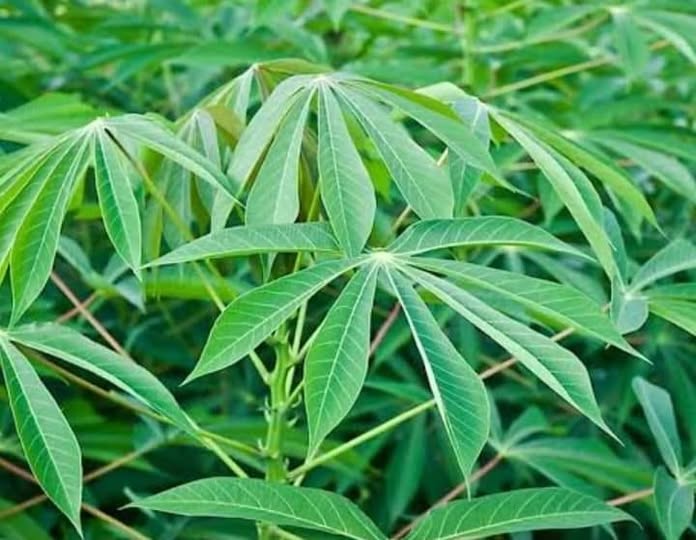
Manihot esculenta is a member of the Euphorbiaceae (spurge) family — the same large botanical family that includes rubber (Hevea brasiliensis), castor (Ricinus communis), and the ornamental poinsettia (Euphorbia pulcherrima). The commercial leaf product is harvested from the compound leaves of the cassava plant — whose palmate structure creates 5–9 leaflets per compound leaf — from actively growing shoot tips and young branches whose compound leaf harvest provides maximum protein content and minimum fibre content.
The Extraordinary Nutritional Profile (Detoxified Dried Leaf):
Protein: 25–38% of dry weight — the most commercially significant nutritional credential whose comparison with global protein sources creates the compelling commercial case for cassava leaf’s food manufacturing and supplement market development. Soybean meal: approximately 44–48% crude protein. Alfalfa meal: approximately 18–22% crude protein. Moringa leaf powder: approximately 22–25% crude protein. Cassava leaf powder: 25–38% crude protein — placing it in the highest tier of plant protein sources available from tropical agricultural by-product streams.
Amino Acid Profile: Cassava leaf protein’s essential amino acid composition includes adequate concentrations of lysine, threonine, tryptophan, and most essential amino acids — with methionine as the primary limiting amino acid (unlike baobab leaf where lysine is the primary limiting amino acid — creating a specific complementarity between cassava leaf and baobab leaf in blended plant protein formulations). For food manufacturers building complete plant protein profiles — the specific limiting amino acid identification guides blending decisions that achieve complete essential amino acid coverage.
Carotenoids (β-carotene): 150–250mg per 100g dry weight — extraordinarily high vitamin A precursor content whose documentation through FAO food composition research confirms cassava leaf as one of the richest β-carotene sources in globally consumed foods. The bright green colour of cassava leaf — whose chlorophyll and carotenoid content creates the visual indicator of nutritional quality — is the primary colour marker whose preservation during drying creates premium-grade material.
Vitamin C: 150–250mg per 100g dry weight — significant, though degraded by the prolonged boiling processing whose HCN reduction requirement conflicts with vitamin C heat-sensitivity. Low-temperature alternative processing creates better vitamin C preservation alongside adequate HCN reduction.
Iron: 15–25mg per 100g dry weight — creating significant mineral nutrition positioning whose combination with the extraordinary protein content creates cassava leaf’s dual nutritional credential for protein-iron nutritional intervention.
Calcium: 200–280mg per 100g dry weight — comparable to baobab leaf’s calcium content, creating mineral nutrition positioning in the same premium range.
Tannins and polyphenols — contributing antioxidant activity but also the anti-nutritional factor that reduces protein digestibility in inadequately processed material — whose reduction through appropriate processing improves protein bioavailability alongside HCN reduction.
The Cyanide Safety Framework — The Most Critical Commercial Distinction
Cyanogenic glycoside chemistry in cassava:
Linamarin — the primary cyanogenic glycoside in cassava leaves and roots (approximately 80% of total cyanogenic content) — is a β-glucoside whose enzymatic hydrolysis by the plant’s endogenous linamarase enzyme (physically separated from linamarin in intact cells but released when tissue is damaged) produces acetone cyanohydrin, which spontaneously decomposes to hydrogen cyanide (HCN) and acetone at physiological pH.
Lotaustralin — the secondary cyanogenic glycoside (approximately 20% of total cyanogenic content) — undergoes the same enzymatic hydrolysis pathway producing butanone cyanohydrin and ultimately HCN.
The total cyanogenic potential of raw cassava leaves: 150–1,250mg HCN equivalent per kg fresh weight — a range whose lower end creates manageable acute risk with traditional processing and whose upper end (in high-cyanide varieties) creates serious acute poisoning risk without adequate processing. For context: the lethal oral dose of HCN in humans is approximately 1mg per kg body weight — meaning inadequately processed high-cyanide cassava consumed in quantity can create life-threatening acute poisoning.
International food safety thresholds for cassava products:
The WHO’s food safety guidelines on cassava cyanide and Codex Alimentarius Commission standards establish guidance for cassava product safety whose application to dried cassava leaf export creates the specific analytical documentation requirement:
EU guidance: No specific EU MRL for cassava HCN in leaf products — buyers reference the Codex guidance of 10mg HCN per kg for cassava flour and apply equivalent stringency to dried cassava leaf products.
Codex Alimentarius: 10mg HCN per kg for cassava flour (HS 1108.14) — applying by analogy to dried cassava leaf products whose processing requirements parallel cassava flour.
Processing methods achieving HCN reduction below food safety thresholds:
Prolonged boiling: The most effective single-step HCN reduction — boiling cassava leaves in large volumes of water for 20–30 minutes (with water discarded) achieves 90–98% HCN reduction through thermal enzyme deactivation, linamarin diffusion into boiling water, and HCN volatilisation. This is the mandatory processing step for food-safe cassava leaf products.
Sun drying: Extended sun drying (3–5 days) reduces HCN through enzymatic hydrolysis during the initial drying period followed by HCN volatilisation as the free acid is released. Effective but variable — humidity and temperature affect efficiency, creating lot-to-lot HCN content variation.
Fermentation: Extended fermentation (3–5 days) activates linamarase enzymatic activity, accelerating glycoside hydrolysis and HCN release — whose combined action with the fermenting environment’s volatile acid character creates effective HCN reduction.
Combined processing (boiling + drying): The most reliably effective approach — boiling for HCN reduction followed by controlled drying for moisture management — achieving documented below-10mg HCN per kg in every production lot.
Paradise MultiTrade’s validated processing protocol: Mandatory boiling of harvested cassava leaves at 100°C for minimum 25 minutes in large-volume water (leaf weight:water ratio 1:5 minimum) with full water discard — followed by controlled drying at 55–65°C to below 10% moisture — with HCN content verification by Picrate paper method (field screening) and UV spectrophotometric determination (laboratory confirmation) on every production lot before commercial acceptance. No cassava leaf is exported without documented HCN content below 10mg per kg.
Commercial Product Forms
Detoxified Dried Whole Cassava Leaves — boiled-detoxified, dried, and sorted whole leaves for diaspora food retail and direct culinary application.
Detoxified Cassava Leaf Flakes — coarsely broken dried cassava leaves for soup and stew manufacturing incorporation.
Detoxified Cassava Leaf Powder (80 mesh) — finely milled dried leaves for food manufacturing ingredient, protein supplement, and animal feed applications.
Cassava Leaf Protein Concentrate — water extraction and concentration process creating higher-protein-density material (45–55% protein) — the form for plant protein ingredient buyers.
Benefits and Industrial Uses of Nigerian Cassava Leaves
Food Manufacturing — The Plant Protein Revolution
The global plant protein ingredient market — tracked through Grand View Research’s plant protein market analysis at over USD 30 billion annually with consistent growth driven by vegan, vegetarian, flexitarian, and sustainability-motivated dietary transition — creates commercial procurement demand for novel, sustainably sourced plant protein ingredients whose production economics and nutritional profiles create alternatives to the dominant soy, pea, and wheat protein sources:
High-protein food fortification — cassava leaf powder at 10–20% inclusion in food products creates significant protein contribution whose per-gram protein density creates formulation economics that lower-protein leaf ingredients cannot match. For food manufacturers developing high-protein plant-based products — cassava leaf powder’s protein concentration creates inclusion rate advantages over generic “green powder” ingredients.
Plant protein blending — cassava leaf powder’s methionine-limiting amino acid profile is specifically complemented by methionine-rich plant proteins including sunflower seed protein and hemp seed protein — whose blending creates nutritionally complete plant protein profiles whose essential amino acid coverage matches or exceeds animal protein references. For food manufacturers building complete plant protein blend systems — cassava leaf’s specific limiting amino acid identification enables rational protein blending whose nutritional completeness is analytically documented.
Sustainable protein sourcing narrative — cassava leaf’s by-product origin (from the world’s largest food crop’s leaf biomass, previously composted as agricultural waste) creates the most compelling sustainability story in the plant protein ingredient market: zero additional land use, zero additional water use, zero additional agricultural input — protein extracted from the agricultural by-product of a crop whose root production would occur regardless. For food brands whose sustainability communication creates premium product positioning — cassava leaf protein’s by-product economics and zero-additional-resource narrative is commercially differentiated from dedicated crop protein sources.
For food manufacturing buyers evaluating cassava leaf powder as a plant protein ingredient — contact our export team to discuss protein content specification and HCN documentation.
West African Diaspora Food Retail and Restaurant Supply
Cross River, Akwa Ibom, Delta, and Rivers State diaspora — the Nigerian communities from cassava-leaf-consuming southeastern states whose diaspora in the UK, USA, and Canada specifically seek dried cassava leaves for traditional soup preparation create the most immediately commercially accessible diaspora retail market. In Cross River and Akwa Ibom State traditional cooking — cassava leaf (ofe ede-adjacent preparations) creates specific diaspora demand whose current supply through informal travel networks creates the familiar supply chain gap.
West and Central African diaspora — the DRC, Congo-Brazzaville, Rwanda, Burundi, and Cameroonian diaspora communities in Brussels, Paris, London, and Montreal whose pondu (Congolese cassava leaf stew) and saka-saka preparation is a weekly household staple create significant European diaspora demand for dried cassava leaves. The Belgian Congolese diaspora alone — concentrated in Brussels, Liège, and Antwerp — represents one of the most commercially significant African diaspora food markets in continental Europe for cassava leaf specifically.
West African restaurant supply — restaurants serving DRC, Cameroonian, and Nigerian southeastern cuisine create consistent food service procurement demand for detoxified dried cassava leaves at commercial kitchen volumes.
For diaspora food retail buyers — contact our team to discuss retail packaging specification and HCN safety certification for diaspora retail use.
Animal Feed Industry
Ruminant feed supplement — cassava leaf meal (dried cassava leaves, including some whose HCN content for ruminant feed tolerance differs from human food standards) is a documented ruminant feed ingredient whose protein content creates value as a protein supplement in cattle, goat, and sheep feed formulations. FAO’s animal feed research programme specifically documents cassava leaf meal as a protein source for ruminant production in tropical agricultural systems — creating institutional research validation for the animal feed application.
Poultry feed ingredient — dried cassava leaf meal’s carotenoid content (β-carotene, xanthophyll) creates egg yolk and skin pigmentation benefits in poultry production whose feed formulation specifically values natural carotenoid sources. Research documented through Tropical Animal Health and Production journal confirms cassava leaf meal’s positive effects on egg yolk colour intensity in laying hen production.
Fish feed ingredient — cassava leaf protein’s digestibility in aquaculture feed formulations — whose research accessibility through NCBI’s aquaculture nutrition database creates fish feed ingredient positioning — creates additional commercial demand beyond human food and ruminant feed applications.
Nutraceutical Supplement Market
Plant protein supplement — cassava leaf powder’s extraordinary protein density creates supplement capsule and protein powder formulation interest for brands building comprehensive plant protein supplement ranges whose diversity of botanical protein sources creates nutritional and marketing differentiation.
Carotenoid supplement — natural β-carotene — cassava leaf’s exceptional β-carotene content (150–250mg per 100g) creates natural vitamin A precursor supplement positioning whose whole-food-matrix carotenoid delivery creates bioavailability advantages over synthetic β-carotene. The International Vitamin A Consultative Group (IVACG) specifically identifies pro-vitamin A-rich green vegetables including cassava leaf as dietary interventions for vitamin A deficiency in sub-Saharan African populations — creating institutional nutrition programme procurement demand.
Iron supplement — cassava leaf powder’s iron content (15–25mg per 100g) creates mineral supplement positioning complementary to the protein and β-carotene credentials — whose combined nutritional profile creates a genuinely multi-dimensional supplement ingredient.
Functional green food blend — cassava leaf powder incorporated in green food blend supplements alongside moringa, spirulina, and other nutrient-dense plant ingredients — creating a comprehensive green supplement whose West African botanical origin differentiates from the Asian botanical-dominated green food supplement market.
Why Buy Cassava Leaves From Nigeria?
World’s Largest Cassava Producer — The Most Abundant Leaf Biomass
Nigeria’s position as the world’s largest cassava producer — 60+ million tonnes of fresh cassava root per year — creates the largest cassava leaf biomass availability of any country, concentrated in production states whose existing harvesting infrastructure, established farmer relationships, and agricultural processing capacity create the most commercially scalable cassava leaf supply geography available. The leaf biomass currently discarded as agricultural waste from Nigeria’s cassava production represents a protein resource of global food security significance — whose commercial formalisation through Paradise MultiTrade’s programme creates agricultural value from existing waste without any additional land or agricultural input.
The Validated HCN Reduction Protocol — The Commercial Differentiator
The single most commercially differentiating aspect of Paradise MultiTrade’s cassava leaf programme is the validated, documented HCN reduction protocol whose specific processing steps, documented temperatures, boiling times, water ratios, and per-lot HCN testing create a food safety assurance that informal supply chains fundamentally cannot provide. For every commercial food buyer whose regulatory environment requires documented food safety for imported plant ingredients — this HCN documentation package is not optional. It is the commercial foundation without which cassava leaf cannot be legitimately sold in regulated food markets.
Buyers sourcing cassava leaves through informal channels whose products carry no HCN testing documentation are procuring material whose food safety cannot be verified — creating legal liability for downstream food product manufacturers and retailers whose supply chain documentation requirements their regulatory environment mandates. Paradise MultiTrade’s programme specifically eliminates this liability through per-lot HCN testing documentation. Contact us to discuss HCN safety documentation.
The Protein Concentration Economics
At 25–38% protein content — cassava leaf powder’s protein density creates procurement economics that lower-protein alternatives cannot match on a per-gram-protein basis. For food manufacturers whose formulation requires plant protein contribution — the protein per dollar economics of cassava leaf powder, combined with its by-product pricing model (leaf value extracting revenue from agricultural waste rather than dedicated crop production), creates a cost-of-protein-delivery advantage whose commercial exploitation is only now beginning in the international food manufacturing sector.
Complete Export Documentation
Every cassava leaf shipment carries phytosanitary certification from NAQS, NEPC export documentation, certificate of origin, commercial invoice, packing list, and bill of lading. We coordinate HCN content documentation (Picrate paper field screening + UV spectrophotometric laboratory confirmation — below 10mg HCN per kg), moisture content, protein content (Kjeldahl method), β-carotene content (HPLC), iron and calcium content (ICP-MS), total phenolic content (Folin-Ciocalteu), aflatoxin screening, pesticide residue multi-residue analysis to EU MRL standards per Regulation (EC) 396/2005, and microbiological safety testing following AOAC International validated procedures. EU-bound shipments comply with Regulation (EU) 2017/625 on official controls and Commission Regulation (EC) 1881/2006. Our NEPC Export Licence No. 0042385 and CAC Registration No. RC-9284647 are verifiable through NEPC.
Nigeria’s Cassava Leaf Export Strength and Global Market Demand
The Global Market
The global cassava leaf market — unlike cassava starch and cassava flour whose formal commodity trade is extensively documented — remains almost entirely undeveloped as a formal international trade category. The product’s consumption is concentrated in sub-Saharan Africa (DRC as primary consumer), Southeast Asia (Indonesia, Cambodia), and diaspora communities worldwide — but the formal export infrastructure that would enable measured, documented international trade is absent in virtually every producing country. This creates the most significant first-mover commercial development opportunity in any product in this series — a product consumed by hundreds of millions daily, producing countries with abundant supply, and essentially zero formal export infrastructure connecting supply to international demand.
The Global Cassava Partnership for the 21st Century (GCP21) and International Institute of Tropical Agriculture (IITA) provide the most relevant institutional research and market development intelligence for cassava leaf’s emerging commercial formalisation.
Key Export Destination Markets
Belgium and France — home to the largest Congolese diaspora communities in Europe (Belgian Congolese community estimated 300,000–500,000) whose pondu and saka-saka preparation creates the most commercially concentrated European cassava leaf demand. EU food safety requirements administered through EFSA and national food safety authorities including AFSCA (Belgium).
United Kingdom — whose Nigerian (Cross River, Rivers State) and West African diaspora communities create consistent demand. UK food import requirements administered by FSA.
United States — whose Nigerian-American and Central African diaspora communities create developing demand. US food import requirements through FDA.
Canada — whose Toronto and Montreal West and Central African diaspora communities create consistent demand tracked through CFIA.
Netherlands — whose Surinamese community (whose Surinamese cuisine incorporates cassava leaf in traditional preparations reflecting historical Javanese and Amerindian culinary influence) creates a specifically Netherlands-concentrated European demand stream.
Indonesia and Southeast Asia — whose domestic cassava leaf consumption is extensive but whose processing-industry quality requirements for food manufacturing grade dried cassava leaf create import interest for documented, HCN-certified material.
International development and nutrition programmes — WFP, UNICEF, and NGO nutrition intervention programmes whose vitamin A deficiency and protein malnutrition programmes in sub-Saharan Africa create institutional procurement demand for food-safe, analytically documented cassava leaf powder at programme scale.
Why Choose Paradise MultiTrade International Limited?
Validated HCN Reduction Protocol — The Non-Negotiable Commercial Foundation. Every cassava leaf lot processed through documented mandatory boiling protocol (100°C, minimum 25 minutes, 1:5 leaf-to-water ratio, water discarded) followed by controlled drying — with per-lot HCN confirmation by UV spectrophotometric analysis below 10mg per kg before commercial acceptance. This is the foundational commercial quality commitment whose presence in our programme and absence from informal supply chains creates our most commercially consequential quality differentiation. Contact us to discuss HCN documentation.
Protein Content Documentation — Kjeldahl Method. Crude protein quantified by Kjeldahl nitrogen determination — confirming 25–38% dry weight protein — providing the protein density documentation that food manufacturing plant protein buyers require for formulation economics calculation and nutritional label claim substantiation. Contact us to discuss protein content specification.
β-Carotene HPLC — Vitamin A Precursor Credential. β-Carotene content quantified by HPLC — confirming 150–250mg per 100g extraordinary carotenoid density — providing the vitamin A precursor documentation for supplement and functional food buyers whose nutritional positioning specifically values high natural pro-vitamin A content. Contact us to discuss β-carotene documentation.
Animal Feed Grade Available. For animal feed industry buyers whose HCN tolerance specifications for ruminant feed differ from human food standards — Paradise MultiTrade coordinates animal feed grade cassava leaf meal whose HCN content documentation follows FAO/WHO animal feed guidance rather than human food standards. Contact our team to discuss animal feed grade specification.
Multi-Commodity West African Starchy Crop and Botanical Sourcing. Cassava leaf buyers frequently source complementary Nigerian products. Alongside cassava leaves, Paradise MultiTrade exports cassava chips, cassava flour/HQCF, garri, moringa leaf powder, baobab leaves (kuka), akamu (pap/ogi), crayfish (dried shrimp), locust beans, hibiscus flower, shea butter, cashew nut kernel, and raw cashew nuts. Explore our full range of Nigerian export commodities and consolidate your West African food ingredient sourcing through one verified, licensed export partner.
Product Specifications
| Specification | Details |
|---|---|
| Product | Nigerian Detoxified Dried Cassava Leaves (Manihot esculenta) |
| Common Names | Cassava leaves, Mandioca leaves (Portuguese tradition), Ofe ede leaves (Cross River State), Pondu ingredient, Saka-saka ingredient, Tapioca leaves (SE Asia trade) |
| Botanical Species | Manihot esculenta Crantz (Euphorbiaceae) |
| Critical Safety Requirement | Raw cassava leaves contain cyanogenic glycosides (linamarin, lotaustralin) producing HCN. ALL commercial material MUST undergo validated HCN reduction processing. Never consumed or exported raw. |
| HCN Reduction Protocol | Mandatory boiling at 100°C minimum 25 minutes, leaf:water ratio 1:5, water discarded — followed by controlled drying at 55–65°C to below 10% moisture |
| HCN Content (Finished Product) | ≤10mg HCN equivalent per kg dry weight — UV spectrophotometric analysis per lot |
| HCN Testing Method | Picrate paper field screening + UV spectrophotometric laboratory confirmation (ISO 11864 or equivalent) |
| Origin | Nigeria (Benue, Kogi, Niger, Anambra, Imo, Cross River, Delta, Edo, Ogun, Oyo States) |
| Harvesting | Young compound leaves from actively growing cassava shoot tips — maximum protein, minimum fibre, maximum β-carotene |
| Forms Available | Detoxified dried whole leaves; Detoxified cassava leaf flakes; Detoxified cassava leaf powder (80 mesh); Cassava leaf protein concentrate (45–55% protein) |
| Protein Content | 25–38% dry weight (Kjeldahl — crude protein) |
| Methionine Content | Primary limiting amino acid — HPLC amino acid analysis on request |
| β-Carotene Content | 150–250mg per 100g dry weight (HPLC) |
| Iron Content | 15–25mg per 100g dry weight (ICP-MS) |
| Calcium Content | 200–280mg per 100g dry weight (ICP-MS) |
| Vitamin C Content | 50–150mg per 100g dry weight (HPLC — heat-degraded by boiling; residual documented) |
| Total Phenolic Content | 50–100mg GAE per gram (Folin-Ciocalteu) |
| Crude Fibre | 8–15% dry weight |
| Fat Content | 3–6% dry weight |
| Moisture Content | ≤10% |
| Water Activity | ≤0.65 |
| Total Ash | ≤10% dry weight |
| Colour | Deep olive green to dark green (premium β-carotene preserving grade) |
| Aroma | Mild cooked leaf character — no raw cyanide odour (confirms adequate processing) |
| Aflatoxin | Total ≤10 ppb; B1 ≤2 ppb |
| Pesticide Residue | Multi-residue analysis to EU MRL standards — mandatory all EU-bound lots |
| Heavy Metals | Lead ≤3 ppm; Cadmium ≤0.5 ppm; Arsenic ≤1 ppm; Mercury ≤0.1 ppm — ICP-MS |
| Microbiological | Salmonella absent/25g; E. coli absent/1g; Total plate count ≤100,000 CFU/g; Mould ≤500 CFU/g |
| Allergen Status | Cassava leaves not among 14 major EU allergens or 9 US FDA major allergens |
| EU Novel Food Status | Cassava leaves have long-established consumption in the EU through Belgian/French Congolese and Dutch Surinamese communities — Novel Food status for diaspora retail likely supported by pre-1997 consumption history; food manufacturing applications should obtain specific regulatory guidance |
| Shelf Life | 18 months (whole and flake, sealed cool dark); 12 months (powder) |
| Packaging — Human Food | 250g, 500g, 1kg retail packs; 5kg, 10kg food service; 25kg food manufacturing — all sealed moisture-barrier |
| Packaging — Animal Feed | 25kg, 50kg polypropylene bags |
| Supply Capacity | 50–5,000+ MT per year (Nigeria’s world-leading cassava production creates exceptional supply scalability) |
| MOQ | Human food grade: 1 MT; Animal feed grade: 5 MT; Protein concentrate: 500kg |
| Export Documentation | Phytosanitary Certificate (NAQS), HCN Content Certificate (UV spectrophotometric — per lot, below 10mg/kg), HCN Reduction Protocol Documentation (processing method, boiling time, temperature, water ratio), Botanical Species Identity Certificate (Manihot esculenta), Certificate of Origin, NEPC Export Licence, Protein Content Certificate (Kjeldahl), β-Carotene HPLC Certificate, Iron and Calcium ICP-MS Certificate, Moisture and Ash Certificate, Water Activity Certificate, Aflatoxin Certificate, Pesticide Residue Certificate (EU MRL), Heavy Metals ICP-MS Certificate, Microbiological Certificate, Commercial Invoice, Packing List, Bill of Lading |
| Payment Terms | T/T, Letter of Credit (LC at sight), Escrow |
| Loading Port | Lagos (Apapa / Tin Can Island Port), Nigeria |
| Incoterms Available | EXW, FOB Lagos, CNF, CIF |
Processing and Export Process
Leaf Harvesting. Fresh cassava leaves harvested from actively growing cassava shoots — the young compound leaves from the top 3–5 node positions whose maximum β-carotene, maximum protein, and minimum fibre content characterise the optimal nutritional quality window. Leaves from older, lower positions are darker, more fibrous, and lower in β-carotene — creating commercial quality differentiation that harvest position management controls.
Mandatory HCN Reduction Processing — The Protocol Centre.
Step 1 — Pre-processing inspection: Harvested leaves visually inspected and weighed. Processing batch size determined by boiling vessel capacity — whose documentation in processing records creates the traceability that per-lot HCN certification requires.
Step 2 — Mandatory boiling: Leaves submerged in clean potable water at a minimum leaf-to-water ratio of 1:5 by weight (1kg leaves in 5L water minimum — ensuring adequate dilution for linamarin diffusion out of the leaf tissue). Water brought to full boiling (100°C) — confirmed by thermometer — and maintained at 100°C for a minimum of 25 minutes with temperature documentation in processing records. At 100°C: linamarase enzyme is deactivated (preventing new HCN generation after initial hydrolysis), linamarin diffuses from the leaf tissue into the boiling water, and HCN generated during the initial heat-up phase volatilises from the open boiling vessel.
Step 3 — Water discard: All boiling water discarded completely — removing the dissolved linamarin and HCN that have transferred from leaf to water. This step is non-negotiable — retaining boiling water and re-using it would reintroduce cyanide to the leaves.
Step 4 — Pressing and draining: Boiled leaves pressed to remove retained water — reducing moisture before drying and ensuring water discard is complete.
Step 5 — Controlled drying: Pressed boiled leaves spread on drying racks and dried at 55–65°C in hot-air cabinet dryers for 14–24 hours — achieving moisture below 10%. Temperature management: above 70°C risks β-carotene degradation (colour bleaching) and protein denaturation effects that reduce nutritional quality.
HCN Testing — Per-Lot Safety Verification.
Field screening: Picrate paper test (alkaline picrate paper changes from yellow to red in the presence of HCN) applied to extract of every production batch — providing rapid field confirmation of adequate processing before resource investment in further processing and packaging.
Laboratory confirmation: UV spectrophotometric determination of HCN content on representative sample of every export lot — confirming below 10mg HCN per kg. Accredited laboratory analysis certificates accompany every shipment.
Post-Processing Quality Assessment. Protein content (Kjeldahl) and β-carotene (HPLC) on monthly composite samples from production batches — confirming nutritional quality maintenance across the production programme.
Milling (for powder grade). Dried leaf flakes hammer-milled to 80 mesh — producing fine green powder whose colour intensity (deep olive green) is the primary visual quality indicator for β-carotene content.
Lead Times. Detoxified dried whole leaves and flakes: 21–28 days (incorporating mandatory boiling protocol and HCN testing). Cassava leaf powder: 28–35 days. Protein concentrate: 42–56 days (concentration processing scheduling). Full analytical panel: add 7–10 days. Contact us to plan your supply schedule.
Frequently Asked Questions
Why do cassava leaves contain cyanide and is the detoxified product genuinely safe to eat?
Cassava’s cyanogenic glycoside content — present in both the root and, at higher concentrations, the leaves — is an evolved plant defence mechanism against herbivory. The cassava plant produces linamarin and lotaustralin specifically to deter insects, mammals, and other organisms from consuming its tissues — storing the glycosides in vacuoles physically separated from the linamarase enzyme that would activate them. When leaf tissue is damaged (by chewing, cutting, or grinding) — the vacuole structure breaks, enzyme and substrate combine, and HCN is generated within seconds. Is detoxified cassava leaf genuinely safe? Yes — with the important qualification that the specific processing protocol is correctly implemented and verified. The mandatory boiling at 100°C for minimum 25 minutes achieves 90–98% HCN reduction through three simultaneous mechanisms: thermal deactivation of linamarase (ending enzymatic HCN generation), linamarin diffusion into boiling water (removing the glycoside substrate before it can generate HCN), and HCN volatilisation (HCN’s low boiling point — 25.6°C — means it volatilises readily from boiling water). The WHO and FAO’s food safety guidance on cassava — documented through Codex Alimentarius Commission standards — confirms that adequately processed cassava products whose HCN content is below 10mg per kg are safe for human consumption. Traditional cassava-leaf-consuming populations across DRC, Indonesia, and Sierra Leone whose daily consumption of traditionally processed cassava leaf has continued for centuries without systematic cyanide health consequences confirms this safety threshold’s practical validity. Paradise MultiTrade’s commercial commitment: every export lot tested and certified below 10mg HCN per kg by UV spectrophotometric laboratory analysis — providing the documented food safety assurance that traditional processing alone cannot supply at commercial scale. Contact us to discuss HCN safety documentation.
What is konzo and why is it relevant to understanding cassava leaf export safety requirements?
Konzo — a sudden-onset permanent lower limb paralysis caused by chronic dietary cyanide exposure — is a documented neurological disease whose occurrence in DRC, Mozambique, and other sub-Saharan African regions during food crises specifically confirms the consequences of inadequate cassava processing. The disease mechanism: chronic consumption of inadequately processed cassava — particularly during drought or food insecurity periods when the traditional 3–5 day cassava soaking and fermentation processing is shortened due to food urgency — creates repeated low-level dietary HCN exposure whose cumulative neurological effects on spinal cord neurons create the irreversible paralysis that defines the condition. Research documenting konzo epidemiology and mechanism is accessible through NCBI’s neurology and tropical disease database and WHO’s nutrition and food safety programme. Commercial relevance for international buyers: konzo’s documented association with inadequately processed cassava is the most compelling evidence for why HCN documentation is non-negotiable in commercial cassava leaf trade. A buyer who receives undocumented, potentially inadequately processed cassava leaf and incorporates it in a commercial food product is carrying legal liability for potential cyanide exposure whose consequences — at sub-acute chronic doses — may not manifest immediately but create regulatory and legal risk whose commercial consequences are severe. Paradise MultiTrade’s HCN documentation programme — whose per-lot UV spectrophotometric certification eliminates this liability — is not regulatory formality but genuine consumer protection. Contact us to discuss our HCN safety documentation framework.
How does cassava leaf’s 25–38% protein content compare to other plant protein sources and what does this mean for food manufacturing?
Cassava leaf powder’s protein content — 25–38% dry weight by Kjeldahl analysis — places it in direct nutritional comparison with the established commercial plant protein market: Soybean meal (conventional): 44–48% crude protein — the dominant commercial plant protein ingredient. Pea protein isolate: 78–85% crude protein — highly processed, concentrated. Cassava leaf powder (whole leaf): 25–38% crude protein — unprocessed, whole-food-matrix. Moringa leaf powder: 22–25% crude protein — for comparison within the leaf vegetable category. Cassava leaf protein concentrate (processed): 45–55% crude protein — comparable to soybean meal. Commercial implications for food manufacturers: (1) Protein contribution per inclusion rate: At 20% inclusion of cassava leaf powder in a food product, protein contribution is 5–7.6g per 100g product — meaningful for “high protein” label claims (≥12g per 100g dry weight or ≥20% energy from protein in EU regulations). (2) Cost-of-protein economics: Cassava leaf powder’s by-product pricing (leaf value from existing cassava root production) creates competitive protein cost relative to dedicated crop protein sources. (3) Clean label positioning: “Cassava leaf powder” on an ingredient list communicates whole-food authenticity that “pea protein concentrate” or “soy protein isolate” does not — creating clean-label premium product positioning. (4) Colour and flavour considerations: Cassava leaf powder’s deep green colour and mild cooked leaf flavour create formulation constraints — appropriate for green smoothies, savoury products, and products whose green colour supports positioning, less appropriate for vanilla protein powder whose colour-neutral requirement cassava leaf does not meet. Contact us to discuss protein content specification for your formulation.
What is pondu (saka-saka) and why does the Congolese diaspora in Belgium and France create the most concentrated European cassava leaf demand?
Pondu — also known as saka-saka in some DRC regions — is the Congolese traditional cassava leaf stew whose status in Congolese food culture is arguably equivalent to jollof rice in West African food culture broadly: the defining national dish whose preparation every Congolese household practices weekly, whose flavour is the most distinctive expression of Congolese culinary identity, and whose diaspora preparation in Belgian and French cities creates the most concentrated single-country diaspora food demand for cassava leaves in the European Union. Traditional pondu preparation: Fresh cassava leaves pounded in a mortar until a paste-like consistency is achieved (the pounding breaks cell structure, initiating linamarase activity and beginning HCN hydrolysis) — then boiled for 30–45 minutes in a large pot with water, onion, and salt. The fully cooked leaf is dressed with palm oil, smoked or dried fish, ground crayfish, and seasoning — creating a dark green, slightly viscous stew whose flavour is rich, slightly earthy, and uniquely Congolese. Why Belgian Congolese diaspora specifically: Belgium’s colonial history in DRC (formerly Belgian Congo, then Zaire) created one of Africa’s largest diaspora communities in any single European city — with Brussels’s Congolese community estimated at 200,000–500,000 — whose weekly pondu preparation creates consistent, concentrated cassava leaf demand whose current supply through informal personal travel and specialist African food retailers in Brussels (particularly the Matongé neighbourhood) is the informal supply chain whose formalisation Paradise MultiTrade’s programme enables. Dried cassava leaf for pondu: Properly processed and dried cassava leaves rehydrate in boiling water — the reconstituted leaf is then used in pondu preparation following the same cooking process as fresh leaves, with the significant advantage that dried leaf eliminates the pounding step (HCN reduction achieved during drying/boiling processing) and creates year-round consistent supply independent of fresh leaf availability. Contact us to discuss pondu-grade specification.
What is the EU Novel Food status of cassava leaves and how should European food manufacturers approach compliance?
Cassava leaves present a more commercially accessible EU Novel Food pathway than most West African botanical leaves documented in this series — because the Belgian and French Congolese diaspora communities whose cassava leaf consumption in EU member states significantly predates May 1997 provide the most substantial pre-1997 consumption documentation of any West African leaf vegetable in the EU. The key evidence base: Belgium and France’s large Congolese diaspora communities — present from the 1960s and 1970s following Congolese independence — whose documented cassava leaf consumption in Belgian and French cities creates pre-1997 EU consumption history that may support traditional food status rather than Novel Food authorisation requirement. Current market reality: Dried cassava leaves are sold in African food retail shops across Belgium, France, Netherlands, and UK without systematic Novel Food enforcement — reflecting the strongest pre-1997 diaspora consumption evidence base of any West African botanical leaf in this series. Food manufacturing application: EU food manufacturers incorporating cassava leaf powder as a named ingredient in commercial food products should obtain specific Novel Food regulatory advice — but the Congolese diaspora consumption evidence makes cassava leaf one of the stronger candidates for traditional food status among West African botanical leaves. The critical food safety requirement — HCN documentation below 10mg per kg — is not a Novel Food regulatory requirement but a general food safety obligation applying regardless of Novel Food status. Recommended approach: For diaspora retail and specialist food use — current market practice and the strong pre-1997 consumption evidence suggest manageable regulatory risk. For commercial food manufacturing at scale — obtain specific regulatory guidance. Contact us to discuss EU regulatory navigation.
How does cassava leaf’s β-carotene content compare to other pro-vitamin A sources and what does this mean for nutrition programmes?
Cassava leaf’s β-carotene content — 150–250mg per 100g dry weight — creates one of the most remarkable pro-vitamin A concentrations in any widely-consumed food plant: Sweet potato (orange flesh): approximately 8–11mg β-carotene per 100g fresh weight (approximately 50–70mg dry weight). Carrots: approximately 8–9mg per 100g fresh weight. Spinach: approximately 5.6mg per 100g fresh weight. Cassava leaf powder: 150–250mg per 100g dry weight. Cassava leaf’s β-carotene concentration is approximately 25–40× higher per 100g dry weight than the richest conventional dietary β-carotene sources. Nutrition programme significance: Vitamin A deficiency affects approximately 190 million preschool children globally according to WHO — whose consequences include night blindness, immune dysfunction, and increased child mortality. The International Vitamin A Consultative Group (IVACG) specifically identifies pro-vitamin A-rich dark green leaf vegetables — including cassava leaf — as dietary intervention strategies whose community-level implementation creates population-level vitamin A status improvement without pharmaceutical supplementation. For international nutrition programmes and food security NGOs whose complementary food and dietary diversification interventions incorporate locally available pro-vitamin A sources — documented, food-safe cassava leaf powder whose β-carotene content is analytically certified creates institutional procurement demand at programme scale. The specific advantage over sweet potato and carrot for programme scale use: cassava leaf’s by-product availability from existing cassava production creates procurement economics that dedicated β-carotene crop production cannot match. Contact us to discuss nutrition programme-scale supply.
What transit times should I expect from Nigeria?
Detoxified dried cassava leaves in all forms (standard dry container — no temperature control required for properly processed material below 10% moisture and ≤0.65 water activity): UK (Tilbury, Felixstowe) — 14–18 days from Lagos. Netherlands (Rotterdam) — 14–18 days. Belgium (Antwerp) — 14–18 days. Germany (Hamburg) — 14–20 days. France (Le Havre) — 14–18 days. Italy (Genoa, Naples) — 12–16 days. USA (East Coast — New York, Baltimore, Savannah) — 18–25 days. Canada (Halifax, Montreal) — 18–28 days. UAE (Jebel Ali) — 10–14 days. Japan (Yokohama) — 25–32 days. Indonesia (Jakarta/Tanjung Priok) — 20–28 days. South Korea (Busan) — 30–38 days. Air freight (UK Heathrow) — 2–3 days total. Air freight (Belgium Brussels/France Paris CDG) — 2–3 days total (recommended for urgent Congolese diaspora retail restocking). Packaging note: Detoxified cassava leaf powder requires sealed moisture-barrier packaging (inner polyethylene liner within outer multilayer kraft bag, nitrogen-flushed for premium protein grade) — preventing moisture ingress that would raise water activity and create mould risk in the protein-rich dried leaf material. Whole and flake grades: sealed inner polyethylene liner within outer kraft bag. Add 7–10 days for HCN laboratory confirmation (UV spectrophotometric), protein Kjeldahl, and β-carotene HPLC before loading for food manufacturing and supplement grade lots. Contact us to plan your complete logistics programme.
Ready to Source Nigerian Cassava Leaves — Detoxified Dried Whole Leaves, Cassava Leaf Flakes, Cassava Leaf Powder, and Protein Concentrate — With Per-Lot HCN Documentation Below 10mg/kg, Processing Protocol Certificate, Protein Content Kjeldahl Analysis, β-Carotene HPLC Certification, and Full Food Safety Documentation for Diaspora Food Retailers, Food Manufacturers, Plant Protein Ingredient Buyers, Institutional Nutrition Programmes, and Global Specialty Buyers?
If you are a Belgian, French, Dutch, or UK West and Central African diaspora food retailer whose Congolese, Rwandan, or Nigerian Cross River State customer base demands authenticated, food-safety-certified, HCN-documented detoxified dried cassava leaves for pondu, saka-saka, and traditional soup preparation through formal commercial channels with year-round consistent availability eliminating the supply interruptions that informal personal travel networks create, a plant protein food manufacturer developing high-protein plant-based food products, green protein smoothie powders, or sustainable protein ingredient ranges whose cassava leaf powder’s 25–38% dry weight protein content, by-product production economics, and clean-label “cassava leaf” ingredient communication creates a commercially compelling alternative to processed soy and pea protein concentrates, an international development nutrition programme, food security NGO, or institutional complementary food purchaser whose vitamin A deficiency, protein malnutrition, or iron deficiency intervention programme incorporates pro-vitamin A-rich, high-protein, food-safe dried cassava leaf powder at programme scale with documented β-carotene content, protein density, and food safety certification, an animal feed manufacturer developing high-protein ruminant or poultry feed supplements whose cassava leaf meal ingredient requires protein content documentation, β-carotene pigmentation verification, and FAO-aligned HCN content specification for the specific tolerance levels appropriate to the target animal species, a functional food manufacturer developing green food blend supplements, African botanical nutrition products, or plant protein fortification systems whose cassava leaf powder ingredient requires documented protein, β-carotene, iron, and calcium content alongside food safety HCN certification that regulated supplement markets require, or a global specialty food ingredient trader building Nigerian cassava leaf supply positions for European diaspora food markets, Asian food manufacturing, and international development nutrition programmes as the first formally documented, food-safety-compliant West African cassava leaf export programme creates the commercial infrastructure this market has been waiting for — Paradise MultiTrade International Limited is the licensed Nigerian exporter your cassava leaf supply programme needs.
We supply Nigerian Manihot esculenta detoxified dried cassava leaves — whole leaves, flakes, powder, and protein concentrate — from Benue, Anambra, Cross River, and Delta State cassava production operations, mandatory boiling HCN reduction protocol documented with temperature and time records, per-lot HCN content UV spectrophotometric certified below 10mg per kg, protein content Kjeldahl documented at 25–38% dry weight, β-carotene HPLC confirmed at 150–250mg per 100g, iron and calcium ICP-MS measured, aflatoxin ELISA tested, EU pesticide residue MRL compliant, heavy metals ICP-MS for food manufacturing and supplement grade, microbiological safety certified, and exported with full food safety and nutritional documentation to buyers in every major regulated destination market.
Request a Quotation — share your required form (whole leaves, flakes, powder, or protein concentrate), HCN documentation specification, protein content minimum, β-carotene content requirement, animal feed vs human food grade, volume, application (diaspora food retail, plant protein food manufacturing, pondu preparation, nutrition programme, animal feed, supplement), destination market, and preferred incoterms. We respond within 48 hours.
Contact Our Export Team — speak directly about HCN reduction protocol documentation and UV spectrophotometric per-lot testing, protein content Kjeldahl analysis for plant protein formulation, β-carotene HPLC for pro-vitamin A nutrition positioning, animal feed vs human food grade HCN specification, EU Novel Food regulatory navigation for Belgian and French Congolese diaspora retail, protein concentrate manufacturing process, institutional nutrition programme bulk supply, combined cassava root and cassava leaf procurement, and long-term supply programme structuring.
Explore Our Full Product Range — alongside cassava leaves, Paradise MultiTrade exports cassava chips, cassava flour/HQCF, yam (fresh), moringa leaf powder, baobab leaves (kuka), akamu (pap/ogi), crayfish (dried shrimp), locust beans, hibiscus flower, shea butter, cashew nut kernel, and raw cashew nuts. One licensed Nigerian exporter. One consolidated West African starchy crop, high-protein leaf, traditional food ingredient, botanical supplement, and natural product sourcing relationship — from the leaf that feeds 700 million people daily yet remains invisible in international trade to the most nutritionally dense plant protein by-product available from the world’s most important tropical food crop.
Paradise MultiTrade International Limited | NEPC Export Licence No. 0042385 | CAC No. RC-9284647 | Lagos, Nigeria | www.paradisemultitrade.com
Reviews
There are no reviews yet.