

Nigerian Cassava Chips: The World’s Most Volume-Significant Cassava Trade Form — Imported by China Alone in Quantities Exceeding 10 Million Metric Tonnes Annually for Animal Feed and Starch Processing — Where Thailand and Vietnam Dominate Despite Nigeria’s Superior Production Base, Creating the Most Commercially Significant Grain and Starch Commodity First-Mover Opportunity Available in West African Export Development
Cassava Chips Exporter Nigeria — Dried Cassava Chips, Cassava Pellets, and Dried Cassava Slices, Direct National Production Belt Sourcing, Bulk Supply to Animal Feed Manufacturers, Cassava Starch Processing Facilities, Bioethanol Producers, Compound Feed Companies, and Global Commodity Wholesale Buyers Worldwide
Cassava chips exporter Nigeria is a search phrase that arrives at the intersection of the world’s most volume-significant cassava trade corridor and the world’s most dominant cassava producing nation’s most glaring formal export gap. To understand both the commercial opportunity and the urgency around it, a single supply chain fact is sufficient: China imports more than 10 million metric tonnes of cassava chips annually — making China’s cassava chip import programme the largest single-commodity agricultural import stream in Asia by volume after soybeans, whose procurement is distributed across Thailand (approximately 70–75% of China’s cassava chip imports) and Vietnam (approximately 20–25%) with the remaining share split among Cambodia, Laos, Indonesia, and African origins. Nigeria — which produces more cassava than Thailand, Vietnam, Cambodia, Laos, and Indonesia combined — supplies an almost negligible fraction of this trade.
The reason for this mismatch is not production quality, agronomic capability, or geographic impossibility. It is the absence of the formal export processing infrastructure, commercial buyer relationship development, and documented supply chain that transforms raw cassava root production dominance into internationally traded dried chip export dominance. Thailand built this infrastructure systematically from the 1970s through the 1990s — establishing the chipping, sun-drying, and pelletising facilities, the commercial buyer networks, and the quality management systems that created its position as the world’s dominant cassava chip exporter. Nigeria, despite producing more cassava than Thailand, has not yet made this infrastructure investment at export scale. The commercial window for building it — and capturing the market share that Nigeria’s production base should justify — is precisely what Paradise MultiTrade’s cassava chips export programme is systematically developing.
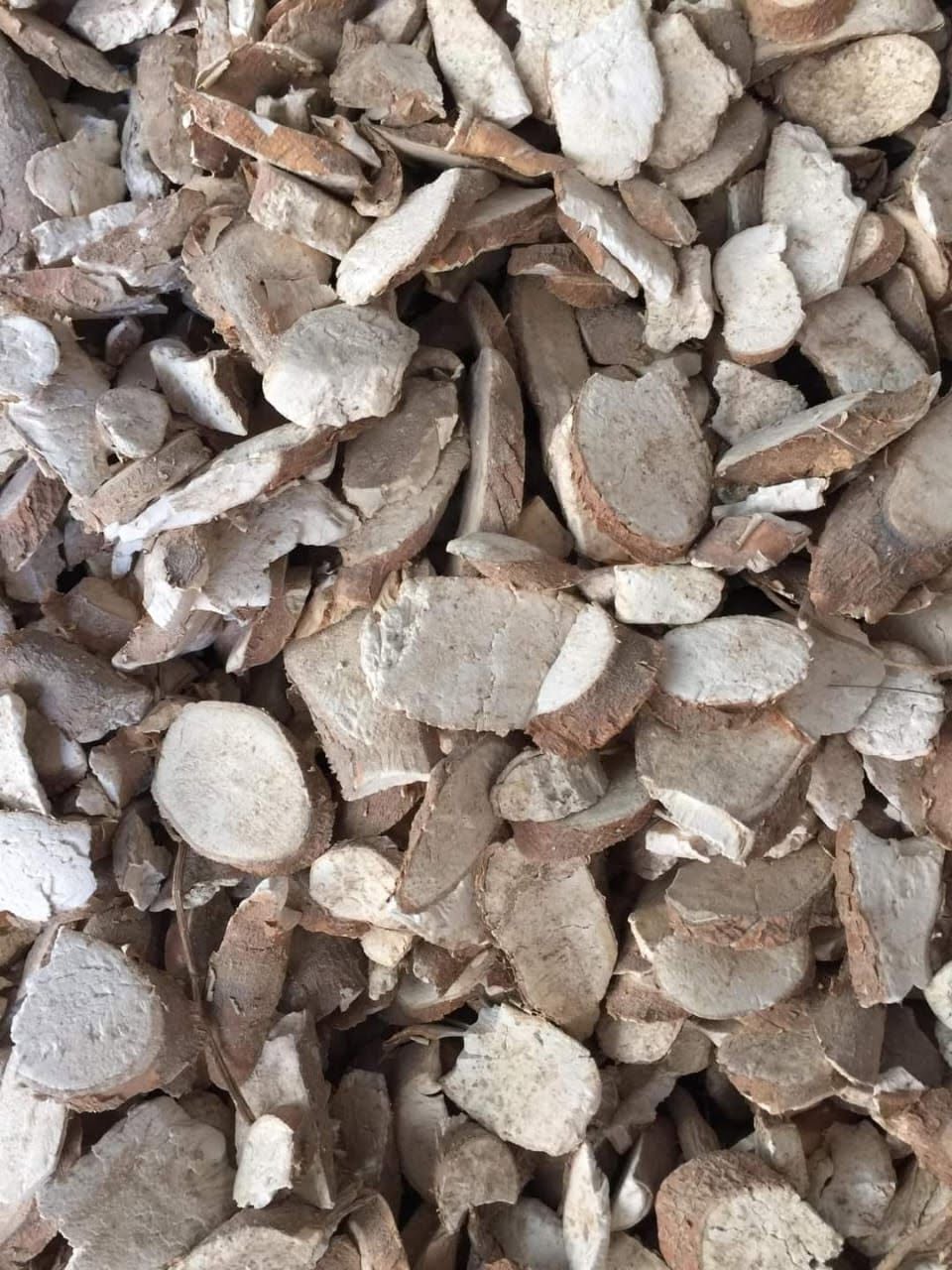
Cassava chips are not the retail snack product — not the flavoured, fried, salted cassava crisps sold in consumer snack packaging. They are the sun-dried or mechanically dried slices or discs of fresh cassava roots — typically 2–5mm thick, 3–8cm in diameter — produced by peeling fresh roots, slicing mechanically, and drying to below 14% moisture under sun or mechanical heat. The result is a dense, pale cream to off-white disc with 60–70% starch content (dry weight basis) and essentially the same starch energy value per kilogram as corn — but typically priced significantly below corn, creating the feed industry economics that drive Asia’s multi-million-tonne annual import demand.
At Paradise MultiTrade International Limited, cassava chips is our highest-volume-potential and most commodity-scale agricultural export category — sourced from processing operations across Ogun, Ondo, Benue, Cross River, Anambra, Imo, Abia, Kogi, Delta, Edo, Ebonyi, Rivers, and Kwara states whose fresh cassava root production creates the raw material base for cassava chip processing at scales that no other West African origin can match, processed into standard dried chips, small-particle cassava grit, and compressed cassava pellets appropriate to different buyer logistics and processing requirements, and exported with full food safety, mycotoxin, and commodity quality documentation.
To discuss sourcing immediately, request a quotation here and our export team responds within 48 hours.
History and Context — Why Cassava Chips Are the World’s Most Important Cassava Trade Form Despite Being the Least Well-Known
The Cassava Chip Trade — A Multi-Billion-Dollar Commodity Market Operating Largely Outside Western Commercial Awareness
The global cassava chip trade is one of the most commercially significant agricultural commodity trade flows in the world by volume — yet it operates almost entirely outside the awareness of European and American food industry professionals who associate cassava primarily with gluten-free flour, tapioca pearls for bubble tea, and West African traditional foods. The reason is geographic: the cassava chip trade is overwhelmingly an intra-Asian and Africa-to-Asia corridor whose dominant origin (Thailand), dominant destination (China), and primary application (animal feed and starch processing) create a commercial ecosystem that the European food industry encounters only tangentially through the downstream products that China’s cassava-fed pig and poultry population eventually generates.
The trade’s scale — documented through FAO trade statistics, ITC Trade Map cassava trade data, and China’s GACC agricultural import statistics — involves the movement of 15–20 million metric tonnes of dried cassava chips and pellets annually from primary producing countries to processing and feed manufacturing destinations. China’s share of this import is dominant: China’s animal feed industry and starch processing sector collectively import enough cassava annually to represent one of the largest single-crop, single-country import programmes in global agricultural trade.
The commercial logic is straightforward: dried cassava chips contain approximately 60–70% starch on a dry weight basis — an energy density roughly equivalent to corn on a dry matter basis — at a price per tonne that reflects cassava’s production economics (no seed input cost, perennial productive life, tolerance of poor soils) rather than corn’s more intensive agricultural input requirements. When corn prices rise — as they have repeatedly done through supply shocks, climate events, and biofuel demand — the differential between corn and cassava chips widens, making cassava chips commercially compelling for feed compounders whose raw material cost structure determines their competitive position.
Nigeria’s Structural Position — The World’s Largest Producer, the World’s Smallest Formal Exporter
The contrast between Nigeria’s cassava production reality and its cassava export reality is the most dramatic production-export mismatch in any commodity we have documented across this series — more extreme than the cowpea mismatch, more extreme than the millet mismatch, and dramatically more commercially consequential given the volume scale of the global cassava chip trade.
Nigeria’s 50–60 million metric tonnes annual cassava root production — confirmed by FAO as the world’s largest — could theoretically supply the entire global cassava chip import demand several times over if processing infrastructure and export logistics were in place. Thailand, the world’s dominant cassava chip exporter with approximately 14–16 million metric tonnes of annual production — less than a quarter of Nigeria’s — has built the processing infrastructure that generates 70–75% of China’s cassava chip import supply.
The Nigerian Export Promotion Council (NEPC) — whose cassava export development programme specifically identifies cassava chips as a priority export category — and IITA’s cassava value chain development work have both documented this mismatch and identified the processing infrastructure investment and commercial buyer development required to close it. Paradise MultiTrade’s cassava chips export programme represents the commercial implementation of the export development logic that these institutional programmes have established.
What Are Nigerian Cassava Chips? The Product Profile, Processing Standards, and Quality Parameters That Determine Commercial Value
The Physical Product — Slices, Grits, and Pellets
Dried Cassava Chips (Slices) — the primary trade form: fresh cassava roots peeled, sliced to 2–5mm thickness by mechanical rotary slicers, and sun-dried or mechanically dried to below 14% moisture. The resulting product is irregular in shape (reflecting root morphology), pale cream to off-white in colour, with a density of approximately 550–650 kg per cubic metre (bulk density) and a starch content of 60–70% of dry weight. This is the standard form for bulk container and bulk vessel shipping.
Cassava Grit — chopped rather than sliced cassava: peeled roots fed through hammer mills or chipper machines that produce small irregular particles rather than slices — typically 5–20mm particle size. Faster to dry than whole slices due to greater surface-area-to-volume ratio. Produces slightly lower-cost product than precision-sliced chips.
Cassava Pellets — compressed cassava chips or cassava flour pressed through pellet die machines into cylindrical pellets of uniform size (typically 6mm or 8mm diameter, 10–25mm length). Pelletising increases bulk density (from approximately 600 kg/m³ for chips to 700–750 kg/m³ for pellets), reduces dust generation during handling, and improves feed mixing homogeneity in compound feed manufacturing — commanding a modest premium over loose chips from buyers whose feed manufacturing equipment is optimised for pelleted ingredients.
The Critical Quality Parameters — What Buyers Evaluate
Moisture Content — the primary quality parameter whose specification determines both food safety (below 14% prevents mould growth) and trade economics (every percentage point of moisture above the agreed specification represents water-weight that the buyer pays commodity price for without receiving starch value). The standard international specification for dried cassava chips is ≤14% moisture — with premium-priced shipments specifying ≤12% moisture for improved storage stability and reduced deterioration risk during ocean transit.
Starch Content — approximately 60–70% of dry weight for standard dried chips from mature cassava roots — the primary determinant of the energetic and processing value that buyers are paying for. Higher starch content = more fermentable carbohydrate per tonne for ethanol producers, more glucose per tonne for starch processors, and more metabolisable energy per tonne for animal feed compounders. Starch content is confirmed by enzymatic-spectrophotometric method (AOAC 996.11) and is the primary analytical specification for starch industry buyers.
HCN (Hydrogen Cyanide) Content — as documented in the cassava flour article, the Codex Alimentarius maximum for cassava chips intended for human food use is 10 ppm — but for animal feed applications the acceptable limit is typically higher (up to 100 ppm for feed-grade material whose intended processing will further reduce HCN through cooking or fermentation before animal consumption). The applicable HCN limit must be confirmed per the buyer’s intended end use and destination country’s feed safety regulations.
Aflatoxin — the primary mycotoxin risk in dried cassava chips whose inadequate drying creates conditions for Aspergillus flavus growth. EU maximum for aflatoxin B1 in feed materials: ≤5 ppb; total aflatoxins ≤10 ppb per Commission Regulation (EC) 574/2011 on feed materials. Chinese import aflatoxin standards for cassava chips are administered through GACC inspection protocols.
Foreign Matter — soil, stones, fibre strands, root bark (peel) fragments, and other non-starch material — whose specification (≤2% for standard trade grade, ≤1% for premium grade) determines the effective starch content that the buyer’s processing equipment receives after physical cleaning and separation.
Sand and Silica Content — of specific relevance to Chinese starch processing buyers whose wet milling equipment is sensitive to abrasive silica contamination — typically specified as ≤0.5% silica/sand content.
Whiteness/Colour — pale cream to off-white (standard quality); darker brown chips indicate excessive drying temperature (starch degradation) or insufficient peeling (peel inclusion). Colour is assessed visually and impacts the starch product colour in downstream wet milling — relevant for starch processing buyers whose product specifications include starch whiteness.
The Commercial Grade Distinction — Food-Grade vs Feed-Grade
Food-grade cassava chips — produced from sweet variety, fully peeled roots, dried to ≤12% moisture, HCN ≤10 ppm, aflatoxin total ≤10 ppb. This grade is the raw material for HQCF production (wet milling) and for human food applications where food safety specifications are mandatory.
Feed-grade cassava chips — produced from any cassava variety (sweet or bitter), with acceptable incomplete peeling, dried to ≤14% moisture, HCN ≤100 ppm (for feed processing applications where cooking further reduces HCN), aflatoxin within EU feed safety limits. This is the standard bulk commodity grade for animal feed and ethanol applications.
Benefits and Industrial Uses of Nigerian Cassava Chips
Animal Feed Manufacturing — The Corn Replacement Economics That Drive the Largest Trade Flow
The primary commercial application for internationally traded cassava chips — and the one that generates the multi-million-tonne annual import volumes that make cassava chips one of the world’s most significant agricultural commodity trades — is animal feed manufacturing as a partial or full corn starch replacement:
The commercial logic for feed industry buyers is price-driven: when cassava chip prices (typically USD 180–280 per metric tonne at international commodity prices documented through World Bank agricultural commodity price monitoring) fall below corn prices (typically USD 200–320 per metric tonne) on an equivalent metabolisable energy basis — feed compounders shift formulations toward cassava chips. This price-driven substitution creates enormous demand elasticity in the cassava chip market: a 20% corn price increase relative to cassava typically triggers a significant formulation shift across Asia’s massive pig and poultry industries, adding millions of tonnes to annual cassava chip import demand.
Poultry feed — cassava chips incorporated at 20–40% of total ration (replacing equivalent corn inclusion) provide metabolisable energy of approximately 3,100–3,300 kcal/kg dry matter — approximately 90–95% of corn’s metabolisable energy value on a dry matter basis. The slightly lower energy density is offset by cassava’s typically lower per-tonne price. Research on cassava chip inclusion in poultry rations — published through NCBI’s veterinary nutrition database — documents acceptable broiler growth performance at inclusions up to 40% of ration when protein supplementation from soybean meal, cowpea, or fish meal compensates for cassava’s low protein content.
Swine feed — the dominant end application for China’s cassava chip imports, whose massive swine herd (China maintains approximately 50% of the world’s pig population) creates feed demand whose energy component is partially met by cassava chips at inclusion rates of 15–30% in finishing rations. FEFAC documents cassava chip use in European swine compound feed as well — confirming established practice across both Asian and European feed manufacturing.
Aquaculture feed — cassava chips as a digestible starch energy source in fish and shrimp feed formulation — particularly in tilapia and catfish rations where cassava’s starch gelatinisation during pellet manufacturing creates acceptable feed pellet durability and water stability.
Dairy cattle — cassava chips in ruminant total mixed rations as a supplementary fermentable starch source — with the important proviso that high-HCN cassava chips should not be fed to ruminants without adequate processing, as rumen bacteria can convert HCN at higher rates than monogastric digestive systems, creating cyanide toxicity risk at feed-grade HCN levels. Low-HCN cassava chips (below 50 ppm) are safe for ruminant feeding.
For animal feed manufacturing buyers evaluating Nigerian cassava chips — contact our export team to discuss moisture, starch content, HCN specification, and volume supply arrangements.
Cassava Starch Processing Industry — The Raw Material for the World’s Most Diverse Industrial Starch
As we documented in the cassava flour article, cassava starch — extracted from dried chips through wet milling at starch processing facilities — is one of the world’s most commercially versatile industrial starches whose applications span food manufacturing, paper and textile coating, pharmaceutical excipients, biodegradable packaging, and modified starch production. Cassava chips serve as the raw material for this starch processing industry when wet milling of fresh roots is not economically feasible due to geographic separation between root production and starch processing facilities:
Chinese cassava starch industry — China’s cassava starch processors — concentrated in Guangxi province (China’s primary cassava-growing and processing zone, though increasingly relying on imports to supplement domestic production) and in major coastal industrial centres — import dried cassava chips specifically for wet-milling starch extraction at industrial processing plants. The dried chip form allows origin-to-processing plant shipping over the ocean distances that fresh cassava root (which deteriorates within 48 hours) cannot sustain. Nigerian cassava chips — whose starch content, moisture, and HCN specification are documented — provide the same raw material functionality as Thai chips in Chinese starch processing operations.
European cassava starch processing — while smaller in scale than the Chinese industry, European cassava starch processors (particularly in the Netherlands and Germany) import cassava chips as raw material for native and modified starch production. The European Starch Industry Association (AAF) tracks cassava starch’s growing use in European food and non-food applications.
Tapioca production — cassava chips used as raw material for the tapioca pearl and tapioca flour products that the bubble tea industry’s extraordinary global expansion has made into one of the fastest-growing cassava chip demand drivers tracked through Grand View Research’s bubble tea market analysis at over USD 2.5 billion annually.
For cassava starch processing industry buyers evaluating Nigerian chips — contact our team to discuss starch content documentation and sand/silica specification.
Bioethanol and Biofuel Production
Cassava bioethanol — cassava chips’ high starch content (60–70% dry weight) and their competitive per-tonne pricing relative to corn and sugarcane make them a commercially attractive bioethanol feedstock whose development is documented through FAO’s bioenergy programme and the International Energy Agency’s (IEA) biofuel market analysis:
The ethanol yield from cassava chips — approximately 350–380 litres per tonne of dry chips — is comparable to the yield from equivalent corn starch inputs and better than sugarcane bagasse. For ethanol producers whose feedstock selection is primarily driven by starch-to-ethanol conversion economics — cassava chips from Nigerian origin whose production cost and proximity economics favour Atlantic coast shipping to European ethanol facilities provide a potentially competitive alternative to traditional grain ethanol feedstocks.
EU Renewable Energy Directive (RED II) sustainability requirements — specifying minimum greenhouse gas savings and deforestation-free feedstock sourcing for EU-consumed biofuel — create specific sustainability documentation demand that Nigerian cassava chips can meet through the same EUDR-equivalent supply chain documentation we developed for soybeans: Nigerian cassava production occurs on established agricultural land whose deforestation-free status is documentable, and cassava’s tropical production carbon footprint comparison with temperate cereal ethanol feedstocks is favourable under RED II’s carbon savings methodology.
West Africa regional ethanol market — the ECOWAS Biofuel Policy‘s mandate for progressive renewable fuel blending across West African markets creates a regional ethanol demand growth driver that positions Nigeria’s cassava chip production base as a regional biofuel feedstock source alongside the international export market.
Traditional Food Processing by-products
While this article focuses primarily on bulk commodity cassava chips for feed, starch, and ethanol applications, it is commercially relevant to note that cassava chips represent the raw material precursor for multiple value-added products in Nigeria’s domestic food processing industry:
Garri production from dried chips — some garri manufacturers purchase dried cassava chips (specifically from sweet variety, properly peeled roots) as a more stable, longer-shelf-life raw material compared to fresh roots — re-hydrating chips before fermenting and toasting to produce garri. This creates a domestic commercial market for food-grade dried chips that complements the export market.
HQCF production from dried chips — starch processing plants that produce HQCF from wet milling dried chips (rather than directly from fresh roots) create industrial-scale HQCF production economics whose commercial development is tracked through NEPC’s cassava value chain programme.
Why Buy Cassava Chips From Nigeria?
The Production Volume Argument — Unmatched Potential Scale
Nigeria’s 50–60 million metric tonnes annual cassava root production translates to a potential dried chip production capacity — at approximately 25–30% conversion ratio from fresh root to dried chip — of 12–18 million metric tonnes of dried chips annually. This potential production represents a magnitude of cassava chip supply that would, if commercially developed to export standard, fundamentally reshape the global cassava chip trade whose current volumes are approximately 15–20 million metric tonnes per year.
The current gap between this potential and Nigeria’s actual formal cassava chip export volumes is the commercial development opportunity that Paradise MultiTrade is progressively closing — building the processing infrastructure networks, quality management systems, and international buyer relationships that will connect Nigeria’s extraordinary production base to the global cassava chip trade at the scale that its position as the world’s largest cassava producer justifies.
The West African Atlantic Logistics Advantage for European Buyers
For European animal feed manufacturers, European starch processors, and European ethanol producers whose cassava chip procurement has historically come exclusively from Thai or Vietnamese origin via the Suez Canal or around the Cape — Nigerian origin provides a significantly shorter supply chain:
Lagos to Rotterdam: 14–18 days (approximately 4,500 nautical miles)
Bangkok to Rotterdam: 25–35 days (approximately 11,500 nautical miles via Suez Canal)
This shipping distance advantage — approximately 10–17 fewer days in transit — translates to: lower freight insurance costs, better quality preservation (dried cassava is hygroscopic — shorter transit time reduces moisture gain risk), reduced capital tied up in inventory in transit, and more procurement schedule flexibility for European buyers whose just-in-time inventory management is constrained by long lead times from Asian origins. For European buyers making competitive sourcing decisions on commodities where per-tonne freight differential is commercially significant — Nigerian origin’s Atlantic shipping advantage is quantifiably valuable.
The EUDR Compliance and Deforestation-Free Advantage
Nigeria’s cassava production — like Nigerian sorghum, millet, and cowpea — occurs on established agricultural land in Nigeria’s southern and Middle Belt farming systems, whose deforestation-free provenance is documentable through the same combination of satellite imagery, agricultural land classification records, and farm operator declarations that Paradise MultiTrade developed for EU-bound soybean compliance. For EU bioethanol producers and feed manufacturers whose supply chain sustainability requirements under EU Regulation 2023/1115 include deforestation-free feedstock documentation — Nigerian cassava chips’ established agricultural land origin provides EUDR-compliant supply without the documentary burden that tropical frontier agriculture origins require.
The Aflatoxin Management Advantage of Harmattan Drying Season
Nigeria’s primary cassava chip drying season — whose optimal conditions for rapid, low-humidity drying coincide with the November–March harmattan season — creates a seasonal quality advantage for aflatoxin management: the harmattan’s characteristically dry, desiccating winds from the Sahara drive moisture content from fresh cassava chips to below 14% rapidly, reducing the time window during which Aspergillus mould can establish on the chip surface before moisture reaches safe storage levels. Properly managed harmattan-season drying produces cassava chips with demonstrably lower aflatoxin risk than chips dried during humid rainy season conditions — a quality advantage whose documentation through pre-export aflatoxin testing provides buyer assurance that Nigerian origin’s seasonal drying advantage delivers consistently clean commodity material.
Complete Export Documentation from a Licensed Exporter
Every cassava chips shipment from Paradise MultiTrade carries phytosanitary certification from NAQS, NEPC export documentation, certificate of origin, commercial invoice, packing list, and bill of lading. For all buyers, we coordinate moisture content, starch content (AOAC 996.11 enzymatic method), foreign matter, HCN content (feed-grade: ≤100 ppm; food-grade: ≤10 ppm), aflatoxin B1 and total aflatoxin, and physical grade description. For EU feed industry buyers, we coordinate compliance with Commission Regulation (EC) 574/2011 feed material aflatoxin limits and provide the EUDR deforestation-free documentation for EU biofuel buyers. For Chinese starch processing buyers, we coordinate sand and silica content testing alongside standard commodity parameters. Our NEPC Export Licence No. 0042385 and CAC Registration No. RC-9284647 are verifiable through NEPC.
Nigeria’s Cassava Chips Export Strength and Global Market Demand
The Global Market — Dominated by China’s Import Demand, Driven by Feed Economics
The global cassava chip trade — tracked through ITC Trade Map cassava commodity data, FAO’s agricultural trade statistics, and USDA FAS international grain and feed reports — generates annual import values measured in billions of dollars and annual import volumes measured in tens of millions of metric tonnes. China’s dominant position — importing approximately 10+ million metric tonnes annually at peak demand periods — reflects the intersection of China’s massive livestock industry (the world’s largest pork producer), the cost economics of cassava chip substitution for corn in feed formulation, and the starch processing industry’s continuous demand for cassava as a raw material.
The FAO’s cassava market assessments and the International Starch Institute’s annual market review provide the most authoritative global cassava chip trade intelligence — documenting the price relationships, import volume fluctuations, and origin share dynamics that characterise this commodity market.
Key Export Destination Markets
China — the world’s most commercially significant single destination for cassava chips by a substantial margin, whose feed industry and starch processing industry together create procurement demand that no other country’s cassava chip import programme approaches. Chinese cassava chip import standards are administered through GACC (General Administration of Customs China) whose specific inspection requirements (aflatoxin testing, HCN testing, moisture and starch content) define the quality documentation requirements for Chinese market entry.
South Korea — the second most commercially significant Asian destination, whose animal feed manufacturing sector creates consistent cassava chip procurement demand documented through KATI (Korea Agro-Fisheries and Food Trade Corporation) agricultural import intelligence.
Japan — whose animal feed industry’s consistent quality requirements and established starch processing sector create specific high-quality cassava chip procurement demand tracked through JETRO.
The Netherlands, Germany, and Belgium — Europe’s primary animal feed manufacturing hubs, whose compound feed production includes cassava chips as a partial corn replacement ingredient in years when cassava-corn price differentials make substitution economically advantageous. EU feed material import requirements administered through FEFAC and the European Commission’s feed safety framework.
Spain and Portugal — whose bioethanol production sector creates specific demand for cassava chips as a fermentable starch feedstock under EU RED II renewable fuel mandates.
Malaysia and Indonesia — whose regional cassava starch processing industries create Southeast Asian demand for cassava chips from West African origins as supplementary supply during periods of Thai and Vietnamese supply tightness.
India — whose growing animal feed manufacturing sector and emerging cassava starch processing industry create developing South Asian demand tracked through APEDA agricultural import data.
Why Choose Paradise MultiTrade International Limited?
Starch Content Documentation Per Lot. AOAC 996.11 enzymatic starch content analysis — confirming 60–70% dry weight starch for standard dried chips — coordinated through accredited commodity analytical laboratories on every export lot. This starch content documentation is the primary analytical value credential that starch processing buyers require before committing to volume procurement. Contact us to discuss starch content specification.
Dual HCN Specification — Feed Grade and Food Grade Both Available. Feed-grade cassava chips (HCN ≤100 ppm) for animal feed and ethanol applications; food-grade cassava chips (HCN ≤10 ppm, from sweet variety only) for starch processors supplying food-grade downstream applications. Both grades tested and certified per lot. Contact us to specify your required HCN grade.
Harmattan Season Drying Programme for Optimal Aflatoxin Control. We specifically coordinate large-volume procurement planning around Nigeria’s November–March harmattan drying season — providing buyers who plan procurement 3–4 months in advance with access to the lowest aflatoxin risk material produced under the most favourable natural drying conditions of the year. Contact our team to plan harmattan season procurement.
Chips, Grit, and Pellet Forms All Available. Standard dried chips (bulk shipping), cassava grit (faster-drying, lower-cost), and compressed cassava pellets (higher bulk density, dust-free handling) — from the same documented Nigerian origin production network. Contact us to specify your required form and logistics preference.
Bulk Vessel Chartering for Large-Volume Buyers. For buyers whose annual cassava chip procurement exceeds 5,000–10,000 MT — bulk vessel chartering from Lagos or Cotonou (closer to inland cassava processing zones by road) provides dramatically lower per-tonne freight economics than container shipping, matching the bulk shipping economics of Thai and Vietnamese cassava chip origins. Contact our team to discuss bulk vessel logistics.
Multi-Commodity West African Starch and Feed Ingredient Sourcing. Cassava chip buyers in the feed and starch industry frequently source complementary Nigerian agricultural commodities. Alongside cassava chips, Paradise MultiTrade exports cassava flour (HQCF), soybeans, sorghum, millet, cowpeas, sesame seeds, shea butter, groundnut oil, moringa leaf powder, cashew nut kernel, and raw cashew nuts. Explore our full range of Nigerian export commodities and consolidate your West African grain, starch, and agricultural commodity sourcing through one verified, licensed export partner.
Product Specifications
| Specification | Details |
|---|---|
| Product | Nigerian Cassava Chips / Dried Cassava (Manihot esculenta) |
| Common Names | Cassava chips, Dried cassava, Cassava flakes, Dried tapioca chips, Yuca chips (commodity trade) |
| Botanical Species | Manihot esculenta Crantz (Euphorbiaceae) |
| Grade | Feed-grade (HCN ≤100 ppm); Food-grade / Starch processing grade (HCN ≤10 ppm) — specify at order |
| Forms Available | Standard dried chips (sliced, 2–5mm thickness); Cassava grit (chopped, 5–20mm); Cassava pellets (6mm or 8mm die, 10–25mm length) |
| Origin | Nigeria (Ogun, Ondo, Benue, Cross River, Anambra, Imo, Delta, Edo, Kogi, Kwara States) |
| Moisture Content | ≤14% (standard feed grade); ≤12% (premium/food grade) |
| Starch Content | 60–70% dry weight (AOAC 996.11 enzymatic method) |
| HCN Content | ≤100 ppm (feed grade); ≤10 ppm (food/starch grade — sweet variety only) |
| Crude Protein | 1–3% dry weight |
| Crude Fat | ≤1% dry weight |
| Crude Fibre | 3–6% dry weight |
| Total Ash | ≤3% dry weight |
| Sand/Silica Content | ≤0.5% (starch processing specification); ≤2% (standard feed grade) |
| Foreign Matter | ≤2% (standard); ≤1% (premium/starch grade) |
| Peel/Bark Inclusion | ≤3% (standard); ≤1% (food/starch grade — fully peeled specification) |
| Aflatoxin | B1 ≤5 ppb; Total ≤10 ppb (EU feed safety standard per Commission Regulation (EC) 574/2011) |
| Colour | Pale cream to off-white (standard quality); Darker brown chips indicate quality concern |
| Bulk Density | Chips: 550–650 kg/m³; Pellets: 700–750 kg/m³ |
| Metabolisable Energy | Approximately 3,100–3,300 kcal/kg dry matter (poultry) |
| Shelf Life | 12 months (sealed storage, cool dry conditions); shorter under humid tropical storage |
| Packaging Options | 50kg polypropylene bags; Bulk container loading (up to 27 MT per 20-foot container); Bulk vessel loading (large volume) |
| Supply Capacity | 1,000–100,000+ MT per year (year-round production; optimal quality October–March) |
| MOQ | Containerised: 25 MT; Bulk vessel: 5,000 MT |
| Export Documentation | Phytosanitary Certificate (NAQS), Certificate of Origin, NEPC Export Licence, Certificate of Analysis (moisture, starch content, HCN, foreign matter, aflatoxin), Sand/Silica Certificate (starch processing buyers), EUDR Deforestation-Free Documentation (EU biofuel buyers), Commercial Invoice, Packing List, Bill of Lading |
| Payment Terms | T/T, Letter of Credit (LC at sight), Escrow |
| Loading Port | Lagos (Apapa / Tin Can Island Port); Cotonou (Benin Republic — closer to inland producing zones) |
| Incoterms Available | EXW, FOB Lagos, CNF, CIF |
Packaging and Export Process
Root Harvest and Raw Material Supply. As documented in the cassava flour article — cassava roots are harvested year-round from staggered-planting production systems across Nigeria’s southern and Middle Belt states. For cassava chip production, the maturity window is broader than for HQCF — roots from 8 to 24 months of growth produce acceptable chip quality, with older roots (18–24 months) typically having higher dry matter content and higher starch concentration that is commercially preferred for starch processing and feed applications.
Peeling. Peeling intensity depends on the grade specification: Food-grade/starch-grade chips require thorough peeling removing both the outer brown bark cortex and the inner pink/cream parenchyma to reach the pure white starch-rich flesh — minimising fibre, tannin, and HCN from the peel fraction. Feed-grade chips may accept less thorough peeling with minor peel fragment inclusion within the 3% specification limit.
Slicing and Chipping. Peeled roots are fed through mechanical rotary slicers (producing 2–5mm thick discs) or through hammer/chipper machines (producing grit). The choice of cutting method affects drying rate (thinner slices dry faster), product appearance (uniform slices vs irregular grit), and downstream processing suitability (slices preferred for starch wet milling; grit acceptable for feed and ethanol applications).
Drying — The Critical Processing Step. Sliced cassava is spread on elevated sun-drying platforms (bamboo, concrete, or tarpaulin-covered frames) in direct sunlight — Nigeria’s harmattan season (November–March) providing optimal drying conditions (low humidity, strong sunlight, drying northeast winds) that reduce chips from 65–70% moisture (fresh root) to below 14% in 2–4 days under good conditions. Mechanical hot-air dryers at 55–70°C supplement sun drying for large-scale commercial operations during the rainy season (April–October) when ambient humidity makes sun drying less reliable. Critical quality point: inadequate drying (failure to reach 14% moisture within 3–5 days) creates surface mould growth conditions that produce aflatoxin contamination — the most commercially significant food safety failure in cassava chip production.
Cleaning and Grading. Dried chips pass through rotary drum cleaners and air aspirators removing dust, loose fibre strands, fine soil particles, and undersized material — achieving the foreign matter specification required per buyer grade. For premium and starch-processing grade material, additional sand separation through density tables reduces silica content.
Pelletising (where specified). Dried chips or cassava grit fed through flat-die or ring-die pellet presses at appropriate die specifications (6mm or 8mm). Pelletising requires approximately 10–12% chip moisture for adequate die conditioning — slightly higher moisture content than optimal chip storage specification.
Quality Testing. Moisture content (oven drying method, AOAC 934.01), starch content (AOAC 996.11 enzymatic), HCN content (picrate paper method or titrimetric method), aflatoxin B1 and total (ELISA or HPLC), foreign matter (manual sieving), sand/silica (hydrochloric acid digestion gravimetric method). All test results compiled into the Certificate of Analysis before export documentation preparation.
Container Loading. Cassava chips are bulk-loaded into 20-foot containers (approximately 25–27 MT per container, higher density with pellets at 27–28 MT) or 40-foot containers. Container liners (food-grade polyethylene bag lining the full container interior) prevent moisture absorption through container walls during ocean transit. For large-volume buyers: bulk vessel chartering from Lagos Apapa port or Cotonou reduces per-tonne freight cost toward Thai/Vietnamese origin equivalence for European and Asian buyers.
Lead Times. From available dry season stock: 7–14 days. Fresh production (rainy season): 21–35 days (drying schedule extended). Pelletised product: add 7 days for pelletising processing. Large bulk vessel charter: 35–56 days from order confirmation to vessel departure. Contact us early — particularly for bulk vessel orders requiring significant advance logistics coordination.
Frequently Asked Questions
What is the difference between cassava chips and cassava flour (HQCF) — and which should I specify?
Both products come from dried Manihot esculenta roots but differ fundamentally in processing, particle size, composition, and commercial application: Cassava chips — sliced or chipped whole cassava roots dried to below 14% moisture. Composition: 60–70% starch, 3–6% fibre, 1–3% protein. Form: irregular disc shapes or grit particles, not uniform powder. Primary applications: animal feed (direct), starch processing (wet milling raw material), ethanol production (fermentation feedstock). Price: lower per tonne than HQCF, appropriate for commodity volume trade. HQCF (High Quality Cassava Flour) — peeled cassava roots grated, pressed, dried, and finely milled to below 250 micron powder. Composition: 78–88% starch, 1.5–3.5% fibre, 1–3% protein, lower moisture than chips. Form: fine white powder. Primary applications: gluten-free food manufacturing (1:1 wheat substitute), food-grade starch extraction, diaspora food cooking. Price: higher per tonne than chips, appropriate for premium food ingredient markets. For feed, starch processing, and ethanol buyers: specify cassava chips. For gluten-free food manufacturing, bakery, and food-grade starch: specify HQCF. Paradise MultiTrade supplies both. Contact us to confirm which product fits your application.
What determines the starch content of Nigerian cassava chips and how does it compare to corn?
Cassava chip starch content — approximately 60–70% of dry weight — depends on three factors: (1) Variety: improved starchy varieties bred by IITA achieve higher dry matter and starch content than traditional varieties; (2) Root maturity: roots harvested at 12–18 months typically have higher starch content than younger (8–10 month) roots whose starch is still accumulating; (3) Drying efficiency: chips dried rapidly to low moisture concentration maximise apparent starch percentage per unit weight. Comparison with corn: corn grain contains approximately 70–75% starch on dry weight basis — somewhat higher than cassava chips’ 60–70%. However, cassava chips’ metabolisable energy value for poultry (3,100–3,300 kcal/kg DMB) approaches corn’s energy value (3,250–3,380 kcal/kg DMB) — because corn’s starch is partially offset by its germ’s fat content (approximately 4% fat in corn vs below 1% fat in cassava). In feed formulation economics, cassava chips typically substitute for corn at 80–90% of corn’s inclusion rate on an energy-equivalent basis, with protein supplementation from soybean meal, cowpea flour, or DDGS compensating for cassava’s low protein content (1–3% versus corn’s 8–9%). We provide starch content documentation by AOAC 996.11 on every export lot. Contact us to discuss starch content specification.
What aflatoxin limits apply to cassava chips for EU animal feed and what is the risk from Nigerian origin?
EU Commission Regulation (EC) 574/2011 on feed materials specifies a maximum aflatoxin B1 limit of 5 ppb (μg/kg) and total aflatoxin limit of 10 ppb for feed materials including cassava chips entering EU animal feed supply chains. This is more stringent than the EU food aflatoxin limit (B1 ≤2 ppb for food) — but reflects the feed safety framework rather than the food safety framework. The aflatoxin risk in Nigerian cassava chips is primarily associated with two scenarios: (1) Inadequate post-harvest drying — cassava chips left above 14% moisture for more than 48–72 hours in warm ambient conditions create rapid Aspergillus mould growth and aflatoxin production; (2) Rainy season production — chips produced during April–October when ambient humidity is high are more challenging to dry rapidly than harmattan season production. Paradise MultiTrade manages this risk through: sourcing from producers with documented rapid-drying protocols; mandatory aflatoxin testing by ELISA on every EU-bound lot through GAFTA-approved laboratories; rejection of any lot exceeding 5 ppb B1 from EU-destined shipments. Harmattan season procurement (November–March) provides inherently lower aflatoxin risk from faster ambient drying. Contact us to discuss aflatoxin management protocols.
Why does China import so much cassava from Thailand when China produces cassava domestically?
China’s domestic cassava production — concentrated primarily in Guangxi and Yunnan provinces — produces approximately 6–8 million MT of fresh cassava annually. China’s demand for cassava starch and cassava-based animal feed ingredients is many times this domestic production capacity — creating a structural import deficit that requires approximately 10+ million MT of imported cassava chips annually even after maximising domestic production. The specific reasons China imports from Thailand rather than Nigeria are: (1) Established commercial relationships and quality documentation infrastructure — Thai cassava chip exporters built formal buyer relationships with Chinese importers and starch processors from the 1970s; (2) Shipping routes — China-Thailand sea routes are shorter (approximately 3,000 nautical miles Bangkok-Shanghai) than China-Nigeria routes (approximately 11,000+ nautical miles Lagos-Shanghai), though the freight differential per tonne is less extreme than it appears because bulk vessel economics reduce per-mile shipping costs significantly; (3) Chinese GACC inspection familiarity with Thai origin documentation. None of these barriers is permanent or insurmountable — they reflect infrastructure development history rather than intrinsic quality or geographic limits. Paradise MultiTrade is actively developing GACC-compliant documentation infrastructure for Nigerian cassava chip China market entry. Contact us to discuss China market entry requirements.
What is the harmattan season and why does it matter for cassava chip quality?
The harmattan is the seasonal dry northeast trade wind that blows from the Sahara Desert across West Africa from approximately November through March. Its defining characteristics — low relative humidity (often below 20–30%), strong and continuous wind movement, and clear skies providing maximum solar radiation — create the most favourable natural drying conditions in the world for any solar-dried agricultural product. For cassava chips specifically: the harmattan’s low humidity creates a large vapour pressure deficit between the wet chip surface and the surrounding air, driving rapid moisture evaporation and reducing chips from 65–70% fresh root moisture to below 14% safe storage moisture in 2–4 days rather than the 4–7 days typical of rainy season production. This faster drying minimises the time window during which surface mould can establish and produce aflatoxin — making harmattan-season cassava chips inherently lower aflatoxin risk than rainy season production. For buyers with procurement schedule flexibility — targeting harmattan season production (November–March) specifically for large-volume purchases provides the most consistently clean, lowest-aflatoxin-risk cassava chip supply that Nigerian origin produces. We offer preferential pricing for advance procurement bookings whose delivery schedule allows alignment with the optimal harmattan drying season. Contact us to plan harmattan season procurement.
What are cassava pellets and when should I specify them over chips?
Cassava pellets are cassava chips or cassava grit that have been compressed through a pellet press die (typically 6mm or 8mm diameter die) into dense, cylindrical pellets of 10–25mm length. Pelletising changes several commercial parameters: Bulk density increases from approximately 600 kg/m³ (loose chips) to approximately 720–750 kg/m³ (pellets) — meaning approximately 20–25% more product can be loaded per container or vessel hold volume, reducing freight cost per tonne of contained starch. Dust generation decreases dramatically — relevant for feed manufacturing operations whose pneumatic conveying and mixing systems create dust management challenges with loose chips. Uniformity improves — pellets’ consistent size and shape improve feed mixing homogeneity and reduce ingredient segregation in compound feed manufacturing. Trade-offs: pelletising adds processing cost (energy, die wear, labour) of approximately USD 10–15 per tonne, and the pelletising temperature can slightly reduce starch availability (reduced cold-water swelling) for some feed applications. Specification guidance: For large-volume bulk vessel shipping with established bulk handling infrastructure — chips are more economical. For container shipping where density matters — pellets improve freight economics. For feed manufacturing with automated handling and mixing equipment — pellets are preferred. Contact us to discuss which form best fits your logistics and processing application.
What transit times should I expect from Nigeria?
Dried cassava chips, grit, and pellets (bulk container — standard dry, no temperature control): UK (Tilbury, Felixstowe) — 14–18 days from Lagos. Netherlands (Rotterdam) — 14–18 days. Germany (Hamburg) — 14–20 days. Spain/Portugal (for biofuel producers) — 12–16 days. China (Shanghai, Tianjin) — 28–35 days. South Korea (Busan) — 30–38 days. Japan (Yokohama) — 32–40 days. Malaysia (Port Klang) — 25–30 days. India (Nhava Sheva) — 15–20 days. Transit comparison vs Thai origin for European buyers: Lagos to Rotterdam (14–18 days) versus Bangkok to Rotterdam via Suez Canal (25–32 days) — approximately 10–15 day advantage for Nigerian origin. Bulk vessel shipping: adds 5–10 days to logistics planning (vessel scheduling, charter party negotiation) but provides dramatically lower per-tonne freight for volumes above 5,000 MT. Contact us to plan your complete logistics programme.
Ready to Source Nigerian Cassava Chips — Dried Chips, Cassava Grit, and Compressed Pellets With Starch Content Documentation, Dual HCN Certification (Feed Grade and Food Grade), Aflatoxin Compliance, EUDR Deforestation-Free Documentation, and Full Commodity Quality Certification for Animal Feed Manufacturers, Cassava Starch Processors, Ethanol Producers, and Global Commodity Wholesale Buyers?
If you are a Chinese, South Korean, or Japanese animal feed manufacturer building supply diversification from Thailand-dominant cassava chip procurement to include West African origin supply at competitive pricing with shorter Atlantic-route transit to European market derivatives, a European compound feed manufacturer evaluating cassava chips as a corn substitute ingredient during high-corn-price periods whose EU feed safety aflatoxin compliance requires documented pre-export testing from origin, a European bioethanol producer seeking deforestation-free, EUDR-compliant cassava chip feedstock from West African documented agricultural land origin for EU RED II sustainable biofuel compliance, a cassava starch processing operation evaluating Nigerian origin chips as a raw material alternative to Thai or Vietnamese origin whose starch content and sand/silica specification documentation is required before wet milling procurement commitment, a commodity grain and starch trading house building Nigerian cassava chip supply positions for Asian and European buyer networks as the world’s largest cassava producer’s export infrastructure progressively formalises, or a large-volume buyer whose annual cassava chip procurement requirements exceed 10,000 MT and who wants to develop a direct long-term supply relationship with a licensed Nigerian exporter whose production base can grow with your procurement requirements — Paradise MultiTrade International Limited is the licensed Nigerian exporter your cassava chip supply programme needs.
We supply Nigerian Manihot esculenta cassava chips, grit, and pellets — from Ogun, Ondo, Benue, Cross River, Anambra, and Delta state processing operations, starch content AOAC 996.11 documented per lot, dual HCN certification (feed grade ≤100 ppm, food/starch grade ≤10 ppm), aflatoxin ELISA certified within EU feed safety limits, EUDR deforestation-free documentation available for EU biofuel buyers, harmattan season procurement programme for optimal aflatoxin risk management, and bulk vessel charter options for large-volume buyers seeking freight economics competitive with Asian origin alternatives.
Request a Quotation — share your required form (chips, grit, or pellets), grade specification (feed grade or food/starch grade), HCN limit requirement, starch content minimum, aflatoxin limit, volume, destination market, and preferred incoterms. We respond within 48 hours.
Contact Our Export Team — speak directly about starch content analytical documentation, HCN certification for feed and food/starch grades, harmattan season procurement planning for optimal aflatoxin control, EUDR deforestation-free documentation for EU biofuel buyers, sand/silica specification for starch processing buyers, bulk vessel charter options, GACC documentation for China market entry, and long-term supply programme development.
Explore Our Full Product Range — alongside cassava chips, Paradise MultiTrade exports cassava flour (HQCF), soybeans, sorghum, millet, cowpeas, sesame seeds, shea butter, groundnut oil, moringa leaf powder, cashew nut kernel, and raw cashew nuts. One licensed Nigerian exporter. One consolidated West African commodity grain, starch, oilseed, botanical, and agricultural ingredient sourcing relationship — from the world’s most volume-significant cassava trade form whose Nigerian production base is only beginning its international commercial development.
Paradise MultiTrade International Limited | NEPC Export Licence No. 0042385 | CAC No. RC-9284647 | Lagos, Nigeria | www.paradisemultitrade.com
buy Nigerian cassava chips, dried cassava chips Nigeria supplier, cassava pellets Nigeria bulk export, Nigeria cassava chips for animal feed, dried cassava Nigeria wholesale, cassava chips starch industry Nigeria, ethanol cassava chips Nigeria, West African cassava chips bulk buyer

Reviews
There are no reviews yet.