

Nigerian Cassava Flour: How the World’s Largest Cassava Producer — Nigeria, Whose Annual Output of 50–60 Million Metric Tonnes Exceeds Every Other Country on Earth — Has Barely Begun to Export the One Flour That Food Scientists Consistently Identify as the Most Functionally Versatile Grain-Free Gluten-Free Wheat Substitute Available
Cassava Flour Exporter Nigeria — High Quality Cassava Flour (HQCF), Cassava Starch, Cassava Fufu Flour, Cassava Chips, and Dried Cassava, Direct National Belt Sourcing, Bulk Supply to Gluten-Free Food Manufacturers, Grain-Free Food Brands, Starch Industry Buyers, Bakery Ingredient Companies, Diaspora Food Importers, and Global Commodity Wholesale Buyers Worldwide
Cassava flour exporter Nigeria arrives at the intersection of two commercial realities whose combination creates the most compelling origin-product opportunity in this entire article series: Nigeria is the world’s largest cassava producer by a margin — annually producing approximately 50–60 million metric tonnes of fresh cassava roots against which no other country comes close — and yet cassava flour from Nigerian origin remains commercially marginal in the international food ingredient market whose demand for grain-free, gluten-free, allergen-free wheat flour alternatives has never been commercially larger or more urgently growing than right now.
The commercial paradox is straightforward: Thailand processes its cassava production into the internationally traded cassava starch and tapioca that dominate the global starch and bubble tea industries. Brazil processes its cassava into the polvilho azedo and polvilho doce that are foundational to traditional Brazilian cooking. Nigeria — which produces more cassava than Thailand, Brazil, Indonesia, and the Democratic Republic of Congo combined — processes the majority of its output into garri, fufu, and lafun for domestic consumption, with formal export of internationally standardised food-grade cassava flour representing only a small fraction of what the production base could commercially justify.
This is not a production quality problem. Nigerian cassava produces High Quality Cassava Flour (HQCF) — the internationally standardised, food-grade, low-moisture cassava flour specification developed through IITA’s cassava processing research programme and endorsed by the Nigerian government’s cassava bread development initiative — at quality parameters that meet EU, UK, and US food safety and functional specification requirements for industrial bakery, food manufacturing, and gluten-free food applications. It is a commercial infrastructure problem whose progressive resolution through Paradise MultiTrade’s cassava flour export programme is creating the market access that Nigerian cassava’s production dominance has always commercially deserved.
The commercial argument for cassava flour specifically — rather than cassava starch, garri, or other cassava derivatives — rests on a functional performance distinction that the food industry has spent a decade discovering and that the gluten-free and grain-free food markets have made into their most commercially significant single product category claim: cassava flour is the only commonly traded grain-free, gluten-free flour that food scientists and experienced formulators consistently rate as the closest 1:1 functional substitute for wheat flour in conventional baking and cooking applications. Not “usable as a wheat flour substitute with significant recipe modification.” Not “acceptable for gluten-free applications with flavour and texture compromises.” Genuinely 1:1 substitutable in a range of conventional recipes — producing baked goods whose visual appearance, texture, crumb structure, and mouth feel approach wheat-flour originals more closely than tiger nut flour, sorghum flour, cassava starch, almond flour, coconut flour, rice flour, or any other commonly traded grain-free alternative.
Manihot esculenta Crantz — the cassava plant, known in Nigeria as ege in Yoruba, akpu or ji akpu in Igbo, and rogo in Hausa — is a perennial woody shrub of the Euphorbiaceae family whose starchy tuberous roots form the commercial raw material for the most diverse range of food products of any single crop in Nigerian agriculture. At Paradise MultiTrade International Limited, cassava flour — specifically High Quality Cassava Flour (HQCF) — is a strategically significant export category whose development is anchored in Nigeria’s extraordinary production base across Ogun, Ondo, Benue, Cross River, Anambra, Imo, Abia, Kogi, Edo, Delta, Ebonyi, Rivers, and Akwa Ibom states whose combined cassava production creates the most geographically distributed and volume-capable supply base of any agricultural commodity in our portfolio.
To discuss sourcing immediately, request a quotation here and our export team responds within 48 hours.
History and Origin of Nigerian Cassava — From Portuguese Introduction Through Agricultural Staple to World’s Largest Production Base
Manihot Esculenta — The South American Origin and the African Agricultural Revolution
Manihot esculenta is native to South America — specifically to the Orinoco and Amazon basin regions of present-day Brazil and Venezuela where indigenous Amazonian peoples domesticated it from wild Manihot species approximately 8,000–10,000 years ago, developing the remarkable processing technology (grating, pressing, fermentation, and toasting) that eliminates the cyanogenic glucosides whose hydrolysis releases hydrogen cyanide in raw bitter varieties and transforms the raw cassava root into the safe, nutritious food that has sustained Amazon basin populations for millennia.
The Portuguese brought cassava from Brazil to West Africa — specifically to the Congo Basin and Nigeria — in the 16th century as part of the same Columbian Exchange that introduced maize, sweet potato, and groundnuts to the continent. Cassava’s extraordinary adaptation to West African conditions — its drought tolerance, its ability to be harvested across a wide maturity window without crop loss (unlike annual cereal grains that must be harvested at precise maturity), its productivity on marginal and exhausted soils where other crops fail — drove its adoption across Nigeria’s entire ecological range with a speed and completeness that few introduced crops have achieved in any agricultural system.
Within two to three centuries of introduction, cassava had become the most important food crop in Nigeria’s south-south and southeastern states — replacing yam as the primary carbohydrate source in many forest-zone farming systems and establishing the processing traditions (garri, fufu, lafun) that remain the most commercially significant cassava food products in Nigeria’s domestic market today. The simultaneous development of cassava processing technology across Nigerian communities — each developing slightly different fermentation times, processing methods, and product forms reflecting their specific ecological and cultural contexts — created the most diverse cassava processing tradition outside the crop’s South American homeland.
Today, Nigeria’s cassava system — documented through FAO production statistics confirming annual production of 50–60 million metric tonnes of fresh cassava roots — represents approximately 20–25% of global cassava production, making Nigeria the most commercially significant cassava origin by a margin that exceeds the production scale advantage documented for any other crop in this series. The International Institute of Tropical Agriculture (IITA) — headquartered in Ibadan, Nigeria — has maintained the world’s largest cassava research and improvement programme for decades, developing improved cassava varieties with higher dry matter content, better disease resistance, and in some biofortified varieties, provitamin A content enhancement — whose progressive adoption by Nigerian farmers has steadily increased productivity per hectare.
The HQCF Standard — The Commercial Grade That Opened International Markets
The most significant commercial development in Nigerian cassava’s export history is the establishment and formalisation of the High Quality Cassava Flour (HQCF) standard — developed through IITA’s cassava processing research in collaboration with the Nigerian government’s cassava value chain development programme and the Nigerian Cassava Growers Association (NCGA).
HQCF — distinguished from low-grade dried cassava flour by its specific moisture content (below 12%), whiteness (minimum 85 Hunterlab units), viscosity, and microbiological safety standards — was developed specifically to create a cassava flour product that could be used as a 10–20% substitute for wheat flour in commercial bread production without requiring recipe reformulation or quality compromise detectable by consumers. The Nigerian government’s Presidential Initiative on Cassava specifically mandated research demonstrating that bread baked with 10% HQCF substitution for wheat flour was acceptable to Nigerian consumer taste panels — and created institutional momentum for cassava flour’s progressive international commercial development whose trajectory Paradise MultiTrade’s export programme is building on.
What Is Nigerian Cassava Flour? The Botanical Profile, Nutritional Chemistry, Critical HCN Safety Management, and Commercial Product Range
Manihot Esculenta — The Tuber Whose Processing Intelligence Determines Commercial Value
Manihot esculenta produces large, cylindrical starchy storage roots — typically 30–100cm in length and 5–10cm in diameter at commercial harvest — whose composition at maturity consists of approximately 30–40% dry matter (primarily starch, approximately 80–90% of dry matter) and 60–70% water. The dry matter fraction’s high starch content and extremely low fat content (below 1%) and moderate protein content (1–3% of dry matter) create the specific functional profile that makes cassava flour the most neutral-flavoured, most wheat-substitutable of all grain-free and gluten-free flour options:
Starch — approximately 80–90% of dry matter — primarily long-chain amylose and amylopectin in a ratio that creates specific gelation, thickening, and binding properties that closely parallel wheat starch’s contribution to bread and baked goods structure. Cassava’s specific amylose:amylopectin ratio (approximately 17–20% amylose: 80–83% amylopectin — similar to waxy corn starch) creates the characteristic chewiness, cohesiveness, and moisture retention in baked goods that most other gluten-free flours cannot replicate without adding gums, stabilisers, or other texture modifiers.
Protein — approximately 1–3% of dry matter — significantly lower than wheat flour (10–13%), sorghum flour (10–14%), or cowpea flour (22–26%). This low protein content is simultaneously cassava flour’s most significant nutritional limitation and its most important functional advantage: the near-absence of protein means the near-absence of all dietary allergens — cassava flour is naturally free from gluten, soy protein, milk protein, egg protein, nut proteins, and every other major food allergen whose presence in other flours creates allergenic risk. For food manufacturers developing allergen-free products — cassava flour’s allergen profile is the cleanest of any commonly traded flour.
Fat — below 1% — creating the extraordinary shelf stability that distinguishes cassava flour from nut flours (almond, tiger nut) whose relatively high fat content creates rancidity risk during storage and transit.
Dietary Fibre — approximately 1.5–3.5% of dry matter (whole root cassava flour) — lower than sorghum or cowpea flour but contributing gut health properties through the resistant starch fraction that survives processing. Cassava’s resistant starch content — whose prebiotic properties are documented through NCBI’s dietary fibre research database — contributes to the blood glucose moderation and colon health benefits that whole cassava flour provides beyond refined tapioca starch.
Vitamin C — fresh cassava roots contain meaningful vitamin C (approximately 20–40mg per 100g fresh weight) — most of which is lost during processing. A small but nutritionally relevant fraction is retained in properly processed HQCF.
The Critical Safety Parameter — Hydrogen Cyanide (HCN) Management
The most commercially consequential quality and safety parameter in cassava flour — whose mismanagement creates the primary consumer safety risk in cassava product supply — is the control of cyanogenic glucosides (primarily linamarin and lotaustrasin) whose enzymatic hydrolysis releases hydrogen cyanide (HCN) in raw or improperly processed cassava.
Nigerian cassava varieties span a wide range from sweet varieties (low HCN, typically below 100 ppm HCN in fresh root) to bitter varieties (high HCN, 100–500 ppm HCN in fresh root) — whose selection for specific end uses reflects traditional processing knowledge about which varieties require which detoxification processing:
Sweet varieties — the primary source for HQCF production — contain low cyanogen concentrations whose elimination during drying and processing is straightforward. The Codex Alimentarius maximum limit for HCN in cassava flour is 10 ppm (10mg HCN per kg dry flour) — a limit that properly processed HQCF from sweet varieties routinely achieves.
Bitter varieties — traditionally used for garri production where the fermentation and toasting process effectively eliminates HCN through evaporation and enzymatic hydrolysis — require more intensive processing to achieve safe HCN levels for food-grade flour production.
Paradise MultiTrade’s HQCF supply specifically uses sweet variety cassava — supplemented by validated processing protocols (sun-drying or mechanical drying after surface grating that maximises HCN volatilisation) — and confirms HCN content below 10 ppm through certified laboratory analysis on every export lot. This HCN testing documentation is the most important single safety credential for cassava flour buyers in regulated markets. Contact us to discuss HCN testing documentation.
The Functional Performance Case — Why Cassava Flour Is the 1:1 Substitute
The claim that cassava flour is the closest 1:1 wheat flour substitute among grain-free alternatives is documented through the most commercially relevant evidence available: consistent, repeated observation by professional food scientists, experienced recipe developers, and gluten-free food brands whose formulation testing repeatedly confirms cassava flour’s superior functional performance compared to other grain-free alternatives:
Texture — cassava flour’s specific starch composition creates a baked good texture — soft crumb, slight chewiness, moisture retention — that approaches wheat flour-based baked goods more closely than rice flour (which produces dry, crumbly results), almond flour (which produces dense, greasy results), or coconut flour (which produces dry, heavy results requiring extensive recipe reformulation).
Flavour neutrality — cassava flour’s virtually flavour-neutral character — a mild, barely detectable starchiness with no nuttiness (unlike almond), no grassiness (unlike sorghum), no coconut (unlike coconut flour), and no bitterness (unlike tiger nut) — allows it to be used in recipes where the wheat flour’s own neutrality is a deliberate formulation choice. For food manufacturers whose product formulation depends on specific flavour profiles that the flour base must not disrupt — cassava flour is the only grain-free alternative that doesn’t impose a competing flavour character.
1:1 volume substitution — cassava flour’s physical density and moisture absorption characteristics allow it to be substituted for wheat flour at approximately 1:1 by volume in many (not all) recipes without requiring reformulation of liquid ratios, leavening agents, or fat content — a functional versatility that no other grain-free flour achieves consistently across recipe types.
Binding without added gums — cassava flour’s starch composition provides adequate binding in many baked good applications without requiring the xanthan gum or psyllium husk additions that rice flour and other lower-starch gluten-free flours require to compensate for the absence of gluten’s binding function.
Research on cassava flour’s functional properties in food manufacturing — published through Cereal Chemistry and LWT — Food Science and Technology — documents these functional advantages in commercial bakery context.
Five Commercial Product Forms
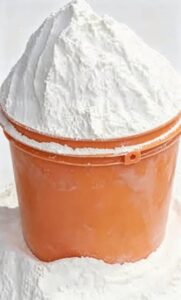
High Quality Cassava Flour (HQCF) — the primary international export form, produced from fresh sweet cassava roots through a specific processing sequence: peeling, washing, grating, pressing, drying (sun or mechanical), and milling to uniform particle size. White colour (minimum 85 Hunterlab whiteness units), low moisture (below 12%), low HCN (below 10 ppm), and fine particle size (below 250 microns) are the defining HQCF specifications that distinguish export grade from domestic grade.
Cassava Starch — isolated starch fraction extracted by wet milling and washing fresh cassava roots — the highest purity starch form (typically 85–92% starch) used in industrial food manufacturing, paper and textile coating, adhesive production, and pharmaceutical excipient applications. Cassava starch’s specific functional properties (high paste clarity, good freeze-thaw stability) distinguish it from corn starch and potato starch in specific food applications.
Cassava Fufu Flour — fermented and dried cassava flour for the diaspora market — whose traditional preparation involves soaking, fermenting (1–3 days), pressing, drying, and milling — producing the sour, fermented character that distinguishes fufu flour from unfermented HQCF and that Nigerian diaspora cooks specifically require for authentic fufu preparation.
Cassava Chips (Dried) — sun-dried or mechanically dried sliced or chipped cassava roots — the commodity export form for starch industry processors who prefer on-site wet milling, and for animal feed manufacturers.
Garri (for export) — the traditional fermented and toasted cassava product — exported to diaspora markets as a distinct product with its own cultural identity and specific preparation requirements.
Benefits and Industrial Uses of Nigerian Cassava Flour
Gluten-Free and Grain-Free Food Manufacturing — The 1:1 Substitute’s Commercial Value
The global gluten-free food market — whose USD 7+ billion annual value and 9%+ growth rate we documented in the sorghum and millet articles — represents the most commercially significant buyer category for HQCF in international trade. But cassava flour’s commercial positioning within this market is more specific and more commercially valuable than the general gluten-free positioning we documented for sorghum and millet:
Paleo and grain-free premium segment — cassava flour’s specific status as a grain-free flour (not merely a gluten-free flour — cassava is a tuber, not a grain) creates eligibility for the more restrictive dietary protocols that rice flour and sorghum flour cannot meet:
The Paleo diet (which excludes all grains but permits tubers and starchy vegetables) allows cassava flour while excluding every other commonly traded gluten-free grain flour. The Paleo Foundation’s certification framework — under which paleo diet-certified products must use grain-free flour bases — specifically lists cassava as an approved ingredient, creating commercial product development demand from the multi-billion-dollar paleo food market tracked through Innova Market Insights’ global paleo product launch database.
The Whole30 programme — the 30-day elimination diet that is one of the most commercially significant dietary protocols in American premium health food retail — specifically identifies cassava flour as the only approved flour for many baked goods and wraps during the protocol period, creating intense commercial demand from Whole30-compliant food brand development documented through the Whole30 programme’s approved ingredient database.
The Specific Carbohydrate Diet (SCD) and GAPS protocol — both of which exclude grain starches — permit cassava when properly prepared. For food manufacturers developing products for these therapeutic dietary protocols, cassava flour provides the most functionally versatile grain-free base available.
Tortilla and flatbread manufacturing — cassava flour’s 1:1 wheat substitution performance in tortilla production has been specifically validated and commercially adopted: multiple tortilla brands including Siete Foods (whose cassava flour tortillas became one of the fastest-growing natural food products in American retail) have built their entire product identity around cassava flour’s unique ability to produce grain-free tortillas with wheat tortilla-like flexibility, folding ability, and texture. The commercial success of cassava flour tortillas — documented through Mintel’s global tortilla innovation database — represents the most commercially validated single application proving cassava flour’s 1:1 wheat substitution commercial claim.
Gluten-free bakery bread, cookies, and cakes — cassava flour’s performance in commercial gluten-free bakery has been documented through food science research in LWT — Food Science and Technology — confirming superior texture, moisture retention, and consumer acceptance compared to rice flour and corn starch-based alternatives across multiple baked good categories.
Pizza crust — cassava flour pizza crust — whose specific starch composition creates a crust with the thin, crispy-edged yet chewy-centred character that pizza consumers most desire — has become one of the most commercially successful cassava flour applications in American and European gluten-free food retail, with multiple dedicated cassava flour pizza crust brands achieving mainstream distribution.
For gluten-free food manufacturing buyers evaluating Nigerian HQCF — contact our team to discuss whiteness specification, moisture content, and HCN safety documentation.
Starch Industry — Industrial and Food-Grade Cassava Starch
The global cassava starch market — tracked through Grand View Research’s cassava starch market analysis at over USD 5 billion annually with Thailand as the dominant supplier — creates commercial procurement demand for cassava starch across a remarkably diverse range of industrial and food applications:
Food manufacturing thickening — cassava starch’s paste clarity (producing clear rather than opaque thickened sauces and gels), its high gelatinisation temperature (60–70°C — appropriate for hot-fill food manufacturing), and its freeze-thaw stability (important for frozen food product thickening) create specific food manufacturing application advantages over corn starch and potato starch in clear sauce, fruit gel, and frozen food formulation. The Institute of Food Technologists (IFT) documents cassava starch’s specific functional advantages in food manufacturing thickening applications.
Paper and textile coating — cassava starch’s high paste viscosity and film-forming properties make it one of the most commercially important binders and coating agents in paper manufacturing (surface sizing and coating) and textile sizing — applications whose combined global starch consumption is documented through industrial starch market intelligence from Mordor Intelligence’s starch market report.
Biodegradable packaging and bioplastics — cassava starch’s thermoplastic properties when plasticised with glycerol or water make it one of the most commercially advanced natural polymer bases for biodegradable plastic film and packaging — whose development is tracked through Grand View Research’s biodegradable packaging market as one of the fastest-growing applications for natural starch.
Pharmaceutical excipient — cassava starch classified as Tapioca Starch BP in the British Pharmacopoeia (BP) and Tapioca Starch NF in the US National Formulary (NF) — used as a pharmaceutical tablet disintegrant and binder whose gluten-free and allergen-free status makes it preferred in pharmaceutical formulation for patients with multiple food allergies.
Modified starch production — cassava starch as the raw material for chemical and enzymatic modification (oxidation, cross-linking, acetylation, hydroxypropylation) that produces modified starches with enhanced functional properties for specific food manufacturing applications — whose commercial production from cassava starch is documented through International Starch Institute technical publications.
West African Diaspora Food Retail — Fufu and the Cultural Non-Negotiable
The diaspora food retail demand for cassava products — specifically fermented fufu flour — mirrors the cultural irreplaceability we have documented for ugu, bitter leaf, crayfish, and scent leaf across this series, but with an additional commercial dimension: cassava fufu competes with yam poundee, plantain fufu, and oat-based substitute “fufu” products in the diaspora market, creating a competitive landscape whose authenticity positioning specifically advantages Nigerian cassava origin:
Akpu/fufu — the southwestern Igbo fermented cassava preparation whose specific sour fermentation character, elastic texture when pounded or mixed with hot water, and swallowable consistency are culturally specific and non-substitutable for communities whose food identity is built around authentic akpu preparation. Diaspora Nigerian food retailers in the UK, USA, and Canada stock fermented cassava fufu flour specifically because diaspora cooks do not accept the yam-based or commercial “instant fufu” alternatives as authentic substitutes.
Lafun — the specifically Yoruba fermented cassava product whose slightly different fermentation profile, coarser texture, and distinct flavour create a separate diaspora procurement stream from Igbo akpu/fufu.
Eba (garri for swallow) — garri, the toasted fermented cassava granule, when added to boiling water and stirred creates eba — the most widely consumed cassava swallow food across all Nigerian ethnic groups. For diaspora food retailers, garri is a consistently high-demand product whose procurement requirements overlap with cassava flour export in the same supply chain.
Bioethanol and Renewable Energy
Cassava’s extraordinary starch content — and Nigeria’s extraordinary cassava production volume — create a biofuel production opportunity whose commercial scale and sustainability credentials are tracked through OECD’s renewable energy and biofuel market intelligence:
Cassava bioethanol — cassava starch’s high fermentable carbohydrate content and the large volumes of cassava chips produced as a processing by-product create ethanol production economics that have made cassava bioethanol a significant energy source in Thailand and increasingly in Nigeria through the Nigerian National Petroleum Company (NNPC)‘s biofuel development programme. For ethanol buyers specifically seeking deforestation-free, African-origin, non-GMO carbohydrate feedstock — cassava chips from Nigerian origin provide EUDR-compliant, sustainably documented feedstock.
Animal Feed — Cassava Chips and Starch By-Products
Poultry and swine feed — dried cassava chips and cassava starch processing by-products (cassava peel, cassava bagasse from wet milling) provide high-energy carbohydrate feed components whose metabolisable energy value (approximately 3,000–3,200 kcal/kg for dried chips) makes them commercially viable as partial corn substitutes in poultry and swine feed formulation. The FEFAC documents cassava chips within European compound feed ingredient alternatives — confirming established commercial use.
Why Buy Cassava Flour From Nigeria?
The Production Scale Argument — No Other Origin Comes Close
Nigeria’s 50–60 million metric tonnes annual cassava root production — confirmed as the world’s largest by FAO production statistics — creates commercial supply capacity for HQCF and cassava starch at scales that no other single country’s production base can match. For buyers whose annual cassava flour procurement runs into thousands or tens of thousands of tonnes — Nigeria’s production scale is the only origin that can credibly serve that demand without supply competition pressure from simultaneous large-scale buyers exhausting national production capacity.
The Year-Round Harvest — The Continuous Production Advantage
Cassava’s extraordinary agronomic flexibility — harvestable across a wide maturity window of 8–24 months after planting, storable in the ground without quality loss for months after maturity, and grown year-round in Nigeria’s southern states whose tropical climate provides continuous planting opportunities — creates the most production-schedule-flexible supply chain in our portfolio. Unlike all grain crops (sorghum, millet, soybeans, cowpeas) whose single annual harvest creates seasonal supply concentration, cassava can be harvested every month of the year from staggered-planting production systems — providing HQCF manufacturers with continuous fresh root supply and buyers with year-round procurement flexibility. Contact our team to discuss year-round supply scheduling.
The HQCF Processing Standard — Nigeria-Developed, Internationally Validated
The HQCF processing standard — developed through IITA’s cassava processing research programme whose institutional headquarters is in Nigeria — represents the most Nigeria-relevant international cassava flour quality standard available. For buyers whose procurement specifications reference the HQCF standard — Nigerian origin cassava flour from Paradise MultiTrade is produced and tested against the standard whose development reflects Nigerian agronomic and processing conditions, creating the most authentic origin-standard match in the international cassava flour market.
The Allergen-Free Commercial Credential
Cassava flour’s allergen profile is the cleanest of any flour in our portfolio — and arguably in the entire global food ingredient market. HQCF contains no: gluten, soy protein, milk protein, egg protein, nut protein, shellfish protein, fish protein, wheat, rye, barley, oats, sesame (in pure cassava flour not cross-contaminated during processing), peanut, or any other major food allergen. For food manufacturers developing products certified free from multiple major allergens simultaneously — cassava flour is the only flour that can serve as the base ingredient across all major allergen exclusion requirements without requiring a specific allergen management programme for the flour itself.
Complete Export Documentation from a Licensed Exporter
Every cassava flour shipment from Paradise MultiTrade carries phytosanitary certification from NAQS, NEPC export documentation, certificate of origin, commercial invoice, packing list, and bill of lading. For HQCF food-grade buyers, we coordinate: HCN content (enzymatic/colorimetric method, confirming below 10 ppm per Codex Alimentarius standard); moisture content (below 12%); whiteness (Hunterlab colorimeter); particle size distribution; starch content; crude protein; pesticide residue analysis to EU MRL standards; aflatoxin screening; and microbiological safety testing. For starch buyers, we coordinate starch purity (above 85%), moisture content, pH, viscosity (Brabender Visco Unit), and ash content. EU-bound shipments comply with Regulation (EU) 2017/625 on official controls. Our NEPC Export Licence No. 0042385 and CAC Registration No. RC-9284647 are verifiable through NEPC.
Nigeria’s Cassava Flour Export Strength and Global Market Demand
The Global Market — Multiple High-Value and High-Volume Demand Streams
The global cassava products market — tracked through Grand View Research’s cassava market analysis and Mordor Intelligence’s cassava starch market report — spans from high-value food-grade HQCF (premium pricing for gluten-free and grain-free food manufacturing) through industrial cassava starch (high volume, competitive pricing) through commodity dried cassava chips (animal feed and bioethanol). The global cassava starch market alone is valued at over USD 5 billion annually — with the premium HQCF segment growing at 12–15% annually driven by gluten-free and grain-free food market expansion.
The Cassava Adding Value for Africa (CAVA) programme — jointly supported by DFID (now FCDO) and the Bill and Melinda Gates Foundation — has specifically worked to develop Nigerian cassava value chain commercial infrastructure for HQCF production and export, providing the institutional development backing that signals the commercial priority of Nigerian cassava’s formalisation as an export commodity.
Key Export Destination Markets
The United Kingdom — whose gluten-free food market is the most commercially developed in Europe and whose West African diaspora creates specific fufu and garri demand — is the most commercially multidimensional European destination. Cassava flour’s no-Novel-Food status (cassava has been consumed in EU communities before 1997) simplifies market entry. UK food import requirements administered by FSA.
The United States — the world’s largest grain-free and paleo food market, whose Whole30, paleo, and gluten-free food brand community creates the highest-value individual-market demand for HQCF. The commercial success of Siete Foods’ cassava flour tortillas demonstrates the scale of validated US consumer demand. US food import requirements through FDA.
Germany and the Netherlands — Europe’s primary food manufacturing and starch industry hub — creating the most commercially significant European starch industry and food manufacturing procurement demand for both HQCF and cassava starch.
Thailand — paradoxically the world’s largest cassava starch exporter — imports specific cassava flour grades from West African origins during domestic supply shortfalls and for specialised applications requiring specific varietal characteristics.
Brazil — whose traditional polvilho (fermented cassava starch) market and growing gluten-free food sector create specific cassava flour procurement demand.
Japan — whose premium food manufacturing sector and growing gluten-free market create specific demand for high-quality cassava starch with documented purity and functional specifications tracked through JETRO.
Why Choose Paradise MultiTrade International Limited?
HCN Safety Testing on Every Export Lot — Non-Negotiable. Hydrogen cyanide content below 10 ppm confirmed by enzymatic or colorimetric assay on every HQCF and cassava starch export lot — the most critical single food safety parameter for cassava flour and the one that distinguishes professionally managed export supply from informal cassava flour trade. Contact us to discuss HCN testing documentation.
HQCF Whiteness Documentation. Hunterlab colorimeter whiteness measurement confirming minimum 85 whiteness units on HQCF lots — the visual quality parameter that determines flour colour in finished baked goods and that distinguishes premium food-grade HQCF from lower-grade dried cassava flour. Contact us to discuss whiteness specification.
Year-Round Supply Scheduling. Unlike seasonal grain crops, cassava’s continuous planting and harvesting capability allows supply scheduling around buyer production requirements rather than harvest season availability. Contact our team to discuss year-round supply programme structuring.
Three Commercial Grade Streams. HQCF (food-grade, gluten-free, 1:1 wheat substitute), cassava starch (industrial and food-grade), and fermented fufu flour (diaspora retail) — from the same documented Nigerian origin supply network. Contact us to specify your required grade.
Multi-Commodity West African Food Ingredient Sourcing. Cassava flour buyers frequently source complementary Nigerian food ingredients. Alongside cassava flour, Paradise MultiTrade exports cowpeas, soybeans, sorghum, millet, tiger nuts, moringa leaf powder, shea butter, red palm oil, crayfish, hibiscus flower, cashew nut kernel, and raw cashew nuts. Explore our full range of Nigerian export commodities and consolidate your West African food ingredient sourcing through one verified, licensed export partner.
Product Specifications
| Specification | Details |
|---|---|
| Product | Nigerian Cassava Flour / High Quality Cassava Flour (HQCF) (Manihot esculenta) |
| Common Names | Cassava flour, HQCF, Tapioca flour (some markets), Rogo flour (Hausa), Ege flour (Yoruba), Akpu flour (Igbo) |
| Botanical Species | Manihot esculenta Crantz (Euphorbiaceae) |
| Grades Available | HQCF (food-grade, gluten-free, paleo); Cassava starch (industrial/food); Fermented fufu flour (diaspora); Cassava chips (commodity/feed) |
| Origin | Nigeria (Ogun, Ondo, Benue, Cross River, Anambra, Imo, Delta, Edo, Ebonyi, Rivers States) |
| Variety Type | Sweet variety (low HCN) — mandatory for HQCF; Bitter variety (high HCN) — processed products only |
| Moisture Content | ≤12% (HQCF standard); ≤14% (fufu flour) |
| HCN Content | ≤10 ppm (Codex Alimentarius maximum for cassava flour) — tested per lot |
| Whiteness | ≥85 Hunterlab units (HQCF premium grade) |
| Starch Content (HQCF) | 78–88% dry weight |
| Starch Content (cassava starch) | 85–92% dry weight |
| Crude Protein | 1–3% dry weight |
| Crude Fat | ≤1% dry weight |
| Crude Fibre | 1.5–3.5% dry weight |
| Total Ash | ≤3% dry weight |
| Particle Size | ≤250 microns (fine HQCF); ≤500 microns (standard HQCF) — sieve analysis confirmed |
| pH | 5.5–7.0 |
| Viscosity (starch) | Documented by Brabender Visco Unit on request |
| Aflatoxin | Total ≤10 ppb; B1 ≤2 ppb |
| Pesticide Residue | Multi-residue analysis to EU MRL standards — mandatory for all EU-bound lots |
| Microbiological | Salmonella absent/25g; Total plate count ≤100,000 CFU/g; E. coli absent/g |
| Allergen Status | Free from gluten, soy, milk, egg, nut, wheat — all major food allergens absent |
| Colour | Bright white to cream (HQCF premium); Cream to off-white (standard) |
| Shelf Life | 12 months (sealed, cool, dry storage); 18 months (sealed vacuum packaging) |
| Packaging Options | 10kg, 25kg, 50kg paper bags with PE liner; vacuum-sealed packs for premium grade |
| Supply Capacity | 100–10,000+ MT per month (year-round production) |
| MOQ | HQCF: 5 MT; Cassava starch: 10 MT; Fufu flour: 1 MT; Chips: 25 MT |
| Export Documentation | Phytosanitary Certificate (NAQS), HCN Safety Certificate (≤10ppm), Whiteness Certificate (Hunterlab), Certificate of Origin, NEPC Export Licence, Starch Content Certificate, Moisture Certificate, Pesticide Residue Certificate (EU MRL), Aflatoxin Certificate, Microbiological Certificate, Allergen Declaration, Commercial Invoice, Packing List, Bill of Lading |
| Payment Terms | T/T, Letter of Credit (LC at sight), Escrow |
| Loading Port | Lagos (Apapa / Tin Can Island Port), Nigeria |
| Incoterms Available | EXW, FOB Lagos, CNF, CIF |
Packaging and Export Process
Root Harvest and Sourcing. Unlike all grain crops in this series with single annual harvest windows, cassava roots are harvested year-round from staggered-planting production systems across Nigeria’s southern states. Roots are harvested at optimal maturity (typically 10–18 months after planting for sweet variety HQCF production) by uprooting the plant and manually harvesting the attached storage roots. Speed of processing after harvest is the most critical quality management step — cassava roots begin deteriorating within 24–48 hours of harvest through post-harvest physiological deterioration (PPD), a rapid browning and softening process. Processing must begin within 24 hours of harvest.
Peeling and Washing. Harvested roots are manually peeled (removing the outer brown cortex and inner parenchyma to reach the clean white starch-rich flesh) and immediately washed in clean water to remove surface soil and peel residue.
Grating. Clean peeled roots are fed through mechanical raspers or grating drums that rupture cell walls and produce a fine grated pulp — maximising HCN volatilisation (hydrogen cyanide being a volatile gas whose release is accelerated by cell wall disruption) and exposing maximum starch surface for drying efficiency.
Pressing (for HQCF). Grated pulp is hydraulically or mechanically pressed to reduce moisture content from approximately 70% to 40–45% before drying — simultaneously concentrating starch and facilitating HCN volatilisation from the pressed pulp.
Drying. Pressed cassava pulp is dried through sun drying on elevated platforms (optimal under Nigeria’s tropical sunshine) or mechanical hot-air drying at 60–80°C until moisture falls below 12%. Drying speed is critical — slow drying at elevated humidity creates conditions for mould growth and HCN-reducing fermentation whose products create off-flavours in HQCF.
Milling and Sieving. Dried cassava material is fed through hammer mills and pin mills to the HQCF particle size specification — with sieve analysis confirming maximum 250 micron particle size for premium grade.
Quality Testing. HCN content (enzymatic or colorimetric assay), moisture content, whiteness (Hunterlab colorimeter), starch content, protein, ash, particle size, aflatoxin, pesticide residue, and microbiological safety — all tested before export documentation preparation.
Lead Times. HQCF from available stock: 14–21 days. Fresh production batches: 7–14 days (year-round production capability). Cassava starch (wet milling processing): 21–35 days. Contact us to plan your supply schedule.
Frequently Asked Questions
What is the difference between cassava flour, tapioca starch, and cassava starch — and which should I specify for my application?
These three products from the same Manihot esculenta plant have significantly different compositions and functional properties: Cassava flour (HQCF) — whole cassava root dried and milled, retaining fibre, protein, and the complete starch granule structure. Composition: approximately 80–88% starch, 1–3% protein, 1.5–3.5% fibre, less than 12% moisture. Use: flour substitute in baking and cooking, 1:1 wheat flour substitute in many applications. Provides texture and body. Cassava starch (tapioca starch) — isolated starch extracted by wet milling, washing, and drying, removing fibre and protein. Composition: 85–92% pure starch, less than 0.5% protein, less than 0.5% fibre. Use: food thickener (sauces, soups, fruit fillings), binding agent, industrial paper and textile coating, pharmaceutical excipient. More neutral texture, less flavour contribution than whole cassava flour. Key formulation guidance: For 1:1 wheat flour substitution in baked goods — use HQCF. For sauce and soup thickening, gluten-free pasta binding, or industrial starch applications — use cassava starch. For pharmaceutical excipient applications — specify pharmaceutical-grade cassava starch (BP/NF grade). Paradise MultiTrade supplies both. Contact us to specify your required product.
Why is HCN testing the most critical safety parameter for cassava flour and what level should I specify?
Cassava naturally contains cyanogenic glucosides (linamarin and lotaustrasin) whose enzymatic hydrolysis releases hydrogen cyanide (HCN) — a toxic gas. The Codex Alimentarius maximum HCN limit for commercially traded cassava flour is 10 ppm (10mg HCN per kg) — the international food safety threshold below which cassava flour is considered safe for human consumption in conventional dietary amounts. The risk varies dramatically by variety and processing: sweet variety cassava roots (low HCN, typically 40–100 ppm in fresh root) processed through pressing and drying routinely achieve below 10 ppm in the finished flour. Bitter variety roots (100–500 ppm fresh root) require fermentation, prolonged soaking, and/or extrusion to reach safe HCN levels. Paradise MultiTrade’s HQCF uses exclusively sweet variety cassava processed through pressing and mechanical drying — confirming HCN below 10 ppm through enzymatic colorimetric assay on every export lot. For food manufacturers and regulators: EU food safety regulations under Regulation (EC) 178/2002 require that all food placed on the EU market is safe — cassava flour below the Codex 10 ppm HCN threshold is compliant. We provide HCN test certificates from accredited GAFTA-approved laboratories. Contact us for HCN documentation.
How does Nigerian HQCF perform as a 1:1 wheat flour substitute in commercial bakery applications?
The 1:1 substitution claim applies most reliably to specific product categories rather than universally to all baked goods: Most successful 1:1 applications: tortillas and wraps (cassava flour’s specific starch composition produces wheat-like flexibility and folding ability), cookies and biscuits (cassava flour produces chewy, moisture-retaining cookies with wheat-like texture), flatbreads and chapatis (comparable pliability and bite), pancakes and crepes (cassava flour produces thin, pliable pancakes without the grittiness of rice flour alternatives), and some cake formulations. Applications requiring formulation adjustment: bread (cassava flour lacks gluten’s gas-trapping network — requires xanthan gum or psyllium husk addition for acceptable crumb structure), puff pastry (gluten’s extensibility and elasticity cannot be replicated), and heavy whole grain-style breads (cassava starch dilutes flavour too much without protein fortification). Commercial formulation guidance: For bakery manufacturers evaluating HQCF — we recommend 10–20% wheat flour replacement trials as a first step (in line with IITA’s HQCF wheat bread substitution research), progressively increasing to 100% substitution for appropriate product categories. Sample supply for trial formulation is available. Contact us to arrange HQCF sample supply for commercial baking trials.
What Novel Food or regulatory requirements apply to cassava flour in EU and UK markets?
Cassava and cassava-derived products (HQCF, cassava starch, tapioca) have a well-documented history of consumption in the EU and UK through West African, West Indian, South American, and Southeast Asian diaspora communities — predating the 1997 Novel Food Regulation baseline by many years. Cassava flour and cassava starch do not require Novel Food authorisation for food use in EU or UK markets — a critically important regulatory advantage compared to several other products in our portfolio (moringa, neem, bitter leaf) whose EU Novel Food status requires careful regulatory navigation. EU food safety requirements that do apply: pesticide residue MRL compliance under Regulation (EC) 396/2005; contaminant limits (aflatoxin) under Commission Regulation (EC) 1881/2006; and the general food safety standard under Regulation (EC) 178/2002. The Codex Alimentarius 10 ppm HCN maximum for cassava flour Codex Stan 176-1989 is the specific HCN safety standard referenced for EU market entry. Contact us for EU regulatory documentation support.
What is the difference between HQCF and Nigerian garri — and which should diaspora food importers specify?
These are both cassava products but with entirely different processing histories, sensory profiles, and culinary applications: HQCF (High Quality Cassava Flour) — unfermented, white, mild-flavoured dried cassava flour produced from sweet variety roots through pressing and hot-air or sun drying. No sour flavour. Used as a wheat flour substitute in baking and cooking. Cannot be used to make authentic akpu/fufu or eba. Garri — fermented cassava product produced by soaking, grating, fermenting (1–5 days, creating the characteristic sour flavour from lactic acid fermentation), pressing, and toasting in a dry pan or mechanical roaster until granulated and partially gelatinised. Has a distinctive sour, slightly smoky flavour. Used to make eba (by adding to boiling water and stirring) for the Nigerian swallow meal. Cannot substitute for HQCF in baking. Fermented fufu flour — similar to garri processing but without the final toasting step, producing a white fermented cassava flour specifically for fufu preparation. For diaspora food retailers: garri for eba-making, fermented fufu flour for akpu-making, and HQCF for recipe development and diaspora baking applications are three separate products requiring separate procurement. Paradise MultiTrade supplies all three. Contact us to specify your required product.
How does Nigeria’s cassava production compare to Thailand’s — and why does Nigeria’s export share not reflect its production dominance?
Nigeria produces approximately 50–60 million MT of fresh cassava annually versus Thailand’s approximately 25–30 million MT — meaning Nigeria produces roughly twice Thailand’s volume. Yet Thailand accounts for approximately 70–80% of internationally traded cassava starch and is the dominant commercial origin in global cassava starch trade. The explanation is processing infrastructure investment: Thailand’s cassava industry invested systematically in industrial wet-milling starch extraction facilities from the 1970s onwards — building the processing scale, quality management systems, and international buyer relationships that created commercial dominance. Nigeria’s cassava production — despite being larger — has historically been absorbed by domestic consumption of garri, fufu, and lafun whose production requires no specialised export processing infrastructure. The commercial opportunity for Paradise MultiTrade’s cassava flour export programme is the systematic development of the HQCF and cassava starch processing, quality documentation, and buyer relationship infrastructure that will progressively close the gap between Nigeria’s production dominance and its export market share. Contact us to be part of building this commercial development.
What transit times and packaging should I expect from Nigeria?
HQCF, cassava starch, and fufu flour (standard dry container, no temperature control): UK (Tilbury, Felixstowe) — 14–18 days from Lagos. Netherlands (Rotterdam) — 14–18 days. Germany (Hamburg) — 14–20 days. France (Le Havre) — 14–18 days. USA (East Coast — New York, Baltimore, Savannah) — 18–25 days. UAE (Jebel Ali) — 10–14 days. Japan (Yokohama) — 25–32 days. Canada (Halifax, Montreal) — 18–28 days. Packaging critical note: Cassava flour is hygroscopic — it absorbs moisture from ambient air through any packaging integrity failure, increasing moisture content above the 12% HQCF specification and creating microbiological risk. All HQCF packaging uses food-grade kraft paper bags with fully sealed inner polyethylene moisture-barrier liners. Vacuum-sealed packaging is available for premium HQCF shipments where extended shelf life or high-humidity destination storage conditions require maximum moisture protection. Contact us to plan your complete logistics and packaging programme.
Ready to Source Premium Nigerian High Quality Cassava Flour (HQCF) — Food-Grade, Grain-Free, Gluten-Free, Allergen-Free, With HCN Safety Certification, Whiteness Documentation, EU Pesticide Residue Compliance, and Full Food Safety Analytical Documentation for Gluten-Free Food Manufacturers, Grain-Free Brand Developers, Starch Industry Buyers, Diaspora Food Importers, and Global Wholesale Buyers?
If you are a gluten-free or grain-free food manufacturer developing cassava flour tortillas, pizza crusts, baked goods, or snacks whose formulation specifically requires the 1:1 wheat flour substitution performance that no other grain-free flour delivers at comparable commercial scale, a Whole30, paleo, or grain-free food brand whose product certification programme specifically requires cassava flour from a documented, food-safety-compliant origin with full HCN testing, an industrial starch buyer evaluating Nigerian cassava starch as a supply diversification alternative to Thai or Brazilian origin material with equivalent functional performance at competitive pricing, a UK or North American ethnic food wholesale importer supplying West African diaspora grocery networks whose fufu and garri demand requires authenticated Nigerian cassava products from formally documented supply chains, a baby food or functional food manufacturer seeking the most allergen-free flour base commercially available for developing products for multiple-allergen-sensitive populations, a pharmaceutical company sourcing tapioca starch NF or cassava starch BP for tablet formulation whose allergen-free specification requires documented freedom from all major food allergens, or a food ingredient wholesale trader seeking to establish first-mover supply positions in Nigerian HQCF before the international food industry’s full commercial discovery of the world’s largest cassava producer’s export potential — Paradise MultiTrade International Limited is the licensed Nigerian exporter your cassava flour supply programme needs.
We supply Nigerian Manihot esculenta HQCF, cassava starch, fermented fufu flour, and cassava chips — from Ogun, Ondo, Benue, Cross River, Anambra, and Imo state producing communities, HCN content below 10 ppm certified on every food-grade lot, whiteness documented by Hunterlab colorimeter, EU pesticide residue certified, aflatoxin screened, allergen-free declared, year-round supply scheduling available, and exported with full food safety and regulatory documentation to buyers in every major regulated destination market.
Request a Quotation — share your required grade (HQCF, cassava starch, fufu flour, or chips), particle size specification, whiteness requirement, volume, application context (gluten-free baking, starch industry, diaspora food, pharma excipient, animal feed, bioethanol), destination market, and preferred incoterms. We respond within 48 hours.
Contact Our Export Team — speak directly about HCN testing and documentation, HQCF whiteness specification, cassava starch viscosity and purity documentation, year-round supply scheduling, commercial baking trial sample supply, EU Novel Food status confirmation, allergen declaration requirements, and long-term supply programme structuring.
Explore Our Full Product Range — alongside cassava flour, Paradise MultiTrade exports cowpeas, soybeans, sorghum, millet, tiger nuts, shea butter, red palm oil, moringa leaf powder, crayfish, hibiscus flower, cashew nut kernel, and raw cashew nuts. One licensed Nigerian exporter. One consolidated West African food ingredient, grain, legume, and botanical sourcing relationship — from the world’s largest cassava producer whose commercial export development creates the most compelling grain-free food ingredient first-mover opportunity of this decade.
Paradise MultiTrade International Limited | NEPC Export Licence No. 0042385 | CAC No. RC-9284647 | Lagos, Nigeria | www.paradisemultitrade.com
buy Nigerian cassava flour, HQCF Nigeria supplier, high quality cassava flour Nigeria bulk export, cassava starch Nigeria wholesale, Nigerian cassava flour for food manufacturing, gluten-free cassava flour Nigeria, grain-free cassava flour Nigeria, West African cassava flour bulk buyer
Reviews
There are no reviews yet.