

Nigerian Hardwood Charcoal: The Fuel That Professional Grill Masters, Michelin-Starred Restaurant Kitchens, and Industrial Buyers on Four Continents Are Sourcing From West Africa’s Ancient Forest Belt
Hardwood Charcoal Exporter Nigeria — Premium Ayin BBQ and Restaurant Grill Charcoal, Long-Burn Low-Ash Performance, Direct Origin Bulk Supply to Global Buyers
Hardwood charcoal exporter Nigeria is a search phrase being typed with increasing frequency by wholesale charcoal importers in the United Kingdom, Germany, and the Netherlands — markets where the premium BBQ culture has exploded over the past decade into a multi-billion-dollar industry that demands far more from its fuel than supermarket briquettes can deliver. It is typed by restaurant procurement managers in the Middle East — where the wood-fire grilling tradition is not a weekend hobby but a daily culinary institution embedded in the culture of every country from Turkey to Saudi Arabia to the UAE. It is typed by shisha café owners in Germany, France, Belgium, and Scandinavia who need consistent, low-smoke hardwood charcoal that burns cleanly enough for indoor hospitality environments. And it is typed by industrial buyers in Japan, South Korea, and across Southeast Asia where premium imported charcoal commands retail and restaurant pricing that makes West African origin material commercially compelling when quality is right and supply is reliable.
Nigeria is not a marginal player in the global hardwood charcoal trade. It sits in one of the world’s most significant hardwood charcoal-producing regions — with vast forest and woodland resources across its Middle Belt and southwestern states providing the dense, slow-grown tropical hardwood species whose carbonisation produces charcoal of exceptional calorific value, long burn duration, low ash content, and minimal smoke — the four performance characteristics that every serious charcoal buyer ranks above all other considerations when evaluating a supply source.
The species that defines Nigerian premium export charcoal is Ayin (Anogeissus leiocarpus) — a dense, high-carbon-content hardwood native to the West African savanna woodland belt whose carbonisation properties have made it the reference standard for premium Nigerian export charcoal among European and Middle Eastern importers who have worked with it. Alongside Ayin, Nigerian forests provide a range of other premium hardwood species — including Apa (Afzelia africana), Ekki (Lophira alata), and Idigbo (Terminalia ivorensis) — that produce charcoal of comparable density and performance characteristics depending on the region of production and the buyer’s specific application requirements.
At Paradise MultiTrade International Limited, hardwood charcoal is one of our most actively developed export categories — sourced from licensed Nigerian charcoal production operations in the primary producing states, carbonised using traditional earth-kiln and improved-kiln methods that produce the dense, uniformly carbonised lump charcoal that serious buyers specify, and exported with full regulatory documentation from Lagos to buyers across Europe, the Middle East, Asia, and North America.
If you are an importer, wholesale distributor, restaurant supply chain buyer, or retail charcoal brand building a West African origin position in your product portfolio — this article makes the complete commercial case for Nigerian hardwood charcoal and explains exactly how to source it through a licensed, compliant Nigerian exporter. To move directly to pricing, request a quotation here and our export team will respond within 48 hours.
History and Origin of Charcoal — The World’s Oldest Industrial Fuel and Its Nigerian Story
Charcoal Before Commerce — The Oldest Intentional Fuel
The history of charcoal production is, in the most literal sense, the history of human industry. Archaeological evidence of deliberate charcoal production — the controlled partial combustion of wood in oxygen-restricted environments to drive off moisture and volatile compounds and concentrate fixed carbon — dates to at least 30,000 BCE, with charcoal-burned wood fragments from controlled fire sites found in cave excavations across Europe, Africa, and Asia. Early humans discovered that charcoal burned hotter, longer, and more controllably than raw wood — and that discovery underpinned the development of metalworking, ceramics, glassmaking, and every other high-temperature industrial process that defined the advance of human civilisation for the next 30,000 years.
For most of recorded history, charcoal was not a luxury or a specialist product — it was the primary industrial fuel of civilisation. The smelting of iron and bronze, the firing of pottery and bricks, the production of glass, the cooking of food in urban environments where open wood fires were impractical — all of these depended on charcoal, produced by charcoal burners who were among the most economically essential craftsmen in every pre-industrial society. The forests of Europe were substantially depleted over centuries of charcoal production for iron smelting before coal eventually replaced charcoal as the dominant industrial fuel during the 18th and 19th centuries.
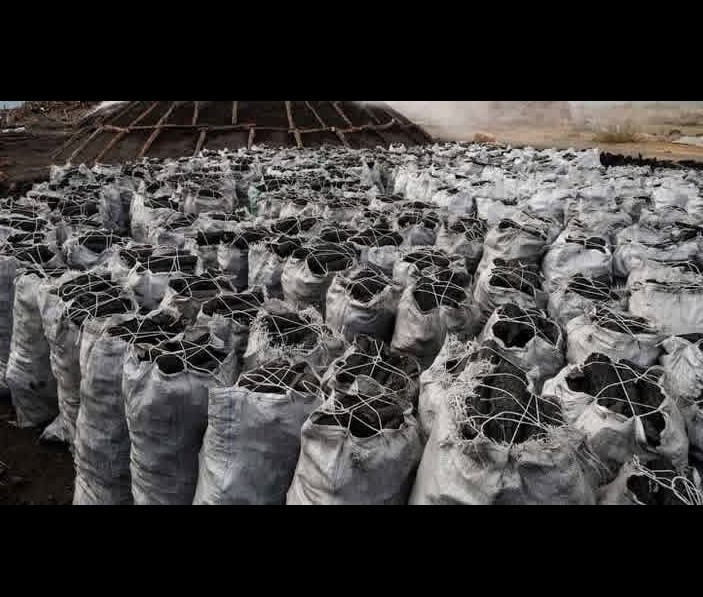
In West Africa — and Nigeria specifically — charcoal production continued along traditional lines long after European industrialisation shifted the continent’s fuel base to coal and later petroleum. The vast savanna woodland and forest resources of Nigeria’s Middle Belt and southwestern states provided an effectively inexhaustible supply of hardwood biomass for charcoal burning, and the traditional earth-mound kiln technique — burying stacked wood under a covering of soil and leaves and allowing it to smoulder for several days in controlled low-oxygen conditions — produced dense, well-carbonised lump charcoal that supplied both domestic cooking fuel markets and, increasingly through the 20th century, export commodity channels.
Nigeria’s Charcoal Export History and Current Commercial Significance
Nigeria’s charcoal has been entering international trade channels since at least the mid-20th century — initially through informal West African regional trade networks and later through formal commodity export channels as European and Middle Eastern importers began systematically evaluating West African origin hardwood charcoal as a supply source for their growing premium BBQ and restaurant grill markets.
The commercial argument for Nigerian charcoal in European markets was made first by traders in the Netherlands and Germany — countries with both significant wholesale charcoal import infrastructure and large Turkish, Moroccan, Arabic, and West African diaspora communities whose cultural cooking traditions demanded hardwood lump charcoal of a quality and consistency unavailable from domestic European wood sources. Once established, Nigerian charcoal’s reputation among European importers for density, burn duration, and low ash content grew through word-of-mouth among the wholesale charcoal trade community — the same informal quality intelligence network that shapes procurement decisions in commodity markets globally.
The Food and Agriculture Organization (FAO) tracks global charcoal production and trade data — and FAO’s forest products statistics consistently document Nigeria among Africa’s significant charcoal producing nations, with export volumes that reflect both the scale of Nigeria’s hardwood resource base and the growing international buyer interest in West African charcoal origins. Trade flow data from ITC Trade Map confirms Nigerian charcoal reaching markets across Europe, the Middle East, and Asia through both direct export channels and via commodity trading intermediaries.
The Nigerian Export Promotion Council (NEPC) has recognised charcoal as part of Nigeria’s diversified non-oil export product portfolio, and Nigeria’s forest management regulatory framework — administered through the Federal Ministry of Environment — provides the legal context within which licensed charcoal production and export operations function.
What Is Nigerian Hardwood Charcoal? Understanding the Product, the Species, and the Performance Difference
Lump Charcoal vs. Briquettes — Why the Distinction Matters for Serious Buyers
Before discussing Nigerian hardwood charcoal specifically, it is worth establishing clearly why the distinction between natural hardwood lump charcoal and manufactured charcoal briquettes is commercially and technically fundamental — because buyers who conflate the two are not evaluating the same product.
Charcoal briquettes are manufactured fuel products — produced by grinding carbonised wood or other biomass into powder, mixing with binders (typically starch, sodium nitrate, and other additives), and compressing into uniform pillow or hexagonal shapes. They burn consistently, ignite predictably, and produce a uniform heat output — but they also contain additive compounds that can produce undesirable flavours and odours in food cooked over them, and their manufactured nature means they represent a processed product rather than a pure hardwood carbonisation product.
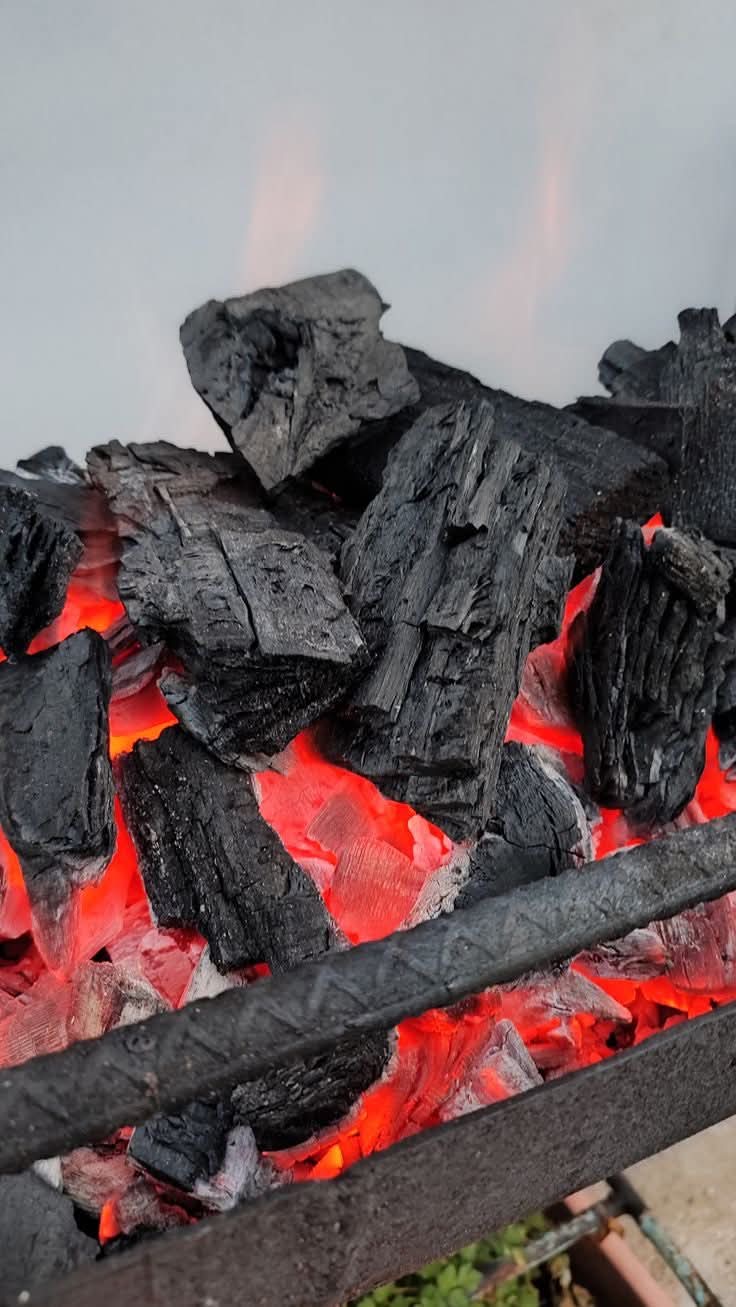
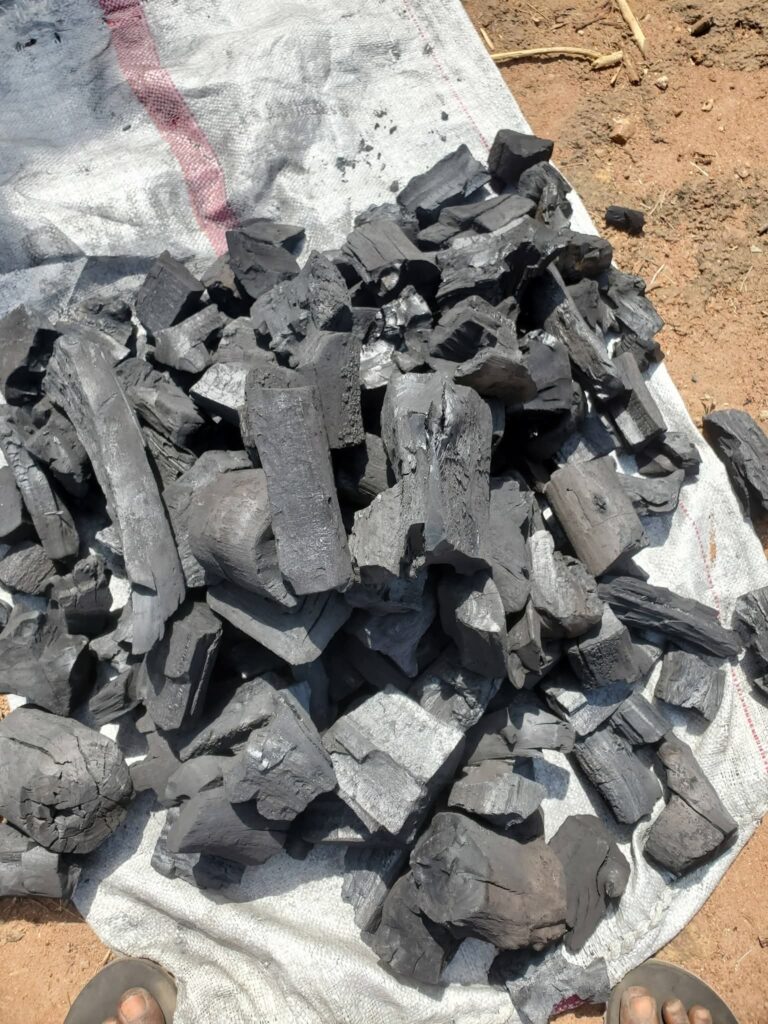
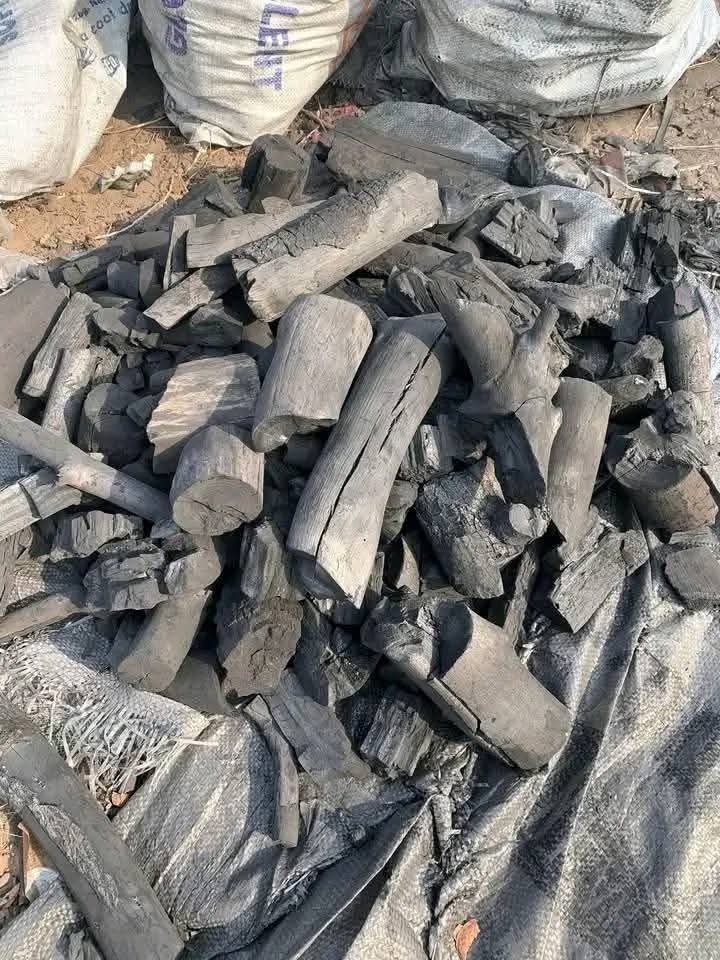
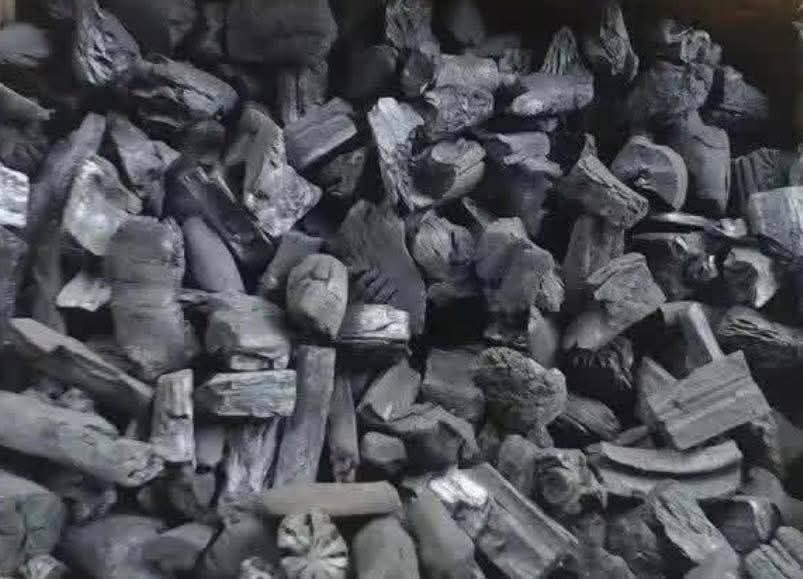
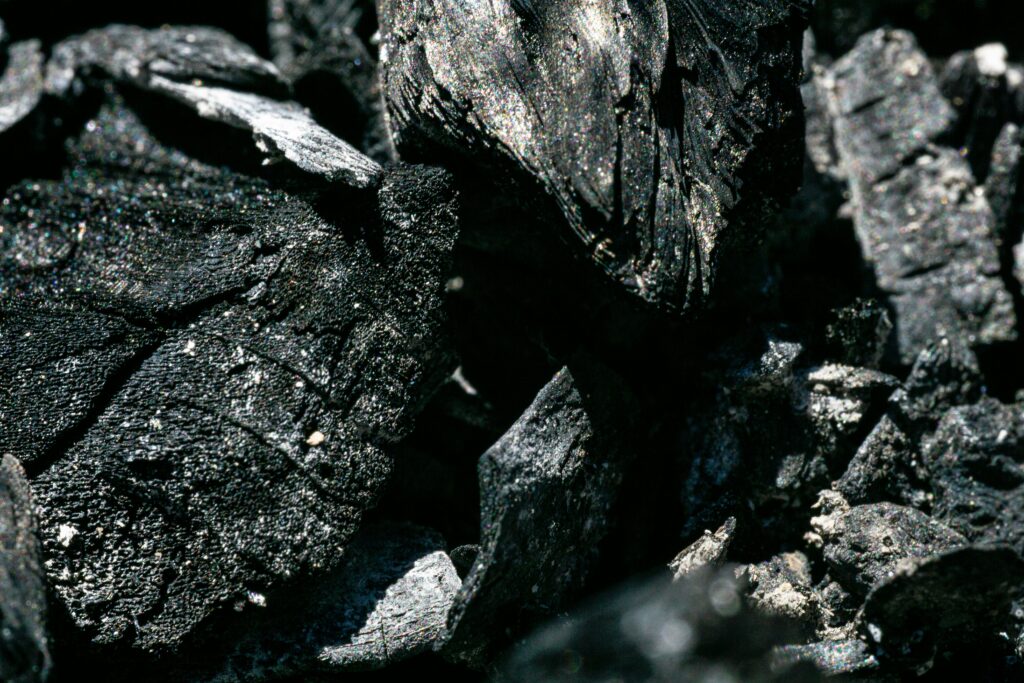
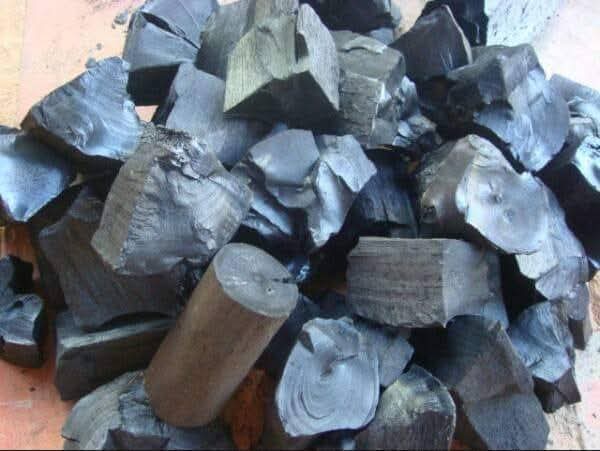
Natural hardwood lump charcoal — the product Paradise MultiTrade exports from Nigeria — is produced by the direct carbonisation of whole hardwood pieces without binders, additives, or processing beyond the kiln itself. The result is irregularly shaped chunks of pure carbonised wood that retain the cellular structure of the original timber, ignite faster than briquettes, burn hotter (achieving temperatures of 650–900°C versus briquettes’ typical 400–600°C ceiling), produce minimal ash, and impart the subtle wood-smoke aromatics that professional chefs and grill masters recognise as a fundamental component of authentic wood-fired cooking flavour.
For the professional BBQ market, the restaurant grill sector, the shisha hospitality industry, and the premium retail charcoal market — natural hardwood lump charcoal is not a substitute for briquettes. It is a categorically superior product for applications where heat intensity, burn duration, flavour purity, and ash production characteristics matter commercially.
Ayin Charcoal — The Nigerian Premium Grade
Ayin (Anogeissus leiocarpus) — known variously as African Birch, Ayin, or Kasia — is the hardwood species whose charcoal has established Nigerian export charcoal’s reputation among informed European and Middle Eastern importers. Anogeissus leiocarpus is a medium-to-large deciduous tree native to the West African and East African savanna woodland belt, growing across Nigeria’s Middle Belt states — Kwara, Kogi, Niger, Kaduna, and Nasarawa — in the dense woodland savanna ecotype that produces the slow-grown, high-density timber that carbonises into premium lump charcoal.
Ayin wood’s commercial charcoal properties derive from its high wood density — typically 750–900 kg/m³ — which translates directly into high fixed carbon content per unit volume of charcoal produced, exceptional heat output per kilogram, long burn duration, and very low ash production relative to softer wood charcoals. The Wood Database — the global reference resource for commercial timber species properties — documents Anogeissus leiocarpus among the denser African hardwood species available in commercial quantities, providing buyers with the scientific species reference framework for understanding why Ayin produces superior charcoal relative to softer tropical wood species.
European and Middle Eastern importers who specify Nigerian charcoal frequently specify Ayin by name — a direct reflection of the species’ established reputation among experienced charcoal buyers for consistent density, excellent heat performance, and the low-smoke clean burn that hospitality sector buyers particularly value.
Other Premium Nigerian Hardwood Charcoal Species
Beyond Ayin, Nigeria’s diverse forest and woodland resources produce several other commercially valued hardwood charcoal species:
Apa (Afzelia africana) — an extremely dense, high-carbon hardwood producing charcoal of exceptional calorific value and very long burn duration. Apa charcoal is among the most premium Nigerian hardwood charcoals by quality metric and commands corresponding pricing in export markets. Its properties are documented in the CABI forestry database.
Ekki (Lophira alata) — known as African Oak or Azobé — a very dense, heavy hardwood from Nigeria’s southern forest belt producing dense, slow-burning charcoal with high fixed carbon content. Ekki charcoal’s density and burn characteristics make it particularly valued for industrial and restaurant applications requiring sustained, high-intensity heat.
Gmelina (Gmelina arborea) — a fast-growing plantation hardwood species increasingly used in managed charcoal production programmes in Nigeria — producing charcoal of moderate density and consistent quality suitable for retail BBQ and food service market specifications where very high density is less critical than consistent piece size and clean burn characteristics.
Mixed Hardwood — a blend of regionally available dense hardwood species carbonised together — available at more competitive pricing than single-species grades and suitable for buyers whose applications do not require species-specific documentation.
Benefits and Commercial Applications of Nigerian Hardwood Charcoal
Premium BBQ and Outdoor Grilling Market
This is the highest-growth and highest-profile market driving international premium hardwood charcoal demand — and the one whose commercial dynamics have most directly elevated Nigerian charcoal’s international market profile over the past decade. The premium outdoor BBQ market across Europe, North America, and Australia has undergone a transformation from backyard convenience cooking toward genuine culinary practice — driven by the explosion of BBQ competition culture, the influence of American low-and-slow smoking traditions on European BBQ practice, the premium gas-to-charcoal grill conversion trend, and the proliferation of BBQ-focused food media content that has educated consumers about the flavour and performance differences between fuel types.
In this environment — where serious home grillers and competition BBQ teams are willing to pay premium prices for charcoal that performs demonstrably better than mass-market alternatives — Nigerian hardwood lump charcoal’s performance credentials are commercially actionable. Its high heat output, long burn duration, minimal ash production, and clean flavour contribution are exactly the characteristics that premium BBQ charcoal consumers and brands specify and pay for.
The Hearth, Patio and Barbecue Association (HPBA) — the North American industry body for the outdoor living and grilling sector — publishes annual market data on charcoal consumption trends that documents the structural shift toward premium lump charcoal in the American and Canadian BBQ market. The European Barbecue Association tracks parallel trends across European BBQ markets, confirming the sustained growth of premium charcoal demand across the UK, Germany, France, the Netherlands, Belgium, and Scandinavia. For wholesale charcoal importers and retail charcoal brands building premium product lines in these markets, Nigerian Ayin hardwood lump charcoal is a commercially viable and quality-credentialed sourcing option.
Contact our export team to discuss supply arrangements for premium BBQ charcoal in the piece size distributions, moisture specifications, and packaging configurations that your retail or wholesale market requires.
Restaurant and Professional Grill Market
Professional kitchen use of charcoal — in dedicated charcoal grills, Josper ovens, Argentine-style parrillas, Robata grills, wood-fired pizza ovens, and charcoal-heated tandoors — is one of the most consistent and volume-reliable demand streams for premium hardwood charcoal globally. Restaurant kitchens running charcoal grills as a core production tool need charcoal that delivers predictable, consistent, high-temperature performance across service periods — with minimal smoke, minimal ash production that would interrupt service for grill cleaning, and zero chemical flavour contribution that would compromise the premium food they are producing.
Nigerian hardwood charcoal — particularly Ayin — meets these professional kitchen requirements with performance characteristics that experienced restaurant grill operators recognise immediately. Its ability to reach and sustain high cooking temperatures (consistently 650°C and above with adequate airflow), its clean burn with minimal visible smoke once fully lit, and its very low ash production make it a practical and economically competitive choice for restaurant procurement programmes.
The restaurant charcoal procurement market across the UK, Germany, France, the UAE, Saudi Arabia, and Japan sources premium hardwood charcoal through wholesale food service distributors and specialist charcoal importers — buyers who evaluate Nigerian origin material on its merits against established alternatives from Paraguay, Namibia, Indonesia, and domestic European wood sources. Market guidance for restaurant charcoal buyers is published by industry organisations including the Sustainable Restaurant Association (SRA) which specifically addresses charcoal sourcing in the context of restaurant sustainability commitments — an increasingly relevant consideration for restaurant procurement teams operating under corporate sustainability policies.
Shisha and Hookah Hospitality Market
This is a market segment that many charcoal buyers outside the hospitality sector underestimate — and one that European importers who service it understand to be one of the most consistent, volume-reliable, and quality-exacting charcoal demand streams in the global market. The shisha café sector across Germany, France, the Netherlands, Belgium, Austria, the UK, and Scandinavia — as well as across the Middle East, Turkey, and increasingly Southeast Asia — uses natural hardwood charcoal as the heat source for shisha pipe heating, in quantities that make individual shisha café operations meaningful charcoal procurement accounts.
Shisha charcoal buyers have specific and exacting requirements that differ meaningfully from BBQ charcoal specifications: minimal smoke production is the paramount requirement, since shisha cafés operate in enclosed hospitality environments where smoke accumulation is unacceptable from both a customer experience and a regulatory compliance perspective. Consistent piece size — typically 3–5cm cube or split pieces — is required for efficient shisha coal arrangement. Long burn duration at moderate heat is valued over the extreme high-temperature output preferred for open-grill cooking. Zero chemical treatment or additive content is non-negotiable — chemical residues transfer directly to the shisha smoke that customers inhale.
Nigerian hardwood charcoal — when properly processed from dense species like Ayin and cut to appropriate piece sizes — meets the shisha hospitality sector’s requirements effectively. Market intelligence on the European shisha café charcoal market and relevant import regulations is published through industry resources including the European Shisha Association and referenced in hospitality sector sourcing guidance.
Industrial Charcoal Applications
Beyond the food and hospitality sector, hardwood charcoal serves as an industrial raw material across several significant application sectors:
Metal smelting and foundry applications — charcoal’s high carbon content and high combustion temperature (exceeding 1,000°C in forced-air applications) make it a relevant fuel and reducing agent for small-scale and artisan metal smelting operations, including gold recovery operations, blacksmithing, and foundry work. Industrial charcoal buyers in this category source dense, high-fixed-carbon material where calorific value per kilogram is the primary quality parameter.
Activated carbon production — high-density hardwood charcoal is the primary raw material for production of activated carbon (activated charcoal) — the highly porous carbonised material used in water purification, air filtration, pharmaceutical formulation, and industrial chemical processing. The International Activated Carbon Conference (IACC) tracks global activated carbon production and raw material sourcing data — with hardwood charcoal from tropical origins including Nigeria serving as feedstock for activated carbon manufacturing in Asia and Europe.
Soil amendment (Biochar) — hardwood charcoal’s application as a soil carbon amendment — improving soil structure, water retention, and microbial activity in degraded agricultural soils — is a growing agronomic application supported by the International Biochar Initiative (IBI). Premium hardwood charcoal from identifiable species like Ayin, where production method and carbonisation temperature can be documented, commands pricing interest from biochar buyers whose agricultural applications require specific charcoal quality parameters.
Chemical and pharmaceutical charcoal — medical-grade activated charcoal derived from hardwood charcoal is used in pharmaceutical formulations for gastrointestinal decontamination following poisoning — a well-established clinical application. While medical-grade production requires significantly more processing and quality control than food service charcoal, the pharmaceutical charcoal supply chain traces to the same hardwood charcoal origin material that BBQ and restaurant buyers source.
Energy and Cooking Fuel Market
In developing market economies across West Africa, East Africa, and South Asia, hardwood charcoal remains a primary domestic cooking fuel — consumed in enormous volumes by urban households without reliable access to gas or electricity. Nigeria itself is a major charcoal consuming nation domestically, and neighbouring countries across the ECOWAS region — Ghana, Côte d’Ivoire, Benin, Togo, Niger, and Cameroon — source significant charcoal volumes from Nigerian production for domestic cooking fuel use. This regional domestic market provides a baseline demand foundation for Nigerian charcoal production that supports the supply infrastructure from which export-grade premium charcoal is sourced.
Why Buy Hardwood Charcoal from Nigeria?
The Hardwood Resource Advantage — Dense Species, Long Carbonisation History
Nigeria’s charcoal-producing regions — primarily across the Middle Belt states of Kwara, Kogi, Niger, Kaduna, Nasarawa, and Ogun — contain extensive areas of savanna woodland and forest dominated by the dense hardwood species whose carbonisation produces premium export-grade charcoal. The West African savanna woodland biome — characterised by slow-growing, high-density hardwood trees adapted to seasonal drought — produces timber with wood density values that compare favourably with the South American and African hardwood species (Namibian Acacia, Paraguayan Quebracho) that currently dominate the European premium charcoal import market.
Ayin (Anogeissus leiocarpus) in particular grows across the Nigerian savanna woodland belt in sufficient natural density that sustainable commercial charcoal production — when managed under appropriate licensed production frameworks — is viable at the export volumes that serious wholesale buyers require. The species’ combination of high wood density, good natural regeneration from stump regrowth, and wide distribution across the Middle Belt savanna makes it the most commercially accessible premium charcoal species in Nigeria’s hardwood resource base.
Performance Metrics That Experienced Buyers Recognise
For charcoal importers and buyers who evaluate products analytically rather than simply accepting origin claims, Nigerian hardwood charcoal — particularly Ayin — delivers documented performance characteristics that support its commercial positioning as a premium product:
Fixed Carbon Content — typically 75–85% for properly carbonised Ayin charcoal — the primary measure of charcoal fuel quality that determines heat output per kilogram of product. Market reference standards for charcoal fixed carbon content are published by the European Committee for Standardization (CEN) through EN standards for solid biofuels — the technical framework that European charcoal importers and regulators use to define product quality.
Calorific Value — typically 28–32 MJ/kg for well-carbonised Nigerian hardwood charcoal — placing it in the upper range of commercially traded natural lump charcoal globally and well above the typical calorific value of softwood charcoals and lower-quality tropical wood charcoals.
Ash Content — typically 2–5% for Ayin charcoal — significantly lower than briquettes (which can reach 10–15% ash) and lower than softer wood charcoals, translating into cleaner grill management and less frequent ash clearing for restaurant and food service operators.
Moisture Content — properly dried Nigerian export charcoal at 5–10% moisture content — critical for reliable ignition, consistent burning, and prevention of steam production during the early burning phase that generates the dense white smoke associated with incompletely dried charcoal.
Piece Size Distribution — consistent lump sizing achievable through manual or mechanical grading for specific market requirements — coarse lump for restaurant and BBQ applications, split or crushed sizes for shisha and specific industrial applications.
Analysis of charcoal physical and chemical properties follows internationally recognised methodologies published by the American Society for Testing and Materials (ASTM) — specifically ASTM E1252 and related standards for solid biofuel characterisation — which provide the testing framework that laboratory analysis certificates for Nigerian charcoal export lots can reference.

Competitive Pricing Against Established Origins
The European premium charcoal import market is currently supplied predominantly by origins including Namibia (Acacia charcoal), Paraguay (Quebracho charcoal), Indonesia (coconut shell and tropical wood charcoal), and several African origins including Nigeria, Mozambique, and Tanzania. Nigerian hardwood charcoal — when sourced directly from licensed Nigerian exporters rather than through multi-tier commodity trading chains — can be priced competitively against these established origins on a performance-per-dollar-landed-cost basis that makes the total procurement economics compelling for importers willing to evaluate West African origin material on its merits.
Pricing benchmarks for internationally traded hardwood charcoal are tracked by commodity intelligence platforms including Tridge’s charcoal market intelligence and cross-referenced against FOB export pricing data available through ITC Trade Map. Contact our export team for a direct quotation that enables proper landed cost comparison against your current supply sources.
Sustainability — Nigeria’s Regulatory Framework and Responsible Sourcing
Charcoal’s relationship with forest management and deforestation is the primary sustainability challenge that European importers increasingly need to address in their procurement documentation — driven by EU due diligence regulations on deforestation-risk commodities and by the sustainability commitments embedded in major retail and food service corporate procurement policies.
The EU Deforestation Regulation (EUDR) — which entered into force in 2023 and applies to charcoal as a regulated commodity — requires that charcoal placed on the EU market is sourced from legally produced wood that has not contributed to deforestation or forest degradation after December 31, 2020. This regulation creates specific due diligence documentation requirements that EU-bound Nigerian charcoal exporters must address — including geolocation data on production areas, forest legality verification, and supply chain traceability documentation.
Paradise MultiTrade engages with the EUDR compliance framework seriously — working with licensed production operators who operate under Nigerian forestry law provisions administered by State Forestry Commissions and coordinating the supply chain documentation required for EU due diligence compliance. Buyers importing Nigerian charcoal into the EU are strongly advised to initiate EUDR compliance discussions at the quotation stage. Contact our team to discuss documentation requirements for your specific destination market.
The Forest Stewardship Council (FSC) certification framework — the internationally recognised forest management certification standard — provides the most broadly accepted third-party verification of responsible forest sourcing for charcoal and other wood products. We are actively working with our supply network to develop FSC-aligned sourcing documentation and welcome discussions with buyers whose procurement policies require FSC-certified wood sourcing.
Full Export Documentation from a Licensed Exporter
Every Nigerian hardwood charcoal shipment processed through Paradise MultiTrade carries phytosanitary certification from the Nigerian Agricultural Quarantine Service (NAQS), NEPC export documentation, certificate of origin, commercial invoice, packing list, and bill of lading. For EU buyers requiring EUDR due diligence documentation, we prepare the geolocation, legality verification, and supply chain traceability documentation package alongside standard commercial shipping documents. Our NEPC Export Licence No. 0042385 and CAC Registration No. RC-9284647 are current and verifiable through NEPC.
Nigeria’s Charcoal Export Strength and Global Market Demand
The Scale of Global Charcoal Trade
Global charcoal production — tracked annually by FAO’s forest products statistics programme — exceeds 50 million metric tonnes annually, with the vast majority consumed domestically in producing countries as a cooking fuel. The internationally traded premium charcoal market — the segment supplying European BBQ retail, restaurant grill, shisha hospitality, and industrial application buyers — is a significantly smaller but commercially high-value subset of this total, where quality differentiation commands price premiums that make African origin hardwood charcoal commercially significant despite freight cost disadvantages versus closer origins.
Market sizing and demand growth analysis for the global premium charcoal market is published by research organisations including Grand View Research’s charcoal market analysis and Mordor Intelligence’s charcoal industry report — both projecting sustained demand growth driven by expanding premium BBQ culture in Europe and North America, growing restaurant sector charcoal grill adoption, and the Middle East hospitality sector’s sustained shisha and wood-fire cooking charcoal demand.
The Markets Driving Nigerian Charcoal Export
Germany is Europe’s largest charcoal import market and the most commercially significant destination for Nigerian premium hardwood charcoal in the EU. German wholesale charcoal importers — concentrated in the Hamburg, Frankfurt, and Munich trading hubs — supply both the mainstream retail BBQ market and the large Turkish, Arabic, and Lebanese shisha café sector that has made Germany one of Europe’s most significant shisha hospitality markets. The German Barbecue Association (GIGA) tracks BBQ market trends and charcoal consumption data — reflecting the sustained growth of premium charcoal demand across German consumer and professional segments.
The United Kingdom is one of the most active markets for Nigerian hardwood charcoal in Europe — driven by the UK’s deeply embedded BBQ culture (one of Europe’s highest per-capita charcoal consumption markets according to industry data), its significant Middle Eastern and West African diaspora communities with strong charcoal cooking traditions, and the UK restaurant sector’s growing adoption of charcoal grills and wood-fired cooking as a premium positioning differentiator. The Barbecue Industry Association UK publishes market data on UK charcoal consumption that confirms sustained retail and food service demand growth.
The Netherlands is a major import hub for Nigerian charcoal destined for the broader EU market — with Dutch commodity importers and distributors buying Nigerian charcoal for redistribution across Germany, Belgium, France, and Scandinavia. Rotterdam’s port infrastructure and the Netherlands’ established agricultural commodity import infrastructure make it the natural EU entry point for West African charcoal.
The United Arab Emirates is the Middle East’s most commercially significant charcoal import market — driven by the enormous hospitality sector’s shisha café, restaurant grill, and traditional wood-fire cooking charcoal demand across Dubai, Abu Dhabi, and Sharjah’s hotel, restaurant, and café landscape. UAE charcoal importers are sophisticated, volume-significant buyers who evaluate Nigerian origin material against established Namibian, Indonesian, and Saudi domestic production alternatives on performance and price.
Saudi Arabia and Kuwait are similarly large charcoal consuming markets — where traditional cooking methods including outdoor grilling and shisha hospitality create year-round demand for quality hardwood lump charcoal that is partially met through imports from African origins including Nigeria.
Japan is a premium and commercially interesting export destination for Nigerian hardwood charcoal — driven by the Japanese restaurant sector’s extensive use of charcoal grills (particularly Binchotan-style grilling in yakitori, robata, and kaiseki restaurants) and the Japanese consumer market’s sophisticated appreciation of charcoal quality differences. While Japanese buyers typically specify domestic Binchotan charcoal (white charcoal produced from Ubame oak) for the highest-end applications, West African hardwood charcoal serves a growing market segment of Japanese restaurants and charcoal retailers seeking premium imported alternatives at more accessible pricing. Market intelligence on Japanese charcoal import trends is available through Japan External Trade Organization (JETRO) trade statistics.
Why Choose Paradise MultiTrade International Limited?
Species-Specific Sourcing Capability. We source Ayin charcoal specifically — not generic mixed tropical wood charcoal that cannot be species-documented. For buyers whose procurement or retail product positioning requires species identification (increasingly important for EU EUDR compliance and for premium retail brand positioning), our ability to source and document Ayin origin is a direct competitive advantage over suppliers offering undifferentiated Nigerian charcoal.
Quality-Managed Production Partnerships. Our charcoal is sourced from licensed production operations using improved-kiln carbonisation methods that produce more consistent fixed carbon content, more uniform piece size distribution, and lower moisture content than traditional earth-mound kilns. Improved kiln technology — including retort kilns and portable metal kilns — produces charcoal with the consistency that serious export market buyers require. Kiln technology guidance and best practices are published by the FAO forestry technical programme and referenced in our production partner selection criteria.
EU EUDR Compliance Support. We are one of the Nigerian charcoal exporters who takes the EU Deforestation Regulation seriously — engaging with geolocation documentation, legality verification, and supply chain traceability requirements at the point of production partner selection rather than retrospectively at the shipping stage. For EU buyers, this compliance investment is not optional — it is the difference between a supply chain that works legally in your market and one that creates customs clearance and reputational risk. Contact us early to discuss EUDR documentation requirements.
Flexible Size Grading for Different Applications. BBQ retail buyers, restaurant procurement teams, and shisha café supply chains all have different piece size preferences — and we engage with size specification requirements seriously. Coarse lump (3–10cm), medium lump (3–7cm), restaurant-grade splits (3–5cm), and shisha-grade cuts are all achievable through our production and grading operations. Contact our team to specify your size distribution requirement.
Multi-Commodity West African Sourcing. Buyers sourcing Nigerian hardwood charcoal through Paradise MultiTrade can simultaneously access our sesame seeds, hibiscus flower, turmeric, cloves, red palm oil, fresh ginger, dry split ginger, bitter kola, kola nut, and cashew products export programmes. Explore our full range of Nigerian export commodities and consolidate your West African agricultural and natural product sourcing through one verified, licensed partner.
Product Specifications
| Specification | Details |
|---|---|
| Product | Nigerian Hardwood Lump Charcoal |
| Primary Species | Ayin (Anogeissus leiocarpus) — premium grade |
| Other Species Available | Apa (Afzelia africana), Ekki (Lophira alata), Gmelina, Mixed Hardwood |
| Origin | Nigeria (Kwara, Kogi, Niger, Kaduna, Nasarawa, Ogun States) |
| Fixed Carbon Content | 75–85% (species and kiln-dependent) |
| Calorific Value | 28–32 MJ/kg |
| Ash Content | 2–5% |
| Moisture Content | 5–10% (export specification) |
| Volatile Matter | 15–25% |
| Piece Size Options | Coarse lump (5–15cm), BBQ lump (3–10cm), Restaurant splits (3–7cm), Shisha grade (2–5cm), Fines (≤2cm — industrial/biochar) |
| Appearance | Black to grey-black; metallic ring when struck (indicator of proper carbonisation) |
| Packaging Options | 5kg, 10kg, 15kg, 20kg paper/PP bags (retail); 500kg, 1,000kg jumbo bags (wholesale); loose bulk container loading |
| Supply Capacity | 100–3,000+ MT per shipment |
| MOQ | 20 Metric Tonnes |
| Shelf Life | Indefinite when stored dry and sealed away from moisture |
| Export Documentation | Phytosanitary Certificate (NAQS), Certificate of Origin, NEPC Export Licence, EUDR Due Diligence Documentation (EU buyers), Commercial Invoice, Packing List, Bill of Lading |
| Payment Terms | T/T, Letter of Credit (LC at sight), Escrow |
| Loading Port | Lagos (Apapa / Tin Can Island Port), Nigeria |
| Incoterms Available | EXW, FOB Lagos, CNF, CIF |
Packaging and Export Process
Wood Selection and Preparation. Premium Nigerian export charcoal begins with species selection at the harvesting stage — Ayin timber is sourced from licensed harvesting operations in savanna woodland zones of the Middle Belt states, where the species grows at sufficient density to support commercial harvesting under appropriate rotational management. Harvested timber is cut to kiln-appropriate lengths and stacked for initial air-drying to reduce moisture content in the green wood before carbonisation — reducing kiln cycle time and improving fixed carbon content in the finished charcoal.
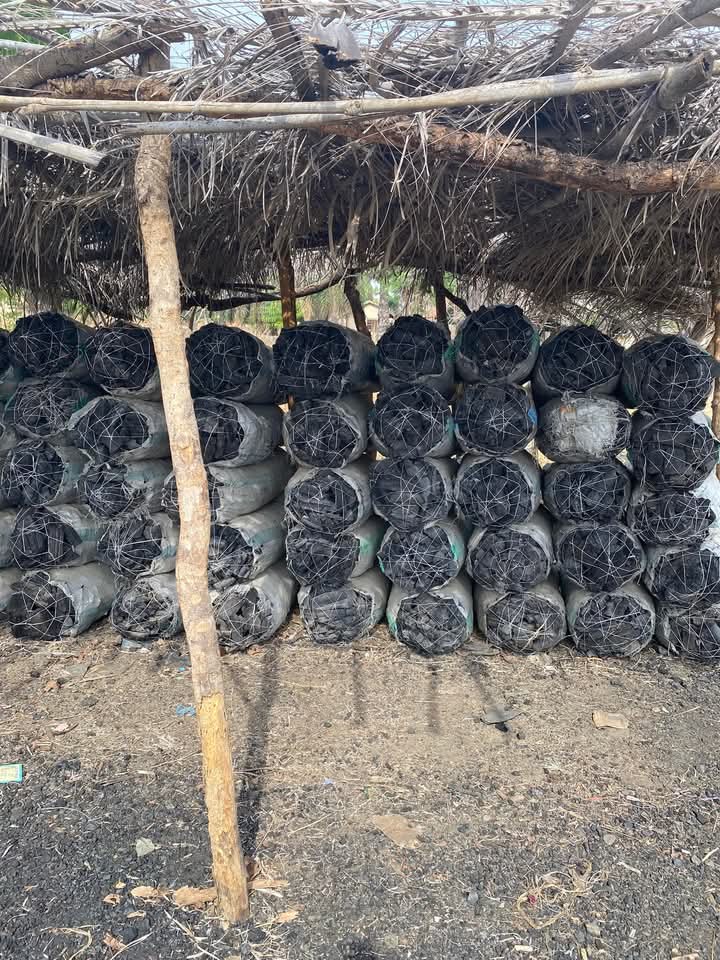
Carbonisation. Dried wood is loaded into kilns — improved portable metal kilns or brick retort kilns where available, traditional earth-mound kilns in more remote production areas — and carbonised under controlled partial combustion conditions. The carbonisation cycle typically runs 48–96 hours depending on kiln type, wood moisture content, and batch volume — with kiln temperature and airflow managed to achieve complete carbonisation of the wood mass without over-burning that degrades fixed carbon content.
Cooling and Extraction. Following carbonisation, kilns are sealed to allow slow cooling before opening — preventing the spontaneous combustion that occurs when hot charcoal is exposed to ambient oxygen. Properly cooled charcoal is extracted from the kiln and spread for final ambient air cooling before sorting and grading.
Grading and Sorting. Cooled charcoal is hand-sorted or mechanically screened to separate piece sizes, remove fines, and eliminate incompletely carbonised material (“brands”) that would produce excessive smoke during burning. This grading stage is where the piece size distribution specified by the buyer is achieved — and where quality control assessment of carbonisation completeness is conducted visually and by the metallic ring test (fully carbonised lump charcoal produces a characteristic clear ringing sound when struck, versus the dull thud of incompletely carbonised material).
Laboratory Analysis. For buyers requiring documented fixed carbon content, ash content, moisture, and calorific value — lot samples are submitted to accredited testing laboratories following ASTM or EN standard methods for solid biofuel characterisation. Test certificates are provided alongside standard export documentation.
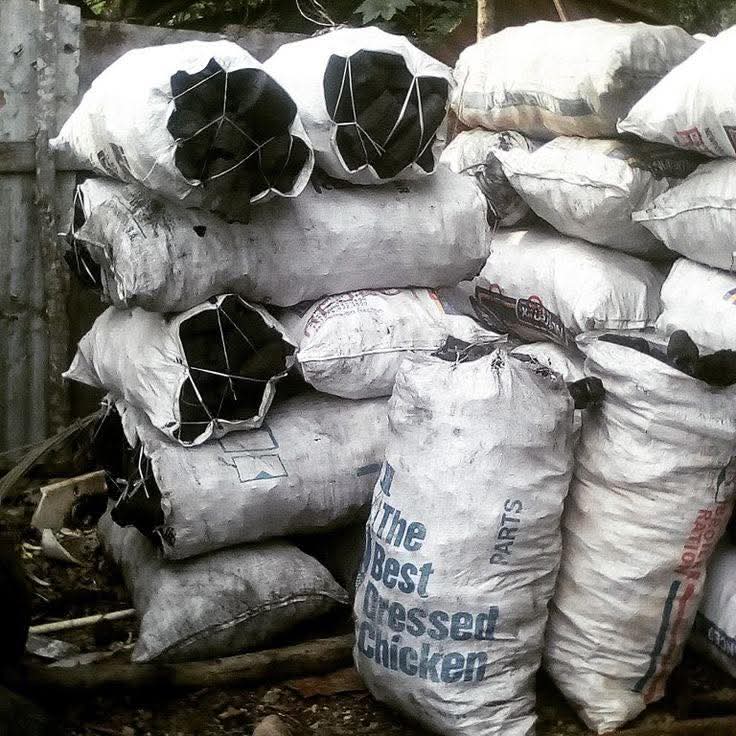
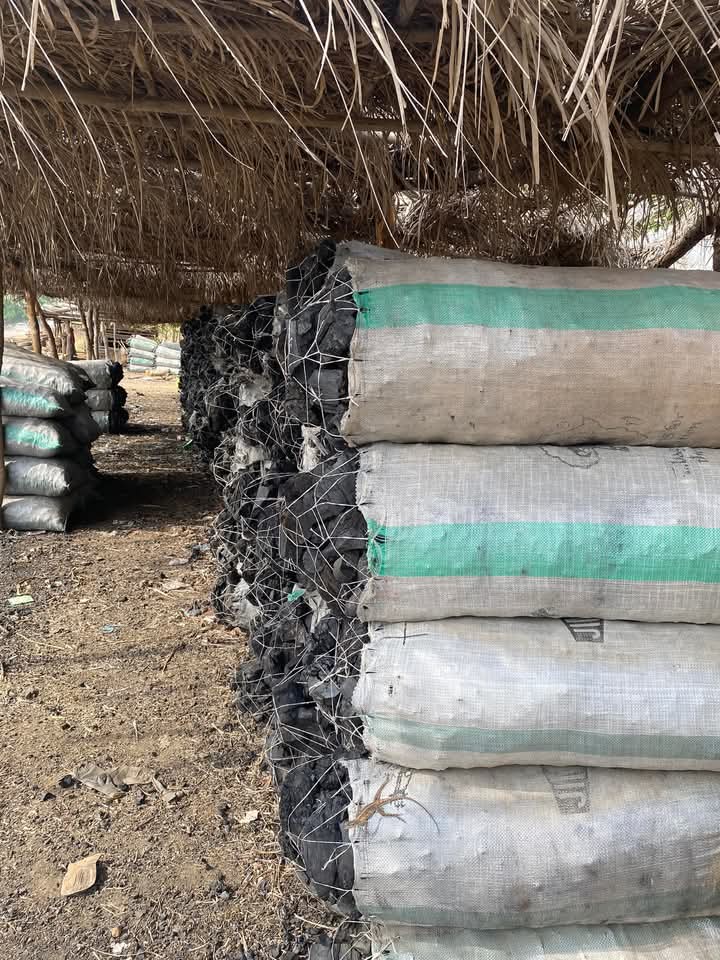
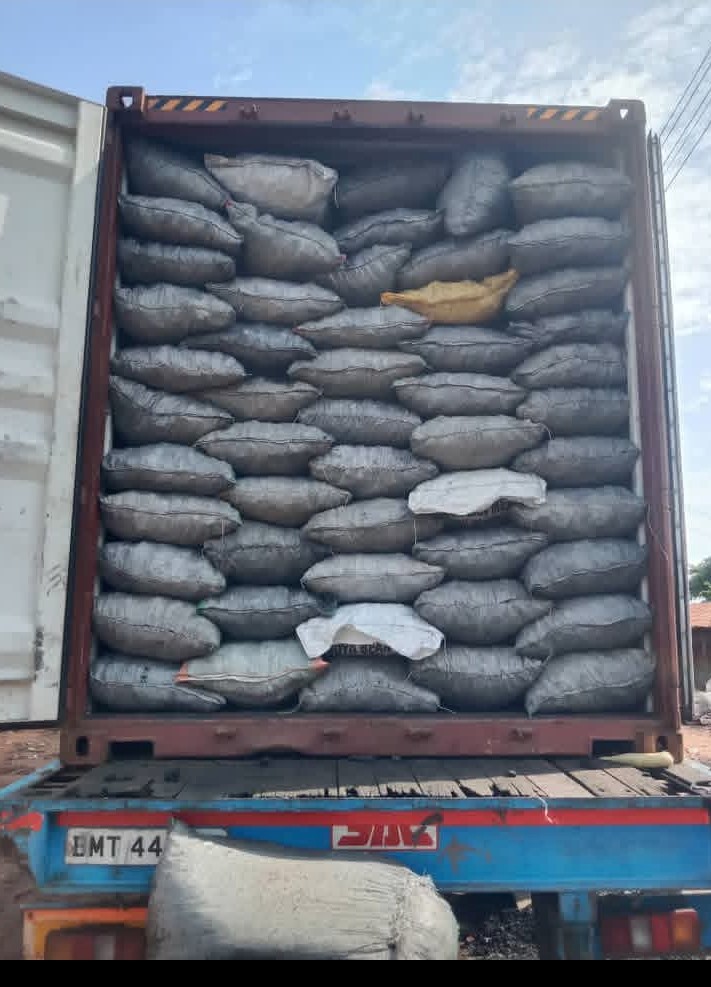
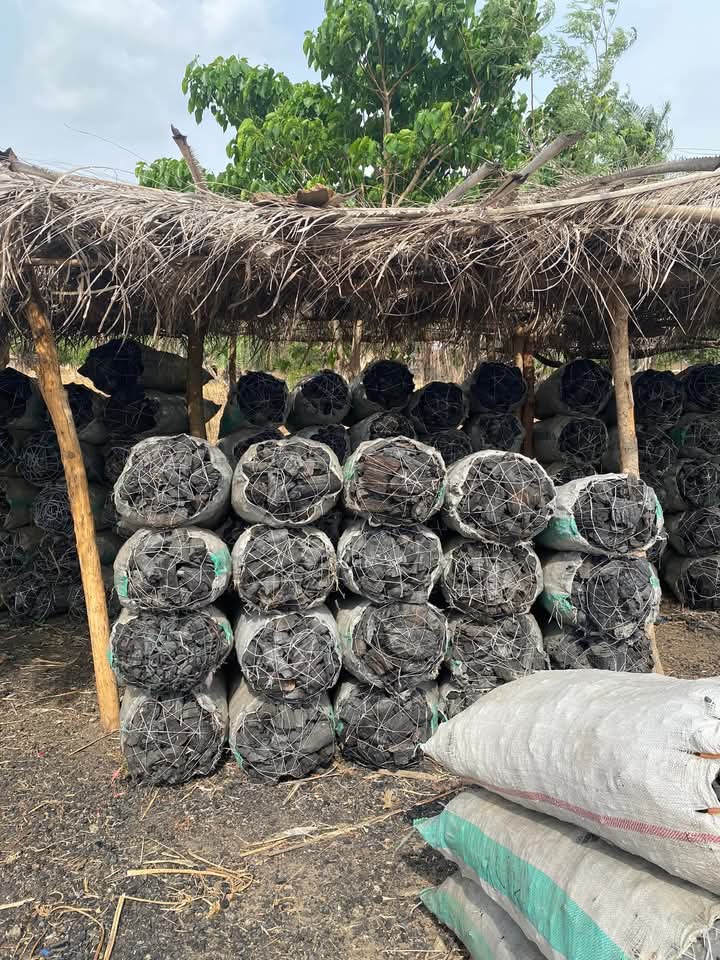
Packaging. Consumer retail packaging in 5–20kg paper or polypropylene bags is available for importers selling through retail channels. Wholesale packaging in 500kg or 1,000kg jumbo woven bags is standard for wholesale distribution buyers. Loose bulk loading into container is available for the highest-volume buyers with their own bagging infrastructure at destination. All packaging is clearly labelled with species, origin, lot number, fixed carbon content, moisture specification, and export documentation reference.
EUDR Documentation. For EU-bound shipments, geolocation coordinates of production areas, forest legality documentation, and operator due diligence statements are prepared in compliance with the EU Deforestation Regulation requirements. This documentation package is prepared alongside standard phytosanitary and commercial shipping documents. Contact us at the order stage to ensure EUDR documentation is initiated with adequate lead time.
Loading and Shipping. Nigerian hardwood charcoal loads in standard dry containers from Apapa or Tin Can Island Port in Lagos. Lead time from order confirmation to container loading is typically 14–28 days depending on volume, species specification, and packaging requirement. Contact our team early — particularly for large volume orders requiring custom grading or specific retail packaging.
Frequently Asked Questions
What makes Ayin charcoal different from other Nigerian hardwood charcoals?
Ayin (Anogeissus leiocarpus) is distinguished by its exceptionally high wood density — typically 750–900 kg/m³ — which translates directly into high fixed carbon content (75–85%), high calorific value (28–32 MJ/kg), very low ash production (2–5%), and long burn duration that experienced grill masters and restaurant operators recognise immediately through use. It burns hotter and longer than softer tropical wood charcoals and produces significantly less ash than manufactured briquettes. Among European and Middle Eastern charcoal importers who have worked with Nigerian material, Ayin is the species most consistently specified by name — a direct reflection of its established performance reputation. Contact us to request a sample for burn testing.
Is Nigerian hardwood charcoal compliant with the EU Deforestation Regulation (EUDR)?
The EU Deforestation Regulation requires that charcoal placed on the EU market after the regulation’s applicable date is produced from legally harvested wood that has not contributed to deforestation or forest degradation. Paradise MultiTrade is actively developing EUDR-compliant supply chains — working with licensed production operators under Nigerian forestry law and preparing the geolocation, legality verification, and traceability documentation required for EU importer due diligence statements. EU buyers must initiate EUDR compliance discussions at the quotation stage to ensure adequate documentation lead time. Contact our team immediately if your procurement timeline includes EU market placement after the regulation’s applicable date.
What piece sizes are available and which is right for my application?
For BBQ and outdoor grilling retail — coarse lump (5–15cm) or BBQ lump (3–10cm) are standard. For restaurant grill and Josper oven use — restaurant splits (3–7cm) provide the consistent sizing that professional kitchen grill management requires. For shisha and hookah café use — shisha grade (2–5cm) pieces are appropriate, providing the compact, consistent sizing needed for efficient shisha coal arrangement and the clean burn that indoor hospitality environments require. For industrial and biochar applications — fines and smaller grade material is available. We discuss and confirm piece size distribution at the quotation stage. Contact our team.
What fixed carbon content should I specify for restaurant or BBQ use?
For premium BBQ and restaurant grill applications, specify minimum 75% fixed carbon content — this threshold ensures the heat output and burn duration performance that serious food service operations require. Laboratory test certificates documenting fixed carbon content, ash content, moisture, and calorific value following ASTM or CEN EN standard methods are available on request. Contact us to confirm specification and testing arrangements.
Can you supply retail-packaged charcoal for supermarket or garden centre distribution?
Yes. We supply Nigerian hardwood charcoal in retail-ready packaging — 5kg, 10kg, and 15kg paper or laminated polypropylene bags with custom printing for importers who sell through supermarket, garden centre, or hardware store retail channels. Retail packaging requires minimum order quantities and lead time discussions at the quotation stage to accommodate printing and packaging scheduling. Contact our export team to discuss retail packaging options.
How does Nigerian charcoal compare to Namibian Acacia or Paraguayan Quebracho charcoal?
All three are premium hardwood charcoal origins commanding price premiums over mass-market alternatives — but each has distinct characteristics. Namibian Acacia charcoal (Acacia species) is among the densest commercially traded charcoals globally, with very high fixed carbon content and extremely long burn duration — it is the benchmark premium African charcoal origin for European buyers. Paraguayan Quebracho charcoal is similarly very dense with excellent performance credentials. Nigerian Ayin charcoal delivers comparable fixed carbon content and calorific value to both, with competitive pricing and the logistical advantage of direct shipping from Lagos on well-established European routes. For buyers currently purchasing Namibian or Paraguayan material who want a quality-verified West African alternative — we recommend requesting a sample and conducting parallel burn testing. Contact us to arrange a sample shipment.
What transit times should I plan for from Nigeria?
Europe (Rotterdam, Hamburg, Felixstowe, Antwerp) — approximately 14–20 days from Lagos. UAE (Jebel Ali, Dubai) — 10–14 days. Saudi Arabia (Jeddah, Dammam) — 12–16 days. USA (East Coast) — 18–25 days. Japan (Yokohama, Osaka) — 25–32 days. South Korea (Busan) — 25–30 days. Australia (Sydney, Melbourne) — 25–35 days.
Ready to Source Premium Nigerian Hardwood Charcoal for BBQ, Restaurant, or Industrial Use?
If you are a wholesale charcoal importer, retail charcoal brand, restaurant supply chain buyer, shisha café distributor, or industrial charcoal processor actively searching for a reliable hardwood charcoal exporter in Nigeria who can deliver premium Ayin lump charcoal with documented performance credentials, EU EUDR compliance support, and the commercial reliability that serious bulk buyers require — Paradise MultiTrade International Limited is built for exactly this.
We supply premium Nigerian Ayin and hardwood lump charcoal — species-documented, properly carbonised to 75–85% fixed carbon content, graded to your piece size specification, packaged for your market channel, and exported with full phytosanitary and commercial documentation to buyers in every major regulated destination market.
Request a Quotation — share your required species preference (Ayin, mixed hardwood, or other), volume, piece size specification, packaging requirement (bulk, jumbo bag, or retail), destination port, and preferred incoterms. We respond with a detailed, competitive quote within 48 hours.
Contact Our Export Team — speak directly with our export coordinators about fixed carbon content analysis, EUDR compliance documentation, retail packaging options, FSC sourcing development, sample requests, and long-term contract supply arrangements.
Explore Our Full Product Range — alongside hardwood charcoal, Paradise MultiTrade exports red palm oil, turmeric, cloves, dry split ginger, fresh ginger, hibiscus flower, sesame seeds, bitter kola, kola nut, cashew nut kernel, and raw cashew nuts. One licensed Nigerian exporter. One consolidated West African sourcing relationship. Consistent quality and documentation across every commodity.
Paradise MultiTrade International Limited | NEPC Export Licence No. 0042385 | CAC No. RC-9284647 | Lagos, Nigeria | www.paradisemultitrade.com
Reviews
There are no reviews yet.