
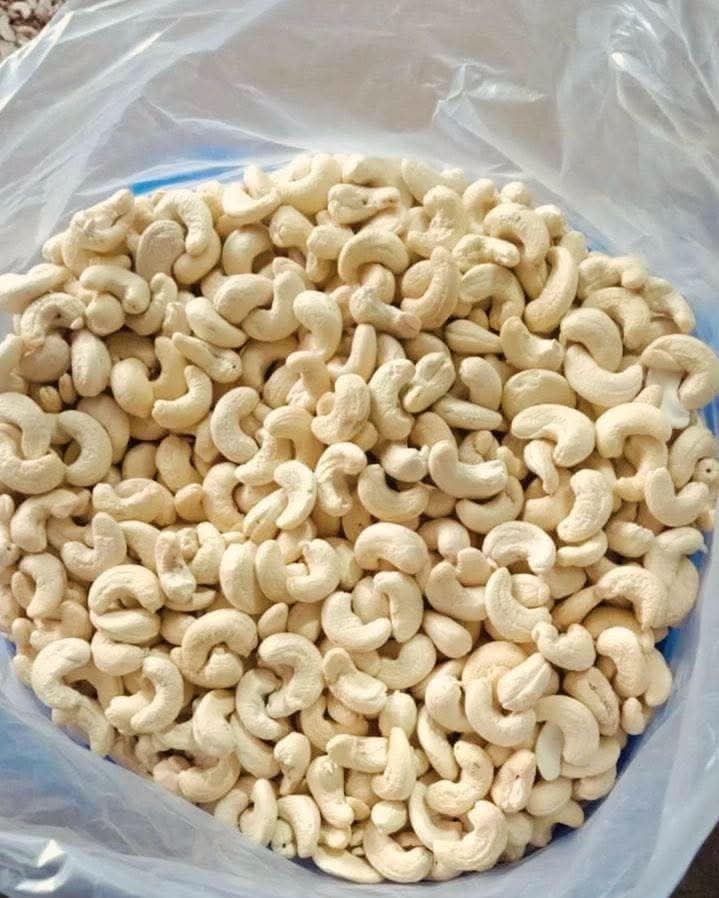

Cashew Nut Kernel from Nigeria: The Premium Snack Nut the World Cannot Get Enough Of — and Why Nigerian W320, W240, and W180 Are the Grades Serious Buyers Specify
Cashew Nut Kernel Exporter Nigeria — W180, W240, W320 and Full Grade Range, Direct Processing Source, Global Bulk Supply
Cashew nut kernel exporter Nigeria is a procurement search with very specific commercial intent behind it. The buyers typing it are not casual enquirers — they are food manufacturers who need a consistent, food-safe raw cashew kernel supply for snack production lines, retail pack operations, confectionery manufacturing, or restaurant supply chains. They are commodity traders building West African origin positions in their nut portfolios. They are private label snack brands sourcing the best whole white cashew kernels they can find at a price point that makes their product commercially viable. And they are coming to Nigeria because the combination of West African origin quality, competitive processing economics, and increasingly sophisticated post-harvest and food safety infrastructure makes Nigerian cashew kernel one of the most commercially attractive sourcing propositions in the global tree nut trade today.
Nigeria is one of Africa’s most significant cashew producing nations — sitting within the top tier of sub-Saharan African cashew origins alongside Côte d’Ivoire, Tanzania, Mozambique, and Benin. What has historically distinguished Nigeria in the global cashew trade is the sheer scale of its raw cashew nut (RCN) production and the growing capacity of its domestic processing sector — a processing industry that has expanded considerably over the past decade, shifting Nigeria from a predominantly raw nut export origin toward a value-added kernel export origin capable of supplying internationally graded, food-safety-certified cashew kernel directly to end buyers.
At Paradise MultiTrade International Limited, we export cashew nut kernel across the full commercially traded grade range — W180, W240, W320, W450, and broken grades — sourced from Nigerian processing facilities operating to international food safety standards and supplying documented, packaged kernel to buyers across Europe, the Middle East, Asia, and North America. If you are a food manufacturer, snack brand, wholesale distributor, retail buyer, or commodity trader looking for a dependable cashew nut kernel exporter in Nigeria, this article covers everything your procurement process requires.
Ready to move straight to specifications and pricing? Request a quotation here and our export team will respond within 48 hours.
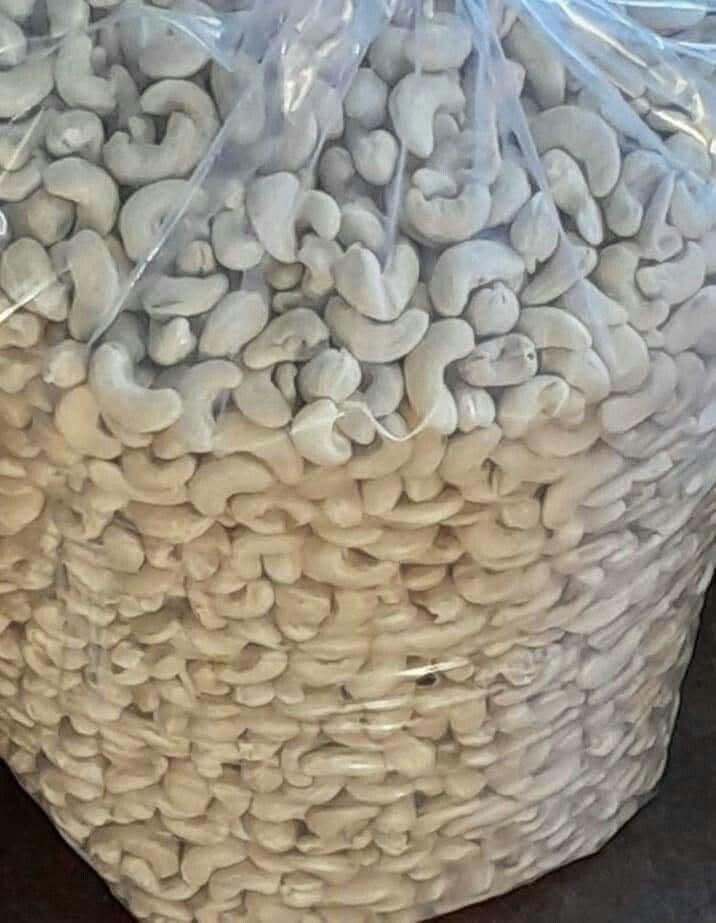
History and Origin of Cashew Nut
A Fruit from the Amazon That Conquered the Tropical World
The cashew tree (Anacardium occidentale) is not African by origin — a fact that surprises many buyers who encounter it primarily through West African supply chains. Its botanical homeland is the coastal northeast of Brazil, in the seasonally dry tropical forests of the states of Ceará, Piauí, and Rio Grande do Norte, where indigenous communities had been harvesting and consuming the cashew apple and its attached nut for thousands of years before European contact.
The Portuguese, who colonised Brazil beginning in the early 16th century, recognised the cashew tree’s extraordinary adaptability to tropical coastal environments — its deep taproot system made it exceptionally drought-tolerant, its fast growth made it useful for coastal dune stabilisation, and its prolific fruiting made it a reliable food source. Portuguese sailors and traders carried cashew seedlings along their trade routes across the Indian Ocean world during the second half of the 16th century, introducing the species to Goa in India, to coastal East Africa, to West Africa, and to other tropical territories under Portuguese influence.
The introduction was transformative. Cashew found near-perfect growing conditions across the tropical belt of Asia and Africa — and within decades of its introduction to each region, it had naturalised and spread into a commercially significant crop. By the 17th century, cashew trees were widespread across coastal India, East Africa, and West Africa. By the 18th and 19th centuries, it had become an established smallholder crop across the tropical regions of both continents.
Cashew Enters the World of Commerce
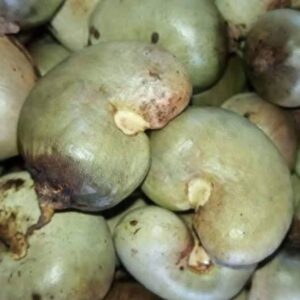
For most of its early history in Africa and Asia, the cashew nut was secondary in economic importance to the cashew apple — the fleshy, vitamin C-rich pseudo-fruit to which the nut is attached and which is consumed as a fresh fruit, fermented into alcohol, or processed into juice across cashew-producing regions. The nut itself presented a formidable processing challenge: its double shell contains caustic cashew nut shell liquid (CNSL) — a mixture of anacardic acid and cardol that causes severe chemical burns on contact with skin — making hand-shelling without proper technique or protective equipment a painful and injury-prone operation.
The development of mechanical cashew processing technology during the early-to-mid 20th century — first in India, which became and remains the world’s dominant cashew kernel processor — transformed the nut from a locally consumed subsistence product into a globally traded premium snack and ingredient nut. India’s processing industry, centred in the coastal states of Kerala, Goa, and Maharashtra, built the global cashew kernel trade infrastructure that defined international grade standards, established packaging protocols, and created the buyer-seller relationships that characterise the market today.
Nigeria’s Cashew Journey — From Wild Trees to Export Infrastructure
Cashew cultivation in Nigeria dates to the colonial period, when trees introduced by Portuguese traders naturalised across the coastal and forest zones of southwestern and north-central Nigeria. Commercial cultivation expanded significantly during the 1950s and 1960s, particularly across Kogi, Enugu, Anambra, Cross River, Kwara, Oyo, and Osun states — the states that today form the core of Nigeria’s cashew production belt.
For decades, Nigeria exported primarily raw cashew nuts (RCN) to India and Vietnam for processing — a pattern common across West African cashew origins and one that left the value-added processing margin in Asian processors’ hands rather than with African producers. The shift toward domestic processing began accelerating in the 2000s and 2010s, driven by Nigerian government incentives for agro-processing investment, growing international buyer interest in directly sourced African kernel, and the establishment of processing facilities capable of producing internationally graded kernel.
According to FAO production data, Nigeria consistently ranks among Africa’s top cashew producing nations, with annual RCN production in the range of 100,000–150,000 metric tonnes in strong harvest years. ITC Trade Map data reflects Nigerian cashew kernel reaching markets in the European Union, the United States, the Middle East, and Asia — a trade geography that continues to expand as Nigerian processing quality and export infrastructure improves. The Nigerian Export Promotion Council (NEPC) has prioritised cashew as a flagship non-oil export commodity, with active market development and processing quality support programmes that directly benefit international buyers seeking Nigerian kernel supply.
What Is Cashew Nut Kernel? Understanding the Grade System
From Raw Nut to Finished Kernel
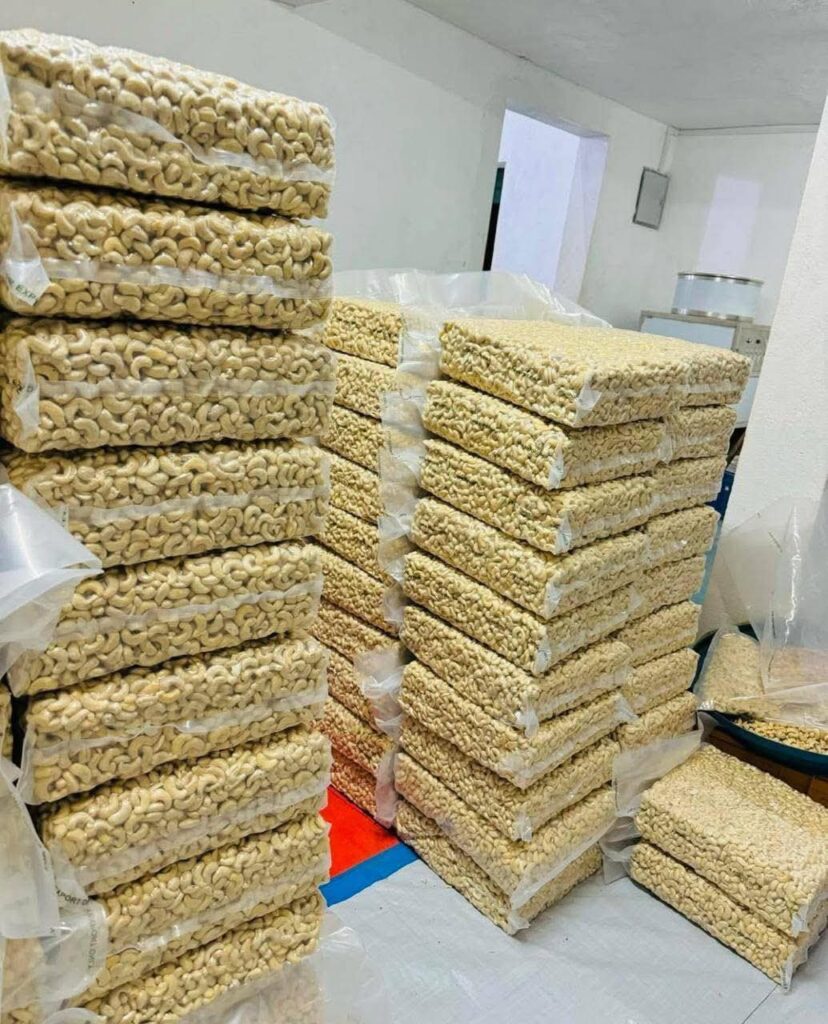
Cashew nut kernel is the edible seed extracted from inside the raw cashew nut shell through a multi-stage processing sequence. The production process — from raw nut to export-ready packaged kernel — is one of the more technically demanding operations in the global food processing industry, involving steam cooking or roasting of the shell to neutralise the caustic CNSL, mechanical or manual cracking of the outer shell, careful extraction of the kernel without fracture, removal of the thin inner seed coat (testa), grading by size and colour, quality inspection, and packaging under food-safe conditions.
The international cashew kernel grading system — standardised through the Association of Food Industries (AFI) cashew kernel specifications that form the basis of most international trade contracts — classifies cashew kernels primarily by count per pound (the number of kernel pieces per 453.6 grams) and by colour and integrity (whole versus split, and white versus scorched or discoloured).
The W-Grade System Explained
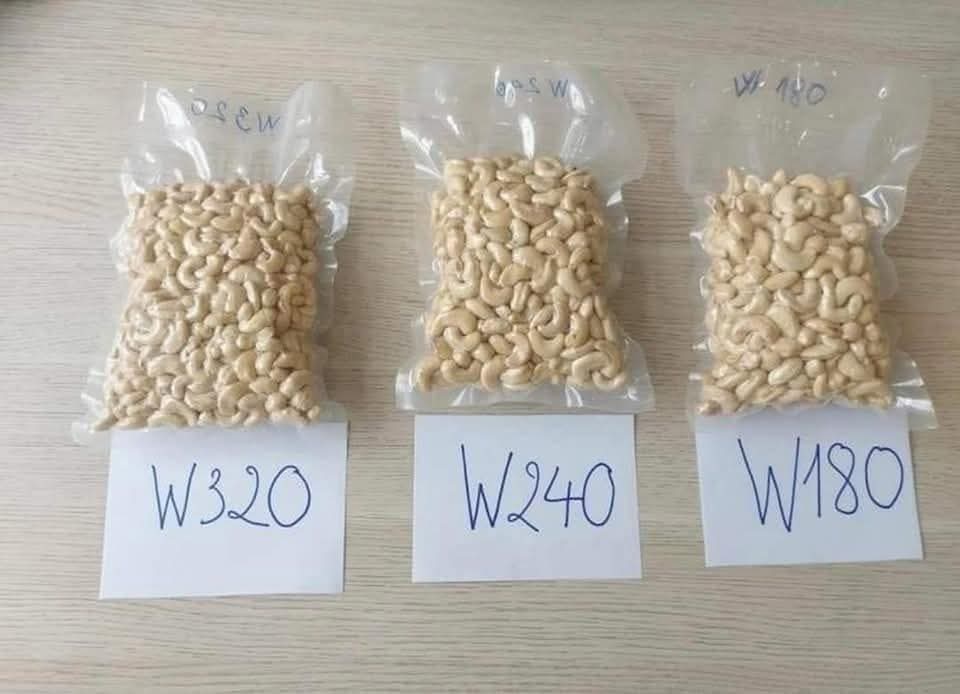
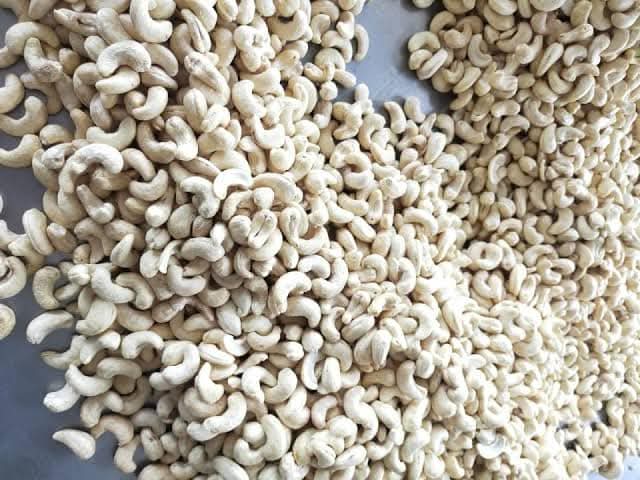
The “W” designation in cashew kernel grades stands for “White Whole” — intact kernels with no significant discolouration. The number following the W indicates the approximate count per pound — so a lower number means a larger kernel per piece, and consequently a higher commercial value:
W180 — approximately 180 kernels per pound. These are the largest commercially traded whole white cashew kernels — sometimes called “Jumbo” in retail markets. W180 kernels are the most visually impressive, commanding the highest per-kilogram price in the whole kernel category. They are favoured by premium retail packaging operations, luxury confectionery brands, and high-end food service operators who want the largest, most visually striking cashew presentation.
W210 — approximately 210 kernels per pound. A large-grade kernel positioned between W180 and W240, traded in meaningful volumes for premium retail and food service applications.
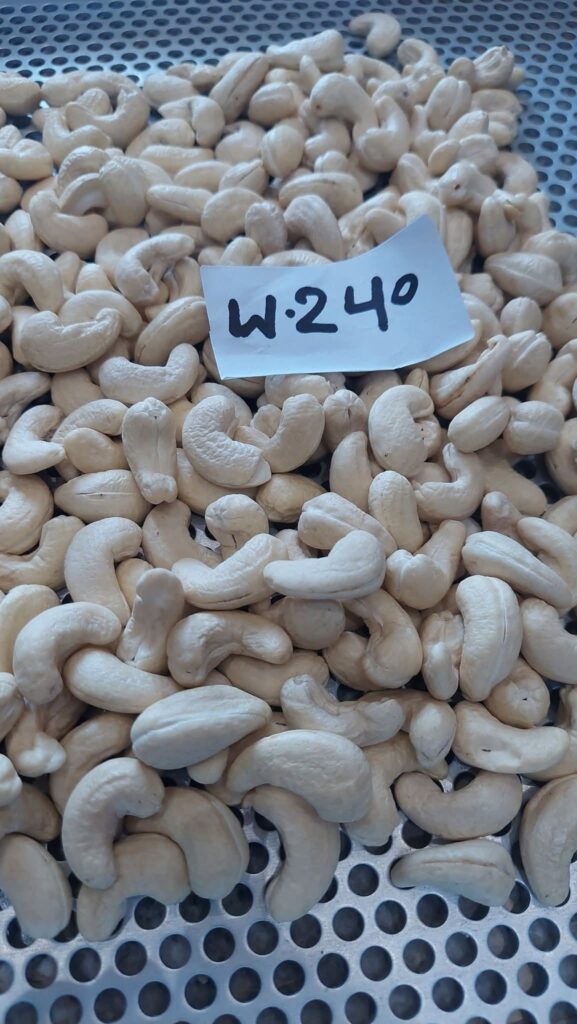
W240 — approximately 240 kernels per pound. A large kernel that sits at the premium end of the high-volume trading range. W240 is actively specified by European and American retail snack brands, premium mixed nut producers, and food service distributors who want a visually impressive kernel at a more accessible price point than W180.
W320 — approximately 320 kernels per pound. This is the world’s most widely traded cashew kernel grade — the commercial workhorse of the global cashew market. W320 strikes the balance between kernel size, visual quality, and price that makes it the default specification for mainstream snack manufacturing, retail own-brand nut packaging, food ingredient applications, and general wholesale distribution across virtually every major importing market globally. When an international buyer says “cashew kernel” without further specification, they almost certainly mean W320.
W450 — approximately 450 kernels per pound. A smaller whole white kernel, used in applications where size is less critical than cost — including nut mixes, confectionery inclusion, and certain food manufacturing applications where kernels are chopped or processed rather than presented whole.
Broken and Split Grades — cashew kernel pieces (halves, splits, pieces, and butts) produced during processing are traded as separate grades at lower price points. These grades serve important markets in confectionery manufacturing, bakery ingredient supply, nut butter and paste production, and snack mix formulation where whole kernel integrity is not required. Paradise MultiTrade supplies broken and split grades alongside whole kernel on buyer request.
Benefits and Industrial Uses of Cashew Nut Kernel
Snack and Retail Industry
This is cashew kernel’s most visible and commercially dominant application globally. Roasted and salted cashews, raw cashews, honey-roasted cashews, flavoured cashew snacks, and mixed nut products containing cashew are among the best-selling snack products in retail across every major market — from European supermarket chains to American mass-market retailers to Middle Eastern hypermarkets to Asian specialty food stores.
The snack industry’s demand for W320 and W240 whole white cashew kernel is enormous, consistent, and year-round — making it one of the most structurally stable demand streams in the global tree nut trade. Retail snack brands, private label manufacturers, and wholesale nut distributors supplying the snack sector are the highest-volume buyer category for Nigerian cashew kernel. For this segment, the key quality parameters are whole kernel integrity, colour whiteness, absence of shell fragments, moisture content, and food safety certification — particularly HACCP compliance at the processing facility level.
For competitive pricing on W320 and W240 grades in FCL volumes for snack manufacturing or retail distribution, request a quotation from Paradise MultiTrade with your volume and destination details.
Food Manufacturing and Ingredients Industry
Beyond direct snack consumption, cashew kernel is a widely used ingredient across multiple food manufacturing categories. Cashew appears as an inclusion ingredient in premium chocolate bars, trail mix and granola products, energy bars, and health snack formulations. Cashew-based sauces and gravies are foundational to Indian and broader South Asian cuisine — consumed in enormous volumes across both domestic and diaspora markets globally. Cashew cream and cashew milk — produced by blending or pressing cashew kernel — have become established plant-based dairy alternatives in the booming vegan and dairy-free food market. Cashew paste and cashew butter are growing ingredient categories in natural food manufacturing across Europe and North America.
For food manufacturers using cashew kernel as an ingredient rather than a finished snack, the W450 grade and broken/split grades offer a cost-effective raw material option where whole kernel presentation is not required. Contact our export team to discuss ingredient-grade cashew kernel pricing and specifications.
Confectionery Industry
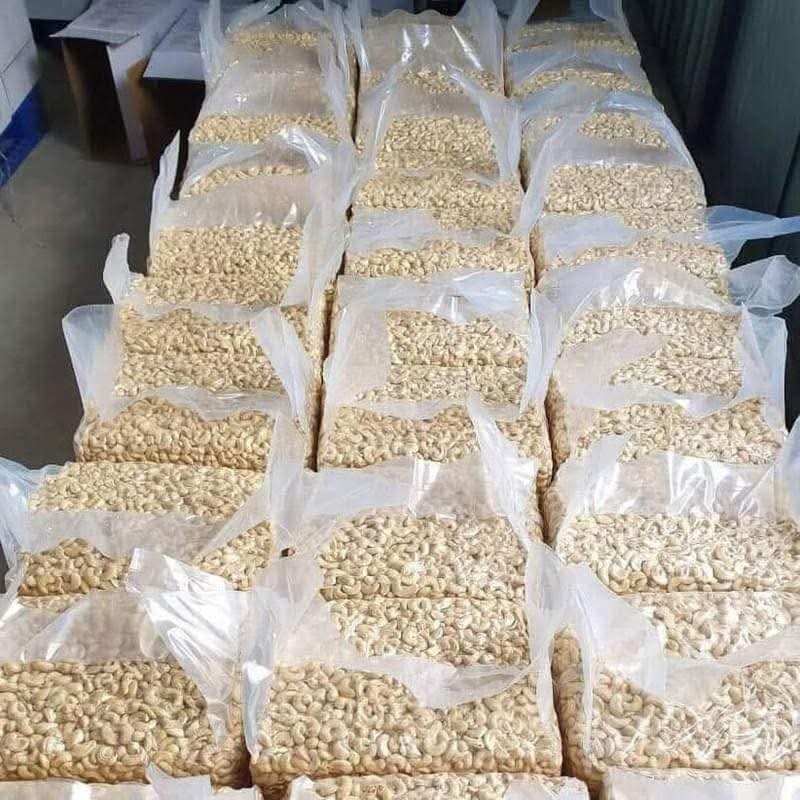
Cashew kernel is one of the most widely used nuts in global confectionery manufacturing — appearing in chocolate-covered cashews, cashew brittle, cashew pralines, cashew-filled confections, and cashew-topped premium chocolate products. The confectionery industry’s preference is typically for W320 or W240 whole kernels for presentation applications and broken/split grades for inclusion and paste applications. European confectionery manufacturers — particularly in Germany, Belgium, Switzerland, and the Netherlands — are active and sophisticated buyers of food-safety-certified cashew kernel from West African origins.
Plant-Based and Vegan Food Industry
The explosive growth of the plant-based food market has created a significant and rapidly expanding demand stream for cashew kernel specifically — driven by cashew’s unique culinary properties in plant-based cooking. Cashew’s high fat content and creamy texture when blended make it the preferred nut base for plant-based cheese production — cashew-based “cheese” has become a mainstream product category in premium vegan food retail across Europe and North America. Cashew cream, cashew-based sauces, and cashew milk formulations are similarly growing rapidly, creating consistent ingredient procurement demand from plant-based food manufacturers who source cashew kernel in meaningful volumes. Research on cashew’s nutritional profile relevant to plant-based diet applications is available through NCBI.
Pharmaceutical and Nutraceutical Industry
Cashew kernel’s nutritional profile positions it as a relevant ingredient in the nutraceutical and health food supplement sector. Cashew is rich in monounsaturated fats (primarily oleic acid), magnesium, zinc, copper, and plant-based protein — with documented benefits in cardiovascular health support, blood glucose management, and bone density maintenance. Research accessible through NCBI documents the metabolic health benefits of regular tree nut consumption, including cashew, providing the clinical evidence base that supplement and health food brands use to support product positioning.
Cashew kernel powder and cashew-derived ingredients appear in protein blend formulations, heart health supplement products, and natural energy food products in the premium nutraceutical retail sector.
Food Service Industry
Hotels, restaurant chains, airline catering operations, and institutional food service buyers purchase cashew kernel in significant volumes — both as a standalone snack served at bars, lounges, and events, and as an ingredient in kitchen operations producing cashew-containing dishes. The food service sector typically sources W320 for general use and W180 or W240 for premium presentation contexts. Food service distributors supplying the hospitality sector across the Middle East, Europe, and Asia are consistent buyers of quality cashew kernel from verified, food-safety-certified sources.
Why Buy Cashew Nut Kernel from Nigeria?
West African Origin Quality — Distinct and Valued
Nigerian cashew trees grow primarily across the Guinea savanna zone of the country’s north-central and southwestern states — a climate characterised by a well-defined wet season, fertile savanna soils, and a dry-season harvest period that concentrates sugar and flavour in the cashew apple and produces a dense, well-filled raw nut. The kernel extracted from Nigerian RCN is known among experienced processors and buyers for its good whiteness, dense flesh, and sweet, mild flavour profile — qualities that have built buyer loyalty among European and Middle Eastern snack manufacturers who have sourced Nigerian kernel over multiple seasons.
A Growing Domestic Processing Sector
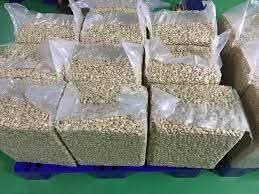
The expansion of Nigeria’s domestic cashew processing capacity over the past decade is one of the most commercially significant developments in West African agribusiness. Processing facilities equipped with modern shelling, peeling, grading, and packaging lines — and operating under HACCP food safety management systems — have progressively moved Nigerian cashew from a raw nut origin to a kernel export origin capable of competing directly with Vietnamese and Indian processed kernel on quality and documentation grounds.
For international buyers, this means that sourcing Nigerian cashew kernel now offers something that raw nut export origins cannot: the ability to specify grade, receive sorted and graded kernel in food-safe packaging, and obtain the processing facility food safety certifications that supermarket buyers, food manufacturers, and food service operators require from their nut supply chains.
Competitive Pricing Relative to Asian Processed Origins
Nigerian cashew kernel — processed domestically and exported directly rather than routed through Indian or Vietnamese processors — can offer competitive landed pricing for buyers in Europe, the Middle East, and North America relative to the premium origins. The combination of competitive Nigerian RCN farmgate pricing, lower processing labour costs relative to Asian competitors, and direct-to-buyer export from Lagos creates a landed cost equation that experienced nut importers find worth evaluating seriously against their existing supply chains.
Contact our export team for a direct comparison quotation on your current specification and volume.
Full Export Documentation and Food Safety Compliance
Every cashew kernel shipment processed through Paradise MultiTrade carries a phytosanitary certificate from the Nigerian Agricultural Quarantine Service (NAQS), NEPC export documentation, certificate of origin, commercial invoice, packing list, and bill of lading. Processing facility HACCP certification documentation is available for buyers whose procurement protocols require food safety system verification at the processing level. EU-bound shipments are prepared in compliance with Regulation (EU) 2017/625 on official controls for food imports. Our NEPC Export Licence No. 0042385 and CAC Registration No. RC-9284647 are current and verifiable through NEPC.
Nigeria’s Export Strength and Global Market Demand
The Markets Driving Nigerian Cashew Kernel Trade
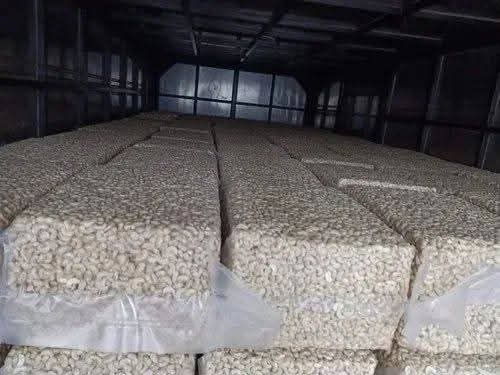
The European Union is the world’s largest importing market for cashew kernel by value — with Germany, the Netherlands, the United Kingdom, France, and Belgium all importing significant volumes for snack manufacturing, retail packaging, confectionery production, and food service distribution. German and Dutch nut importers are the most active and sophisticated buyers of Nigerian cashew kernel in the European market, with established procurement relationships with West African kernel exporters and well-developed quality assessment frameworks. ITC Trade Map data consistently reflects the EU as the primary destination for African-origin cashew kernel.
The United States is the world’s second-largest cashew kernel import market — driven by the enormous American snack industry, the growing natural and health food retail sector, and the food manufacturing industry’s significant cashew ingredient demand. American buyers typically source through nut importers and ingredient distributors based in New York, Los Angeles, and Chicago who manage the import compliance process and distribute to food manufacturers and retail brands. USDA Agricultural Market Reports reflect strong and growing US import volumes of cashew kernel across all major grades.
The Middle East — particularly the UAE, Saudi Arabia, Kuwait, Qatar, and Bahrain — is a major cashew kernel consuming region with high per-capita nut consumption driven by cultural snacking traditions, the hospitality industry, and gifting practices around religious festivals and celebrations. UAE-based nut importers and distributors supply the GCC retail and food service market with cashew kernel sourced from multiple origins, including Nigeria.
India — despite being one of the world’s largest cashew processors — is also a significant cashew kernel consumer and re-importer, purchasing processed kernel from African and Southeast Asian sources to supplement domestic processing capacity in high-demand periods.
Asia-Pacific — including Japan, Australia, and China — represents a growing export opportunity for Nigerian cashew kernel, driven by expanding nut consumption in these markets and growing interest in diversified African origin supply.
Why Choose Paradise MultiTrade International Limited?
Full Grade Range from One Supplier. We supply the complete commercially traded cashew kernel grade range — W180, W210, W240, W320, W450, and broken/split grades — from a single export source. Buyers who need multiple grades for different product lines or customer segments can consolidate procurement through Paradise MultiTrade rather than managing separate supplier relationships for each grade.
Processing Facility Quality Assurance. Our cashew kernel is sourced from processing facilities operating under HACCP food safety management systems. We provide processing facility documentation to buyers whose procurement protocols require food safety system verification — a standard requirement from supermarket buyers, branded food manufacturers, and food service operators.
Grade-Specific Quality Control. Each grade is sorted, visually inspected, and packed to AFI specification standards. Buyers receive kernels that meet the count, colour, and integrity specifications for the grade they purchased — not a mixed-quality batch that requires re-sorting on arrival.
Nitrogen-Flushed Vacuum Packaging. Cashew kernel’s high fat content makes it vulnerable to oxidative rancidity during extended shipping and storage. We pack in nitrogen-flushed vacuum-sealed tins or foil bags — the international standard for cashew kernel preservation — to ensure product arrives at destination with full freshness, flavour, and colour integrity.
Multi-Commodity Export Convenience. Beyond cashew kernel, Paradise MultiTrade exports raw cashew nuts (RCN), sesame seeds, fresh ginger, dry split ginger, hibiscus flower, bitter kola, and kola nut. Explore our full range of Nigerian export commodities and consolidate your Nigerian agricultural sourcing through one verified, licensed partner.
Product Specifications
| Specification | Details |
|---|---|
| Product | Cashew Nut Kernel (Anacardium occidentale) |
| Origin | Nigeria (Kogi, Enugu, Kwara, Oyo, Osun, Cross River, Anambra States) |
| Grades Available | W180, W210, W240, W320, W450, SW (Scorched Wholes), SP (Splits), B (Butts), P (Pieces) |
| Colour | White to pale ivory (W-grades); light scorched available in SW grade |
| Moisture Content | Maximum 5% |
| Broken Kernels | Maximum 5% in whole grade lots |
| Shell and Skin Pieces | Maximum 0.1% |
| Free of | Mould, insect damage, rancidity, foreign matter, shell fragments |
| Food Safety | HACCP-certified processing facility; aflatoxin testing available |
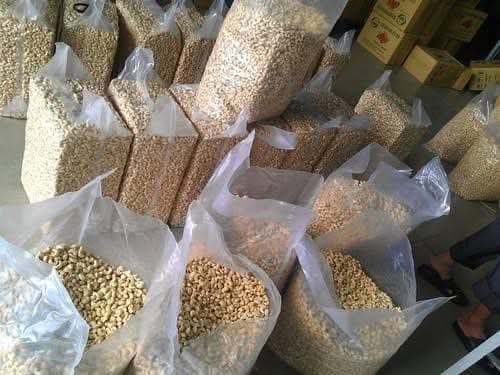
| Packaging | Nitrogen-flushed vacuum tins (25 lbs / 11.34kg); carton-packed; custom packaging available |
| Carton Pack | 10 tins per carton (standard); 12 tins per carton (alternate) |
| Supply Capacity | 10–500+ MT per shipment (subject to grade and seasonal availability) |
| MOQ | 5 Metric Tonnes |
| Shelf Life | 12–18 months in original nitrogen-flushed vacuum packaging |
| Export Documentation | Phytosanitary Certificate (NAQS), HACCP Certificate, Certificate of Origin, NEPC Export Licence, Commercial Invoice, Packing List, Bill of Lading |
| Payment Terms | T/T, Letter of Credit (LC at sight), Escrow |
| Loading Port | Lagos (Apapa / Tin Can Island Port), Nigeria |
| Incoterms Available | EXW, FOB Lagos, CNF, CIF |
Packaging and Export Process
Raw Nut Reception and Grading. Raw cashew nuts sourced from Nigerian farms across the production belt states are received at processing facilities, weighed, and graded for initial quality assessment. RCN quality — outturn ratio, nut count per kilogram, and moisture content — is recorded and used to plan the processing run.
Steam Treatment and Shelling. Raw cashew nuts are steam-treated or roasted at controlled temperatures to neutralise the caustic CNSL in the shell. After cooling, the shells are cracked mechanically or by hand to release the kernel. The shelling process requires significant skill and precision — aggressive shelling damages the kernel, increasing broken rates and downgrading commercial value.
Peeling and Drying. Extracted kernels — still covered by the thin inner testa — are dried in grading ovens or sun-dried to reduce moisture to levels that allow clean testa removal. The dried testa is then removed by peeling — either manually or mechanically — revealing the white to ivory kernel underneath.
Grading and Sorting. Peeled kernels are graded by size on mechanical grading lines calibrated to the AFI count-per-pound specification. Colour sorting — manual or optical — separates white grade kernels from scorched, discoloured, or damaged material. Each grade is accumulated separately for packaging.
Quality Inspection. Grade lots are inspected against AFI specification parameters — count accuracy, colour, broken kernel percentage, moisture, shell and skin presence, and overall cleanliness — before packing confirmation.
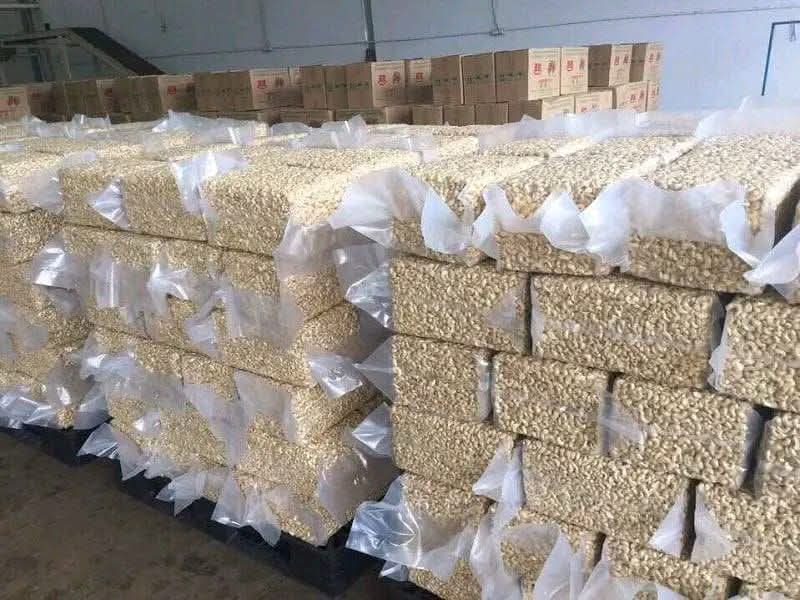
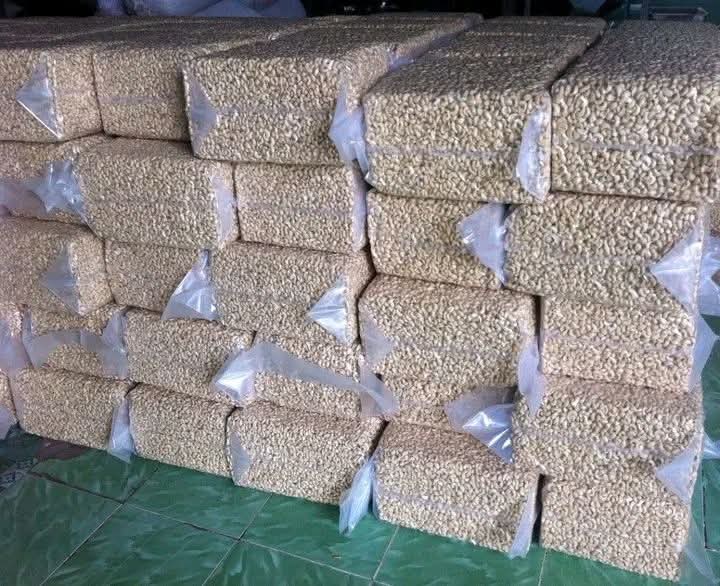
Nitrogen-Flushed Vacuum Packaging. Graded and inspected kernel is packed into tinplate cans or laminated foil bags, flushed with food-grade nitrogen to displace oxygen, and vacuum-sealed. This packaging method is the international standard for cashew kernel preservation — it prevents oxidative rancidity development during shipping and storage and maintains the fresh flavour and white colour of the kernel through its shelf life. Sealed tins are packed into export cartons, labelled with grade, lot number, net weight, packaging date, and export documentation reference.
Phytosanitary Inspection and Loading. Pre-export phytosanitary inspection by NAQS is conducted before container loading. Cashew kernel ships in standard dry containers — no refrigeration required when properly packaged in nitrogen-flushed vacuum tins. Lead time from order confirmation to container loading typically runs 14–28 days depending on grade, volume, and current processing schedule. Contact us early to discuss scheduling and secure your allocation.
Frequently Asked Questions
What is the difference between W180, W240, and W320 cashew kernel grades?
The W-grade number indicates the approximate count of whole white kernel pieces per pound (453.6g). W180 contains approximately 180 pieces per pound — the largest, most premium whole kernel grade. W240 contains approximately 240 pieces per pound — a large kernel favoured by premium retail and food service buyers. W320 contains approximately 320 pieces per pound — the world’s most widely traded grade, preferred for mainstream snack manufacturing, retail packaging, and general wholesale distribution. Lower count = larger kernel = higher price per kilogram. All three are whole white kernels meeting the same colour and integrity standards — they differ only in size.
Which cashew kernel grade should I order for retail snack packaging?
For mainstream retail snack packaging — whether own-brand or branded — W320 is the standard commercial choice, offering the best balance of kernel size, visual quality, and cost efficiency. For premium retail positioning — premium mixed nuts, luxury gifting, or high-end health food retail — W240 or W180 will differentiate your product on shelf. If you are unsure which grade best suits your application, contact our team and we will advise based on your product and market context.
Is Nigerian cashew kernel HACCP certified?
Our cashew kernel is sourced from processing facilities operating under HACCP food safety management systems. HACCP certificates and facility documentation are available for buyers whose procurement protocols require food safety system verification. Contact us to request facility documentation.
How is cashew kernel packaged to prevent rancidity during shipping?
Cashew kernel is packed in nitrogen-flushed vacuum-sealed tinplate cans — the internationally accepted standard packaging for cashew kernel export. Nitrogen flushing displaces oxygen from the packaging environment, eliminating the oxidative rancidity development that would otherwise degrade the kernel’s flavour and colour during extended shipping and storage. Sealed tins maintain kernel quality for 12–18 months from the packaging date under ambient warehouse conditions.
Can you supply broken and split grades alongside whole kernel?
Yes. Splits (SP), butts (B), pieces (P), and other broken grades are available alongside whole W-grade kernel. These grades are used in confectionery manufacturing, bakery ingredient applications, nut butter and paste production, and snack mix formulation. Pricing and availability for broken grades are discussed at the quotation stage. Contact our team to specify your broken grade requirements.
What transit times should I expect from Nigeria?
Europe (Rotterdam, Hamburg, Felixstowe, Antwerp) — approximately 14–20 days from Lagos. UAE (Jebel Ali) — 10–14 days. USA (East Coast) — 18–25 days. India (Nhava Sheva) — 10–15 days. Australia (Sydney, Melbourne) — 22–30 days. China (Shanghai, Guangzhou) — 22–28 days.
Do you also export raw cashew nuts (RCN) from Nigeria?
Yes. Paradise MultiTrade exports both processed cashew kernel and raw cashew nuts (RCN) — the unprocessed shell nut sourced directly from Nigerian farms for buyers who operate their own processing facilities. See our raw cashew nut export page for RCN specifications and supply details, or contact our team to discuss RCN sourcing alongside kernel.
Ready to Source Premium Cashew Nut Kernel from Nigeria?
If you are a snack manufacturer, retail buyer, food manufacturer, confectionery producer, food service distributor, plant-based food brand, or commodity trader actively searching for a dependable cashew nut kernel exporter in Nigeria who can deliver graded W180, W240, W320, or broken grades with full food safety documentation and nitrogen-flushed vacuum packaging — Paradise MultiTrade International Limited is precisely the export partner your procurement programme requires.
We combine direct access to Nigeria’s cashew processing sector, rigorous grade-specific quality control, nitrogen-flushed vacuum packaging as standard, and the full regulatory documentation package that buyers in every major regulated import market require.
Request a Quotation — specify your required grade or grades (W180, W240, W320, W450, broken), volume per shipment, destination port, and preferred incoterms. We will respond with a detailed, competitive quote within 48 hours.
Contact Our Export Team — speak directly with our export coordinators about grade availability, HACCP documentation, sample requests, broken grade pricing, and long-term contract supply arrangements across multiple grades.
Explore Our Full Product Range — alongside cashew nut kernel, Paradise MultiTrade exports raw cashew nuts (RCN), sesame seeds, fresh ginger, dry split ginger, hibiscus flower, bitter kola, and kola nut. One licensed Nigerian exporter. One consolidated sourcing relationship. Consistent quality and documentation across every commodity.
buy cashew kernel from Nigeria, Nigerian cashew kernel supplier, W320 cashew kernel Nigeria, W240 cashew kernel bulk export, W180 cashew kernel wholesale, cashew kernel grades Nigeria, white whole cashew kernel Africa, Nigerian cashew kernel for food industry
Paradise MultiTrade International Limited | NEPC Export Licence No. 0042385 | CAC No. RC-9284647 | Lagos, Nigeria | www.paradisemultitrade.com
Reviews
There are no reviews yet.