

Raw Cashew Nuts from Nigeria: The Processor’s Origin of Choice — What High Outturn RCN Means, Why Nigerian Material Wins on Quality Economics, and How to Source It Directly
Raw Cashew Nuts Nigeria — High Outturn RCN, Direct Farm Sourcing, Full Container Supply to Processors Worldwide
Raw cashew nuts in Nigeria is a search phrase typed with a very deliberate purpose. The buyers running this search are not retail consumers or casual enquirers. They are cashew processing facility operators in Vietnam, India, and Brazil who need a consistent pipeline of quality RCN to keep their shelling lines running. They are commodity traders building multi-origin raw nut portfolios for resale into Asian and European processing markets. They are agricultural commodity investment firms evaluating West African origin positions. And increasingly, European and American food companies are investigating direct-from-origin RCN procurement to feed their own or contract processing operations.
Every single one of these buyers shares one non-negotiable priority: outturn. In the raw cashew nut trade, outturn — the weight of exportable whole white kernel produced per 80kg bag of raw nut processed — is the commercial metric around which every procurement decision ultimately revolves. It determines processing yield, it determines kernel cost-per-kilogram, and it determines whether buying Nigerian RCN at a given price makes economic sense against Indian, Tanzanian, Ivorian, or Mozambican alternatives. Nigerian raw cashew nuts — when properly sourced from the right growing regions and handled correctly through the post-harvest chain — deliver outturn rates that make them one of the most commercially competitive RCN origins on the global market.
At Paradise MultiTrade International Limited, we export Nigerian RCN directly to processing facilities and commodity traders worldwide — sourcing from established farming networks across Nigeria’s primary cashew producing states, grading to international trade specification, and shipping with full regulatory documentation from Lagos. If you process cashew or trade RCN, this is the article that makes the case for Nigerian origin — and explains exactly how to source it through a licensed, compliant Nigerian exporter.
To move immediately to pricing and specification discussions, request a quotation here and our export team responds within 48 hours.
The Story of Raw Cashew Nuts — From Brazilian Forest to Global Processing Industry
An Accidental Crop That Became a Global Industry
Anacardium occidentale — the cashew tree — arrived in West Africa carrying the ambitions of Portuguese colonial expansion and the botanical curiosity of 16th-century European naturalists who had encountered it on the coast of northeastern Brazil. What the Portuguese found in Ceará and Piauí was a tree of remarkable hardiness — drought-tolerant, fast-growing, capable of stabilising coastal dunes and producing edible fruit across soils too poor and dry for most other crops. They carried it across the Indian Ocean world deliberately, introducing it to Goa around 1560, to coastal East Africa by the 1590s, and to West Africa through the same trade routes that moved slaves, gold, and spices between continents.
The tree took to West African conditions with extraordinary enthusiasm. Nigeria’s Guinea savanna zone — warm, well-drained, seasonally dry — replicated the conditions of the Brazilian cerrado closely enough that cashew naturalised rapidly and spread far beyond the coastal zones where Portuguese traders first planted it. For the next three centuries, cashew trees across Nigeria were valued primarily for their pseudo-fruit — the fleshy cashew apple consumed fresh or fermented into local beverages — while the nut attached to the apple’s base was largely ignored or discarded.
The transformation of the cashew nut from agricultural afterthought to globally traded commodity happened primarily in India. As documented in historical accounts of the Indian cashew processing industry tracked through the International Nut and Dried Fruit Council (INC), Indian entrepreneurs in the coastal state of Kerala developed the shelling and processing techniques during the early 20th century that made large-scale cashew kernel production economically viable — and in doing so, created the global demand for raw cashew nuts that gave West African production its commercial value. By the 1960s and 1970s, Indian processors were actively sourcing RCN from West African origins including Nigeria, recognising that African-grown cashew trees — growing in lower population densities across savanna farmland — produced nuts with dense, well-filled kernels that translated into strong processing outturn.
Nigeria’s Cashew Belt — Geography and Commercial Significance
Nigeria’s cashew production is concentrated in a band of states stretching across the country’s Guinea savanna transition zone — the ecological boundary between the tropical forest belt of the south and the drier Sudan savanna of the north. The primary producing states — Kogi, Enugu, Anambra, Cross River, Kwara, Oyo, Osun, Ondo, Ekiti, and Benue — share the climatic characteristics that cashew trees thrive in: well-defined wet and dry seasons, moderate to low rainfall, free-draining sandy to loamy soils, and intense solar radiation during the dry-season flowering and fruiting period.
This geographic concentration creates a defined harvest calendar that processors and traders use to plan their procurement cycles. Nigeria’s cashew harvest runs primarily from February through May — with the peak of the harvest in March and April across most producing states. This harvest window sits conveniently within the global cashew processing industry’s procurement cycle, giving Nigerian RCN strong timing relevance for processors who need to fill post-Ivorian harvest supply gaps.
According to FAO production statistics, Nigeria produces between 80,000 and 150,000 metric tonnes of raw cashew nuts annually in significant harvest years — making it one of sub-Saharan Africa’s most important cashew origins by volume. Trade flow data available through ITC Trade Map confirms Nigerian RCN reaching processing destinations in Vietnam, India, Brazil, and to a lesser extent European and American markets — a destination spread that reflects both the quality credentials of Nigerian material and the efficiency of Lagos as a loading port for multiple global shipping routes.
The African Cashew Alliance (ACA) — the continent’s primary cashew industry development organisation — tracks Nigerian production, quality standards, and market development within its broader West and East African cashew sector monitoring programme, providing processors and traders with the market intelligence infrastructure to evaluate Nigerian origin systematically alongside competing African sources.
What Is Raw Cashew Nut (RCN)? The Processor’s Raw Material Explained
Anatomy of the Raw Nut
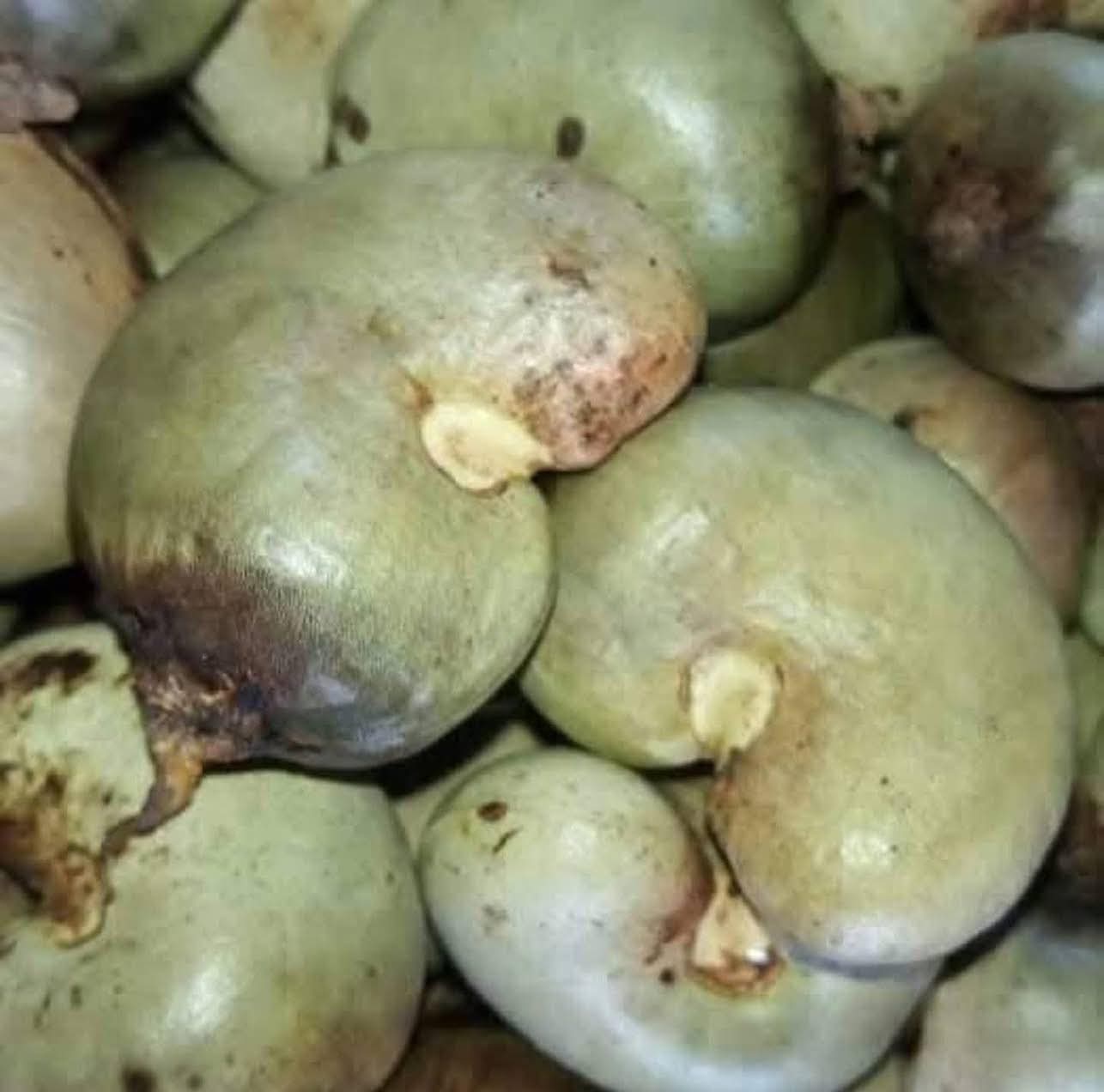
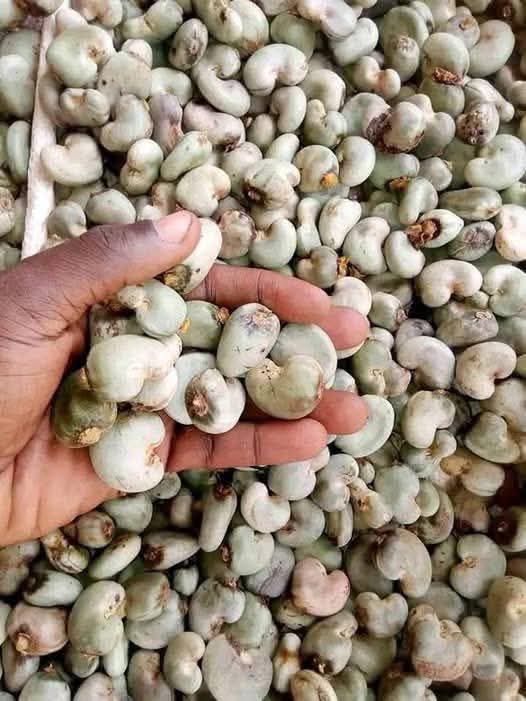
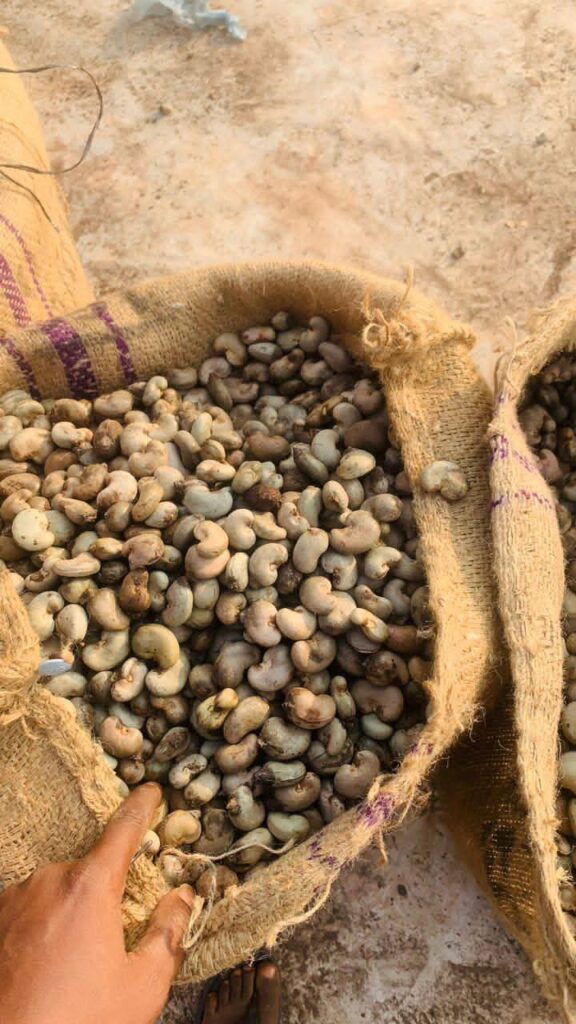
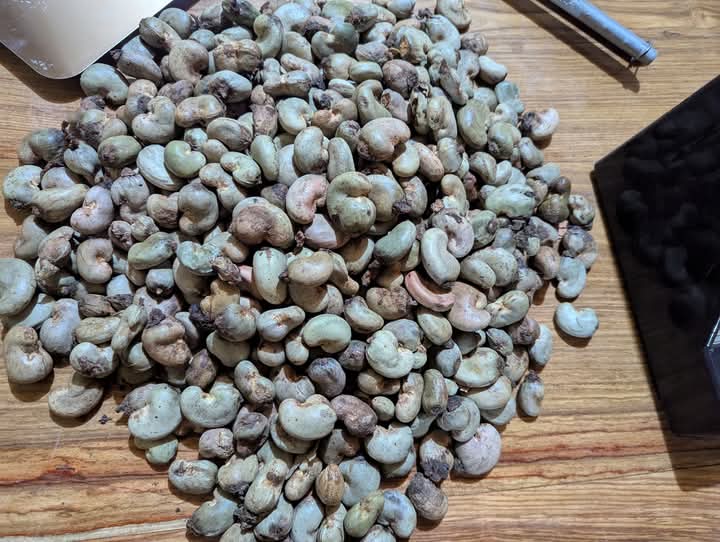
The raw cashew nut of commerce is the kidney-shaped seed attached to the base of the cashew apple — enclosed in a double-layered shell between whose layers sits cashew nut shell liquid (CNSL), a caustic mixture of anacardic acid, cardol, and cardanol that constitutes approximately 20–25% of the raw nut’s weight and must be neutralised during processing before the shell can be safely cracked.
The structure of the raw nut — from the outside in — is: outer shell (testa externa), CNSL layer, inner shell (testa interna), testa (the thin inner seed coat covering the kernel), and at the centre, the kernel itself — the edible white seed that is the finished commercial product after processing.
Understanding this anatomy matters commercially because the ratio of kernel weight to total nut weight — the outturn — is directly determined by kernel development quality at the farm and harvest level. A well-nourished, fully mature cashew nut from a tree growing in optimal conditions produces a dense, well-filled kernel that occupies maximum space within the shell. A poorly nourished, prematurely harvested, or drought-stressed nut produces a shrivelled, incompletely developed kernel that delivers poor outturn regardless of processing skill.
Outturn — The Number That Defines RCN Value
In raw cashew nut trade, outturn is everything. It is calculated as the weight of whole white kernel produced per 80kg bag of RCN processed — expressed in pounds. An outturn of 48 lbs per 80kg bag means that processing one 80kg bag of that RCN produces 48 lbs (approximately 21.8kg) of exportable whole white kernel — roughly a 27% kernel-to-raw-nut ratio.
Industry benchmarks and outturn ranges across major origins are tracked and published by organisations including the CBI Netherlands Market Intelligence platform — a valuable reference for processors evaluating origin economics. Nigerian RCN from well-managed supply chains in the primary producing states typically delivers outturn in the range of 44–52 lbs per 80kg bag — a commercially competitive range that positions Nigerian material favourably against many competing origins when evaluated on a cost-per-pound-of-kernel basis rather than a cost-per-tonne-of-RCN basis.
The distinction between these two pricing frameworks is one of the most important concepts in RCN procurement economics. Paying a slightly higher price per tonne for RCN with a significantly higher outturn can be — and frequently is — more economically rational than buying cheaper RCN with a lower outturn. Processing facilities with fixed overhead costs benefit directly from higher-outturn raw material: the same processing infrastructure produces more sellable kernel per hour of operation, reducing effective cost per unit of finished product.
Why Nigerian RCN Delivers Strong Outturn — The Agronomic Explanation
The Guinea Savanna Advantage
Nigeria’s cashew producing belt occupies the Guinea savanna ecological zone — characterised by a clearly defined growing season of 6–8 months of rainfall followed by a pronounced dry season during which the cashew trees flower, fruit, and mature their nuts. This seasonal structure is agronomically ideal for cashew: the wet season supports vegetative growth, root development, and nutrient accumulation, while the dry season — warm, sunny, and progressively drier through March and April — concentrates carbohydrates and oils in the developing kernel during the critical final maturation phase.
The result is a raw nut with a higher kernel density and better-developed nut meat than origins where rainfall is less clearly seasonal or where the harvest period coincides with humid conditions that cause premature nut drop and incomplete kernel development. Research on cashew agronomy and regional quality differentiation published through CABI’s crop science database provides the scientific framework for understanding how growing environment affects raw nut quality — and why origin matters in RCN procurement as much as it does in coffee, cacao, or specialty grain sourcing.
Nut Count and Size — The Other Key Quality Parameter
Beyond outturn, the second most important quality parameter in RCN trade is nut count — the number of raw nuts per kilogram, which determines average nut size. Lower nut count means larger individual nuts, which generally — though not universally — correlates with higher outturn and the ability to produce larger kernel grades (W180, W240) that command premium prices in finished kernel markets.
Nigerian RCN from the primary producing states typically delivers nut counts in the range of 160–200 nuts per kilogram in well-managed supply chains — a count range that produces kernels grading predominantly into W240 and W320 categories after processing, with meaningful proportions of W180 in strong harvest years. This size profile makes Nigerian RCN particularly attractive to processors targeting premium kernel grades for European and American retail markets.
Benefits of Sourcing RCN from Nigeria — The Processor’s Commercial Case
Origin Diversification in a Concentrated Supply World
The global raw cashew nut supply is heavily concentrated — Côte d’Ivoire alone accounts for approximately 35–40% of global RCN production in most years, creating a structural supply concentration risk that experienced processing facility operators and commodity traders manage actively by maintaining multi-origin procurement programmes. As documented in market analysis available through Tridge commodity intelligence, supply disruptions in Côte d’Ivoire — whether weather-driven, logistical, or political — create significant price and availability volatility that processors without diversified origin supply chains are exposed to directly.
Nigeria is the natural West African diversification origin for processors who are Côte d’Ivoire-heavy in their procurement mix. Its harvest calendar sits slightly later than the Ivorian peak — Nigerian material becomes available in March-May as the Ivorian harvest winds down — creating a supply continuity bridge that processors managing year-round shelling line operations find practically valuable. Adding Nigerian origin to a procurement programme is not just quality diversification — it is supply chain risk management.
Competitive Processing Economics
The economics of sourcing Nigerian RCN versus alternative origins are best evaluated through a landed-cost-per-pound-of-kernel analysis rather than a simple price-per-tonne comparison. Using publicly available freight rate benchmarks and origin FOB pricing data tracked through platforms including World Bank Commodity Markets and ITC Trade Map, processors can construct a comparative landed cost model that accounts for freight from Lagos versus Abidjan, Mumbai, or Dar es Salaam, and then layer in the outturn differential to arrive at the true cost of white kernel produced from each origin.
For processing facilities in Vietnam — the world’s dominant cashew kernel processor, handling over 60% of global RCN according to data tracked by the International Nut and Dried Fruit Council — Nigerian RCN offers competitive transit times via direct sailing routes from Lagos, competitive FOB pricing relative to East African origins, and outturn credentials that support the processing economics of facilities targeting W240 and W320 kernel for European buyers.
Direct Sourcing from a Licensed Nigerian Exporter
The Nigerian RCN supply chain — from farm to export container — passes through several handling stages: farm harvest, local buying agent aggregation, regional trader consolidation, and Lagos-based exporter packing and shipping. Each stage adds cost and introduces potential quality variability. Processors who source through a licensed Nigerian exporter with direct farmer and regional aggregator relationships — rather than buying through international commodity brokers who purchased from Nigerian secondary traders — access the supply chain at its most quality-efficient and cost-efficient point.
At Paradise MultiTrade International Limited, our sourcing relationships in Kogi, Kwara, Oyo, Osun, Enugu, and Cross River states connect us directly to the aggregation level of the supply chain — giving us genuine quality visibility over the material we are shipping and genuine pricing efficiency that we pass through to buyers. Contact our export team to discuss how our sourcing structure affects the pricing and quality consistency you can expect.
Nigeria’s Position in the Global Cashew Trade
The Numbers That Define Nigeria’s Market Relevance
Nigeria’s standing in the global cashew trade is well-documented across multiple international agricultural data sources. FAO production data consistently places Nigeria among the top four or five African cashew producing nations. The African Cashew Alliance — which publishes annual season reports covering production volumes, quality assessments, and price tracking across West and East African origins — regularly profiles Nigerian RCN within its market intelligence outputs, providing processors with independently sourced quality benchmarks against which to evaluate procurement proposals.
Global cashew market sizing and demand trend analysis published by industry research sources confirms that the world cashew kernel market — driven by growing snack nut consumption across China, Europe, and North America, and by the plant-based food industry’s growing cashew demand — is on a sustained growth trajectory. Demand analysis available through the INC’s annual market reports projects continued global cashew consumption growth through the remainder of this decade, providing the demand foundation that justifies long-term supply relationship development between processors and reliable RCN origin exporters.
Where Nigerian RCN Goes — The Processing Destinations
Vietnam is the world’s largest cashew processor and the most significant destination for Nigerian RCN in volume terms. Vietnamese processors — operating large-scale automated and semi-automated shelling facilities primarily in Binh Phuoc, Dong Nai, and Ho Chi Minh City provinces — source RCN from across the globe, including significant West African volumes. Nigerian RCN competes in the Vietnamese market primarily on outturn, nut size, and freight economics relative to East African and Asian origins.
India — historically the world’s dominant cashew processor before Vietnam surpassed it — remains an active buyer of Nigerian RCN, particularly through traders based in Mumbai and Chennai who aggregate multi-origin RCN for distribution to processing facilities across Kerala, Goa, and Maharashtra. The Cashew Export Promotion Council of India (CEPC) is the Indian industry body through which Nigerian RCN quality standards are benchmarked against Indian processor requirements.
Brazil is an emerging processor of African-origin RCN — Brazilian processing facilities that traditionally processed domestic northeastern Brazilian RCN have begun supplementing their raw material supply with African-origin nuts during domestic lean seasons, and Nigerian material has entered this procurement channel in exploratory volumes.
European Direct Processors — a smaller but growing segment of European food companies and ingredient processors who are building direct-from-African-origin RCN procurement to feed their own or contract processing operations — are an increasingly relevant destination for Nigerian RCN. CBI Netherlands’ market intelligence on cashew sourcing specifically highlights direct African sourcing as a growing trend among European buyers seeking supply chain transparency and shorter sourcing chains.
Why Choose Paradise MultiTrade International Limited for Nigerian RCN?
Primary State Sourcing. Our RCN sourcing is concentrated in Nigeria’s highest-quality producing states — Kogi, Kwara, Oyo, Osun, Enugu, and Cross River — where the Guinea savanna agronomic conditions produce the nut density and kernel development that translate into strong processing outturn. We are not aggregating from secondary markets or buying mixed-origin material from Lagos brokers.
Pre-Shipment Quality Assessment. We conduct outturn sampling assessments on source lots before committing to purchase — working with buyers to establish the outturn expectations for each shipment and providing sample material for buyers who wish to conduct their own pre-shipment outturn verification. Third-party pre-shipment inspection by SGS, Intertek, or equivalent agencies is available and welcomed.
Nut Count and Moisture Compliance. Every RCN lot is assessed for nut count per kilogram and moisture content before containerisation. Moisture control — keeping RCN below 10% moisture for container loading — is critical for preventing mould development and CNSL migration during sea transit. Improperly dried RCN is a known quality risk in the Nigerian export supply chain that we manage actively at source.
Full Export Documentation. Every RCN shipment carries phytosanitary certification from the Nigerian Agricultural Quarantine Service (NAQS), NEPC export documentation, certificate of origin, commercial invoice, packing list, and bill of lading. Our NEPC Export Licence No. 0042385 and CAC Registration No. RC-9284647 are current and verifiable through the Nigerian Export Promotion Council. EU-bound shipments comply with Regulation (EU) 2017/625 on official controls for food imports.
Multi-Commodity Relationship. Processors and traders sourcing Nigerian RCN through Paradise MultiTrade can also access our cashew kernel export programme — W180, W240, W320 and broken grades — as well as sesame seeds, hibiscus flower, ginger, bitter kola, and kola nut. Explore our full Nigerian export commodity range and consolidate your West African agricultural sourcing through one trusted, licensed partner.
Product Specifications
| Specification | Details |
|---|---|
| Product | Raw Cashew Nuts (RCN) — Anacardium occidentale |
| Origin | Nigeria (Kogi, Kwara, Oyo, Osun, Enugu, Cross River, Benue States) |
| Crop Year | Current season (February–May harvest) |
| Outturn | 44–52 lbs per 80kg bag (lot-specific, pre-shipment assessed) |
| Nut Count | 160–200 nuts per kilogram (grade-dependent) |
| Moisture Content | Maximum 10% (container loading specification) |
| Admixture | Maximum 2% (immature nuts, foreign matter, rejects) |
| Defectives | Maximum 5% (mouldy, insect-damaged, empty nuts) |
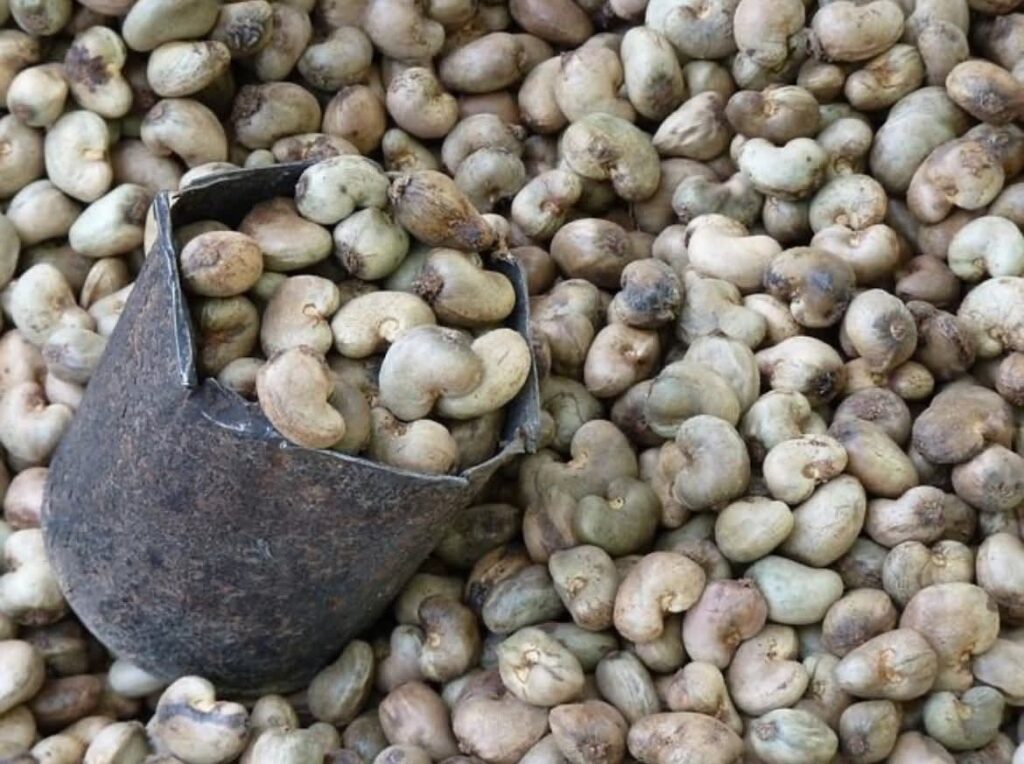
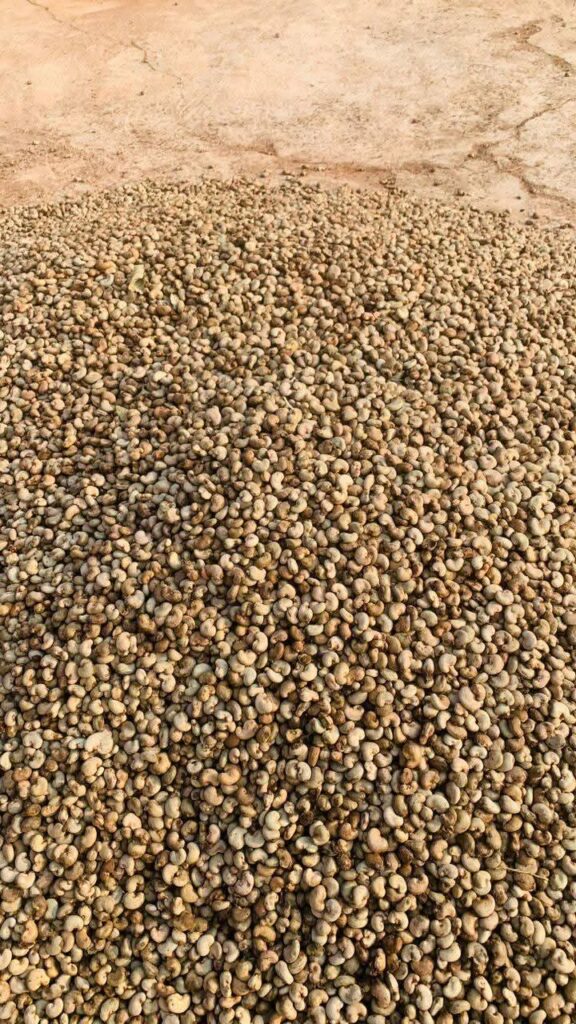
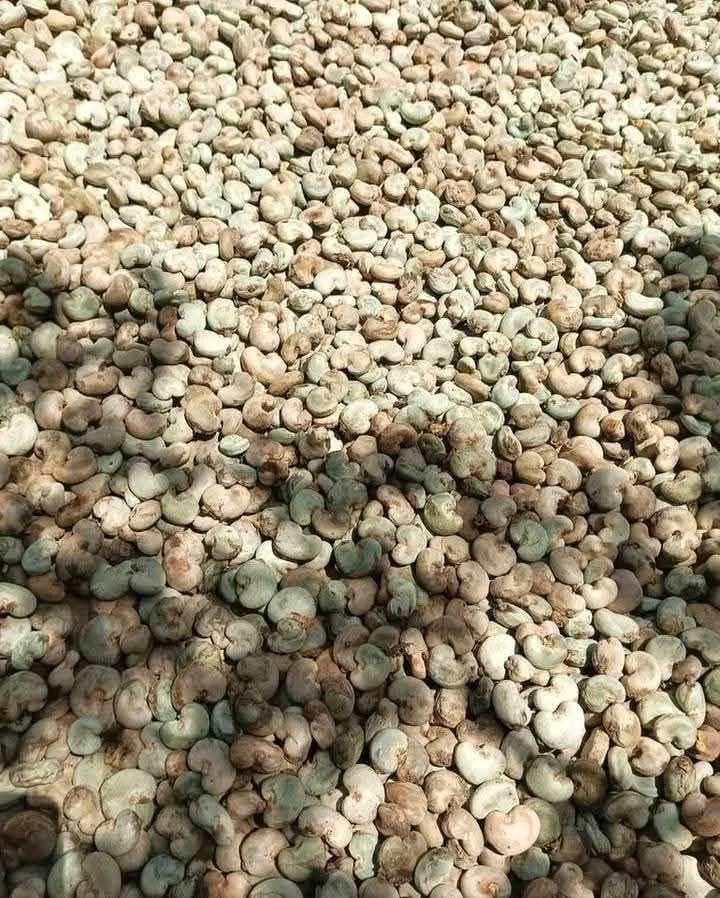
| Nut Colour | Natural grey-brown to green-tinged (fresh season); tan to grey (stored) |
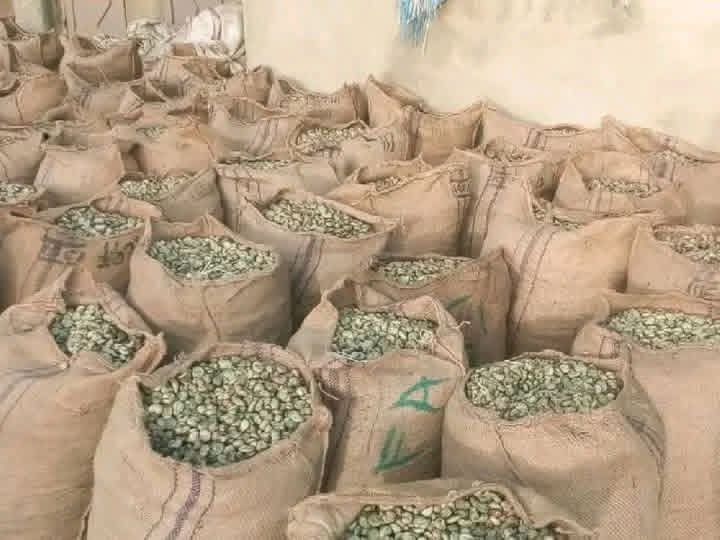
| Packaging | 80kg polypropylene woven bags (standard trade unit) |
| Supply Capacity | 100–3,000+ MT per shipment (subject to harvest season availability) |
| MOQ | 100 Metric Tonnes |
| Export Documentation | Phytosanitary Certificate (NAQS), Certificate of Origin, NEPC Export Licence, Commercial Invoice, Packing List, Bill of Lading |
| Payment Terms | T/T, Letter of Credit (LC at sight), Escrow |
| Loading Port | Lagos (Apapa / Tin Can Island Port), Nigeria |
| Incoterms Available | EXW, FOB Lagos, CNF, CIF |
| Pre-Shipment Inspection | SGS, Intertek, Bureau Veritas — available at buyer’s request |
Packaging and Export Process
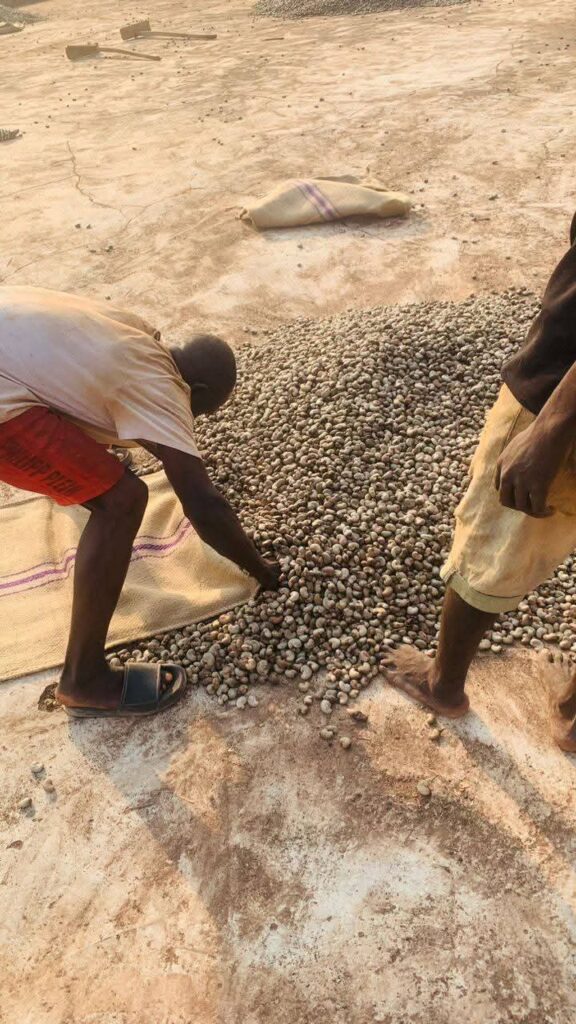
Farm Harvest and Aggregation. Nigerian cashew harvest runs primarily February through May. Farmers harvest fallen nuts from the ground daily — cashew nuts drop naturally from the apple when fully mature, which is why timely daily collection is critical to preventing moisture uptake, mould development, and CNSL migration that degrade nut quality. Harvested nuts are dried at the farm level before sale to local buying agents.
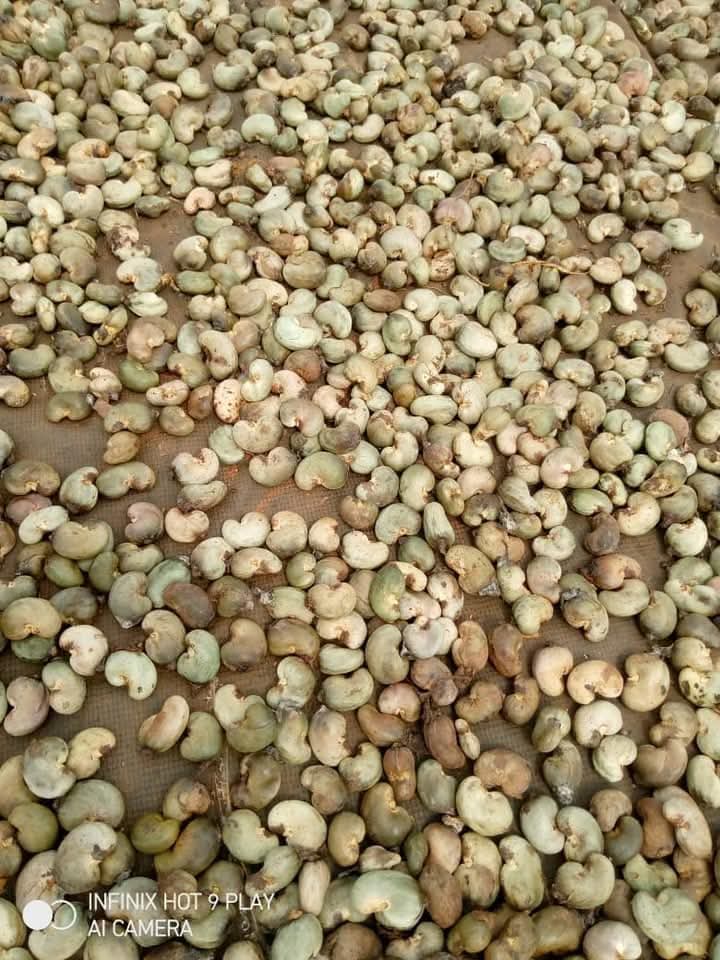
Farm-Level Drying. Freshly harvested RCN carries 20–30% moisture at collection. Farm-level sun-drying on clean, raised surfaces over 3–5 days reduces this to 10–12% — approaching the threshold for safe bagging and transport. Inadequate farm-level drying is one of the most significant quality risk factors in Nigerian RCN and a primary focus of our sourcing quality monitoring. Resources on post-harvest cashew handling best practices are published by the Food and Agriculture Organization and the African Cashew Alliance through their producer training programmes.
Regional Aggregation and Secondary Drying. At regional aggregation points, RCN lots are weighed, sampled for quality assessment, and — where moisture requires further reduction — dried to achieve the ≤10% moisture level required for container loading. This secondary drying stage is critical for shipments from areas where early-season harvest coincides with residual wet-season humidity.
Quality Sampling. Paradise MultiTrade conducts outturn sampling on aggregated lots before purchase confirmation. Outturn assessment — processing a representative sample through mini-shelling to determine expected kernel yield — is the most reliable pre-purchase quality verification method available and is standard practice among serious RCN buyers globally. The methodology is referenced in procurement guidance published by the CBI Netherlands cashew market intelligence platform.
Bagging and Container Loading. Dried, quality-assessed RCN is packed into 80kg polypropylene woven bags — the global trade standard for RCN packaging. Bags are stitched and clearly labelled with lot number, weight, origin state, harvest season, and export documentation reference. Containers are loaded at Apapa or Tin Can Island Port in Lagos — standard dry containers, with maximum container loading weight respected to prevent bag damage during transit.
Phytosanitary Inspection. Pre-export phytosanitary inspection by NAQS is conducted before container sealing. The phytosanitary certificate issued at this stage is a mandatory import document in Vietnam, India, the EU, and most other destination markets. Contact us early — Nigerian RCN is a seasonal commodity and container allocation during peak export season (March–June) requires advance planning.
Global Market Context — Demand, Trends, and Why Now Is the Right Time to Source Nigerian RCN
The global cashew market is structurally healthy — consumption is growing across every major import market, processing capacity continues to expand in Vietnam and increasingly in Africa itself, and the tree nut sector’s long-term demand trajectory is supported by robust nutritional science and evolving consumer preferences toward plant-based protein sources and natural snack foods. Annual market reporting from the International Nut and Dried Fruit Council consistently documents growing per-capita cashew consumption across China, Southeast Asia, and Western markets — a demand environment that supports continued strong procurement interest in quality RCN origins.
Supply-side dynamics are equally relevant for processors evaluating Nigerian origin. Climate variability across West Africa — particularly its effect on the Ivorian harvest, which dominates global supply — creates periodic market conditions where alternative African origins including Nigeria become strategically important to processors seeking supply security. The World Bank’s commodity market monitoring tracks RCN price dynamics across origins and seasons, providing the market context within which Nigerian origin pricing should be evaluated.
The Nigerian government’s ongoing investment in cashew sector development — including processing infrastructure support, farmer extension services, and export market linkage programmes coordinated through institutions including the Nigerian Investment Promotion Commission (NIPC) and the Nigerian Export Promotion Council (NEPC) — is progressively improving the quality and compliance infrastructure of the Nigerian cashew supply chain, directly benefiting international buyers who require higher standards from their African origin sources.
On food safety and quality standards relevant to RCN import compliance, the Codex Alimentarius Commission’s standards for tree nuts provide the international regulatory framework within which both Nigerian exporters and destination market importers operate — and Paradise MultiTrade’s export practices are aligned with Codex standards as a baseline for all shipment documentation and quality assurance.
Frequently Asked Questions
What is outturn and why does it matter when buying Nigerian RCN?
Outturn is the weight of exportable whole white cashew kernel produced per 80kg bag of raw cashew nut processed — expressed in pounds. It is the most important quality metric in RCN procurement because it determines actual processing yield and therefore the true cost of finished kernel per kilogram. Nigerian RCN from primary producing states typically delivers 44–52 lbs outturn per 80kg bag. Higher outturn means lower effective kernel cost — making a higher FOB price per tonne for high-outturn RCN potentially more economical than a lower price for low-outturn material. The CBI Netherlands cashew procurement guide provides a good framework for understanding outturn economics.
What is the Nigerian RCN harvest season and when should I place my order?
Nigeria’s primary cashew harvest runs from February through May, with March and April representing peak production across most producing states. RCN export from Nigeria is strongest between March and July. Buyers planning shipments during this window should initiate procurement discussions in January or February to secure allocation at pre-harvest pricing and ensure container scheduling. Contact us to discuss forward purchasing arrangements.
What moisture content should I specify for Nigerian RCN?
For container shipping, RCN moisture should be at or below 10% at loading. Above this level, moisture migration within the container during transit can cause mould development on the nut surface and CNSL migration between nuts — both of which degrade quality and can cause significant processing yield loss at the destination. We verify moisture content on every export lot before containerisation. Buyers with processing facilities operating in humid climates or receiving containers after long transit may specify ≤8% moisture — advise us at the quotation stage if this tighter specification applies to your operation. Contact our team.
How is Nigerian RCN quality compared to Ivorian or Tanzanian origins?
Each origin has a distinct quality profile. Ivorian RCN is the global benchmark for volume and generally delivers strong outturn of 48–54 lbs, with large nut sizes in good harvest years. Tanzanian RCN is known for premium nut size and high outturn but is geographically further from major Asian processing destinations. Nigerian RCN delivers competitive outturn of 44–52 lbs, strong nut size in primary state material, and the advantage of a Lagos loading port with direct services to Vietnam, India, and Europe. For processors already running Ivorian material, Nigerian RCN is a commercially logical diversification option rather than a compromise alternative. The African Cashew Alliance publishes comparative origin quality assessments that can inform multi-origin procurement decisions.
What is the minimum order quantity for Nigerian RCN from Paradise MultiTrade?
Our standard MOQ for RCN is 100 Metric Tonnes — approximately one to two 20-foot containers depending on container loading weight. For processors interested in a trial shipment before committing to full season volumes, we can discuss initial order structures that allow quality verification at manageable volume. Contact us to discuss.
Can I arrange pre-shipment inspection of Nigerian RCN before container loading?
Yes — and we actively encourage it for first-time buyers. Pre-shipment inspection by SGS, Intertek, Bureau Veritas, or any other accredited inspection agency the buyer designates can be arranged to cover moisture content, nut count, outturn sampling, admixture percentage, and visual quality assessment before container sealing. Inspection costs are borne by the buyer and coordinated with the designated agency through our logistics team. Contact our export team to initiate inspection arrangements alongside your order.
Do you also export processed cashew kernel alongside RCN?
Yes. Paradise MultiTrade exports both raw cashew nuts and processed cashew kernel — W180, W240, W320, W450, and broken grades — from Nigerian processing facilities. Buyers who process their own RCN can source raw nuts from us, while buyers who need finished kernel can source directly from our kernel export programme. See our cashew nut kernel export page for full kernel grade specifications and pricing, or contact our team to discuss both RCN and kernel sourcing in the same conversation.
Ready to Source High Outturn Raw Cashew Nuts from Nigeria?
If you operate a cashew processing facility in Vietnam, India, Brazil, or Europe — or if you trade RCN commercially and are building a West African origin position in your portfolio — Paradise MultiTrade International Limited offers direct access to Nigerian RCN with the outturn credentials, moisture compliance, documentation integrity, and sourcing transparency that serious processors and traders require.
We are not a Lagos broker buying from secondary markets. We are a licensed Nigerian exporter with direct sourcing relationships in Nigeria’s primary cashew producing states, operating a quality-managed supply chain from farm aggregation through container loading — and we stand behind every shipment with full phytosanitary documentation, pre-shipment inspection access, and the kind of straightforward commercial communication that long-term business relationships are built on.
Request a Quotation — share your required volume, destination port, outturn expectation, moisture specification, and preferred incoterms. We respond with a detailed, competitive quote within 48 hours.
Contact Our Export Team — speak directly with our export coordinators about current season availability, outturn sampling arrangements, pre-shipment inspection coordination, and forward purchasing contract options ahead of the February–May harvest window.
Explore Our Full Product Range — alongside raw cashew nuts, Paradise MultiTrade exports cashew nut kernel (W180–W450), sesame seeds, fresh ginger, dry split ginger, hibiscus flower, bitter kola, and kola nut. One licensed Nigerian exporter. One consolidated West African sourcing relationship. Consistent quality and documentation across every commodity.
buy RCN from Nigeria, Nigerian raw cashew nut supplier, high outturn RCN export, raw cashew nut bulk export Africa, RCN exporter West Africa, Anacardium occidentale Nigeria, Nigerian RCN for processors, raw cashew nut importer wholesale
Paradise MultiTrade International Limited | NEPC Export Licence No. 0042385 | CAC No. RC-9284647 | Lagos, Nigeria | www.paradisemultitrade.com
Reviews
There are no reviews yet.