
Kola Nut from Nigeria: The Seed That Built a Global Industry — and Why International Buyers Keep Coming Back to the Source
Kola Nut Exporter Nigeria — Red & White Cola Nitida, Bulk Supply, Direct from Origin
Kola nut exporter Nigeria is a search phrase with a history far older than the internet itself. Long before digital trade platforms existed, before container shipping, before international commodity exchanges — buyers were finding their way to Nigeria for kola nut. That is not a coincidence or a quirk of geography. It is the result of a botanical reality: Cola nitida, the species that produces the commercially significant kola nut traded globally, grows best in the humid tropical forests of West Africa, and Nigeria — by sheer scale of production, forest coverage, and established trade infrastructure — sits at the very centre of the world’s kola nut supply chain.
At Paradise MultiTrade International Limited, we export both red and white varieties of Cola nitida — the two commercially recognised colour grades of kola nut — directly from Nigerian-origin sources to international buyers across Europe, North America, Asia, the Middle East, and beyond. Whether you are a beverage ingredient buyer, a pharmaceutical raw material sourcer, a diaspora food importer, or a bulk commodity trader, this article gives you the full picture of what Nigerian kola nut is, why it matters commercially, and how to source it reliably at scale.
If you are ready to move straight to procurement, request a quotation here and our export team will respond within 48 hours.
History and Origin of Kola Nut
The Seed That Shaped the World — Literally
Few agricultural commodities carry the historical weight of kola nut. Its influence stretches from the royal courts of West African kingdoms to the laboratories of 19th-century European chemists to the recipe vaults of some of the world’s most recognisable beverage brands. To understand kola nut as a commercial product today, you need to understand where it came from — because the history is inseparable from the demand.
Cola nitida is native to the humid tropical forests of West Africa. Botanical evidence and oral historical records both point to the region stretching across present-day Nigeria, Ghana, Côte d’Ivoire, Sierra Leone, and Liberia as the natural home of the species. Unlike many domesticated crops that were deliberately cultivated from wild ancestors, kola nut’s transition from forest tree to traded commodity happened organically — driven by the discovery that chewing the seed produced a sustained, clean stimulant effect that reduced hunger, fatigue, and thirst while sharpening mental clarity.
Kola Nut in the Courts and Trade Routes of West Africa
By at least the 11th century CE, kola nut was already a fixture of long-distance trade across the Saharan and sub-Saharan trade networks that connected West Africa to North Africa and the Arab world. Arab traveller and geographer Ibn Battuta, writing in the 14th century, documented the use of kola nut among West African rulers and elites. The nut carried deep ceremonial significance — it was offered at royal audiences, used in marriage negotiations, presented at funerals, and exchanged as a symbol of hospitality and respect across virtually every major ethnic group in the region.
Among the Yoruba of Nigeria, kola nut (obi) remains to this day a central element of traditional ceremonies. Among the Igbo, the presentation and breaking of kola nut (oji) at gatherings is a sacred ritual governed by protocols that vary by clan and occasion. Among the Hausa, kola nut (goro) has been a trade item of extraordinary importance for centuries — carried by Hausa merchants across the Sahara into North Africa and into the Arab trading world long before European contact.
This cultural centrality is commercially significant. It means that unlike most agricultural commodities, whose demand is purely industrial, kola nut carries a layer of culturally embedded, diaspora-sustained demand that persists across generations and geographies — providing a baseline of consistent market offtake that no amount of market disruption can entirely eliminate.
The 19th Century: Kola Nut Meets Industrial Chemistry
The pivotal moment in kola nut’s transition from regional trade commodity to global commercial ingredient came in the 19th century, when European chemists began systematically analysing West African botanical products for pharmacologically active compounds. In 1865, French chemist Charles Arnaud isolated the primary active compound in kola nut — caffeine — in concentrations significantly higher than coffee or tea. Further analysis revealed a second xanthine alkaloid — theobromine — found more commonly in cacao, giving kola nut a dual-stimulant profile unlike any previously studied botanical.
The commercial implications were immediate. European and American pharmaceutical companies began importing kola nut extract for use in tonics, health elixirs, and patent medicines. By the 1880s, kola nut extract had become a fashionable ingredient in the booming proprietary medicine market on both sides of the Atlantic.
Then, in 1886, an Atlanta pharmacist named John Pemberton combined kola nut extract with coca leaf extract and a carbonated syrup base to create a beverage he called Coca-Cola. The rest, as they say, is beverage industry history. While the modern Coca-Cola formula no longer uses active cocaine, the kola nut extract — providing caffeine and characteristic flavour notes — remained part of the formula for decades, and the “Cola” in the brand name is a direct linguistic acknowledgement of Cola nitida‘s foundational role in the product.
Nigeria’s Emergence as the World’s Dominant Supplier
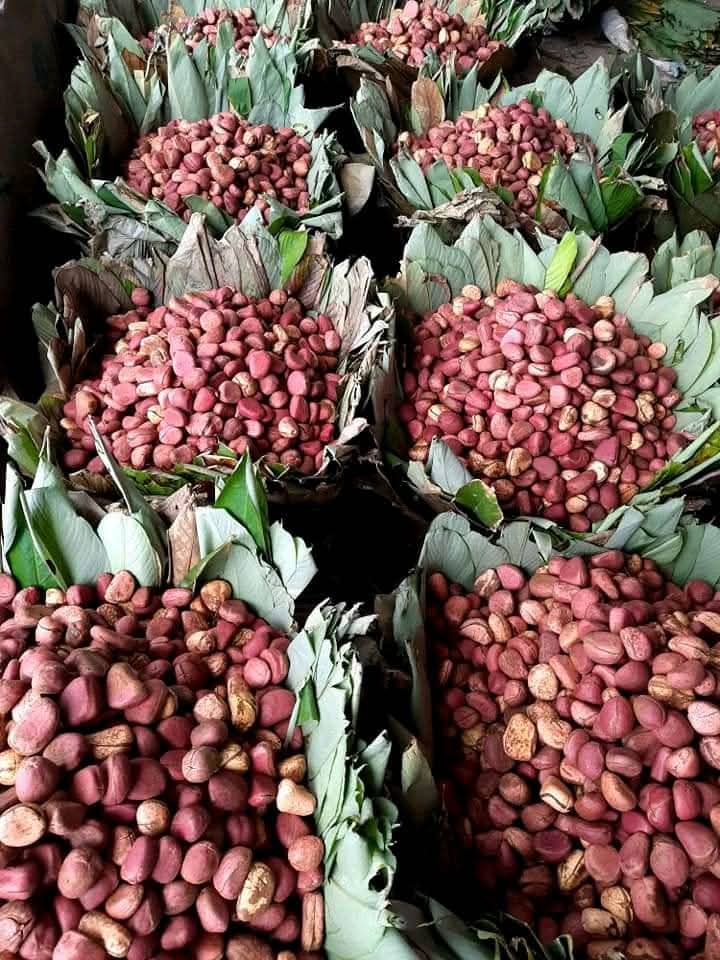
Nigeria’s kola nut production is concentrated primarily in the southwestern states — Oyo, Osun, Ondo, Ogun, Ekiti, and Lagos — where the humid forest belt provides ideal growing conditions for Cola nitida. Secondary production occurs in parts of Cross River, Edo, and Delta states. The combination of Nigeria’s vast land area, appropriate climate, deep cultural tradition of kola nut cultivation, and large domestic consumption base has produced a supply infrastructure that no other country comes close to matching at scale.
According to data tracked through FAO production statistics, Nigeria is consistently among the world’s top kola nut producing nations, with annual output that dwarfs competing origins. Côte d’Ivoire and Ghana produce meaningful volumes, but Nigeria’s combination of domestic market depth and export capacity makes it the natural first choice for international buyers sourcing at scale. Global trade flow data available through ITC Trade Map confirms Nigeria’s position as the dominant origin for kola nut entering European, North American, and Middle Eastern markets.
The Nigerian Export Promotion Council (NEPC) has formally recognised kola nut as a priority non-oil export commodity, with ongoing efforts to improve post-harvest handling standards, documentation processes, and market linkage for Nigerian exporters — all of which benefit international buyers seeking compliant, documented supply.
What Is Kola Nut? Red vs. White Cola Nitida Explained
The Botanical Profile
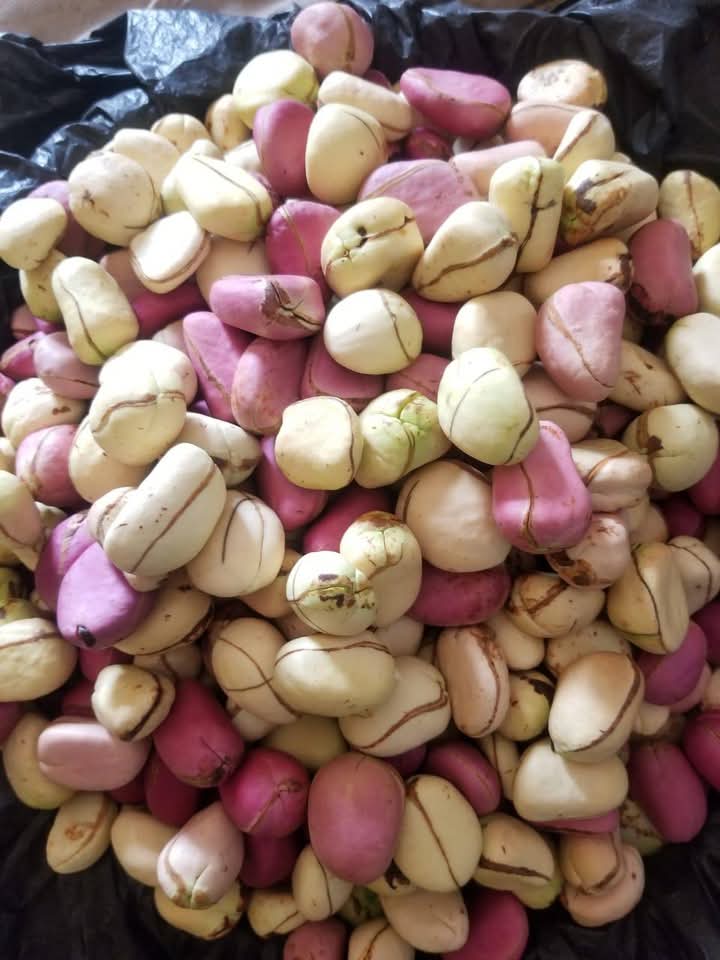
Cola nitida is a medium-to-large evergreen tree reaching 20 metres or more in height, producing large star-shaped pods that split open at maturity to reveal the seeds — the kola nuts of commerce. Each pod contains between 2 and 8 seeds packed in a white, fleshy aril. The seeds are relatively large — typically 3 to 6 cm in length — with a dense, starchy interior and a thin outer skin whose colour at maturity defines the two main commercial grades.
Red Kola Nut (Cola nitida — Red Variety)
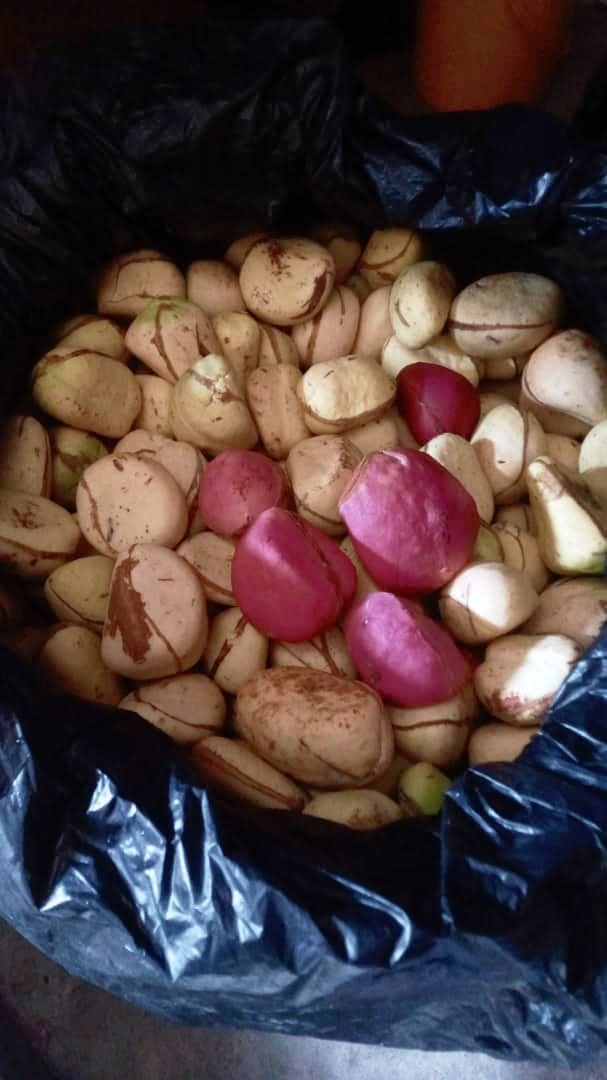
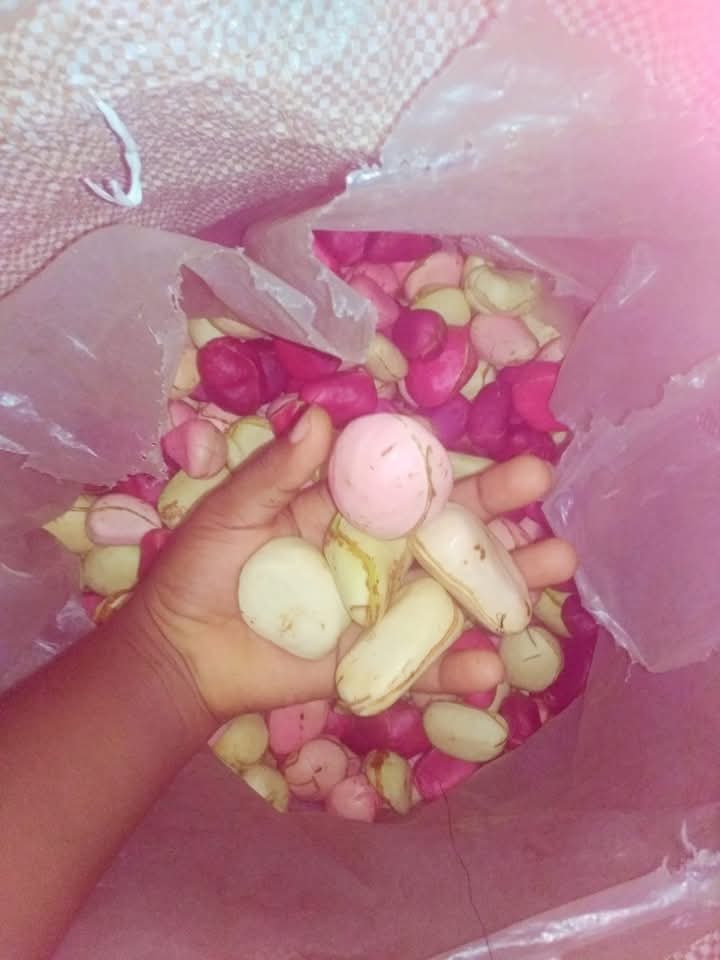
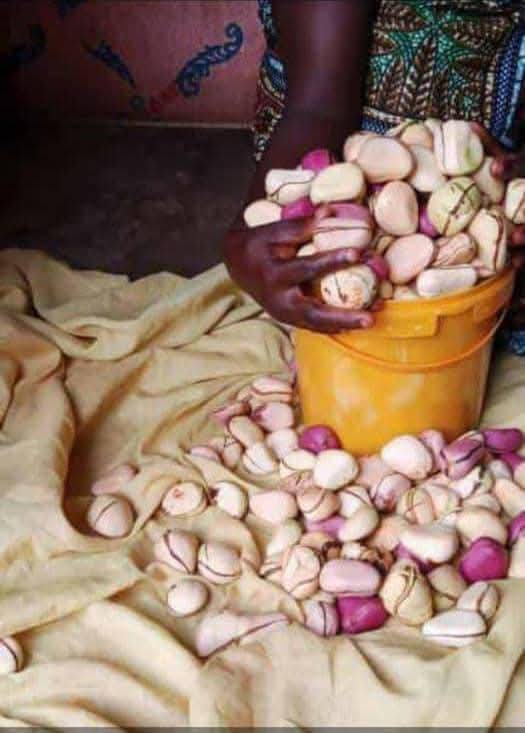
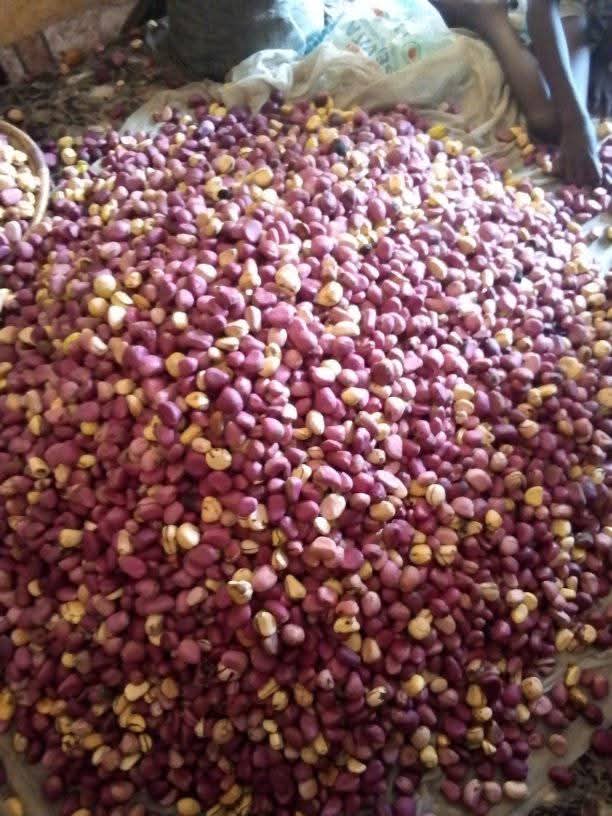
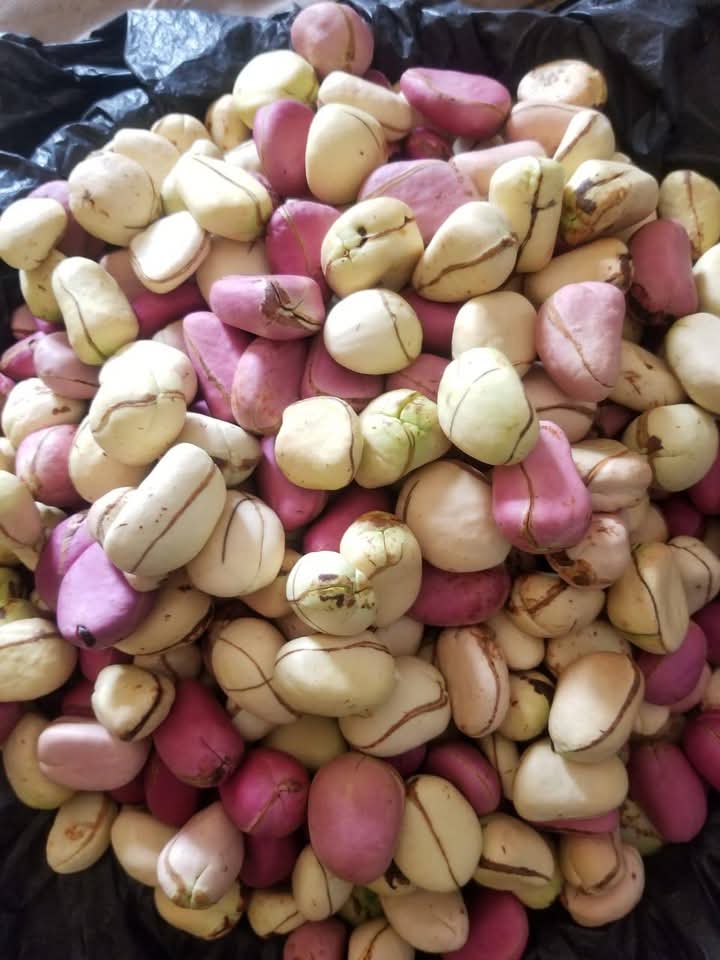
Red kola nut — known in trade as obi abata among the Yoruba — is characterised by its reddish-pink to deep red seed coat at maturity. It is the most widely traded variety in the domestic Nigerian market and carries the strongest ceremonial and cultural associations across most of Nigeria’s major ethnic groups. Red kola nut has a more intense, slightly more astringent flavour profile compared to white, with marginally higher levels of certain phenolic compounds.
In international trade, red kola nut is the dominant variety sourced by diaspora community importers and ethnic food wholesalers supplying West African grocery markets across the UK, USA, Canada, France, Italy, and the Netherlands. It is also the variety most commonly used by traditional medicine practitioners and herbalists in diaspora communities.
White Kola Nut (Cola nitida — White Variety)
White kola nut — obi orogbo in some Yoruba dialects, though terminology varies regionally — has a paler cream-to-ivory skin at maturity and a somewhat milder, less astringent flavour profile. It is particularly valued in certain ceremonial contexts — among some Igbo communities, white kola nut carries specific ritual significance distinct from the red variety.
In commercial trade, white kola nut commands a slight price premium in certain markets — particularly for pharmaceutical extraction and for buyers in Asian markets where the milder profile is preferred. Beverage industry buyers have historically shown preference for white kola nut for extract production, citing the cleaner flavour profile and slightly different alkaloid ratio.
Active Compounds Driving Commercial Value
Regardless of colour variety, both red and white Cola nitida contain the same primary active compounds that drive their commercial and industrial value:
Caffeine — present at 1.5–3.5% by dry weight, making kola nut one of the most caffeine-dense naturally occurring botanical ingredients commercially available.
Theobromine — present at 0.02–0.09%, providing a secondary stimulant effect distinct from caffeine’s action and contributing to the characteristic smooth, sustained energy effect associated with kola nut consumption.
Kolanin — a glycoside compound with documented cardiac stimulant properties.
Tannins and Phenolic Compounds — contributing to the characteristic astringency and providing antioxidant activity that has drawn research interest in the nutraceutical sector. Detailed phytochemical analyses are available through the NCBI research database.
Phlobaphene — the pigment compound responsible for the red colouration in red kola nut varieties.
Benefits and Industrial Uses of Kola Nut
Beverage Industry
This is historically kola nut’s largest industrial application globally — and it remains so today. Beyond the iconic Coca-Cola connection, kola nut extract is used as a flavouring and caffeine source in a range of cola beverages, energy drinks, functional beverages, and botanical drink formulations produced by both major multinationals and artisan craft beverage brands.
The craft beverages and “natural energy drink” segment has shown particular growth interest in authentic kola nut extract as a natural, plant-derived alternative to synthetic caffeine — a direct response to consumer demand for cleaner-label ingredient declarations. Beverage companies in this space source whole dried kola nut for small-batch extraction, or work with ingredient suppliers who process kola nut extract to standardised caffeine concentrations. USDA Agricultural Market Reports reflect growing import interest in botanical caffeine sources, of which kola nut is among the most commercially relevant.
Pharmaceutical Industry
Kola nut’s caffeine and theobromine content gives it a straightforward application as a raw material for pharmaceutical caffeine production — either as an extract or as a direct input into caffeine isolation processes. Beyond stimulant applications, kola nut’s broader phytochemical profile has attracted pharmaceutical research interest in areas including:
Cardiovascular stimulation and cardiac support formulations. Respiratory function — theobromine has documented bronchodilatory properties relevant to asthma and respiratory medicine research. Anti-fatigue and cognitive performance applications. Antimicrobial activity — documented in peer-reviewed literature available through NCBI.
Pharmaceutical-grade kola nut procurement requires consistent alkaloid content, verified origin, and full phytosanitary documentation — all of which Paradise MultiTrade provides as standard.
Nutraceutical and Dietary Supplement Industry
The global dietary supplement market has embraced kola nut as a natural stimulant and metabolic support ingredient. Kola nut extract and powder appear in pre-workout formulations, weight management supplements, cognitive enhancement products, and energy capsules — marketed on the strength of their natural caffeine and theobromine content. As consumers increasingly shift away from synthetic stimulants toward botanical alternatives, kola nut’s clean-label appeal strengthens its position in this segment.
European supplement manufacturers, in particular, are active buyers of documented-origin dried kola nut for extraction into standardised supplement ingredients. Import and trade data for this category is trackable through ITC Trade Map.
Traditional and Ceremonial Use — The Diaspora Market
This market segment is frequently underestimated by exporters who focus exclusively on industrial buyers — and that is a significant commercial error. The West African diaspora population across the UK, USA, Canada, France, Italy, the Netherlands, Spain, and Germany collectively represents hundreds of thousands of households with a deep, culturally embedded kola nut consumption habit. Kola nut is used at naming ceremonies, weddings, funerals, family gatherings, and community events — occasions that occur year-round, in every diaspora city, without seasonal variation.
Ethnic food importers and African grocery wholesalers supplying this community are among the most consistent, volume-reliable buyers of Nigerian kola nut internationally — placing regular orders with predictable specifications and relatively straightforward quality requirements. For exporters, this segment offers the commercial advantage of repeat, relationship-based purchasing rather than the tender-driven, specification-intensive process common in pharmaceutical and industrial procurement.
Cosmetics and Wellness Industry
Kola nut extract is gaining traction in cosmetics formulation — particularly in anti-cellulite products (where caffeine’s lipolytic properties are valued), scalp stimulation treatments, energising body care products, and formulations targeting circulation and skin tone. Several European and Asian cosmetic ingredient suppliers have begun offering kola nut extract as a standardised botanical active, sourcing raw material from West African origin suppliers.
Why Buy Kola Nut from Nigeria?
No Credible Alternative at Scale
The fundamental commercial reality of kola nut sourcing is straightforward: Cola nitida is a West African endemic species, and Nigeria produces more of it, at higher consistent quality, with more established export infrastructure, than any other country on earth. Buyers have understood this for centuries. It has not changed.
Dual Variety Supply from One Partner
One of the practical advantages of sourcing from Paradise MultiTrade is that we supply both red and white kola nut — giving buyers who require both varieties the ability to consolidate procurement through a single verified exporter rather than managing multiple supplier relationships for a related product line.
Cultural Authenticity for Diaspora Markets
For importers supplying West African diaspora retail markets, product authenticity matters. Their customers know what Nigerian kola nut looks, smells, and tastes like. They are not looking for a substitute — they want the genuine article from the genuine origin. Paradise MultiTrade’s direct Nigerian sourcing delivers exactly that, with documented provenance that diaspora retail importers can communicate confidently to their customers.
Complete Export Documentation
Every kola nut shipment from Paradise MultiTrade is processed with phytosanitary certification from the Nigerian Agricultural Quarantine Service (NAQS), NEPC export documentation, certificate of origin, and full commercial documentation. EU-bound shipments are prepared in compliance with Regulation (EU) 2017/625 on official controls for food and botanical imports. Our NEPC Export Licence No. 0042385 and CAC Registration No. RC-9284647 are current and verifiable through NEPC.
Nigeria’s Export Strength and Global Market Demand
Europe
The United Kingdom is Nigeria’s most significant European destination for kola nut, driven primarily by the large British-Nigerian and broader West African community resident in London, Birmingham, Manchester, and other major cities. Germany, France, Italy, and the Netherlands follow as active import markets — combining diaspora demand with pharmaceutical and supplement sector procurement.
North America
The United States and Canada host some of the world’s largest Nigerian diaspora communities outside Africa itself. Major cities — New York, Houston, Atlanta, Washington DC, Toronto — have well-established African grocery retail networks that import kola nut regularly. The American natural food and supplement sector is also an active buyer of kola nut extract ingredients.
Middle East and Asia
The UAE serves as a re-export hub for kola nut entering Gulf, South Asian, and East Asian markets. Direct import interest from India, China, South Korea, and Japan is growing, driven by pharmaceutical and cosmetic ingredient sourcing activity. These markets typically demand high-grade, well-dried material with consistent alkaloid content and full phytosanitary documentation.
Why Choose Paradise MultiTrade International Limited?
Both Varieties, One Supplier. We supply red and white Cola nitida — handling both under the same quality standards, documentation processes, and commercial terms. For buyers who need both, this saves time, reduces vendor management complexity, and simplifies logistics.
Direct Origin Sourcing. Our kola nut is sourced directly from producing communities in southwestern Nigeria’s kola nut belt — primarily across Oyo, Osun, Ondo, and Ogun states. We are not buying from Lagos commodity brokers. We are sourcing from the origin.
Consistent Grading Standards. Every batch is sorted for size, skin condition, and moisture content. Buyers receive the grade they specified, not a mixed unsorted shipment that creates downstream processing complications.
Experienced Export Team. We understand the documentation requirements of buyers in regulated markets — the EU, UK, USA, and UAE included. We navigate Nigerian export compliance efficiently and communicate clearly at every stage of the process.
Multi-Commodity Sourcing. Paradise MultiTrade also exports fresh ginger, dry split ginger, bitter kola, sesame seeds, hibiscus flower, cashew nuts, and charcoal. Explore our full range of Nigerian export commodities and simplify your African sourcing through one partner.
Product Specifications
| Specification | Details |
|---|---|
| Product | Kola Nut (Cola nitida — Red and White varieties) |
| Origin | Nigeria (Oyo, Osun, Ondo, Ogun, Cross River states) |
| Varieties Available | Red (Cola nitida Red), White (Cola nitida White) |
| Form | Whole dried seed; split available on request |
| Moisture Content | 8–13% (export-dried) |
| Purity | 95%+ (free from mould, insect damage, and foreign matter) |
| Color | Red variety: reddish-pink to deep red skin. White variety: cream to ivory skin |
| Grade | Grade A (large, uniform, undamaged seeds); Grade B (mixed/smaller sizes) |
| Seed Size | Large (4–6cm), Medium (3–4cm), Mixed |
| Packaging Options | 50kg jute bags, 25kg polypropylene bags, custom packaging on request |
| Supply Capacity | 10–300+ MT per shipment (subject to seasonal availability) |
| MOQ | 3 Metric Tonnes |
| Shelf Life | 10–15 months properly dried and stored |
| Export Documentation | Phytosanitary Certificate (NAQS), Certificate of Origin, NEPC Export Licence, Commercial Invoice, Packing List, Bill of Lading |
| Payment Terms | T/T, Letter of Credit (LC at sight), Escrow |
| Loading Port | Lagos (Apapa / Tin Can Island Port), Nigeria |
| Incoterms Available | EXW, FOB Lagos, CNF, CIF |
Packaging and Export Process
Harvesting and Initial Processing. Kola nut pods are harvested by hand when fully mature. Seeds are extracted from the pod, cleaned of the surrounding fleshy aril, and sorted for initial quality assessment at the farm or aggregation level.
Drying. Fresh kola nut has a moisture content of 40–60% at harvest. To achieve the 8–13% moisture required for safe export, seeds are dried — either through natural sun-drying under controlled conditions or through mechanical drying. Moisture control at this stage is critical: under-dried product is vulnerable to mould during transit; over-dried product becomes brittle and cracks, downgrading commercial value.
Grading and Sorting. Dried seeds are sorted by size and physical condition. Cracked, moulded, or visibly damaged seeds are removed. Red and white varieties are sorted and packed separately to maintain variety purity.
Packaging. Standard export packing is 50kg jute bags or 25kg polypropylene bags. Jute is the preferred packaging medium for kola nut — it allows the seed to breathe, preventing moisture accumulation that promotes mould growth. All bags are labelled with product name, variety (red/white), lot number, net weight, origin, and documentation reference.
Phytosanitary Inspection. Pre-export phytosanitary inspection by NAQS is conducted before container sealing. The issued phytosanitary certificate is a mandatory import requirement in the EU, UK, USA, UAE, and most other destination markets.
Logistics. Kola nut ships in standard dry containers from Apapa or Tin Can Island Port in Lagos. No refrigeration is required at export-dried moisture levels. Contact our export team early in your planning cycle — lead times run 10–21 days from order confirmation to container loading.
Frequently Asked Questions
What is the difference between red and white kola nut?
Both are Cola nitida — the same species — but different colour varieties at maturity. Red kola nut has a reddish-pink to deep red seed coat and a slightly more intense, astringent flavour. White kola nut has a cream to ivory skin and a milder profile. Both contain caffeine and theobromine as primary active compounds. Some buyers — particularly in the beverage and pharmaceutical sectors — specify one variety over the other based on flavour profile or alkaloid ratio preferences. We supply both.
What is the difference between kola nut and bitter kola?
They are completely different products from different plant species. Kola nut (Cola nitida) is milder, higher in caffeine, and widely used in beverages, supplements, and diaspora food markets. Bitter kola (Garcinia kola) is dramatically more bitter, contains the unique kolaviron bioflavonoid complex, and is primarily valued for pharmaceutical and health applications. Paradise MultiTrade exports both — see our bitter kola export page for full details.
What is your minimum order quantity for kola nut?
Our standard MOQ is 3 Metric Tonnes. First-time buyers are welcome to request a product sample before committing to full volume. Contact us to arrange a sample.
Can you supply both red and white kola nut in the same shipment?
Yes. We can pack red and white varieties separately within the same container, clearly labelled and documented by variety. This is a common arrangement for buyers who need both varieties but want to consolidate freight.
What documentation comes with a kola nut export shipment?
Every shipment includes a phytosanitary certificate from NAQS, certificate of origin, NEPC export licence reference, commercial invoice, packing list, and bill of lading. Additional documentation required by specific destination market regulations can be arranged on request.
How do I verify that Paradise MultiTrade is a legitimate Nigerian exporter?
Our NEPC Export Licence No. 0042385 and CAC No. RC-9284647 are verifiable through the Nigerian Export Promotion Council. We are accustomed to supporting buyers through their vendor due diligence processes and welcome verification requests.
What is the caffeine content of Nigerian kola nut?
Cola nitida typically contains 1.5–3.5% caffeine by dry weight, making it one of the most naturally caffeine-dense botanical ingredients commercially available. Exact alkaloid content varies by harvest batch, growing region, and drying conditions. Laboratory analysis certificates can be arranged for buyers with specific pharmaceutical or supplement formulation requirements. Contact us to discuss testing arrangements.
Ready to Source Premium Kola Nut from Nigeria?
If you are a beverage ingredient buyer, pharmaceutical raw material sourcer, nutraceutical manufacturer, ethnic food importer, or bulk commodity trader actively looking for a reliable kola nut exporter in Nigeria, Paradise MultiTrade International Limited is built for exactly this.
We supply both red and white Cola nitida, sourced directly from Nigeria’s kola nut belt, dried and graded to export specification, and shipped with full regulatory documentation to destinations across Europe, North America, Asia, and the Middle East.
Request a Quotation — share your required variety (red, white, or both), volume, destination port, and preferred incoterms. We respond with a detailed, competitive quote within 48 hours.
Contact Our Export Team — speak directly with our export coordinators about sourcing requirements, sample requests, variety specifications, and long-term supply contract terms.
Explore Our Full Product Range — alongside kola nut, Paradise MultiTrade exports fresh ginger, dry split ginger, bitter kola, sesame seeds, hibiscus flower, cashew nuts, and charcoal. One trusted partner for multiple Nigerian agricultural commodities.
buy kola nut from Nigeria, Nigerian kola nut supplier, Cola nitida wholesale export, red kola nut Nigeria, white kola nut Nigeria, kola nut bulk supplier Africa, kola nut importer wholesale, Nigerian kola nut for beverage industry, Cola nitida bulk export
Paradise MultiTrade International Limited | NEPC Export Licence No. 0042385 | CAC No. RC-9284647 | Lagos, Nigeria | www.paradisemultitrade.com
Reviews
There are no reviews yet.