
Nigerian Moringa Seeds: The Miracle Tree’s Most Commercially Undervalued Export — and Why the World’s Fastest-Growing Superfood Industry Is Finally Looking to West Africa for Supply
Moringa Seed Exporter Nigeria — High-Oil Moringa Oleifera Seeds, Direct Farm Sourcing, Bulk Supply to Nutraceutical, Cosmetic, Pharmaceutical, and Water Treatment Buyers Globally
Moringa seed exporter Nigeria is a search phrase whose commercial frequency is accelerating in direct proportion to the global moringa market’s extraordinary growth trajectory — a trajectory driven by the convergence of three simultaneously expanding demand streams: the global nutraceutical industry’s insatiable appetite for plant-based functional ingredients with documented bioactive profiles, the cosmetics industry’s premium positioning of moringa seed oil as one of the world’s most stable and nutrient-dense botanical carrier oils, and the water treatment sector’s growing recognition of moringa seed’s remarkable natural coagulant properties as a low-cost, chemical-free alternative to aluminium sulphate in developing-world water purification systems.
Moringa oleifera — the species behind all of this commercial activity — is not a new discovery. It has been cultivated across South Asia, East Africa, and West Africa for centuries, consumed as a vegetable, medicinal herb, and livestock feed supplement across dozens of cultures that understood its nutritional density long before the global wellness industry validated it with clinical trial data and marketing budgets. What is new is the scale and sophistication of international commercial interest in moringa as an ingredient, and the degree to which that interest is driving serious procurement enquiries toward West African origins — including Nigeria — where moringa grows with extraordinary vigour across the northern Sahel and Middle Belt states and where the combination of favourable climate, existing smallholder cultivation base, and growing export infrastructure is creating a moringa supply chain with real commercial potential for international buyers.
Nigeria’s moringa story is, in many ways, the most compelling in West Africa. Moringa oleifera is already so well-integrated into Nigerian agricultural and nutritional culture — consumed as a vegetable leaf, used as a livestock feed supplement, applied in traditional medicine, and increasingly cultivated as a commercial crop in response to growing domestic and international demand — that the infrastructure for scaling production to export volumes exists in a way that purely nascent cultivation programmes in other origins cannot replicate. In the Sahel states of Kano, Katsina, Zamfara, Sokoto, and Kebbi — and in the Middle Belt states of Niger, Kaduna, and Nasarawa — moringa grows both wild and in cultivation across hundreds of thousands of hectares, producing seeds with the high oil content and bioactive compound concentration that serious international buyers require.
At Paradise MultiTrade International Limited, moringa seed is one of our most strategically important emerging export commodities — sourced from smallholder cultivation networks and wild-harvest communities across Nigeria’s primary moringa producing states, dried and cleaned to international commercial specification, and exported with full regulatory documentation to buyers across Europe, the Middle East, Asia, and North America. If you are building a moringa seed supply chain for nutraceutical extraction, cosmetics formulation, water treatment application, or specialty food ingredient use — this article is the comprehensive sourcing guide your procurement programme requires.
Ready to move directly to specifications and pricing? Request a quotation here and our export team will respond within 48 hours.
History and Origin of Moringa — The Tree That Has Fed, Healed, and Purified Water for Millennia
The Ancient Tree With the Modern Reputation
Moringa oleifera carries more traditional names than perhaps any other commercially traded botanical — reflecting the geographic breadth of its cultivation and the depth of its integration into diverse cultures across the tropical world. It is called the Miracle Tree, the Drumstick Tree (for the shape of its seed pods), the Horseradish Tree (for the flavour of its root bark), Ben Oil Tree (for the behenic acid-rich oil pressed from its seeds), and the Never Die Tree — a reference to the species’ extraordinary resilience, its ability to regenerate rapidly from cut stumps, and its capacity to survive drought conditions that kill most other food-producing plants.
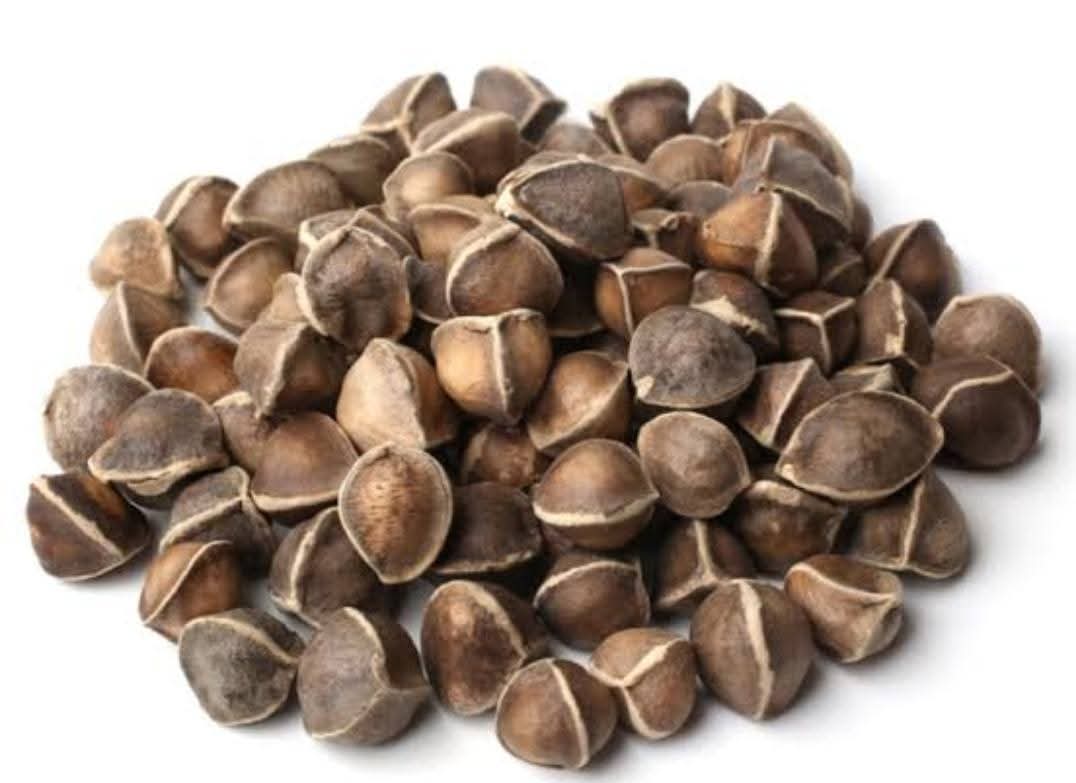
Botanically, Moringa oleifera is the most commercially significant of the thirteen species in the Moringaceae family — a small, distinctive plant family with no close relatives in the broader botanical classification system, reflecting the moringa tree’s unusual evolutionary history as an isolated lineage that developed its extraordinary nutritional and biochemical profile independently of the major cultivated plant families. It grows to between 10 and 12 metres in height under favourable conditions, producing compound feathery leaves, fragrant cream-coloured flowers, and long, triangular seed pods — typically 20–50cm in length — containing 10–25 seeds each. These seeds — round to triangular, approximately 1cm in diameter, with three papery wings that aid wind dispersal — are the commercial product whose international trade value has grown dramatically over the past decade.
South Asian Origins and Global Diffusion
The botanical evidence for Moringa oleifera‘s origin places the species’ centre of domestication in the sub-Himalayan foothills of northwestern India — specifically the states of Rajasthan, Gujarat, and Uttar Pradesh — where the tree has been cultivated for food, medicine, and seed oil production for at least 2,000 years. Ancient Indian texts — including Ayurvedic manuscripts from the 1st century CE — describe moringa leaves, seeds, roots, and oil in detail, documenting both their nutritional properties and their medicinal applications across a remarkable range of conditions.
The Mauryan Empire of ancient India reportedly used moringa oil for skin protection and food preservation. Ancient Roman, Greek, and Egyptian records reference moringa oil — called ben oil in classical antiquity — as a luxury skin care and perfume fixative product, imported from Indian and East African sources through Arab trading networks. The Pharaohs of ancient Egypt were reportedly buried with vessels of moringa oil among their funerary goods — a reflection of the oil’s value as a skin protectant and preservative in the dry Egyptian climate.
Arab traders carried moringa cultivation westward across the Indian Ocean trade networks into East Africa — where it naturalised readily in the semi-arid conditions of the African Sahel belt — and eventually into West Africa through the trans-Saharan trade routes that connected the Arab world with the societies of the Niger bend and Lake Chad basin. In Nigeria, moringa arrived under various local names — zogale in Hausa (the language of northern Nigeria’s dominant ethnic group), ikwe oyibo in Igbo, ewe igbale in Yoruba — names that reflect both the species’ cultural assimilation into Nigerian agricultural practice and the different communities that adopted it independently through different introduction pathways.
The Modern Commercial Discovery — From Traditional Knowledge to Global Industry
For most of its history in West Africa, moringa’s commercial significance was primarily local and regional — its leaves sold in markets as a vegetable and cooking ingredient, its seeds pressed by rural communities for cooking oil and water purification, its bark and roots used in traditional medicine formulations. The transformation of moringa from a regional subsistence crop into a globally traded commercial ingredient happened during the 1990s and 2000s — driven by a combination of nutritional science research that quantified moringa’s extraordinary bioactive compound profile, the global functional food and nutraceutical industry’s search for novel plant-based ingredients with strong clinical evidence bases, and the advocacy of international development organisations that recognised moringa’s potential as a nutritional intervention crop for food-insecure communities.
The Trees for Life International organisation — which has championed moringa cultivation and consumption as a nutrition intervention since the 1980s — was among the first international organisations to publish comprehensive nutritional data on moringa’s leaf and seed composition that eventually reached commercial food and supplement industry audiences. The Moringa Association of Africa has since been established to represent and develop the commercial moringa sector across the African continent — coordinating quality standards, market development, and buyer-producer linkage across West and East African moringa producing countries including Nigeria.
The Nigerian Export Promotion Council (NEPC) has formally recognised moringa as part of Nigeria’s priority non-oil export commodity portfolio, with active market linkage programmes supporting Nigerian moringa producers’ access to international buyers. Global moringa trade flow data accessible through ITC Trade Map confirms Nigerian moringa seeds and moringa products entering international trade channels with growing frequency — particularly into European, American, and Middle Eastern markets where the nutraceutical and natural cosmetics industries are the primary demand drivers.
What Is Moringa Seed? The Commercial Product and Its Bioactive Profile
Anatomy of the Commercial Seed
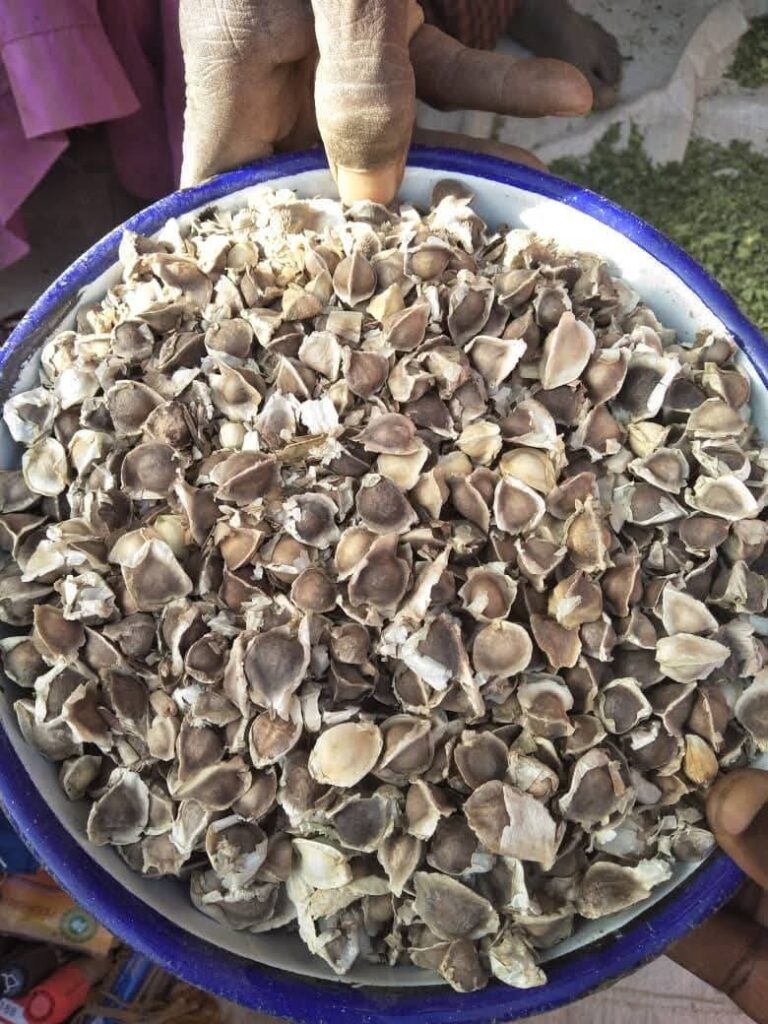
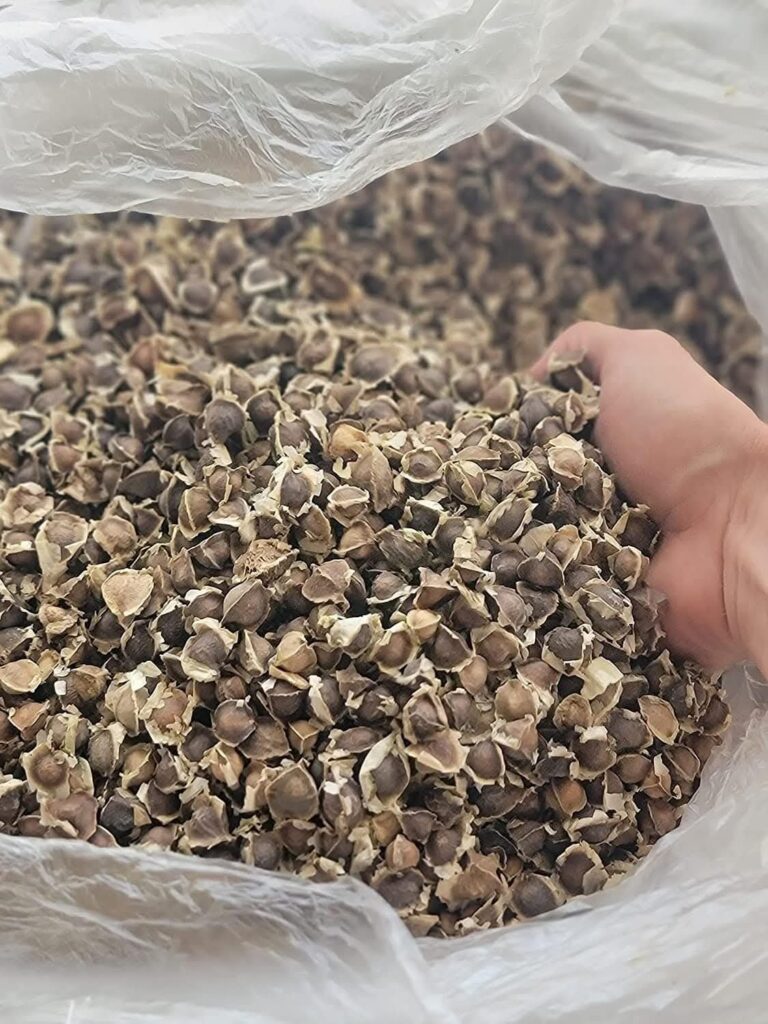
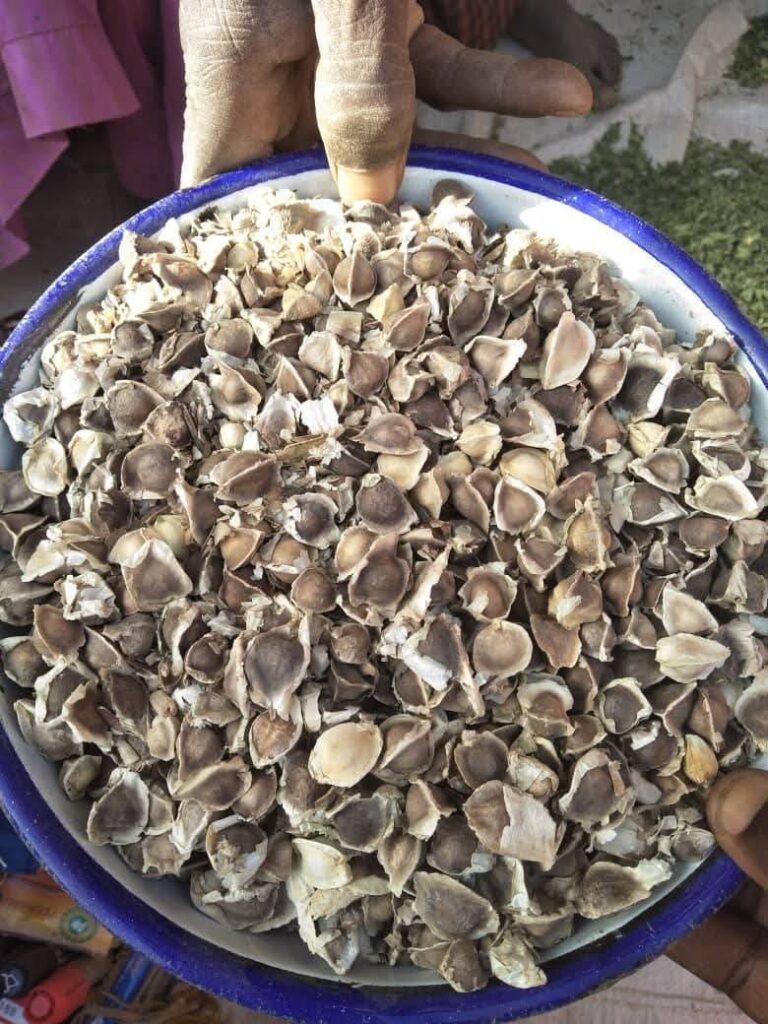
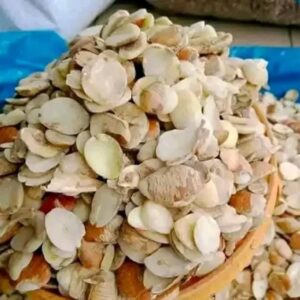
The moringa seed of commerce is extracted from the fully mature, dried seed pod of Moringa oleifera. Each pod — typically harvested when it turns brown and begins to split naturally — contains seeds that are approximately spherical, 8–12mm in diameter, with a dark brown, slightly rough seed coat and three distinctive papery white wings attached at equal intervals around the circumference. For commercial export, the seeds are typically decorticated — the papery wings removed through mechanical or manual processing — to produce the compact, winged-free seed that packs efficiently and processes cleanly in industrial extraction and powder production applications.
The moringa seed’s extraordinary commercial value derives from two distinct fractions:
The oil fraction — comprising approximately 30–42% of the seed by dry weight — is pressed as moringa seed oil (also called ben oil or Behen oil), one of the most chemically stable vegetable oils commercially available. Its stability derives from its unusually high behenic acid content — a C22 saturated fatty acid that resists oxidative rancidity — making moringa seed oil resistant to going rancid for periods that far exceed most other commercially pressed botanical oils. This stability, combined with its light texture, high oleic acid content, and documented skin compatibility, makes moringa seed oil one of the premium carrier oils in the global cosmetics and personal care ingredient market.
The protein fraction and bioactive compounds — the defatted seed cake remaining after oil extraction contains approximately 35–40% protein by dry weight, along with a range of bioactive compounds including the coagulant protein polyelectrolyte that gives moringa seed its documented water purification capability, glucosinolates (the sulphur-containing compounds shared with mustard and broccoli), isothiocyanates, and the antioxidant flavonoids that contribute to moringa’s nutraceutical value.
Moringa Seed vs. Moringa Leaf — Distinct Products With Different Markets
It is important for procurement teams to clearly understand that moringa seed and moringa leaf powder — both widely traded internationally — are distinct commercial products from the same tree, serving different market applications with different processing pathways and quality specifications.
Moringa leaf powder — the most widely traded moringa product globally — is produced from the dried, ground leaves of Moringa oleifera and is valued primarily for its chlorophyll content, protein concentration, and broad micronutrient profile. Moringa seed — the focus of this article — is valued for its oil content, coagulant protein fraction, and the specific bioactive compounds concentrated in the seed endosperm that differ from the leaf’s phytochemical profile.
Paradise MultiTrade exports moringa seed as our primary moringa product form. For buyers interested in moringa leaf powder alongside moringa seed, contact our export team to discuss leaf powder availability.
Benefits and Industrial Uses of Nigerian Moringa Seed
Cosmetics and Personal Care Industry — Ben Oil’s Premium Market Position
This is moringa seed’s highest-value single commercial application — and the one driving the most sophisticated international procurement interest in documented-origin, high-oil-content moringa seed from West African origins. Moringa seed oil — cold-pressed from cleaned, dried seeds — is positioned among the premium tier of botanical carrier oils in the global cosmetics ingredient market, alongside argan oil, rosehip seed oil, and marula oil, for its combination of exceptional chemical stability, light skin-feel, high oleic acid content, and documented skin compatibility properties.
The cosmetics industry’s demand for moringa seed oil is comprehensively documented through ingredient market research published by Mintel’s beauty and personal care database and trend analysis from Euromonitor International’s beauty industry reports — both of which identify moringa oil as one of the fastest-growing botanical oil ingredients in premium skincare product development, appearing in face serums, hair care products, makeup removing oils, anti-aging formulations, and luxury body care products across European, American, and East Asian premium cosmetics markets.
Moringa seed oil’s chemical stability — derived from its behenic acid content and its natural antioxidant compound profile — gives it a shelf life of 3–5 years without preservative addition under ambient storage conditions. This stability makes it an exceptionally practical cosmetics ingredient from a formulation and supply chain management perspective — allowing cosmetics manufacturers to hold stock without the rancidity risk that affects more unsaturated botanical oils like rosehip or hemp seed oil.
Cosmetic ingredient buyers evaluating moringa seed oil can reference ingredient safety documentation through the Cosmetic Ingredient Review (CIR) and ingredient nomenclature through the INCI Decoder — both of which document moringa oil’s established safety profile and ingredient classification. European cosmetics buyers should also reference EFSA’s published assessments on moringa for regulatory clarity on moringa-derived ingredients in EU-marketed products.
For cosmetics buyers sourcing Nigerian moringa seed for in-house oil pressing or sourcing moringa seed oil directly, contact our export team to discuss specification and pricing.
Nutraceutical and Dietary Supplement Industry
The global nutraceutical sector’s embrace of moringa as a functional botanical ingredient is one of the most commercially significant demand developments in the natural health products market of the past decade. Market sizing and growth analysis published by Grand View Research’s moringa products market report values the global moringa market at over USD 9 billion and projects compound annual growth exceeding 8% through 2030 — driven by expanding consumer awareness of moringa’s nutritional profile and the growing accessibility of moringa supplement products through mainstream health retail channels globally.
Moringa seed specifically — as distinct from the more widely marketed moringa leaf — is attracting nutraceutical procurement interest for its isothiocyanate content, particularly moringin (4-α-L-rhamnopyranosyloxy benzyl isothiocyanate) — a compound unique to moringa that has attracted significant pharmaceutical research interest for its documented anti-inflammatory, antimicrobial, and potential anticancer properties. Research published through NCBI’s natural product research database documents moringin’s pharmacological profile in detail — providing the scientific foundation for nutraceutical buyers developing moringa seed-based supplement products that go beyond the general “superfood” positioning of moringa leaf products.
The American Botanical Council’s HerbalGram publication has published comprehensive reviews of moringa’s clinical evidence base — providing the independent scientific assessment that serious nutraceutical buyers use to validate ingredient sourcing decisions.
Water Treatment and Purification Industry
This is moringa seed’s most socially significant application and one that creates a consistent demand stream from an entirely different buyer category than the food and cosmetics sectors — water treatment engineers, public health organisations, NGOs, and municipal water supply operators working in water-stressed developing market environments.
Moringa seed contains a naturally occurring cationic protein — identified scientifically as MOCP (Moringa Oleifera Coagulant Protein) — that functions as a highly effective natural water coagulant when added to turbid water. The coagulant protein carries a positive charge that attracts and binds the negatively charged clay particles, silt, and microbial cells that constitute turbidity in raw water sources — causing them to aggregate into flocs that settle rapidly, dramatically reducing water turbidity, suspended solids, and microbial load without the introduction of chemical coagulants.
Research published through NCBI and through the Water Research Foundation has comprehensively documented moringa seed’s water purification efficacy — demonstrating turbidity reductions of 80–99% achievable using moringa seed extracts in appropriate dosages, along with significant reductions in coliform bacteria and other pathogenic microorganisms in treated water. The World Health Organization’s water quality guidelines reference natural coagulants including moringa in the context of point-of-use water treatment for low-resource settings.
This documented efficacy has created a genuine procurement market for moringa seed among:
NGOs and humanitarian organisations implementing low-cost water purification programmes in sub-Saharan Africa, South Asia, and Latin America — where moringa seed’s combination of local availability, low cost, and freedom from chemical inputs makes it a practically viable intervention.
Municipal water treatment authorities in developing markets investigating moringa seed as a partial or full replacement for imported aluminium sulphate coagulant — a substitution that has significant cost and supply chain security advantages for water utilities in import-dependent economies.
Research institutions and universities investigating moringa seed coagulant protein’s properties for both water treatment optimisation and potential pharmaceutical applications — creating smaller but recurring procurement demand from academic supply chains.
Water treatment technology companies developing and commercialising moringa-based water purification products for distribution in water-stressed markets globally.
Food Industry — Moringa Seed as a Functional Food Ingredient
The food industry’s application of moringa seed is less developed than the leaf product market but growing — driven by the functional food sector’s appetite for novel plant-based ingredients with documented nutritional and bioactive properties that can be positioned as clean-label, natural, and science-backed. Moringa seed oil is used as a premium cooking and finishing oil in specialty food products, salad dressings, and health food formulations. Moringa seed powder — produced from defatted seed cake — is explored as a protein supplement ingredient for plant-based food formulations given its approximately 35–40% protein content and complete amino acid profile.
The food ingredient application of moringa seed is further supported by the European Food Safety Authority (EFSA) — which has published assessments on moringa products relevant to EU food ingredient regulatory status — and by the Codex Alimentarius Commission food standards framework that provides the international regulatory reference for moringa product classification in food trade.
Animal Feed and Aquaculture Industry
Moringa seed and defatted moringa seed cake are recognised livestock and aquaculture feed supplement ingredients — valued for their high protein content, mineral profile, and documented growth-promoting and immune-modulating effects in production animals. Research accessible through NCBI’s veterinary and animal science publications documents moringa seed meal’s efficacy as a feed supplement in poultry, swine, and aquaculture species — with documented improvements in feed conversion ratio, growth performance, and disease resistance in multiple controlled studies.
Aquaculture feed producers in Southeast Asia — where fish and shrimp farming is a major industry with growing interest in natural, antibiotic-free feed supplements — are an emerging buyer category for moringa seed meal as a functional feed additive. The Food and Agriculture Organization’s fisheries and aquaculture department tracks the growing application of natural plant-based feed supplements in global aquaculture — a trend that positions moringa seed meal as a commercially relevant ingredient in this sector’s supply chain.
Pharmaceutical Industry — Moringin and Emerging Drug Research
Beyond the established nutraceutical applications, the pharmaceutical research community’s interest in moringa seed’s specific bioactive compounds — particularly the isothiocyanate moringin and the seed lectin isolectin — is creating early-stage procurement interest from pharmaceutical ingredient companies and contract research organisations investigating these compounds for drug candidate development. Research published through NCBI documents the pharmacological activity of moringa seed-derived compounds in anti-inflammatory, antimicrobial, and antitumour experimental models — evidence that has attracted the attention of natural product drug discovery programmes at pharmaceutical companies in Europe, the USA, and Japan.
While this pharmaceutical research demand is currently smaller in volume than nutraceutical and cosmetics procurement, it represents the highest-value per-kilogram application for moringa seed — and creates a demand stream whose growth trajectory is likely to accelerate as clinical research matures and pharmaceutical companies move from discovery to development-stage compound procurement.
Why Buy Moringa Seeds from Nigeria?
Nigeria’s Agronomic Advantage — Sahel Climate and Scale of Production
Moringa oleifera is exceptionally well-adapted to the semi-arid conditions of northern Nigeria’s Sahel and Sudan savanna zones — where it has naturalised over centuries into an integrated component of the agricultural landscape. The species’ famous drought tolerance — a product of its deep taproot system and its ability to enter dormancy during extreme dry periods before regenerating rapidly when moisture returns — is matched by the Sahel growing conditions of Kano, Katsina, Zamfara, Sokoto, Kebbi, and Yobe states, where annual rainfall of 400–800mm and intense dry-season sunshine produce exactly the conditions that stimulate moringa seed pod development and seed oil concentration.
Research on moringa agronomy and regional quality variation published by the International Centre for Research in Agroforestry (ICRAF) — now the World Agroforestry Centre — documents how semi-arid growing conditions in West Africa’s Sahel belt produce moringa seeds with oil content at the high end of the commercially traded range (30–42% oil by dry weight) — a function of the plant’s metabolic response to the stress of seasonal drought, which concentrates oil reserves in the seed as an energy storage mechanism. This agronomic oil content advantage is commercially significant: for oil pressing buyers, higher seed oil content translates directly into higher oil yield per tonne of raw seed processed — the same procurement economics argument that drives sesame and moringa seed buyers toward high-oil-content origins.
FAO’s agroforestry research documentation specifically references moringa’s agroforestry integration in West African smallholder farming systems — confirming the depth of moringa’s cultivation presence in Nigerian agricultural communities and the scale of production infrastructure available for commercial harvest.
The Scale That West African Origins Can Deliver
Nigeria’s moringa cultivation base — spread across millions of smallholder farm plots in the northern states, along with significant wild-harvest populations across the Middle Belt — represents a production scale that boutique East African specialty moringa programmes, however high their unit quality, cannot match for buyers who need multiple container loads of seed per season. For serious industrial buyers — cosmetics companies running continuous moringa oil extraction operations, nutraceutical manufacturers producing moringa supplement product lines at commercial scale, water treatment organisations implementing large-scale moringa coagulant programmes — supply volume reliability is as important as quality. Nigeria’s production geography delivers both.
Competitive Pricing at a Premium Quality Level
Nigerian moringa seed can be sourced at competitive FOB Lagos pricing relative to East African origins — particularly India, which dominates global moringa trade but whose increasingly high domestic demand has created upward price pressure on export pricing. The combination of Nigeria’s competitive farmgate economics, Lagos port’s established freight connections to major destination markets, and Paradise MultiTrade’s direct-origin sourcing structure creates a landed cost equation that buyers sourcing Indian-origin moringa seed should evaluate seriously as an alternative or complementary supply position. Contact our export team for a current pricing comparison.
Complete Export Documentation from a Licensed Exporter
Every moringa seed shipment processed through Paradise MultiTrade carries phytosanitary certification from the Nigerian Agricultural Quarantine Service (NAQS), NEPC export documentation, certificate of origin, commercial invoice, packing list, and bill of lading. For pharmaceutical and nutraceutical buyers requiring oil content analysis, heavy metal screening, pesticide residue testing, microbiological analysis, and isothiocyanate content documentation — we coordinate third-party laboratory testing through accredited facilities.
EU-bound shipments are prepared in compliance with Regulation (EU) 2017/625 on official controls for botanical and food imports and in reference to EFSA’s published assessments on moringa products for regulatory clarity on EU market compliance. Our NEPC Export Licence No. 0042385 and CAC Registration No. RC-9284647 are current and verifiable through NEPC.
Nigeria’s Moringa Export Strength and Global Market Demand
The Global Market Trajectory
Few agricultural ingredient markets are growing with the consistency and breadth of the global moringa market. Analysis published by Grand View Research projects the global moringa products market — including leaf, seed, and oil — reaching USD 9+ billion by 2030, growing at a compound annual rate that reflects simultaneous expansion across the nutraceutical, cosmetics, food, and water treatment sectors. Market intelligence from Mordor Intelligence’s moringa market report and commodity trade intelligence from Tridge’s moringa intelligence platform both confirm the global trade volume growth and destination market expansion that positions Nigerian origin moringa seed for growing export relevance.
The CBI Netherlands market intelligence platform has published specific market guidance on moringa for European cosmetics ingredient buyers — documenting EU quality requirements, buyer expectations for traceability documentation, and market entry considerations that directly inform how Nigerian moringa exporters should position their product in the European market.
Key Export Destination Markets
Germany and the Netherlands — Europe’s dominant entry markets for moringa seed and moringa oil, driven by the German and Dutch cosmetics ingredient industry’s sophisticated procurement infrastructure and the broader European nutraceutical sector’s growing moringa supplement product lines.
The United Kingdom — active procurement of moringa seed for both cosmetics ingredient supply chains and the UK’s growing natural health supplement retail market, with additional diaspora community demand from Nigerian and broader West African communities who consume moringa as a traditional food and medicine.
The United States — the world’s largest supplement market and a major cosmetics ingredient procurement hub, with American nutraceutical companies, natural beauty brands, and specialty food producers all active in moringa seed and moringa oil sourcing. Market data tracked through USDA Foreign Agricultural Service reports confirms sustained US import demand for moringa products.
Japan and South Korea — premium cosmetics ingredient sourcing markets where moringa seed oil is positioned in luxury skincare formulation, with Japanese cosmetics ingredient companies among the most exacting buyers of clean, analytically documented botanical oils.
India — simultaneously a moringa producer and a significant moringa product processor — Indian companies source Nigerian moringa seed for blended supply chain management and for the Ayurvedic product market’s substantial moringa demand, tracked through Spices Board of India trade data.
The UAE and Middle East — growing markets for moringa seed and moringa oil in both food supplement retail and premium cosmetics channels.
Why Choose Paradise MultiTrade International Limited?
Sahel-Origin High-Oil Seeds. Our moringa seed is sourced specifically from the Sahel and Sudan savanna producing zones of Kano, Katsina, Zamfara, and Kebbi states — where semi-arid growing conditions produce seeds with oil content at the high end of the commercially traded range (30–42%). We do not blend Sahel-origin seed with lower-quality Middle Belt material — buyers receive origin-specific seed whose oil content advantage is verifiable through laboratory analysis.
Clean, Decorticated Seeds as Standard. We supply moringa seed with papery wings removed and cleaned to remove soil, dust, broken seed, and foreign matter — providing buyers with the clean, compact seed form that processes efficiently in oil pressing and powder production operations without the contamination and process inefficiency caused by wing material and field debris.
Analytical Support for Multiple Buyer Types. Whether you need oil content analysis for cosmetics ingredient specification, isothiocyanate content documentation for nutraceutical formulation, coagulant protein concentration data for water treatment application, or heavy metal and pesticide residue screening for pharmaceutical compliance — we coordinate the appropriate laboratory analysis package through accredited testing facilities. Contact our team to specify your analytical requirements.
Development-Oriented Supply Relationships. The Nigerian moringa sector is at an earlier stage of international commercial development than moringa leaf markets in East Africa or seed markets in India — which creates an opportunity for buyers willing to invest in supply chain development relationships to build preferred access to growing supply volumes, price stability, and quality improvement trajectories that spot-market purchasing cannot deliver. Paradise MultiTrade is interested in building long-term procurement partnerships with buyers who take this development-oriented view of Nigerian moringa sourcing.
Multi-Commodity West African Sourcing. Moringa seed buyers frequently have parallel requirements for hibiscus flower, sesame seeds, turmeric, ginger, cloves, red palm oil, bitter kola, or kola nut. Explore our full range of Nigerian export commodities and consolidate your West African botanical sourcing through one verified, licensed export partner.
Product Specifications
| Specification | Details |
|---|---|
| Product | Moringa Seed (Moringa oleifera) |
| Origin | Nigeria (Kano, Katsina, Zamfara, Sokoto, Kebbi, Niger, Kaduna States) |
| Form | Whole cleaned seed (decorticated — wings removed); seed with shell; dehulled kernel on request |
| Oil Content | 30–42% by dry weight (lot-specific analysis available) |
| Protein Content (defatted basis) | 35–40% |
| Moisture Content | 6–10% (export specification) |
| Purity | 95%+ (free from foreign matter, mould, broken seed, and soil) |
| Colour | Dark brown to olive brown (seed coat); cream-white (kernel) |
| Seed Size | 8–12mm diameter (typical commercial range) |
| Packaging Options | 25kg, 50kg polypropylene woven bags; custom packaging on request |
| Supply Capacity | 10–200+ MT per shipment (subject to seasonal availability) |
| MOQ | 3 Metric Tonnes |
| Shelf Life | 12–18 months properly dried and stored (cool, dry, ventilated, dark conditions) |
| Export Documentation | Phytosanitary Certificate (NAQS), Certificate of Origin, NEPC Export Licence, Laboratory Analysis Certificate (on request), Commercial Invoice, Packing List, Bill of Lading |
| Payment Terms | T/T, Letter of Credit (LC at sight), Escrow |
| Loading Port | Lagos (Apapa / Tin Can Island Port), Nigeria |
| Incoterms Available | EXW, FOB Lagos, CNF, CIF |
Packaging and Export Process
Harvesting. Moringa seed pods are harvested by hand when they reach full maturity and begin to turn brown — typically between October and January across Nigeria’s primary northern producing states, following the end of the rainy season. Timing of harvest is critical: pods harvested too early contain immature seeds with lower oil content; over-mature pods that have split and begun seed dispersal contain partially degraded seeds. Experienced harvesters in established producing communities identify peak pod maturity reliably through visual and tactile assessment.
Pod Drying and Seed Extraction. Harvested pods are spread on clean drying surfaces and sun-dried under the harmattan season’s low-humidity conditions until fully dry — typically 5–10 days. Dried pods are then threshed or shelled to release the seeds, either by hand or using simple mechanical threshers. This pod-drying-before-shelling sequence — rather than extracting seeds from fresh pods — allows better control of seed moisture and reduces damage to seed integrity during extraction.
Decorticating and Cleaning. After extraction, seeds are passed through mechanical decorticators to remove the papery wings — improving packing efficiency and processing cleanliness for industrial buyers. Decorticated seeds are then cleaned through air aspiration and screening to remove dust, seed fragments, soil particles, and foreign matter to achieve the 95%+ purity specification.
Drying to Specification. Cleaned seeds are dried to 6–10% moisture content — verified by moisture meter sampling across the lot. Proper moisture control is critical: above 10% moisture, moringa seeds are susceptible to mould development during storage and shipping; below 6%, seeds become brittle and oil content can degrade through oxidation during extended storage.
Quality Sampling and Laboratory Analysis. Lot samples are retained for moisture, oil content, and purity assessment. For buyers requiring documented oil content, isothiocyanate concentration, or coagulant protein data — samples are submitted to accredited laboratories following validated analytical methods referenced in AOAC International standards. Heavy metal screening, pesticide residue analysis, and microbiological testing are coordinated for pharmaceutical and EU food ingredient buyers.
Packaging and Loading. Standard export packaging is 25kg or 50kg polypropylene woven bags, clearly labelled with product name, origin state, lot number, moisture content, oil content specification, net weight, and export documentation reference. Pre-export phytosanitary inspection by NAQS is conducted before container sealing. Moringa seed ships in standard dry containers from Lagos ports. Lead time from order confirmation to container loading runs 10–21 days. Contact us to plan your shipment schedule around the October–January peak harvest availability window.
Frequently Asked Questions
What oil content should I expect from Nigerian moringa seed?
Nigerian moringa seed from our primary sourcing zones in the Sahel states — Kano, Katsina, Zamfara, and Kebbi — typically delivers oil content of 30–42% by dry weight, with Sahel-grown material from semi-arid conditions consistently testing at the higher end of this range. Specific lot oil content analysis through accredited third-party laboratories is available for buyers requiring documented values for cosmetics ingredient specification or oil pressing yield calculations. Analytical methods follow AOAC International validated procedures for fat determination in seeds. Contact us to arrange testing.
How does moringa seed work as a water treatment coagulant?
Moringa seed contains a naturally occurring cationic protein — MOCP (Moringa Oleifera Coagulant Protein) — that carries a positive electrical charge. When added to turbid water, this protein attracts and binds the negatively charged clay, silt, and microbial particles that cause turbidity — causing them to aggregate into visible flocs that settle under gravity. The process achieves turbidity reductions of 80–99% and significant reductions in coliform bacteria in treated water, as documented through research published in NCBI and referenced in WHO water quality guidelines. Typical dosing rates are 30–200mg of crushed seed per litre of water, depending on initial turbidity levels.
What is the difference between moringa seed and moringa seed oil?
Moringa seed is the raw whole seed pressed from the pod — Paradise MultiTrade exports whole cleaned seeds as our primary product form. Moringa seed oil is the extracted oil product pressed from moringa seeds — typically through cold pressing or expeller pressing — representing approximately 30–42% of the seed’s weight. Buyers who operate their own pressing facilities source whole seed for in-house extraction. Buyers who need the finished oil source moringa seed oil directly. We discuss moringa seed oil availability on a case-by-case basis alongside whole seed supply. Contact our team to specify your requirement.
Is Nigerian moringa seed EU food supplement compliant?
Moringa’s regulatory status as a food supplement ingredient varies across EU member states — the European Food Safety Authority (EFSA) has assessed moringa products and published opinions relevant to EU food ingredient classification. Buyers placing moringa seed or moringa-derived ingredients in EU food supplement or cosmetics products should consult their regulatory affairs team alongside our export documentation. We provide the phytosanitary, origin, and analytical certificates that form the raw material compliance documentation foundation — regulatory classification decisions at the product level are the buyer’s responsibility under EU law. Contact us for documentation support.
What is the Nigerian moringa seed harvest season?
Nigeria’s primary moringa pod harvest runs from October through January — following the end of the rainy season as the dry harmattan conditions arrive across the northern and Middle Belt states. This provides excellent natural drying conditions for pods and seeds immediately after harvest. Export stock from the main harvest is typically available through approximately May–June of the following year. Buyers planning large-volume purchases should initiate discussions before October to discuss forward pricing and secure allocation. Contact us to plan your procurement cycle.
How should moringa seed be stored after delivery?
Store in a cool, dark, dry, well-ventilated warehouse at ambient temperature below 25°C and relative humidity below 65%. Moringa seed’s high oil content makes it susceptible to rancidity development under warm, humid storage conditions — particularly once the seed coat is damaged or the seed is powdered. Store bags on pallets away from direct contact with concrete floors and away from direct sunlight. Under proper conditions, properly dried Nigerian moringa seed maintains oil quality and bioactive compound integrity for 12–18 months from the processing date.
What transit times should I plan for from Nigeria?
Europe (Rotterdam, Hamburg, Felixstowe, Antwerp) — approximately 14–20 days from Lagos. UAE (Jebel Ali) — 10–14 days. USA (East Coast) — 18–25 days. India (Nhava Sheva, Mundra) — 10–15 days. Japan (Yokohama) — 25–32 days. China (Shanghai) — 22–28 days. South Korea (Busan) — 25–30 days.
Ready to Source Premium Nigerian Moringa Seeds?
If you are a cosmetics ingredient buyer, nutraceutical manufacturer, pharmaceutical ingredient sourcer, water treatment organisation, food ingredient company, or botanical commodity trader actively searching for a reliable moringa seed exporter in Nigeria with documented oil content credentials, full regulatory compliance, and the supply chain depth that serious industrial procurement requires — Paradise MultiTrade International Limited is ready to supply.
We offer Sahel-origin Nigerian moringa seed — cleaned, decorticated, dried to specification, analytically tested on request, and exported with full phytosanitary and commercial documentation to buyers in every major regulated destination market.
Request a Quotation — share your required volume, oil content specification, analytical testing requirements, destination port, and preferred incoterms. We respond with a detailed, competitive quote within 48 hours.
Contact Our Export Team — speak directly with our export coordinators about oil content analysis, isothiocyanate documentation, water treatment coagulant protein data, moringa seed oil availability, sample requests, and long-term contract supply arrangements.
Explore Our Full Product Range — alongside moringa seed, Paradise MultiTrade exports hibiscus flower, turmeric, cloves, red palm oil, hardwood charcoal, sesame seeds, fresh ginger, dry split ginger, bitter kola, kola nut, cashew nut kernel, and raw cashew nuts. One licensed Nigerian exporter. One consolidated West African botanical sourcing relationship. Consistent quality and documentation across every commodity.
Buy moringa seeds from Nigeria, Nigerian moringa seed supplier, Moringa oleifera seed bulk export, moringa seed oil Nigeria wholesale, moringa seed for water purification, Nigerian moringa seed for pharmaceutical industry, moringa seed powder Nigeria, West African moringa seed bulk buyer
Paradise MultiTrade International Limited | NEPC Export Licence No. 0042385 | CAC No. RC-9284647 | Lagos, Nigeria | www.paradisemultitrade.com
Reviews
There are no reviews yet.