

Nigerian Baobab Powder: The First Sub-Saharan African Fruit to Achieve EU Novel Food Authorisation — Whose Extraordinary Vitamin C Concentration, Prebiotic Fibre Profile, and Tartaric Acid Digestive Properties Have Built One of the Most Commercially Successful African Botanical Superfood Categories in European and North American Natural Food Retail While African Producers Capture a Disproportionately Small Share of the Value
Baobab Powder Exporter Nigeria — Baobab Fruit Pulp Powder, Spray-Dried Baobab Extract, Organic Certified Baobab Powder, Baobab Seed Oil Grade Material, and Whole Dried Baobab Fruit, Direct Northern Savanna Belt Sourcing, Bulk Supply to Nutraceutical Supplement Brands, Functional Food Manufacturers, Natural Beverage Companies, Baby Food Producers, Cosmetics Ingredient Buyers, and Global Specialty Wholesale Buyers Worldwide
Baobab powder exporter Nigeria is a search phrase that arrives in a market whose commercial infrastructure is more developed than any other product in this series for which Paradise MultiTrade is building formal Nigerian export supply — because the global baobab fruit powder market has already been commercially established through a decade of European and North American superfood retail development whose regulatory foundation (the 2008 EU Novel Food authorisation), consumer awareness infrastructure (major retailer and brand adoption), and commercial price discovery have collectively created the most commercially mature African botanical specialty food market in the global natural food industry.
The commercial irony of this situation is commercially instructive: the EU’s Novel Food authorisation for baobab fruit pulp — granted in 2008 following an application by PhytoTrade Africa, the regional trade association representing southern and eastern African baobab industry — created the regulatory clearance that enabled European food manufacturers to incorporate baobab fruit powder in commercial products. European brands including Aduna, Yeo Valley, Innocent, and dozens of health food retailers built commercial products around this authorisation — creating the European baobab fruit powder market whose annual import volumes are documented through ITC Trade Map at thousands of tonnes annually. The supply development for this European market was concentrated in Zimbabwe, Malawi, Zambia, and Senegal — whose baobab industry development organisations built the producer networks, quality systems, and export infrastructure that European buyers developed supply relationships with.
Nigeria — the most populous country in Africa, with one of the continent’s most extensive Adansonia digitata populations across its northern Sahel and Guinea savanna belt — was largely absent from this commercial development. Not because Nigerian baobab fruit is nutritionally inferior or geographically inaccessible. But because the formal supply chain development effort that connected Zimbabwean and Senegalese baobab producers to European buyers had not been replicated in Nigeria at the same commercial scale.
This is the gap that Paradise MultiTrade’s baobab powder export programme specifically closes: building the formal supply chain infrastructure that connects Nigerian Adansonia digitata fruit powder production to the commercial buyers whose market infrastructure, consumer awareness, and regulatory clearance already exist — requiring only a new, formally documented, food-safety-compliant Nigerian origin supply to complete the West African geographic diversification that European baobab buyers’ procurement risk frameworks need.
At Paradise MultiTrade International Limited, baobab powder is sourced from community harvesting operations across Nigeria’s northern Sahel and Guinea savanna states of Kano, Katsina, Jigawa, Sokoto, Kebbi, Zamfara, Borno, Yobe, Gombe, Bauchi, Adamawa, and Niger — the same Adansonia digitata agroforestry landscape whose leaf production we documented in the baobab leaves article — processing the fruit pulp into standardised powder, spray-dried extract, and organic certified forms appropriate to the full range of international buyer requirements.
To discuss sourcing immediately, request a quotation here and our export team responds within 48 hours.
History and Origin — The Novel Food Authorisation That Created an Industry
Adansonia Digitata Fruit — The Botanical Architecture of Commercial Value
As documented in the baobab leaves article, Adansonia digitata L. is among Africa’s most ecologically significant and longest-lived trees — whose individual specimens survive 2,000–5,000 years in Sahel savanna landscapes and whose multiple commercial products span leaf, fruit, seed, and bark applications across food, medicine, and industrial use categories.
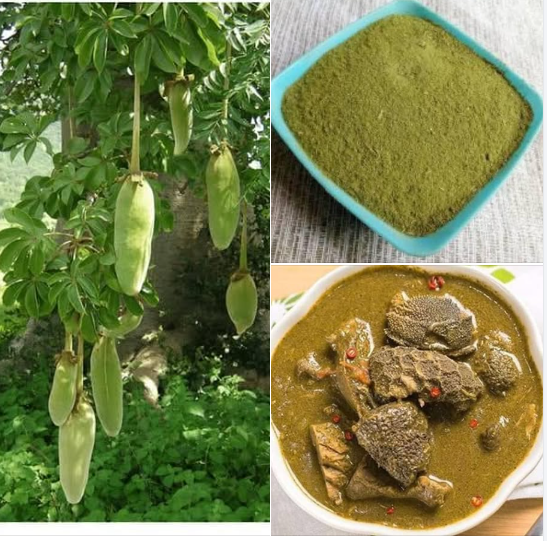
The fruit of Adansonia digitata — whose commercial relevance is the subject of this article — is botanically a woody capsule (30–40cm long, 15–25cm diameter) whose hard, woody outer shell (endocarp) contains seeds embedded in a dry, powdery, white to cream-coloured fruit pulp (mesocarp) whose specific physical state — dry and powdery at natural harvest with moisture content naturally below 10% — creates the extraordinary commercial circumstance of a wild fruit that arrives at harvest already in approximately the correct moisture range for international trade without requiring artificial drying.
This natural dry state is not a coincidence of African climate. It reflects Adansonia digitata‘s evolutionary adaptation to the Sahel’s intense dry season — the fruit dries on the tree during the dry season months before harvest, the tree’s canopy providing shade while the dry harmattan winds dessicate the pulp within the hard protective shell. The result is a self-preserving botanical package: hard shell protecting naturally dried pulp, moisture content naturally below 10%, tartaric acid’s antimicrobial activity preventing microbial spoilage during the extended dry-on-tree period. Traditional Sahel communities have exploited this natural processing for millennia — simply cracking the shell, sieving out the seeds, and consuming or storing the naturally powdery white pulp.
The 2008 EU Novel Food Authorisation — A Landmark Regulatory Event
The EU Novel Food Regulation — which requires formal safety assessment and authorisation for foods that did not have a significant history of consumption in the EU before May 1997 — was the regulatory barrier whose existence prevented baobab fruit’s commercial deployment in European food manufacturing despite clear consumer interest. The PhytoTrade Africa application — submitted to the UK Food Standards Agency (the UK was the primary application country) and reviewed under the predecessor Regulation (EC) 258/97 — documented baobab fruit pulp’s traditional use history, nutritional composition, and safety evidence whose positive assessment by the Scientific Panel on Dietetic Products, Nutrition and Allergies produced the 2008 authorisation.
The EFSA scientific opinion on baobab dried fruit pulp confirming safety for food use — published 2008 — was a landmark event for multiple commercial reasons: it was the first EU Novel Food authorisation for an African fruit; it created regulatory certainty for European food manufacturers whose inclusion of baobab in commercial products had previously carried regulatory risk; and it confirmed that the extensive traditional use evidence assembled by PhytoTrade Africa’s member organisations constituted adequate safety substantiation.
Post-Brexit UK, the UK Food Standards Agency maintains the same baobab fruit pulp authorisation — creating continued UK market access whose independence from EU Novel Food Regulation does not change baobab fruit pulp’s permitted food use status in the UK.
What Is Nigerian Baobab Fruit Powder? The Nutritional Profile, Processing Routes, and Commercial Product Range
Adansonia Digitata Fruit Pulp — The Nutritional Architecture of the Natural Powder
The fruit pulp of Adansonia digitata — the white to cream-coloured powdery mesocarp that surrounds the seeds within the hard shell — contains a nutritional profile whose specific characteristics have driven its superfood commercial positioning:
Vitamin C content: 280–380mg per 100g of natural fruit pulp powder — among the highest vitamin C concentrations of any whole food plant source, documented through FAO food composition research and multiple African botanical nutrition studies. For comparison: fresh oranges contain approximately 53mg vitamin C per 100g — baobab fruit powder contains approximately 6–7 times more vitamin C per gram than fresh orange. At a typical 10g serving of baobab powder — common in smoothies and functional beverages — vitamin C delivery is approximately 28–38mg, approximately 30–40% of EU Recommended Daily Value.
Prebiotic fibre content: 44–55% of dry weight — primarily soluble fibre (pectin-type polysaccharides) and insoluble fibre whose combined prebiotic activity — stimulating Lactobacillus and Bifidobacterium growth in the colon — is documented through ISAPP research and NCBI’s gut microbiome and prebiotic research database. The prebiotic fibre content — at 44–55% of dry weight — is extraordinarily high for a fruit product, dramatically exceeding most commercial prebiotic ingredients including inulin-enriched chicory and acacia gum. This single nutritional fact creates baobab powder’s most commercially differentiating functional food positioning: it is simultaneously a vitamin C source and a high-fibre prebiotic in one ingredient.
Tartaric acid: 12–18% of dry weight — the organic acid whose concentration in baobab fruit pulp is among the highest of any commercially consumed fruit — creating the characteristic sharp, tart flavour whose tangy-lemon character creates baobab powder’s distinctive taste profile in beverages and confectionery. Tartaric acid’s specific commercial value extends beyond flavour: its antimicrobial activity creates the natural preservation that allows baobab pulp to remain shelf-stable on the tree through the Sahel dry season; its pH-lowering effect in the gastrointestinal tract creates digestive acid-buffering properties documented in traditional use for digestive disorders; and its commercial use as an acidulant in food manufacturing creates application interest from food manufacturers whose tartaric acid replacement programme values natural plant-source alternatives to synthetic tartaric acid.
Calcium: 260–300mg per 100g — significant, though lower than baobab leaf (300–400mg per 100g) — contributing to baobab powder’s overall mineral nutrition positioning.
Phosphorus: 150–180mg per 100g — creating bone health mineral pairing with calcium.
Magnesium: 120–160mg per 100g — contributing cardiovascular and muscle function mineral positioning.
Iron: 9–12mg per 100g — significant for a fruit product, though lower than baobab leaf (28–35mg per 100g) — contributing to the iron nutrition positioning that complements baobab leaf powder’s more dramatic iron density.
Total polyphenol content: 200–350mg GAE per 100g — documenting antioxidant activity through Journal of Agricultural and Food Chemistry baobab polyphenol characterisation studies confirming procyanidins, quercetin glycosides, and epicatechin as primary antioxidant compounds.
Starch and sugars: 15–25% of dry weight — providing the carbohydrate energy fraction whose quick-release glucose creates the functional energy contribution in beverage and sports nutrition applications.
Processing Routes and Commercial Grades
Natural Pulp Powder (Sun-Dried, Minimally Processed) — the traditional form: dried fruit pulp sieved from seeds and shell fragments, milled to fine powder. This form preserves the complete natural nutritional profile including maximum vitamin C at natural concentrations.
Spray-Dried Baobab Extract — liquid extraction of baobab pulp followed by spray drying with carrier (maltodextrin or acacia gum) — creating standardised, highly soluble powder with defined vitamin C and fibre specification. Preferred for beverage applications requiring instant dissolution.
Organic Certified Natural Powder — natural pulp powder from documented organic certified wild collection — the premium form for European and North American natural food retail whose certified organic positioning creates maximum consumer price premium.
Baobab Seed (De-pulped) — the seeds separated during pulp extraction — whose oil content creates separate commercial value for cosmetics (baobab seed oil) and food applications.
Benefits and Industrial Uses of Nigerian Baobab Powder
Superfood Beverage and Smoothie Market — The Primary Commercial Application
The global functional beverage and superfood ingredient market — tracked through Grand View Research’s superfood ingredient market analysis at over USD 157 billion annually — creates the most volume-significant commercial procurement stream for baobab fruit powder:
Smoothie and functional beverage addition — baobab powder’s extraordinary vitamin C content, prebiotic fibre, and tangy tartaric acid flavour create a natural smoothie ingredient whose functional beverage positioning is commercially established through major European brands including Aduna (UK), Pukka Herbs, and Holland & Barrett own-label baobab products. The characteristic tangy, lemon-adjacent flavour creates a distinctive taste contribution that differentiates baobab smoothies from vanilla-flavoured protein powder or neutral-tasting greens supplements. For beverage manufacturers — baobab powder’s instant solubility (tartaric acid and soluble fibre creating rapid hydration) and stable vitamin C make it technically superior to many functional botanical additions whose poor solubility creates processing challenges.
Sports nutrition and energy drink formulation — baobab powder’s combination of rapidly available carbohydrate (15–25% sugars), electrolytes (potassium, calcium, magnesium), and vitamin C creates specific sports nutrition positioning for pre-workout energy, hydration support, and antioxidant recovery whose natural food matrix delivery differentiates baobab from synthetic electrolyte tablets and synthetic vitamin C supplements.
Functional yoghurt and dairy addition — baobab powder as a yoghurt mix-in or yoghurt product ingredient creates the vitamin C and prebiotic fibre positioning whose synergy with yoghurt’s probiotic content creates the most commercially sophisticated gut health product positioning available — live probiotics plus prebiotic substrate in the same product.
For beverage and functional food manufacturers — contact our export team to discuss vitamin C content specification and solubility characteristics.
Natural Food Manufacturing — Prebiotic Fibre Ingredient
The global prebiotic ingredient market — tracked through Grand View Research’s prebiotic ingredient market analysis at over USD 6 billion annually — creates specific procurement demand for baobab powder as a natural, whole-food-matrix prebiotic ingredient:
Prebiotic food formulation — baobab powder’s 44–55% dietary fibre content (of which the soluble fraction creates documented prebiotic activity) creates commercial inclusion in: high-fibre breakfast cereal, prebiotic granola bars, digestive health biscuits, and functional bread whose prebiotic communication specifically values baobab’s whole-food-matrix fibre origin versus isolated inulin or FOS whose processing-intensive production creates industrial rather than natural product identity.
Clean-label prebiotic ingredient — the regulatory simplicity of “baobab fruit powder” on an ingredient list — a recognisable food ingredient whose origin, processing, and functionality are all communicated by a single word — creates clean-label food manufacturing positioning that isolated prebiotic ingredients cannot achieve. Innova Market Insights’ global clean-label trend database specifically identifies whole-food prebiotic ingredients as one of the fastest-growing food manufacturing formulation trends.
Digestive health product formulation — baobab powder’s combination of prebiotic fibre, tartaric acid’s digestive support, and polyphenol antioxidant activity creates multi-mechanism digestive health positioning for functional food and supplement products tracked through the Natural Products Association (NPA).
Nutraceutical Supplement Industry — Vitamin C and Whole Food Nutrition
Natural vitamin C supplement — the global vitamin C supplement market — tracked through Grand View Research’s vitamin C market analysis at over USD 1.5 billion annually — creates specific procurement demand for natural, whole-food-matrix vitamin C sources whose bioflavonoid co-presence (quercetin, epicatechin in baobab polyphenols alongside ascorbic acid) creates superior bioavailability positioning over synthetic ascorbic acid. Supplement brands including Garden of Life, New Chapter, and Whole Earth & Sea specifically communicate “natural food-matrix vitamin C” as a premium differentiation from synthetic ascorbic acid isolates — creating procurement interest in baobab powder as one of the most vitamin-C-dense natural food-matrix sources.
African superfood multivitamin — baobab powder incorporated in African botanical multivitamin formulations whose combination of vitamin C, calcium, magnesium, iron, and polyphenol antioxidants from a single authenticated African botanical origin creates the most commercially coherent whole-food multivitamin positioning available from an African source.
Weight management supplement — baobab powder’s high dietary fibre content creates satiety signalling through gastric distension and cholecystokinin release — whose weight management positioning is documented through NCBI’s appetite regulation research database confirming fibre-mediated satiety benefits in weight management programmes.
For supplement manufacturers requiring documented vitamin C and prebiotic fibre — contact our team to discuss supplement-grade specification.
Baby Food and Infant Nutrition
Vitamin C fortification for complementary foods — baobab powder at 5% inclusion in weaning food delivers approximately 15–18mg vitamin C per 20g serving — creating meaningful vitamin C contribution whose natural food-matrix delivery is preferred over synthetic ascorbic acid fortification in premium natural baby food formulations. The concurrent iron enhancement (baobab fruit’s moderate 9–12mg per 100g iron, amplified by vitamin C’s bioavailability enhancement) creates the baby food formulation value that complements the more dramatic iron delivery of baobab leaf.
Natural acidulant in baby food — tartaric acid’s gentle pH-lowering effect creates natural food preservation in baby food formulations without artificial preservatives — supporting the clean-label positioning that premium natural baby food brands specifically require.
Prebiotic for infant gut microbiome — baobab’s soluble prebiotic fibre creates specific infant gut microbiome development support whose positioning aligns with the growing commercial and scientific interest in infant gut microbiome establishment’s long-term health consequences documented through NCBI’s microbiome and infant health research database.
Cosmetics — Baobab Seed Oil
Baobab seed oil cosmetics application — the seeds recovered during baobab fruit pulp extraction yield a valuable cosmetics oil (Adansonia digitata seed oil — INCI: Adansonia Digitata Seed Oil) whose specific fatty acid composition (palmitic 18–21%, oleic 30–36%, linoleic 27–30%, α-linolenic 2–5%) and high vitamin E content create skin care applications in moisturising, hair conditioning, and anti-aging formulations. The CIR (Cosmetic Ingredient Review) has assessed baobab seed oil safety in cosmetics — confirming safety for topical application. For cosmetics buyers whose formulation requires the seed oil fraction — Paradise MultiTrade coordinates seed supply alongside fruit pulp powder from the same fruit processing operations.
Why Buy Baobab Powder From Nigeria?
The EU Novel Food Authorisation — Regulatory Clarity Already Established
The most commercially significant advantage of building Nigerian baobab fruit powder supply is that the regulatory barrier whose existence has limited other African botanicals’ European market access has already been removed. EU Novel Food authorisation for baobab dried fruit pulp — granted 2008 — applies to the ingredient regardless of African country of origin. Nigerian baobab fruit pulp powder benefits from the same authorisation as Zimbabwean, Malawian, or Senegalese baobab — because the authorisation covers the botanical ingredient (Adansonia digitata dried fruit pulp) rather than a specific geographic origin.
For European food manufacturers whose regulatory compliance programmes require Novel Food clearance before new ingredient incorporation — Nigerian baobab fruit pulp powder requires no additional Novel Food application. The 2008 authorisation covers it completely. This regulatory clarity removes the primary commercial risk that would otherwise prevent European food manufacturers from sampling Nigerian origin supply. Contact us to discuss EU regulatory documentation.
Supply Diversification From Southern and Eastern African Dominant Origins
Zimbabwe, Malawi, Zambia, and Senegal’s baobab industry — developed through PhytoTrade Africa’s institutional support over two decades — has successfully established the European baobab market but created a supply concentration in southern and eastern African origins. Nigerian origin provides West African supply diversification whose Atlantic coast logistics (14–18 days Lagos to Rotterdam versus 20–30 days from southern African origins via the Cape of Good Hope or Suez Canal) creates freight economics and supply chain geography diversification that European baobab buyers’ procurement risk frameworks value.
The Nigerian Production Scale — The Largest Sahel Baobab Population
Nigeria’s northern savanna belt contains one of Africa’s largest Adansonia digitata populations — distributed across approximately 500,000 square kilometres of Sahel and Guinea savanna whose parkland agroforestry maintains baobab trees at densities of 10–50 trees per hectare across vast swathes of Kano, Katsina, Sokoto, Jigawa, and adjacent states. This population scale creates commercial baobab fruit collection potential that dwarfs the smaller, more isolated baobab populations of southern African origins — providing the supply volume scalability that large international buyer programmes require.
The Organic Certification Opportunity
Traditional baobab fruit wild collection in northern Nigeria — from trees managed within traditional agroforestry systems without synthetic pesticides, herbicides, or fertilisers — creates the same inherent organic farming foundation documented for baobab leaves. EU Organic Regulation 848/2018 and USDA NOP certification are achievable through documentation of wild collection management practices whose absence of synthetic inputs is structurally verifiable. For premium natural food and supplement brands whose product positioning specifically communicates “certified organic” — Nigerian baobab fruit powder’s traditional wild collection creates the most commercially accessible organic certification pathway of any major superfood ingredient.
Complete Export Documentation
Every baobab powder shipment carries phytosanitary certification from NAQS, NEPC export documentation, certificate of origin, commercial invoice, packing list, and bill of lading. We coordinate vitamin C content (HPLC ascorbic acid), total dietary fibre (AOAC 991.43 method), soluble and insoluble fibre fraction (AOAC), tartaric acid content (titration), calcium and iron content (ICP-MS), total polyphenol content (Folin-Ciocalteu), ORAC antioxidant capacity, aflatoxin screening, pesticide residue multi-residue analysis to EU MRL standards per Regulation (EC) 396/2005, heavy metals ICP-MS, and microbiological safety testing following AOAC International validated procedures. EU-bound shipments comply with Regulation (EU) 2017/625 on official controls, Commission Regulation (EC) 1881/2006, and the 2008 Novel Food authorisation framework. Our NEPC Export Licence No. 0042385 and CAC Registration No. RC-9284647 are verifiable through NEPC.
Nigeria’s Baobab Powder Export Strength and Global Market Demand
The Global Market
The global baobab products market — tracked through Grand View Research’s baobab market analysis at over USD 200 million annually with projected growth to USD 500 million+ by 2030 as consumer awareness continues expanding — represents one of the most commercially developed African botanical superfood categories in the global natural food market. European natural food retailers including Holland & Barrett, Planet Organic, and Whole Foods UK stock baobab fruit powder as an established premium ingredient. American retailers including Whole Foods Market, Sprouts, and Natural Grocers feature baobab in their superfood sections.
The Baobab Foods and PhytoTrade Africa institutional frameworks whose commercial development work created the European baobab market provide the commercial infrastructure within which Paradise MultiTrade’s Nigerian supply development positions West African origin for market integration.
Key Export Destination Markets
United Kingdom — Europe’s most commercially developed baobab retail market, whose established consumer awareness, retailer infrastructure, and brand relationships create the most immediately commercially accessible European market for additional African origin supply. UK Novel Food clearance maintained post-Brexit by FSA.
Germany and Netherlands — Europe’s primary functional food manufacturing and natural food ingredient distribution hubs creating consistent procurement demand. EU Novel Food authorisation applies; food safety requirements administered through EFSA and BVL.
United States — whose natural food retail sector and growing African superfood category awareness creates expanding procurement demand. US food import requirements through FDA; GRAS notification may be beneficial for US food manufacturing applications.
Japan and South Korea — whose functional food markets create developing baobab interest tracked through JETRO and KATI.
Australia — whose premium natural food retail sector creates consistent baobab demand tracked through DAFF.
Canada — whose health-conscious consumer market creates growing baobab interest tracked through CFIA.
Why Choose Paradise MultiTrade International Limited?
EU Novel Food Authorisation Compliance Documentation. Complete EU Novel Food authorisation compliance documentation — confirming that Nigerian Adansonia digitata dried fruit pulp powder meets the 2008 EU authorisation specifications for baobab dried fruit pulp — providing European food manufacturers with the regulatory clearance evidence whose existence removes Novel Food compliance risk. Contact us to discuss Novel Food compliance documentation.
Vitamin C HPLC Documentation — Natural Source Credential. Total vitamin C quantified by HPLC ascorbic acid analysis — confirming the 280–380mg per 100g natural source vitamin C concentration whose food-matrix bioflavonoid co-delivery creates the premium positioning over synthetic ascorbic acid that whole-food supplement brands communicate. Contact us to discuss vitamin C specification.
Total and Soluble Dietary Fibre — AOAC Method. Total dietary fibre quantified by AOAC 991.43 method — confirming 44–55% total fibre content and documenting soluble versus insoluble fibre fractions whose ratio determines prebiotic efficacy and product texture contribution. Contact us to discuss fibre specification.
Organic Certification Programme. Certified organic baobab fruit powder from documented traditional wild collection management — coordinated through EU Organic Regulation 848/2018 and USDA NOP accredited certification bodies. Contact our team to discuss organic certification timeline.
Integrated Baobab Product Portfolio. Paradise MultiTrade supplies baobab leaves (kuka powder), baobab fruit powder, and baobab seed (for oil extraction) from the same Nigerian northern Sahel agroforestry community sourcing network — allowing buyers who source multiple baobab products to consolidate procurement through one licensed exporter whose integrated supply creates the most commercially efficient West African baobab value chain access. Contact us to discuss integrated baobab product procurement.
Multi-Commodity West African Superfood and Botanical Sourcing. Baobab powder buyers frequently source complementary Nigerian superfoods. Alongside baobab powder, Paradise MultiTrade exports baobab leaves (kuka), moringa leaf powder, hibiscus flower, guava leaves, pawpaw leaves, gum arabic, sesame seeds, shea butter, cashew nut kernel, raw cashew nuts, and raw bush honey. Explore our full range of Nigerian export commodities and consolidate your West African botanical superfood and natural ingredient sourcing through one verified, licensed export partner.
Product Specifications
| Specification | Details |
|---|---|
| Product | Nigerian Baobab Fruit Powder (Adansonia digitata) — dried fruit pulp |
| Common Names | Baobab powder, Baobab fruit powder, Tabalde (Wolof/Senegalese trade name), Kuka fure (Hausa — baobab fruit pulp powder, distinct from kuka/leaf), Monkey bread powder |
| Botanical Species | Adansonia digitata L. (Malvaceae) — fruit pulp (mesocarp) only |
| EU Novel Food Status | Authorised under 2008 EU Novel Food authorisation (Regulation EC 258/97 — now Regulation EU 2015/2283). No additional authorisation required for food use. |
| Botanical Authentication | Visual morphological confirmation; HPLC tartaric acid and polyphenol fingerprint |
| Origin | Nigeria (Kano, Katsina, Jigawa, Sokoto, Kebbi, Zamfara, Borno, Yobe, Gombe, Bauchi States) |
| Product Forms | Natural pulp powder (minimally processed); Spray-dried extract (with maltodextrin carrier); Organic certified natural powder |
| Vitamin C Content | 280–380mg per 100g dry weight (HPLC ascorbic acid analysis) |
| Total Dietary Fibre | 44–55% dry weight (AOAC 991.43) |
| Soluble Fibre Fraction | 25–35% of dry weight (prebiotic activity fraction) |
| Insoluble Fibre Fraction | 15–25% of dry weight |
| Tartaric Acid Content | 12–18% dry weight (titration) |
| Calcium Content | 260–300mg per 100g dry weight (ICP-MS) |
| Iron Content | 9–12mg per 100g dry weight (ICP-MS) |
| Magnesium Content | 120–160mg per 100g dry weight (ICP-MS) |
| Potassium Content | 500–700mg per 100g dry weight (ICP-MS) |
| Total Polyphenols | 200–350mg GAE per 100g (Folin-Ciocalteu) |
| ORAC Antioxidant Capacity | 1,500–2,500 μmol TE per 100g (ORAC method — on request) |
| Total Sugars | 15–25% dry weight |
| Protein Content | 2–4% dry weight |
| Fat Content | ≤1.5% dry weight |
| Moisture Content | ≤10% (natural powder); ≤6% (spray-dried) |
| pH (10% aqueous solution) | 2.8–3.5 (reflecting tartaric acid content) |
| Colour | White to cream (premium natural); cream-tan (standard) |
| Aroma and Taste | Tangy, tartly acidic, citrus-adjacent — characteristic baobab |
| Aflatoxin | Total ≤10 ppb; B1 ≤2 ppb |
| Pesticide Residue | Multi-residue analysis to EU MRL standards — mandatory all EU-bound lots |
| Heavy Metals | Lead ≤3 ppm; Cadmium ≤0.5 ppm; Arsenic ≤1 ppm; Mercury ≤0.1 ppm — ICP-MS |
| Microbiological | Salmonella absent/25g; E. coli absent/1g; Total plate count ≤100,000 CFU/g; Mould ≤1,000 CFU/g |
| Allergen Status | Baobab fruit powder is not among the 14 major EU allergens or 9 US FDA major allergens |
| Organic Certification | EU Organic Regulation 848/2018; USDA NOP — available on request |
| Shelf Life | 24 months (sealed, cool, dark storage) |
| Packaging Options | 5kg, 10kg, 25kg multilayer kraft bags with inner polyethylene liner; nitrogen-flushed for premium organic grade |
| Supply Capacity | 20–2,000+ MT per year |
| MOQ | Natural powder: 1 MT; Organic certified: 500kg; Spray-dried extract: 500kg |
| Export Documentation | EU Novel Food Authorisation Compliance Certificate, Phytosanitary Certificate (NAQS), Botanical Species Identity Certificate (Adansonia digitata fruit pulp), Certificate of Origin, NEPC Export Licence, Vitamin C HPLC Certificate, Total and Soluble Dietary Fibre Certificate (AOAC), Tartaric Acid Certificate, Calcium and Iron ICP-MS Certificate, Total Polyphenol Certificate, ORAC Antioxidant Certificate (on request), Moisture Certificate, Aflatoxin Certificate, Pesticide Residue Certificate (EU MRL), Heavy Metals ICP-MS Certificate, Microbiological Certificate, Organic Certificate (where applicable), Commercial Invoice, Packing List, Bill of Lading |
| Payment Terms | T/T, Letter of Credit (LC at sight), Escrow |
| Loading Port | Lagos (Apapa / Tin Can Island Port), Nigeria |
| Incoterms Available | EXW, FOB Lagos, CNF, CIF |
Processing and Export Process
Fruit Harvest Season. Adansonia digitata fruits in Nigeria’s northern savanna mature and are ready for harvest during the dry season (December through March) — when the natural on-tree drying process has reduced pulp moisture to below 10% and the hard shell has fully hardened. The harvest coincides with the harmattan season whose low humidity and strong desiccating winds complete the natural drying whose result is the self-preserved, naturally shelf-stable fruit that traditional communities have harvested and stored for millennia without artificial processing.
Community Collection. Baobab fruits collected from traditional agroforestry trees by community harvesting cooperatives — fallen fruits gathered from ground and accessible fruits harvested by pole from lower branches. Each tree produces 50–200 fruits per season depending on age and rainfall conditions — with individual ancient trees producing higher volumes. Collection documented by community, tree location, and collection date for traceability.
Shell Cracking and Pulp Separation. Hard woody shells cracked by mechanical nut crackers or traditional stone-pounding — releasing the seed-pulp matrix. The naturally dry, powdery white pulp is loosely bound around the seeds whose mechanical separation (through vibrating sieves and aspiration) creates clean pulp and clean seed streams. The naturally low moisture of correctly harvested fruit (below 10%) means no drying is required — only separation and milling.
Sieving and Pulp Cleaning. Separated pulp passed through multi-stage sieves — removing shell fragments, seed coat particles, and fibre strands — producing clean white to cream pulp powder. Colour of finished powder is the primary visual quality indicator: pure white to cream confirms clean separation; darker tan or brown indicates excessive shell fragment or oxidised material contamination.
Milling to Specification. Clean pulp milled to target particle size — natural powder grade (100–300 microns for standard food manufacturing incorporation); fine supplement grade (80 mesh, 180 microns) for capsule filling and beverage dissolution. Tartaric acid’s hygroscopic character requires humidity-controlled milling environment to prevent powder caking during grinding.
Spray Drying (where specified). Pulp slurried with water and spray-dried with maltodextrin or acacia gum carrier — producing highly soluble, standardised extract powder whose consistent vitamin C and fibre specification creates formulation reproducibility for industrial food manufacturing buyers.
Quality Testing. Vitamin C (HPLC), total fibre (AOAC 991.43), tartaric acid (titration), calcium and iron (ICP-MS), aflatoxin (ELISA), pesticide residue (GC/LC-MS), microbiological, and moisture — tested before export documentation. ORAC and heavy metals for premium supplement grade.
Lead Times. Natural pulp powder from harvest season stock: 14–21 days. Organic certified: 14–21 days plus certification documentation. Spray-dried extract: 28–42 days (spray drying scheduling). Contact us to plan your supply schedule.
Frequently Asked Questions
What is the difference between baobab fruit powder and baobab leaf powder and when should buyers specify each?
Both products come from the same Adansonia digitata baobab tree but from entirely different parts with different nutritional profiles and different commercial applications — creating two distinct commercial ingredients rather than variants of the same product: Baobab fruit powder (this article): The white powdery pulp from inside the fruit shell — extremely high vitamin C (280–380mg per 100g), very high dietary fibre (44–55%), high tartaric acid (12–18%), tangy flavour. Applications: smoothie ingredient, functional beverage, prebiotic supplement, natural vitamin C, sports nutrition, baby food vitamin C fortification. Baobab leaf powder (preceding article — kuka): The dried ground leaf — extremely high iron (28–35mg per 100g), very high calcium (300–400mg per 100g), high protein (13–16%), complete amino acid profile, mild earthy flavour. Applications: traditional miyan kuka soup, iron and calcium supplement, baby food fortification, diaspora traditional food ingredient. The commercial rule: for vitamin C, prebiotic fibre, and beverage application — specify fruit powder. For iron, calcium, protein, and traditional northern Nigerian food — specify leaf powder (kuka). Both products from the same Nigerian baobab tree sourcing — Paradise MultiTrade supplies both and can coordinate integrated procurement for buyers requiring both products. Contact us to discuss integrated baobab product specification.
What is the EU Novel Food authorisation for baobab and what does it mean for European food manufacturers?
The 2008 EU Novel Food authorisation for baobab dried fruit pulp — the most commercially significant regulatory event in the history of African botanical food trade — was granted under Regulation (EC) 258/97 following review of a PhytoTrade Africa application. Key commercial implications: (1) EU food manufacturers can legally incorporate baobab dried fruit pulp powder in food products without additional Novel Food application — the 2008 authorisation provides regulatory clearance for food use across all EU member states. (2) The authorisation covers “baobab dried fruit pulp” regardless of which African country of origin — Nigerian baobab fruit pulp powder from Paradise MultiTrade benefits from the same authorisation as Zimbabwean, Senegalese, or Kenyan baobab. (3) UK Novel Food clearance is maintained post-Brexit — the UK FSA maintains baobab fruit pulp’s authorised status under the UK’s retained equivalent legislation. (4) US GRAS status: Baobab has received GRAS (Generally Recognised As Safe) self-determination status from several US food manufacturers and is sold in the USA without FDA objection — though formal FDA GRAS notification may be beneficial for large-volume food manufacturing applications. (5) Labelling: In EU retail products, baobab may be declared as “baobab” (Annex III botanical name Adansonia digitata may be added) on the ingredient list without additional Novel Food labelling requirements. Paradise MultiTrade provides complete Novel Food authorisation compliance documentation with every EU-bound shipment. Contact us to discuss Novel Food compliance documentation.
Why does baobab fruit pulp naturally dry on the tree — and why does this create commercial advantage over other tropical fruits?
Baobab’s natural on-tree drying is one of the most commercially unusual characteristics of any commercially traded tropical fruit — and creates specific processing advantages whose value the commercial supply chain has exploited: (1) Botanical mechanism: Adansonia digitata fruits ripen during the rainy season and then remain on the tree through the subsequent Sahel dry season — up to 9 months before falling naturally. During this extended on-tree period, the fruit’s hard wooden shell provides moisture-impermeable protection while the interior desiccates from the seed’s respiratory activity and the Sahel’s extremely low dry-season humidity. The natural result: fruit pulp whose moisture content falls below 10% through natural evaporation with the hard shell protecting against external contamination. (2) Commercial advantage: Most tropical fruits (mango, papaya, guava) require active drying infrastructure — hot-air dryers or freeze-dryers — creating capital and energy costs that raise production economics. Baobab’s natural self-drying eliminates this cost. The processing requirement is simply shell cracking, seed separation, and milling — operations requiring far less infrastructure than active drying of high-moisture fruit. (3) Vitamin C preservation benefit: The gradual, ambient-temperature natural drying creates a gentler thermal environment than hot-air drying — potentially preserving more vitamin C than rapid high-temperature forced-air drying would achieve. This natural process alignment with vitamin C preservation creates a nutritional quality advantage whose commercial communication to premium supplement buyers is authentic rather than manufactured. Contact us to discuss natural processing documentation.
What is tartaric acid and why is it commercially significant in baobab powder?
Tartaric acid — the organic acid whose concentration in baobab fruit pulp at 12–18% of dry weight is among the highest of any commercially consumed fruit — creates multiple commercial value dimensions: (1) Flavour profile: Tartaric acid’s sharp, clean acidity (similar to but distinct from citric acid in lemon juice) creates baobab’s characteristic tangy flavour whose intensity and pleasantness in beverages has driven consumer adoption in the European smoothie and functional drink market. The specific tartaric acid character — a clean sharpness that doesn’t have lemon’s harsh edge — creates a distinctive flavour that beverages incorporating baobab powder immediately recognise as “baobab.” (2) Natural acidulant: Food manufacturers who use tartaric acid as a food acidulant — in beverages, confectionery, and bakery products — currently source tartaric acid primarily from wine production (tartaric acid is a natural by-product of wine fermentation). Baobab powder’s tartaric acid content creates interest as a natural, non-wine-derived tartaric acid source whose botanical origin creates clean-label positioning advantages over wine-derivative tartaric acid in products targeting abstaining or alcohol-avoiding consumer segments. (3) Natural preservative: Tartaric acid’s pH-lowering activity creates antimicrobial conditions in food matrices — contributing to baobab powder’s natural shelf stability and creating natural preservation activity in food products incorporating it. (4) Digestive support: Traditional use of baobab for digestive complaints — confirmed through ethnomedicinal research in Journal of Ethnopharmacology — partly reflects tartaric acid’s documented stimulation of gastric acid secretion and digestive enzyme activity. Contact us to discuss tartaric acid content specification.
How does baobab powder’s prebiotic fibre content compare to established commercial prebiotic ingredients?
Baobab powder’s prebiotic fibre credentials — when compared to the established commercial prebiotic ingredient landscape — reveal a commercially significant competitive positioning: Inulin (from chicory): Approximately 90–95% inulin content as isolated ingredient; prebiotic activity well-established (ISAPP-recognised); processing-intensive extraction from chicory root. Baobab fruit powder: 44–55% total dietary fibre, 25–35% soluble fibre with documented prebiotic activity; whole-food-matrix rather than isolated compound; no extraction processing — natural product. FOS (fructooligosaccharides): Approximately 95% FOS as isolated ingredient; processed from chicory or synthesised from sucrose; excellent prebiotic activity; industrial production cost higher than baobab. Acacia gum: 85–90% soluble fibre (arabinogalactan); documented prebiotic; produced by exudate collection from Acacia senegal — a West African tree product! Research published through NCBI’s gut microbiome and prebiotic research specifically confirms baobab fruit powder’s prebiotic activity — documenting significant Bifidobacterium and Lactobacillus growth stimulation compared to control at human-relevant baobab consumption doses. The commercial positioning argument: baobab powder delivers prebiotic activity from a whole-food-matrix natural ingredient whose clean label (“baobab fruit powder”) communicates authenticity and naturalness that no isolated prebiotic ingredient’s label communicates equivalently. Contact us to discuss prebiotic fibre specification for your formulation.
What is the Nigerian baobab fruit harvest season and how does supply availability work?
Nigerian baobab fruit harvest follows a precise seasonal pattern: (1) Primary harvest (December–March): The Sahel dry season — whose low humidity and harmattan winds have naturally dried the on-tree fruits during the October–December post-rainy-season period — creates the primary harvest window when fruit pulp moisture is naturally at or below 10% and fruit quality is at its peak. Community collectors gather fallen fruits and harvest accessible fruits from lower branches during December–March. (2) Fruit quality variation: Early dry season fruits (October–November harvest) have experienced less on-tree drying and may have slightly higher moisture (10–14%) requiring additional processing; peak-dry-season fruits (January–March) have optimal moisture (8–10%) from extended harmattan exposure. (3) Year-round supply from storage: Properly dried baobab pulp powder sealed in moisture-barrier packaging maintains quality for 24 months — enabling year-round supply from a single harvest season’s stock without quality degradation. (4) Procurement planning: For premium-quality first-harvest material — initiate procurement discussions by October before the December–January primary harvest to coordinate community collection capacity and quality sorting. For standard supply — year-round procurement from sealed storage is available at consistent quality. (5) Volume planning: Large-volume buyers (above 100 MT per year) should establish annual supply agreements that coordinate community harvesting capacity allocation before the harvest season — whose community cooperative organisation creates predictable collection limits per geographic area. Contact us to plan your procurement cycle.
What transit times should I expect from Nigeria?
Baobab fruit powder in all forms (standard dry container — no temperature control required for properly dried powder below 10% moisture): UK (Tilbury, Felixstowe) — 14–18 days from Lagos. Netherlands (Rotterdam) — 14–18 days. Germany (Hamburg) — 14–20 days. France (Le Havre) — 14–18 days. Italy (Genoa, Naples) — 12–16 days. USA (East Coast — New York, Baltimore, Savannah) — 18–25 days. Canada (Halifax, Montreal) — 18–28 days. UAE (Jebel Ali) — 10–14 days. Japan (Yokohama) — 25–32 days. South Korea (Busan) — 30–38 days. Australia (Sydney, Melbourne) — 28–38 days. Air freight (UK Heathrow) — 2–3 days total. Air freight (USA JFK/Houston) — 3–4 days total. Transit comparison vs southern African origins: Lagos to Rotterdam 14–18 days versus Harare (Zimbabwe) to Rotterdam approximately 22–30 days (Cape route) or 20–25 days (Suez route) — Nigerian Atlantic logistics advantage creates approximately 8–15 days faster delivery for European buyers. Packaging note: Baobab powder is mildly hygroscopic — tartaric acid’s moisture-attracting character requires sealed moisture-barrier packaging preventing clumping and vitamin C oxidation during transit. Inner polyethylene liner within outer multilayer kraft bag for standard grade; nitrogen-flushed sealed packaging for premium organic and supplement grade. Add 7–10 days for full analytical panel (vitamin C HPLC, fibre AOAC, minerals ICP-MS) before loading for supplement and baby food buyers. Contact us to plan your complete logistics programme.
Ready to Source Nigerian Baobab Fruit Powder — Natural Pulp Powder, Spray-Dried Extract, and Organic Certified Grade — With EU Novel Food Authorisation Compliance Documentation, Vitamin C HPLC Certification, Total Dietary Fibre AOAC Documentation, Tartaric Acid Specification, Mineral Content ICP-MS, and Full Analytical Documentation for Supplement Brands, Functional Food Manufacturers, Natural Beverage Companies, Baby Food Producers, and Global Specialty Buyers?
If you are a European or North American functional food manufacturer building smoothie, functional beverage, prebiotic food, or natural vitamin C fortification products whose ingredient sourcing requires EU Novel Food-authorised baobab dried fruit pulp powder from a West African origin whose Atlantic logistics advantage over southern African dominant supply creates supply chain diversification and freight cost improvement, a nutraceutical supplement brand developing natural vitamin C supplements, prebiotic fibre supplements, African superfood multivitamins, or weight management products whose whole-food-matrix baobab fruit powder ingredient delivers the vitamin C and fibre credentials that synthetic supplement alternatives cannot replicate with clean-label consumer communication, a baby food manufacturer building natural vitamin C fortification for complementary food products whose clean-label positioning requires “baobab fruit powder” rather than synthetic ascorbic acid and whose prebiotic fibre content simultaneously supports infant gut microbiome development positioning, a natural food retailer or private label brand building premium African superfood products whose baobab fruit powder ingredient requires EU Novel Food compliance documentation, vitamin C HPLC certification, and organic certification for premium natural food retail positioning in UK, European, or North American markets, a sports nutrition brand developing natural electrolyte recovery products incorporating baobab’s potassium, calcium, magnesium, and vitamin C combination from an authentic African botanical source with documented mineral content, or a global botanical ingredient trader building Nigerian baobab fruit powder supply positions for European, North American, Japanese, and Australian superfood markets as West African Atlantic logistics creates competitive supply chain advantages over established southern African dominant origins — Paradise MultiTrade International Limited is the licensed Nigerian exporter your baobab powder supply programme needs.
We supply Nigerian Adansonia digitata baobab fruit powder — natural pulp powder, spray-dried extract, and organic certified grade — from Kano, Katsina, Sokoto, and Borno Sahel belt traditional wild collection community operations, EU Novel Food authorisation compliance documented with every EU-bound shipment, vitamin C HPLC certified per lot, total and soluble dietary fibre AOAC 991.43 documented, calcium and iron ICP-MS confirmed, tartaric acid content certified, aflatoxin ELISA tested, EU pesticide residue MRL compliant, heavy metals ICP-MS for supplement and baby food grade, organic certification available, and exported with full nutritional and regulatory documentation to buyers in every major regulated destination market.
Request a Quotation — share your required form (natural powder, spray-dried extract, or organic certified), vitamin C content minimum, dietary fibre specification (total and soluble), tartaric acid content requirement, organic certification need, volume, application (functional beverage, prebiotic food, vitamin C supplement, baby food, sports nutrition, private label superfood), destination market, and preferred incoterms. We respond within 48 hours.
Contact Our Export Team — speak directly about EU Novel Food authorisation compliance documentation, vitamin C HPLC natural source credentialing, total and soluble fibre AOAC documentation for prebiotic claim substantiation, spray-dried extract standardisation, organic certification programme, tartaric acid natural acidulant specification, integrated baobab leaf plus fruit powder combined procurement, Atlantic logistics advantage over southern African supply chains, and long-term Nigerian Sahel agroforestry supply programme structuring.
Explore Our Full Product Range — alongside baobab powder, Paradise MultiTrade exports baobab leaves (kuka), moringa leaf powder, hibiscus flower, guava leaves, pawpaw leaves, gum arabic, sesame seeds, shea butter, raw bush honey, cashew nut kernel, and raw cashew nuts. One licensed Nigerian exporter. One consolidated West African botanical superfood, traditional food ingredient, oilseed, and natural product sourcing relationship — from the first Sub-Saharan African fruit to achieve EU Novel Food authorisation to the most nutritionally complete African botanical portfolio available through a single licensed export partner.
Paradise MultiTrade International Limited | NEPC Export Licence No. 0042385 | CAC No. RC-9284647 | Lagos, Nigeria | www.paradisemultitrade.com
Reviews
There are no reviews yet.