
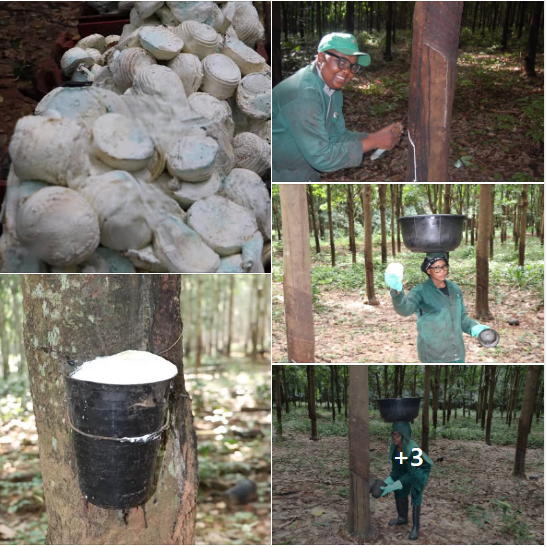

Nigerian Natural Rubber: The Industrial Agricultural Raw Material Whose USD 8 Billion Global Market Touches Every Tyre, Medical Glove, Condom, and Industrial Rubber Seal on Earth — and Whose Nigerian Production From 350,000 Hectares of Established Hevea Plantation Creates the Most Commercially Mature Export Pathway of Any Industrial Raw Material in the Nigerian Agricultural Portfolio
Rubber Natural Latex Exporter Nigeria — Field Latex (Fresh), Latex Concentrate (HA and LA Grade — 60% DRC), Ribbed Smoked Sheet (RSS 1, 2, 3, 4 — IRRDB Grades), Technically Specified Rubber (TSR 10, TSR 20 — ISO 2000 Grades), Air-Dried Sheet (ADS), Pale Crepe, Brown Crepe, and Skim Rubber, Direct Edo, Delta, Cross River, Ondo, and Ogun State Plantation and Smallholder Sourcing, Bulk Supply to Tyre Manufacturers, Medical Glove Producers, Pharmaceutical Rubber Goods Companies, Industrial Rubber Goods Manufacturers, Adhesive and Sealant Companies, Foam Manufacturers, and Global Commodity Trading Houses Worldwide
Rubber natural latex exporter Nigeria is a search phrase that arrives at the most commercially established industrial agricultural raw material in the Nigerian non-petroleum export portfolio — a product whose international market infrastructure is the most developed, whose buyer community is the most commercially sophisticated, and whose quality grading and pricing mechanisms are the most internationally standardised of any commodity in this entire series.
Natural rubber (Hevea brasiliensis Müll. Arg. — the Brazilian rubber tree) is simultaneously one of the most commercially important agricultural commodities in the world and one of the most technically irreplaceable industrial raw materials in modern manufacturing. Despite 150 years of synthetic rubber research and production (styrene-butadiene rubber, polyisoprene, neoprene, nitrile rubber — all commercially significant synthetic alternatives) — natural rubber from Hevea brasiliensis retains approximately 40–45% of global rubber consumption, specifically in the applications where synthetic rubber’s properties fundamentally cannot match natural rubber’s performance:
Aircraft tyres: 100% natural rubber — synthetic rubber’s heat generation under the extreme flex conditions of aircraft landing creates dangerous thermal failure. Natural rubber’s superior resilience (the ability to recover from deformation without energy loss — creating lower heat build-up under repeated flexion) makes synthetic substitution technically impossible for aircraft tyres.
Large truck and off-road vehicle tyres: 30–40% natural rubber content in the most demanding tyre applications — providing the tear resistance, high tensile strength (28–32 MPa — exceeding all commercial synthetic rubbers), and cut resistance that mining, agricultural, and heavy transport tyres specifically require.
Medical gloves and surgical gloves: Natural rubber latex’s film-forming properties (creating continuous, pinhole-free films at 0.1–0.2mm thickness whose barrier integrity protects against blood-borne pathogens) and tactile sensitivity (allowing surgeons to feel tissue texture through the glove — impossible with thicker synthetic alternatives) create indispensable medical application. The global medical glove market — accelerated dramatically by COVID-19 pandemic demand — consumes approximately 300 billion gloves annually according to WHO medical device statistics, with natural rubber latex accounting for approximately 60% of the surgical glove market.
Condoms: Natural rubber latex condoms — the most effective single-use prophylactic device for STI prevention documented by WHO’s contraceptive effectiveness data — whose effectiveness depends specifically on natural rubber’s combination of elasticity, barrier integrity, and tensile strength whose synthetic alternatives cannot replicate at equivalent comfort and security.
Adhesives and sealants: Contact cement (natural rubber in solvent) creates the strongest ambient-temperature bond strength of any non-epoxy adhesive for leather, rubber, and flexible substrates — whose footwear manufacturing application creates consistent procurement demand.
Nigeria’s rubber history: at independence in 1960, Nigeria was the world’s second largest natural rubber producer — whose rubber industry had been systematically developed during the British colonial period from 1900 onwards, creating the plantation infrastructure (initially on large estates, later distributed to smallholders through the Rubber Research Institute of Nigeria (RRIN)) whose legacy today includes approximately 350,000 hectares of rubber-planted land whose commercial development represents the most commercially immediately exploitable industrial export programme in the Nigerian agricultural sector.
At Paradise MultiTrade International Limited, natural rubber and latex concentrate is a priority industrial export programme — sourcing from both estate plantations and the smallholder tapper communities documented by RRIN across Nigeria’s primary rubber production states, processing through documented quality grading protocols, and exporting with complete quality certificates, fumigation documentation, and export permits enabling immediate international industrial buyer procurement.
To discuss sourcing immediately, request a quotation here and our export team responds within 48 hours.
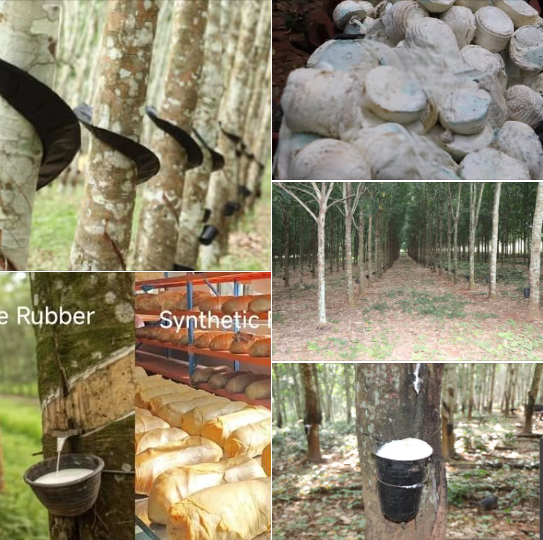
History and Origin — From Colonial Cash Crop to Industrial Export Cornerstone
Hevea Brasiliensis in Nigeria — Introduction, Colonial Development, and Modern Industry
Hevea brasiliensis is native to the Amazon basin of South America — specifically the states of Pará, Amazonas, and Mato Grosso in Brazil — whose indigenous peoples (the Munduruku, Mura, and related Amazonian communities) used natural rubber for waterproofing and ball-making thousands of years before European contact. The Amazon rubber boom of 1850–1912 — during which Brazilian wild rubber from tapped Hevea trees created the commercial foundation for the global rubber industry — ended abruptly when British entrepreneur Henry Wickham’s 1876 smuggling of Hevea seeds from Brazil to Kew Gardens, London created the Southeast Asian plantation system whose economies of scale made Brazilian wild rubber economically uncompetitive.
Nigeria’s rubber development: British colonial agricultural policy from 1900 — whose rubber plantation establishment in the humid southern zones identified by agricultural officers as climatically suitable for Hevea cultivation — created the plantation estate system in Edo (then Benin Province), Delta (Warri Province), and Cross River (Calabar Province) states. The Rubber Research Institute of Nigeria (RRIN) — established at Irrua, Edo State in 1961 — created the scientific foundation whose yield improvement, disease resistance, and smallholder extension programmes have underpinned Nigerian rubber development since independence.
The commercial decline of the 1980s-2000s — whose petroleum export dominance created the “Dutch Disease” economic phenomenon (oil revenue strengthening the naira, making non-oil agricultural exports uncompetitive internationally) — reduced Nigeria’s rubber industry from its world-second-place historical peak to a fraction of its capacity. The restoration opportunity whose commercial development Paradise MultiTrade’s programme specifically exploits: Nigeria’s depreciated naira (creating dramatically improved export price competitiveness since 2015), RRIN’s development of high-yielding clones (PB 217, RRIM 600, GT 1 — creating 2,000–2,500 kg/hectare/year yield from improved genetics versus 400–600 kg/hectare from unimproved traditional varieties), and the global supply deficit (Thailand, Indonesia, and Malaysia — the three dominant natural rubber producers collectively accounting for 75% of global supply — facing replanting cycles creating near-term supply tightness) collectively create the most commercially favourable Nigerian rubber export conditions since independence.
What Is Nigerian Natural Rubber? The Botanical Chemistry, Product Architecture, and Commercial Grade Structure
Hevea Brasiliensis — The Latex Biochemistry and Commercial Processing Chain
The latex biochemistry:
Natural rubber latex is produced in specialised cells called laticifers — a network of interconnected tube-like structures running throughout the bark and phloem of Hevea brasiliensis whose cutting during tapping creates the hydrostatic pressure release that drives latex flow. The latex composition:
Water: approximately 60–70% of field latex
Dry rubber content (DRC): approximately 30–40% of field latex — the commercial value fraction consisting primarily of polyisoprene — the high-molecular-weight polymer (molecular weight 200,000–2,000,000 Da) whose unique combination of extremely long chain length and cis-1,4 configuration creates natural rubber’s commercially irreplaceable mechanical properties
Non-rubber components: approximately 5–8% — proteins (particularly Hevea latex allergen Hev b 5 and Hev b 6 — the allergens creating latex allergy whose clinical significance is documented below), lipids, carbohydrates (inositol), mineral ions (potassium, magnesium, zinc)
The cis–polyisoprene distinction — the chemistry creating irreplaceability:
Natural rubber’s polyisoprene polymer adopts exclusively the cis-1,4 configuration — whose specific geometry creates: high molecular weight (200,000–2,000,000 Da — exceeding synthetic polyisoprene’s typical 100,000–500,000 Da); high stereoregularity (essentially 100% cis configuration — synthetic polyisoprene achieves 92–96% cis, the 4–8% deviation creating property differences); and strain-induced crystallisation — the most commercially important property distinguishing natural from synthetic rubber: when stretched, natural rubber’s chains align and crystallise, creating local order that dramatically increases tensile strength and tear resistance under load. Synthetic polyisoprene’s lower stereoregularity creates less efficient strain-induced crystallisation — reducing tensile strength and tear resistance below natural rubber performance even at equivalent starting composition.
Strain-induced crystallisation — creating the most commercially irreplaceable property: natural rubber under tension (in a tyre flexing around a pothole, or in a surgical glove being pulled over the hand) locally crystallises — the crystalline regions acting as physical crosslinks creating the extraordinary tensile strength (28–32 MPa) and tear resistance that no synthetic rubber at equivalent cost achieves.
The Commercial Processing Chain — From Field to Export Grade
Field latex collection (tapping):
The economic starting point — tapping Hevea trees through a systematic cut on the bark surface:
Tapping cut geometry: A half-spiral or full-spiral downward cut at 45° angle on the bark, penetrating to the cambium but not damaging the wood — the precise cut depth creating maximum latex flow without permanent tree damage. The Panel System — systematic rotation through different bark positions (traditionally called panels A, B, C on alternate sides of the tree) — creates the sustainable tapping whose maintenance of tree viability for 25–30 productive years creates the plantation economics whose long production life amortises establishment cost.
Tapping frequency: Standard: 3 times in 7 days (d/3 system) or alternate days (d/2) — whose frequency management balances yield maximisation against bark consumption whose depletion ends the tree’s tapping life.
Yield stimulation: Ethylene-releasing compounds (ethephon — an ethylene-generating chemical applied to the tapping cut or bark surface) stimulate increased latex flow by dilating the laticifer system — creating 20–40% yield increases documented by RRIN whose adoption in high-yielding clone plantations creates the production economics whose improvement enables competitive export pricing.
Anti-coagulant application: Ammonia solution (typically 0.2–0.5% by volume) added to collection cups — preventing the enzymatic coagulation (activated by latex enzyme systems triggered by CO₂ exposure in air) that would solidify latex in the cup before bulking collection.
Processing into commercial grades:
Latex concentrate (for latex products — gloves, condoms, balloons):
Fresh field latex centrifuged (4,000–8,000 rpm for 30 minutes) — separating heavy water-protein serum phase from concentrated latex cream phase. Target: 60% DRC (Dry Rubber Content) — confirming that 60% of latex weight is polyisoprene rubber (versus field latex’s 30–40%). Two commercial grades:
- HA (High Ammonia): 1.5–1.6% ammonia by weight — the standard export grade; long shelf life (12+ months); requires pre-vulcanisation or deammoniation before processing
- LA (Low Ammonia): 0.2% ammonia + secondary preservative (TMTD/ZnO system) — for processors preferring lower ammonia handling
Ribbed Smoked Sheet (RSS — for tyre and general rubber goods):
Field latex coagulated with dilute formic acid (2% solution); coagulum sheets rolled through ribbing rolls (creating the characteristic ribbed texture increasing surface area for uniform smoking); smoked in smoke houses using rubber wood for 4–5 days at 40–60°C — creating the brownish-amber RSS sheet whose quality grades (RSS 1 through RSS 5, with RSS 1 being the highest quality and RSS 5 the lowest) are defined by the Green Book — the international quality standard published by International Rubber Quality and Packing Conference (IRQPC).
Technically Specified Rubber (TSR — for tyre and industrial applications):
The most commercially significant export grade in volume terms — field latex or cup lump (spontaneously coagulated latex collected in situ) processed through: washing (removing field contamination); granulation (crumbling into small granules); drying (hot air tunnel dryers at 100–110°C); and baling (pressing into standardised 33.3kg bales whose consistency enables automated handling at tyre factories). TSR specification by technical parameters rather than visual grading — creating more objective quality definition than the visual RSS system:
- TSR 10 (international designation CV 60 — or Nigerian standard NR-20): Plasticity Retention Index (PRI) ≥60; Dirt ≤0.10%; Ash ≤0.75%; Nitrogen ≤0.60%; Volatile Matter ≤0.80%
- TSR 20 (NR-30): PRI ≥40; Dirt ≤0.20%; Ash ≤1.00%; Nitrogen ≤0.60%; Volatile Matter ≤0.80%
Benefits and Industrial Uses of Nigerian Natural Rubber
Tyre Manufacturing — The Primary Global Market
The global tyre industry — tracked through World Rubber Industry Group (WRIG) data at approximately 1.8 billion tyres produced annually — consumes approximately 75% of all natural rubber produced globally, making tyre manufacturing the dominant commercial application whose procurement decisions move the global natural rubber price:
Passenger car tyres: 25–30% natural rubber content in standard tyres; 35–45% in performance and run-flat tyres. The Bridgestone, Michelin, Goodyear, Continental, Pirelli, and Sumitomo (collectively producing approximately 65% of global tyre volume — tracked through Rubber News Global Tyre Report) procurement departments represent the most commercially significant single buyer community for any agricultural commodity in international trade.
Commercial truck tyres: 40–55% natural rubber — the high-scrub resistance and thermal stability requirements of truck tyres whose commercial vehicle’s 10,000-cycle flexion creates the heat generation that natural rubber’s low hysteresis (energy returned versus energy input per cycle) specifically manages.
Specialty tyres (aircraft, mining, agricultural): 60–100% natural rubber — where synthetic substitution creates unacceptable safety and performance compromise whose technical documentation creates the most commercially durable demand for natural rubber.
The Nigerian TSR 10 positioning: Nigerian TSR 10’s PRI (Plasticity Retention Index) ≥60 confirms resistance to thermo-oxidative degradation during tyre factory processing — the specific quality parameter whose confirmation enables tyre manufacturer qualification testing and long-term procurement contract development. Contact our export team to discuss TSR 10 specification for tyre manufacturer qualification.
Medical Glove and Pharmaceutical Rubber Manufacturing
The global medical glove market:
The COVID-19 pandemic whose global personal protective equipment demand created the most dramatic commodity price spike in any medical material in 2020-2021 — permanently expanded the global medical glove manufacturing infrastructure and created structural demand growth whose post-pandemic sustainability is documented through WHO’s global health security investment programme. The concentrated manufacturing geography: Malaysia dominates medical glove production (Top Glove, Hartalega, Supermax, Kossan — the “Big Four” Malaysian glove manufacturers whose combined capacity creates approximately 75% of global examination glove supply) — whose concentrated production geography creates supply chain risk whose diversification to African natural rubber sources creates specific commercial interest.
The latex allergy regulatory framework:
Natural rubber latex allergy — Type I hypersensitivity (IgE-mediated immediate allergic reaction) to Hevea latex proteins (primarily Hev b 5 — a patatin-like enzyme; and Hev b 6.02 — hevein, a lectin-like protein) — creates the most commercially significant regulatory requirement specific to latex medical device products:
EU Medical Device Regulation (MDR) 2017/745 and In Vitro Diagnostic Regulation (IVDR) 2017/746 — requiring latex content declaration on all medical devices containing natural rubber latex: “Contains Natural Rubber Latex which may cause allergic reactions” — the specific advisory whose EU MDR compliance creates the labelling requirement for all medical glove products.
ASTM D6319 and D3578 (US Standards) and ISO 11193-1 — the specific medical glove standards whose performance requirements (barrier integrity, mechanical strength, extractable protein content — the last being the parameter most directly managed by processing quality) create the technical qualification requirements that Paradise MultiTrade’s latex concentrate documentation programme enables.
Low-protein latex processing: RRIN’s documented protein reduction processing (repeated centrifugation and washing of latex concentrate creating extractable protein below 200μg/g — the threshold below which latex allergy sensitisation risk is substantially reduced) creates the premium low-protein latex concentrate whose medical glove application creates premium pricing above standard HA concentrate.
Industrial Rubber Goods — Adhesives, Foam, and Engineered Products
The breadth of industrial natural rubber applications:
Natural rubber’s combination of mechanical properties creates commercial applications across an extraordinary range of industries:
Contact adhesives: Natural rubber dissolved in aliphatic or aromatic solvent (typically 15–25% DRC concentration) creates the contact cement used in: footwear manufacturing (Bata, Nike, Adidas sole bonding); flexible packaging lamination; and automotive trim bonding. Nigeria’s footwear manufacturing sector — NNEWI shoe cluster in Anambra State and Lagos Island shoe manufacturers — creates domestic industrial demand whose export-grade equivalent creates international adhesive manufacturer procurement interest.
Latex foam (Dunlopillo foam): Latex concentrate vulcanised with sulfur, processed through Dunlop or Talalay foaming processes — creating the natural rubber foam whose premium mattress and cushion application (the premium bedding market whose natural rubber positioning commands 3–5× the price of synthetic PU foam equivalents) creates growing procurement demand from European and North American premium bedding manufacturers whose “natural latex mattress” communication creates the most commercially successful premium bedding material positioning.
Engine mounts, vibration isolators, and seismic isolators: Engineered rubber components (bonded rubber-metal assemblies) in automotive and structural engineering applications — whose dynamic mechanical properties require natural rubber’s superior fatigue resistance (documented in Rubber Chemistry and Technology journal) for vibration isolation in vehicles, industrial machinery, and earthquake-resistant building foundations.
Rubber bands, elastic bands, and thread rubber: Natural rubber’s superior elasticity retention (maintaining elastic performance over millions of stretch-relax cycles — documented in Journal of Applied Polymer Science) creates commercial dominance in rubber band and elastic thread manufacturing where synthetic alternatives’ lower elasticity retention creates product quality inferiority.
Contraceptive and Barrier Device Manufacturing
The global condom market:
Approximately 12 billion condoms manufactured annually (tracked through UNFPA’s contraceptive procurement data) — virtually all from natural rubber latex whose combination of elasticity, barrier integrity, and user acceptance creates the product performance that synthetic alternatives have never successfully replicated at commercial scale.
The public health procurement market: UNFPA, WHO, and national government health procurement programmes — whose combined condom procurement for HIV prevention, family planning, and STI prevention creates consistent large-volume demand — represent a specific commercial procurement community whose Nigerian-origin latex creates both supply security diversification value and the development impact communication that public health procurement increasingly values in supplier selection.
Natural rubber latex as a global health infrastructure essential: The specific UNFPA and WHO supplier qualification process for natural rubber latex for condom manufacturing — whose technical audit requirements include latex DRC confirmation, viscosity specification, potassium hydroxide stability, and mechanical film-forming testing — creates the quality documentation framework whose establishment positions Paradise MultiTrade’s latex programme for public health procurement consideration. Contact us to discuss condom-grade latex specification.
Why Buy Natural Rubber From Nigeria?
The Equatorial Climate Advantage — Year-Round Tapping Season
Nigeria’s rubber-producing states (Edo, Delta, Cross River — all lying between 4°N and 8°N latitude) create year-round tapping conditions — unlike Southeast Asian (Thailand, Indonesia) rubber whose pronounced dry season and cold season create yield depressions reducing annual supply during specific months. Nigerian year-round tapping creates the supply consistency whose procurement planning advantage for buyers managing just-in-time inventory systems creates specific operational value.
The specific Nigerian climate parameters for Hevea cultivation in primary production zones:
- Annual rainfall: 1,800–2,500mm (distributed across 9–10 months — minimal dry season)
- Temperature: 24–30°C average (within the 20–35°C optimal Hevea growth range throughout the year)
- Relative humidity: 70–85% (maintaining bark moisture for tapping performance)
- Altitude: 0–300m above sea level (below the elevation threshold creating cold stress)
RRIN High-Yielding Clones — The Productivity Foundation
The Rubber Research Institute of Nigeria (RRIN) at Irrua, Edo State — whose documented clone development programme has created the commercial planting material that generates 2,000–2,500 kg/hectare/year from improved genetics:
PB 217: The highest-yielding RRIM-developed clone in Nigerian conditions — 2,200–2,500 kg/hectare/year in dense planting. High protein content natural rubber with excellent processing characteristics.
RRIM 600: Malaysian-origin clone extensively planted in Nigeria — 1,800–2,200 kg/hectare/year; high DRC (36–38%); excellent RSS quality.
GT 1: Widely planted, disease-resistant, consistent performer at 1,600–2,000 kg/hectare/year — the most common smallholder clone whose disease tolerance creates reliable yield in less intensively managed systems.
These clones — whose documented performance creates the economic foundation for competitive international pricing — are the specific raw material whose processing through TSR and RSS protocols creates the quality documentation enabling premium market access. Contact us to discuss clone-specific quality documentation.
The Competitive Cost Structure
Nigerian natural rubber’s cost competitiveness — creating the export pricing whose market access enables commercial development:
Farm gate price dynamics: Nigeria’s naira depreciation (from NGN 150:USD 1 in 2015 to NGN 1,500:USD 1 in 2024) creates a 10× improvement in the dollar-equivalent cost of Nigerian rubber production — making Nigerian natural rubber one of the most competitively priced internationally compared to Thai, Indonesian, and Malaysian equivalents whose domestic cost structures have not experienced equivalent competitive devaluation.
Processing cost advantage: Nigeria’s lower energy costs (the rubber drying fuel whose cost creates the most significant processing variable cost in TSR production) and lower labour costs (tapping labourers’ wage rates significantly below Southeast Asian equivalents) create a total production cost below most competing origins whose export price creates specific market penetration opportunity in price-sensitive commodity procurement.
Complete Export Documentation
Every natural rubber shipment carries NEPC export documentation, certificate of origin, commercial invoice, packing list, phytosanitary certificate, and bill of lading. We coordinate: grade certificate (RSS: IRQPC Green Book grade confirmed by visual inspection; TSR: laboratory analysis confirming all technical parameters per ISO 2000); DRC (Dry Rubber Content) (gravimetric — confirming 60% for latex concentrate); PRI (Plasticity Retention Index) (Wallace Plastimeter at 140°C, 30 minutes — confirming thermal stability); initial plasticity (Po) (Wallace Plastimeter at 100°C — confirming raw rubber processability); dirt content (ASTM D1278 — confirming particulate contamination); ash content (ASTM D1278 — confirming mineral contamination); nitrogen content (Kjeldahl — confirming protein contamination); volatile matter (ASTM D1278 — confirming moisture and volatile content); viscosity (Mooney viscosity ML(1+4) at 100°C — confirming processing viscosity for specific application requirements); colour (Lovibond comparator — for latex concentrate and pale crepe); ammonia content (for latex concentrate — titration); mechanical stability (MST — for latex concentrate, confirming centrifuge stability in manufacturing); KOH number (for latex concentrate — confirming non-rubber solids including protein content); extractable protein (modified Lowry method — for medical-grade latex confirming below 200μg/g where claimed); fumigation certificate (methyl bromide or phosphine fumigation of baled TSR and RSS — for insect infestation prevention during sea transit); weight certificate (certified scale — confirming bale weight for commercial invoice accuracy); and phytosanitary certificate (NAQS — confirming freedom from plant pests). EU-bound shipments comply with Regulation (EU) 2017/625 — though natural rubber as an industrial raw material is primarily governed by industrial chemical and product regulations rather than food safety regulations. Our NEPC Export Licence No. 0042385 and CAC Registration No. RC-9284647 are verifiable through NEPC.
Nigeria’s Natural Rubber Export Strength and Global Market Demand
The Global Market
The global natural rubber market — tracked through International Rubber Study Group (IRSG) data at approximately 14–15 million metric tonnes annual production and USD 25–30 billion in trade value — is dominated by Thailand (approximately 4.4 million MT — largest global producer), Indonesia (approximately 3.0 million MT), Vietnam (approximately 1.2 million MT), and Malaysia (approximately 0.55 million MT — declining from historical peak). These four Asian origins collectively produce approximately 80% of global natural rubber.
The supply concentration risk: The COVID-19 pandemic’s disruption of Malaysian rubber supply created the most commercially dramatic illustration of the risk created by concentrating global supply in a small number of neighbouring countries whose simultaneous adverse conditions (the 2020 Malaysian plantation labour shortage creating supply disruption; the 2021 India-Pakistan and Bangladesh supply chain disruptions affecting downstream rubber goods manufacturers) accelerated procurement teams’ interest in supply diversification whose African natural rubber sources — whose geographic separation from Asian producing areas creates supply chain diversification value — creates specific commercial interest.
The Southeast Asian replanting cycle: Thailand, Indonesia, and Malaysia’s rubber plantations are undergoing systematic replanting of ageing trees (planted in the 1970s–1980s boom period) — creating a 7–10 year period of reduced productivity per hectare as newly planted areas pass through their non-productive juvenile phase (1–7 years from planting to first tapping). This replanting-cycle supply tightness creates the most commercially favourable external market conditions for Nigerian rubber development in decades.
Nigeria’s formal export position: Nigeria currently exports approximately 50,000–80,000 metric tonnes of rubber annually — a fraction of its production potential from 350,000 hectares. The gap between potential and actual represents the commercial development opportunity whose capture through formal export infrastructure — quality-documented TSR and RSS, latex concentrate, and direct-to-buyer sales — creates the most commercially scalable industrial export programme in the Nigerian agricultural portfolio.
Key Export Destination Markets
China — the world’s largest natural rubber importer (approximately 5 million MT annually — consuming rubber in its massive tyre manufacturing and industrial rubber goods sector), whose procurement of African-origin rubber has grown significantly through Chinese-Nigerian bilateral trade development. China’s rubber trade tracked through China Rubber Industry Association.
India — the world’s second-largest rubber consumer whose domestic production deficit (India consumes approximately 1.2 million MT but produces approximately 0.7 million MT) creates consistent import demand for West African rubber. India’s rubber trade through Rubber Board of India.
USA — the largest single-country natural rubber consumer outside Asia (approximately 1.0 million MT annually for tyre manufacturing, medical gloves, and industrial goods), whose ASTM-standard quality requirements create the technical qualification documentation whose establishment enables US market access. Rubber import through US International Trade Commission.
Germany — Europe’s largest tyre manufacturer (Continental AG — whose Hannover headquarters creates the most commercially significant European natural rubber procurement centre) and industrial rubber goods producer. EU rubber trade through European Tyre and Rubber Manufacturers Association (ETRMA).
Japan — the world’s most technically demanding quality requirement for natural rubber (Bridgestone, Sumitomo, and Yokohama tyre companies whose Japanese market technical standards create the highest-quality procurement specifications in any rubber market). Japan rubber trade through Japan Automobile Tyre Manufacturers Association (JATMA).
South Korea — Hankook and Kumho tyre manufacturers whose growing global market share creates developing procurement demand for competitively priced African natural rubber.
Malaysia — paradoxically a significant importer of Nigerian-quality latex concentrate for its dominant medical glove manufacturing sector whose domestic latex production no longer meets capacity requirements.
Why Choose Paradise MultiTrade International Limited?
Wallace Plastimeter PRI Certification — Tyre Manufacturer Qualification Standard. Plasticity Retention Index (PRI) measurement by Wallace Plastimeter (rapid plastimeter, ISO 2930 method — measuring the ratio of plastic deformability after and before thermal ageing at 140°C for 30 minutes, expressed as percentage) per lot — confirming Nigerian TSR 10’s PRI ≥60 compliance whose specific value enables tyre manufacturer compound formulation at known processing properties. For tyre manufacturer technical procurement teams whose compound formulation requires consistent PRI specification: per-lot certification creates the process control foundation that informal rubber supply without PRI documentation cannot provide. Contact us to discuss tyre manufacturer qualification documentation.
Low-Protein Latex Concentrate Programme — Medical Grade. Multiple centrifugation and washing cycles reducing extractable latex protein below 200μg/g (Lowry protein assay per ASTM D5712) — creating the low-protein latex concentrate whose medical device regulatory compliance (EU MDR 2017/745 protein content management; ASTM D6319 examination glove standard extractable protein requirement) enables medical glove manufacturer procurement. Contact us to discuss medical-grade latex specification.
IRQPC Green Book Grade Certification — RSS Visual Standard. RSS grading by trained IRQPC-standard graders — confirming RSS 1, 2, 3, or 4 grade per bale through the standardised visual inspection methodology (examining each sheet for mould, blemishes, oxidation, bark inclusions, insects, transparent and opaque appearance) that creates the internationally agreed grade basis whose commercial transparency enables commodity trading without physical inspection at destination. Contact us to discuss RSS grade specification and grading report.
Smallholder Community Traceability — Responsible Sourcing Documentation. Paradise MultiTrade’s sourcing programme documents the smallholder tapper communities (GPS farm location, farmer registration, tapping practice documentation) creating the responsible sourcing narrative whose communication adds premiums in European and North American markets whose CSR procurement frameworks specifically value traceable, community-supporting supply chains. RRIN extension programme collaboration — RRIN-registered farms creating the most commercially credible traceability foundation available from any Nigerian rubber source. Contact us to discuss responsible sourcing documentation.
Multi-Grade Portfolio — Complete Commercial Range. Latex concentrate (HA and LA), RSS (1–4), TSR 10, TSR 20, pale crepe, and skim rubber — the complete commercial natural rubber product range available through a single Nigerian supply relationship whose procurement simplification creates operational efficiency for buyers whose product range requires multiple rubber grades from a single West African origin. Contact us to discuss multi-grade supply programme.
Product Specifications
| Specification | Latex Concentrate (HA) | Latex Concentrate (LA) | RSS 3 | TSR 10 | TSR 20 | Pale Crepe |
|---|---|---|---|---|---|---|
| Species | Hevea brasiliensis Müll.Arg. | Hevea brasiliensis | Hevea brasiliensis | Hevea brasiliensis | Hevea brasiliensis | Hevea brasiliensis |
| Grade Standard | ISO 2004 / ASTM D1076 | ISO 2004 / ASTM D1076 | IRQPC Green Book RSS 3 | ISO 2000 TSR 10 | ISO 2000 TSR 20 | ISO 2000 |
| DRC (Dry Rubber Content) | 60% minimum | 60% minimum | N/A (solid rubber) | N/A | N/A | N/A |
| Total Solids Content | 61.5% minimum | 61.5% minimum | N/A | N/A | N/A | N/A |
| Ammonia Content | 1.5–1.6% (HA) | 0.2% + TMTD/ZnO (LA) | N/A | N/A | N/A | N/A |
| Mechanical Stability (MST) | ≥650 seconds (ISO 35) | ≥650 seconds | N/A | N/A | N/A | N/A |
| KOH Number | ≤0.80 | ≤0.80 | N/A | N/A | N/A | N/A |
| Coagulum Content | ≤0.050% | ≤0.050% | N/A | N/A | N/A | N/A |
| Extractable Protein | Standard: N/A; Medical: ≤200μg/g (Lowry) | Same | N/A | N/A | N/A | N/A |
| Colour | White — Lovibond confirmed | White | Amber to brown — IRQPC visual | Variable | Variable | Pale — Lovibond ≤5 |
| Dirt Content | N/A | N/A | ≤0.10% (ASTM D1278) | ≤0.10% (ISO 249) | ≤0.20% | ≤0.05% |
| Ash Content | N/A | N/A | ≤0.75% | ≤0.75% (ISO 247) | ≤1.00% | ≤0.50% |
| Nitrogen Content | N/A | N/A | ≤0.60% | ≤0.60% (ISO 1656) | ≤0.60% | ≤0.40% |
| Volatile Matter | N/A | N/A | ≤0.80% | ≤0.80% (ISO 248) | ≤0.80% | ≤0.80% |
| PRI (Plasticity Retention Index) | N/A | N/A | ≥60 (ISO 2930) | ≥60 (ISO 2930) | ≥40 | ≥60 |
| Initial Plasticity (Po) | N/A | N/A | ≥30 | ≥30 (ISO 2007) | ≥30 | ≥40 |
| Mooney Viscosity ML(1+4)@100°C | N/A | N/A | 55–85 (guidance) | 55–90 | 55–90 | 45–70 |
| Bale Weight | N/A (liquid) | N/A (liquid) | Variable (30–35kg) | 33.33 kg (ISO standardised) | 33.33 kg | Variable |
| Bale Wrapping | N/A | N/A | Biscuit-packed in cartons | Polythene-wrapped, polyester-banded | Same | Polythene-wrapped |
| Copper Content | N/A | N/A | ≤8 mg/kg | ≤8 mg/kg (ISO 810) | ≤8 mg/kg | ≤5 mg/kg |
| Manganese Content | N/A | N/A | ≤10 mg/kg | ≤10 mg/kg (ISO 810) | ≤10 mg/kg | ≤5 mg/kg |
| Fumigation | N/A | N/A | Methyl bromide or phosphine | Methyl bromide or phosphine | Same | Same |
| Shelf Life | 3 months (refrigerated 5–15°C) | 3 months | 12 months (dry, cool storage) | 12 months | 12 months | 12 months |
| Packaging | 205L steel drums or flexitank (20,000L) | 205L drums or flexitank | Biscuit-pack cartons in container | 33.33kg bales — container loaded | Same | Polythene-wrapped bales |
| Container Loading | 16–18 MT per 20ft (flexitank — latex) | Same | 18–20 MT per 20ft container | 20–22 MT per 20ft container | Same | 18–20 MT |
| Supply Capacity | 500–5,000 MT per year | 500–5,000 MT per year | 1,000–10,000 MT per year | 2,000–20,000 MT per year | 2,000–20,000 MT | 200–2,000 MT |
| MOQ | 1 × 20ft container (16–18 MT) | Same | 1 × 20ft container | 1 × 20ft container (20–22 MT) | Same | 1 × 20ft |
Export Documentation (all grades): Grade Certificate (IRQPC RSS or ISO 2000 TSR — test results per specification), DRC Certificate (latex concentrate — gravimetric), PRI Certificate (Wallace Plastimeter ISO 2930), Po (Initial Plasticity) Certificate (ISO 2007), Dirt, Ash, Nitrogen, Volatile Matter Certificate (ISO 248, 247, 1656, 249), Mooney Viscosity Certificate (ISO 289), Mechanical Stability Certificate (ISO 35 — latex concentrate), KOH Number Certificate (latex concentrate), Ammonia Content Certificate (latex concentrate), Copper and Manganese Trace Metals Certificate (ISO 810), Extractable Protein Certificate (ASTM D5712 — medical grade), Fumigation Certificate (methyl bromide or phosphine — solid rubber grades), Weight Certificate (certified scale), Phytosanitary Certificate (NAQS), NEPC Export Licence, Certificate of Origin, Commercial Invoice, Packing List, Bill of Lading.
Payment Terms: T/T, LC at sight (standard for commodity rubber). Loading Port: Lagos (Apapa / Tin Can Island Port). Incoterms: EXW, FOB Lagos, CNF, CIF.
Processing and Export Process
Estate and Smallholder Procurement. Fresh field latex collected from Edo State estate plantations (whose processing facilities create the most consistent quality) and from registered smallholder tappers (whose RRIN-registered farm documentation creates the responsible sourcing traceability) — within 4 hours of tapping to prevent the natural field coagulation whose prevention requires prompt bulking and anti-coagulant maintenance. Anti-coagulant (ammonia 0.2% solution) added to bulking tanks at the collection point confirming field latex pH above 9.5 — preventing the enzymatic coagulation whose onset creates the transition from processable field latex to cup lump (solid coagulum) requiring different processing routes.
Latex Concentrate Processing. Bulked field latex (30–35% DRC, pH ≥9.5) pumped through 500μm strainer removing bark inclusions and debris; fed to centrifuge (Westfalia or Alfa Laval separator — 6,000–8,000 rpm creating the density separation whose latex cream phase at 60% DRC separates from skim serum); cream phase concentrated latex collected; skim rubber (2–5% DRC residual in serum) collected separately for skim RSS processing; ammonia added to concentrate to achieve 1.5–1.6% (HA) or 0.2% + TMTD/ZnO (LA); cooled to 5–10°C for storage stability; quality tested (DRC gravimetric, MST ISO 35, KOH titration, coagulum count) before drum or flexitank loading.
RSS Processing. Bulked field latex standardised to 15–17% DRC by dilution; formic acid (2%) added at 5–6ml per litre of latex — lowering pH to 4.5–5.0 creating the protein-mediated coagulation through isoelectric point precipitation of latex proteins (latex protein’s isoelectric point at pH 4.5 creating the charge neutralisation that destabilises the colloidal latex system); coagulum formed in shallow pans over 4–6 hours; sheeted through a series of smooth and ribbed nip rolls (the ribbing rolls creating the characteristic RSS texture); smoked in wood-fired smoke houses (rubber wood, the densest available Nigerian hardwood, creating the ideal smoke at 40–60°C) for 4–5 days; dried sheets graded by trained IRQPC-standard graders; sorted by grade (RSS 1, 2, 3, 4); biscuit-packed (grouped in cartons with polyethylene separating sheets); fumigated (methyl bromide or phosphine); containerised.
TSR Processing. Cup lump (spontaneously coagulated field latex collected at fortnightly intervals from cups) blended with fresh field-coagulated rubber; thoroughly washed in series of water tanks (removing bark, dirt, and non-rubber components); granulated (shredder creating 5–10mm granules creating maximum surface area for uniform drying); extruder-dried at 100–110°C in hot air tunnel dryer for 3–4 hours; baled in hydraulic press to 33.33kg standardised bale weight; wrapped in polyethylene film; banded with polyester strapping; laboratory tested (dirt, ash, nitrogen, volatile matter, PRI, Po, Mooney viscosity, copper and manganese); graded as TSR 10 or TSR 20 per ISO 2000 parameters; palletised (36 bales per pallet for containerisation efficiency — 22 MT per 20ft container).
Lead Times. Latex concentrate: 21–35 days (production batch + laboratory testing). RSS: 28–42 days (production, smoking, grading, fumigation). TSR: 28–42 days (production, drying, baling, laboratory testing, fumigation). Full laboratory test panel (PRI, Po, dirt, ash, nitrogen, Mooney, copper/manganese): 7–10 days. Contact us to plan your supply schedule.
Frequently Asked Questions
What is natural rubber’s cis-polyisoprene chemistry and why does it create properties that synthetic rubber cannot replicate?
The molecular chemistry creating natural rubber’s commercial irreplaceability — whose technical documentation creates the foundation for understanding why synthetic alternatives remain permanently supplementary rather than substitutive: (1) Polyisoprene structure: Natural rubber is cis-1,4-polyisoprene — a high-molecular-weight polymer of isoprene (2-methylbutadiene) monomers connected in cis configuration at the 1 and 4 positions of each monomer unit. The cis prefix specifically describes the geometric relationship of hydrogen atoms around the double bond in the polymer backbone — with both substituents on the same side of the double bond (as opposed to trans configuration whose specific geometry creates gutta-percha, a completely different material that is rigid at room temperature rather than elastic). (2) Molecular weight significance: Natural rubber’s molecular weight (200,000–2,000,000 Da — equivalent to chain lengths of 3,000–30,000 isoprene monomer units) exceeds synthetic polyisoprene (100,000–500,000 Da) — creating higher entanglement density (the physical crosslinks created by chain overlapping whose density determines mechanical properties). Higher entanglement density creates: higher tensile strength at break; higher tear resistance; and superior fatigue resistance under cyclic loading. (3) Strain-induced crystallisation — the definitive advantage: When natural rubber is stretched above its crystallisation strain (approximately 300–400% elongation), the cis-polyisoprene chains align and form crystalline domains — whose crystalline regions act as physical crosslinks dramatically increasing tensile strength under load. This phenomenon creates natural rubber’s tensile strength of 28–32 MPa (unstretched) compared to 15–20 MPa for synthetic polyisoprene at equivalent formulation — creating the 40–60% tensile strength advantage whose expression in aircraft tyres, surgical gloves, and condoms creates the technically non-substitutable demand. Synthetic polyisoprene’s 92–96% cis configuration (versus natural rubber’s essentially 100%) creates less efficient crystallisation — reducing the tensile strength advantage to 15–25% below natural rubber. (4) The commercial permanence of natural rubber: The 150-year history of synthetic rubber research has not eliminated natural rubber demand — whose 40–45% share of total rubber consumption is determined not by price economics but by the specific applications where synthetic rubber’s property deficit creates safety-critical performance failure. Contact us to discuss natural rubber specification.
What is PRI (Plasticity Retention Index) and why is it the most commercially critical quality parameter for tyre manufacturer procurement?
PRI — the single most commercially important quality parameter in technical rubber procurement — whose understanding creates the informed basis for tyre and industrial rubber manufacturer supply qualification: (1) What PRI measures: Plasticity Retention Index measures the thermal-oxidative stability of natural rubber — specifically the fraction of original plasticity retained after ageing at 140°C for 30 minutes. Calculated as: PRI = (P₁/P₀) × 100, where P₁ = plasticity after ageing and P₀ = initial plasticity. A PRI of 60 means the rubber retains 60% of its original plasticity after accelerated thermal ageing — indicating good oxidative stability. (2) Why tyre manufacturers specifically require PRI ≥60: During tyre manufacturing, rubber compounds undergo intensive mixing at temperatures of 130–160°C (internal mixer “Banbury” mixing creating the thermal exposure whose severity parallels the Wallace Plastimeter ageing test). Rubber with low PRI (poor oxidative stability) degrades during mixing — creating: degraded molecular weight reducing compound properties; increased tackiness creating handling problems; and inconsistent compound viscosity creating tyre uniformity defects. High-PRI rubber (≥60) processes consistently without degradation — creating the compound reproducibility that large-scale tyre production specifically requires. (3) Factors affecting PRI in Nigerian rubber: PRI is primarily determined by the natural antioxidant content of field latex (tocotrienol — a vitamin E derivative present in Hevea latex that protects polyisoprene from oxidation). Processing conditions affecting PRI: rapid processing after tapping (minimising oxidative exposure); clean, low-temperature drying (excessive drying temperature destroys tocotrienol antioxidant); and contamination prevention (copper and manganese — trace metal prooxidants catalysing oxidative degradation, hence the ISO 810 copper ≤8 mg/kg and manganese ≤10 mg/kg specification). (4) Nigerian TSR 10 PRI performance: RRIN-documented analysis of Nigerian TSR 10 from high-yielding clones (PB 217, RRIM 600) confirms PRI values of 65–80 — comfortably above the 60 minimum — reflecting Nigeria’s rapid processing infrastructure and climate conditions creating lower pro-oxidant exposure than some competing origins. Contact us to discuss PRI documentation programme.
What is latex allergy and how does Paradise MultiTrade’s low-protein programme manage this for medical applications?
Natural rubber latex allergy — the most commercially significant health and regulatory concern specific to medical-grade latex products: (1) The allergy mechanism: Natural rubber latex contains approximately 50 proteins — of which approximately 13 are documented allergens whose IgE-mediated recognition by sensitised individuals creates Type I hypersensitivity reactions. The two most clinically significant: Hev b 5 (a patatin-like enzyme whose 16kDa molecular weight creates efficient immune recognition; particularly associated with healthcare worker latex allergy from repeated glove exposure); and Hev b 6.02 (hevein — a 4.7kDa lectin-like protein whose chitin-binding domain creates cross-reactivity with avocado, banana, kiwi, and chestnut through the “latex-fruit syndrome” documented in Allergy journal). (2) Prevalence: Latex allergy affects approximately 1–6% of the general population and 8–17% of healthcare workers with chronic latex exposure — whose clinical significance in hospital settings creates the most commercially significant single safety concern for medical device manufacturers using natural rubber latex. (3) The protein reduction solution: Multiple centrifugation cycles (creating protein-containing skim serum separation at each pass) and extensive washing of latex concentrate reduce extractable protein content from standard latex’s 500–1,000μg/g to below 200μg/g — the threshold below which sensitisation risk is substantially reduced. ASTM D5712 (modified Lowry protein assay) quantifies extractable protein per lot. EU Medical Device Regulation 2017/745 does not set a specific protein content limit but requires manufacturers to “minimise risk from substances that are carcinogenic, mutagenic, or toxic, or endocrine disrupting” — creating an implicit risk management requirement whose protein content documentation enables regulatory compliance demonstration. (4) The “powder-free” connection: Glove manufacturing powder (corn starch used as release agent to prevent gloves sticking during donning) adsorbs latex proteins and creates airborne protein-carrying particles — creating the most potent latex sensitisation exposure route in healthcare settings. Powder-free gloves from low-protein latex represent the combined risk reduction strategy whose adoption has been mandated by FDA (USA) for healthcare gloves since 2017. Contact us to discuss low-protein medical latex specification.
How does the Nigerian rubber industry compare to Southeast Asian producers and what creates competitive differentiation?
The competitive positioning of Nigerian natural rubber versus the dominant Southeast Asian producers — whose honest comparison creates the informed commercial context for procurement decisions: (1) Thailand (world’s largest producer at 4.4 million MT): Thai rubber’s competitive advantages: the most developed rubber processing infrastructure globally; TOATS quality management system creating consistent TSR specification; the most price-competitive production cost; and the deepest buyer relationships whose years of supply history create procurement inertia. Nigerian competitive response: lower absolute production cost (naira depreciation creating 40–60% of Thai farm gate cost on a USD basis at current exchange rates); year-round production whose Thai dry season (December–February) and cold season (January–February) supply reduction creates specific procurement substitution opportunity during Asian low-supply periods; and supply chain diversification value whose non-correlated geographic risk justifies procurement premium above pure price comparison. (2) Indonesia (3.0 million MT): Indonesian rubber’s significant challenges — deforestation concerns, child labour documentation in some smallholder areas, quality consistency issues — create sustainability procurement concerns whose documentation-based resolution requires significant investment. Nigerian smallholder rubber’s RRIN documentation and responsible sourcing programme creates a specific sustainability comparison advantage for European procurement teams whose CSR requirements specifically screen supplier practices. (3) Malaysia (0.55 million MT — declining): Malaysia’s rubber industry is systematically converting plantation land to higher-value oil palm (documented in Category 9’s coconut flakes article’s palm oil context) — creating structural supply reduction whose gap creates commercial opportunity for alternative origins. Malaysian medical glove manufacturing sector’s resulting domestic latex deficit creates specific import demand for Nigerian-origin latex whose quality consistency enables direct medical glove application. (4) The competitive positioning statement: Nigerian natural rubber’s commercial positioning is not “cheaper than Asia” (although current exchange rates create cost competitiveness) but “complementary to Asia” — providing supply diversification whose geographic separation, year-round availability, responsible sourcing documentation, and halal certification creates specific procurement value exceeding price comparison alone. Contact us to discuss strategic sourcing positioning.
What fumigation is required for rubber export and how does it prevent quality failure during sea transit?
Fumigation — the most commercially critical transit protection step for solid rubber (RSS and TSR) — whose specific application prevents the most common quality failure in sea freight rubber shipment: (1) The fumigation requirement: Baled solid natural rubber during sea transit creates conditions for: insect infestation — specifically Biscogniauxia and other wood-boring beetles whose larvae can penetrate rubber bales creating physical damage and weight loss; and mould growth — particularly relevant for RSS rubber whose residual moisture and organic content creates substrate for Aspergillus, Penicillium, and Cladosporium species whose visible mould growth creates grade rejection at destination. (2) Methyl bromide fumigation (conventional): Methyl bromide (bromomethane — CH₃Br) applied to sealed container or warehouse at 24–48g/m³ for 24–48 hours at ambient temperature. Insecticidal and fungistatic efficacy: broad-spectrum, rapidly penetrating bales. Regulatory context: methyl bromide is classified as an ozone-depleting substance under the Montreal Protocol — subject to phaseout in developed countries for most agricultural uses but maintaining a “critical use exemption” for commodity treatment preventing significant economic loss where no effective alternatives exist. Post-treatment: aeration confirming below 1 ppm before container sealing; fumigation certificate issued by licensed fumigator. (3) Phosphine fumigation (preferred alternative): Phosphine (PH₃) generated from aluminium phosphide tablets (3g tablets releasing approximately 1g PH₃ per tablet) — 2–4 tablets per cubic metre of container space; 72–120 hours exposure at ambient temperature. More gradual penetration than methyl bromide requiring longer exposure; equally effective for insect control; considered more environmentally acceptable (phosphine degrades rapidly without ozone depletion). IPPC (International Plant Protection Convention) — whose ISPM 15 phytosanitary standard governs wood packaging material treatment — creates the international framework within which rubber bale fumigation certificates are recognised. (4) Container sealing: Fumigated containers sealed with ventilation holes taped (preventing gas escape during treatment); certification label applied; seal integrity confirmed before export. Contact us to discuss fumigation protocol.
What are the environmental sustainability aspects of Nigerian natural rubber and how does this create premium market positioning?
Natural rubber’s specific environmental sustainability profile — whose commercial communication creates differentiation in markets whose procurement increasingly incorporates environmental criteria: (1) Carbon sequestration: Hevea brasiliensis trees sequester carbon during their 25–30 year productive lifespan — estimated at 1.7–2.1 tonnes CO₂ per hectare per year — creating a carbon sink whose 350,000 hectares of Nigerian rubber plantation absorbs approximately 600,000–740,000 tonnes of CO₂ annually. Natural rubber products’ carbon footprint includes this sequestration credit — creating a genuinely carbon-advantaged material compared to petroleum-derived synthetic rubber whose production is carbon-positive throughout its lifecycle. IRSG’s Carbon Footprint of Natural Rubber study documents this calculation. (2) Biodegradability: Natural rubber is ultimately biodegradable through microbial rubber oxygenase enzyme systems (documented in Applied and Environmental Microbiology) — unlike synthetic rubber whose petrochemical polymer backbone resists biodegradation creating persistent waste. This creates specific end-of-life environmental advantage in increasingly regulated markets. (3) Smallholder livelihoods: Approximately 85% of global natural rubber is produced by smallholder farmers on ≤5 hectares — creating the most broadly distributed agricultural economic benefit of any major commodity crop. Nigerian rubber smallholders in Edo, Delta, and Cross River states whose tapping income creates the primary cash income for rural households — whose livelihood documentation creates the social sustainability narrative whose communication resonates with European procurement teams whose responsible sourcing policies specifically value farmer welfare. (4) FSC and RSPO equivalent (SAN/Rainforest Alliance): While formal Rainforest Alliance certification for rubber is less developed than for cocoa or coffee, the Sustainable Natural Rubber Initiative (SNR-i) provides the sustainability framework whose compliance documentation creates the most commercially recognised responsible sourcing certification for rubber. Contact us to discuss sustainability documentation programme.
What transit times and logistics apply to natural rubber export from Nigeria?
Nigerian natural rubber transit and logistics — whose specific requirements differ significantly between latex concentrate (liquid cold chain) and solid rubber (ambient standard): TSR and RSS solid rubber (ambient container — standard dry container): China (Shanghai, Tianjin, Qingdao) — 22–28 days from Lagos. India (Chennai, Mumbai, Kolkata) — 16–22 days. USA (Baltimore, Houston) — 18–25 days. Germany (Hamburg) — 14–20 days. Netherlands (Rotterdam) — 14–18 days. Japan (Yokohama) — 25–32 days. South Korea (Busan) — 25–30 days. Malaysia (Port Klang) — 18–22 days. Container loading: TSR 10 bales — 33.33kg each; 20ft container loads 600–660 bales (20–22 MT); 40ft container loads 1,200–1,320 bales (40–44 MT). RSS — variable bale weight; 20ft container loads 18–20 MT. Temperature: TSR and RSS are ambient-stable — no temperature control required. Container temperatures above 40°C for extended periods can create minor softening of bale surface (rubber’s glass transition temperature Tg of approximately -70°C creates essentially no thermal damage risk at freight temperatures); the primary transit concern is moisture ingress (sealed containers prevent this effectively). Latex concentrate (cold chain mandatory — 5–15°C): Flexitank: 20,000L per 20ft container at 5–15°C — refrigerated container. Shelf life: 3 months from production date at proper temperature. All destinations by refrigerated reefer container. India (Chennai) — 16–22 days refrigerated. Malaysia (Port Klang) — 18–22 days refrigerated. Lead times including testing: TSR and RSS: 28–42 days from production scheduling through laboratory testing and fumigation. Latex concentrate: 21–35 days. Documentation timeline: Laboratory test panel (PRI, Po, dirt, ash, nitrogen, Mooney, Cu/Mn) — 7–10 days; fumigation — 5–7 days; phytosanitary and grade certificate — 3–5 days. Total documentation: 14–21 days. Containerisation efficiency note: Rubber bales’ specific density (solid rubber approximately 0.92–0.95 g/cm³) means container weight limits (typically 18–22 MT for 20ft) are reached before volume limits for TSR — stacking configuration critical for weight distribution compliance. Contact us to plan your logistics programme.
Ready to Source Nigerian Natural Rubber — Field Latex, Latex Concentrate (HA 60% DRC and Low-Protein Medical Grade), RSS 1 Through RSS 4, TSR 10, TSR 20, Pale Crepe, and Skim Rubber — With Complete ISO 2000 / IRQPC Green Book Grade Certificates, PRI Wallace Plastimeter Certification (≥60 for TSR 10), Initial Plasticity (Po) ISO 2007, Dirt/Ash/Nitrogen/Volatile Matter ISO Panel, Mooney Viscosity Certification, Copper and Manganese Trace Metals ISO 810, Mechanical Stability (MST ISO 35 — Latex), KOH Number and DRC for Latex Concentrate, Extractable Protein Lowry Assay (Medical Grade), Fumigation Certificate (Methyl Bromide or Phosphine), Phytosanitary Certificate (NAQS), Smallholder Traceability and Responsible Sourcing Documentation, and Full Export Package for Tyre Manufacturers, Medical Glove Producers, Pharmaceutical Rubber Companies, Industrial Rubber Goods Manufacturers, Adhesive Companies, Latex Foam Producers, and Global Commodity Trading Houses?
If you are a tyre manufacturer — Bridgestone, Michelin, Continental, Goodyear, Sumitomo, Hankook, Kumho, or regional tyre manufacturer — whose TSR 10 procurement requires PRI ≥60 Wallace Plastimeter certification enabling compound formulation at known processing properties, Po ≥30 initial plasticity confirmation, Mooney viscosity within your compound specification range, dirt ≤0.10% and ash ≤0.75% confirming processing cleanliness, copper ≤8 mg/kg and manganese ≤10 mg/kg trace metals confirmation, and the 20–22 MT per 20ft container loading efficiency whose logistics economics specifically favour TSR bale format — alongside the supply chain diversification value whose Nigerian geographic separation from Thailand and Indonesia creates non-correlated risk in your rubber supply portfolio, a medical glove manufacturer, surgical glove producer, condom manufacturer, or pharmaceutical rubber goods company whose latex concentrate procurement requires 60% DRC ISO 2004 grade, MST ≥650 seconds ISO 35 mechanical stability, KOH number ≤0.80, ammonia content specification (HA 1.5–1.6% or LA 0.2% TMTD/ZnO — as required by your dipping process), and for medical-grade applications — extractable protein ≤200μg/g Lowry assay enabling EU MDR 2017/745 risk management compliance and ASTM D6319 examination glove standard alignment, a commodity trading house, rubber merchant, or industrial raw material importer building Nigerian natural rubber supply positions for Asian, European, or North American tyre and industrial buyer clients — whose diversification from Southeast Asian-dominant supply creates portfolio risk management whose commercial value is demonstrated by the 2020 COVID-related Malaysian supply disruption whose Nigerian-origin alternative supply would have created immediate commercial value for any buyer holding established Nigerian supplier relationships, an industrial rubber goods manufacturer, adhesive company, latex foam producer, or engineered rubber components manufacturer whose natural rubber procurement requires consistent quality documentation, grade certification, and fumigation clearance enabling immediate factory use without additional quality testing investment — whose single-source Nigerian supply relationship from documented estate and RRIN-registered smallholder sources creates the responsible sourcing narrative whose European and North American customer communication specifically values, or a public health agency, UNFPA procurement division, or family planning programme procurement team developing natural rubber latex supply diversification for condom manufacturing whose Nigerian-origin HA latex concentrate — halal-certified from RRIN-documented estates — creates both supply security and the development impact narrative whose African-origin condom supply chain communication resonates with the public health funding community’s emphasis on African agricultural development — Paradise MultiTrade International Limited is the licensed Nigerian natural rubber exporter your industrial raw material supply programme needs.
Request a Quotation — share your required grade (latex concentrate HA, LA, or low-protein medical; RSS 1, 2, 3, or 4; TSR 10 or TSR 20; pale crepe; or skim rubber), specific technical specification requirements (PRI minimum, Mooney viscosity range, extractable protein maximum — medical grade, DRC and MST for latex), container quantity (20ft or 40ft), volume per month or year, loading port preference (Lagos Apapa), documentation requirements (fumigation method preference — methyl bromide or phosphine; grade certificate standard — IRQPC or ISO 2000; sustainability documentation level required), application (tyre manufacturing, medical glove, condom, industrial rubber goods, adhesive, latex foam, commodity trading), destination port and country, payment terms preference (T/T or LC at sight), and preferred incoterms. We respond within 48 hours.
Contact Our Export Team — speak directly about PRI Wallace Plastimeter testing protocol and TSR 10 specification compliance; RSS grading methodology per IRQPC Green Book and visual grading training; latex centrifuge specification (DRC achievement, MST performance, KOH number management); low-protein medical latex extraction Lowry protein assay and EU MDR 2017/745 relevance; strain-induced crystallisation technical briefing for tyre buyer compound formulation teams; copper and manganese pro-oxidant management through processing protocol (contamination prevention in processing water, equipment); RRIN clone documentation (PB 217, RRIM 600, GT 1 — specific yield and quality characteristics); ethephon yield stimulation and field latex quality management; fumigation protocol selection (methyl bromide versus phosphine) and container sealing documentation; flexitank versus drum latex concentrate logistics; naira exchange rate competitiveness versus Thai and Indonesian pricing; SNR-i responsible sourcing documentation for European sustainable procurement frameworks; smallholder tapper community traceability programme; and long-term supply contract structuring for commodity procurement teams.
Explore Our Full Product Range — alongside natural rubber, Paradise MultiTrade exports palm oil, palm kernel oil, sesame oil, moringa oil, shea butter, beeswax, charcoal, cashew nut kernel, sesame seeds, hibiscus flower, moringa leaf powder, and ginger powder.
Paradise MultiTrade International Limited | NEPC Export Licence No. 0042385 | CAC No. RC-9284647 | Lagos, Nigeria | www.paradisemultitrade.com

Reviews
There are no reviews yet.