
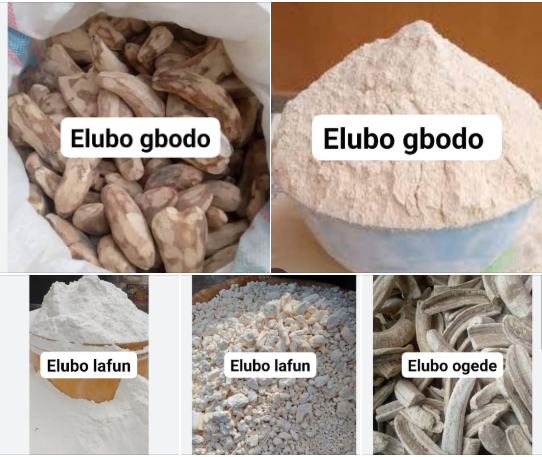

Nigerian Yam Flour (Elubo): The Processed Form of Nigeria’s Most Culturally Prestigious Food Crop — Whose 40-Million-Tonne Annual Production Makes Nigeria the World’s Undisputed Yam Capital Yet Whose Diaspora Communities Cannot Reliably Source the Authentic Yam Flour That Recreates the Pounded Yam Whose Cultural Status in Nigerian Food Hierarchy Exceeds Every Other Starch Staple Without Exception
Yam Flour Exporter Nigeria — Yam Flour (Elubo), Instant Pounded Yam Mix, Pre-Gelatinised Yam Flour, Yam Starch, and Whole Dried Yam Slices, Direct Benue, Kogi, Niger, Oyo, and Ekiti State Sourcing, Bulk Supply to West African Diaspora Food Retailers, Nigerian Restaurant Chains, Food Processing Companies, Gluten-Free Food Manufacturers, Traditional Medicine Producers, and Global Wholesale Buyers Worldwide
Yam flour exporter Nigeria is a search phrase whose commercial significance is anchored by a cultural food hierarchy fact that every Nigerian adult — regardless of ethnicity, regional origin, or socioeconomic status — recognises without question: pounded yam (iyan) is the most prestigious traditional starch staple in Nigerian food culture. Not garri, not rice, not eba. Pounded yam — served with egusi soup, ofe onugbu, or banga soup at weddings, naming ceremonies, funerals, and celebration feasts — is the food whose presence signals abundance, hospitality, and cultural respect in Nigerian social occasions in a way that no other starch staple replicates.
This cultural prestige is commercially decisive because it creates a diaspora food demand whose emotional intensity rivals even the Ofada rice and Ijebu garri demand documented in preceding articles — but whose supply challenge is compounded by an additional dimension that neither Ofada rice nor garri shares: fresh yam is perishable, expensive in diaspora markets, and requires the labour-intensive pounding process (traditionally done in wooden mortars with large pestles by multiple people simultaneously — a communal activity whose practical impossibility in diaspora kitchen settings creates the demand for yam flour as the diaspora’s solution to iyan preparation).
The production paradox whose resolution this article documents: Nigeria produces approximately 40–45 million metric tonnes of fresh yam annually — representing approximately 70% of the world’s entire yam production according to FAO production statistics — making Nigeria so overwhelmingly dominant in global yam production that the second-largest producer (Ghana, at approximately 8–9 million MT) produces less than 25% of Nigeria’s output. The world’s yam is grown in Nigeria. The food that millions of diaspora Nigerians most want — authentic pounded yam made from yam flour — comes from the crop that Nigeria grows in extraordinary abundance.
Yet yam flour reaches diaspora consumers in London, New York, Toronto, and Houston through the same informal personal travel network documented for garri, akamu, and uziza leaves — family members bringing kilograms of elubo in checked luggage, diaspora traders importing through informal channels, and specialist West African food retailers whose supply of yam flour is as inconsistent and undocumented as every other diaspora food product in this series.
Yam flour (elubo in Yoruba) — the dried, milled product produced from fresh yam (Dioscorea rotundata — white yam, the primary commercial species) through a specific processing sequence of peeling, parboiling, slicing, drying, and milling — creates the shelf-stable powder whose reconstitution with boiling water and vigorous stirring creates iyan (pounded yam) whose sensory properties: elastic, smooth, cohesive dough whose characteristic stretch and bounce when pulled between fingers and whose smooth, neutral, yam-flavoured eating experience with soup — are so specifically calibrated in Nigerian food culture that authentic yam flour quality is immediately recognisable and inauthenticity is immediately detected.
At Paradise MultiTrade International Limited, yam flour is a priority traditional food export category — sourced from yam processing communities across Nigeria’s primary production states of Benue, Kogi, Niger, Ekiti, Oyo, Ondo, Anambra, Imo, and Enugu, processed to food safety and quality specifications that enable legitimate international commercial trade, and exported with full food safety, quality, and regulatory documentation.
To discuss sourcing immediately, request a quotation here and our export team responds within 48 hours.
History and Origin — The African Staple Whose Cultural Depth Exceeds Any Introduced Crop
Dioscorea Rotundata — Indigenous West African, 5,000-Year Cultivation Heritage
Dioscorea rotundata Poir. — white yam, Guinea yam — is indigenous to West Africa, with botanical evidence and ethnobotanical documentation confirming independent domestication from wild Dioscorea species in the West African forest-savanna transition zone approximately 5,000 years ago — creating an agricultural heritage contemporaneous with fonio and predating the introduction of maize, cassava, and all colonial-era crops. Unlike maize (16th century arrival), cassava (16th century), and rice (15th century arrival in some traditions) — yam’s cultivation heritage in Nigeria represents indigenous agricultural innovation whose depth creates the most authentic origin story of any major Nigerian food crop.
The International Institute of Tropical Agriculture (IITA) — whose yam research programme at Ibadan creates the most commercially significant yam improvement portfolio in the world — documents D. rotundata‘s domestication across the West African forest zone, whose specific combination of climate, soil type, and traditional farming knowledge created the yam belt extending from Côte d’Ivoire through Ghana, Togo, Benin, and into Nigeria’s dominant Benue, Kogi, and Middle Belt production zones.
The cultural significance of yam in Nigerian (and broader West African) societies cannot be overstated: yam appears in Igbo, Yoruba, and Tiv creation mythology; yam festivals (Iri Ji — New Yam Festival — documented across Igbo communities in Journal of Ethnology and Folkloristics) mark the agricultural calendar’s most significant celebration; the proverb-rich Igbo cultural discourse — documented through Chinua Achebe’s Things Fall Apart — specifically positions yam as the “king of crops” whose cultivation is the measure of a man’s worth in traditional Igbo society. This cultural depth creates the most commercially significant single-ingredient diaspora food identity of any product in the Nigerian export portfolio.
The four commercial Dioscorea species in Nigerian trade:
D. rotundata (white yam) — the most commercially significant species: the primary food yam, the primary yam flour species. Large, cylindrical tubers with white or cream flesh. Most widely cultivated across Nigeria’s yam belt. The yam whose flour creates the most commercially premium, most culturally authentic iyan.
D. cayenensis (yellow yam) — similar to white yam with yellowish flesh from carotenoid content; commercially important but less widely cultivated than D. rotundata.
D. alata (water yam, greater yam) — larger tubers, more watery texture; less preferred for pounded yam but significant in some regional traditions.
D. dumetorum (bitter yam) — contains alkaloids (dioscorine) requiring specific preparation for human consumption; traditional medicine rather than primary food crop.
This article focuses on D. rotundata white yam flour as the primary commercial export species — whose quality characteristics, cultural authenticity, and processing specifications create the commercial product that diaspora and international buyers specifically seek.
What Is Nigerian Yam Flour? The Processing Chemistry, Quality Markers, and Commercial Product Range
Dioscorea Rotundata — The Kernel of Yam Flour Commercial Quality
Dioscorea rotundata is a member of the Dioscoreaceae family — a monocotyledonous botanical family whose commercial members include primarily the Dioscorea tuber crops and the ornamental Dioscorea vines. The tuber’s commercial architecture:
The Yam Tuber Structure:
Epidermis (bark/peel): The rough, fibrous outer layer (approximately 5% of tuber weight) containing the highest concentration of oxalic acid and irritant compounds — requiring complete removal during processing.
Cortex (flesh): The primary commercial fraction (approximately 90% of tuber weight) — comprising the starchy parenchyma cells whose starch content (approximately 20–30% of fresh weight, 70–80% of dry weight), protein (2–3% fresh weight, 8–9% dry weight), and specific D. rotundata starch chemistry creates the unique texture of iyan.
Core: The innermost fraction — similar in composition to cortex but occasionally with higher moisture content.
The Starch Chemistry — Why D. rotundata Creates Unique Iyan Texture:
The specific commercial quality of iyan — its elasticity, cohesiveness, and specific bounce when pulled — derives directly from D. rotundata‘s specific starch granule characteristics documented through Journal of Agricultural and Food Chemistry yam starch research:
High amylopectin content (approximately 70–80% of starch): Creating the highly branched, gel-forming starch network whose gelatinisation creates iyan’s cohesive, elastic texture. The same amylopectin-dominant starch chemistry documented for Ofada rice’s slight stickiness — but in yam starch creating the specific rheological properties (viscoelasticity, gel strength, cohesion) whose combination in iyan preparation is dramatically more pronounced than in any rice or cassava starch.
Large starch granule size (20–40 micrometres): The largest starch granules of any commercially significant food crop — whose size creates rapid water absorption during cooking and the characteristic smooth, lump-free gel formation whose consistency during iyan preparation enables the vigorous stirring that creates smooth, cohesive dough without lumping.
Gelatinisation temperature range (71–82°C): Higher than cassava starch (58–70°C) and rice starch (68–77°C) — requiring near-boiling water for complete gelatinisation, which is why iyan preparation specifically requires boiling water rather than merely hot water for optimal texture development.
The Processing Sequence for Yam Flour Production:
Unlike garri’s four-stage chemical transformation — yam flour production’s primary technical challenge is moisture management rather than detoxification, creating a different processing paradigm:
Step 1 — Selection: Mature, disease-free, undamaged yam tubers selected — immature tubers have higher moisture and lower starch content creating inferior flour; damaged tubers create mycotoxin risk.
Step 2 — Peeling: Bark completely removed — the rough, fibrous, oxalic acid-containing epidermis whose complete removal is essential for food safety (oxalic acid crystals in yam peel create the skin irritation documented in traditional yam peeling). Mechanical peeling or hand-peeling with stainless steel knives.
Step 3 — Parboiling (optional but quality-improving): Brief parboiling (5–10 minutes in hot water at 70–80°C) before slicing — creating partial surface gelatinisation that prevents enzymatic browning during subsequent drying, reduces mould growth risk during drying by surface microbial deactivation, and improves milling efficiency through controlled starch modification. Critical distinction: parboiling at 70–80°C for yam flour production versus the cassava leaf boiling at 100°C for 25 minutes — yam flour’s partial parboiling serves different technical purposes and does not require the same temperature or duration as cassava’s mandatory cyanide detoxification.
Step 4 — Slicing: Parboiled yam sliced into uniform 5–8mm thick pieces — whose consistent thickness creates uniform drying rate and granule homogeneity in the finished flour.
Step 5 — Drying: Sliced yam dried at 55–65°C (hot-air cabinet dryers or solar dryers) to below 12% moisture — creating the dried yam pieces (elubo baba — dry yam pieces) whose milling creates yam flour. Temperature management critical: above 70°C creates undesirable starch gelatinisation in the dry state (creating lumpy flour difficult to reconstitute); below 50°C creates slow, inadequate drying creating mould risk.
Step 6 — Milling: Dried yam pieces milled through hammer mills to fine flour (80–100 mesh) — creating the cream-white to off-white powder whose particle size uniformity determines reconstitution quality. Particle size management: uniform fine flour creates smooth, lump-free iyan; coarse or variable particle size creates lumping during reconstitution.
Commercial Product Forms
Standard Yam Flour (Elubo): The traditional commercial form — dried, milled yam flour for traditional iyan preparation. Requires 15–20 minutes preparation (stirring vigorously into boiling water).
Instant Pounded Yam Mix (Pre-Gelatinised): Yam flour pre-gelatinised through specific partial cooking during processing — creating a product whose hot water reconstitution requires 5–8 minutes rather than 15–20 minutes. The most commercially premium format for diaspora retail and food service.
Yam Starch: The purified starch fraction extracted from yam — creating pharmaceutical, food manufacturing, and industrial applications distinct from the whole-grain yam flour.
Fortified Yam Flour: Yam flour combined with soya flour, moringa leaf powder, or other nutrient-dense ingredients — creating nutritionally enhanced complementary food products for institutional nutrition programmes.
Benefits and Industrial Uses of Nigerian Yam Flour
West African Diaspora Food Retail — The Pounded Yam Premium
The cultural hierarchy that makes yam flour diaspora demand qualitatively different from garri demand — and more directly comparable to Ofada rice’s premium positioning:
The iyan cultural premium: In Nigerian food culture’s informal prestige hierarchy — pounded yam occupies the apex. Serving garri eba to guests communicates adequacy; serving pounded yam (iyan) communicates premium hospitality. The proverb “eba is everyday food, iyan is celebration food” — documented across Yoruba, Igbo, and Edo cultural communities — captures the food prestige dynamic whose commercial expression is simple: diaspora Nigerians willingly pay 3–5× the price of cassava flour for authentic yam flour because the cultural statement it enables (authentic iyan for family and guests) is worth the price differential.
The texture authenticity test: Experienced Nigerian food consumers can instantly distinguish iyan prepared from authentic yam flour versus from inferior alternatives (cassava/potato starch blends marketed as “pounded yam”) through three sensory markers: the specific stretch (authentic yam flour iyan has characteristic elasticity when a portion is pulled between fingers — it stretches without breaking, then springs back); the smoothness (authentic iyan is completely lump-free with a silky, uniform texture); and the yam flavour (subtle but specific neutral-sweet yam character that cassava-based alternatives cannot replicate). For diaspora consumers whose food memory calibration is precise — the difference is commercially decisive and drives premium pricing willingness.
Instant pounded yam — the diaspora convenience format: The single most commercially significant format innovation for diaspora yam flour retail — pre-gelatinised yam flour whose 5–8 minute preparation time (versus 15–20 minutes for standard elubo, or 45 minutes for pounding fresh yam) creates the convenience format whose diaspora retail success mirrors instant oatmeal’s displacement of rolled oats as the primary retail oat format. For working diaspora parents whose weeknight cooking must balance cultural food identity with time constraints — instant pounded yam creates the market-enabling format whose commercial development is the primary driver of the category’s international retail growth. Several Nigerian brands (Pride, Ola-Ola, Olu Olu) have achieved diaspora retail distribution specifically through instant pounded yam format development — creating market awareness whose supply requirement Nigeria’s yam flour export programme must build to serve.
For diaspora food retail buyers — contact our export team to discuss standard elubo and instant pounded yam mix specification.
Nigerian and West African Restaurant Supply
Restaurant iyan: The growing global Nigerian restaurant sector whose high-end Nigerian cuisine positioning specifically features pounded yam as the premium swallow food creates consistent food service procurement demand. Unlike home cooks whose weekly iyan preparation requires kilograms — restaurant operations serving iyan as the premium swallow option create weekly procurement needs measured in tens of kilograms. Restaurants whose yam flour quality creates authentic, consistently textured iyan retain customers; restaurants whose inferior quality creates lumpy, flavour-deficient iyan lose them.
Catering operations: Nigerian wedding caterers, burial ceremony caterers, and naming ceremony food providers across UK, USA, and Canada whose traditional menu specifically features pounded yam as the celebration swallow food create consistent, event-driven procurement demand whose per-event volumes (weddings may require 20–50kg yam flour per event) create meaningful commercial procurement.
West African food hall concepts: The progressive development of modern West African food halls and pan-African restaurant concepts in London (Eko Kitchen, Chukwuemeka’s), New York (Afrolicious, Buka), and Toronto create food service procurement demand from operations whose premium African cuisine positioning requires authentic, consistently quality yam flour.
Food Manufacturing and Gluten-Free Applications
Gluten-free food manufacturing: Yam flour’s natural gluten-free status — like fonio, garri, and cassava flour in this series — creates commercial application in the gluten-free food market tracked through Grand View Research’s gluten-free products market analysis. Yam flour’s specific starch properties (high amylopectin, large granule size, specific gelatinisation temperature) create gluten-free food manufacturing applications including: yam-based gluten-free pasta (whose starch gel provides structure analogous to gluten); yam flour flat bread and tortilla products; yam-based infant weaning food (whose smooth gelatinisation creates the lump-free texture appropriate for infants); and yam flour as a thickening agent in soup and sauce manufacturing whose yam starch’s viscosity profile creates specific functional food application.
Pharmaceutical and cosmetics applications: Dioscorea species — including D. rotundata — contain diosgenin (in some wild yam species more than cultivated D. rotundata) — the steroidal saponin whose pharmaceutical significance as a precursor for synthetic steroid hormone manufacture (progesterone, cortisone, and related synthetic steroids are manufactured from diosgenin through Marker degradation — the chemical process documented through Royal Society of Chemistry historical pharmaceutical chemistry research) creates pharmaceutical raw material interest. While commercial D. rotundata contains lower diosgenin than wild Dioscorea villosa (wild yam — the primary diosgenin commercial source), the broader Dioscorea pharmaceutical research context creates ingredient research interest. Yam starch’s cosmetics application: INCI nomenclature Dioscorea Japonica Root Extract and Dioscorea Villosa (Wild Yam) Root Extract create skin care formulation applications whose commercial parallel to Nigerian D. rotundata starch creates cosmetics ingredient procurement interest.
Baby food and complementary food: Yam flour’s smooth gelatinisation, neutral flavour, and digestibility create specific appeal for complementary food manufacturers developing weaning foods for Nigerian and West African infant markets whose traditional introduction of yam-based foods at 6 months reflects the cultural primacy of yam in Nigerian food culture. UNICEF’s complementary feeding guidelines for West Africa — whose documentation through UNICEF nutrition programme research specifically identifies cultural acceptability as a key criterion for successful complementary food adoption — creates institutional procurement demand for authentic yam-based complementary food ingredients whose cultural acceptability Nigerian-origin yam flour specifically provides.
Traditional Medicine and Nutraceutical Applications
Wild yam (Dioscorea villosa) and diosgenin supplement context: The global market for wild yam supplements — whose diosgenin content has created a commercial supplement category based on traditional Native American use for menstrual and menopausal symptoms — creates nutraceutical context for Dioscorea species broadly. Clarification critical for commercial communication: commercial D. rotundata (white yam flour) contains negligible diosgenin versus wild yam (D. villosa) — Nigerian yam flour’s nutraceutical positioning is primarily through its nutritional profile (protein, starch, B vitamins, potassium) rather than diosgenin pharmaceutical precursor content.
Traditional Nigerian medicine: D. rotundata yam in Yoruba traditional medicine (Amala wura — the black amala/yam flour preparation specific to unripe yam) has documented traditional use in management of inflammation, hypertension, and diabetes — whose ethnomedicinal documentation through Journal of Ethnopharmacology Yoruba medicinal plant surveys creates research interest in yam-based functional food and traditional medicine ingredient procurement.
Why Buy Yam Flour From Nigeria?
70% of World Yam — The Supply Scale Argument
Nigeria’s dominance in global yam production — documented through FAO production statistics at approximately 40–45 million MT annually (approximately 70% of global production) — creates the supply infrastructure whose commercial formalisation through documented yam flour export programmes creates a supply chain connecting the world’s primary yam producing nation to the international buyers who need its most commercially premium processed form.
No alternative supply geography approaches Nigeria’s production scale for D. rotundata white yam. Ghana (second largest producer), Côte d’Ivoire, and Cameroon collectively produce less than 30% of Nigerian production. For international buyers whose procurement requires authentic D. rotundata white yam flour at commercial volumes — Nigerian origin is not merely the best option. It is essentially the only option.
The IITA Yam Improvement Programme — Quality at Farm Level
IITA’s yam breeding programme — one of the most commercially significant plant improvement programmes in African agriculture — has developed the TDr (True Diosocorea rotundata) series improved variety portfolio whose performance advantages over traditional landraces create the quality foundation that commercial yam flour production requires:
Higher dry matter content (30–35% versus traditional varieties’ 25–28%) — whose commercial expression is higher flour yield per tonne of fresh yam (more efficient processing economics) and higher starch content per kilogram of flour (better iyan texture per serving).
Disease resistance: Specifically against yam mosaic virus (YMV), Dioscorea rotundata anthracnose (Colletotrichum gloeosporioides), and dry rot (Fusarium oxysporum) — whose combined disease pressure creates the primary yield loss factor in Nigerian yam production. Disease-resistant varieties’ lower mycotoxin contamination risk (fungal disease creates secondary mycotoxin production) creates food safety improvement alongside yield improvement.
Consistent starch quality: IITA-selected varieties’ documented starch amylopectin percentage and gelatinisation temperature range — creating more consistent iyan texture across production batches than traditional variety diversity creates.
The Amala Positioning — The Unripe Yam Flour Special Grade
Amala — the black Yoruba swallow food prepared specifically from the flour of unripe yam that has been processed differently from standard white yam flour — creates a specific commercial premium grade whose cultural significance specifically within Yoruba food culture parallels Ijebu garri’s Yoruba cultural premium. Amala’s dark purple-black colour (from the enzymatic browning of unripe yam’s phenolic compounds during processing) and specific flavour profile creates a culturally distinctive product whose diaspora demand — specifically from UK and USA Yoruba communities — mirrors the Ijebu garri premium demand dynamic. Paradise MultiTrade’s processing programme includes both white yam flour (standard elubo) and amala-grade (unripe yam processed without parboiling to preserve the enzymatic browning that creates amala’s characteristic colour and flavour). Contact us to discuss amala-grade specification.
Complete Export Documentation
Every yam flour shipment carries phytosanitary certification from NAQS, NEPC export documentation, certificate of origin, commercial invoice, packing list, and bill of lading. We coordinate moisture content, water activity, granule fineness (particle size distribution — 80–100 mesh confirmation), starch content (enzymatic starch determination), protein content (Kjeldahl), colour specification (whiteness index for standard elubo; darkness index for amala grade), aflatoxin screening (ELISA), pesticide residue multi-residue analysis to EU MRL standards per Regulation (EC) 396/2005, and microbiological safety testing following AOAC International validated procedures. EU-bound shipments comply with Regulation (EU) 2017/625 on official controls and Commission Regulation (EC) 1881/2006. Our NEPC Export Licence No. 0042385 and CAC Registration No. RC-9284647 are verifiable through NEPC.
Nigeria’s Yam Flour Export Strength and Global Market Demand
The Global Market
The global yam flour market — unlike yam’s extraordinary production scale whose FAO documentation is comprehensive — remains primarily a diaspora-driven informal market whose formal commercial development is at the same formative stage documented for garri, suya spice, and akamu throughout this series. ITC Trade Map confirms yam flour’s minimal formal trade documentation — reflecting the pre-formalisation stage whose commercial development Paradise MultiTrade’s programme specifically addresses.
The commercial precedent from the instant pounded yam category — whose brands including Pride, Ola-Ola, and Yam Pounded Nigeria have achieved formal UK and US retail distribution through dedicated brand development — demonstrates that the diaspora market infrastructure exists and is commercially receptive. Paradise MultiTrade’s bulk and retail-pack supply programme creates the supply chain infrastructure whose connection to established retail channels creates the formal market access that bulk commodity supply alone cannot achieve.
Key Export Destination Markets
United Kingdom — home to Europe’s largest Nigerian diaspora — whose Yoruba, Igbo, and Edo communities all consuming pounded yam as the cultural premium swallow food create the most concentrated European yam flour demand. UK food import requirements administered by FSA and APHA.
United States — whose Nigerian-American diaspora in Houston, Atlanta, Dallas, New York, and Washington DC creates significant demand. The Yoruba diaspora’s àmàlà and iyan cultural consumption creates specific product differentiation demand (amala grade alongside standard white yam flour). US food import requirements through FDA.
Canada — whose Toronto and Ottawa Nigerian communities create consistent demand tracked through CFIA.
Germany, Netherlands, Italy — whose growing Nigerian communities and Ghanaian communities (whose fufu tradition parallels Nigerian iyan in cultural significance) create developing European continental demand.
UAE and Gulf States — where Nigerian professional expatriate communities create consistent traditional food demand tracked through ADAFSA.
Ghana — whose own yam production and fufu tradition creates regional trade interest in Nigerian white yam flour as a premium alternative to Ghanaian cocoyam-cassava fufu.
Why Choose Paradise MultiTrade International Limited?
Authentic Dioscorea rotundata Sourcing — Species Authentication. Botanical species confirmation (D. rotundata — white yam — distinguished from D. alata, D. cayenensis, and other commercial yam species) through visual tuber morphology documentation and starch granule microscopy — creating the species authenticity whose documentation enables commercial communication of “D. rotundata white yam flour” rather than generic “yam flour” whose species ambiguity creates quality uncertainty for food-informed buyers. Contact us to discuss species documentation.
Amala Grade Programme — Black Yam Flour Authenticity. Separately documented amala-grade unripe yam flour — processed without parboiling to preserve enzymatic browning character, with colour specification (Hunter Lab L* ≤50 confirming characteristic dark colour), specific flavour profile documentation, and cultural authenticity confirmation from Yoruba food culture reference — creating the authenticated amala supply whose Yoruba diaspora demand parallels the Ijebu garri programme’s cultural premium. Contact us to discuss amala-grade specification.
Instant Pounded Yam Mix — Pre-Gelatinisation Processing. Pre-gelatinised yam flour (partial cooking during processing) creating 5–8 minute reconstitution time — with reconstitution performance documentation (hot water ratio for optimal texture: typically 1:1.2 yam flour-to-water, boiling water, vigorous stirring 5–8 minutes) providing the convenience format whose diaspora retail commercial success is established. Contact our team to discuss instant pounded yam specification.
Water Activity and Moisture Management — Shelf Life Assurance. Water activity ≤0.60 and moisture ≤12% — confirming ambient-temperature shelf stability whose 18-month shelf life claim creates the export logistics confidence that long-distance diaspora retail supply requires. Contact us to discuss moisture management.
Multi-Commodity West African Yam Value Chain and Food Sourcing. Yam flour buyers frequently source complementary Nigerian products. Alongside yam flour, Paradise MultiTrade exports fresh yam, garri (cassava), cassava flour/HQCF, plantain flour, akamu (pap/ogi), crayfish (dried shrimp), locust beans (iru), egusi (watermelon seed), palm oil, hibiscus flower, moringa leaf powder, and cashew nut kernel. Explore our full range of Nigerian export commodities and consolidate your West African traditional food, swallow staple, and specialty food sourcing through one verified, licensed export partner.
Product Specifications
| Specification | White Yam Flour (Standard Elubo) | Instant Pounded Yam Mix | Amala Grade (Black Yam Flour) | Yam Starch |
|---|---|---|---|---|
| Botanical Species | Dioscorea rotundata Poir. (Dioscoreaceae) | Dioscorea rotundata | Dioscorea rotundata (unripe — high phenolic) | Dioscorea rotundata |
| Yam Maturity | Mature ripe tuber | Mature ripe tuber | Unripe/partially ripe tuber (specific phenolic profile) | Mature ripe tuber |
| Processing | Peel-parboil-slice-dry-mill | Peel-parboil-cook (partial gelatinisation)-dry-mill | Peel-slice-dry-mill (NO parboiling — enzymatic browning preserved) | Peel-grate-extract starch-dry |
| Colour | Cream-white to off-white (Hunter Lab L* ≥75) | Cream-white | Dark grey-black (Hunter Lab L* ≤50 — defining characteristic) | Pure white |
| Moisture Content | ≤12% | ≤10% | ≤12% | ≤14% |
| Water Activity | ≤0.60 | ≤0.55 | ≤0.60 | ≤0.65 |
| Particle Size | 80–100 mesh (≤180 microns) | Fine — 80–100 mesh pre-gelatinised | 60–80 mesh (slightly coarser — traditional character) | >95% through 200 mesh |
| Starch Content | 70–80% dry weight | 65–75% (gelatinised starch) | 65–75% | ≥95% dry weight |
| Protein Content | 8–9% dry weight (Kjeldahl) | 8–9% | 7–9% | <1% (starch purified) |
| Fat Content | 0.1–0.3% dry weight | 0.1–0.3% | 0.2–0.5% | <0.2% |
| Dietary Fibre | 3–6% dry weight | 2–4% (some fibre lost in processing) | 4–8% (unripe yam higher fibre) | <1% |
| Amylopectin (% of starch) | 70–80% (high amylopectin — key quality marker) | 68–78% | 65–75% | 72–82% |
| Gelatinisation Temperature | 71–82°C | Pre-gelatinised (complete) — boiling water activates | 68–80°C | 71–82°C |
| Reconstitution Performance | 15–20 minutes vigorous stirring in boiling water | 5–8 minutes in boiling water (hot water ratio 1:1.2) | 15–20 minutes (traditional preparation) | Industrial use — varies |
| Potassium | 600–900mg per 100g | 550–800mg | 550–750mg | Minimal (water-washed out) |
| Vitamin C | 5–15mg per 100g (heat-sensitive — some loss in drying) | 2–8mg per 100g | 3–10mg per 100g | <2mg |
| Aflatoxin | Total ≤10 ppb; B1 ≤2 ppb | Total ≤4 ppb | Total ≤10 ppb | Total ≤4 ppb |
| Pesticide Residue | EU MRL compliant | EU MRL compliant | EU MRL compliant | EU MRL compliant |
| Microbiological | Salmonella absent/25g; TPC ≤100,000 CFU/g; Mould ≤1,000 CFU/g | Salmonella absent/25g; TPC ≤50,000 CFU/g | Salmonella absent/25g; TPC ≤100,000 CFU/g | Salmonella absent/25g |
| Allergen Status | No major EU or US allergens; naturally gluten-free | Gluten-free | Gluten-free | Gluten-free |
| Gluten Status | Naturally gluten-free (Dioscorea — no gluten proteins) | Gluten-free | Gluten-free | Gluten-free |
| Shelf Life | 18 months (sealed, cool, dark) | 18 months | 18 months | 24 months |
| Packaging — Retail | 500g, 1kg, 2kg sealed PP bags | 500g, 1kg, 2kg retail packs | 500g, 1kg, 2kg premium bags | 25kg sealed bags |
| Packaging — Bulk | 10kg, 25kg, 50kg PP bags | 25kg bags | 25kg bags | 25kg sealed |
| Supply Capacity | 500–20,000 MT per year | 100–5,000 MT per year | 50–1,000 MT per year | 100–5,000 MT per year |
| MOQ | 1 MT | 500kg | 500kg | 500kg |
Export Documentation: Phytosanitary Certificate (NAQS), Botanical Species Identity Certificate (Dioscorea rotundata), Certificate of Origin, NEPC Export Licence, Moisture Content Certificate, Water Activity Certificate, Particle Size Certificate, Starch Content Certificate (enzymatic determination), Protein Content Certificate (Kjeldahl), Colour Specification Certificate (Hunter Lab measurement), Aflatoxin Certificate (ELISA), Pesticide Residue Certificate (EU MRL), Microbiological Certificate, Gluten-Free Status Certificate (no gluten-forming proteins — Dioscorea family), Commercial Invoice, Packing List, Bill of Lading.
Payment Terms: T/T, LC at sight, Escrow. Loading Port: Lagos (Apapa / Tin Can Island Port). Incoterms: EXW, FOB Lagos, CNF, CIF.
Processing and Export Process
Yam Sourcing — The Quality Foundation. Fresh D. rotundata yam tubers sourced from documented farming communities in Benue, Ekiti, Kogi, and Niger State — Nigeria’s primary white yam production zones — within 24–48 hours of harvest. Variety documentation: TDr series IITA-improved varieties preferred for consistent dry matter content and disease-resistance; traditional landrace varieties accepted from long-established farming communities with documented quality history. Post-harvest inspection: tubers graded for size uniformity (uniform tubers create consistent slice thickness and uniform drying), absence of mechanical damage (bruising creates mycotoxin entry points), disease freedom (mosaic virus, rot, anthracnose), and freshness (firm, unshrivelled tubers — shrivelling indicates moisture loss and quality degradation).
Peeling. Mechanical peeling (abrasive drum peelers for uniform processing at commercial scale) or trained hand-peeling with stainless steel knives — removing the entire bark layer including the sub-surface layer whose residual presence creates off-flavour and potential irritant compound (oxalic acid crystal) contamination. Peeled tubers immediately immersed in clean cold water — preventing enzymatic browning (standard white elubo) or held in air (amala grade — allowing surface browning that creates the characteristic dark colour).
Parboiling (Standard White Elubo Only). Peeled yam immersed in hot water at 70–80°C for 5–10 minutes — inhibiting the polyphenol oxidase enzyme whose activity creates browning, reducing surface microbial load, and initiating the partial starch structure modification that improves milling performance. Specific temperature control: above 80°C creates starch gelatinisation that reduces flour reconstitution performance; below 65°C inadequately inhibits polyphenol oxidase. Amala grade: NO parboiling — unparboiled yam’s active polyphenol oxidase creates the enzymatic browning during subsequent processing that creates amala’s characteristic dark colour.
Slicing. Parboiled yam sliced to uniform 5–8mm thickness through mechanical slicers — uniformity critical for even drying whose inconsistency creates both under-dried (mould risk) and over-dried (excessive browning, quality loss) slices in the same batch.
Drying. Sliced yam dried at 55–65°C in hot-air cabinet dryers or tray dryers — achieving ≤12% moisture. Multiple-stage drying: initial high-airflow phase (55°C, 4–6 hours — rapid surface moisture reduction); final equilibration phase (60°C, 4–6 hours — completing internal moisture reduction to target). Total drying time: 8–14 hours depending on slice thickness and initial moisture. For amala grade: solar drying on elevated racks allows natural browning continuation during drying — creating the complete dark colour development before final mechanical drying.
Milling. Dried yam pieces milled through hammer mills (first pass creating coarse granules) and pin mills or impact mills (second pass to fine flour) — achieving 80–100 mesh for standard elubo and instant mix; 60–80 mesh for amala grade. Temperature-controlled milling (air-cooled milling chambers) prevents heat generation that would partially gelatinise starch during milling — preserving the flour’s reconstitution performance.
Pre-Gelatinisation (Instant Pounded Yam Mix). Standard milled yam flour subjected to controlled partial cooking in steam chambers at 80–90°C for 15–25 minutes — creating partial starch gelatinisation that reduces subsequent hot water reconstitution time from 15–20 minutes to 5–8 minutes. Critical control: partial gelatinisation (55–70% starch gelatinisation) creates reconstitution speed benefit without eliminating the remaining ungelatinised starch’s structural contribution to iyan texture. Complete gelatinisation creates a product that reconstitutes too rapidly with excessive stickiness — losing the specific texture that authentic iyan requires.
Quality Testing. Moisture, water activity, particle size (laser diffraction or sieve analysis), colour (Hunter Lab), starch content (enzymatic), protein (Kjeldahl), aflatoxin (ELISA), pesticide residue, microbiological — tested before export documentation.
Lead Times. Standard white elubo from processing stock: 14–21 days. Instant pounded yam mix: 28–42 days (pre-gelatinisation scheduling). Amala grade: 21–35 days. Full analytical panel: add 7–10 days. Contact us to plan your supply schedule.
Frequently Asked Questions
What is the difference between yam flour (elubo), cassava flour (HQCF), and garri — and why can they not substitute for each other in pounded yam preparation?
The commercial disambiguation between Nigeria’s primary starch flour products is among the most practically important for diaspora food retailers whose stock must match customer expectations: (1) Yam flour (elubo): Made from Dioscorea rotundata white yam — whose specific high-amylopectin starch creates the elastic, cohesive, specific-textured iyan. Colour: cream-white. Flavour: subtle, neutral-sweet yam character. Reconstitution: vigorous stirring in boiling water creates the characteristic stretch-and-bounce iyan texture. (2) Cassava flour (HQCF): Made from fresh cassava without fermentation or roasting — whose starch creates a paste whose viscosity and texture fundamentally differ from yam-starch-based iyan. Colour: white. Flavour: neutral. HQCF-based “pounded yam substitute” creates a stiffer, less elastic, different-flavoured result immediately identifiable as inauthentic by experienced Nigerian consumers. (3) Garri: Made from fermented, roasted cassava — a pre-gelatinised product whose reconstitution creates eba rather than iyan. The specific sourness, different starch character, and different texture make garri and yam flour non-interchangeable at any level. (4) Commercial consequence: Diaspora retailers who stock HQCF or garri labelled as “pounded yam flour substitute” lose customer trust irreversibly. Nigerian diaspora consumers whose cultural calibration is precise — they have eaten authentic iyan at home celebrations for their entire childhood — immediately identify inauthentic alternatives. Stocking authentic D. rotundata yam flour creates the customer loyalty whose retention creates long-term retail value. Contact us to discuss species authentication for elubo retail.
What is amala and how is it different from standard white pounded yam (iyan)?
Amala — the dark Yoruba swallow food prepared specifically from unripe or partially ripe yam flour — creates one of the most culturally specific food products in the Nigerian diaspora retail landscape: (1) Production difference: Standard white yam flour (elubo) is made from mature, ripe yam tubers processed with parboiling that prevents browning. Amala is specifically made from unripe or partially ripe yam whose polyphenol content — phenolic compounds concentrated in unripe yam whose enzymatic oxidation creates the characteristic dark colour — is allowed to oxidise (brown) during processing WITHOUT parboiling, creating the dark grey-black colour that defines authentic amala. (2) Texture and flavour: Amala creates a darker, slightly more densely textured swallow whose flavour is earthier and more complex than white iyan’s neutral character — whose distinctive taste is specifically preferred by traditional Yoruba food culture consumers. (3) Cultural significance: Amala with ewedu (jute leaf soup), gbegiri (bean soup), and buka stew — the specific combination that defines Lagos buka cuisine (the informal restaurant culture of Lagos’s iconic bukas) — is among the most commercially significant traditional Nigerian restaurant food combinations. Restaurants serving this combination consistently attract the most loyal Yoruba diaspora customer base. (4) Commercial premium: Amala commands a price premium in diaspora retail over standard white elubo — whose cultural specificity creates the scarcity value that Ijebu garri creates in the garri market. Paradise MultiTrade’s amala-grade programme creates the authenticated unripe yam flour supply whose processing documentation confirms the specific technical parameters (no parboiling, enzymatic browning preserved, colour specification L* ≤50) that authentic amala requires. Contact us to discuss amala-grade supply.
How is authentic iyan (pounded yam) prepared from yam flour and what determines quality?
The specific preparation technique whose execution creates authentic versus inferior iyan — commercially important for both retail packaging guidance and restaurant quality management: (1) Water ratio: Approximately 1 cup yam flour to 1–1.2 cups boiling water — slightly less water than initial instinct suggests. Too much water creates sloppy, insufficiently cohesive iyan; too little creates dry, lumpy, overly stiff iyan. The ratio adjustment within this range calibrates texture to personal preference (firmer or softer). (2) Water temperature: Boiling water (100°C) is essential — not hot water, not warm water. Yam starch’s high gelatinisation temperature (71–82°C) requires near-boiling water for complete gelatinisation. Below 80°C water creates partial gelatinisation and lumpy texture. (3) Stirring technique: Pour flour into boiling water gradually while stirring vigorously — preventing the surface of the flour mass from gelatinising before the interior is moistened (which creates lumps). Continuous, energetic, circular stirring creating a smooth ball. Cover pot after initial stirring; allow to steam for 3–5 minutes; stir vigorously again to incorporate any remaining ungelled spots. (4) Resting: Completed iyan rested in the covered pot off heat for 5 minutes — allowing steam distribution to complete gelatinisation of any residual dry spots and creating the smooth, uniform texture. (5) Quality markers of authentic flour: If iyan stretches between fingers and springs back elastically — good amylopectin starch quality; good flour. If iyan is lump-free and uniformly smooth — good milling and processing. If iyan has subtle yam flavour — authentic D. rotundata origin. If iyan holds shape without spreading (firm ball maintains form on plate) — correct water ratio and adequate starch content. (6) Instant pounded yam preparation: Add boiling water (ratio 1:1.2 flour-to-water), stir vigorously for 5–8 minutes. Steam for 2–3 minutes. Ready to serve. Contact us to discuss preparation guide for retail packaging.
What is Nigeria’s yam production scale and why does it create the strongest commercial foundation for yam flour export development?
Nigeria’s yam production dominance — documented through FAO FAOSTAT at 40–45 million metric tonnes annually (approximately 70% of global production) — creates the most commercially secure raw material foundation of any product in this series: (1) Production scale: Nigeria’s yam harvest is so large that even marginal yield improvements from IITA’s TDr improved variety adoption create exportable surplus in the millions of tonnes. The cassava leaf article documented Nigeria’s 60 million MT cassava production as a massive raw material base; Nigeria’s 40 million MT yam production — for a more perishable, more culturally significant, more commercially premium product — creates an equally powerful raw material foundation. (2) Post-harvest loss context: Nigeria’s Food and Agriculture Organisation’s Nigeria post-harvest loss report documents 30–50% annual post-harvest losses in fresh yam — an extraordinary quantity of commercially valuable yam that spoils between harvest and consumption. For every tonne of yam flour produced — the post-harvest loss reduction it creates (converting perishable fresh yam to shelf-stable flour) represents both commercial value captured and food system waste reduced. The yam flour formalisation argument includes this post-harvest loss reduction narrative whose commercial appeal to food system sustainability-motivated buyers creates premium pricing justification. (3) Production geography: Nigeria’s yam belt — spanning Benue, Kogi, Ekiti, Oyo, and Niger states — creates processing facility proximity advantages that reduce the fresh-yam-to-processing transit time whose extension creates quality degradation. Yam’s perishability (fresh yam deteriorates within weeks of harvest without proper storage) makes rapid farm-to-factory transit essential — whose achievement Nigeria’s concentrated production geography specifically enables. Contact us to discuss supply programme.
What EU food safety regulations apply to yam flour imports and are there Novel Food concerns?
Yam flour’s EU regulatory status creates a more commercially accessible pathway than most West African botanical products documented in this series: (1) Novel Food status: Yam (Dioscorea rotundata) and its processed forms have documented consumption history in the EU through West African diaspora communities — particularly UK, France, Germany, Netherlands, Belgium, and Italy — that significantly predates May 1997. The substantial size of Nigerian and Ghanaian communities in these countries from the 1960s–1970s onward creates pre-1997 EU consumption documentation that is among the strongest of any West African traditional food. Current market reality: yam flour is sold openly in West African diaspora food retail across EU member states without systematic Novel Food enforcement. For diaspora food retail applications — the traditional food consumption history argument provides a commercially manageable regulatory position. (2) Food safety limits: Yam products contain no specific regulated contaminants beyond the standard agricultural commodity limits: aflatoxin (EU limits: B1 ≤2 ppb, total ≤4 ppb for food), pesticide residues (EU MRL per Regulation EC 396/2005), and general microbiological standards. Yam contains oxalic acid (primarily in the peel — removed during processing) but processed yam flour’s oxalic acid content is at food-safe levels not creating specific regulatory limit concerns. (3) EU food manufacturing scale: European food manufacturers building yam flour-containing products at mainstream commercial scale should obtain specific regulatory advice from national food safety authorities. The Novel Food pathway, if required, would benefit from the substantial pre-1997 diaspora consumption evidence whose documentation supports traditional food status rather than full Novel Food authorisation. Contact us to discuss EU regulatory navigation.
How does Nigerian yam flour compare to Ghanaian or other African origin yam flour?
The commercial comparison between Nigerian and alternative African origin yam flour — whose quality differences create specific procurement preferences — creates important commercial clarity for buyers evaluating supply geography: (1) Species alignment: Nigeria’s commercial yam flour is predominantly D. rotundata (white yam) — the culturally and texturally preferred species for authentic iyan and amala. Ghana’s commercial yam flour includes D. rotundata but also significant D. alata (water yam) and D. cayenensis (yellow yam) whose different starch properties create different iyan textures. For buyers whose product specifically must create authentic Nigerian-style iyan — D. rotundata species authentication is essential, creating a specific procurement reason for Nigerian-origin specification. (2) Production scale and supply consistency: Nigeria’s 40–45 million MT production versus Ghana’s 8–9 million MT creates dramatically different supply volume reliability — Nigeria’s larger surplus creates greater supply security for commercial buyers whose procurement at scale requires consistent volume availability. (3) Price comparison: Nigerian yam flour’s larger production base creates competitive pricing versus Ghanaian origin — whose smaller production scale creates less supply competition and higher per-tonne pricing. (4) Processing tradition: The specific Yoruba, Igbo, and Edo yam flour processing traditions — whose generational knowledge creates the processing expertise that creates premium elubo and amala grades — are concentrated in Nigerian production communities whose specific traditional knowledge creates qualitative advantages not easily replicated in non-Nigerian production geography. (5) IITA advantage: IITA’s Ibadan location creates the same research proximity advantage documented for maize (IITA) and wheat (IAR Zaria) — Nigerian yam farmers’ technology access creates consistently improving variety and processing quality. Contact us to discuss Nigerian versus alternative origin quality comparison.
What transit times should I expect from Nigeria?
Nigerian yam flour in all forms (standard dry container — no temperature control required for properly dried flour at ≤12% moisture, water activity ≤0.60): UK (Tilbury, Felixstowe) — 14–18 days from Lagos. Netherlands (Rotterdam) — 14–18 days. Germany (Hamburg) — 14–20 days. France (Le Havre) — 14–18 days. Belgium (Antwerp) — 14–18 days. Italy (Genoa, Naples) — 12–16 days. USA (East Coast — New York, Baltimore, Houston) — 18–25 days. Canada (Toronto via Halifax or Montreal) — 18–28 days. UAE (Jebel Ali) — 10–14 days. Ghana (Tema) — 3–5 days. Japan (Yokohama) — 25–32 days. Air freight (UK Heathrow) — 2–3 days total (recommended for urgent diaspora food retail restocking — yam flour stockouts before Nigerian celebration occasions create intense customer dissatisfaction). Air freight (USA JFK/Houston) — 3–4 days total. Packaging notes: Yam flour is hygroscopic — moisture-barrier sealed packaging (inner polyethylene liner within outer polypropylene bag, heat-sealed) preventing moisture re-absorption during transit. The starchy powder’s moisture sensitivity is similar to garri — desiccant sachets recommended for long-haul transit above 21 days. Amala-grade yam flour: opaque packaging essential — light exposure can alter the dark colour character that defines amala’s premium appearance. Instant pounded yam mix: nitrogen-flushed sealed retail bags maintaining freshness through the transit and retail shelf period. Add 7 days for quality testing (moisture, water activity, colour specification, aflatoxin, starch content) before loading confirmation. Contact us to plan your complete logistics programme.
Ready to Source Nigerian Yam Flour — White Elubo (Standard and Fine Grade), Instant Pounded Yam Mix, Amala Grade (Black Yam Flour), and Yam Starch — With Botanical Species Authentication (Dioscorea rotundata), Moisture and Water Activity Certification, Colour Specification, Starch Content Documentation, Aflatoxin Testing, EU Pesticide Residue Compliance, and Full Food Safety Documentation for West African Diaspora Food Retailers, Nigerian Restaurant Chains, Food Manufacturers, and Global Wholesale Buyers?
If you are a West African diaspora food retailer in the UK, USA, Canada, or continental Europe whose Nigerian and Yoruba, Igbo, and Edo customer base demands authenticated, food-safety-certified yam flour — both standard white elubo and amala-grade black yam flour — through formal commercial channels with consistent availability and species documentation confirming authentic Dioscorea rotundata sourcing that inferior cassava-starch alternatives cannot replicate, a Nigerian or West African restaurant chain whose pounded yam and amala menu represents your highest-prestige, highest-margin swallow food category requiring consistent, authentic, species-documented yam flour at commercial kitchen volumes with moisture and starch quality specifications that ensure consistent iyan texture whose quality your Yoruba and Igbo customers immediately evaluate, a food manufacturing company developing gluten-free flour products, cassava-yam blend flours, instant swallow food mixes, or West African traditional food kits whose yam flour ingredient requires species authentication, starch content documentation, and food safety certification enabling commercial food product labelling in regulated EU, UK, and US markets, a catering company, Nigerian events caterer, or institutional food service operation whose Nigerian celebration menu features pounded yam as the premium swallow food requiring large-volume, consistent-quality, properly documented yam flour for wedding and celebration events whose cultural significance makes authentic texture non-negotiable, or a global specialty food ingredient importer building Nigerian yam flour supply positions for diaspora food markets across Europe, North America, and Gulf States — whose first-mover commercial positioning in the most culturally prestigious Nigerian staple food’s formal export development creates supply relationships whose value grows with the market whose formalisation this article documents — Paradise MultiTrade International Limited is the licensed Nigerian exporter your yam flour supply programme needs.
We supply Nigerian Dioscorea rotundata yam flour — white elubo (standard and fine grade), instant pounded yam mix (pre-gelatinised), amala-grade black yam flour (enzymatic browning preserved, L* ≤50 colour confirmed), and yam starch — from Benue, Ekiti, Kogi, and Niger State white yam farming communities including IITA TDr series improved variety sourcing, botanical species authenticated per lot (D. rotundata confirmed), moisture content certified (≤12%), water activity documented (≤0.60), colour specification confirmed (Hunter Lab measurement per grade), starch content enzymatically determined, particle size specification documented, aflatoxin ELISA tested, EU pesticide residue MRL compliant, microbiological safety certified, gluten-free status confirmed (Dioscorea family — no gluten proteins), and exported under NEPC Licence No. 0042385 with full quality and food safety documentation to buyers in every major regulated destination market.
Request a Quotation — share your required grade (white elubo standard, white elubo fine, instant pounded yam, amala grade, or yam starch), moisture specification, colour specification (white versus amala dark grade), starch content minimum, volume, packaging (retail packs or bulk bags), application (diaspora food retail, restaurant supply, food manufacturing, catering, wholesale), destination market, and preferred incoterms. We respond within 48 hours.
Contact Our Export Team — speak directly about Dioscorea rotundata species authentication and IITA TDr series variety sourcing, amala-grade production process (no parboiling, enzymatic browning documentation), instant pounded yam pre-gelatinisation specification and reconstitution performance documentation, moisture and water activity management for ambient-temperature shelf stability, EU Novel Food regulatory navigation for food manufacturing applications, iyan preparation guide for retail packaging, colour specification measurement for amala versus white elubo quality differentiation, Nigerian celebration event catering bulk supply programme, and long-term supply programme structuring.
Explore Our Full Product Range — alongside yam flour, Paradise MultiTrade exports fresh yam, garri (cassava), cassava flour/HQCF, plantain flour, akamu (pap/ogi), crayfish (dried shrimp), locust beans (iru), egusi (watermelon seed), palm oil, moringa leaf powder, hibiscus flower, and cashew nut kernel. One licensed Nigerian exporter. One consolidated West African yam value chain, traditional swallow food, processed cassava product, and specialty food sourcing relationship — from the most culturally prestigious starch staple in Nigeria’s food hierarchy to the most comprehensively documented Nigerian food and agricultural export portfolio available through a single licensed export partner.
Paradise MultiTrade International Limited | NEPC Export Licence No. 0042385 | CAC No. RC-9284647 | Lagos, Nigeria | www.paradisemultitrade.com


Reviews
There are no reviews yet.