

Nigerian Garri: The Most Consumed Processed Food in Africa’s Most Populous Country — Whose Traditional Four-Stage Processing Technology Simultaneously Detoxifies Cyanide, Creates Shelf Stability Without Refrigeration, Develops Unique Fermentation Flavour Complexity, and Produces the Single Most Versatile Cassava-Derived Staple in West African Food Culture — Yet Remains One of the Least Formally Exported Foods in Nigeria’s Entire Agricultural Portfolio
Garri Exporter Nigeria — White Garri (Fine and Coarse Grade), Yellow Garri (Palm Oil Garri), Ijebu Garri (Extra-Dry Premium Grade), Garri Flour, and Garri Fines, Direct Southern and Middle Belt Sourcing, Bulk Supply to West African Diaspora Food Retailers, Nigerian Restaurant Chains, Food Manufacturing Companies, Institutional Catering Operations, Commodity Wholesale Buyers, and Global Food Industry Procurement Teams Worldwide
Garri exporter Nigeria is a search phrase that arrives at one of the most commercially extraordinary contradictions in African food export — a product consumed daily by an estimated 100 million Nigerians, whose annual domestic production is measured in millions of metric tonnes, whose cultural centrality to Nigerian food identity is arguably exceeded only by rice and yam, yet whose presence in formal international commercial trade is so minimal that it does not register as a significant line item in any major international agricultural trade database.
The garri paradox is more extreme than any other product documented in this series: not just commercially underexported but essentially commercially invisible in formal international trade despite being the most frequently consumed processed food in the most populous country in Africa.
Understanding garri requires understanding the process that creates it — because garri is not a primary agricultural commodity like maize or sesame. It is a traditionally processed food whose four-stage production transforms raw cassava root into something chemically, texturally, culinarily, and nutritionally different from its origin — and whose processing complexity is simultaneously the reason for its extraordinary shelf stability and the reason it has been difficult to produce at formal export quality specifications:
Stage 1 — Peeling and washing: Fresh cassava roots peeled, washed, and inspected for quality — the foundational stage whose careful execution removes soil contamination and creates the clean raw material whose processing quality determines every subsequent stage’s outcome.
Stage 2 — Grating: Peeled cassava roots grated on traditional grating boards or mechanical graters — reducing the root to a wet, pulpy mash whose cell wall disruption simultaneously initiates the enzymatic hydrolysis of linamarin (cassava’s cyanogenic glycoside) whose HCN release during subsequent processing creates the critical detoxification whose completion is the primary food safety parameter. This mirrors the cassava leaf processing documented in Article 91 — but with important differences in the specific HCN reduction mechanism.
Stage 3 — Fermentation and pressing: Grated cassava mash packed into porous bags or traditional woven baskets and pressed under heavy weights — squeezing out the starch-water suspension (separating the liquid lafu starch that settles and is dried separately as cassava starch) while the pressed mash undergoes spontaneous lactic acid fermentation (24–72 hours) whose Lactobacillus and related microorganisms create: lactic acid (reducing pH to 3.5–4.5, creating the distinctive sour character of fermented garri); significant HCN volatilisation from the acidic environment (whose combination with the physical pressing and the cell damage-induced enzymatic hydrolysis creates the critical cyanide reduction); and the partial protein hydrolysis that improves digestibility.
Stage 4 — Roasting (garification): Fermented, pressed cassava mash sieved and roasted in large cast iron pans (garification) at 180–220°C, stirring continuously — the most technically demanding and most commercially critical stage, whose specific outcomes are: complete HCN elimination (high temperature volatilising all residual HCN from the fermented mash, creating the food safety completion whose documentation is the commercial quality foundation); starch gelatinisation (creating garri’s characteristic granular structure whose particle size and texture determines commercial grade); Maillard browning (developing the complex flavour profile whose caramelised cassava character creates garri’s distinctive taste that no unroasted cassava product replicates); and moisture reduction to 8–12% (creating the shelf-stable, low-water-activity product that requires no refrigeration, no preservatives, and no special storage infrastructure — whose ambient-temperature shelf life of 12–24 months creates the long-distance export viability that fresh or wet-processed cassava cannot achieve).
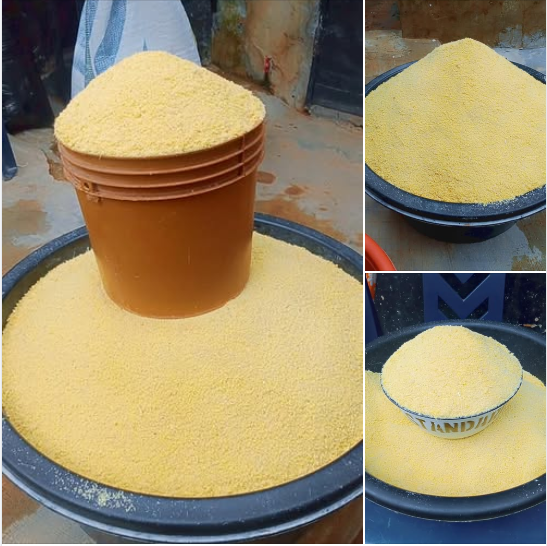
The result of this four-stage processing: a dry, granular, ivory-cream to cream-white product whose characteristic slightly sour, lightly roasted cassava flavour, free-flowing granular texture, and extraordinary culinary versatility (eaten dry as a snack with cold water; soaked to create a stiff porridge; cooked with boiling water to create eba — the most widely consumed Nigerian swallow food; fried as a crunchy snack) makes it simultaneously Nigeria’s most ubiquitous street food, most consumed breakfast food, most economical starch staple, and most emotionally laden diaspora food memory.
At Paradise MultiTrade International Limited, garri is a priority processed food export category — sourced from garri production communities across Nigeria’s primary cassava and garri processing states of Ogun, Edo, Ondo, Delta, Cross River, Rivers, Anambra, Imo, Abia, Enugu, and Benue, processed to documented food safety specifications including per-lot HCN testing, and exported with full quality, food safety, and regulatory documentation enabling legitimate international commercial trade.
To discuss sourcing immediately, request a quotation here and our export team responds within 48 hours.
History and Origin — The Processing Technology That Made Cassava Safe and Created a Cultural Staple
Garri — Pre-Colonial Processing Intelligence Meeting Modern Food Science
The history of garri production in Nigeria and West Africa represents one of the most sophisticated applications of traditional food processing intelligence in African food history — a technology whose development by West African farming communities over centuries of empirical knowledge creation solved the same cyanide management challenge that modern food scientists have only formally characterised in the past 50 years.
As documented in the cassava leaves article — Manihot esculenta contains cyanogenic glycosides (linamarin and lotaustralin) whose enzymatic hydrolysis creates hydrogen cyanide at potentially lethal concentrations in raw or inadequately processed form. The traditional West African cassava processing systems — of which garri production is the most technically sophisticated — were developed specifically to manage this challenge, creating food safety through traditional knowledge whose biochemical mechanism was understood empirically (inadequately processed cassava makes people sick; properly processed cassava is safe) long before the molecular chemistry was characterised.
Garri’s specific origins in southwestern Nigeria — particularly in Yoruba and Edo cultural spheres — create the foundational processing tradition whose regional variations (Ijebu garri from Ijebu-Ode area of Ogun State; Ogun State garri; Edo State garri; Igbo-style garri from Anambra, Imo, and Enugu) create the commercial grade differentiation that premium garri markets value.
The Ijebu tradition — whose reputation for producing Nigeria’s most premium garri creates the commercial benchmark whose product characteristics define international quality expectations — is specifically rooted in the garri production communities of Ijebu-Ode, Ijebu-Mushin, and adjacent Ogun State communities whose specific cassava varieties, fermentation duration protocols, and roasting expertise create the Ijebu garri character: extra-dry (moisture below 10%), extra-sour (extended fermentation 48–72 hours creating more lactic acid than standard 24-hour fermentation), extra-fine (consistent granule size from controlled sieving), and the specific cream-white colour whose absence of yellow palm oil pigment distinguishes Ijebu garri from yellow palm oil-enriched garri varieties.
The cultural embedding of garri in Nigerian life is arguably the most profound of any processed food in any country documented in this series: a 2014 survey accessible through Nigerian Bureau of Statistics documented garri as the single most frequently consumed food across all income categories in Nigeria — consumed daily by low-income households and regularly by middle and upper income households — creating a food whose social democratic quality (eaten equally by street food vendors and university professors, by children and grandparents, by Yoruba and Igbo and Hausa communities) is unique in Nigerian food culture.
What Is Nigerian Garri? The Processing Chemistry, Variety Landscape, and Commercial Grade Structure
The Processing Chemistry — Why Each Stage Matters Commercially
The four-stage garri production whose commercial quality documentation creates Paradise MultiTrade’s export differentiation creates specific chemical and physical transformations whose documentation is the analytical foundation of food safety and quality certification:
HCN Reduction Across Processing Stages:
| Processing Stage | HCN Reduction Mechanism | Cumulative Reduction |
|---|---|---|
| Peeling | Removes peel (highest HCN concentration) | 15–25% |
| Grating | Cell wall disruption releases linamarase enzyme — begins HCN generation and release | Initiates hydrolysis |
| Fermentation (24–72h) | pH reduction to 3.5–4.5 promotes HCN volatilisation; enzymatic hydrolysis of remaining linamarin | 60–80% from fresh root |
| Pressing | Physical HCN expulsion with liquid fraction | Additional 10–15% |
| Roasting (180–220°C) | Complete thermal volatilisation of residual HCN; temperature destroys any residual linamarase | ≥95% total reduction — target <10mg HCN/kg finished product |
Research through NCBI’s cassava food safety database and FAO’s cassava processing safety programme confirms that properly executed garri processing — combining fermentation duration adequate for lactic acid development (pH ≤4.0) with roasting at ≥180°C for sufficient duration — consistently achieves HCN reduction to below 10mg per kg in finished garri — the same safety threshold documented in the cassava leaf article.
The Lactic Acid Fermentation — Creating Garri’s Distinctive Character:
As documented in the akamu article, spontaneous lactic acid fermentation creates nutritional improvements alongside the HCN reduction: phytate reduction (increasing mineral bioavailability); partial protein hydrolysis (improving digestibility); probiotic organism contribution; and the specific organic acid profile (lactic acid, acetic acid in varying ratios depending on fermentation duration and conditions) whose combination creates garri’s characteristic slightly sour, fermented cassava flavour that is immediately identifiable to any Nigerian consumer.
The Garification Roasting — Creating Texture and Stability:
The specific roasting stage (garification) — whose continuous stirring and temperature management transforms fermented, pressed cassava mash into the final product — creates three simultaneous technical outcomes whose commercial documentation creates grade differentiation:
Granule formation: The mash particles’ surface starch gelatinises and dextrinises during roasting — creating the characteristic free-flowing granules whose size distribution determines commercial grade. Fine garri (granule size 0.5–1.5mm — for eba/swallow use whose smooth, cohesive texture when cooked with boiling water requires fine particle distribution) versus coarse garri (granule size 1.5–3.0mm — for dry consumption and snacking whose crunchy character some consumers prefer).
Moisture reduction: The roasting’s evaporative effect reduces moisture from the pressed mash’s 40–50% to the finished product’s 8–12% — creating the water activity below 0.65 that prevents microbial growth and enables ambient-temperature shelf stability without preservatives.
Flavour development: The Maillard reaction between amino acids and reducing sugars (dextrose from enzymatic starch hydrolysis) creates the characteristic roasted cassava flavour notes — similar in mechanism to the suya spice’s groundnut cake caramelisation documented in Article 82 but with cassava-specific substrate chemistry.
The Commercial Variety Landscape
White Garri (Standard Grade):
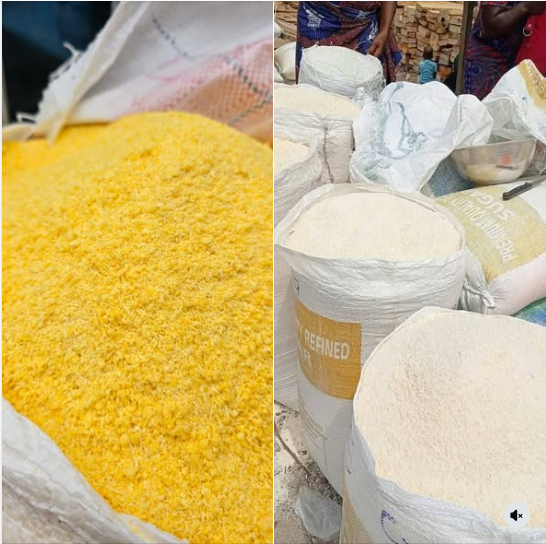
The most widely produced and consumed garri — cream-white colour (no palm oil addition), fine to medium granule size, 24–36 hour fermentation creating mild sourness, moisture 10–12%. The most commercially versatile grade appropriate for both eba (swallow) and dry consumption applications.
Yellow Garri (Palm Oil Enriched):
White garri with palm oil added during roasting — whose carotenoid pigmentation creates the characteristic golden-yellow colour, increased fat content (4–6% versus white garri’s 0.5–1.5%), and distinctive palm oil flavour note. The most common garri in eastern Nigeria (Anambra, Imo, Enugu states) where palm oil addition is traditional. Nutritional advantage: palm oil’s beta-carotene creates provitamin A enhancement whose public health significance in vitamin A-deficient populations is documented through UNICEF’s vitamin A deficiency programme.
Ijebu Garri (Premium Extra-Dry Grade):
The most commercially premium garri variety — produced specifically in the Ijebu area of Ogun State and Ikenne LGA surrounds. Distinguishing characteristics: extra-dry (moisture ≤8% — drier than standard garri); extra-sour (extended fermentation 48–72 hours creating intense lactic acid character); extra-fine (consistent granule size 0.3–0.8mm — the finest garri grade); cream-white colour (no palm oil — distinctly different from yellow garri). Ijebu garri’s specific characteristics create its cultural premium in Nigerian food culture: its exceptional dryness makes it the preferred garri for soaking in cold water (a practice whose sensory experience — garri soaking — is so culturally embedded that it is specifically referenced in Nigerian social media, university culture, and generational memory). The Ijebu brand creates 2–3× price premium over standard garri in Nigerian premium retail — commanding similar cultural cachet to Ofada rice’s premium positioning in Yoruba food culture.
Garri Flour (Ultra-Fine Grade):
Garri processed through additional milling to ultra-fine flour (above 100 mesh) — creating a cassava flour-like product whose specific application in gluten-free baking, cassava bread, and food manufacturing creates differentiation from standard garri whose granular texture is not appropriate for baking applications.
Benefits and Industrial Uses of Nigerian Garri
West African Diaspora Food Retail — The Most Emotionally Intense Supply Gap in the Entire Portfolio
The diaspora demand for authentic Nigerian garri is — without any qualification — the most emotionally and culturally intense food supply gap documented in this entire article series. More than any other product, garri represents the food whose absence in diaspora communities creates the most sustained, vocal, and commercially actionable consumer frustration:
The garri soaking tradition: For Nigerian students, young adults, and economically constrained households across the diaspora — garri soaking (pouring cold water over dry garri, sweetening with sugar, adding groundnuts or milk, eating the partially softened, pleasantly sour, crunchy-soft mixture with a spoon or hands) is not merely food but a culturally specific sensory experience whose emotional resonance is equal to any comfort food in any culture. The specific sourness of properly fermented Ijebu garri, the specific granule texture, the specific way it softens in cold water while retaining crunch — create a sensory memory so precise that substitute products whose sensory profile differs are immediately identifiable as inauthentic.
The eba tradition: For Nigerian households maintaining traditional eating patterns in diaspora — eba (garri swallow, made by adding garri to boiling water and stirring vigorously into a stiff, cohesive dough eaten with soup) is the most frequently consumed traditional Nigerian swallow food. Diaspora Nigerians in London, New York, Toronto, and Houston whose weekly eba with egusi soup, ofe onugbu, or okra soup requires authentic Nigerian garri specifically — create consistent, emotionally motivated retail demand whose intensity is documented through Nigerian social media communities’ frequent expressions of frustration at garri unavailability abroad.
Supply chain reality: Nigerian garri reaches diaspora consumers primarily through: personal travel (Nigerians returning from home visits bring 5–10kg bags in luggage — the most common garri diaspora supply mechanism); informal trader importation through non-commercial channels; and specialist West African food retailers whose garri supply is inconsistent, often of variable quality, and without food safety documentation. The formal commercial supply chain whose documented HCN certification, consistent quality, and reliable availability eliminates these supply limitations does not currently exist at meaningful scale.
For diaspora food retail buyers — contact our export team to discuss white garri, Ijebu garri, and yellow garri retail specification.
West African Restaurant and Food Service Supply
Eba restaurant supply: The growing global Nigerian restaurant sector whose menu builds around traditional swallow food consumption — eba with assorted soups — creates consistent food service procurement demand for garri at commercial kitchen volumes. Unlike diaspora home cooks whose monthly consumption is measured in kilograms, restaurant operations serving eba daily measure weekly consumption in tens of kilograms — creating procurement scale that formal supply chains serve cost-effectively.
Nigerian fast food chains — the growing Nigerian quick service restaurant format whose adaptation of traditional food for urban convenience creates commercial operations (Mr. Biggs, Genesis Deluxe Cinemas food court, Chicken Republic) whose garri procurement at institutional scale creates consistent supply demand.
University and institutional catering — Nigerian university halls of residence, hospital catering, and institutional feeding programmes whose budget constraints specifically make garri the most cost-effective starch staple create large-scale institutional procurement demand for food-safe, consistently specified garri.
Food Manufacturing — The Cassava Derivative Ingredient
Gluten-free food manufacturing — garri’s natural gluten-free status creates specific appeal for food manufacturers whose gluten-free product development specifically values cassava-derived ingredients. Garri flour (ultra-fine grade) creates cassava bread, cassava-based pancakes, and gluten-free snack products whose clean-label “cassava flour” ingredient (garri’s processed form) differentiates from standard white rice flour.
Cassava snack manufacturing — the commercial development of cassava-based snack products — cassava chips, cassava crisps, and the West African garri biscuit (whose fried, salted garri creates a crunchy snack product analogous to corn chips in application) — creates food manufacturing procurement demand from snack manufacturers whose West African traditional food product development specifically requires garri as the primary ingredient.
Traditional food product manufacturing — commercial production of packaged eba mixes, instant swallow food products, and ready-to-eat traditional Nigerian food whose diaspora and domestic market creates consistent food manufacturing demand for garri as a primary ingredient.
Fortified garri for nutrition intervention — FAO’s cassava value chain programme and UNICEF’s complementary feeding initiatives document garri fortification (with vitamin A, iron, zinc, and protein from soya flour addition) as a commercially accessible and nutritionally significant intervention for addressing micronutrient deficiency in West African populations whose garri consumption creates a natural dietary vehicle for nutrient delivery. For food manufacturers developing fortified garri products for institutional nutrition programmes — documented base garri quality creates the foundation for subsequent fortification.
Why Buy Garri From Nigeria?
The HCN Documentation Programme — The Commercial Foundation That Changes Everything
The single most commercially transformative aspect of Paradise MultiTrade’s garri export programme is the systematic per-lot HCN testing documentation whose presence in our programme creates the food safety foundation that enables legitimate international commercial trade — and whose absence from informal garri supply channels creates the legal liability risk that prevents regulated food market acceptance of undocumented garri.
Unlike most foods in this series whose food safety testing addresses trace contamination (mycotoxins, pesticides at parts-per-billion levels) — garri’s HCN management is the primary safety-critical processing validation whose documented completion is as fundamental to garri’s food safety as the mandatory boiling protocol documented for cassava leaves. For every international food market — UK, EU, USA, Canada — whose food safety regulatory framework requires that imported foods are free from toxic substances at dangerous levels, garri without documented HCN testing cannot be legitimately imported and sold as food.
Paradise MultiTrade’s HCN documentation programme: Picrate paper field screening of every production batch during roasting to confirm adequate HCN elimination before packaging; UV spectrophotometric laboratory confirmation on every export lot before documentation preparation; target: below 10mg HCN per kg — the same safety threshold applied to cassava leaves and consistent with Codex Alimentarius Commission guidance on cassava product safety. Contact us to discuss HCN documentation.
The Ijebu Garri Premium Programme — Authenticating the Most Culturally Valued Grade
For diaspora premium food retail whose Nigerian customers specifically seek Ijebu garri — Paradise MultiTrade’s direct sourcing from Ijebu-Ode area garri processing communities in Ogun State, combined with moisture documentation (≤8%), fermentation pH confirmation (≤3.8 — confirming extended fermentation for Ijebu character), and granule size verification (0.3–0.8mm) — creates the authenticated Ijebu garri supply whose premium commercial positioning commands the 2–3× price differential that cultural premium garri buyers willingly pay.
Nigeria’s Production Scale — The World’s Largest Garri Producer
Nigeria’s position as the world’s largest cassava producer (60+ million MT annually) creates a garri production infrastructure — whose Southern Nigerian cassava belt’s garri processing communities in Ogun, Edo, Anambra, and Cross River states represent the most concentrated garri production geography in the world — whose commercial formalisation through documented export programmes creates the most commercially accessible premium processed cassava food available from any African origin.
Complete Export Documentation
Every garri shipment carries phytosanitary certification from NAQS, NEPC export documentation, certificate of origin, commercial invoice, packing list, and bill of lading. We coordinate: HCN content certificate (UV spectrophotometric — per lot, below 10mg/kg); fermentation documentation (pH measurement confirming lactic acid fermentation completion); moisture content; water activity (≤0.65); granule size distribution; colour specification; aflatoxin screening (ELISA); fumonisin testing (where cassava adjunct maize contamination risk exists in production area); pesticide residue multi-residue analysis to EU MRL standards per Regulation (EC) 396/2005; and microbiological safety testing including Salmonella and total plate count. EU-bound shipments comply with Regulation (EU) 2017/625 on official controls and Commission Regulation (EC) 1881/2006. Our NEPC Export Licence No. 0042385 and CAC Registration No. RC-9284647 are verifiable through NEPC.
Nigeria’s Garri Export Strength and Global Market Demand
The Global Market — Informal, Enormous, Waiting for Formalisation
The global garri market parallels the markets documented for akamu, suya spice, and utazi: commercially significant informal trade volumes, genuinely large diaspora demand, essentially zero formal documented export infrastructure. ITC Trade Map confirms garri’s absence from significant formal trade statistics — reflecting the pre-formalisation stage whose commercial development Paradise MultiTrade’s programme specifically addresses.
The commercial precedent for formal garri export development: the palm oil, cassava starch, and cassava flour (HQCF) export programmes whose progressive formalisation has created documented, food-safety-certified cassava-derived export categories from Nigerian origin — demonstrating that Nigerian cassava processing industries can achieve the formal export documentation standard whose absence has previously prevented garri’s formal international market entry.
Key Export Destination Markets
United Kingdom — home to Europe’s largest Nigerian diaspora — whose Nigerian communities in London, Birmingham, Manchester, Leeds, and Bristol create the most commercially concentrated European garri demand. UK food import requirements for processed cassava products administered by FSA and APHA — with specific attention to cassava HCN limits under EU-derived food safety standards maintained post-Brexit.
United States — whose Nigerian-American diaspora in Houston, Atlanta, Dallas, New York, and Washington DC creates significant demand. US food import requirements through FDA food import programme — FDA has specific guidance on cassava product cyanide limits for imported cassava-derived foods.
Canada — whose Toronto and Ottawa Nigerian communities create consistent demand tracked through CFIA.
Germany, Netherlands, Italy — whose growing Nigerian and West African diaspora communities create developing European continental demand.
UAE and Gulf States — where Nigerian professional expatriate communities create consistent demand for traditional food products tracked through ADAFSA.
West African Regional Markets (Ghana, Cameroon, Côte d’Ivoire) — whose own cassava processing industries exist but whose specific garri-style processing tradition differs from Nigerian garri — creating regional trade in Nigerian garri grades as premium imports.
Why Choose Paradise MultiTrade International Limited?
Certified HCN Documentation — Every Lot, No Exceptions. Per-lot UV spectrophotometric HCN certification below 10mg per kg — the non-negotiable food safety foundation whose systematic implementation creates the regulated market access that informal garri supply fundamentally cannot achieve. For every EU, UK, USA, or Canadian food importer whose regulatory environment requires food safety documentation — Paradise MultiTrade’s HCN certificate is the commercial enabler whose absence prevents all other commercial relationships. Contact us to discuss HCN documentation.
Ijebu Garri Authenticity Programme. Direct Ogun State Ijebu-Ode area sourcing with moisture (≤8%), pH (≤3.8), and granule size (0.3–0.8mm) documentation — creating the authenticated premium grade whose diaspora premium pricing and cultural authority creates 2–3× value premium over commodity garri. Contact us to discuss Ijebu garri specification.
Three Commercial Grades Available. White garri (standard), yellow garri (palm oil enriched), and Ijebu garri (premium extra-dry) — from the same documented southern Nigeria production network, with consistent quality specifications and per-lot food safety documentation for each. Contact our team to specify your required grade.
Water Activity Documentation for Shelf Life Assurance. Water activity measurement (≤0.65) confirming the microbiological safety and ambient-temperature shelf stability that garri’s 12–24 month export shelf life claim requires — preventing the mould growth and quality degradation that inadequately dried garri creates during extended transit and retail storage. Contact us to discuss water activity specification.
Multi-Commodity West African Cassava Value Chain and Food Ingredient Sourcing. Garri buyers frequently source complementary Nigerian cassava and food products. Alongside garri, Paradise MultiTrade exports cassava chips, cassava flour/HQCF, cassava leaves, yam (fresh), akamu (pap/ogi), crayfish (dried shrimp), locust beans (iru), palm oil, hibiscus flower, moringa leaf powder, cashew nut kernel, and raw cashew nuts. Explore our full range of Nigerian export commodities and consolidate your West African cassava product, traditional food, and specialty food sourcing through one verified, licensed export partner.
Product Specifications
| Specification | White Garri (Standard) | Yellow Garri (Palm Oil) | Ijebu Garri (Premium) | Garri Flour (Ultra-Fine) |
|---|---|---|---|---|
| Primary Ingredient | Manihot esculenta — cassava root | Manihot esculenta + palm oil | Manihot esculenta — specific Ijebu processing | Manihot esculenta — garri re-milled |
| Processing | Peel-grate-ferment-press-roast | Peel-grate-ferment-press-roast-with-palm-oil | Extended fermentation (48–72h), high-temperature roasting | Garri milled to ultra-fine flour |
| HCN Content | ≤10mg/kg (UV spectrophotometric — per lot) | ≤10mg/kg | ≤8mg/kg (premium safety standard) | ≤8mg/kg |
| Fermentation pH | ≤4.2 (confirming lactic acid fermentation) | ≤4.2 | ≤3.8 (extended fermentation — more acidic, more sour) | ≤4.0 |
| Moisture Content | ≤12% | ≤12% | ≤8% (defining characteristic — extra dry) | ≤10% |
| Water Activity | ≤0.65 | ≤0.65 | ≤0.55 (extra-dry — superior shelf stability) | ≤0.60 |
| Granule Size | 0.5–2.0mm (fine to medium) | 0.5–2.0mm | 0.3–0.8mm (fine — defining characteristic) | <0.15mm (100 mesh — flour) |
| Colour | Cream-white to ivory | Golden-yellow (palm oil carotenoid) | Bright cream-white (no palm oil) | Cream-white |
| Sourness | Mild-moderate lactic acid character | Mild-moderate | Distinctly sour (extended fermentation character — defining) | Mild |
| Starch Content | 75–85% dry weight | 70–78% | 76–86% | 75–85% |
| Protein | 1–2% dry weight | 1–2% | 1–2% | 1–2% |
| Fat | 0.5–1.5% | 4–6% (palm oil addition) | 0.3–0.8% | 0.5–1.0% |
| Dietary Fibre | 2–4% dry weight | 2–4% | 2–4% | 2–3% |
| Fat (Palm Oil Grade) | N/A | Palm oil inclusion: 3–5% by weight of finished product | N/A | N/A |
| Total Ash | ≤3% dry weight | ≤3% | ≤3% | ≤2.5% |
| Aflatoxin | Total ≤10 ppb; B1 ≤2 ppb | Total ≤10 ppb | Total ≤4 ppb (premium) | Total ≤4 ppb |
| Pesticide Residue | EU MRL compliant | EU MRL compliant | EU MRL compliant | EU MRL compliant |
| Microbiological | Salmonella absent/25g; TPC ≤50,000 CFU/g; Mould ≤500 CFU/g | Salmonella absent/25g; TPC ≤50,000 CFU/g | Salmonella absent/25g; TPC ≤10,000 CFU/g (premium) | Salmonella absent/25g |
| Allergen Status | No major EU or US allergens (cassava is gluten-free) | Contains palm oil (not a major allergen) | No major allergens | Gluten-free |
| Gluten Status | Naturally gluten-free | Naturally gluten-free | Naturally gluten-free | Naturally gluten-free |
| Shelf Life | 12–18 months (sealed, cool, dry storage) | 12 months (fat content limits shelf life) | 18–24 months (extra-dry — superior shelf life) | 12 months |
| Aroma | Mild, pleasant fermented cassava — lightly roasted | Mild fermented cassava with palm oil warmth | Distinctly sour-fermented, lightly roasted — premium character | Mild cassava |
| Packaging — Retail | 1kg, 2kg, 5kg sealed PP bags | 1kg, 2kg, 5kg sealed PP bags | 500g, 1kg, 2kg premium sealed bags | 25kg sealed PP bags |
| Packaging — Bulk | 10kg, 25kg, 50kg PP bags | 25kg, 50kg PP bags | 5kg, 10kg, 25kg premium bags | 25kg sealed |
| Supply Capacity | 500–50,000 MT per year | 500–20,000 MT per year | 50–2,000 MT per year (Ijebu area limited) | 100–2,000 MT per year |
| MOQ | Retail: 500kg; Bulk: 5 MT | 500kg retail; 5 MT bulk | 500kg | 1 MT |
Export Documentation (all grades): Phytosanitary Certificate (NAQS), HCN Content Certificate (UV spectrophotometric per lot — below 10mg/kg confirmed), Fermentation pH Certificate (lactic acid fermentation documentation), Moisture Content Certificate, Water Activity Certificate, Granule Size Certificate, Aflatoxin Certificate (ELISA), Pesticide Residue Certificate (EU MRL), Microbiological Certificate (Salmonella, TPC, Mould), Gluten-Free Status (no gluten-forming proteins — cassava confirmed), Certificate of Origin (with Ijebu-Ode area specific documentation for Ijebu grade), NEPC Export Licence, Commercial Invoice, Packing List, Bill of Lading.
Payment Terms: T/T, LC at sight, Escrow. Loading Port: Lagos (Apapa / Tin Can Island Port). Incoterms: EXW, FOB Lagos, CNF, CIF.
Processing and Export Process
Cassava Sourcing. Fresh cassava roots procured from farming communities within 50km radius of garri processing facilities — minimising transport time whose increase creates post-harvest starch degradation and HCN precursor chemical changes affecting both safety and quality. Cassava variety selection: specific TMS (Tropical Manioc Selection) series varieties documented through IITA‘s cassava improvement programme — whose specific starch content, low-cyanide-variety classification, and garri processing performance is documented by production community experience.
Peeling. Hand-peeling by trained production workers — removing the entire brown outer peel and the immediately sub-surface white peel layer whose higher cyanide concentration requires complete removal. Peeled roots immediately washed in clean water — preventing oxidative browning and surface contamination.
Grating. Peeled cassava grated through mechanical graters (replacing traditional hand grating whose labour intensity limits commercial-scale processing) — producing the uniform wet mash whose particle size consistency creates the granule size uniformity that premium garri specification requires.
Bagging and Fermentation. Grated mash packed into porous jute or polypropylene sacks — stacked under heavy weights (traditional stone weights or hydraulic press) creating both the pressing that expels starch-liquid fraction and the anaerobic conditions that favour lactic acid bacterial fermentation. Fermentation duration:
- Standard garri: 24–36 hours (mild sourness, standard HCN reduction)
- Ijebu garri: 48–72 hours (intense sourness, maximum HCN reduction through extended enzymatic hydrolysis and lactic acid volatilisation)
- Quality control: pH measurement at fermentation end confirming ≤4.2 (standard) or ≤3.8 (Ijebu) before proceeding to roasting
Sieving. Fermented, pressed mash broken up and sieved through graded sieves — creating the specific particle size ranges that distinguish fine garri (0.5–1.5mm), medium garri (1.5–3.0mm), and Ijebu garri (0.3–0.8mm). The sieving stage removes large lumps and creates the granule size uniformity whose specification consistency is the primary physical quality parameter.
Roasting (Garification). Sieved mash roasted in large cast iron pans over open wood or gas fires — continuous manual stirring creating even heat distribution and preventing burning. Temperature management: 180–200°C sufficient for complete HCN volatilisation and adequate Maillard browning without excessive charring. Duration: 20–40 minutes per batch depending on batch size and moisture content. Critical for Ijebu garri: higher temperature (200–220°C) and longer duration creating the extra-dry moisture content (≤8%) that defines authentic Ijebu character.
Palm Oil Addition (Yellow Garri Only). For yellow garri — fresh red palm oil added to the roasting mash in the final 5 minutes of roasting — mixing thoroughly to create uniform golden-yellow colour throughout the garri batch. Palm oil quantity: approximately 50–80ml per kilogram of finished garri.
Cooling and Packaging. Roasted garri cooled on clean concrete floors or steel cooling racks — preventing condensation moisture re-absorption whose risk during hot garri cooling creates quality degradation. Cooled garri immediately bagged in sealed polypropylene bags whose moisture barrier prevents re-absorption during storage and transit.
HCN Field Testing. Picrate paper test performed on representative samples from every roasting batch — confirming adequate HCN elimination before commercial packaging. Any batch with persistent yellow-orange picrate paper colour (indicating residual HCN above threshold) returned for additional roasting.
Laboratory Testing. UV spectrophotometric HCN quantification, pH measurement, moisture (Karl Fischer), water activity (electronic water activity meter), aflatoxin (ELISA), pesticide residue, and microbiological — on every export lot before documentation.
Lead Times. White garri and yellow garri from processing stock: 14–21 days. Ijebu garri (extended fermentation scheduling): 21–35 days. Garri flour: 21–35 days. Full analytical panel (HCN UV spectrophotometric, water activity, aflatoxin): add 7 days. Contact us to plan your supply schedule.
Frequently Asked Questions
What is the difference between garri and cassava flour (HQCF) and why does the distinction matter for food manufacturers?
The commercial distinction between garri and cassava flour (HQCF — High Quality Cassava Flour) is as commercially important as the distinction between akamu and unfermented maize flour — because the two products are chemically, texturally, and culinarily different despite both deriving from cassava: (1) Processing: HQCF is produced from fresh cassava peeled, grated, pressed, dried, and milled WITHOUT fermentation — creating a neutral-flavoured, white flour whose functional properties parallel wheat flour as a food manufacturing ingredient. Garri is produced WITH fermentation AND roasting — creating a pre-gelatinised, fermented, granular product whose chemical transformation creates a fundamentally different ingredient. (2) Functional properties: HQCF dissolves smoothly in water and creates pastes and baked goods with neutral flavour. Garri is already partially gelatinised through roasting — creating the instant-swelling character in hot water that creates eba without the cooking time that raw cassava flour requires. (3) Flavour: HQCF is neutral-tasting. Garri has the characteristic lactic acid sourness and Maillard browning flavour whose distinctive character makes it organoleptically incompatible with HQCF applications requiring neutral flavour. (4) Applications: HQCF — bread, biscuit, pasta, industrial food manufacturing. Garri — eba/swallow, garri soaking, garri snacks, cassava-specific traditional food. (5) For food manufacturers: These are NOT interchangeable. A manufacturer substituting garri for HQCF in bread production creates sour-flavoured bread with unexpected texture. Specifying clearly — garri for traditional Nigerian food applications; HQCF for food manufacturing wheat flour substitution — creates the commercial accuracy that prevents costly specification errors. Contact us to discuss which cassava product fits your application.
Why does garri have such a distinctive sour taste and is it safe to eat very sour garri?
Garri’s sourness is the direct organoleptic expression of its fermentation quality — whose understanding creates both consumer confidence in authentic garri and the quality assessment tool whose commercial application Paradise MultiTrade’s fermentation pH documentation provides: (1) Source of sourness: The lactic acid produced by Lactobacillus species during the fermentation stage creates garri’s characteristic sourness. More intense fermentation (longer duration, higher bacterial activity, complete pH reduction) creates more sour garri. The pH range in properly fermented garri: 3.5–4.5 — creating the “pleasantly sour” to “intensely sour” sourness spectrum whose consumer preference varies by regional tradition (Ijebu garri’s intense sourness at pH ≤3.8 is specifically valued; standard garri’s milder sourness at pH 4.0–4.2 is more broadly acceptable). (2) Sourness and HCN management: The lactic acid environment of fermented garri specifically promotes HCN release through two mechanisms: acid conditions favour the liberation of free HCN from cyanohydrin intermediates (increasing volatilisation rate); and lactic acid bacteria’s metabolic activity consumes oxygen, creating conditions that facilitate linamarase-mediated glycoside hydrolysis. More sour garri — especially Ijebu garri with extended fermentation — is therefore associated with more thorough HCN reduction, not less safe. (3) Very sour garri: Extremely sour garri — whose extended fermentation creates intense lactic acid accumulation — is not a safety concern but a quality indicator of thorough fermentation whose HCN reduction is likely more complete than less sour garri. The consumer’s sensory experience of extreme sourness is a function of personal preference, not safety. Diaspora Nigerians from Ijebu areas specifically seek the most sour Ijebu garri precisely because this character signals authentic, thorough, premium traditional processing. Contact us to discuss fermentation pH specification for your market’s sourness preference.
How is garri traditionally prepared and what are its main culinary uses?
Garri’s extraordinary culinary versatility — documented as the primary reason for its cultural embeddedness across all of Nigeria’s 36 states and FCT — creates multiple preparation methods whose documentation is commercially useful for retail packaging and food service buyers: (1) Eba (swallow — most consumed method): Boil water in pot; remove from heat; pour garri into the hot water gradually while stirring continuously with a wooden spoon; the gelatinising starch creates a cohesive, stiff dough whose consistency is adjusted by the garri-to-water ratio (more garri = stiffer eba, less garri = softer eba). Rest covered for 2–3 minutes to complete gelatinisation. Serve immediately with soup (egusi, okra, ofe onugbu, banga soup, ogbono or any traditional Nigerian soup). The garri-to-water ratio: approximately 1 cup garri per 1–1.2 cups boiling water for firm eba. (2) Garri soaking (most culturally specific method): Place 1–2 cups dry garri in bowl; pour cold water over garri (approximately 1:2 garri-to-water ratio); the garri absorbs water and softens partially while retaining granule texture; add sugar, evaporated milk, coconut flakes, groundnuts, or a combination; eat with spoon or hands. The specific pleasure: the slightly softened-yet-crunchy texture, the sourness amplified by cold water, and the specific satiety that garri’s gelatinised starch creates. (3) Garri with cold water and sugar only: The simplest preparation — a student dormitory staple whose economic accessibility and rapid preparation create the specific cultural association with Nigerian university life that is among the most iconic food culture references in Nigerian social media. (4) Fried garri (tuwo shinkafa substitute in some applications): Dry garri eaten as a crunchy snack — the unsoaked, uncooked garri consumed as a crunchy, slightly sour cereal snack. (5) Garri-based snacks: Commercial production of fried garri biscuits and garri crisps using garri as the primary ingredient. Contact us to discuss preparation guide for retail packaging.
What is the EU regulatory framework for garri import and what HCN limits apply?
Garri’s EU import regulatory framework creates specific compliance requirements whose understanding is essential for European food importers: (1) Cassava product HCN limits (EU Regulation framework): The EU does not have a single specific Regulation establishing maximum HCN limits for all cassava-derived food products — but relies on the Codex Alimentarius General Standard for Cassava Flour which establishes 10mg HCN per kg for cassava flour — whose application to garri (a roasted, processed cassava product) creates the 10mg/kg reference threshold that EU Food Business Operators apply as the safety benchmark. Some EU member states have national food safety authority guidance on cassava product cyanide limits — Germany’s BVL and the Netherlands’ NVWA have assessed cassava product cyanide safety whose guidance Paradise MultiTrade provides to EU-bound buyers. (2) UK post-Brexit: The UK FSA maintains the same cassava product HCN guidance as the EU standard — applying 10mg/kg as the practical safety benchmark for imported cassava products whose food safety documentation should include HCN analytical certification. (3) EU Border Inspection: Cassava and cassava-derived products from Nigeria may be subject to enhanced controls at EU Border Inspection Posts — whose sampling and testing programmes include HCN analysis on inspected shipments. Paradise MultiTrade’s pre-export HCN certification specifically prepares for BIP sampling — providing the pre-shipment analytical foundation that BIP results should confirm. (4) Novel Food consideration: Garri’s pre-1997 EU consumption through Nigerian diaspora communities — documented in UK, Germany, Netherlands, France, and Belgium where significant Nigerian communities existed before 1997 — creates a pre-1997 consumption history whose documentation may support traditional food status rather than Novel Food authorisation requirement. Buyers seeking mainstream EU food manufacturing-scale incorporation should obtain specific regulatory advice. For diaspora retail — current market practice confirms routine availability without systematic Novel Food enforcement. Contact us to discuss EU regulatory compliance documentation.
What is the difference between white garri and yellow garri and which should diaspora retailers stock?
The white versus yellow garri distinction creates the most commercially important product selection decision for diaspora food retail whose wrong choice creates customer dissatisfaction: (1) White garri: Cassava processed without palm oil addition — creating cream-white colour, lower fat content (0.5–1.5%), longer shelf life, neutral to mildly sour character. Most widely consumed across all Nigerian regions; preferred by Yoruba-speaking consumers for both eba and soaking; the default garri in southwestern Nigerian (Lagos, Ogun, Ondo, Oyo) food culture; also widely consumed in northern states. (2) Yellow garri: Cassava processed with palm oil added during roasting — creating golden-yellow colour, higher fat (4–6%), distinctive palm oil flavour note, shorter shelf life (oil rancidity limits shelf life to approximately 12 months versus white garri’s 18 months). Preferred by many eastern Nigerian (Igbo) consumers for eba — where palm oil garri creates a richer, more flavourful swallow. Some Igbo households specifically seek yellow garri for traditional eba preparation. (3) Diaspora retail stocking decision: For mixed Nigerian diaspora retail — stock BOTH, as customer preference is strongly tied to regional origin and personal tradition. White garri typically sells in higher volume (broader acceptance) but yellow garri command specific loyalty among eastern Nigerian consumers. (4) Ijebu garri: The premium sub-category that commands specific western Nigerian (Yoruba/Ogun State) consumer demand — whose extra-dryness and extra-sourness creates specific commercial value worth stocking separately as a premium product alongside standard white garri. Many diaspora retailers stock all three: standard white, yellow, and Ijebu — creating the product range whose breadth captures the full spectrum of Nigerian garri consumer preferences. Contact us to discuss retail assortment planning.
How should garri be stored and what factors create quality deterioration during transit and retail?
Garri’s storage and handling requirements — whose specific management creates or destroys the ambient-temperature shelf stability that is one of garri’s most commercially valuable characteristics — create specific guidance for importers, retailers, and logistics operators: (1) Moisture is the primary quality threat: Garri’s gelatinised starch is extremely hygroscopic — readily absorbing atmospheric moisture that: raises water activity above 0.65 (creating mould growth risk); makes dry garri clump and cake (preventing the free-flowing granular texture that eba preparation requires); and creates the unpleasant stale, musty character that consumers identify as spoiled garri. All garri must be sealed in moisture-barrier packaging (polypropylene bags with inner polyethylene liner for bulk; sealed multi-layer film for retail). Container loading must avoid positions creating condensation risk. (2) Temperature — secondary concern: Garri’s low-fat content (white and Ijebu grades) creates minimal fat oxidation risk — making temperature management less critical than for brown rice or brown rice flour. Yellow garri’s palm oil content creates mild rancidity risk at temperatures above 30°C over extended periods. Ambient temperature storage (below 30°C) is adequate for white and Ijebu garri; cool storage preferred for yellow garri. (3) Light: Not a significant quality factor for garri (unlike β-carotene-rich products documented earlier). (4) Retail shelf management: Opened retail bags must be resealed or transferred to airtight containers — un-sealed garri in humid shop environments absorbs moisture within days, creating the clumping and staleness that customers associate with poor quality product. Paradise MultiTrade’s retail pack programme uses heat-sealed moisture-barrier bags whose consumer opening mechanism (tear notch) creates clean opening without compromising the sealed remainder’s moisture protection. Contact us to discuss moisture management specification.
What transit times should I expect from Nigeria?
Nigerian garri in all forms (standard dry container — no temperature control required for white and Ijebu garri at water activity ≤0.65): UK (Tilbury, Felixstowe) — 14–18 days from Lagos. Netherlands (Rotterdam) — 14–18 days. Germany (Hamburg) — 14–20 days. France (Le Havre) — 14–18 days. Belgium (Antwerp) — 14–18 days. Italy (Genoa, Naples) — 12–16 days. USA (East Coast — New York, Baltimore, Houston) — 18–25 days. Canada (Toronto via Halifax or Montreal) — 18–28 days. UAE (Jebel Ali) — 10–14 days. Ghana (Tema) — 3–5 days. Senegal (Dakar) — 5–8 days. Air freight (UK Heathrow) — 2–3 days total (recommended for urgent diaspora retail restocking whose garri stockouts create the most intense customer complaints in West African food retail). Air freight (USA JFK/Houston) — 3–4 days total. Packaging recommendation for container transit: Moisture-barrier sealed bags inside polypropylene outer bags; palletised loading with timber pallets off container floor; avoid container deck loading in tropical latitudes (direct sun creates condensation cycle); insert desiccant sachets in bulk bags for long-haul container transit above 21 days. Yellow garri: Nitrogen-flushed sealed retail bags recommended for oil rancidity prevention on transit above 14 days. Add 7 days for HCN UV spectrophotometric analysis, water activity measurement, and microbiological testing before loading. Contact us to plan your complete logistics programme.
Ready to Source Nigerian Garri — White Garri, Yellow Garri, Ijebu Garri, and Garri Flour — With Per-Lot HCN Documentation Below 10mg/kg, Fermentation pH Certification, Water Activity Assurance, Aflatoxin Testing, EU Pesticide Residue Compliance, and Full Food Safety Documentation for West African Diaspora Food Retailers, Nigerian Restaurant Chains, Food Manufacturing Companies, and Global Wholesale Buyers?
If you are a West African diaspora food retailer in the UK, USA, Canada, or continental Europe whose Nigerian and West African customer base demands authenticated, food-safety-certified garri — white garri, yellow garri, and Ijebu garri — through formal commercial channels with consistent availability and HCN documentation that eliminates the food safety liability risk that undocumented informal supply creates, a Nigerian or West African restaurant chain whose eba menu requires consistent, food-safety-documented garri at commercial kitchen volumes — with fermentation pH confirmation, moisture specification, and granule size consistency that informal procurement cannot reliably deliver, a food manufacturing company developing cassava-based snack products, gluten-free baking ingredients, fortified traditional food products, or West African traditional meal kits whose formulation requires food-safety-certified garri as the primary ingredient with full food safety documentation enabling commercial food product labelling in regulated markets, an institutional catering operation or food security programme whose large-scale feeding programme incorporates garri as the most economical and most culturally resonant starch staple for Nigerian and West African beneficiary populations — requiring documented food safety whose HCN certification creates regulatory compliance and beneficiary protection, or a global specialty processed food importer building Nigerian garri supply positions for diaspora food markets across Europe, North America, and Gulf States as the formal export infrastructure whose creation transforms garri from informal travel-based diaspora supply to legitimate international commercial food trade — Paradise MultiTrade International Limited is the licensed Nigerian exporter your garri supply programme needs.
We supply Nigerian garri — white garri (standard and fine grade), yellow garri (palm oil enriched), Ijebu garri (premium extra-dry, Ogun State origin), and garri flour — from Ogun, Edo, Anambra, Cross River, and Delta State garri processing community production, per-lot HCN content UV spectrophotometric certified below 10mg/kg, fermentation pH documented (≤4.2 standard; ≤3.8 Ijebu), moisture content confirmed (≤12% standard; ≤8% Ijebu), water activity certified (≤0.65 standard; ≤0.55 Ijebu), granule size specification documented, aflatoxin ELISA tested, EU pesticide residue MRL compliant, microbiological safety certified (Salmonella absent, TPC and mould within food-grade limits), gluten-free status confirmed (cassava — no gluten-forming proteins), and exported under NEPC Licence No. 0042385 with full food safety and quality documentation to buyers in every major regulated destination market.
Request a Quotation — share your required grade (white garri, yellow garri, Ijebu garri, or garri flour), moisture specification, granule size preference (fine or medium), volume, packaging specification (retail packs or bulk bags), application (diaspora food retail, restaurant supply, food manufacturing, institutional catering, wholesale), destination market, and preferred incoterms. We respond within 48 hours.
Contact Our Export Team — speak directly about HCN documentation programme and per-lot UV spectrophotometric testing, Ijebu garri authentication including extended fermentation pH documentation and extra-dry moisture specification, yellow garri palm oil grade specification and shelf life management, EU and UK regulatory compliance for cassava cyanide limits, EU Novel Food status navigation for food manufacturing applications, diaspora retail packaging with sourness intensity labelling for Ijebu versus standard garri, water activity management for ambient-temperature shelf life assurance, eba preparation guide for restaurant supply, and long-term supply programme structuring.
Explore Our Full Product Range — alongside garri, Paradise MultiTrade exports cassava chips, cassava flour/HQCF, cassava leaves, yam (fresh), akamu (pap/ogi), crayfish (dried shrimp), locust beans (iru), palm oil, moringa leaf powder, hibiscus flower, cashew nut kernel, and raw cashew nuts. One licensed Nigerian exporter. One consolidated West African cassava value chain, traditional processed food, botanical supplement, and specialty agricultural commodity sourcing relationship — from the most consumed processed food in Africa’s most populous country to the most comprehensively documented Nigerian food export portfolio available through a single licensed export partner.
Paradise MultiTrade International Limited | NEPC Export Licence No. 0042385 | CAC No. RC-9284647 | Lagos, Nigeria | www.paradisemultitrade.com


Reviews
There are no reviews yet.