
Nigerian Turmeric: The Golden Rhizome With the World’s Most Documented Bioactive Compound — and Why Global Buyers Are Turning to West Africa’s Fastest-Growing Spice Export Origin
Turmeric Exporter Nigeria — High Curcumin Curcuma Longa, Dried Fingers and Powder, Direct Farm Sourcing, Global Bulk Supply
Turmeric exporter Nigeria is a search phrase whose commercial frequency is growing at a pace that mirrors the extraordinary global demand explosion for Curcuma longa — the golden-fleshed rhizome that has transitioned, within a single decade, from a regional Indian spice into one of the most commercially significant botanical ingredients in the global food, pharmaceutical, nutraceutical, and cosmetics industries. The driver is curcumin — the polyphenolic compound responsible for turmeric’s vivid yellow-orange colour and the subject of over 12,000 published scientific studies investigating its anti-inflammatory, antioxidant, anticancer, neuroprotective, and metabolic health properties. When the global scientific and wellness community decided, collectively and with unusual speed, that curcumin was among the most pharmacologically interesting natural compounds available in commercial quantities, the demand signal that hit the global turmeric supply chain was unlike anything the spice trade had seen since the 19th-century pepper boom.
Nigeria heard that signal clearly. Turmeric cultivation in Nigeria — long practised at subsistence and local market level across the country’s Middle Belt agricultural states — has been scaling rapidly in response to international buyer interest, with Kaduna, Nassarawa, Benue, Taraba, and Cross River states emerging as the core of a growing commercial turmeric production zone whose product is attracting the attention of pharmaceutical ingredient buyers in Europe, spice processors in the Middle East, nutraceutical manufacturers in the United States, and food ingredient companies across Asia.
At Paradise MultiTrade International Limited, turmeric is a commodity we export with the same direct-origin sourcing rigour and documentation standards that define our broader agricultural export programme. We supply dried turmeric fingers and turmeric powder to international buyers who understand that Nigerian turmeric — grown in the same highland savanna conditions that produce world-class ginger just kilometres away — delivers a curcumin content profile that makes it commercially competitive with the Indian origin material that has historically dominated the global turmeric trade.
If your procurement programme needs turmeric at scale and your quality benchmark is curcumin content, this article is written for you. To move directly to pricing, request a quotation here and our export team will respond within 48 hours.
History and Origin of Turmeric — The Spice That Science Validated
Five Millennia of Use Before the Clinical Trials
Curcuma longa is believed to have been first cultivated in South Asia — most likely in the Indian subcontinent or Indochina — at least 4,000 years ago, with some botanical historians placing its domestication as early as 3,000 BCE based on linguistic and archaeological evidence from Harappan civilisation sites. Sanskrit texts from the Vedic period describe turmeric — called haridra — as a sacred plant with purifying, healing, and cosmetic properties. It appears in Ayurvedic medical manuscripts dating to the 1st century CE as a treatment for digestive complaints, skin conditions, liver disorders, and respiratory infections.
Arab traders carried turmeric westward through Persia and into the Middle East by the 7th century CE, where it became known as kurkum — the root of the English word through the Medieval Latin curcuma. Marco Polo documented encountering turmeric in China during his 13th-century travels, noting its resemblance to saffron in colour if not in flavour — a comparison that led to its occasional marketing in medieval Europe as “Indian saffron.” By the time European colonial powers were establishing direct sea routes to Asia in the 16th century, turmeric was already a well-established commodity moving through Arab and Indian Ocean trade networks.
What makes turmeric’s history remarkable is not merely its antiquity but the degree to which traditional knowledge about its therapeutic properties has been validated by modern science. The curcumin compounds that Ayurvedic physicians prescribed for inflammation and wound healing 2,000 years ago have been shown in thousands of peer-reviewed clinical studies to demonstrate precisely the anti-inflammatory, antimicrobial, and antioxidant mechanisms that traditional practitioners observed empirically. This convergence of ancient knowledge and modern science is the commercial foundation of turmeric’s extraordinary demand growth — and it is documented comprehensively through research accessible via the National Center for Biotechnology Information (NCBI).
How Turmeric Came to Nigeria — and Why it Thrives in the Middle Belt
Turmeric’s introduction to West Africa followed the broader pattern of South Asian botanical exchanges that accompanied centuries of Indian Ocean trade — arriving through Arab and Swahili trade networks into East Africa and moving westward through trans-continental trade routes. In Nigeria, turmeric cultivation became established primarily in the Middle Belt states where the climate — characterised by well-distributed rainfall during the growing season, fertile loamy soils, and adequate altitude to moderate temperatures during rhizome development — closely approximates the conditions that produce premium turmeric in India’s major growing regions.
Kaduna, Nassarawa, Benue, and Taraba states emerged as the core of Nigeria’s turmeric production geography — states where farmers were already growing ginger in similar agronomic systems and where the transition to turmeric cultivation required minimal additional input or knowledge, given the two crops’ closely related botanical profiles and compatible agronomic requirements. For decades, Nigerian turmeric was consumed domestically — used in local cooking, traditional medicine, and small-scale spice trading — without significant connection to the international market.
The commercial inflection point came as international buyer awareness of West African turmeric’s curcumin content grew — and as the global pharmaceutical and nutraceutical sectors’ appetite for high-curcumin raw material pushed buyers to evaluate origins beyond the established Indian supply base. According to FAO production statistics, Nigeria’s turmeric output has been growing consistently as commercial cultivation expands in response to international demand signals — and ITC Trade Map data confirms Nigerian turmeric entering international trade channels with increasing regularity, particularly into European and Middle Eastern markets.
The Nigerian Export Promotion Council (NEPC) has recognised turmeric as part of Nigeria’s expanding spice export portfolio, with the same institutional support infrastructure — documentation, market linkage, and post-harvest quality improvement — that has helped Nigerian ginger and sesame build international buyer recognition over the past two decades.
What Is Nigerian Turmeric? Botanical Profile and Commercial Forms
The Plant and the Rhizome
Curcuma longa is a perennial herbaceous plant of the Zingiberaceae family — the same botanical family as ginger, cardamom, and galangal — which explains the close agronomic compatibility between turmeric and ginger cultivation in Nigeria’s Middle Belt farming systems. The plant grows to approximately 1 metre in height, producing large, oblong leaves and distinctive pale yellow flowers, but its commercial value lies entirely below ground — in the rhizome system that develops during the growing season and is harvested after the aerial parts of the plant die back at maturity.
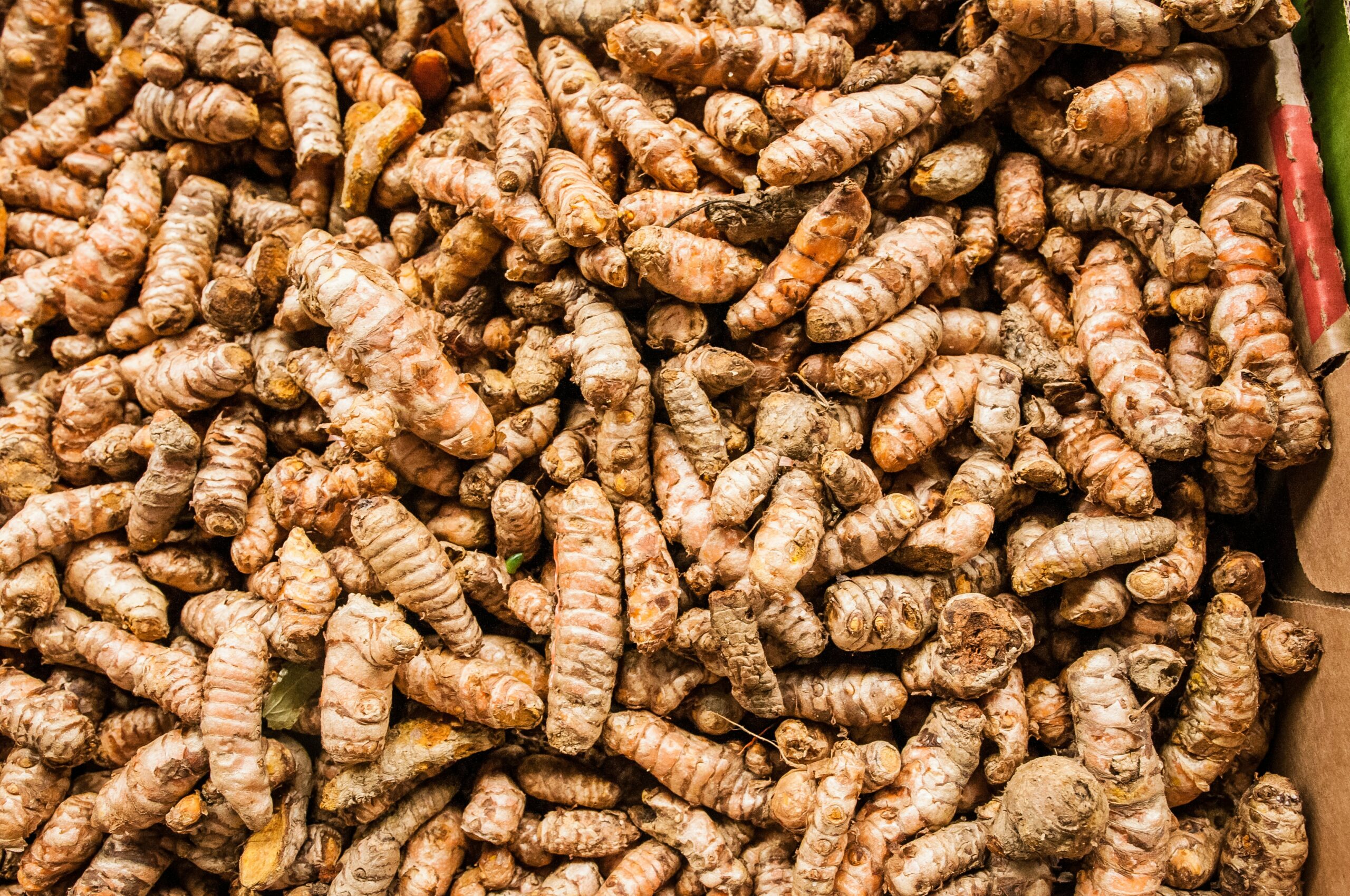
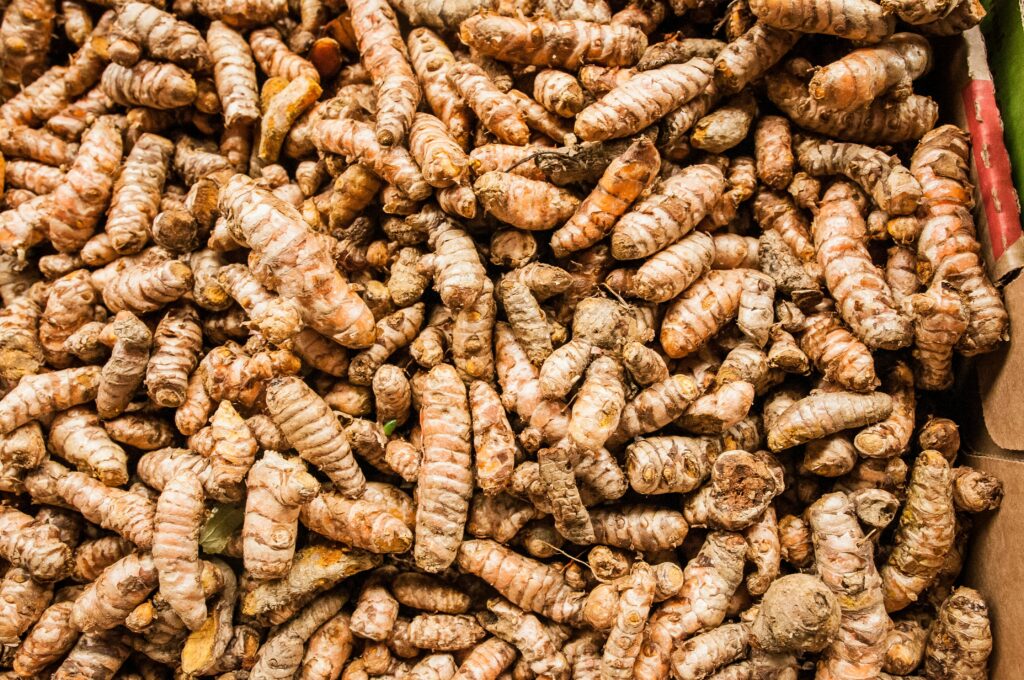
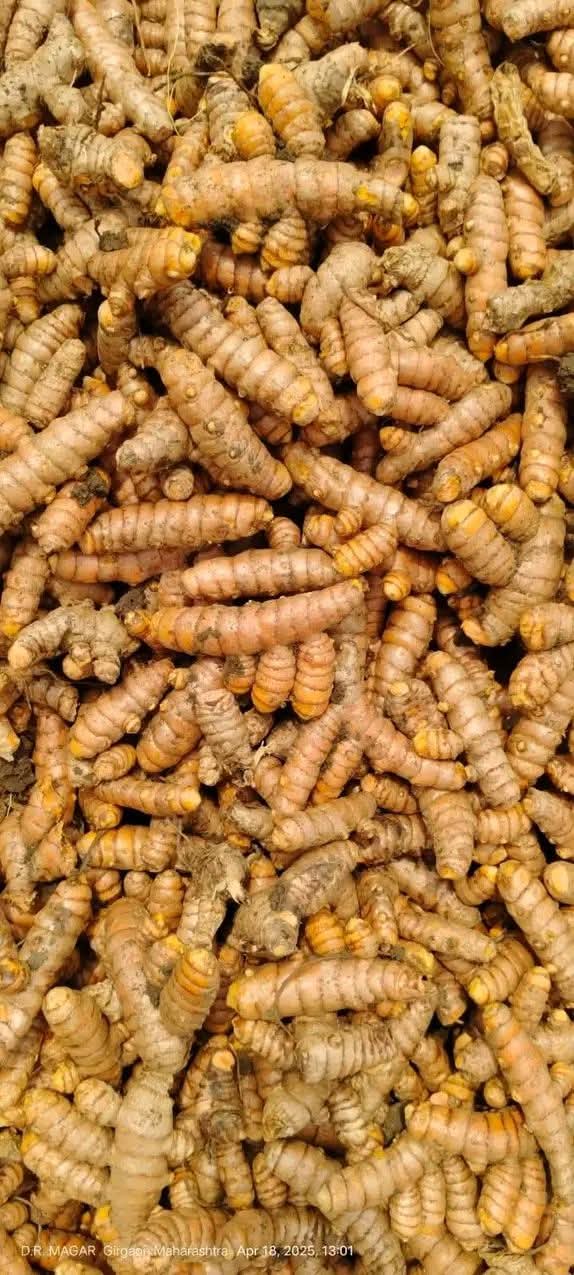
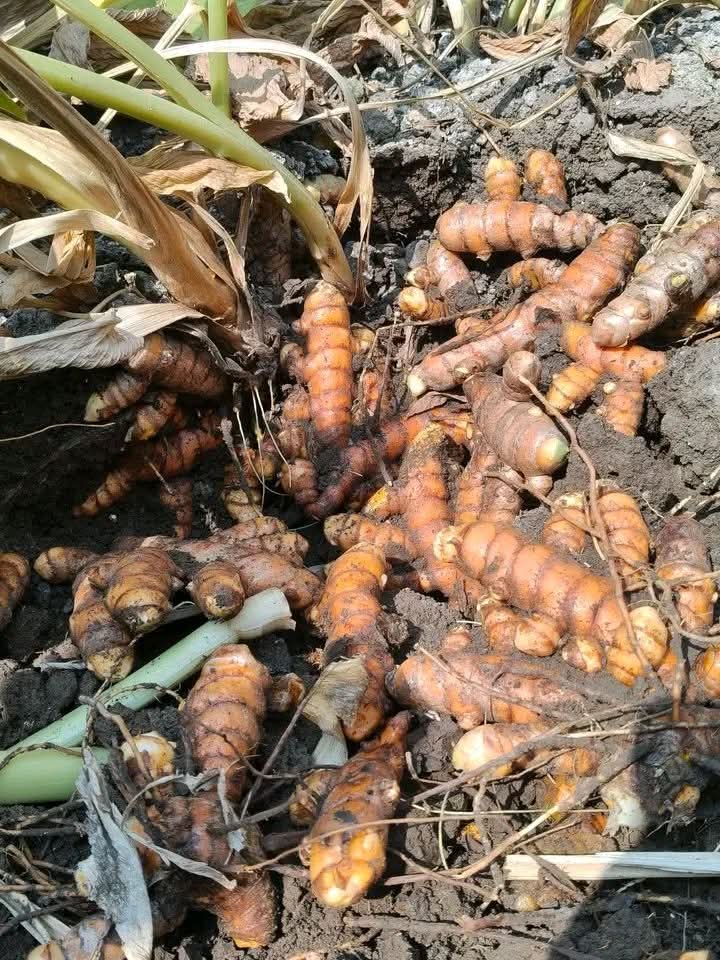
The turmeric rhizome consists of a central mother rhizome (called the “bulb” or “round”) and a series of lateral finger rhizomes that extend from the mother — the “fingers” or “digits” of commercial trade. It is these finger rhizomes that constitute the primary commercial product form in international turmeric trade. The internal flesh of the rhizome is a vivid orange-yellow — the colour that immediately identifies the curcuminoid compounds concentrated in the rhizome tissue.
Commercial Forms of Nigerian Turmeric
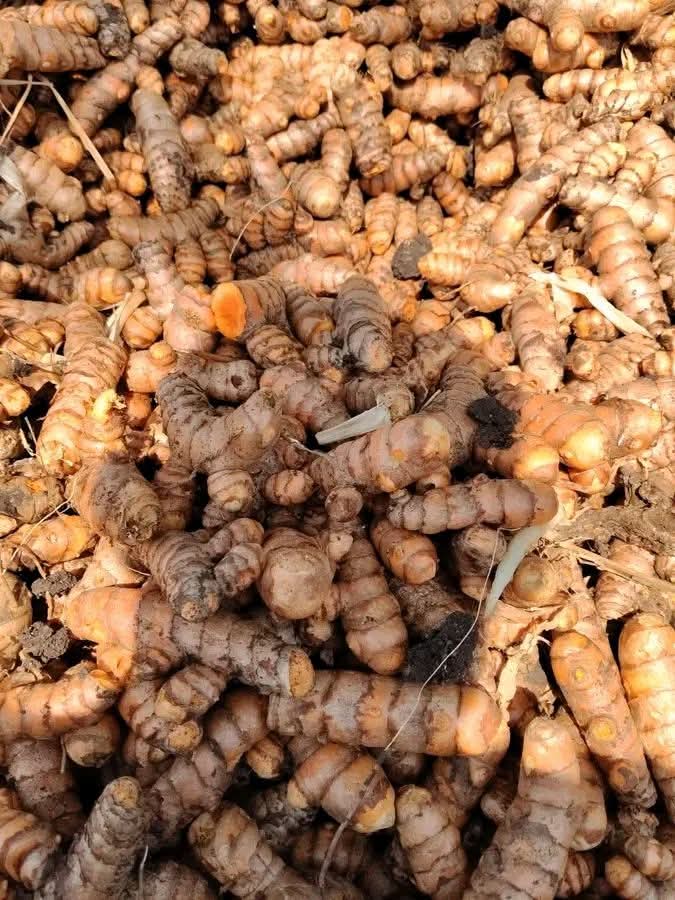
Dried Turmeric Fingers — the primary export form from Nigeria. Fresh turmeric rhizomes (harvested at approximately 80–90% moisture) are boiled or steamed briefly to gelatinise the starch and fix the colour, then dried — through sun-drying or mechanical drying — to reduce moisture to 8–12%. The resulting dried fingers are the raw material for grinding into turmeric powder and for curcumin extraction in pharmaceutical and nutraceutical processing. Dried turmeric fingers from Nigeria are the product form most actively sourced by industrial buyers.
Turmeric Powder — produced by grinding dried turmeric fingers to a defined particle size. Turmeric powder is the consumer-facing product form used directly in food manufacturing, spice blending, curry powder formulation, and retail packaging. Some Nigerian processors are producing turmeric powder for export — a value-added step that commands higher per-kilogram pricing than dried fingers. Paradise MultiTrade handles both forms on buyer specification.
Fresh Turmeric — available during the October–January harvest season for buyers in regional markets or those with cold chain logistics capability for perishable botanical imports.
Curcumin — The Compound That Defines Commercial Value
Curcumin — or more precisely, the three curcuminoid compounds collectively called curcumin (curcumin I, demethoxycurcumin, and bisdemethoxycurcumin) — is the bioactive fraction of dried turmeric that determines its pharmaceutical, nutraceutical, and functional food value. Curcumin content is expressed as a percentage of dry weight and is the single most important quality parameter for pharmaceutical and nutraceutical buyers — directly analogous to oleoresin content in ginger or anthocyanin content in hibiscus.
Indian turmeric varieties vary significantly in curcumin content — from as low as 1.5% in some commercial varieties to as high as 5–7% in premium varieties like Alleppey Finger from Kerala. Nigerian turmeric from the Middle Belt highland growing zones has been assessed by buyers and laboratory analysis at 3–5% curcumin content — a commercially significant range that positions Nigerian material as a genuine alternative to premium Indian varieties for pharmaceutical extraction and nutraceutical standardisation applications.
Detailed curcuminoid chemistry and pharmacological properties are documented extensively through research accessible via NCBI and the American Botanical Council’s HerbalGram publications — both essential reference resources for pharmaceutical and nutraceutical buyers evaluating turmeric raw material sourcing decisions.
Benefits and Industrial Uses of Nigerian Turmeric
Pharmaceutical Industry — Curcumin as a Drug Candidate
No other spice has attracted the pharmaceutical industry’s attention with the intensity that turmeric has generated over the past two decades. Curcumin’s documented anti-inflammatory mechanism — inhibiting the NF-κB signalling pathway that regulates inflammatory gene expression — has made it the subject of clinical investigation for applications ranging from inflammatory bowel disease and rheumatoid arthritis management to Alzheimer’s disease prevention, cancer adjunct therapy, and metabolic syndrome treatment.
The World Health Organization’s monograph on Curcuma longa — part of WHO’s Selected Medicinal Plants monograph series — formally recognises turmeric’s traditional medicinal uses and the evidence base for several therapeutic applications, providing the international regulatory legitimacy that pharmaceutical procurement teams require when evaluating botanical raw materials for clinical product development.
Pharmaceutical companies and contract research organisations sourcing curcumin as an investigational ingredient or established active pharmaceutical ingredient (API) require dried turmeric with verified curcumin content, standardised extraction protocols, heavy metal compliance, and full origin documentation. Nigerian turmeric — with its documented 3–5% curcumin range — meets the raw material specification for pharmaceutical curcumin extraction when properly sourced and handled. Contact our export team to discuss pharmaceutical-grade sourcing requirements.
Nutraceutical and Dietary Supplement Industry
This is currently the highest-growth application sector for turmeric globally — and the one most directly driving international procurement of high-curcumin raw material. Curcumin supplement products — capsules, soft gels, tablets, and liquid formulations — are among the best-selling botanical supplements in the United States, Germany, the United Kingdom, Japan, and Australia. Market research data published by Grand View Research on the global turmeric market projects the global turmeric extract market to continue growing at a compound annual rate exceeding 9% through 2030 — a demand trajectory that is structurally supportive of Nigerian origin development as a complementary supply base to the dominant Indian origin.
The nutraceutical sector’s quality requirements for turmeric raw material centre on curcumin percentage (with most standardised extract products targeting 95% curcuminoid extract from raw material), microbial load, heavy metal content, and pesticide residue compliance. Buyers in this sector are sophisticated, analytically driven, and increasingly interested in supply chain diversification beyond the Indian origin concentration that characterises most of the current nutraceutical turmeric procurement market.
Food Industry — Colour, Flavour, and Clean-Label Positioning
Turmeric’s role in the global food industry is far broader than its association with curry. As a natural yellow-orange food colourant — registered as E100 under European food additive regulations and fully approved by the European Food Safety Authority (EFSA) — turmeric extract (curcumin) is used to colour mustard, salad dressings, butter, margarine, cheese, snack foods, breakfast cereals, beverages, confectionery, and dozens of other processed food categories across the EU, USA, and beyond.
The food industry’s accelerating shift away from synthetic artificial colours — driven by consumer demand for clean-label products and regulatory pressure particularly in European markets — has significantly expanded the commercial opportunity for natural turmeric-derived colourants. For food manufacturers seeking a documented-origin, natural yellow colourant with strong consumer recognition and a positive health association, turmeric occupies an almost uniquely favourable market position. Market trend analysis from Mintel’s global food and drink database consistently identifies turmeric as one of the most frequently cited “hero ingredients” in new natural food product launches globally.
Nigerian turmeric’s vivid colour — a function of its curcumin concentration — makes it well-suited to food colourant applications where colour intensity per unit of raw material directly affects ingredient economics.
Beverage Industry — The Golden Milk and Functional Drink Revolution
If any single consumer trend has done more than any other to accelerate turmeric’s transition from ethnic spice aisle to mainstream Western grocery, it is the golden milk phenomenon. Turmeric latte — warm milk blended with turmeric, black pepper, ginger, and other spices — went from an obscure Ayurvedic wellness practice to a mainstream café menu item and retail product category within the space of approximately three years between 2015 and 2018. It has not retreated. Mintel trend data and analysis from Innova Market Insights both confirm turmeric’s sustained presence as a top-ranked functional ingredient in new beverage product launches globally.
Beyond golden milk, turmeric now appears in cold-pressed wellness shots, functional sparkling waters, kombucha blends, plant-based protein drinks, and bottled health tonics sold through premium grocery retail across Europe, North America, Australia, and increasingly Asia. Beverage manufacturers sourcing turmeric as an ingredient need consistent colour intensity, standardised curcumin content for label claims, and reliable origin documentation — all of which Nigerian turmeric from Paradise MultiTrade’s supply chain can deliver.
Cosmetics and Personal Care Industry
Turmeric’s skin benefits — documented in Ayurvedic tradition and increasingly validated by cosmetic science — have made it a highly sought-after active ingredient in premium skincare formulation. Curcumin’s anti-inflammatory and antioxidant properties make it relevant in anti-acne formulations, skin-brightening serums, anti-aging creams, and products targeting hyperpigmentation and uneven skin tone.
The South Asian tradition of applying turmeric paste to skin before wedding ceremonies — a practice that has persisted for millennia across Indian, Pakistani, and Sri Lankan cultures — has been absorbed into mainstream cosmetics marketing as evidence of turmeric’s skin benefit credentials. European and American cosmetics formulators sourcing turmeric extract or raw turmeric for cosmetic applications can access detailed ingredient safety and efficacy documentation through the Cosmetic Ingredient Review (CIR) database and INCI (International Nomenclature of Cosmetic Ingredients) reference systems.
Textile Industry — Natural Dyeing Applications
Turmeric has been used as a natural textile dye for thousands of years — producing yellow, gold, and orange tones on natural fibres including cotton, silk, wool, and linen. The global sustainable fashion movement’s growing interest in natural, plant-derived textile dyes has created a modest but real commercial opportunity for high-quality dried turmeric and turmeric extract in the textile sector — particularly among artisan textile producers and sustainable fashion brands communicating natural dyeing practices as part of their brand identity. Research on turmeric’s dyeing properties and applications is available through CABI’s industrial crops database.
Animal Feed and Veterinary Applications
Curcumin’s anti-inflammatory and antioxidant properties are not limited to human health applications. The animal nutrition and veterinary sector has developed significant interest in curcumin as a natural feed additive for poultry, swine, and aquaculture — with documented benefits in growth performance, immune function, and reduction of inflammatory pathology in production animals. Research published through NCBI’s veterinary science publications documents curcumin’s efficacy as a natural feed supplement across multiple livestock species — a growing application that provides an additional commercial demand stream for bulk dried turmeric from producing origins including Nigeria.
Why Buy Turmeric from Nigeria?
The Curcumin Argument — Chemistry Over Convention
The dominant logic that drives turmeric procurement toward India — specifically toward the high-curcumin varieties grown in Erode (Tamil Nadu) and Alleppey (Kerala) — is historically grounded but increasingly challengeable as Nigerian turmeric’s curcumin profile becomes better documented and more widely known among international buyers. Nigerian Middle Belt turmeric, grown at altitudes between 600 and 1,200 metres in the same highland zone that produces Nigeria’s premium ginger, has been assessed at curcumin concentrations of 3–5% by dry weight — a range that overlaps with India’s premium variety performance and significantly exceeds the curcumin content of lower-altitude Indian commercial varieties.
For pharmaceutical and nutraceutical buyers whose procurement decisions are driven by cost-per-unit-of-curcumin rather than origin convention, this is a commercially actionable quality finding. Sourcing high-curcumin Nigerian turmeric at competitive West African origin pricing and shipping it to European or Asian extraction facilities may deliver a lower cost-per-gram-of-curcumin than sourcing equivalent Indian material — a cost equation that experienced botanical ingredient procurement managers are increasingly motivated to evaluate. Curcumin analysis and standardisation methodology referenced in AOAC International analytical standards provides the testing framework buyers can use to verify curcumin content on specific lots.
Climate and Agronomic Compatibility With Premium Spice Production
Nigeria’s turmeric growing regions in Kaduna, Nassarawa, and Taraba states share agronomic characteristics with India’s best turmeric-producing zones — specifically the combination of altitude, well-drained loamy soils, and a clearly seasonal rainfall pattern that delivers adequate moisture during rhizome growth while providing dry conditions during the final maturation and harvest phase. The close botanical relationship between turmeric and ginger — both Zingiberaceae family members — means that farming communities already skilled in ginger cultivation can produce quality turmeric using compatible agronomic knowledge. This agricultural skill base gives Nigerian Middle Belt turmeric production a quality floor that origins relying on less experienced turmeric farming communities cannot guarantee.
Supply Chain Diversification in a Single-Origin-Dominated Market
India currently produces approximately 75–80% of the world’s turmeric — a market concentration that creates structural supply risk for buyers operating without alternative origin positions. When Indian turmeric production is affected by drought, excess rainfall, or price inflation — as it has been multiple times in recent years — international buyers without diversified origin supply chains face significant disruption. Market supply and pricing volatility analysis for turmeric is tracked by the Spices Board of India, and the volatility documented in that data makes the strategic case for African origin diversification compelling.
Nigerian turmeric — available through Paradise MultiTrade with the same phytosanitary documentation, origin certification, and quality management that our ginger and sesame buyers rely on — is the natural West African diversification position for buyers currently running India-concentrated turmeric supply chains.
Competitive Origin Pricing
Nigerian turmeric can be sourced at competitive FOB Lagos pricing relative to Indian origin material, particularly when factoring in the freight differential for buyers in Europe and North America where Lagos is comparably or more favourably positioned than Indian west coast ports for certain routing combinations. Contact our export team for a current pricing comparison against your existing supply chain landed cost.
Full Export Documentation from a Licensed Exporter
Every turmeric shipment processed through Paradise MultiTrade is supported by phytosanitary certification from the Nigerian Agricultural Quarantine Service (NAQS), NEPC export documentation, certificate of origin, commercial invoice, packing list, and bill of lading. EU-bound shipments comply with Regulation (EU) 2017/625 on official controls for botanical and food imports. For pharmaceutical and nutraceutical buyers requiring heavy metal testing, pesticide residue screening, and microbial analysis, we coordinate third-party laboratory testing through accredited facilities. Our NEPC Export Licence No. 0042385 and CAC Registration No. RC-9284647 are current and verifiable through NEPC.
Nigeria’s Turmeric Export Strength and Global Market Demand
The Global Demand Picture
The global turmeric market is one of the agricultural commodity sector’s most compelling growth stories of the past decade. Market sizing and demand trajectory analysis published by Grand View Research values the global turmeric market at several billion USD annually, and projects sustained double-digit growth through the remainder of this decade — driven simultaneously by pharmaceutical sector curcumin demand, nutraceutical supplement consumption growth, functional food and beverage industry adoption, and natural cosmetics ingredient sourcing. Few agricultural commodities offer this breadth of independent, simultaneously growing demand streams.
Import and trade flow data accessible through ITC Trade Map and commodity market intelligence available through platforms including Tridge confirm the major destination markets for internationally traded turmeric, with the United States, Germany, Japan, the United Arab Emirates, and the United Kingdom representing the highest-value import destinations for dried turmeric and turmeric extract.
The European Spice Association (ESA) — representing the European spice processing and trading industry — publishes quality standards and market guidance relevant to turmeric import and processing within the EU market. These standards inform the specification framework that European buyers apply when evaluating turmeric from non-traditional origins, including Nigeria.
Who Is Buying Nigerian Turmeric?
European Herbal and Spice Processors — German, Dutch, and UK companies processing dried turmeric fingers into powder, extract, and standardised ingredient forms for food manufacturing and supplement production.
Pharmaceutical Ingredient Companies — procurement teams sourcing high-curcumin dried turmeric as a raw material for curcumin extraction and standardised pharmaceutical-grade curcuminoid production.
Nutraceutical Supplement Manufacturers — companies producing curcumin capsules, turmeric latte blends, golden milk powder mixes, and turmeric-containing wellness supplement product lines.
Natural Food Colourant Producers — ingredient companies producing E100 turmeric extract as a natural alternative to synthetic yellow food dyes for the European and North American food manufacturing market.
Ethnic Food Importers — sourcing Nigerian turmeric for diaspora community retail markets in the UK, USA, Canada, and continental Europe, where West African and South Asian communities consume turmeric as a daily cooking spice.
Cosmetic Ingredient Suppliers — sourcing turmeric extract or raw dried turmeric for incorporation into premium skincare formulations targeting inflammation, brightening, and anti-aging applications.
Why Choose Paradise MultiTrade International Limited?
Middle Belt Highland Origin. Our turmeric is sourced specifically from the highland growing zones of Kaduna, Nassarawa, and Taraba states — where altitude and seasonal climate conditions produce the curcumin concentration that differentiates Nigerian turmeric from lower-altitude material. We do not aggregate from mixed regional sources.
Ginger-Adjacent Supply Chain Infrastructure. Because our Nigerian ginger supply chain operates through the same Middle Belt farming networks and regional aggregators as our turmeric sourcing, we benefit from established relationships, logistics infrastructure, and quality monitoring systems already calibrated for premium spice rhizome export — an advantage that a turmeric-only supplier starting from scratch cannot replicate.
Analytical Support for Curcumin Verification. We coordinate curcumin content analysis through accredited laboratories for buyers requiring documented percentage values for pharmaceutical, nutraceutical, or food ingredient specification compliance. Laboratory analysis references AOAC International methods for curcuminoid determination — the internationally accepted analytical standard. Contact our team to discuss testing arrangements.
Both Fingers and Powder Available. We supply dried turmeric fingers as the primary export form and can source turmeric powder from Nigerian processing operations for buyers who need the value-added form. Specifications, pricing, and lead times for powder differ from fingers and are discussed at the quotation stage.
Multi-Commodity Sourcing Convenience. Turmeric buyers frequently have parallel requirements for dry split ginger, fresh ginger, hibiscus flower, sesame seeds, bitter kola, kola nut, or cashew products. Paradise MultiTrade exports all of these alongside turmeric. Explore our full range of Nigerian export commodities and consolidate your West African agricultural sourcing through one verified, licensed partner.
Product Specifications
| Specification | Details |
|---|---|
| Product | Dried Turmeric (Curcuma longa) — Fingers and Powder |
| Origin | Nigeria (Kaduna, Nassarawa, Taraba, Benue, Cross River States) |
| Forms Available | Dried turmeric fingers (whole/split); turmeric powder |
| Curcumin Content | 3–5% by dry weight (lot-specific analysis available) |
| Moisture Content | 8–12% (fingers); 8–10% (powder) |
| Purity | 95%+ (free from foreign matter, mould, and extraneous material) |
| Colour | Deep orange-yellow (fingers); bright yellow-orange (powder) |
| Volatile Oil Content | 3–7% (varies by growing region and processing) |
| Finger Size | Large (5–10cm), Medium (3–5cm), Mixed |
| Packaging Options | 25kg, 50kg polypropylene bags (fingers); 25kg multi-wall paper bags (powder); custom packaging available |
| Supply Capacity | 20–300+ MT per shipment (subject to seasonal availability) |
| MOQ | 5 Metric Tonnes |
| Shelf Life | 18–24 months properly stored (cool, dark, dry conditions) |
| Export Documentation | Phytosanitary Certificate (NAQS), Certificate of Origin, NEPC Export Licence, Laboratory Analysis Certificate (on request), Commercial Invoice, Packing List, Bill of Lading |
| Payment Terms | T/T, Letter of Credit (LC at sight), Escrow |
| Loading Port | Lagos (Apapa / Tin Can Island Port), Nigeria |
| Incoterms Available | EXW, FOB Lagos, CNF, CIF |
Packaging and Export Process
Harvesting. Nigerian turmeric is harvested between October and January — when the aerial parts of the plant have died back, signalling full rhizome maturity. Harvesting is done by hand using hoes or mechanical diggers, taking care to avoid rhizome damage that creates entry points for mould during post-harvest handling.
Washing and Boiling. Freshly harvested rhizomes are washed to remove soil and then boiled or steamed for 45–60 minutes — a critical step that gelatinises the starch within the rhizome tissue, kills surface microorganisms, fixes the yellow curcumin pigment uniformly throughout the rhizome flesh, and reduces drying time by opening the cell structure. This processing step, combined with immediate post-boiling drying, is what gives properly processed dried turmeric its characteristic uniform orange-yellow colour throughout the cross-section.
Drying. Boiled rhizomes are spread on clean drying surfaces and sun-dried under the dry harmattan conditions of the Nigerian Middle Belt post-harvest period — or mechanically dried using hot-air drying tunnels where production scale requires. Drying continues until moisture reaches 8–12% — verified by moisture meter testing. Proper drying is the most critical post-harvest quality factor: under-dried turmeric develops mould rapidly, while over-dried material becomes brittle and fragments during handling.
Polishing and Sorting. Dried turmeric fingers are polished in rotating drum polishers to remove surface dust and improve appearance, then sorted by size and visual quality. Misshapen, mouldy, or undersized pieces are removed. Large and medium finger grades are packed separately from mixed material.
Grinding (for powder). Where turmeric powder is specified, sorted dried fingers are milled through industrial pin mills or hammer mills to the desired particle size fineness, then sieved for uniformity and packed in moisture-barrier multi-wall paper bags.
Packaging and Loading. Standard export packaging for dried fingers is 25kg or 50kg polypropylene woven bags. All bags are clearly labelled with product details, lot number, moisture content, curcumin content range, net weight, and export documentation reference. Pre-export phytosanitary inspection by NAQS is conducted before container sealing. Lead time from order confirmation to container loading typically runs 10–21 days. Contact us to plan your shipment schedule around the October–January peak harvest availability window.
Frequently Asked Questions
What curcumin content can I expect from Nigerian turmeric?
Nigerian turmeric from our primary sourcing zones in Kaduna, Nassarawa, and Taraba states has been assessed at 3–5% curcumin content by dry weight — a commercially significant range comparable to premium Indian varieties and well above lower-altitude commercial Indian material. For buyers requiring documented curcumin content for pharmaceutical, nutraceutical, or food ingredient specification compliance, we arrange third-party laboratory analysis using AOAC International validated methods. Contact us to discuss testing arrangements for your specific application.
How does Nigerian turmeric compare to Indian origin material?
India produces approximately 75–80% of the world’s turmeric and has been the global benchmark origin for decades. Nigerian Middle Belt turmeric from highland growing zones is agronomically compatible with India’s premium producing regions — delivering comparable curcumin content in the 3–5% range, strong colour intensity, and competitive volatile oil content. The primary advantages of Nigerian origin for international buyers are supply chain diversification away from single-origin dependence, competitive pricing, and the emerging opportunity to establish direct-from-Africa sourcing relationships before Nigerian turmeric’s international profile becomes as widely established as Nigerian ginger’s. The Spices Board of India publishes comparative quality data that buyers can use to benchmark Indian material — we encourage buyers to request equivalent analysis on Nigerian lots for direct comparison.
Is turmeric powder available or only dried fingers?
Both forms are available from Paradise MultiTrade. Dried turmeric fingers are the primary and most widely available export form. Turmeric powder — ground from dried fingers at Nigerian processing facilities — is available on request, with specifications, pricing, and lead times discussed at the quotation stage. Contact our team to specify your required form.
What heavy metal and pesticide residue testing is available?
For pharmaceutical and nutraceutical buyers requiring compliance documentation beyond standard phytosanitary certification, we coordinate heavy metal screening (lead, cadmium, arsenic, mercury), pesticide residue analysis, and microbiological testing through accredited laboratories. Test results are provided as part of the shipment documentation package. EU buyers should reference EFSA maximum limits for contaminants in spices — we prepare documentation in compliance with applicable EU maximum residue and contaminant limits. Contact us to discuss your specific testing requirements.
What is the Nigerian turmeric harvest season?
Nigeria’s turmeric harvest runs from October through January, with peak availability of freshly processed dried material between November and February. Export stock from the season is typically available through approximately June–July of the following year. Buyers planning large-volume purchases should initiate discussions before the harvest period to secure allocation and discuss forward pricing. Contact us to plan your procurement cycle around the Nigerian harvest calendar.
How should dried turmeric be stored after delivery?
Store in a cool, dark, dry warehouse with ambient temperature below 25°C and relative humidity below 65%. Avoid direct sunlight — curcumin pigments are photosensitive and will fade under prolonged UV exposure. Store bags on pallets away from floor contact to allow air circulation. Under proper conditions, dried Nigerian turmeric fingers maintain curcumin content and colour intensity for 18–24 months from the processing date.
What transit times should I plan for from Nigeria?
Europe (Rotterdam, Hamburg, Felixstowe) — approximately 14–20 days from Lagos. UAE (Jebel Ali) — 10–14 days. USA (East Coast) — 18–25 days. India (Nhava Sheva, Mundra) — 10–15 days. Japan (Yokohama) — 25–32 days. China (Shanghai) — 22–28 days.
Ready to Source Premium High-Curcumin Turmeric from Nigeria?
If you are a pharmaceutical ingredient buyer, nutraceutical manufacturer, food processor, natural colourant producer, beverage ingredient sourcer, or cosmetics formulator actively searching for a reliable turmeric exporter in Nigeria with documented curcumin credentials, full regulatory compliance, and the supply chain transparency that serious industrial procurement requires — Paradise MultiTrade International Limited is the partner your sourcing programme needs.
We supply high-curcumin Nigerian turmeric fingers and powder, sourced from the Middle Belt highland growing zones that produce Nigeria’s most commercially competitive spice rhizome material — processed, graded, analytically tested on request, and exported with full documentation to buyers in every major regulated market.
Request a Quotation — specify your required form (fingers or powder), volume, curcumin content requirement, destination port, and preferred incoterms. We respond with a detailed, competitive quote within 48 hours.
Contact Our Export Team — speak directly with our export coordinators about curcumin analysis, sample availability, powder specification, heavy metal and pesticide testing, and long-term contract supply arrangements.
Explore Our Full Product Range — alongside turmeric, Paradise MultiTrade exports dry split ginger, fresh ginger, hibiscus flower, sesame seeds, bitter kola, kola nut, cashew nut kernel, and raw cashew nuts. One licensed Nigerian exporter. One consolidated sourcing relationship. Consistent quality and documentation across every commodity.
buy turmeric from Nigeria, Nigerian turmeric supplier, high curcumin turmeric Nigeria, Curcuma longa bulk export Africa, dried turmeric rhizome Nigeria, turmeric powder exporter Nigeria, Nigerian turmeric for pharmaceutical industry, turmeric finger wholesale Nigeria
Paradise MultiTrade International Limited | NEPC Export Licence No. 0042385 | CAC No. RC-9284647 | Lagos, Nigeria | www.paradisemultitrade.com
Reviews
There are no reviews yet.