
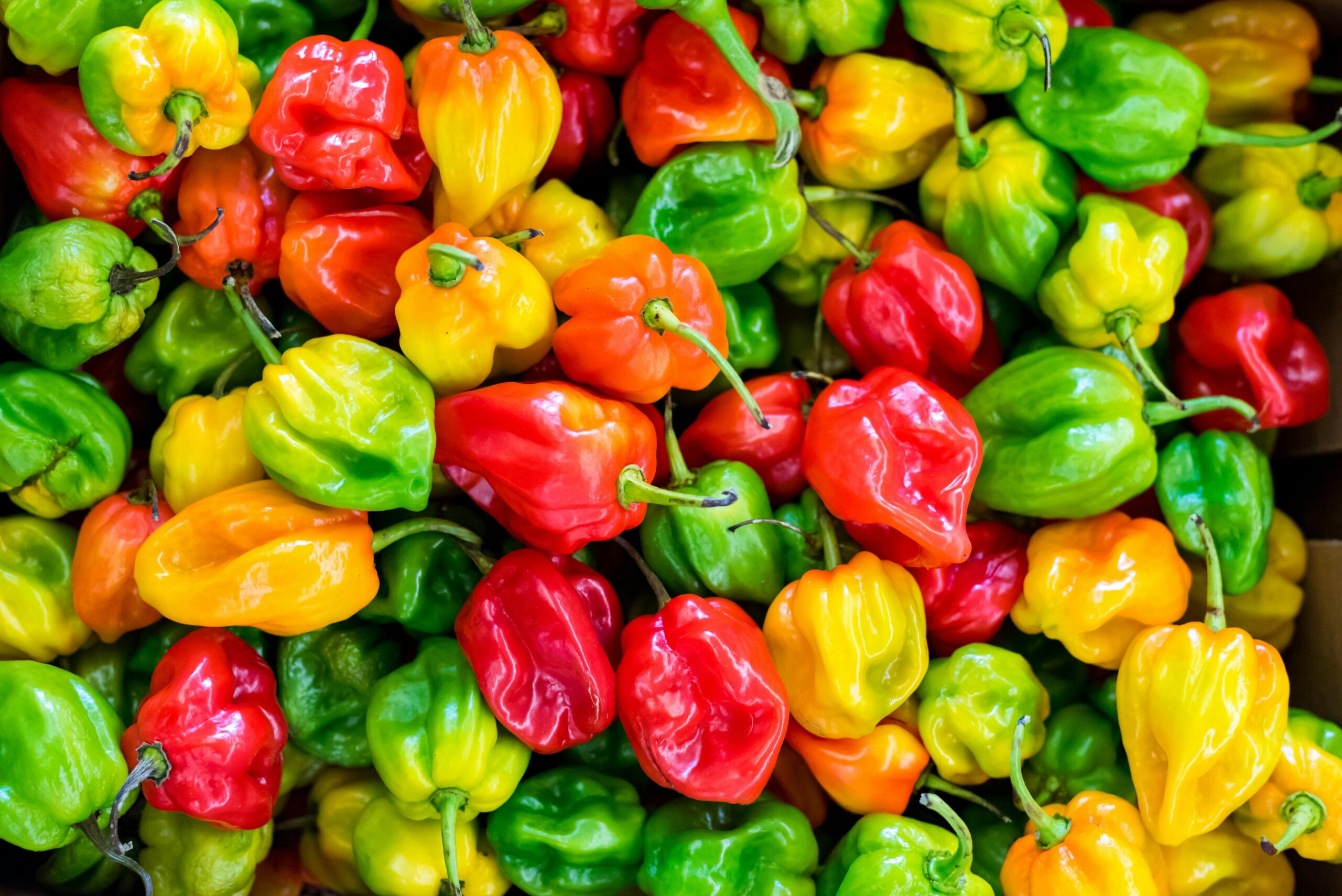

Nigerian Habanero Pepper: The Capsicum That Has Gone From West African Subsistence Crop to Pan-European Food Industry Priority — and Why the UK, Germany, and Italy Are Now Among the Most Commercially Urgent Markets for Documented-Quality Nigerian Supply
Habanero Pepper Exporter Nigeria — Fresh, Dried, Flaked, and Powdered Capsicum Chinense, Direct Farm Sourcing From Nigeria’s Primary Habanero Belt, Bulk Supply to European Food Manufacturers, Hot Sauce Producers, Spice Processors, Diaspora Food Importers, and Global Wholesale Buyers
Habanero pepper exporter Nigeria is a search phrase whose commercial frequency is accelerating with a speed that reflects a convergence of market forces so aligned and so simultaneous that experienced agricultural commodity traders describe it as a once-in-a-decade commercial inflection point for a single crop. Three countries — the United Kingdom, Germany, and Italy — are simultaneously experiencing habanero pepper demand growth driven by three completely different cultural dynamics, each independently sufficient to sustain significant import volume growth, but whose convergence in the same market window creates a demand trajectory that Nigerian production geography, climatic advantage, and Paradise MultiTrade’s established supply infrastructure are uniquely positioned to address.
In the United Kingdom, habanero and Scotch bonnet pepper demand is surging across two distinct and simultaneous channels: the Nigerian and West African diaspora community — now approaching 600,000 British-Nigerian citizens and several million broader West African heritage consumers — for whom Scotch bonnet (Capsicum chinense) is not a condiment but a dietary non-negotiable whose absence from a pot of soup renders the dish incomplete regardless of every other ingredient’s quality; and the mainstream British food culture’s extraordinary embrace of heat, spice, and what food media has branded the “hot food revolution” — the wave of hot sauce consumption, chilli sauce retail growth, and spicy food restaurant culture that has made the UK one of Europe’s most commercially dynamic markets for extreme heat pepper products across demographics and backgrounds simultaneously.
In Germany, the demand driver is different and equally powerful: Germany operates approximately 160,000 registered Döner kebab outlets — the highest density of Turkish-style spiced meat food service operations of any country on earth — every one of which uses significant quantities of chilli pepper in their marinades, sauces, and garnish preparations. The German food service sector’s growing appetite for authentic, high-capsaicin peppers that deliver genuine heat rather than merely chilli flavour — combined with the German chilli enthusiast community’s documented growth, tracked through the annual Cologne Chilli Festival (Köln Chilli Fiesta) and Hanover Hot Sauce Festival — creates a food manufacturing and food service procurement need for premium-grade habanero that Nigeria’s production geography is perfectly placed to supply.
In Italy, the dynamic is the most culturally surprising and commercially significant of the three: Italian chilli culture — centred historically on the Calabrian peperoncino traditions of the deep south and institutionalised in products including ‘nduja spiced salami, Calabrian chilli paste, and peperoncino-infused olive oil — has been experiencing a documented shift toward higher-heat pepper varieties as Italian consumers, influenced by global food culture, food tourism, and the growing north African and West African community in Italian cities, increasingly seek habanero and habanero-adjacent Capsicum chinense peppers for premium hot sauce production, artisan spiced product development, and the growing Italian craft hot sauce market whose commercial growth is tracked by Agrifood Italy and Italian specialty food trade publications.
Capsicum chinense — the species that includes habanero, Scotch bonnet, and dozens of related superhot and ultra-hot pepper cultivars — grows in Nigeria across a remarkable range of producing zones, from the highland cooler climates of Plateau State whose temperature variation concentrates capsaicinoid compounds at levels even higher than tropical lowland production, to the well-irrigated fadama zones of Kano and Kaduna that produce high-volume commercial crop for the processed food industry. At Paradise MultiTrade International Limited, habanero and Scotch bonnet pepper is one of our most commercially timely export categories — sourced from established farming communities across Plateau, Nassarawa, Benue, Cross River, Kano, Kaduna, and Kogi states, processed into fresh whole pods, dried whole pods, flakes, and powder appropriate to every buyer application, and exported to the European food industry, the global hot sauce market, the spice and seasoning industry, and the diaspora food retail sector with full food safety, phytosanitary, and analytical documentation.
To discuss sourcing immediately, request a quotation here, and our export team will respond within 48 hours.
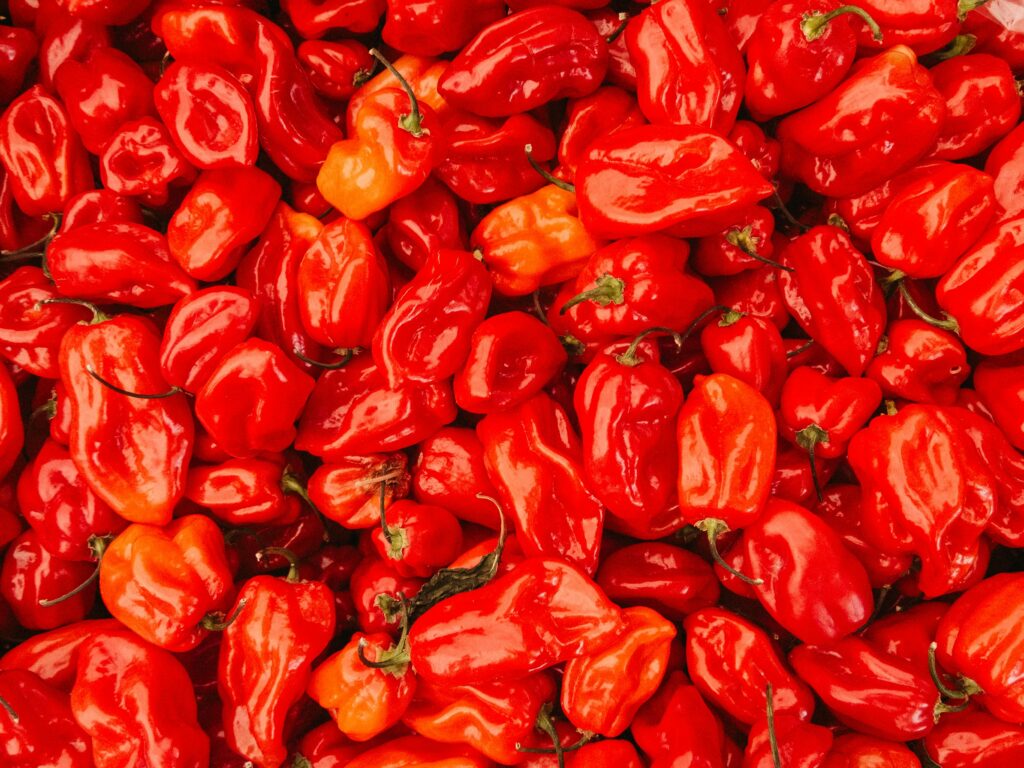
History and Origin of Habanero Pepper — The Capsicum That Came From the Amazon, Conquered the Caribbean, and Made West Africa Its Second Home
The World’s Hottest Commercial Pepper — A Biological Arms Race Between Plants and Insects
Capsicum chinense — the botanical species encompassing habanero, Scotch bonnet, datil, fatalii, and dozens of related cultivars — is the culmination of an evolutionary arms race that was never intended for human consumption. Chilli plants produce capsaicinoids — the compounds responsible for the burning sensation that humans experience as “heat” — as a chemical defence against mammalian predators, specifically to discourage animals from eating and destroying their seeds. Birds, who are the intended seed dispersers, lack the capsaicin-sensitive TRPV1 pain receptors that mammalian mouths possess and experience no pain from consuming even the hottest peppers. The higher the capsaicinoid concentration, the more effectively the plant deters seed-destroying mammals while attracting seed-dispersing birds.
Capsicum chinense has taken this evolutionary strategy further than any other commercially cultivated capsicum species — producing capsaicinoid concentrations in the range of 100,000–350,000 Scoville Heat Units (SHU) for habanero and Scotch bonnet varieties, compared to approximately 2,500–8,000 SHU for conventional jalapeño and 30,000–50,000 SHU for cayenne pepper. This extraordinary heat intensity — which places habanero and Scotch bonnet at the superhot end of the commercially traded pepper spectrum — is the primary commercial value driver for every application from hot sauce to pharmaceutical capsaicin extraction to cosmetic topical heat therapy products.
Botanical evidence places the original domestication of Capsicum chinense in the Amazon basin of South America, with genetic research accessible through the USDA’s Agricultural Research Service genetic resources programme documenting the wild Capsicum chinense ancestor populations that grow in Bolivia and Brazil. The species’ Caribbean domestication — producing the Scotch bonnet varieties whose cultural significance in Caribbean cuisine is as profound as Scotch bonnet’s significance in West African cooking — created the specific cultivar types that were subsequently carried to West Africa through both the Portuguese-mediated Atlantic slave trade commodity exchanges of the 16th–18th centuries and through the later colonial-era botanical distribution that systematically moved useful crop varieties across tropical territories.
The adoption of Capsicum chinense in Nigeria — where it arrived alongside the red finger pepper (Capsicum frutescens) that Nigerians call tatashe, rodo, or sombo depending on variety — was immediate and total. The Scotch bonnet’s specific combination of intense heat, fruity tropical aroma, and the complex flavour profile that makes it simultaneously hotter and more aromatically interesting than cayenne or jalapeño matched the West African palate’s appreciation for bold, complex flavour in a way that simpler hot pepper varieties never quite managed. Within generations of introduction, Capsicum chinense had become not merely a condiment in Nigerian cooking but a dietary foundation — used daily in stews, soups, sauces, and condiments across all 36 Nigerian states and across all major ethnic and regional food traditions.
Nigeria’s Habanero and Scotch Bonnet Production — The Commercial Geography of Extreme Heat
Nigeria’s Capsicum chinense production is distributed across a geographic range that reflects the species’ adaptability across multiple ecological zones — from the humid lowland tropics of Cross River State through the Guinea savanna of Benue and Nassarawa through the highland conditions of Plateau State and the fadama irrigated zones of Kano and Kaduna:
Plateau State — the most commercially premium habanero production zone, whose highland altitude (1,200–1,800 metres), cool temperatures (15–28°C), and the sharp diurnal temperature variation that has appeared as a quality driver in article after article in this series — concentrates capsaicinoid compounds in maturing pepper fruit at levels measurably higher than warmer lowland production. Plateau State habanero — whose premium heat intensity is recognised by domestic buyers in Nigerian markets — represents the highest-capsaicin-content origin for pharmaceutical and premium food industry applications, where capsaicin yield per kilogram of dried pepper is the primary quality economic driver.
Nassarawa and Benue states — the Middle Belt secondary production zones, contributing significant volumes of both habanero and Scotch bonnet varieties from the forest-savanna transition zone, whose warm, humid conditions and reliable rainfall produce high yields of commercial-quality peppers for the domestic and export processed food market.
Cross River State — the southeastern producing zone, where the humid tropical conditions of the Niger Delta and Cross River basin support habanero production in farming communities whose pepper cultivation is deeply integrated into the agricultural systems of Efik, Ibibio, and Ogoja communities.
Kano and Kaduna states — the northern commercial production zones where fadama irrigation allows dry-season habanero production that fills the seasonal gap between rain-fed crop cycles — making Nigerian habanero supply available to export buyers across a wider portion of the calendar year than single-season production origins can manage.
According to FAO production statistics for Capsicum species, Nigeria is sub-Saharan Africa’s most significant pepper-producing nation by total output, with habanero and Scotch bonnet varieties constituting a commercially significant and growing fraction of the country’s total pepper production. The Nigerian Export Promotion Council (NEPC) has formally recognised chilli pepper and dried pepper products as priority non-oil export commodities — with active market linkage connecting Nigerian pepper farmers and processors with international buyers in European food manufacturing, the global hot sauce industry, and the international spice trade.
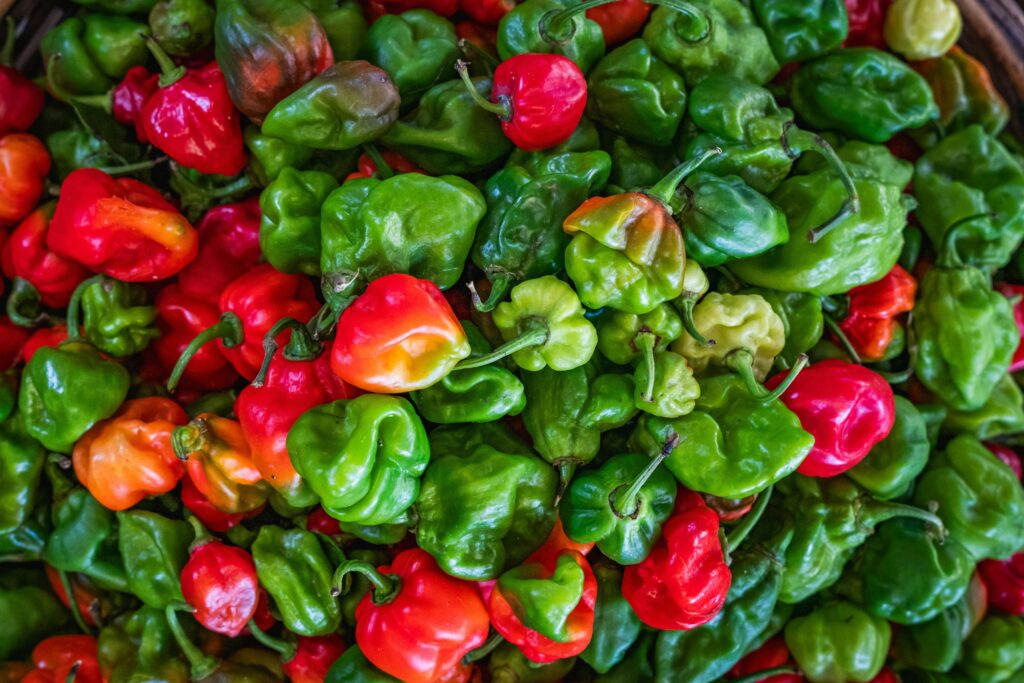
What Is Nigerian Habanero Pepper? Botanical Profile, Heat Science, and the Commercial Distinction That Determines Value
Capsicum Chinense — Botanical Identity and the Scotch Bonnet Subspecies Question
Capsicum chinense is a perennial shrub species of the Solanaceae (nightshade) family — the same botanical family as tomato, potato, and aubergine — whose misleading species name (chinense — “of China”) reflects a taxonomic error made by the 18th-century Dutch botanist Nikolaus von Jacquin, who incorrectly attributed the species to a Chinese origin. The species produces the characteristic ribbed, lantern-shaped, or rounded, deeply creased fruits whose visual identity is as distinctive as their aromatic and heat profile.
Within Capsicum chinense, the commercial distinction between habanero and Scotch bonnet is primarily a matter of fruit morphology and regional naming convention rather than a definitive botanical subspecies boundary:
Habanero varieties — typically more elongated, tapered, and smooth-skinned, with a lantern or teardrop shape — are the Capsicum chinense type most commonly found in Mexican, Central American, and global hot sauce commerce. The most commercially famous is the Habanero de Yucatan — a deep orange at maturity variety whose 100,000–350,000 SHU heat intensity and distinctive fruity, apricot-citrus aromatic profile have made it the benchmark against which other superhot peppers are measured.
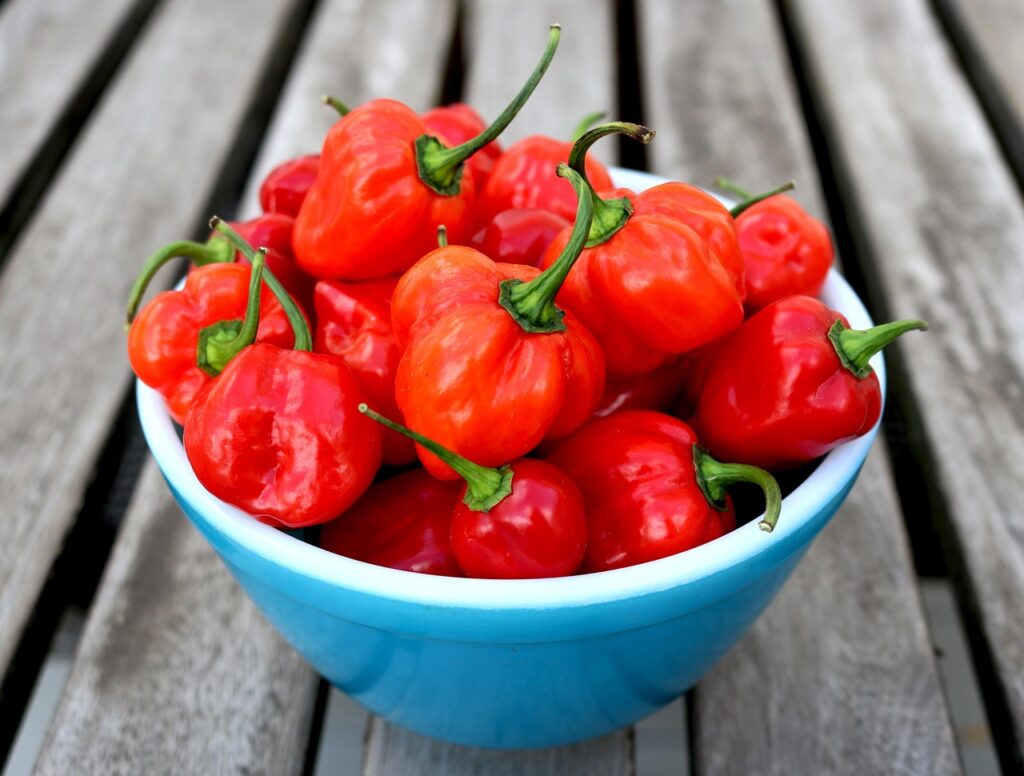
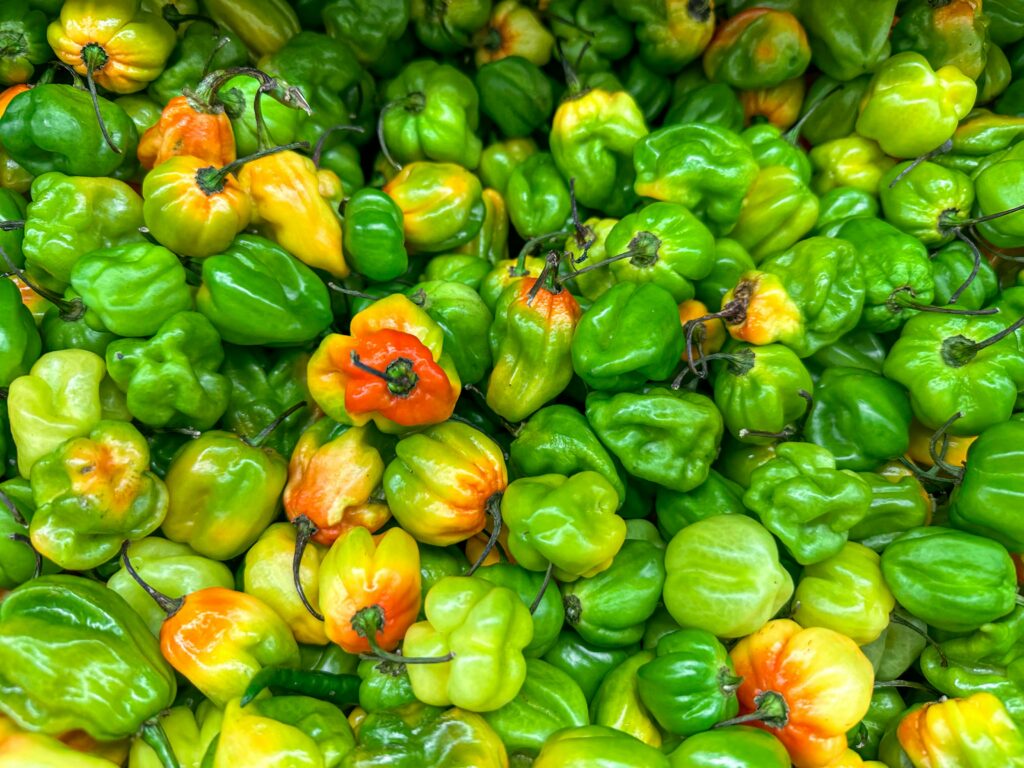
Scotch bonnet varieties — with their characteristic flattened, bonnet-like, deeply lobed shape and their specific combination of intense heat with a distinctly sweeter, more complex tropical fruit aroma than Mexican habanero — are the Capsicum chinense type grown in Jamaica, West Africa, and the Caribbean, and are the specific variety type that Nigerian farmers cultivate, Nigerian cooks use daily, and Nigerian diaspora consumers specifically seek in European ethnic food markets.
For the purposes of international commercial trade — and specifically for the European food industry buyers in the UK, Germany, and Italy whose demand Isiba has correctly identified as the most urgent commercial opportunity — both habanero and Scotch bonnet are classified within Capsicum chinense and are traded interchangeably across most commercial applications, with specific variety distinctions mattering most to hot sauce producers and premium food brands who specifically communicate Scotch bonnet or habanero variety identity in their product marketing. Paradise MultiTrade sources and supplies both varieties — clearly identified in commercial documentation. Contact our team to specify your required variety.
The Scoville Scale and Capsaicin Chemistry — Why Heat Measurement Determines Commercial Value
The commercial value of habanero pepper in the food manufacturing, hot sauce, pharmaceutical, and premium spice markets is not primarily determined by visual appearance, flavour complexity, or agricultural provenance — it is determined by capsaicin and dihydrocapsaicin content, expressed commercially through the Scoville Heat Unit (SHU) scale and analytically through HPLC capsaicinoid content measurement.
Capsaicin and its primary analogue dihydrocapsaicin — together comprising approximately 90% of total capsaicinoid content in Capsicum chinense — are vanillyl amide alkaloid compounds whose concentration in habanero and Scotch bonnet fruit tissue is dramatically higher than in any other commercially cultivated sweet or mild pepper variety. The mechanism through which they produce the burning sensation is well-documented through pain physiology research published via NCBI’s pain medicine and pharmacology database — binding specifically and with high affinity to the TRPV1 (transient receptor potential vanilloid 1) receptor in sensory nerve endings, triggering a pain and heat sensation that is indistinguishable from actual thermal burning despite no temperature increase occurring.
HPLC capsaicin analysis — the analytical method used by the American Spice Trade Association (ASTA) and the European food industry to quantify capsaicinoid content in commercial pepper products — provides the precise capsaicin concentration documentation that allows food manufacturers, oleoresin processors, and pharmaceutical ingredient buyers to calculate heat delivery economics: how much capsaicin per kilogram of pepper powder, per litre of pepper extract, or per gram of oleoresin. For buyers whose production economics depend on this delivery efficiency, Nigerian Plateau State habaneros’ higher capsaicin concentration (a consequence of the altitude, diurnal temperature variation, and growing stress factors documented in NCBI’s capsaicin biosynthesis research) translates directly into lower raw material cost per unit of capsaicin delivered to the finished product.
The Scoville scale ranges for Nigerian Capsicum chinense commercial varieties:
Scotch Bonnet (Nigerian variety): typically 100,000–350,000 SHU — with highland Plateau State production consistently at the higher end of this range and lowland production at the lower-to-mid range.
Habanero (Nigerian orange variety): typically 150,000–300,000 SHU — the most commercially standard range for international food industry habanero procurement.
Both significantly exceed cayenne pepper (30,000–50,000 SHU), dried chilli flakes (40,000–60,000 SHU), and jalapeño (2,500–8,000 SHU) — making Nigerian habanero and Scotch bonnet among the highest-heat commercial pepper products that food manufacturers can source within the conventional agricultural pepper category.
The Flavour Dimension — Why Heat Alone Undervalues Nigerian Capsicum Chinense
The commercial error that buyers who have only encountered habanero as a heat ingredient sometimes make is reducing its commercial identity to its Scoville rating — as though the relevant procurement specification were “units of pain per kilogram” rather than a combination of heat intensity, aroma complexity, and flavour character that together define how habanero and Scotch bonnet contribute to the finished food product’s overall sensory profile.
Capsicum chinense produces a characteristic tropical fruit aromatic profile — dominated by notes of apricot, mango, citrus, and tropical flower that food scientists attribute to the specific volatile aromatic compound profile documented through gas chromatography research published in the Journal of Agricultural and Food Chemistry. This aromatic complexity — entirely distinct from the simpler, more straightforwardly hot-without-fruity profiles of Capsicum frutescens (tabasco) and Capsicum annuum (cayenne, jalapeño) — is commercially irreplaceable in the specific cuisine contexts where Scotch bonnet and habanero are the defining heat ingredient: Nigerian and West African soups, Caribbean jerk seasoning, Jamaican pepper sauce, West African hot sauce, and the growing category of premium artisan hot sauces in European and American markets whose product positioning specifically communicates habanero or Scotch bonnet variety identity as a quality and authenticity claim.
For European food manufacturers in the UK, Germany, and Italy who are developing products whose heat ingredient is not merely a Scoville number but a flavour component with cultural authenticity and premium brand positioning, Nigerian habanero’s specific aromatic profile is as commercially relevant as its capsaicin content. Contact our team to request aroma profile documentation alongside capsaicin content analysis.
Four Commercial Product Forms for International Export
Fresh Whole Habanero/Scotch Bonnet — the primary form for diaspora food retail, West African restaurant supply, and fresh produce wholesale buyers. Fresh Capsicum chinense has a shelf life of 2–3 weeks at 7–10°C under proper cold chain management — making fresh habanero an air freight or fast sea freight product rather than a standard ocean container commodity. Fresh pod supply requires close coordination between Nigerian harvest timing and destination market delivery logistics.
Dried Whole Habanero/Scotch Bonnet — the most volume-significant export form for international food industry buyers, produced by hot-air drying fresh pods to 10–12% moisture content — preserving capsaicin content, colour, and aromatic compounds in an ambient-temperature stable product with 12–18 months shelf life in sealed packaging. Dried whole pods are the form most commonly imported by European spice processors, hot sauce manufacturers, and ethnic food distributors.
Habanero Flakes (Crushed Dried Pepper) — dried whole pods ground to coarse flakes for direct incorporation into dry spice blends, seasoning mixes, pizza toppings (particularly relevant for Italian market buyers), kebab shop seasoning (directly relevant for German Döner market supply), and retail spice packs. Flakes preserve more of the aromatic volatile compound profile than powder — making them preferred in applications where habanero’s distinctive aroma is as important as its heat delivery.
Habanero Powder — finely milled dried habanero to a uniform powder whose particle size specification ranges from coarse (600–800 microns for seasoning incorporation) through medium (400–600 microns for dry spice blend) through fine (below 400 microns for oleoresin extraction and food manufacturing ingredient applications). Habanero powder is the highest-volume single processed form for the European food manufacturing market — used in marinade powders, hot sauce dry blends, seasoning sachets, snack food seasoning systems, and food service seasoning packs.
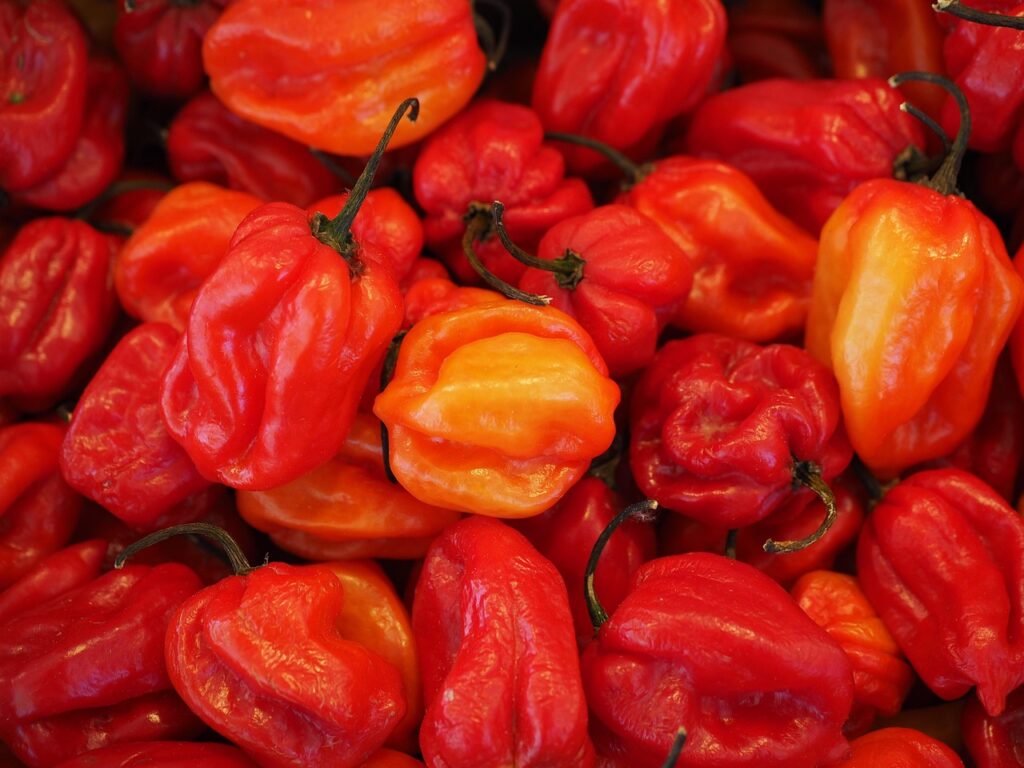
Benefits and Industrial Uses of Nigerian Habanero Pepper
The European Hot Sauce Market — The UK, Germany, and Italy in Commercial Detail
The user’s identification of the UK, Germany, and Italy as markets of exceptional demand is commercially astute, and each deserves specific analysis that goes beyond the generic “growing European hot sauce market” framing:
United Kingdom — Diaspora Foundation Plus Mainstream Heat Revolution
The UK hot sauce market — tracked through Mintel’s UK condiment market database and documented in trade publications from the British Retail Consortium (BRC) — has grown at compound annual rates exceeding 15% through 2022–2024, making it the fastest-growing condiment category in British retail. This growth has two commercially distinct demand streams:
The diaspora demand stream — driven by approximately 600,000 British-Nigerian citizens, 150,000+ British-Ghanaian citizens, 350,000+ British-Caribbean citizens, and millions of broader West African and Afro-Caribbean heritage consumers for whom Scotch bonnet and habanero are fundamental cooking ingredients rather than occasional condiments — creates consistent, high-frequency, weekly or multiple-times-weekly purchasing of Scotch bonnet products across the African and Caribbean grocery retail networks concentrated in London (Peckham, Brixton, Tottenham, Hackney), Birmingham, Manchester, Leeds, and Sheffield.
The mainstream heat demand stream — driven by UK consumers who have been profoundly influenced by the success of products like Nando’s Peri-Peri sauce, the Sriracha phenomenon, and the growing UK craft hot sauce movement centred on brands including Grá (London), Tubby Tom’s, and the hundreds of artisan hot sauce producers who participate in events including London’s Hot Sauce Festival and the Great British Food Festival. This mainstream demand creates procurement needs at multiple scales: artisan hot sauce producers sourcing 50–500kg of dried habanero per production run; established condiment manufacturers sourcing 5–50MT per year; and food service operators sourcing bulk habanero powder for restaurant and catering heat seasoning.
UK habanero imports are subject to UK Food Standards Agency (FSA) food safety oversight and APHA phytosanitary inspection — compliance frameworks that Paradise MultiTrade navigates as standard for UK-bound pepper shipments.
Germany — The Döner Economy and the Chilli Enthusiast Community
Germany’s habanero demand has two pillars whose commercial scale together make it one of the most commercially significant European habanero markets, despite Germany not being as culturally associated with chilli pepper cuisine as the UK or Italy:
The Döner kebab food service sector — Germany operates an estimated 16,000–20,000 Döner kebab outlets employing approximately 60,000 people and generating annual revenues exceeding EUR 2 billion according to trade association data from Verband der Türkischen Unternehmer und Industriellen in Europa (ATIAD). Every Döner outlet uses significant quantities of chilli-based condiments, pepper flakes, and hot sauces in their preparation, with the growing consumer expectation for authentic, higher-heat options in premium kebab food service driving increasing procurement of habanero and other superhot pepper varieties rather than generic chilli powder.
The German chilli enthusiast and craft hot sauce community — whose commercial scale is tracked through the organiser databases of events including the Chili & BBQ Festival Mannheim and the Cologne Chilli Festival — has grown dramatically with the influencer-driven hot food challenge culture, the craft hot sauce gifting market, and Germany’s general craft food movement. Market intelligence on the German hot sauce market is published by Statista Germany, confirming consistent category growth.
EU food safety requirements for pepper products entering Germany apply under Regulation (EU) 2017/625 on official controls — with specific attention to pesticide residue Maximum Residue Levels (MRLs) published by EFSA’s pesticide residue database that Nigerian pepper must comply with for German market clearance.
Italy — Peperoncino Tradition Meets New Heat Ambitions
Italy’s relationship with chilli pepper is older and more culturally embedded than most non-Italian buyers realise. The Calabrian tradition of extreme chilli use — documented through food anthropology research and institutionalised in the Accademia Italiana del Peperoncino and the Diamante Chilli Pepper Festival that has been celebrated annually since 1992 — creates a sophisticated Italian consumer base for premium hot pepper products that is culturally primed to embrace habanero and Scotch bonnet alongside the traditional Capsicum annuum Calabrian chilli varieties.
The specific commercial opportunity that habanero represents for Italian food manufacturers is the development of new-generation peperoncino products that incorporate Capsicum chinense heat intensity into traditional Italian spiced food formats: premium ‘nduja incorporating habanero alongside traditional Calabrian pepper, habanero-infused olive oils, habanero chilli paste (conserva), and the growing Italian craft hot sauce market whose commercial development has been tracked through Agrifood Italy and Italian specialty food trade publications. The Eataly premium Italian food retail network and similar high-end Italian food distributors are among the most commercially sophisticated natural buyers for premium habanero as a documented-origin, quality-certified specialty pepper ingredient.
For European buyers in the UK, Germany, and Italy evaluating Nigerian habanero procurement, contact our export team to discuss dried pod, flake, and powder specifications alongside phytosanitary and food safety documentation requirements for each destination market.
Global Food Manufacturing — Sauces, Seasonings, and Snack Food
Beyond the three European markets specifically identified, the global food manufacturing industry’s use of habanero and Scotch bonnet pepper in processed food applications represents the largest-volume procurement stream for dried habanero powder and oleoresin globally:
Hot sauce and condiment manufacturing — the global hot sauce market — tracked through Grand View Research’s hot sauce market analysis, which values the market at over USD 2.4 billion and projects compound annual growth of 6.4% through 2030 — is the single most commercially important destination for Nigerian dried habanero. Hot sauce manufacturers globally source habanero either as dried pods for in-house processing, as habanero mash or puree processed from fresh pods, or as standardised habanero powder for direct incorporation into vinegar-based hot sauce formulations. The most commercially significant global hot sauce brands — including Frank’s RedHot, Tabasco, Cholula, and Crystal — use capsaicin content standardisation in their hot sauce formulations, making consistent, documented capsaicin content a procurement priority.
Snack food seasoning — the global snack food industry’s relentless innovation in heat and flavour seasoning systems has made habanero one of the most specified flavours in snack food new product development globally. Market intelligence from Innova Market Insights documents habanero as one of the top five flavour descriptors in global snack food product launches — appearing on potato chip seasoning, tortilla chip flavour, meat snack seasoning, and puffed corn seasoning product packaging across European, American, and Asian retail. This application requires habanero powder with consistent capsaicin content, consistent colour value, and food safety documentation for each production season.
Meat processing and marinades — habanero pepper’s heat and aromatic profile make it an increasingly specified seasoning component in premium marinade systems for grilled meat, jerk-style preparations, peri-peri sauce marinades, and West African-inspired meat seasoning systems. German meat processing companies — whose sausage, salami, and processed meat product innovation is tracked through German Butchers’ Association (BVDF) publications — are among the most commercially active European buyers of habanero seasoning ingredients for product development.
Ready meals and food service seasoning — pre-portioned habanero seasoning sachets, ready meal flavour bases incorporating habanero, and food service seasoning packs represent consistent procurement from the UK and European ready meal manufacturing sector, tracked through Mintel’s UK and European ready meal ingredient innovation database.
Pharmaceutical and Nutraceutical Industry — Capsaicin’s Clinical Evidence Base
Capsaicin extracted from habanero pepper — at concentrations of 8% used in prescription topical products and 0.025–0.1% in over-the-counter preparations — is one of the most evidence-supported natural pharmaceutical actives for pain management, with clinical evidence documented through research published comprehensively via NCBI’s pain medicine database:
Topical pain management — capsaicin cream and patch formulations are formally registered pharmaceutical products across the EU, UK, and US markets for the management of neuropathic pain, post-herpetic neuralgia (shingles pain), diabetic peripheral neuropathy, and osteoarthritis joint pain. Qutenza (8% capsaicin patch, Astellas Pharma) is the highest-profile pharmaceutical product in this category — a prescription topical analgesic whose commercial success demonstrates the genuine pharmaceutical industry demand for high-purity capsaicin derived from high-capsaicin natural sources. Research on capsaicin’s TRPV1-mediated pain desensitisation mechanism is published through the Journal of Pain — the primary peer-reviewed publication of the American Pain Society.
Metabolic health and weight management — capsaicin’s documented thermogenic effects — increasing energy expenditure and fat oxidation through sympathetic nervous system activation — have made it one of the most commercially established nutraceutical actives in weight management supplement formulation. Research on capsaicin’s metabolic effects is published through NCBI’s endocrinology and metabolism database — providing the clinical foundation for capsaicin supplement product development, whose upstream raw material demand creates procurement interest in high-capsaicin habanero as a pharmaceutical raw material.
Cardiovascular health applications — capsaicin’s documented effects on blood pressure management, platelet aggregation inhibition, and atherosclerosis risk reduction — reviewed through clinical research accessible via NCBI — have attracted nutraceutical product development interest in capsaicin as a cardiovascular health supplement active whose upstream habanero powder procurement market is growing alongside consumer supplement adoption.
Capsaicin oleoresin production — pharmaceutical and food ingredient buyers who source habanero specifically for capsaicin oleoresin extraction — a concentrated capsaicin-rich extract used as a food additive, pharmaceutical active, and industrial compound (capsaicin is used in marine antifouling paint and pepper spray formulation) — evaluate raw material procurement on HPLC capsaicin content per kilogram of dried pepper, making high-capsaicin Nigerian Plateau State habanero the most cost-effective raw material per unit of capsaicin extracted.
For pharmaceutical and oleoresin extraction buyers, contact our team to discuss HPLC capsaicin content documentation and supply arrangements.
Diaspora Food Retail — The Cultural Non-Negotiable
The West African diaspora food market for Nigerian Scotch bonnet and habanero is the most persistently demand-consistent market discussed in this article, because it is driven not by food trend cycles but by cultural dietary identity whose persistence across generations has been well-documented. Research on food culture retention in diaspora communities published through the African Studies Association confirms that certain core culinary ingredients — including Scotch bonnet pepper, palm oil, and crayfish — are retained with near-complete fidelity across diaspora generations, maintaining procurement demand regardless of second- or third-generation acculturation in other dietary dimensions.
For ethnic food importers and distributors supplying the UK, German, French, Italian, and broader European West African diaspora retail market — Nigerian Scotch bonnet pepper supply is one of the most commercially reliable product categories available: predictable demand, inelastic pricing sensitivity (diaspora buyers do not substitute alternative peppers when Scotch bonnet prices rise — they pay the higher price), and the specific variety identity preference (Scotch bonnet rather than generic habanero is the specific cultural preference that Nigerian diaspora buyers communicate to their retailers).
Why Buy Habanero Pepper from Nigeria?
The Capsaicin Concentration Advantage — Plateau State’s Highland Premium
The most commercially significant quality differentiator for Nigerian habanero — particularly for pharmaceutical, oleoresin extraction, and premium hot sauce buyers whose procurement economics are determined by capsaicin yield per kilogram of dried pepper — is the documented capsaicin concentration advantage of Plateau State highland production over both lowland Nigerian production and most established international habanero origins.
Research on environmental factors affecting capsaicinoid accumulation in Capsicum chinense — published through NCBI’s plant biochemistry and phytochemistry database and reviewed through the American Society for Horticultural Science (ASHS) — documents the well-established relationship between cool growing temperatures, high UV radiation, and elevated capsaicinoid biosynthesis in pepper fruit tissue. Jos Plateau’s altitude-driven cool temperatures and intense sunshine — the same environmental conditions that produce high-curcumin turmeric, high-gingerol ginger, and high-allicin garlic across Nigeria’s highland growing zones — consistently produce habanero fruit with capsaicin concentrations at the upper end of the commercial range.
For oleoresin buyers who calculate procurement cost on capsaicin yield per kilogram of raw pepper, every additional percentage point of capsaicin concentration in the raw material reduces the raw material input cost per unit of extracted capsaicin proportionally. We coordinate HPLC capsaicin content analysis through accredited laboratories on request. Contact us to discuss capsaicin content specification and documentation.
Supply Chain Diversification From Mexico and India-Dominant Habanero Trade
Mexico — the habanero’s ancestral commercial home and the dominant origin for global habanero trade — accounts for approximately 40–50% of internationally traded habanero volume. India — a major dried red chilli producer whose Capsicum chinense production has grown significantly — contributes another 20–30%. Both origins face the same supply concentration risks that we have documented across every dominant-origin commodity in this series: weather disruption (Hurricane season in Mexico, monsoon variability in India), export policy interventions, domestic demand competition, and pricing volatility that buyers without diversified origin positions must absorb fully.
Nigerian origin provides West African habanero supply diversification — with growing production infrastructure, consistent Sahelian and highland growing conditions that produce reliable annual crops, Paradise MultiTrade’s established farming network, and the logistical advantage of Nigeria’s Atlantic coast access to European markets at transit times competitive with Mexican and Indian origins for EU destinations. ITC Trade Map confirms growing Nigerian chilli pepper export volumes entering formal international trade channels — documenting the progressive commercial formalisation that Paradise MultiTrade’s habanero export programme is directly building.
The Scotch Bonnet Diaspora Authenticity Advantage
For UK, European, and North American importers supplying the West African and Caribbean diaspora food retail market, Nigerian Scotch bonnet’s authenticity as the specific variety grown and consumed in West Africa for generations creates a cultural provenance credential that Mexican habanero, Indian dried chilli, and other conventional habanero origins cannot replicate. The diaspora consumer’s preference is not “superhot pepper” — it is specifically “Scotch bonnet” or “rodo” from West African origin, whose flavour profile and cultural identity are distinct from Mexican habanero in ways that diaspora cooks and consumers reliably distinguish.
For ethnic food importers whose customer base includes West African and Caribbean diaspora consumers who know the difference between generic habanero and authentic West African Scotch bonnet, Nigerian origin is not merely a supply option. It is the authenticity credential that serves the customer’s specific cultural procurement requirement. Contact our team to discuss the West African Scotch bonnet variety specification and documentation.
EU Food Safety Compliance — The Non-Negotiable Requirement for European Markets
The EU’s stringent pesticide residue Maximum Residue Level (MRL) framework — administered through EFSA’s pesticide MRL regulation database and enforced at EU border inspection posts under Regulation (EU) 2017/625 — applies specifically to pepper products with a documented history of compliance challenges from some origins. EU buyers sourcing habanero from any origin must verify pesticide residue compliance on each lot — and buyers who have experienced the commercial disruption of lot rejections at EU borders due to pesticide MRL exceedances understand why pesticide residue certification from accredited laboratories is a mandatory procurement requirement rather than an optional quality assurance supplement.
Paradise MultiTrade coordinates pre-export multi-residue pesticide analysis (covering 400+ compounds by GC/MS and LC/MS/MS methods following AOAC International validated procedures) on all pepper lots designated for EU, UK, and German market entry — issuing pesticide residue compliance certificates alongside standard phytosanitary and commercial documentation as a non-negotiable quality assurance step for European market shipments. Our NEPC Export Licence No. 0042385 and CAC Registration No. RC-9284647 is current and verifiable through NEPC.
Nigeria’s Habanero Pepper Export Strength and Global Market Demand
The Global Market — Extraordinary Growth Across Multiple Simultaneous Demand Streams
The global hot sauce and habanero pepper market is experiencing commercial growth that reflects the globalisation of spicy food culture at a pace and geographic breadth that was not commercially predictable a decade ago. Market analysis from Grand View Research’s hot sauce market report values the global hot sauce market at USD 2.4 billion and projects sustained compound annual growth of 6.4% through 2030. Mordor Intelligence’s global chilli sauce market analysis confirms this trajectory and additionally documents the global dried chilli and chilli powder market’s parallel growth — providing the commercial framework within which Nigerian habanero export development is positioned.
The World Spice Organisation and the American Spice Trade Association (ASTA) both track habanero and Scotch bonnet pepper market dynamics within their broader spice trade intelligence — confirming the category’s sustained commercial momentum and the growing international buyer interest in West African origin habanero as supply diversification from established origins.
Key Export Destination Markets
The United Kingdom — the most immediately commercially urgent market, combining the UK’s large West African diaspora community’s specific Scotch bonnet demand with the mainstream British hot food revolution’s enormous and growing habanero procurement. Paradise MultiTrade is actively building dedicated UK habanero supply programmes for both diaspora ethnic food importers and mainstream hot sauce manufacturers whose procurement scale ranges from 500kg to 20+ MT per order. Contact us to discuss UK-specific supply arrangements.
Germany — the European market whose commercial habanero demand most directly reflects organised food service sector procurement (the Döner kebab industry) and the growing German craft hot sauce and chilli enthusiast community. German food import requirements are administered through BLE (Federal Office for Agriculture and Food) and BVL — regulatory bodies whose requirements Paradise MultiTrade coordinates for German-bound habanero shipments.
Italy — the European market whose sophisticated food culture, pepperoncino artisan tradition, and growing craft hot sauce development create commercial demand for premium habanero that differentiates quality and origin rather than buying on price alone. Italian specialty food import channels — including Eataly’s premium sourcing network, Italian specialty food distributors, and the artisan food producer community served by Slow Food Italia’s sourcing networks — represent the most premium-value commercial pathway for Nigerian habanero in Italy.
The United States — the world’s largest hot sauce market and the most commercially developed capsaicin-based food and pharmaceutical market — represents the highest-volume destination for Nigerian habanero powder and dried pods. American food safety compliance for pepper products is administered through the FDA’s food import programme with specific attention to pesticide residues, aflatoxin (relevant for dried pepper), and microbiological safety.
France — whose Antillean diaspora community’s specific Scotch bonnet demand mirrors the UK’s Caribbean community’s procurement and whose food manufacturing sector’s growing hot sauce and condiment innovation creates industrial procurement demand — is a growing European destination.
The Netherlands — whose Surinamese, Antillean, and broader Caribbean and West African diaspora communities create consistent ethnic food retail demand for Scotch bonnet, alongside Dutch industrial food ingredient procurement infrastructure for the broader EU market — is the EU’s most commercially accessible first-entry market for Nigerian habanero.
Canada — whose Caribbean and West African diaspora communities in Toronto, Montreal, and Vancouver create consistent ethnic food retail demand analogous to the UK pattern — is a growing North American destination whose food import requirements are administered through CFIA.
Why Choose Paradise MultiTrade International Limited?
Plateau State Highland vs. Lowland Origin Distinction. For buyers who evaluate habanero procurement on capsaicin content per kilogram, we differentiate between highland Plateau State origin (higher capsaicin, premium grade) and lowland Middle Belt origin (commercial grade, higher volume, competitive pricing) rather than supplying undifferentiated “Nigerian habanero” without origin specificity. This origin precision allows buyers to match their specification requirements to their procurement budget rather than paying highland premiums for applications that commercial grade adequately serves. Contact us to discuss origin-specific specifications.
All Four Commercial Forms Available. We supply fresh whole Scotch bonnet/habanero (with cold chain coordination for fast transit to UK and European fresh produce buyers), dried whole pods (for European spice processors and ethnic food distributors), habanero flakes (for German kebab seasoning, Italian peperoncino blend, and UK hot sauce manufacture), and habanero powder (for food manufacturing, pharmaceutical, and oleoresin extraction buyers). Contact us to specify your required form.
EU Pesticide Residue Certification as Standard. Multi-residue pesticide analysis to EU MRL standards on every European-bound pepper lot — not as an optional extra but as a standard documentation component that we provide alongside phytosanitary certification as a non-negotiable food safety quality assurance step. For buyers who have experienced a lot of rejections at EU entry ports, Paradise MultiTrade’s pre-export pesticide residue certification eliminates this risk from your supply chain.
Capsaicin HPLC Documentation for Pharmaceutical and Oleoresin Buyers. We coordinate HPLC capsaicin and dihydrocapsaicin content quantification through accredited laboratories following ASTA and AOAC validated methods — providing the Scoville-equivalent capsaicin content documentation that pharmaceutical buyers and oleoresin processors require for their procurement yield calculations. Contact us to discuss capsaicin documentation.
Scotch Bonnet Variety Authentication. For UK and European diaspora market importers who specifically need documented West African Scotch bonnet — not generic habanero — we provide variety identification documentation and sourcing provenance certification that supports authentic West African Scotch bonnet product positioning. Contact our team to discuss a variety of authentication documentation.
Multi-Commodity West African Spice and Food Sourcing. Habanero buyers frequently source complementary Nigerian spice and agricultural commodities. Alongside habanero pepper, Paradise MultiTrade exports chilli pepper, fresh ginger, dry split ginger, turmeric, cloves, egusi melon seed, ogbono seed, crayfish, alligator pepper, bitter kola, sesame seeds, hibiscus flower, cashew nut kernel, and raw cashew nuts. Explore our full range of Nigerian export commodities and consolidate your West African spice, food ingredient, and agricultural sourcing through one verified, licensed export partner.
Product Specifications
| Specification | Details |
|---|---|
| Product | Nigerian Habanero / Scotch Bonnet Pepper (Capsicum chinense) |
| Common Names | Habanero, Scotch bonnet, Rodo (Yoruba), Atarodo (general Nigerian), Tatashe roro, Ata ijosi |
| Origin | Nigeria (Plateau, Nassarawa, Benue, Cross River, Kano, Kaduna, Kogi States) |
| Species | Capsicum chinense (confirmed — not Capsicum annuum or Capsicum frutescens) |
| Premium Grade Origin | Plateau State highland (altitude 1,200–1,800m — higher capsaicin) |
| Commercial Grade Origin | Middle Belt states — Nassarawa, Benue, Kano, Kaduna (high volume) |
| Forms Available | Fresh whole pods; Dried whole pods; Flakes (crushed dried); Powder (fine milled) |
| Scoville Heat Units | 100,000–350,000 SHU (variety and origin dependent — HPLC capsaicin analysis available) |
| Capsaicin + Dihydrocapsaicin Content | Documented by HPLC per lot on request |
| ASTA Colour Value | 25–60+ (dried grade — by ASTA method) |
| Moisture Content | 8–10% (dried pods); 10–12% (dried whole) |
| Fresh Pod Shelf Life | 2–3 weeks at 7–10°C under proper cold chain |
| Dried Pod Shelf Life | 12–18 months (cool, dark, sealed storage) |
| Powder Shelf Life | 18–24 months (moisture-barrier sealed packaging) |
| Pesticide Residue | Multi-residue analysis (400+ compounds) to EU MRL standards — standard for all EU-bound lots |
| Aflatoxin | Screened per EU maximum limits on dried pepper lots |
| Microbiological | Total viable count, Salmonella (absent/25g), E. coli per food safety standards |
| Packaging Options | 25kg, 50kg polypropylene bags (dried pods/flakes/powder); 5kg retail packs on request |
| Supply Capacity | Dried: 20–500+ MT per season; Fresh: subject to harvest timing and cold chain coordination |
| MOQ | Dried whole pods: 5 MT; Flakes: 3 MT; Powder: 3 MT; Fresh: discuss with our team |
| Export Documentation | Phytosanitary Certificate (NAQS), Certificate of Origin, NEPC Export Licence, Pesticide Residue Certificate (EU MRL compliance), HPLC Capsaicin Certificate (on request), ASTA Colour Certificate, Aflatoxin Certificate, Microbiological Certificate, Commercial Invoice, Packing List, Bill of Lading |
| Payment Terms | T/T, Letter of Credit (LC at sight), Escrow |
| Loading Port | Lagos (Apapa / Tin Can Island Port), Nigeria |
| Incoterms Available | EXW, FOB Lagos, CNF, CIF |
Packaging and Export Process
Harvest. Nigerian habanero and Scotch bonnet have two main harvesting seasons aligned with the country’s agricultural calendar: the main season harvest (August–November), following the July–September peak rains across most producing states, and the dry season harvest (February–April) from fadama-irrigated production in northern states. Plateau State highland production — with its extended cooler growing season — typically harvests in October–December for the main season crop.
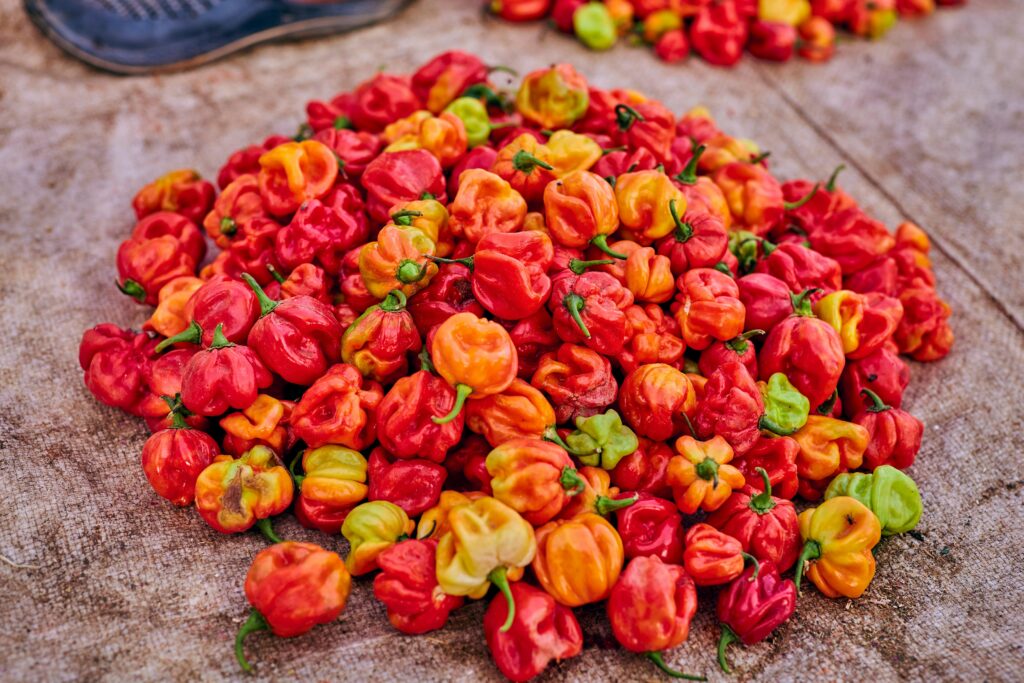
Fresh pods are harvested at the appropriate colour stage for the specific application: green to yellow-orange for fresh produce export (more shelf life remaining); fully orange-red-ripe for drying and processing (maximum capsaicin content, deepest colour value).
Sorting and Grading. Harvested pods are sorted at the collection point — removing damaged, diseased, and off-colour pods that would compromise the whole lot’s quality during drying. Export-grade pods for drying are sorted to a minimum 95% sound, properly developed fruit percentage.
Drying. Fresh pods are dried through one of three methods, depending on production zone and processor capability: solar tunnel drying (controlled temperature, faster than open sun, better colour preservation), mechanical hot-air drying (most consistent colour and capsaicin retention, recommended for export quality), or open sun drying (traditional method, lowest capital cost, highest weather-dependency risk). Mechanical hot-air drying at 55–65°C is the specification that Paradise MultiTrade recommends for all export-grade dried habanero — preserving ASTA colour value and minimising aflatoxin risk from the prolonged ambient moisture exposure that open sun drying creates.
Pesticide Residue Testing — Mandatory for EU-Bound Shipments. Dried pepper samples from each export lot are submitted to accredited laboratories for multi-residue pesticide analysis using GC/MS and LC/MS/MS methods before container loading confirmation. EU MRL compliance certificates are issued per lot. Any lot that fails EU MRL compliance is not exported to EU destinations — it is redirected to domestic or non-EU market channels. This compliance gate is non-negotiable and is the primary quality assurance step that distinguishes Paradise MultiTrade’s European habanero supply programme from informal export channels that do not implement pre-export pesticide testing.
Milling (for flakes and powder). Dried whole pods are fed into hammer mills or blade mills for flake production (coarse grinding) or further processed through fine-grinding mills for powder production. Milling equipment is cleaned and verified free from foreign odour before habanero processing to prevent the cross-contamination of other spice notes into the distinctively aromatic habanero product. Particle size is verified against the buyer’s specification before packaging.
Packaging and Loading. Dried pods, flakes, and powder are packed in 25kg or 50kg polypropylene woven bags with sealed inner polyethylene liner that provides moisture barrier protection. Powder lots are packed in multi-wall paper bags with a sealed inner polyethylene moisture barrier. Pre-export phytosanitary inspection by NAQS is completed before container sealing. Lead time from order confirmation to container loading: dried whole pods — 14–21 days; flakes and powder — 21–35 days (milling processing time). Fresh pods require discussion of cold chain and air freight logistics with a minimum 7-day lead time.
Frequently Asked Questions
What is the difference between Nigerian Scotch bonnet and habanero — do I need to specify which one?
Both Nigerian Scotch bonnet and habanero are Capsicum chinense varieties with comparable heat ranges (100,000–350,000 SHU) but distinct visual and aromatic identities. Scotch bonnet has a characteristic flattened, bonneted, deeply lobed shape with a sweeter, more complex tropical fruit aroma — the specific variety grown and used in Nigerian and West African cuisine, and the specific variety that West African and Caribbean diaspora consumers and UK ethnic food buyers specifically request. Habanero has a more elongated, lantern-shaped profile with a slightly more straightforward heat-forward aromatic profile. For diaspora food retail, West African restaurant supply, and Caribbean community supply chains — always specify Scotch bonnet. For hot sauce manufacturing, food industry powder, and oleoresin extraction, both varieties are technically interchangeable, and specification is based on capsaicin content and ASTA colour value rather than variety morphology. Contact us to specify your required variety, and we will confirm availability from our production zone networks.
Why is pesticide residue compliance so critical for Nigerian habanero entering the UK, German, and Italian markets?
The EU and UK post-Brexit food safety regulatory frameworks apply stringent Maximum Residue Levels (MRLs) to fresh and dried pepper products, with the EFSA pesticide MRL regulation specifying limits for hundreds of pesticide compounds that are tested at EU entry border inspection posts. Pepper products from West African origins have historically been flagged in EU RASFF (Rapid Alert System for Food and Feed) notifications for pesticide residue exceedances — making pre-export multi-residue testing not merely good practice but a commercial necessity for maintaining import clearance integrity. Paradise MultiTrade conducts GC/MS and LC/MS/MS multi-residue analysis covering 400+ compounds on all EU and UK-bound pepper lots before container loading — providing pesticide residue compliance certificates that EU border inspection posts can verify against our accredited laboratory reports. For buyers who have had previous lots rejected at EU entry, our pre-export testing programme eliminates this supply chain risk. Contact us to discuss pesticide compliance protocols.
What capsaicin content should I specify for hot sauce manufacturing versus pharmaceutical oleoresin extraction?
For commercial hot sauce manufacturing using dried habanero powder, the capsaicin specification that most hot sauce producers work with is a minimum of 1.5–3.0% total capsaicinoids by HPLC (equivalent to approximately 240,000–480,000 SHU measured chemically) in the dried powder. This specification ensures consistent heat delivery in sauce formulation where the capsaicin concentration in the finished sauce must meet the product’s Scoville rating. For pharmaceutical capsaicin oleoresin extraction — where the economics depend on capsaicin yield per kilogram of raw material processed — we recommend specifying a minimum 2.5% total capsaicinoids (approximately 400,000 SHU equivalent) and accepting Plateau State highland origin premium-grade material that consistently delivers at or above this specification. For snack food seasoning and spice blend incorporation, a minimum 1.5% total capsaicinoids provides the heat intensity for effective seasoning at the typical inclusion rates (0.5–2% of finished seasoning blend). We coordinate HPLC capsaicin analysis per lot for all pharmaceutical, oleoresin extraction, and commercial hot sauce procurement specifications. Contact us to discuss your specific capsaicin requirement.
What are the specific food safety requirements for habaneros entering Germany?
Habanero pepper entering Germany is subject to EU food safety import requirements under Regulation (EU) 2017/625 — administered at German entry through border inspection posts operating under BVL oversight. Specific requirements include: pesticide residue compliance with EU MRLs (particularly relevant for pepper given the RASFF notification history for some origins), aflatoxin B1 below 5 ppb and total aflatoxin below 10 ppb for dried pepper (per Commission Regulation (EC) 1881/2006 on contaminant maximum limits), ochratoxin A screening for dried pepper, microbiological safety certification, and phytosanitary certification confirming the absence of quarantine pest organisms. For German market buyers specifically, the BVL (Federal Office of Consumer Protection and Food Safety) publishes annual testing result statistics for pepper imports that provide market intelligence on the specific compliance challenges that have triggered alerts in previous years. Contact us to build the complete German market food safety documentation package for your habanero shipment.
How does Nigerian habanero compare to Mexican or Indian origin on capsaicin content and quality?
Nigerian habanero from Plateau State highland production — grown at 1,200–1,800 metres altitude under cool temperatures and high UV radiation — consistently produces capsaicin concentrations at the upper end of the commercial habanero range, comparable to or exceeding the capsaicin content of premium Yucatan habanero from Mexico (whose Yucatan State production zone is considered the international benchmark). Nigerian lowland Middle Belt production delivers capsaicin concentrations in the mid-range — comparable to standard Indian and Ethiopian habanero production. The analytically verifiable quality comparison between Nigerian highland origin and Mexican or Indian alternatives can be conducted through HPLC capsaicin measurement on representative samples from each origin, and we actively encourage buyers to commission independent comparative analysis before committing to supply volume decisions. The ASTA colour value of Nigerian dried habanero — typically 25–60+ depending on drying method — is competitive with established international colour benchmarks for the variety. Contact us to arrange a sample supply for independent comparative testing.
What is the Nigerian habanero production season, and how does it affect procurement timing?
Nigerian habanero has two main production seasons whose timing determines fresh pod availability, dried pod production windows, and optimal procurement scheduling: Main season: August–November (following the July–September peak rains across Middle Belt and southeastern producing states) provides the highest-volume harvest of the year, with fresh pods available August–October and dried pods produced from September through February. Plateau State highland: October–December produces the premium-capsaicin highland harvest with slightly later timing due to the extended cool growing season at altitude. Dry season: February–April, from fadama-irrigated production in northern states provides a secondary crop at lower volumes. For buyers requiring large volumes of dried whole pods or powder, the October–January post-main-season processing window provides the best combination of high-capsaicin fresh material, optimal drying weather, and maximum powder production availability. Buyers planning purchases above 50 MT should initiate discussions by August to coordinate pre-harvest quality assessment and production scheduling. Contact us to plan your procurement cycle.
What transit times should I expect for habanero from Nigeria to the UK, Germany, and Italy?
UK (Tilbury, Felixstowe) — 14–18 days by sea for dried pods/flakes/powder (standard dry container). For fresh pods requiring cold chain: 3–5 days by air freight — cold chain must be maintained from harvest point through packing, loading, flight, and delivery. Germany (Hamburg) — approximately 14–20 days sea freight for dried forms. Italy (Genoa, Naples, Livorno) — 12–16 days sea freight from Lagos — one of the shortest transit times to any major European market, given Italy’s Mediterranean position. This short transit time to Italian ports makes Nigerian origin particularly logistics-competitive for Italian buyers relative to origins whose European transit requires routing through northern European hub ports. USA (East Coast) — 18–25 days. Canada (Montreal, Halifax) — 18–28 days. For the three markets, Isiba specifically identified — the Italy transit time advantage and the UK/Germany competitive transit, combined with Paradise MultiTrade’s established documentation infrastructure, make Nigerian origin commercially practical for regular procurement programmes in all three markets. Contact us to plan your logistics.
Ready to Source Premium Nigerian Habanero and Scotch Bonnet Pepper — Fresh Pods, Dried Whole, Flakes, and Powder for UK, German, Italian, and Global Buyers Whose Demand You Have Correctly Identified as the Commercial Opportunity of This Decade?
If you are a UK hot sauce manufacturer or condiment producer sourcing authentic Nigerian Scotch bonnet for West African cuisine-inspired sauce development, a UK ethnic food importer supplying the Nigerian and Caribbean diaspora community’s weekly Scotch bonnet procurement, a German food service supplier building habanero seasoning programmes for the Döner kebab and food service sector, a German craft hot sauce producer or chilli festival vendor seeking authentic West African origin habanero, an Italian artisan food producer developing premium habanero-enhanced peperoncino products or craft hot sauce for the Italian specialty food market, a European spice processor sourcing dried habanero powder with EU MRL-compliant pesticide testing for seasoning manufacturing, a pharmaceutical or oleoresin extraction company sourcing high-capsaicin Nigerian Plateau State origin habanero as pharmaceutical raw material, or a global food manufacturer developing hot sauce, snack seasoning, or marinade systems that require documented-capsaicin habanero supply from a licensed, compliant West African exporter — Paradise MultiTrade International Limited is the licensed Nigerian exporter your habanero supply chain needs.
We supply Nigerian habanero and Scotch bonnet pepper — fresh, dried whole, flakes, and powder — from Plateau State highland and Middle Belt origin zones, EU pesticide residue certified as standard for all European shipments, HPLC capsaicin documented per lot on request, Scotch bonnet variety authenticated for diaspora authenticity requirements, and exported with full phytosanitary and food safety documentation to buyers in the UK, Germany, Italy, and every other major regulated destination market.
Request a Quotation — share your required form (fresh pods, dried whole, flakes, or powder), volume, capsaicin specification if applicable, variety preference (Scotch bonnet or habanero), destination market (UK, Germany, Italy, or other), pesticide residue compliance documentation requirements, and preferred incoterms. We respond with a detailed, competitive quote within 48 hours.
Contact Our Export Team — speak directly with our export coordinators about Plateau State highland versus lowland origin selection for your capsaicin requirement, EU MRL pesticide compliance testing protocols, Scotch bonnet variety authentication, HPLC capsaicin documentation for pharmaceutical buyers, fresh pod cold chain logistics for UK and European fresh produce buyers, German market BVL compliance documentation, Italian peperoncino artisan market supply, and long-term supply contract structuring for buyers building Nigeria as a strategic habanero origin position.
Explore Our Full Product Range — alongside habanero pepper, Paradise MultiTrade exports chilli pepper, alligator pepper, fresh ginger, dry split ginger, turmeric, cloves, moringa seeds, egusi melon seed, ogbono seed, crayfish, hibiscus flower, sesame seeds, bitter kola, cashew nut kernel, and raw cashew nuts. One licensed Nigerian exporter. One consolidated West African spice, pepper, and food ingredient sourcing relationship — for the markets that are demanding it most urgently right now.
Buy Nigerian habanero pepper, Capsicum chinense Nigeria supplier, Scotch bonnet Nigeria bulk export, dried habanero pepper Nigeria wholesale, Nigerian habanero for food industry, habanero powder Nigeria export, fresh Scotch bonnet Nigeria, West African hot pepper bulk buyer
Paradise MultiTrade International Limited | NEPC Export Licence No. 0042385 | CAC No. RC-9284647 | Lagos, Nigeria | www.paradisemultitrade.com

Reviews
There are no reviews yet.