
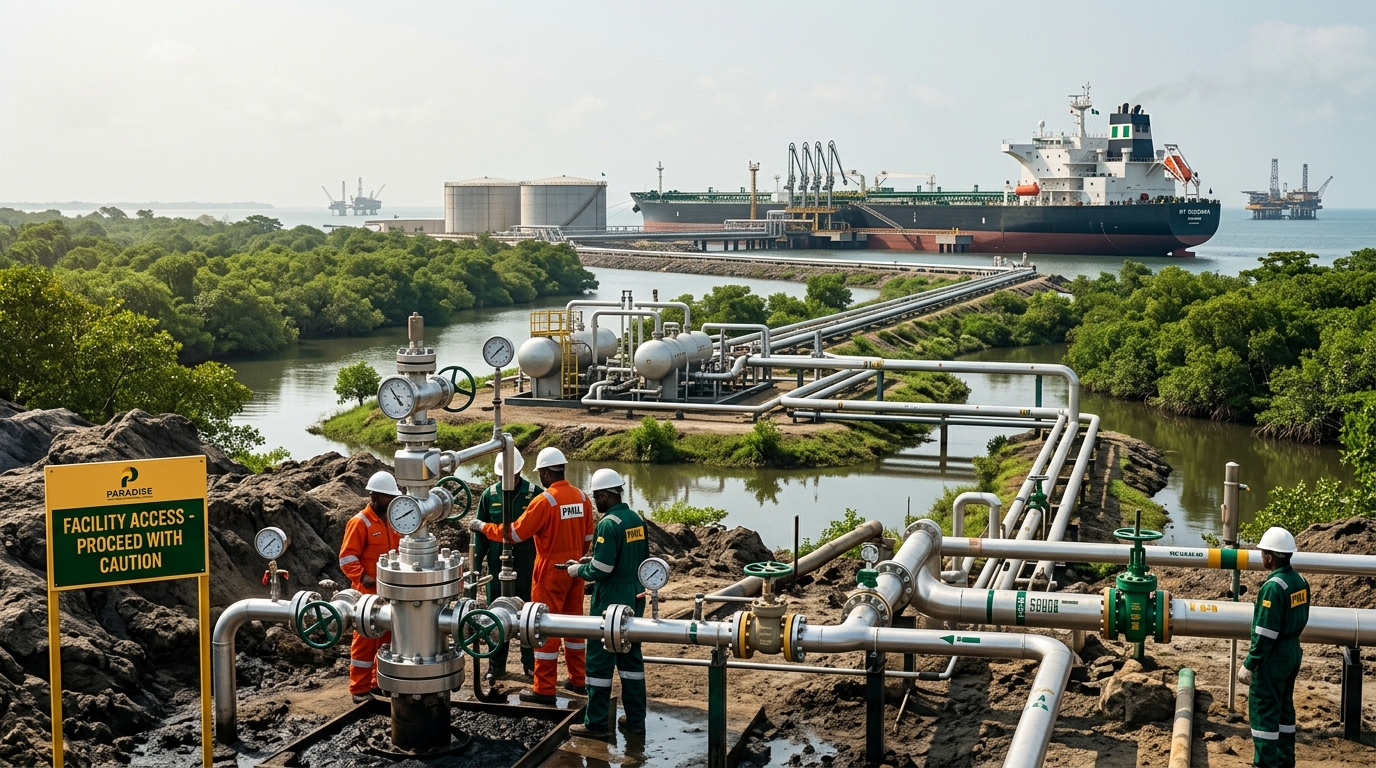
Nigerian Crude Oil Production: How Much Oil Does Nigeria Produce and Where Does It Come From?
Nigeria is one of Africa’s most important oil-producing countries, and Nigerian crude oil production remains a major part of the country’s energy sector and international trade.
But how much crude oil does Nigeria actually produce?
Where does Nigerian crude oil come from?
Which oil fields and terminals contribute the largest volumes?
And how does crude oil move from Nigerian production fields into the international market?
These questions are important for international refineries, crude oil traders, energy analysts, investors and companies interested in sourcing Nigerian petroleum.
As of 2026, Nigeria’s crude oil production has been showing significant improvement compared with some of the lower production levels recorded in previous years.
According to the Nigerian Upstream Petroleum Regulatory Commission (NUPRC), Nigeria produced approximately 1.56 million barrels per day of crude oil in June 2026, excluding condensates. The Commission described this as the country’s highest monthly crude-only average since April 2020.
In August 2026, Nigeria produced approximately 1.50 million barrels per day of crude oil, excluding condensates, while combined crude oil and condensate production reached approximately 1.68 million barrels per day.
These figures demonstrate an important point: Nigeria’s oil production changes from month to month depending on field performance, maintenance, infrastructure availability, operational disruptions and crude evacuation conditions.
This article explains the Nigerian crude oil production system, where the oil comes from, how much Nigeria produces, the major producing areas and terminals, and how Nigerian crude eventually reaches international buyers.
How Much Crude Oil Does Nigeria Produce?
Nigeria’s crude oil production is not a fixed number.
Production changes daily and monthly.
Oil fields experience maintenance, operational interruptions, reservoir changes, pipeline availability issues and other factors that can affect output.
For example, NUPRC reported the following recent production figures:
| Period | Crude Oil Production |
|---|---|
| June 2026 | Approximately 1.56 million barrels/day |
| July 2026 | Approximately 1.505 million barrels/day |
| August 2026 | Approximately 1.50 million barrels/day |
These figures exclude condensates.
NUPRC reported that Nigeria’s combined crude oil and condensate production averaged approximately 1.735 million barrels per day in June 2026.
In July, combined crude oil and condensate production was approximately 1.67 million barrels per day.
By August, combined production increased slightly to approximately 1.678 million barrels per day.
This distinction between crude oil and condensates is important.
When researching Nigerian production statistics, readers should check whether a reported number includes condensates or refers strictly to crude oil.
Why Nigerian Oil Production Numbers Change
There are several reasons why Nigerian crude oil production does not remain constant.
These include:
- Oil field maintenance
- Production facility shutdowns
- Pipeline outages
- Crude oil evacuation constraints
- Equipment problems
- Security incidents
- Mature oil fields
- New field developments
- Offshore operational challenges
- Repairs and maintenance
- Production optimization
NUPRC’s July 2026 report, for example, attributed part of the monthly decline in crude production to operational challenges affecting the Erha and Akpo fields.
In August, NUPRC reported that the resolution of Single Buoy Mooring operational challenges at Erha contributed positively to production performance.
This demonstrates why crude production should be analyzed as a dynamic system rather than a single permanent number.
Where Does Nigerian Crude Oil Come From?
A large portion of Nigeria’s historical petroleum production has come from the Niger Delta and associated offshore petroleum systems.
The Niger Delta contains extensive petroleum infrastructure, including:
- Oil wells
- Flow stations
- Gathering systems
- Pipelines
- Storage facilities
- Export terminals
- Marine loading facilities
- Offshore production platforms
However, it is important to understand that not all Nigerian crude oil comes from traditional onshore Niger Delta fields.
Nigeria also produces significant volumes from offshore and deepwater developments.
The U.S. Energy Information Administration identifies a range of Nigerian crude streams associated with both onshore and offshore production, including Bonny Light, Forcados, Qua Iboe, Escravos, Bonga, Egina, Akpo, Erha and others.
Nigerian Crude Oil Production Regions
Nigeria’s petroleum production can broadly be considered across several geographical and operational environments.
1. Niger Delta Onshore
The traditional Niger Delta onshore environment includes oil-producing fields distributed across several southern Nigerian states.
These areas contain established petroleum infrastructure developed over many decades.
2. Niger Delta Swamp
Swamp and creek environments create unique operational requirements.
Operators may need specialized marine logistics, barges, flowlines and other infrastructure to reach production facilities and evacuate crude.
The terrain also creates additional challenges for infrastructure maintenance.
3. Shallow Water
Nigeria has petroleum assets located in shallow-water environments around the Niger Delta.
Production from these areas contributes to the country’s overall crude supply.
4. Deep Offshore
Deepwater production has become increasingly important to Nigeria’s petroleum industry.
Major offshore fields include:
- Bonga
- Egina
- Akpo
- Erha
- Usan
- Agbami
NUPRC stated in August 2026 that deep offshore production accounted for approximately 24% of Nigeria’s total oil production, highlighting the importance of offshore assets to the national petroleum system.
The Niger Delta and Nigerian Crude Oil Production
The Niger Delta remains central to understanding Nigerian petroleum.
Major petroleum-producing states associated with the region include:
- Rivers State
- Delta State
- Bayelsa State
- Akwa Ibom State
- Edo State
- Ondo State
- Abia State
- Imo State
However, the exact contribution of each state changes depending on the production period, asset classification and reporting methodology.
The petroleum system is also interconnected.
An oil field may be located in one geographical area while its crude is transported through infrastructure that connects it to a terminal or offshore loading system elsewhere.
This is why international buyers should focus on the specific crude stream, terminal and contractual supply arrangement, rather than simply asking which Nigerian state produces the oil.
Major Nigerian Crude Oil Streams
Nigeria produces several crude oil grades and streams.
Some of the best-known include:
Bonny Light
Bonny Light is one of the most internationally recognized Nigerian crude grades.
The EIA lists Bonny Light at approximately 35° API gravity and 0.15% sulfur.
Forcados
Forcados is another major Nigerian crude stream.
The EIA lists Forcados at approximately 32° API gravity and 0.20% sulfur.
Qua Iboe
Qua Iboe is associated with the Akwa Ibom petroleum-producing area.
The EIA lists it at approximately 38° API gravity and 0.12% sulfur.
Escravos
Escravos is another established Nigerian crude stream.
The EIA lists Escravos at approximately 32° API gravity and 0.20% sulfur.
Bonga
Bonga is associated with offshore production and represents the importance of deepwater petroleum to Nigeria’s crude output.
Egina
Egina is another major offshore Nigerian crude-producing development.
The variety of Nigerian crude grades is important because Nigerian crude oil is not one uniform product.
Different crude streams have different physical and chemical properties.
For buyers interested in particular Nigerian grades, Paradise MultiTrade provides information on buying Nigerian crude oil as well as specific opportunities such as Bonny Light crude oil from Nigeria and Forcados crude oil from Nigeria.
Major Nigerian Oil-Producing Fields
Nigeria has numerous producing oil fields.
Some of the names frequently encountered in Nigerian crude production data and industry discussions include:
- Bonga
- Egina
- Akpo
- Erha
- Agbami
- Usan
- Qua Iboe-associated production
- Forcados-associated production
- Bonny-associated production
- Escravos-associated production
- Utapate
The exact production contribution of each asset changes over time.
For example, NUPRC’s June 2026 data showed significant production associated with major terminals and offshore streams, including Bonny, Forcados, Qua Iboe, Escravos and Bonga.
In August 2026, NUPRC reported:
- Bonny Terminal: approximately 320.04 thousand barrels per day
- Forcados Terminal: approximately 317.40 thousand barrels per day
- Qua Iboe: approximately 171.72 thousand barrels per day of crude oil and condensates
- Escravos Oil Terminal: approximately 131.71 thousand barrels per day
- Bonga: approximately 92.50 thousand barrels per day of crude oil
These figures demonstrate the importance of Nigeria’s major production and export systems.
How Is Crude Oil Produced in Nigeria?
The production process begins deep underground.
Crude oil exists within geological formations known as reservoirs.
The basic process can be simplified into several stages.
Stage 1: Exploration
Before crude oil can be produced, companies must identify potential petroleum-bearing geological structures.
Exploration can involve:
- Geological studies
- Seismic surveys
- Exploration wells
- Reservoir evaluation
- Geological modelling
The objective is to determine whether commercially recoverable hydrocarbons are present.
Stage 2: Drilling the Oil Well
Once an exploration or development programme identifies a commercially viable reservoir, wells can be drilled.
A drilling rig creates a wellbore extending from the surface toward the reservoir.
The well is then completed using specialized equipment designed to allow controlled production.
Modern oil wells can be located:
- Onshore
- In swamp environments
- In shallow water
- Offshore
- In deepwater
The technical requirements differ significantly depending on the environment.
Stage 3: Bringing Crude to the Surface
Once a production well is completed, crude oil can be brought to the surface.
Reservoir pressure may provide some of the energy needed for production.
Additional artificial-lift systems may also be used where required.
The produced stream may contain more than crude oil.
It can also contain:
- Natural gas
- Water
- Sediments
- Other hydrocarbons
This means the production stream generally needs additional handling and processing before crude can be transported for export.
Stage 4: Separation and Processing
At production facilities, crude oil can undergo separation and treatment.
The objective is to separate crude oil from associated gas, produced water and other unwanted components.
Depending on the field and facility configuration, production may pass through:
- Separators
- Treatment systems
- Measurement equipment
- Storage facilities
- Gas-handling systems
- Water-treatment systems
The precise equipment varies according to the field.
Stage 5: Gathering Crude Oil
Crude from individual wells may be transported through flowlines toward gathering facilities.
Multiple wells can feed into a gathering system.
This allows production from different wells to be collected and processed as part of the wider field operation.
Stage 6: Flow Stations
Flow stations play an important role in many Nigerian oil production systems.
They can receive production from multiple wells and provide processing, measurement and separation functions.
NUPRC’s regulatory responsibilities include monitoring operations at drilling sites, producing wells, production platforms and flow stations.
A simplified production chain can therefore look like this:
Oil Reservoir
↓
Production Well
↓
Flowline
↓
Flow Station
↓
Pipeline / Evacuation System
↓
Storage / Export Terminal
↓
Crude Oil Tanker
↓
International Refinery
Stage 7: Crude Oil Evacuation
After processing and gathering, crude must be moved toward its next destination.
This is known as crude evacuation.
Depending on the location, evacuation can involve:
- Pipelines
- Marine transportation
- Barges
- Offshore loading systems
- Floating production facilities
- Storage systems
Reliable crude evacuation is critical.
A producing field may have available underground reserves, but if its production cannot be safely transported to an appropriate destination, actual marketable production can be affected.
NUPRC’s recent production reports repeatedly highlight the importance of crude evacuation operations to maintaining production levels.
Stage 8: Export Terminal
The crude eventually reaches an export terminal or offshore loading system.
At this point, the crude can be measured, stored and prepared for lifting.
Nigeria’s major crude export systems include:
- Bonny
- Forcados
- Qua Iboe
- Escravos
- Bonga
- Brass
- Other offshore and terminal systems
NUPRC’s National Production Monitoring System directly monitors production and exports, including data transmitted from onshore and offshore export terminals.
This digital monitoring system is designed to provide more accurate and timely production and export information.
Stage 9: Tanker Loading
Once the crude cargo is ready for lifting, an appropriate tanker can be loaded.
The vessel transports the crude from Nigeria to the destination market.
The voyage may involve:
- Nigerian export terminal
- Loading operation
- Ocean voyage
- Destination port
- Discharge terminal
- Refinery or storage facility
The exact shipping requirements depend on the crude cargo, vessel, terminal, destination and transaction structure.
International buyers requiring logistical assistance can explore crude oil shipping and tanker charter assistance.
Stage 10: Refining the Nigerian Crude
The final destination for crude oil is often a refinery.
A refinery processes crude into petroleum products.
Depending on the refinery configuration, crude can be processed into products such as:
- Gasoline
- Diesel
- Jet fuel
- Kerosene
- Fuel oils
- LPG-related products
- Petrochemical feedstocks
- Other refined petroleum products
The specific yield depends on the crude characteristics and refinery configuration.
This is why refinery buyers should specify their crude requirements carefully.
Why Crude Quality Matters
Two Nigerian crude grades can have different characteristics.
Important crude specifications may include:
- API gravity
- Sulfur content
- Water and sediment
- Acidity
- Metals
- Salt
- Distillation characteristics
- Viscosity
The EIA’s Nigerian crude-grade data illustrates the differences between individual Nigerian streams.
For example, Bonny Light, Forcados, Qua Iboe and other Nigerian crude streams have different API and sulfur characteristics.
A refinery therefore needs to determine which crude grades are suitable for its configuration.
For appropriate transactions, buyers may also require independent inspection and laboratory analysis. Paradise MultiTrade provides commodity analysis and laboratory testing support as part of its broader trade facilitation services.
What Are Nigeria’s Major Crude Oil Export Terminals?
Nigeria has several important crude oil export terminals and offshore loading systems.
Among the most recognizable are:
Bonny Terminal
Bonny is one of Nigeria’s most important petroleum export hubs.
It is associated with Bonny Light crude and is also located near Nigeria’s LNG infrastructure.
Forcados Terminal
Forcados is another major Nigerian crude export system and is associated with the Forcados crude stream.
Qua Iboe Terminal
Qua Iboe is associated with the Qua Iboe crude stream and offshore petroleum production.
Escravos Terminal
Escravos is associated with the Escravos crude stream and petroleum infrastructure in Delta State.
Bonga
Bonga is an offshore production and loading system that demonstrates the importance of deepwater petroleum production in Nigeria.
NUPRC’s 2026 production reports show the continuing contribution of these major systems to Nigeria’s overall crude output.
How Nigerian Crude Oil Reaches International Markets
Once crude reaches an export terminal, it becomes part of the international physical oil market.
A simplified export journey is:
Nigerian Oil Field
→
Production Facility
→
Gathering System
→
Crude Evacuation
→
Export Terminal
→
Tanker
→
International Port
→
Refinery
→
Petroleum Products
Nigeria has historically been heavily connected to international crude markets.
The EIA reported that Nigeria exported approximately 1.3 million barrels per day of crude oil and condensate in 2024, with Europe receiving the largest share of those exports.
This makes the reliability of Nigeria’s upstream production and export infrastructure important not only domestically but also internationally.
How Much of Nigerian Oil Is Exported?
Nigeria has historically exported a significant portion of its crude production.
NUPRC’s 2025 production analysis reported that total crude oil and condensate production averaged approximately 1.62 million barrels per day in 2025, with about 82% allocated to export volumes and approximately 18% allocated to domestic refinery supply.
The balance between exports and domestic supply can change as domestic refining capacity develops.
Nigeria’s expanding refining sector means that domestic crude supply is increasingly important as well.
For international buyers, this means the Nigerian crude market should be viewed as having both:
International export demand
and
Growing domestic refining demand.
Nigerian Crude Oil Production and Domestic Refineries
Historically, Nigeria has exported large quantities of crude while importing significant volumes of refined petroleum products.
The situation is changing as domestic refining capacity expands.
The EIA identifies the Dangote refinery in Lagos as a major operating refinery with a nameplate capacity of approximately 650,000 barrels per day, while also listing other Nigerian refineries and their status.
NUPRC has also reported improvements in domestic crude supply to local refiners.
Between April and June 2026, NUPRC reported that 53.7 million barrels of crude oil were supplied to local refineries, representing an overall Q2 performance of 97.4% under the domestic crude supply framework.
This development is significant because it creates another important destination for Nigerian crude besides international export.
Challenges Affecting Nigerian Crude Oil Production
Nigeria’s crude production has faced several challenges over the years.
These include:
Mature Oil Fields
Some Nigerian fields have been producing for decades.
Mature fields can experience declining production unless additional investment, technology and reservoir-management techniques are applied.
The EIA identifies mature producing fields as one of the factors contributing to Nigeria’s production decline over the past decade.
Pipeline and Infrastructure Problems
Pipelines are essential to many Nigerian crude evacuation systems.
Pipeline outages can restrict the ability to move crude from production areas to export facilities.
Infrastructure reliability is therefore directly connected to production performance.
Crude Oil Theft
Crude theft has historically affected Nigeria’s petroleum industry.
Illegal connections and unauthorized crude removal can result in production losses, infrastructure damage and environmental consequences.
Security Challenges
Security incidents can disrupt operations around petroleum infrastructure.
Reduced disruption has contributed to recent improvements in Nigerian production.
NUPRC’s June 2026 production report specifically linked improved output to stable production operations and the absence of major pipeline outages during the month.
Offshore Operational Challenges
Offshore fields require sophisticated infrastructure and specialized technical operations.
Problems involving subsea equipment, production facilities, offshore loading systems or other infrastructure can temporarily affect production.
The Erha and Akpo operational challenges reported by NUPRC in July 2026 demonstrate how offshore issues can affect national production statistics.
New Developments Supporting Nigerian Oil Production
Nigeria continues to develop new petroleum opportunities.
Recent production growth has partly benefited from newer projects.
The EIA identified projects including Akpo West, Ikike and Utapate as contributing to Nigeria’s recovery from lower production levels.
NUPRC has also emphasized production optimization, recovery of shut-in volumes, reduction of losses and faster development of petroleum resources as part of its upstream strategy.
In addition, Nigeria’s 2025 licensing round included blocks across Niger Delta onshore, Niger Delta shallow water, Niger Delta deep offshore and several frontier basins.
This indicates that Nigeria’s future oil production is expected to involve both optimization of existing assets and development of new petroleum resources.
What Does Nigerian Crude Production Mean for International Buyers?
For an international refinery or oil trading company, production numbers are important because they help provide market context.
However, national production figures do not mean that every barrel is immediately available for purchase.
A buyer needs to distinguish between:
National production
and
Available commercial cargo.
A legitimate crude transaction requires a specific supply arrangement.
The buyer should establish:
- Crude grade
- Available quantity
- Loading location
- Loading window
- Seller identity
- Seller authority
- Quality specification
- Inspection procedure
- Contractual terms
- Payment structure
- Shipping arrangements
- Destination requirements
This is particularly important when purchasing physical crude oil.
How to Start a Nigerian Crude Oil Procurement Enquiry
An international buyer interested in Nigerian crude should provide enough information to allow the requirement to be properly evaluated.
A typical enquiry may include:
Buyer company
Registered company name and relevant corporate information.
Crude requirement
For example:
- Bonny Light
- Forcados
- Qua Iboe
- Escravos
- Other acceptable Nigerian grade
Quantity
State the required volume.
Delivery destination
Identify the refinery, port or discharge location.
Purchase frequency
Clarify whether the requirement is:
- Spot
- Trial cargo
- Monthly
- Term contract
- Long-term supply
Technical specification
Provide the refinery’s acceptable crude parameters.
Commercial requirements
Include relevant transaction and payment requirements.
International buyers can submit a Nigerian crude oil supplier enquiry with their requirements.
Buyer Registration for Nigerian Crude Oil
Before progressing with a physical crude transaction, buyer identification is an important part of commercial due diligence.
A genuine buyer should be able to demonstrate:
- Corporate identity
- Purchasing requirement
- Destination
- Refinery or trading capability
- Authorized representatives
- Commercial capacity appropriate to the transaction
Companies can register as Nigerian crude oil buyers as part of the procurement process.
This helps establish the commercial requirements before discussions progress further.
LOI and ICPO for Nigerian Crude
Depending on the transaction structure, buyers may be asked to submit commercial documentation such as an LOI or ICPO.
These documents can communicate:
- Buyer identity
- Product
- Quantity
- Destination
- Purchasing intention
- Commercial requirements
However, an LOI or ICPO should not be considered proof that a seller owns a particular cargo.
Proper verification remains necessary.
Buyers who have a defined requirement can submit an LOI or ICPO for Nigerian crude oil.
Requesting an FCO
Once the buyer requirement and commercial framework are established, an FCO may be requested where appropriate.
A Full Corporate Offer can contain proposed terms such as:
- Product
- Quantity
- Price
- Loading location
- Delivery terms
- Payment terms
- Procedure
- Validity period
The precise contents vary between transactions.
Buyers can request an FCO for Nigerian crude oil when appropriate to their procurement process.
Why Crude Oil Verification Matters
The international crude oil market involves large transaction values.
Consequently, buyers should not rely solely on emails, documents or claims from intermediaries.
Commercial due diligence can involve verifying:
- Counterparty identity
- Corporate registration
- Authority to sell
- Product specification
- Cargo availability
- Terminal information
- Inspection arrangements
- Shipping arrangements
- Contract documentation
Independent inspection and laboratory testing may also be relevant.
This is particularly important when the buyer requires a particular crude specification for a refinery.
The Role of NUPRC in Nigerian Crude Production
The Nigerian Upstream Petroleum Regulatory Commission plays a central regulatory role in Nigeria’s upstream petroleum industry.
NUPRC’s responsibilities include monitoring petroleum operations involving:
- Drilling sites
- Producing wells
- Production platforms
- Flow stations
- Crude oil export terminals
- Pipelines
The Commission also operates the National Production Monitoring System, which collects production and export information through electronic data transmission.
This monitoring infrastructure is important for production accounting, regulatory oversight and national petroleum statistics.
Nigerian Crude Oil Production: What the Numbers Really Tell Us
Production statistics provide an important snapshot of Nigeria’s petroleum industry.
But one monthly production number cannot tell the whole story.
A serious analysis should consider:
- Production volume
- Crude versus condensate
- Field performance
- Terminal performance
- Export volumes
- Domestic refinery supply
- Infrastructure reliability
- New projects
- Shut-in production
- Maintenance
- Security conditions
- International oil-market conditions
For example, Nigeria’s June 2026 production increase was associated with stable operations and improved crude evacuation, while July experienced operational challenges at Erha and Akpo. August then benefited from the resolution of the Erha SBM challenge.
This shows why current, verified data matters when evaluating Nigerian crude availability.
Frequently Asked Questions About Nigerian Crude Oil Production
How much crude oil does Nigeria produce per day?
Nigeria’s crude production varies. NUPRC reported approximately 1.56 million barrels per day in June 2026, approximately 1.505 million barrels per day in July, and approximately 1.50 million barrels per day in August, excluding condensates.
Where does Nigerian crude oil come from?
Nigerian crude comes from onshore, swamp, shallow-water and offshore petroleum assets, with the Niger Delta remaining a major production region.
What are Nigeria’s major crude oil grades?
Major Nigerian crude streams include Bonny Light, Forcados, Qua Iboe, Escravos, Bonga, Egina, Akpo, Erha and others.
Which Nigerian crude oil terminal produces the most?
Terminal output changes over time. In August 2026, NUPRC reported Bonny Terminal at approximately 320.04 thousand barrels per day and Forcados Terminal at approximately 317.40 thousand barrels per day.
Does Nigeria produce oil offshore?
Yes. Offshore production is an important part of Nigerian crude production. NUPRC reported that deep offshore production accounted for approximately 24% of total oil production in 2026.
Is Nigerian crude oil exported?
Yes. Nigeria exports substantial quantities of crude oil and has several major export terminals and offshore loading systems.
Can an international refinery buy Nigerian crude oil?
International buyers can enquire about Nigerian crude, subject to availability, specifications, commercial terms, verification, regulatory requirements and appropriate transaction procedures.
How can I buy Nigerian crude oil?
A buyer can begin by defining the desired crude grade, quantity, destination and delivery requirements, then submitting a structured procurement enquiry. You can contact Paradise MultiTrade’s Oil & Gas Desk to discuss a specific requirement.
Conclusion
Nigerian crude oil production is a large and complex system involving oil reservoirs, wells, flow stations, pipelines, offshore platforms, gathering systems, export terminals, tankers and international refineries.
Nigeria’s production level changes continuously.
Recent NUPRC figures show crude production reaching approximately 1.56 million barrels per day in June 2026, followed by approximately 1.505 million barrels per day in July and approximately 1.50 million barrels per day in August, excluding condensates.
The oil comes from a combination of traditional Niger Delta assets and offshore developments.
Major crude streams such as Bonny Light, Forcados, Qua Iboe, Escravos and Bonga form part of Nigeria’s diverse petroleum portfolio, each with its own characteristics and commercial considerations.
The journey from an oil reservoir to an international refinery involves many stages:
Exploration → Drilling → Production → Separation → Gathering → Evacuation → Export Terminal → Tanker → International Refinery
For international buyers, understanding this chain is essential.
National production figures provide useful market context, but they should not automatically be interpreted as available commercial cargo. A genuine procurement process requires verification of the specific crude grade, quantity, availability, loading arrangements, seller authority, quality specifications, inspection requirements and shipping arrangements.
If your company is looking to source Nigerian crude oil, you can begin a Nigerian crude oil enquiry, register as a crude oil buyer, or contact the Paradise MultiTrade Oil & Gas Desk for commercial discussion.