
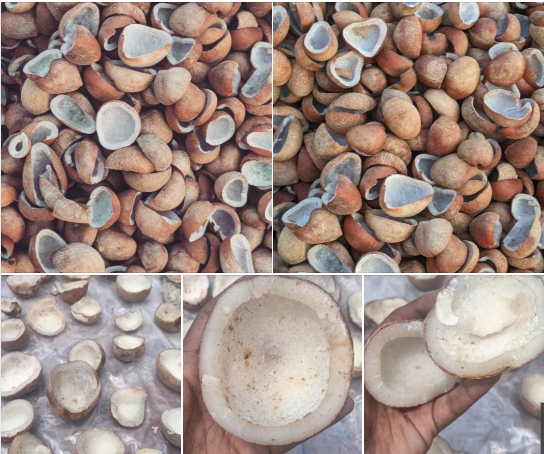

Nigerian Dried Copra: The Dried Coconut Meat That Bridges Two Completely Different Commercial Worlds — The Century-Old Industrial Copra Oil Trade Whose Commodity Pricing Reflects Volume Economics, and the Premium Virgin Coconut Oil Market Whose Consumer Retail Pricing Reflects the Wellness Industry’s Discovery of Lauric Acid as a Functional Food Compound — With Nigerian Coastal Production Positioned to Serve Both
Dried Copra Exporter Nigeria — Sun-Dried and Kiln-Dried Copra, Desiccated Coconut, Oil-Grade Copra, and Fresh Coconut for Processing, Direct Coastal Belt Sourcing, Bulk Supply to Coconut Oil Refineries, Virgin Coconut Oil Producers, Desiccated Coconut Manufacturers, Food Ingredient Companies, Oleochemical Producers, and Global Commodity Wholesale Buyers Worldwide
Dried copra exporter Nigeria is a search phrase whose commercial context sits at a genuinely fascinating intersection: the coconut industry has simultaneously one of the world’s oldest commodity trade histories — copra (dried coconut meat) has been traded internationally for oil extraction since the 19th century — and one of the most commercially dynamic premium product stories of the past two decades, as the global wellness market’s discovery of virgin coconut oil’s lauric acid content and medium-chain triglyceride (MCT) health positioning transformed what was once a commodity industrial oil into a premium consumer retail product whose pricing trajectory the industrial copra trade did not anticipate.
The commercial consequence of this dual identity is that buyers who search for dried copra in 2026 are operating in one of two entirely different procurement frameworks: the commodity industrial buyer who wants maximum oil content per tonne at minimum moisture for copra oil extraction at prices reflecting the commodity market; and the premium product buyer who wants authenticated origin, documented processing method, and minimum heat treatment to preserve the volatile aromatic compounds and bioactive components that distinguish virgin coconut oil’s premium positioning from refined, bleached, and deodorised (RBD) commodity coconut oil. Both buyers need copra — but they need it processed differently, documented differently, and priced according to entirely different commercial frameworks.
Cocos nucifera — the coconut palm — is one of the few commercially important food plants in this series whose global distribution is so extensive that it has acquired the designation “tree of life” in virtually every tropical culture that cultivates it. In Nigeria, the coconut palm is concentrated along the Atlantic coastal belt stretching from Lagos State through Ogun, Oyo (coastal areas), Delta, Bayelsa, Rivers, Cross River, and Akwa Ibom states — where the combination of sandy coastal soils, high humidity, abundant rainfall, and the warm temperatures of the Atlantic coastal zone create the growing conditions that Cocos nucifera specifically requires. Nigerian coastal community cultivation of coconut palms — combining subsistence food use, fresh coconut water consumption, and commercial kernel processing — creates a production base whose formal export formalisation through Paradise MultiTrade’s copra programme is building the commercial infrastructure that connects West African coastal coconut production to international buyers.
At Paradise MultiTrade International Limited, dried copra is a strategically significant emerging export category — sourced from coastal community processing operations across Nigeria’s Atlantic coastal states, processed into sun-dried copra, kiln-dried copra, desiccated coconut, and oil-grade copra appropriate to the full range of international buyer requirements, and exported with full food safety, analytical, and quality documentation.
To discuss sourcing immediately, request a quotation here and our export team responds within 48 hours.
History and Origin — The Tree of Life and Its Ancient Commercial Journey
Cocos Nucifera — Pantropical Distribution, Uncertain Origin, Universal Cultural Integration
Cocos nucifera is the most widely distributed large food plant in the world — cultivated across virtually every tropical coastal and island geography between 20°N and 20°S latitude. Its botanical origin is scientifically debated — genetic evidence suggests both Pacific and Indian Ocean population origins, with the most current research from NCBI’s plant genetics database supporting a dual domestication hypothesis whose Pacific and Indian Ocean origin populations were distributed globally through human maritime migration before recorded history.
What is commercially certain is that Cocos nucifera arrived along West Africa’s Atlantic coast through Portuguese maritime trade networks whose 15th and 16th century East African and Indian Ocean contacts provided the biological material that established coconut cultivation in West African coastal communities. The palm’s adaptation to Nigeria’s Atlantic coastal sandy soils and humid tropical climate was rapid — creating the coastal belt cultivation tradition that persists today in Lagos, Ogun, Delta, Bayelsa, Rivers, Cross River, and Akwa Ibom states.
The international copra trade — in which dried coconut meat (copra) was shipped from tropical producing regions to European and American industrial oil extraction facilities — was one of the foundational commodity trades of the 19th and early 20th century global economy. The Philippines, Indonesia, Sri Lanka, India, and Papua New Guinea developed the most commercially significant copra export industries — with European copra crushing mills in Marseille, Hamburg, and Rotterdam building their industrial infrastructure around processing tropical copra into the lauric oil that soap manufacturers, margarine producers, and oleochemical companies required.
Nigeria’s participation in this trade was historically modest — a function of production scale, processing infrastructure, and the commercial relationship between coastal community production and formal export channels rather than any fundamental quality limitation. The commercial development opportunity that Paradise MultiTrade’s programme addresses is the formalisation of Nigerian copra export supply chains whose quality documentation, food safety testing, and commercial buyer relationship development progressively build the export infrastructure that the production base has always supported.
The Virgin Coconut Oil Revolution — How Wellness Changed the Commercial Landscape
The most commercially significant development in the coconut industry in the past two decades is not a supply chain story — it is a consumer health narrative whose commercial translation transformed the pricing economics of coconut-derived products at every level of the supply chain.
The discovery — or more precisely the rediscovery, since traditional tropical communities had consumed coconut oil throughout recorded history without the metabolic harm that mid-20th century nutrition science incorrectly attributed to saturated fats — of medium-chain triglycerides (MCTs) as a metabolically distinctive class of dietary fat whose rapid absorption, ketone body production, and potential weight management benefits were documented through clinical research accessible via NCBI’s nutrition and metabolism research database, created a premium consumer health product category whose pricing reflected perceived therapeutic value rather than commodity oil economics.
Virgin coconut oil — extracted from fresh coconut meat (or from dried copra processed without heat that would destroy volatile aromatic compounds) using mechanical pressing without chemical refining — became one of the most commercially successful wellness food products of the 2010s. Retail pricing of USD 20–60 per litre in European and American natural food stores contrasts dramatically with commodity coconut oil pricing of USD 1–3 per litre at wholesale — creating the premium margin that has attracted investment in premium coconut supply chains and that makes the quality differentiation between processing grades commercially decisive.
The International Coconut Community (ICC) — the intergovernmental organisation coordinating global coconut industry development — has specifically tracked the virgin coconut oil market’s growth and its impact on upstream copra and fresh coconut procurement as a major industry development driver.
What Is Nigerian Copra? The Botanical Profile, Oil Chemistry, Processing Methods, and Commercial Product Range
Cocos Nucifera — The Nut Whose Dried Meat Creates Commercial Value
Cocos nucifera produces the coconut fruit — botanically a drupe — whose commercial layers correspond directly to distinct product categories:
Coconut water (endosperm liquid) — the clear liquid inside immature coconuts (young green coconuts) — the hydration beverage whose commercial retail market is tracked through Grand View Research’s coconut water market analysis at over USD 6 billion annually.
Coconut meat (endosperm solid) — the white, firm flesh layer inside the hard shell of mature coconuts — the raw material for copra production, desiccated coconut, coconut cream, and coconut milk. This is the commercial substance of this article’s product.
Coconut oil — extracted from dried copra (RBD process for commodity oil) or from fresh coconut meat (cold-pressed for virgin coconut oil) — the lauric acid-rich oil whose applications we document in the section below and whose commercial story was introduced in our coconut oil article.
The Oil Chemistry — Identical to Palm Kernel Oil in Lauric Acid Profile
Coconut oil’s fatty acid composition is remarkably similar to palm kernel oil — both are lauric acid-dominant oils whose shared commercial applications create them as the two primary global lauric oil sources:
Lauric acid (C12:0) — approximately 47–53% of total coconut oil fatty acids — slightly higher than palm kernel oil’s 46–52% range — making coconut oil the world’s highest-lauric-acid commercially traded oil. Research on coconut oil’s fatty acid profile published through FAO’s food composition programme and Journal of Agricultural and Food Chemistry confirms this concentration range across varieties and growing origins.
Myristic acid (C14:0) — approximately 17–20% — slightly higher than palm kernel oil.
Caprylic acid (C8:0) and Capric acid (C10:0) — approximately 13–15% combined — the shorter-chain MCTs whose specific metabolic properties (fastest absorption, most ketogenic) are the primary compounds referenced in MCT oil nutraceutical research published through NCBI’s metabolism research database.
Palmitic acid (C16:0) — approximately 8–10% — the long-chain saturated acid whose presence is lower than in palm kernel oil.
Oleic acid (C18:1) — approximately 5–7% — the monounsaturated fraction whose antioxidant contribution provides modest oxidative stability alongside the saturated fat majority.
The Critical Processing Method Distinction — Virgin vs RBD
Virgin Coconut Oil (VCO) processing — fresh coconut meat is cold-pressed at below 40°C (wet process) or fresh coconut milk is fermented and separated (wet-milling process) — preserving the polyphenols, tocopherols, and volatile aromatic compounds that distinguish VCO from RBD. The characteristic mild coconut aroma, subtle sweetness, and natural antioxidant content that premium VCO consumers specifically value are entirely dependent on minimal-heat processing. Research on VCO’s polyphenol content published through NCBI confirms significantly higher antioxidant activity versus RBD coconut oil.
RBD (Refined, Bleached, Deodorised) Coconut Oil processing — dried copra is solvent-extracted or mechanically pressed at high temperature — producing crude coconut oil that is then refined (removing free fatty acids by neutralisation), bleached (removing colour and remaining impurities through activated earth treatment), and deodorised (removing off-flavours through steam stripping). RBD produces a neutral-flavoured, clear-to-white oil with extended shelf life — the commercial grade for food manufacturing applications where coconut aroma would be undesirable and where price competitiveness matters more than premium positioning.
The copra quality implication: For VCO processing — fresh, minimally dried coconut meat with maximum moisture below 6%, harvested at optimal maturity, and processed within days of drying produces the highest-quality VCO. For RBD processing — commercial copra dried to below 6% moisture with maximum oil content and minimum FFA is the appropriate specification.
Four Commercial Product Forms
Sun-Dried Copra — the traditional processing form whose exposure to direct sunlight dries coconut meat to below 6% moisture over 3–7 days — lower processing cost but higher contamination risk from mould, insects, and soil contact. Commercial grade for RBD oil extraction.
Kiln-Dried Copra — mechanically dried at 60–80°C for faster, more consistent moisture reduction with lower mould and contamination risk — preferred for premium-grade oil extraction and for buyers whose aflatoxin compliance programmes require documented controlled drying.
Desiccated Coconut — fresh coconut meat finely shredded or grated and dried at controlled temperature (below 80°C) to below 3% moisture — the food-grade form used in confectionery, bakery, and food manufacturing as a coconut ingredient. Distinct from copra in that desiccated coconut is produced from fresh coconut meat without prior copra drying.
Virgin Coconut Oil (Cold-Pressed) — produced from fresh or minimally dried coconut meat at below 40°C — the premium food and nutraceutical product form whose processing Paradise MultiTrade coordinates from coastal community fresh coconut processing.
Benefits and Industrial Uses of Nigerian Copra
Coconut Oil Refining — The Primary Industrial Application
The global coconut oil market — tracked through Grand View Research’s coconut oil market analysis at over USD 5 billion annually — creates the primary commercial procurement stream for copra as a raw material:
RBD coconut oil for food manufacturing — refined coconut oil’s neutral flavour, high smoke point (200–232°C depending on refinement grade), and solid-to-liquid transition at approximately 24–26°C create specific food manufacturing applications in: premium margarine and shortening (where coconut oil’s natural semi-solid character reduces hydrogenation requirements), confectionery coating fats (where its sharp melt-mouth character creates confectionery snap and texture), non-dairy coffee creamer (whose coconut oil fat base mimics dairy creamer mouthfeel), and commercial frying oil blends (particularly in Asian food manufacturing where coconut oil’s specific flavour threshold at frying temperatures creates accepted mildly coconut-flavoured fried products).
Virgin coconut oil for premium food and nutraceutical retail — the most commercially dynamic market segment whose consumer retail pricing creates the premium margin that justifies investment in quality-documented, origin-authenticated, cold-pressed Nigerian VCO. For VCO manufacturers building West African origin supply positions — Nigerian coastal community fresh coconut creates authentic origin differentiation from Philippine and Indonesian dominant supply. The Organic Trade Association (OTA) tracks organic VCO market development — whose certified organic production requires documented organic farming practices that Nigerian smallholder coastal coconut cultivation’s traditional minimal-input farming systems can support with appropriate certification.
For coconut oil refinery buyers evaluating Nigerian copra — contact our export team to discuss oil content specification and aflatoxin documentation.
Food Manufacturing — Desiccated Coconut
The global desiccated coconut market — tracked through Mordor Intelligence’s desiccated coconut market report at over USD 500 million annually — creates specific food-grade procurement demand for finely shredded or grated dried coconut whose food manufacturing applications span:
Confectionery and chocolate manufacturing — desiccated coconut as a confectionery ingredient in chocolate bars, coconut truffle centres, coconut macaroons, and Bounty-style chocolate-coconut bars creates consistent food-grade procurement demand from European and American confectionery manufacturers. Cadbury, Nestlé, and Mars-affiliated confectionery operations collectively consume significant desiccated coconut volumes annually.
Bakery ingredient — desiccated coconut in premium biscuit, cake, and bread formulations whose coconut flavour and texture contribution creates product differentiation in mainstream bakery.
Breakfast cereal and muesli inclusion — desiccated coconut as a premium natural ingredient in high-end muesli, granola, and breakfast cereal whose visual identity and flavour contribution attract premium natural food consumers.
Asian and Middle Eastern culinary applications — desiccated coconut in traditional Indian, Sri Lankan, Thai, and Middle Eastern cuisine creates consistent food service and industrial procurement demand from manufacturers supplying these cultural food markets.
Oleochemical Manufacturing — Lauric Acid Derivatives
As documented in the palm kernel article — the oleochemical industry’s requirement for C12 lauric acid creates coconut copra as a co-source of lauric acid feedstock alongside palm kernel oil. For oleochemical manufacturers whose product lines include sodium lauryl sulphate (SLS), lauryl alcohol, glyceryl laurate, and related C12 derivatives — Nigerian copra provides a West African origin lauric oil feedstock whose supply diversification from Philippine and Indonesian dominant origins creates the same resilience benefits documented for palm kernel.
The Oleochemical Market Analysis from Grand View Research confirms coconut-derived lauric acid’s established position in surfactant and emulsifier manufacturing — alongside palm kernel-derived lauric acid — as the two primary commercial sources.
Nutraceutical and Functional Food Industry — MCT Oil and Ketogenic Products
The global MCT oil market — tracked through Grand View Research’s MCT oil market analysis at over USD 3 billion annually — is one of the fastest-growing nutraceutical categories whose raw material chain begins with coconut copra:
MCT oil production — fractionation of coconut oil to isolate caprylic (C8) and capric (C10) fatty acids — the two shortest-chain MCTs whose specific metabolic properties (immediate hepatic ketone body production without transit through lymphatic system) are the primary clinical basis for MCT oil’s documented applications in ketogenic diet support, cognitive function, and athletic performance documented through NCBI’s MCT metabolism research.
Ketogenic diet formulation — coconut oil and MCT oil’s role in ketogenic diet nutrition is one of the most commercially significant functional food drivers in premium food retail — tracked through Innova Market Insights’ global ketogenic product launch database as one of the most dynamically growing functional nutrition categories.
Brain health supplement — the specific research on MCT oil’s potential benefit for Alzheimer’s disease management through ketone body provision to glucose-impaired neurons — published through NCBI’s neurology research database and reviewed through Alzheimer’s Research UK — creates nutraceutical market development interest in coconut-derived MCT products for the growing brain health supplement category.
Cosmetics and Personal Care Industry
Coconut oil — extracted from copra through various processing methods — has established itself as one of the most commercially ubiquitous cosmetics ingredient in natural personal care:
Hair care — coconut oil’s documented ability to penetrate hair shaft (uniquely among common cosmetics oils — due to its lauric acid’s small molecular size and affinity for hair protein) — confirmed through NCBI’s hair care research database — creates the evidence base for hair oil, hair mask, and deep conditioning formulation applications whose commercial scale is enormous.
Skin care — coconut oil’s emollient, antimicrobial (from lauric acid’s documented antibacterial and antiviral activity through lipid envelope disruption), and skin barrier enhancement properties create skin care formulation applications tracked through Mintel’s global skin care innovation database.
Lip care — coconut oil as primary emollient in lip balm, lip gloss, and lip treatment formulations — one of the most commercially widespread cosmetics applications by number of SKUs containing coconut oil.
INCI nomenclature — coconut oil is classified as Cocos Nucifera (Coconut) Oil in the INCI Decoder international cosmetics naming system. The Cosmetic Ingredient Review (CIR) has assessed coconut oil in cosmetics — confirming safety for use.
Why Buy Copra From Nigeria?
The West African Terroir Differentiation — A Genuinely Different Coconut
Nigerian coastal coconut palms — cultivated in the Atlantic coastal belt whose specific combination of sandy loam soils, high humidity, proximity to the ocean, and Atlantic coastal climate creates growing conditions that differ meaningfully from Philippine, Indonesian, and Sri Lankan plantation environments — produce coconuts whose oil composition shows documented variation from Asian origin material.
Research on Cocos nucifera fatty acid composition variation across growing environments — reviewed through NCBI’s plant biochemistry database — confirms that soil mineral profile, water table salinity proximity to ocean, and temperature regime all influence the specific lauric:myristic acid ratio and the minor fatty acid composition of the resulting coconut oil. For premium VCO brands whose product positioning communicates specific origin authenticity — West African Nigerian coastal coconut provides a genuinely differentiated terroir story that Philippine or Indonesian origin cannot replicate.
Supply Diversification From Asian Dominant Origins
The Philippines, Indonesia, India, and Sri Lanka collectively dominate global copra and coconut oil production — accounting for approximately 80–90% of internationally traded coconut oil according to ITC Trade Map and ICC trade statistics. The same supply concentration risk documented throughout this series applies: Philippine typhoon events, Indonesian land-use policy changes, and logistics disruptions in Asian shipping routes all create supply volatility that buyers without diversified origin positions must entirely absorb.
Nigerian origin provides Atlantic coast supply diversification whose climate exposure (Atlantic tropical, not Pacific typhoon belt) and political stability relative to some Asian producers create meaningful supply chain resilience value for buyers building long-term coconut product procurement programmes.
The Organic Certification Opportunity
Nigerian coastal community coconut cultivation — practised in traditional smallholder systems with minimal synthetic input use — presents the same structural organic certification advantage we documented for Nigerian sesame, moringa, and coffee. The base of low-input traditional farming that characterises coastal community coconut cultivation means that organic certification is primarily a documentation process rather than requiring fundamental farm management change. For VCO buyers whose premium product positioning specifically communicates “organic” credentials — EU Organic Regulation 848/2018-certified Nigerian copra and VCO provides the premium ingredient credential that certified-organic product formulation requires.
The Aflatoxin Management Programme
Copra’s primary food safety challenge — aflatoxin contamination from Aspergillus flavus growth during inadequate sun-drying — requires the same systematic management we documented for groundnut. Paradise MultiTrade coordinates ELISA aflatoxin testing through accredited laboratories on every EU and US-bound copra shipment — with kiln-dried copra’s controlled drying conditions providing inherently lower aflatoxin risk than uncontrolled sun-dried material. Contact us to discuss aflatoxin management.
Complete Export Documentation
Every copra shipment carries phytosanitary certification from NAQS, NEPC export documentation, certificate of origin, commercial invoice, packing list, and bill of lading. For oil-grade buyers, we coordinate oil content (Soxhlet), moisture content, FFA, acid value, peroxide value, aflatoxin screening, and pesticide residue analysis to EU MRL standards. For desiccated coconut food-grade buyers, we coordinate moisture content, fat content, particle size, aflatoxin, microbiological safety, and pesticide residue analysis following AOAC International methods. For VCO buyers, we coordinate fatty acid profile (GC), peroxide value, FFA, moisture, and polyphenol content. EU-bound shipments comply with Regulation (EU) 2017/625 on official controls. Our NEPC Export Licence No. 0042385 and CAC Registration No. RC-9284647 are verifiable through NEPC.
Nigeria’s Copra Export Strength and Global Market Demand
The Global Market
The global coconut product market — tracked through Grand View Research’s coconut oil market analysis and Mordor Intelligence’s coconut market report — is experiencing sustained growth driven by VCO premium market expansion, MCT oil nutraceutical demand, desiccated coconut food manufacturing growth, and oleochemical industry demand for lauric acid feedstock. The International Coconut Community (ICC) — the most authoritative global coconut industry institution — provides market intelligence confirming growing buyer interest in West African origin diversification as Asian dominant supply concentration creates procurement risk awareness.
Key Export Destination Markets
Germany and the Netherlands — Europe’s primary coconut oil refining, oleochemical manufacturing, and natural food ingredient distribution hubs — creating the most commercially significant European procurement community for oil-grade copra and desiccated coconut. EU food safety requirements including aflatoxin limits under Commission Regulation (EC) 1881/2006 are the primary compliance requirements.
The United Kingdom — whose premium natural food market, growing VCO category, and confectionery industry create dual premium and commodity coconut procurement demand. UK food import requirements administered by FSA.
The United States — the world’s largest premium VCO retail market, whose natural food retail chains (Whole Foods, Sprouts, Natural Grocers) create consistent demand for organic, authenticated-origin VCO. US coconut product import requirements through FDA food import programme.
India — a major coconut producing country that simultaneously imports specific copra grades from West African origins during domestic supply shortfalls tracked through APEDA.
Japan — whose premium food manufacturing and sophisticated cosmetics industry create consistent quality-demanding coconut product procurement tracked through JETRO.
UAE and Gulf States — where the large South and Southeast Asian expatriate community creates coconut product demand alongside growing premium food retail tracked through ADAFSA.
South Korea — whose growing natural food and cosmetics markets create developing premium coconut product demand tracked through KATI.
Why Choose Paradise MultiTrade International Limited?
Processing Method Documentation for VCO vs RBD Buyers. We explicitly document the processing method applied to each copra or coconut oil lot — cold-pressed (below 40°C, for VCO) versus kiln-dried and expeller-pressed (for RBD commercial grade). This processing transparency is the most commercially critical quality communication for premium VCO buyers whose product positioning specifically communicates processing authenticity to their consumers. Contact us to discuss processing method documentation.
Aflatoxin Management with Kiln-Dried Programme. We specifically offer kiln-dried copra from controlled temperature-drying operations — whose documented drying parameters provide inherently lower aflatoxin risk than uncontrolled sun-dried material, accompanied by ELISA/HPLC aflatoxin testing on every EU and US-bound lot. Contact us to discuss aflatoxin management protocol.
Organic Certification Programme for Premium VCO Buyers. We are developing EU Organic Regulation 848/2018-certified and USDA NOP-certified copra and VCO supply from documented low-input coastal community farming operations — providing the organic certification that premium VCO brand positioning specifically requires. Contact us to discuss organic certification availability.
Fatty Acid Profile Documentation for Oleochemical Buyers. GC fatty acid analysis confirming lauric acid percentage, caprylic and capric acid content, and complete fatty acid profile — coordinated through accredited oil chemistry laboratories for oleochemical manufacturers whose synthesis economics depend on specific C12 lauric acid concentration. Contact us to discuss fatty acid profile documentation.
Multi-Commodity West African Lauric Oil and Agricultural Sourcing. Copra buyers frequently source complementary Nigerian commodities. Alongside copra, Paradise MultiTrade exports coconut oil, palm kernel, palm kernel oil, red palm oil, shea butter, groundnut oil, sesame seeds, moringa oil, hibiscus flower, gum arabic, cashew nut kernel, and raw cashew nuts. Explore our full range of Nigerian export commodities and consolidate your West African lauric oil and agricultural commodity sourcing through one verified, licensed export partner.
Product Specifications
| Specification | Details |
|---|---|
| Product | Nigerian Dried Copra / Desiccated Coconut (Cocos nucifera) |
| Common Names | Copra, Dried coconut, Agbon (Yoruba), Aki oyibo (Igbo in some contexts) |
| Botanical Species | Cocos nucifera L. (Arecaceae) |
| Origin | Nigeria (Lagos, Ogun, Delta, Bayelsa, Rivers, Cross River, Akwa Ibom States — Atlantic coastal belt) |
| Forms Available | Sun-dried copra; Kiln-dried copra; Desiccated coconut (shredded/grated); Virgin Coconut Oil (cold-pressed) |
| Oil Content (Copra) | 63–70% dry weight (Soxhlet extraction) |
| Moisture Content (Copra) | ≤6% (commercial crushing grade); ≤3% (desiccated coconut) |
| Free Fatty Acid (FFA) | ≤1.5% (premium grade); ≤3% (standard grade); ≤5% (industrial grade) |
| Acid Value | ≤3.0 mg KOH/g (premium grade) |
| Peroxide Value | ≤10 meq/kg (VCO and premium grades) |
| Lauric Acid Content | 47–53% of total fatty acids (GC analysis) |
| Caprylic Acid (C8:0) | 7–9% of total fatty acids |
| Capric Acid (C10:0) | 6–8% of total fatty acids |
| Aflatoxin | Total ≤10 ppb; B1 ≤2 ppb |
| Pesticide Residue | Multi-residue analysis to EU MRL standards — mandatory all EU-bound lots |
| Microbiological | Salmonella absent/25g; Total plate count ≤100,000 CFU/g |
| Desiccated Coconut: Fat | 60–68% dry weight |
| Desiccated Coconut: Particle Size | Fine (below 1mm); Medium (1–2mm); Coarse (2–4mm) — specify at order |
| Colour | White to cream (fresh quality); yellowing indicates oxidation/age |
| Aroma | Mild characteristic coconut (fresh quality); rancid off-note indicates oxidation |
| VCO: Processing Temperature | Below 40°C (cold-pressed — documented per lot) |
| Allergen Status | Coconut classified as a tree nut under US FDA (FALCPA); not among 14 major EU allergens in 1169/2011 (coconut classified as tree nut in US only) |
| Shelf Life | Copra: 6 months (sealed, cool, dry); Desiccated: 12 months; VCO: 24 months |
| Packaging Options | 50kg polypropylene bags (copra); food-grade cartons/bags (desiccated); sealed drums/bottles (VCO) |
| Supply Capacity | 50–2,000+ MT per season |
| MOQ | Copra: 10 MT; Desiccated coconut: 5 MT; VCO: 500kg |
| Export Documentation | Phytosanitary Certificate (NAQS), Certificate of Origin, NEPC Export Licence, Oil Content Certificate (Soxhlet), FFA Certificate, Moisture Certificate, Aflatoxin Certificate, Fatty Acid Profile GC (oleochemical buyers), Peroxide Value Certificate (VCO), Processing Method Declaration (VCO cold-press), Pesticide Residue Certificate (EU MRL), Microbiological Certificate, Organic Certificate (where applicable), Commercial Invoice, Packing List, Bill of Lading |
| Payment Terms | T/T, Letter of Credit (LC at sight), Escrow |
| Loading Port | Lagos (Apapa / Tin Can Island Port), Nigeria |
| Incoterms Available | EXW, FOB Lagos, CNF, CIF |
Packaging and Export Process
Coconut Harvest and Maturity. Nigerian coastal coconut palms produce harvestable nuts year-round — with individual palms in continuous production whose maturation of individual nuts occurs at 12–14 months after pollination. Commercial copra production requires fully mature nuts — whose complete kernel development and maximum oil content occur at 12–14 months (brown outer husk, solid white kernel). Immature or partially mature nuts produce copra with lower oil content and higher moisture — commercially inferior for oil extraction.
Dehusking and Shell Cracking. Harvested mature nuts are dehusked (removing the outer fibrous husk through spike-mounted dehuskers or mechanical husk removers) — releasing the hard-shelled coconut. Shells are cracked by hand (traditional) or mechanical nut crackers — splitting the nut in half and releasing the coconut water. Shell halves containing the coconut meat are collected for further processing.
Meat Separation. Coconut meat (copra) is separated from the shell using hand or mechanical scrapers — releasing the white meat layer for drying. Thorough meat separation is important — shell fragments in the copra create abrasion problems in crushing equipment and contaminate oil quality.
Drying — The Critical Quality Step:
Sun-drying: Separated coconut meat spread on raised platforms or clean concrete surfaces in direct sunlight for 3–7 days — turning regularly for even drying. Target moisture: below 6%. Risk: mould growth if rain interrupts drying; insect contamination; soil contact if elevated racks not used. Appropriate for: industrial RBD oil extraction grade.
Kiln-drying: Separated coconut meat loaded into kiln dryers at 60–80°C for 18–36 hours — achieving consistent moisture reduction with documented temperature control that minimises mould growth risk and maintains lower FFA than slow sun-drying whose enzymatic activity increases FFA during prolonged drying. Appropriate for: premium oil extraction grade and desiccated coconut production.
Cold-pressed VCO: Fresh coconut meat (not dried copra) — pressed immediately at below 40°C through hydraulic or screw presses — the minimal-heat processing that preserves VCO’s aromatic compounds and antioxidant polyphenols.
Quality Testing. Oil content, moisture, FFA, acid value, peroxide value, aflatoxin (ELISA), pesticide residue — tested before export documentation. GC fatty acid profile for oleochemical buyers. Polyphenol content for premium VCO buyers on request.
Lead Times. Sun-dried copra from available stock: 14–21 days. Kiln-dried copra: 21–28 days. Desiccated coconut: 21–35 days. Cold-pressed VCO: 28–42 days. Organic certified (subject to certification timing): 35–56 days. Contact us to plan your supply schedule.
Frequently Asked Questions
What is copra and how does it differ from desiccated coconut and fresh coconut?
These are three distinct commercial products from the same Cocos nucifera palm at different processing stages: Fresh coconut — the whole mature nut, cracked and consumed fresh — with coconut water and soft-to-firm white meat. Commercial use: fresh food retail, food service. Short shelf life (days to weeks). Copra — the dried coconut meat (endosperm) separated from the shell and dried to below 6% moisture for preservation — the primary raw material for coconut oil extraction. Oil content 63–70% dry weight. Not directly edible without further processing — used as oil extraction feedstock. Long shelf life (6 months+). Desiccated coconut — fresh coconut meat that has been washed, sulfited (optional), finely shredded or grated, and dried at controlled temperature to below 3% moisture without first making copra — the food-grade form directly incorporated in confectionery, bakery, and food manufacturing. Not processed through the copra stage — produced directly from fresh meat. The commercial implication: for coconut oil extraction — specify copra. For food manufacturing inclusion — specify desiccated coconut. For fresh food retail — specify fresh coconut (different logistics, no relevance to dried export programme). Contact us to confirm which product fits your application.
What is virgin coconut oil and why does it command such a dramatic price premium over conventional coconut oil?
Virgin Coconut Oil (VCO) and conventional RBD (Refined, Bleached, Deodorised) coconut oil share the same fatty acid profile (both are approximately 50% lauric acid) — but differ fundamentally in processing, bioactive content, and commercial positioning: RBD coconut oil — extracted from dried copra using solvent extraction or high-temperature mechanical pressing, then chemically refined to remove free fatty acids, bleached to remove colour, and steam-deodorised to remove flavour. Result: neutral-flavoured, clear-to-white, extended shelf life oil suitable for industrial food manufacturing at commodity pricing (USD 1–3 per litre wholesale). VCO — extracted from fresh or minimally dried coconut meat at below 40°C by cold-pressing or centrifugal separation — retaining the polyphenol antioxidants (documented through NCBI at 3–5× higher concentration than RBD), natural tocopherols, and the characteristic mild coconut aroma whose presence confirms minimal-heat processing authenticity. Research documents VCO’s higher antioxidant activity, potential antimicrobial activity from intact lauric acid monoglyceride (monolaurin), and specific MCT bioavailability advantages over RBD. The price premium (USD 5–15 per litre wholesale, USD 20–60 per litre retail) reflects genuine bioactive content difference, processing authenticity, and premium market positioning — not merely branding. For VCO manufacturers sourcing from Nigeria — cold-press processing documentation, peroxide value, and polyphenol content are the critical quality specifications. Contact us to discuss VCO specification.
Is coconut classified as a tree nut allergen and what labelling implications does this create for buyers?
The allergen classification of coconut varies by regulatory jurisdiction — creating an important compliance consideration for food manufacturers incorporating Nigerian copra-derived ingredients: United States (FDA): Coconut (Cocos nucifera) is classified as a tree nut under the Food Allergen Labeling and Consumer Protection Act (FALCPA) — meaning US food products containing coconut or coconut-derived ingredients must declare “coconut” as a tree nut allergen in the ingredients list. Note: FDA has indicated that coconut is botanically a fruit and that most coconut-allergic individuals are not allergic to other tree nuts — but the regulatory classification remains tree nut for labelling purposes. European Union: Coconut is NOT among the 14 major allergens listed in EU Regulation 1169/2011 on food information to consumers — whose tree nut list specifies specific tree nut species (almond, hazelnut, walnut, cashew, etc.) without including coconut. EU food manufacturers are not legally required to declare coconut as an allergen — though many do voluntarily. Practical implication: US food manufacturers incorporating Nigerian coconut products must declare coconut allergen on labels. EU manufacturers do not have this legal requirement though voluntary declaration is commercially prudent. Paradise MultiTrade provides coconut presence documentation for both regulatory contexts. Contact us to discuss allergen documentation.
What is the commercial relationship between coconut oil and palm kernel oil — and when should buyers specify one versus the other?
Coconut oil and palm kernel oil are the world’s two primary lauric oil sources — sharing similar fatty acid profiles (both approximately 47–53% lauric acid) and broadly overlapping commercial applications in soap, cosmetics, and specialty fats. The commercial distinctions that drive specification choice: (1) Lauric acid concentration — coconut oil is slightly higher (47–53%) than palm kernel oil (46–52%) — relevant for oleochemical manufacturers whose synthesis yield per tonne of feedstock is sensitive to C12 concentration. (2) Caprylic and capric acid content — coconut oil contains approximately 13–15% C8+C10 combined versus palm kernel oil’s approximately 7–9% — making coconut oil the preferred raw material for MCT oil production where C8/C10 yield maximisation is the objective. (3) Price and origin — palm kernel oil is typically priced below coconut oil reflecting larger production volumes from Malaysian/Indonesian plantation economies; coconut oil carries premium positioning from wellness market discovery. (4) Sustainability narrative — virgin coconut oil’s smallholder production story and minimal processing position it favourably versus palm kernel oil’s plantation associations in premium consumer markets. For industrial soap manufacturing — both work interchangeably. For MCT oil production — specify coconut. For premium wellness consumer products — specify VCO coconut. Contact us to confirm which specification fits your application.
What is the aflatoxin risk in Nigerian copra and how is it managed?
Copra is one of the most aflatoxin-susceptible commodities in agricultural trade — because Aspergillus flavus grows rapidly on moist coconut meat under warm tropical conditions whose combination creates ideal conditions for mould colonisation during inadequate or interrupted drying. EU maximum aflatoxin limits for coconut products under Commission Regulation (EC) 1881/2006: B1 ≤2 ppb and total ≤4 ppb for copra and coconut products intended for direct human consumption; higher limits for processing grade. Nigeria’s tropical coastal climate — high humidity, warm temperatures — creates particularly high risk for sun-dried copra whose drying is weather-dependent and potentially interrupted by rain during the rainy season (April–October). Paradise MultiTrade addresses this risk through: (1) Preferring kiln-dried copra from controlled drying operations whose temperature and drying time documentation eliminates weather-dependency risk; (2) Scheduling dry season production (November–March) when low humidity supports faster, more reliable sun-drying; (3) Mandatory ELISA aflatoxin testing on every EU and US-bound lot through GAFTA-approved accredited laboratories; (4) Rejecting any lot whose test results exceed EU direct consumption limits from EU food market channels. Contact us to discuss our aflatoxin management protocol in detail.
What is the Nigerian coconut production season and how does year-round availability work?
Nigerian coastal coconut palms — unlike annual crops with defined harvest seasons — are perennial producers whose individual nuts mature on a 12–14 month cycle from pollination with different nuts on the same tree at different stages simultaneously. This creates a fundamentally different supply availability compared to seasonal grain and legume crops: Year-round production is genuinely possible from established coastal palm communities — with some harvest activity occurring every month of the year across the coastal belt. Seasonal volume variation: Production is higher during the post-rainy season months (November–February) when reduced rainfall creates better harvesting conditions and faster sun-drying post-harvest. Processing capacity constraints — rather than harvest seasonality — are the primary limitation on supply volume at any given time. The wet season (April–October) creates challenges for sun-drying copra production — making kiln-dried copra the more reliable processing route for consistent year-round supply. Supply planning implication: Unlike sorghum, millet, or groundnut whose procurement must be planned around specific harvest windows — copra supply from Nigeria can be planned on a more flexible monthly basis aligned with processing capacity scheduling. For buyers whose production requirements are monthly rather than seasonally determined — Nigerian copra’s year-round availability creates procurement scheduling advantages. Contact us to discuss year-round supply planning.
What transit times should I expect from Nigeria?
Dried copra, desiccated coconut, and VCO (standard dry container — no temperature control required for properly dried copra below 6% moisture; sealed containers for VCO): UK (Tilbury, Felixstowe) — 14–18 days from Lagos. Netherlands (Rotterdam) — 14–18 days. Germany (Hamburg) — 14–20 days. France (Le Havre) — 14–18 days. Italy (Genoa, Naples) — 12–16 days. USA (East Coast — New York, Baltimore, Savannah) — 18–25 days. Canada (Halifax, Montreal) — 18–28 days. UAE (Jebel Ali) — 10–14 days. India (Nhava Sheva, Mundra) — 10–15 days. Japan (Yokohama) — 25–32 days. South Korea (Busan) — 30–38 days. Transit comparison vs Philippine or Indonesian origin: Lagos to Rotterdam 14–18 days versus Manila/Cebu to Rotterdam approximately 25–30 days (via Suez Canal) — approximately 10–12 day Atlantic logistics advantage for European buyers. VCO specific packaging: Sealed aluminium or food-grade stainless steel drums for VCO — preventing light-induced oxidation of the polyphenol compounds that distinguish VCO’s premium quality during transit. Contact us to plan your complete logistics programme.
Ready to Source Nigerian Dried Copra — Sun-Dried, Kiln-Dried, Desiccated Coconut, and Cold-Pressed Virgin Coconut Oil — With Oil Content Documentation, FFA Certification, Aflatoxin Management Programme, Fatty Acid GC Profile, Processing Method Declaration, Organic Certification Programme, and Full Export Documentation for Coconut Oil Refineries, VCO Premium Brands, Desiccated Coconut Food Manufacturers, Oleochemical Producers, and Global Wholesale Buyers?
If you are a European coconut oil refinery building West African supply diversification from Philippine and Indonesian dominant procurement whose Atlantic logistics advantage reduces freight costs and supply chain geopolitical concentration, a premium VCO brand seeking authenticated West African origin cold-pressed virgin coconut oil with processing temperature documentation, polyphenol content analysis, and organic certification programme for premium natural food retail positioning, a confectionery or bakery ingredient manufacturer requiring food-grade desiccated coconut with documented moisture, fat content, particle size specification, aflatoxin certification, and consistent quality from a formally documented supply chain, an MCT oil manufacturer sourcing coconut oil as a C8/C10 fatty acid feedstock whose documented caprylic and capric acid content percentages determine your fractionation yield economics, an oleochemical manufacturer whose lauric acid derivative production requires documented C12 concentration from an Atlantic-logistics-advantaged West African origin alternative to Asian-dominant supply, a natural cosmetics brand developing coconut oil-based hair care, skin care, or lip care formulations whose ingredient sourcing requires authenticated botanical origin and INCI-compliant documentation, or a global commodity trader building Nigerian coastal coconut supply positions for oil-grade and premium VCO markets as West African origin coconut gains recognition in international lauric oil procurement — Paradise MultiTrade International Limited is the licensed Nigerian exporter your copra supply programme needs.
We supply Nigerian Cocos nucifera dried copra — sun-dried, kiln-dried, desiccated coconut, and cold-pressed VCO — from Lagos, Delta, Rivers, Cross River, and Akwa Ibom coastal community processing operations, oil content Soxhlet-certified, FFA and peroxide value documented, aflatoxin ELISA tested on all food-grade lots, GC fatty acid profile for oleochemical buyers, cold-press processing temperature documented for VCO buyers, organic certification programme in development, and exported with full documentation to buyers in every major regulated destination market.
Request a Quotation — share your required form (sun-dried copra, kiln-dried copra, desiccated coconut, or VCO), oil content minimum, FFA specification, desiccated particle size, VCO cold-press documentation requirement, organic certification need, aflatoxin compliance programme, volume, application (oil refining, VCO, desiccated food manufacturing, oleochemical, cosmetics), destination market, and preferred incoterms. We respond within 48 hours.
Contact Our Export Team — speak directly about kiln-dried versus sun-dried copra aflatoxin risk management, VCO cold-press temperature documentation, fatty acid GC profile for MCT and oleochemical buyers, desiccated coconut particle size and moisture specification, organic certification programme timeline, US coconut allergen declaration documentation, year-round supply scheduling, and long-term procurement programme structuring.
Explore Our Full Product Range — alongside dried copra, Paradise MultiTrade exports coconut oil, palm kernel, palm kernel oil, red palm oil, shea butter, groundnut oil, sesame seeds, moringa oil, hibiscus flower, gum arabic, cashew nut kernel, and raw cashew nuts. One licensed Nigerian exporter. One consolidated West African lauric oil, oilseed, botanical, and natural food sourcing relationship — from the tree whose every part has a commercial value that the global food, cosmetics, and oleochemical industries have built multi-billion-dollar categories around.
Paradise MultiTrade International Limited | NEPC Export Licence No. 0042385 | CAC No. RC-9284647 | Lagos, Nigeria | www.paradisemultitrade.com


Reviews
There are no reviews yet.