
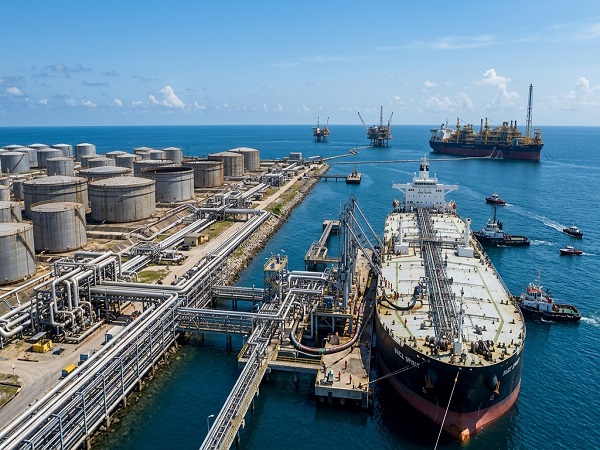
Nigerian Crude Oil Export Terminals: The Complete Guide for International Buyers and Energy Traders

When international buyers discuss Nigerian crude oil, conversations often focus on grades such as Bonny Light , Forcados or Qua Iboe .
However, experienced procurement teams know that understanding where crude is exported from is just as important as understanding what crude is being purchased.
Nigeria’s export terminals are the critical connection between production fields and international refineries. They serve as loading points where crude is measured, prepared, inspected and transferred onto ocean-going tankers bound for buyers across Asia, Europe and other global markets.
For buyers, traders and logistics professionals, understanding Nigeria’s export infrastructure helps improve procurement decisions and reduces commercial uncertainty.
Why Export Terminals Matter in International Crude Trade

A crude oil transaction does not begin when a tanker sails.
It begins much earlier.
Export terminals perform several critical functions:
-
receiving crude from production systems
-
storing export volumes
-
measuring cargo quantities
-
supporting quality verification
-
coordinating tanker loading
-
facilitating international shipment
Without this infrastructure, moving millions of barrels into international markets would not be possible.
This is why experienced buyers verify terminal information during commercial negotiations rather than relying only on marketing claims.
How Nigerian Crude Reaches Export Terminals

Although each crude stream follows its own operational path, the simplified export journey generally looks like this:
Production Wells
↓
Gathering Systems
↓
Processing Facilities
↓
Export Terminal or FPSO
↓
Storage
↓
Tanker Loading
↓
International Voyage
↓
Destination Refinery
This physical journey explains why logistics knowledge is essential for serious crude procurement.
Our guide on How International Buyers Source Nigerian Crude explores how buyers evaluate these commercial stages before committing to major transactions.
Bonny Oil Terminal
The Bonny Oil Terminal is one of Nigeria’s most internationally recognized export facilities.
It is closely associated with Bonny Light Crude Oil , one of the country’s best-known export grades.
Professional buyers value Bonny because:
-
it has long-established export infrastructure
-
international markets are familiar with its crude stream
-
procurement teams regularly evaluate Bonny Light during sourcing decisions
Despite its reputation, experienced buyers still verify:
-
cargo availability
-
commercial authority
-
loading schedules
-
pricing formulas
Forcados Terminal
The Forcados Terminal serves another important Nigerian export stream.
It plays a significant role in moving crude from production systems into international markets.
Buyers evaluating Forcados Crude Oil typically examine:
-
loading windows
-
terminal operations
-
freight economics
-
refinery compatibility
Understanding terminal logistics helps buyers evaluate the complete commercial picture.
Qua Iboe Offshore Export System
Unlike purely onshore export systems, Qua Iboe Crude Oil relies heavily on offshore loading infrastructure.
Offshore export systems involve:
-
marine loading operations
-
offshore coordination
-
tanker positioning
-
specialized transfer procedures
This demonstrates how offshore production creates different logistical considerations from conventional export terminals.
Escravos Export Infrastructure
The Escravos export system is another important part of Nigeria’s petroleum infrastructure.
Like other export facilities, it connects production systems with international shipping through specialized loading operations and export logistics.
Professional buyers evaluate Escravos using the same commercial principles applied across other Nigerian export streams:
-
quality
-
pricing
-
logistics
-
commercial verification
Offshore FPSO Exports: Bonga and Egina

Not all Nigerian crude exports pass through traditional onshore terminals.
Deepwater projects such as:
-
Bonga Crude Oil
-
Egina Crude Oil
use FPSOs (Floating Production Storage and Offloading vessels).
An FPSO performs multiple functions:
-
receives crude from subsea wells
-
processes production
-
stores export cargo
-
transfers crude to ocean-going tankers
These offshore facilities represent some of Nigeria’s most technologically advanced petroleum infrastructure.
How Tankers Load Nigerian Crude

Once a cargo is ready, loading operations require careful coordination.
Important commercial considerations include:
-
vessel suitability
-
loading schedule
-
weather conditions
-
inspection procedures
-
cargo measurement
Buyers understand that successful loading depends on operational execution—not simply contractual paperwork.
We’ll examine this further in our upcoming guide on Understanding Crude Oil Lifting Procedures .
Why Export Terminals Matter for Pricing
Many new market participants focus only on the advertised crude price.
Professional buyers evaluate something much broader.
Delivered economics can be influenced by:
-
freight costs
-
loading timing
-
vessel availability
-
destination routing
-
commercial differentials
This is why understanding export infrastructure becomes part of procurement strategy.
Our future guide on FOB vs CIF in Crude Oil Trading explains how delivery terms affect final transaction costs.
The Nigerian Regulatory Framework
Nigeria’s export terminals operate within the country’s broader petroleum regulatory framework.
The Nigerian Upstream Petroleum Regulatory Commission (NUPRC) oversees upstream petroleum regulation, while the Nigerian Midstream and Downstream Petroleum Regulatory Authority (NMDPRA) regulates midstream and downstream activities.
International buyers should rely on current official guidance when evaluating Nigerian petroleum operations.
Common Mistakes Buyers Should Avoid
Experienced procurement teams avoid assumptions.
Common mistakes include:
-
believing terminal names automatically prove cargo availability
-
assuming documents eliminate verification
-
ignoring shipping logistics
-
focusing only on headline pricing
-
skipping commercial due diligence
Professional procurement depends on disciplined verification.
Frequently Asked Questions
What is Nigeria’s best-known export terminal?
The Bonny export system is one of Nigeria’s most internationally recognized crude export facilities.
Do all Nigerian crude grades use the same terminal?
No. Different crude streams use different export systems, including offshore FPSOs.
What is an FPSO?
An FPSO is a Floating Production Storage and Offloading vessel used in offshore petroleum production.
Why do buyers verify terminal information?
Terminal information forms part of the broader commercial verification process.
Does freight affect crude economics?
Yes. Freight and delivery logistics can materially influence the final economics of a transaction.
Why Paradise MultiTrade Focuses on Export Infrastructure Knowledge
At Paradise MultiTrade International Limited, we believe informed buyers make stronger commercial decisions.
Our Oil & Gas division focuses on:
-
international buyer sourcing
-
trade facilitation
-
supply chain coordination
-
crude market intelligence
-
logistics coordination
-
commercial due diligence
Whether you’re evaluating Bonny, Forcados, Qua Iboe, Bonga or Egina, understanding export infrastructure helps build more confident procurement decisions.
Conclusion
Nigeria’s crude oil export terminals form the backbone of the country’s international petroleum trade, connecting production systems with buyers across global markets.
From traditional export terminals like Bonny and Forcados to offshore FPSOs serving Bonga and Egina, each export system plays an important role in moving Nigerian crude into international commerce.
For companies exploring Nigerian crude procurement opportunities, understanding export infrastructure is an essential step toward successful, transparent and professionally managed energy transactions.